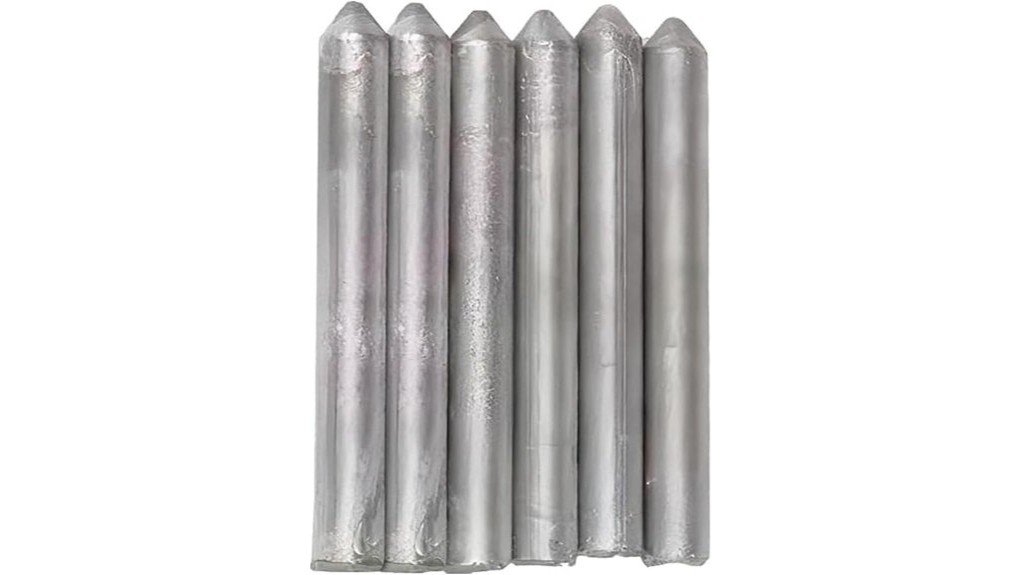
The 6 pieces low temperature universal welding rods set is meant for small, light repairs on thin or heat-sensitive metal, not for structural welding. The listing names stainless steel, iron and copper as the base metals and describes a low melting point of around 350 degrees C. Rods like these are normally applied with a torch, so confirm the heat source on the listing before you order.
6 Pieces Low Temperature Universal Welding Rods: Specs From the Listing
These details come from the Amazon listing, and listings for this type of rod are often inconsistent. Check them on the listing page before you buy.
| Spec | Per the listing |
|---|---|
| Quantity | 6 rods |
| Melting point | About 350 degrees C (some similar listings say about 300 degrees C) |
| Base metals named | Stainless steel, iron, copper |
| Rod length | Listing text says 33 cm, but the package size is given as 3.62 x 2.91 x 1.14 in, so check the length |
| Weight | 1.76 oz |
What These Rods Are Good For
- Patching thin sheet metal, small cracks and pinholes where a full weld would burn through.
- Repairing light brackets, cookware handles and hobby projects that do not carry real load.
- Joining dissimilar thin metals where low heat helps prevent warping.
Low temperature rods bond to the surface rather than fusing the base metal the way a true weld does. That is why the joint is weaker, and why preparation matters more than the rod itself.
When Not to Use Them
- Structural parts, trailer hitches, vehicle frames and lifting gear.
- Pressure vessels, fuel tanks and anything that holds gas or fuel.
- Parts that run hot or flex constantly. A low melting filler can let go under heat or vibration.
Basic Technique
- Clean to bright metal. Remove paint, rust, oil and oxide with a wire brush or abrasive, then wipe with a degreaser.
- Fit the joint tightly. The filler flows best into a close, supported joint.
- Heat the base metal. Warm the part with a torch rather than blasting the rod. The rod should melt when it touches hot metal.
- Feed the rod. Touch it to the heated joint, let it flow, and keep the flame moving so you do not overheat thin stock.
- Cool and test. Let the part cool without quenching, then test gently before putting it back into service.
Practice on scrap of the same metal first. Work with ventilation, since flux and heated metal give off fumes, and wear gloves and eye protection.
Check Before You Buy
- Confirm the heat source, flux needs and base metals on the listing page.
- Check the actual rod length, because the listing figures conflict.
- Expect a light-duty repair. If the part matters for safety, weld or braze it properly.
Related Guides
Compare this pack with the Galepromot 6-piece low temperature rods, the 6PCS low temperature universal welding rods and the low temperature universal welding rod review. To see how brazing differs from welding, read brazing vs welding on auto body metal.
Frequently Asked Questions
Can I use these rods with an arc welder?
Do not assume so. Low temperature rods of this type are normally applied with a propane or MAPP torch, not an arc welder. Check the listing and the seller instructions for the heat source before you buy.
What metals do these rods join?
The listing names stainless steel, iron and copper. Similar low temperature rods are also sold for aluminum, so confirm the base metals on the listing page and test on scrap first.
How strong is a repair made with low temperature rods?
Strong enough for light, non-structural repairs, but well below a real weld or silver brazed joint. Do not use them on frames, trailer hitches, pressure parts or anything that carries a heavy load.
Do I need flux?
Many low temperature rods are flux-cored, but that varies by product. Read the listing, and if the rod is not flux-cored you need a flux that suits the base metal.
How should I store the rods?
Keep them dry and in their package so the flux core stays clean. Moisture and dirt can make the rod flow poorly.