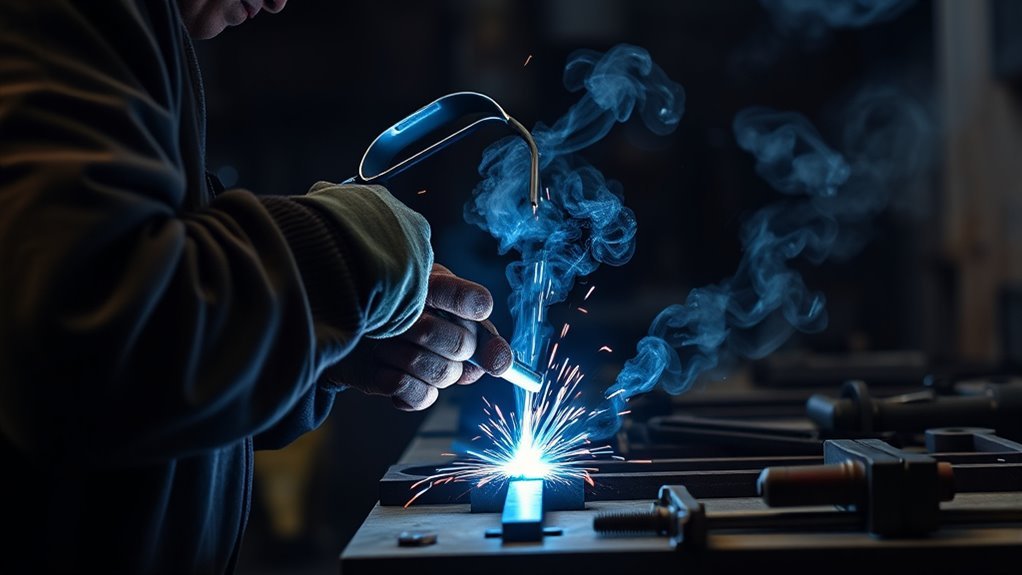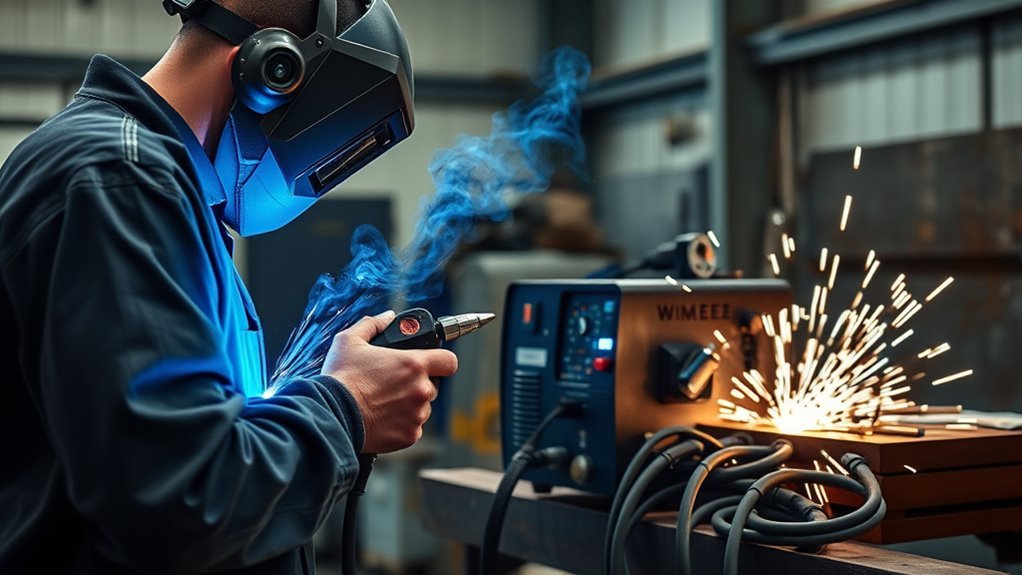
Choosing between brazing and welding for auto body metal is not a matter of picking the “stronger” process and using it everywhere. The safe choice depends on the exact vehicle, model year, body material, joint location, and attachment method listed in the vehicle maker’s repair information. Lower heat can help protect a panel, but using an unapproved process can weaken a crash structure, damage coatings, or create corrosion later.
Quick Answer
Neither process is always better. Use welding or MIG brazing only where the vehicle-specific repair procedure permits it. Welding is common for approved structural joints and replacement seams. Brazing uses lower heat and does not melt the base metal, but on late-model vehicles it is suitable only for specified joints, materials, and filler systems.
Key Takeaways
- Look up the repair procedure by VIN, model year, body style, and exact part before choosing a joining method.
- Do not treat torch brazing, braze welding, and MIG brazing as the same process.
- Welding is not automatically approved for every structural steel; excess heat can reduce the strength of some high-strength and ultra-high-strength steels.
- MIG brazing can be an OEM-approved structural attachment method, but only at the locations and with the equipment, wire, gas, hole size, and testing the procedure specifies.
- Control fumes, fire, coatings, electronics, SRS components, and high-voltage systems before any hot work.
At a Glance
| First Decision | Follow the vehicle-specific OEM body repair procedure; do not choose by habit or equipment on hand. |
| Brazing Advantage | Lower base-metal heat and the ability to join selected materials without melting them. |
| Welding Advantage | A fused joint when the specified base metal, location, wire, gas, and welding method support it. |
| Main Risk | Using too much heat or an unapproved attachment method can reduce strength, distort panels, damage coatings, and compromise corrosion protection. |
| DIY Suitability | Cosmetic practice work may be suitable for trained hobbyists; structural, SRS-adjacent, aluminum, mixed-material, and EV repairs belong with qualified collision technicians. |
Brazing vs Welding: Which Is Better for Auto Body Metal?
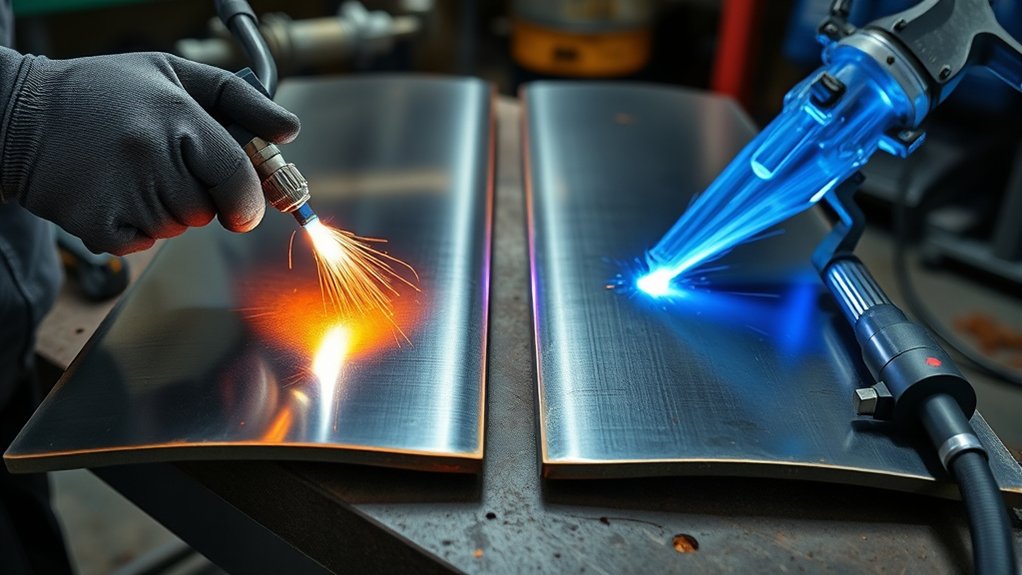
The better method is the one approved for the exact joint. In general, brazing heats and melts a filler metal while the base materials remain solid. The American Welding Society defines brazing as a group of processes that use filler metal above 840°F (450°C) but below the solidus temperature of the base materials. Fusion welding, by contrast, melts the base metal at the joint.
That lower base-metal heat can reduce the size of the heat-affected area and make distortion easier to control. It does not mean every thin panel should be brazed. Modern collision repair uses several attachment methods, including squeeze-type resistance spot welding, MAG/GMAW plug or butt welding, MIG brazing, rivet bonding, adhesive bonding, and combinations of these methods. The OEM procedure decides which one restores the designed load path and corrosion protection.
On a late-model vehicle, “brazing versus welding” is an OEM repair-procedure decision before it is a tool or preference decision.
Torch Brazing, Braze Welding, and MIG Brazing Are Not the Same
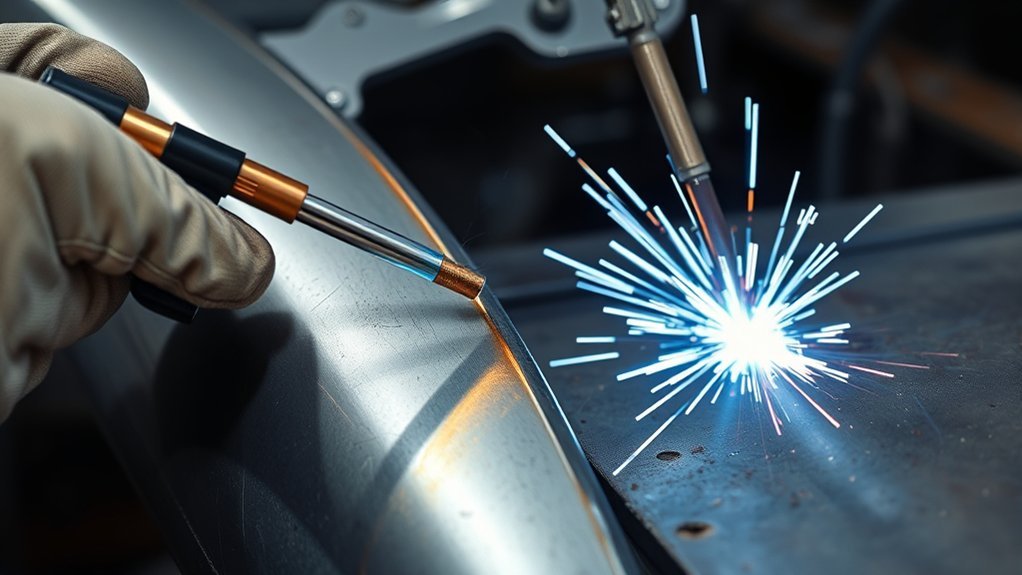
Traditional torch brazing heats a close-fitting joint so filler flows between the surfaces by capillary action. Braze welding uses a bronze or similar filler to build a fillet without fully melting the base metal. MIG brazing uses a GMAW-style gun and an electric arc to melt a copper-alloy filler, often silicon bronze, while limiting base-metal melting.
This difference matters in collision repair. A vehicle maker may specify pulsed MIG brazing at selected holes or seams while prohibiting torch brazing in that same area. Honda/Acura guidance, for example, requires MIG-brazed locations, hole sizes, pulse control, shielding gas, and inspection methods to follow the model-specific body repair manual. Treating a propane or oxy-fuel torch as a substitute for an OEM MIG-brazing procedure can produce the wrong joint geometry and heat pattern.
Note: The factory may have used one joining method during production while the service repair procedure specifies another. Always follow the published repair method for the replacement part rather than trying to copy the factory seam by appearance alone.
When to Braze Auto Body Metal
Braze auto body metal only when the material, joint, and repair information support it. Lower heat can help on selected thin or coated steel joints, and brazing can join some dissimilar metals in general fabrication. In collision repair, however, “dissimilar metals” does not create automatic permission to braze. Aluminum-to-steel body structures often use approved adhesives, rivets, isolators, or other mixed-material attachment systems to control galvanic corrosion and restore crash performance.
MIG brazing is most appropriate when the vehicle maker calls for it at a specific seam, plug hole, slot, or inaccessible spot-weld location. It may also be useful for certain non-structural custom or restoration work when the joint design, filler alloy, coatings, and corrosion plan are known.
| Braze When | Why It May Help | Required Check |
|---|---|---|
| OEM-specified MIG-brazed seam or hole | Limits heat while creating the specified service joint | Wire, gas, pulse mode, hole size, overlap, and test requirements |
| Selected thin, non-structural restoration work | Can reduce burn-through and finishing work | Metal compatibility, joint design, and corrosion protection |
| Some dissimilar-metal fabrication joints | Base metals do not have to melt together | Engineering approval; do not assume it applies to a vehicle structure |
Brazing is not automatically cheaper or easier. Traditional torch brazing may use simple equipment, but OEM MIG brazing can require a pulse-capable welder, exact consumables, practice coupons, destructive tests, and trained technique.
When to Weld Auto Body Metal
Weld auto body metal when the vehicle-specific procedure calls for a fusion weld or resistance spot weld. Common approved methods include squeeze-type resistance spot welding and MAG/GMAW plug or butt welding. The allowed method depends on the steel grade, panel stack, access, sectioning location, and joint design.
Do not assume that more heat produces a stronger repair. Some high-strength and ultra-high-strength steels lose strength when heated outside the approved process window. Honda/Acura’s published guidance, for example, limits butt welding by steel strength and allows certain plug welds or MIG-brazed joints only where the body repair manual specifies them. Its guidance also states that common ER70S-6 wire is suitable only through certain lower steel strengths, while stronger steels require approved higher-strength wire.
MIG/MAG is common for steel collision work because it supports controlled plug, stitch, and butt welds. TIG can provide fine control in custom fabrication and some aluminum work, but it is not a universal replacement for an OEM-specified collision process. Stick welding is useful in heavier general fabrication, yet it is rarely suitable for thin vehicle body panels and should not replace an approved collision-repair method.
Warning: Do not weld, braze, section, or heat-straighten a structural part unless the current vehicle-specific repair procedure permits it. A process that looks acceptable on the surface can still reduce crash performance, damage an SRS mounting area, or weaken heat-sensitive steel.
Brazing vs Welding for Dissimilar Metals
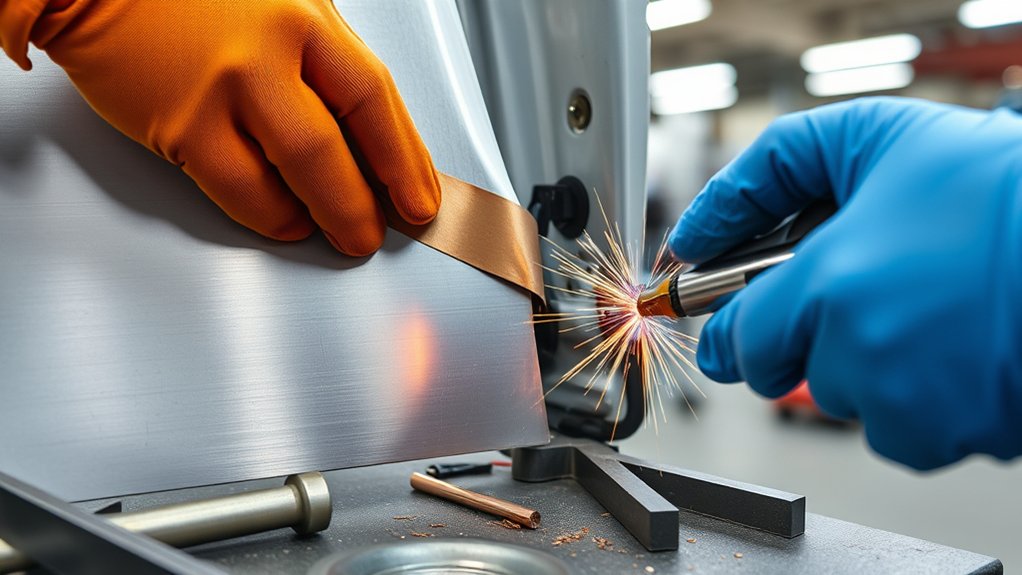
Brazing can join many combinations of metals because the filler wets the base surfaces without requiring both materials to melt. This is one reason the process is valuable in manufacturing and general fabrication. It can also reduce the metallurgical problems caused by trying to fusion-weld metals with very different melting points or thermal expansion rates.
Auto body repair adds another concern: galvanic corrosion. A direct aluminum-to-steel joint can corrode when the metals are electrically connected and exposed to an electrolyte. Vehicle makers may use adhesives, coated fasteners, isolation layers, rivets, or sealed flanges to manage that risk. Do not replace those systems with an improvised brazed joint.
Before joining different metals, identify both materials and the coating on each side of the joint. Confirm the approved filler, overlap, isolation method, corrosion protection, and refinishing steps. If the repair information does not authorize the joint, replace the assembly or refer the repair to a facility with the required equipment and training.
How Heat Warps Auto Body Panels
Thin sheet metal expands where it is heated and contracts as it cools. When the heat is concentrated or uneven, that movement can pull a panel out of shape. Long welds, wide beads, poor fit-up, excessive voltage or wire feed, and repeated reheating all increase the risk of distortion and burn-through.
Control heat by using the specified joint, clean fit-up, short weld intervals, balanced weld placement, and enough cooling time. Do not quench a structural weld unless the procedure allows it; rapid cooling can change hardness and create stress. Practice on coupons made from the same type and thickness of metal before touching the vehicle.
Heat straightening also requires OEM permission. Some mild steels may allow controlled heating, while many HSS and UHSS parts must not be heat-straightened and may require complete replacement. Identify the material before applying a torch, induction heater, heat gun, or stud-welder heat.
Pro Tip: Make test welds on matching coupons after the machine, wire, gas, panel stack, and settings are ready. Adjust the process from the test results—not from how the bead looks on the vehicle.
Brazed vs Welded Joint Strength
A correctly designed fusion weld can be very strong, but “welded is stronger” is too simple for collision repair. Joint strength depends on the base-metal grade, heat input, filler or wire strength, overlap, weld spacing, hole size, penetration, panel stack, and the direction of the load. A poor weld can be weaker than an approved MIG-brazed joint, and an unapproved weld can soften heat-sensitive steel next to the bead.
Brazed joints depend on clean surfaces, correct wetting, filler compatibility, joint geometry, and adequate bonded area. MIG-brazed plug or slot joints also depend on the OEM-specified hole size and number. When the repair manual specifies MIG brazing on an UHSS attachment, the repair is not a cosmetic substitute; it is the engineered service method for that location.
Inspect every joint as required. Visual appearance alone cannot prove strength. Many collision procedures call for test coupons and destructive testing before the vehicle welds are made. The joint should produce the required tear-out or failure pattern on the test piece before the technician proceeds.
Tools and Filler Metals for Each Method
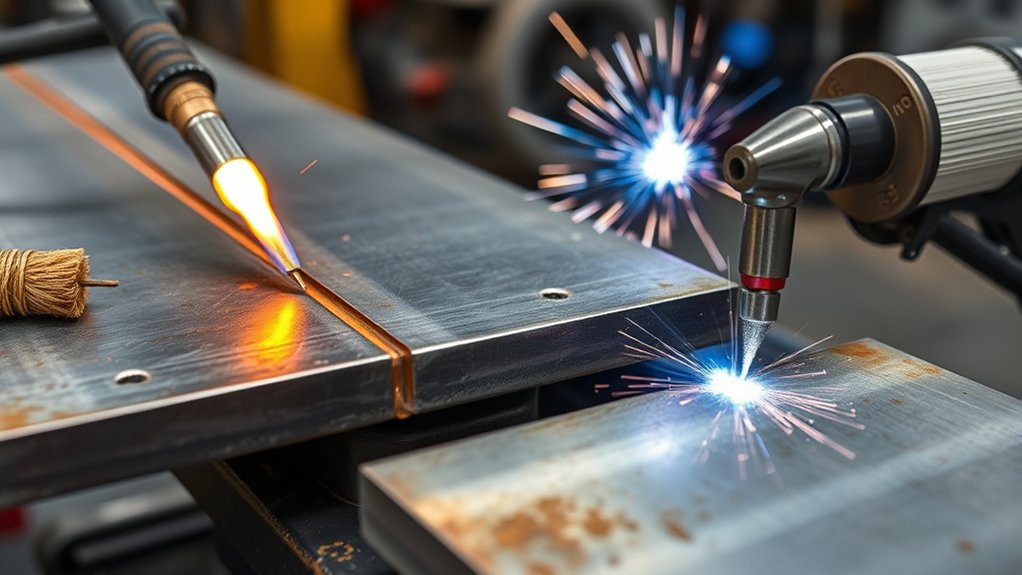
The required equipment follows the repair procedure. For traditional brazing or restoration work, the setup may include a propane or oxygen-fuel torch, the approved flux, and a silver-, copper-, bronze-, or aluminum-based filler selected for the base materials. The joint must reach the filler’s flow temperature without melting or overheating the base metal.
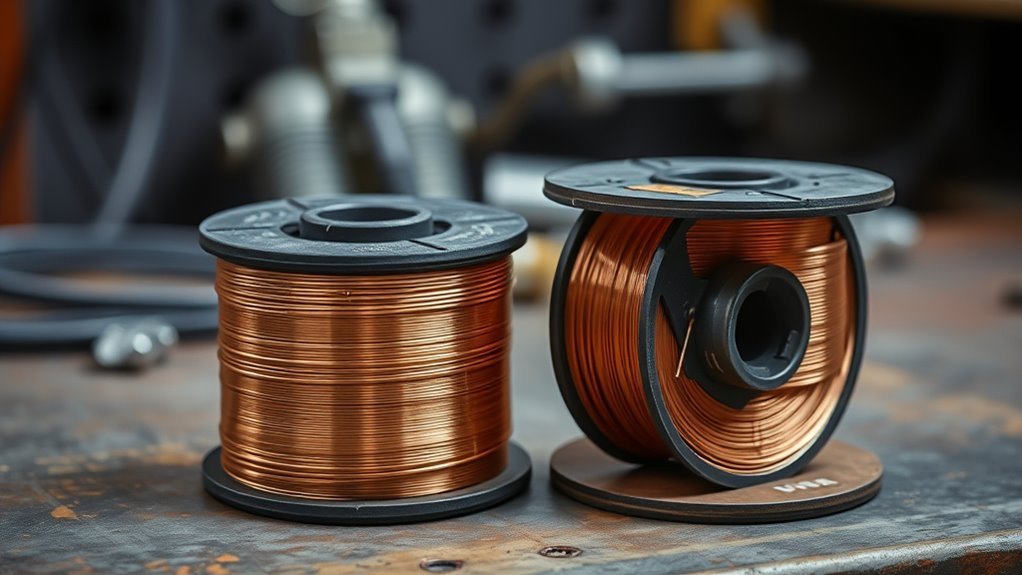
For OEM MIG brazing, use a machine capable of the specified pulse program, the required copper-alloy wire, correct drive rolls and liner, and the shielding gas stated by the vehicle maker. Honda/Acura guidance describes MIG welding and brazing with 100% argon and requires pulse control for specified MIG-brazed joints. Do not copy that setup to another make unless its repair information calls for the same system.
For fusion welding, the wire or rod must match both the process and the required joint strength. ER70S-6 is common in general mild-steel GMAW, but it is not automatically suitable for every modern body steel. The Honda/Acura guideline states that typical ER70S-6 wire has a minimum tensile strength of 70 ksi (483 MPa) and limits its use to steel parts up to 440 MPa; higher-strength applications require approved wire with greater tensile strength.
| Process | Typical Equipment | Collision-Repair Limit |
|---|---|---|
| STRSW | OEM-capable resistance spot welder, correct tips, pressure, current, and time | Panel stack and access must match the procedure |
| MAG/GMAW fusion welding | Approved welder, matching wire, shielding gas, clamps, and copper backing where permitted | Steel grade, weld type, and sectioning location control use |
| MIG brazing | Pulse-capable welder, specified copper-alloy wire, liner, drive rolls, and gas | Use only where the OEM specifies it |
| Torch brazing | Propane or oxygen-fuel torch, flux, and compatible filler | Not a substitute for an OEM MIG-brazed or welded structural joint |
Products Worth Considering

Lincoln ED030584 .035", NR-211, LB Spool, Inner Shield Flux-Core Welding Wire

✅ Low Heat Input: Effectively minimizes metal warping and prevents burn-through on delicate, thin-gauge automotive body panels.

Commonly used for general shop applications with poor fit-up
Surface Prep and Fit-Up Before You Join Metal
Good prep matters as much as the joining process. Remove paint, rust, oil, seam sealer, adhesive, and coatings only to the extent required by the procedure. Contamination can block filler wetting, cause porosity, weaken fusion, and create poor corrosion protection.
Do not assume weld-through primer belongs under every joint. Honda/Acura’s current welding guideline says weld-through primer should not be used for its MAG plug, MAG butt, or MIG-brazing operations because it can reduce joint quality; it calls for removing only enough e-coat for the heat-affected area and applying epoxy primer over the completed joint. Other makes may specify a different preparation, so follow the exact OEM instructions.
Fit-up controls heat and strength. Traditional brazing needs a close, even gap for capillary flow. Plug welding and MIG-brazed holes need the correct diameter and overlap. Butt welding needs the specified root gap and edge preparation. Clamp the panel so it cannot lift or separate while the joint is made.
After joining, restore every corrosion-protection layer the procedure requires. That may include epoxy primer, seam sealer, cavity wax, adhesive, undercoat, and topcoat. Keep drain paths open and avoid sealing moisture inside a flange.
Follow the OEM Repair Procedure Before Choosing
Start with the VIN and confirm the model year, body style, powertrain, build variation, and exact replacement part. Then open the current vehicle-maker body repair information and record:
- The material and tensile-strength designation for each panel in the joint.
- Whether repair, straightening, sectioning, or complete replacement is allowed.
- The approved attachment method and exact weld or braze locations.
- Hole diameter, overlap, weld count, spacing, joint length, and access requirements.
- Required equipment, wire, filler, shielding gas, pulse program, tips, current, time, and pressure.
- Test-coupon, destructive-test, inspection, and corrosion-protection steps.
- Battery, high-voltage, SRS, sensor, and electronic precautions.
The I-CAR OEM repair guidance on MIG brazing stresses that MIG brazing should be used only where a vehicle-specific repair manual or OEM instruction calls for it. If the information is unavailable or unclear, stop and obtain the correct procedure rather than substituting a familiar method.
Safety Checklist Before Brazing or Welding
Welding and brazing expose the technician to fire, electric shock, burns, intense light, hot metal, gases, and metal fumes. The OSHA welding, cutting, and brazing guidance identifies metal fumes and ultraviolet radiation as major hazards. Zinc-coated steel, primers, paint, seam sealers, adhesives, and plated parts can add hazardous decomposition products.
- Wear the correct helmet shade, safety glasses, flame-resistant clothing, gloves, hearing protection, and respiratory protection required by the hazard assessment.
- Use local exhaust ventilation close to the plume. Do not rely on an open shop door to control coated-metal or confined-area fumes.
- Remove or shield carpet, foam, trim, fuel and brake lines, wiring, glass, seam sealer, sound deadener, and other heat-sensitive or combustible materials on both sides of the joint.
- Move fire hazards away, keep the correct extinguisher ready, inspect hidden cavities, and maintain a fire watch as the hot-work plan requires.
- Follow OEM steps for the 12-volt battery, modules, grounds, SRS components, and electronic memory. Place the welding ground where the procedure directs and close to the work area.
- On a hybrid or EV, have a qualified person follow the vehicle-specific high-voltage depowering procedure. Some OEMs also require high-voltage components or the battery to be removed before cutting or welding near them.
- Never weld or braze a tank, closed container, fuel-contaminated part, or refrigerant line. Recover refrigerant with approved equipment before heat is applied near an A/C circuit.
Test Welds Before Working on the Vehicle
Prepare test coupons that match the vehicle joint as closely as possible: same material type, thickness, number of layers, coatings, overlap, wire, gas, tips, and machine settings. Make the same plug weld, spot weld, butt weld, or MIG-brazed hole that the repair procedure requires.
Inspect and destructively test the coupons according to the OEM or equipment-maker procedure. For a plug or spot weld, the expected result is often a specified nugget or tear-out rather than the weld separating cleanly at the interface. MIG-brazed joints may have their own peel, chisel, or sectioning criteria. I-CAR’s Honda/Acura MIG-brazing test guidance emphasizes following the OEM’s destructive-testing requirements before completing the repair.
Repeat the test after changing wire, gas, tips, panel stack, machine, power supply, extension lead, or major settings. A saved program is not proof that the current setup will produce the required joint.
Common Mistakes to Avoid
- Choosing by panel thickness alone: The same thickness can appear in mild steel, HSS, UHSS, aluminum, or a coated mixed-material stack.
- Calling every low-heat joint “brazing”: Torch brazing and OEM MIG brazing use different equipment and joint designs.
- Using ER70S-6 on every steel: The wire must meet the strength and process requirements in the repair procedure.
- Substituting TIG or stick welding: Fine control or high penetration does not make an unapproved process acceptable.
- Skipping test coupons: A clean-looking bead can still have poor penetration, weak wetting, contamination, or the wrong failure pattern.
- Grinding the joint flat: Excess grinding can thin the panel or remove required weld reinforcement. Finish only as the procedure allows.
- Ignoring the back side: Hidden paint, foam, adhesive, wiring, and seam sealer can burn or produce fumes.
- Failing to restore corrosion protection: Bare flanges and burned coatings can rust long after the repair looks finished.
How to Choose the Right Repair Method
Use this order of decisions:
- Identify the vehicle and part. Verify the VIN, model year, body style, powertrain, and exact panel.
- Identify the material. Confirm steel grade, aluminum alloy or construction, coatings, and every layer in the joint.
- Check repairability. Determine whether straightening, sectioning, or repair is allowed, or whether the complete part must be replaced.
- Use the specified attachment method. Follow the listed spot weld, MAG/GMAW weld, MIG-braze, rivet, adhesive, or combined process.
- Match all consumables and settings. Use the required wire or filler, shielding gas, hole size, overlap, tips, pressure, and machine program.
- Prepare and test. Clean and clamp the joint, make matching coupons, and pass the required destructive test.
- Protect the vehicle and technician. Complete battery, HV, SRS, ventilation, fire, coating, and refrigerant precautions.
- Restore corrosion protection and inspect. Prime, seal, coat, and document the completed joint as required.
For a non-structural restoration panel with no OEM procedure, brazing may offer useful heat control when the joint is engineered for it. For a late-model collision repair, do not use “brazing for thin metal” or “welding for strength” as the final rule. The approved repair procedure is the final rule.
Products Worth Considering

DURABLE - Double-Sided 3/8" Heavy Duty High Speed Rotary Metal Cutting Blade Made From High-Quality High-Speed Steel.

【Separates Spot-Welded Panels Without Damage】 51900 Spot Weld Chisel is designed for tight spaces, providing precise access to hard-to-reach areas of vehicle bodies. It cleanly separates spot-welded panels, rear quarter panels, rocker panels, and other welded components without bending, warping, or damaging surrounding metal. Engineered to deliver strong, controlled force, it ensures efficient removal for both professional auto body technicians and DIY users.

【Designed For Automotive Repair Work】Spot weld panel chisel Designed for automotive body repair work, precisely removes auto body spot welds and easily separates metal panels. It is suitable for a wide range of bodywork, include accident repairs, vehicle dismantling, door and fender replacement, and the separation of welds on frames and chassis, ensuring efficient performance to meet your needs.
Frequently Asked Questions
When should you braze instead of weld?
Braze when the vehicle-specific repair procedure calls for MIG brazing or when a properly engineered non-structural fabrication joint benefits from lower base-metal heat. Do not choose brazing only because the panel is thin or the metals are different.
Is MIG brazing the same as torch brazing?
No. MIG brazing uses an arc and a wire-fed gun, usually with a copper-alloy filler and a specified shielding gas. Torch brazing heats the joint with a flame and commonly relies on capillary flow. One process should not be substituted for the other unless the repair information permits it.
What metals are difficult to braze?
Metals with stable oxide layers, reactive alloys, incompatible coatings, or very different expansion rates need specialized fillers, fluxes, atmospheres, and joint designs. Magnesium, titanium, and oxidized aluminum are not beginner brazing jobs. In vehicle repair, use only the material combination and process approved by the OEM.
What are the disadvantages of brazing?
Brazing needs clean surfaces, correct wetting, controlled fit-up, compatible filler, and enough joint area. It may be unsuitable for high-temperature service or an unsupported butt joint. In collision repair, the main disadvantage is that an improvised brazed joint may not restore the designed crash load path.
Can you braze with just a propane torch?
A propane torch can supply enough heat for some small, compatible parts and low-mass joints. Larger parts may pull heat away too quickly and require different equipment. A propane torch is not a substitute for an OEM-specified pulsed MIG-brazing process on a vehicle body.
Is brazing strong enough for auto body repair?
It can be when the joint is designed and approved for brazing. Some OEM procedures specify MIG-brazed joints on structural steel attachments. That does not make brazing acceptable everywhere; joint location, hole size, filler, gas, pulse control, and testing must match the repair procedure.
Can you weld ultra-high-strength steel?
Only with the methods and locations the vehicle maker approves. Some UHSS parts cannot be straightened or sectioned, and some fusion-welding methods are prohibited because excess heat reduces strength. The repair may require complete replacement, spot welding, a specified plug weld, or MIG brazing.
Do you need to disconnect the battery before welding a vehicle?
Follow the OEM procedure rather than a universal shortcut. It may require disconnecting the 12-volt battery, waiting for SRS backup power to discharge, protecting modules, and placing the welding ground in a specified location. Hybrids and EVs also require trained high-voltage depowering and may require battery or component removal near the repair.
Safety Disclaimer: This article is for general information and does not replace the current vehicle-specific body repair manual, equipment instructions, workplace hazard assessment, or technician training. Structural, SRS-adjacent, aluminum, mixed-material, hybrid, and EV repairs should be performed by qualified collision-repair professionals with the required equipment.
Conclusion
The right choice depends on more than panel thickness or the desire for a strong-looking bead. Brazing can limit base-metal heat and join selected materials without melting them. Welding can create a fused joint where the steel grade and repair design allow it. On modern vehicles, either process can be correct—or unsafe—depending on the location. Verify the vehicle and material, follow the OEM procedure, make and test matching coupons, control fumes and fire, and restore corrosion protection before the repair is complete.
Sources
- American Welding Society — Brazing definition — defines brazing temperature, filler-metal flow, and the distinction from fusion welding.
- Honda/Acura — Body Repair Manual Welding & Sectioning Guideline Revisions — supports steel-strength limits, wire selection, coating preparation, and OEM-specific welding requirements.
- I-CAR — Who Requires or Recommends MIG Brazing? — supports using MIG brazing only where vehicle-specific OEM information specifies it.
- I-CAR — Honda/Acura MIG Brazing Destructive Testing — supports test-joint and inspection requirements.
- OSHA — Welding, Cutting, and Brazing Hazards and Solutions — supports ventilation, fume, radiation, and hot-work safety controls.
- OSHA 29 CFR 1910.252 — supports fire prevention, ventilation, coated-metal, and general welding and brazing precautions.