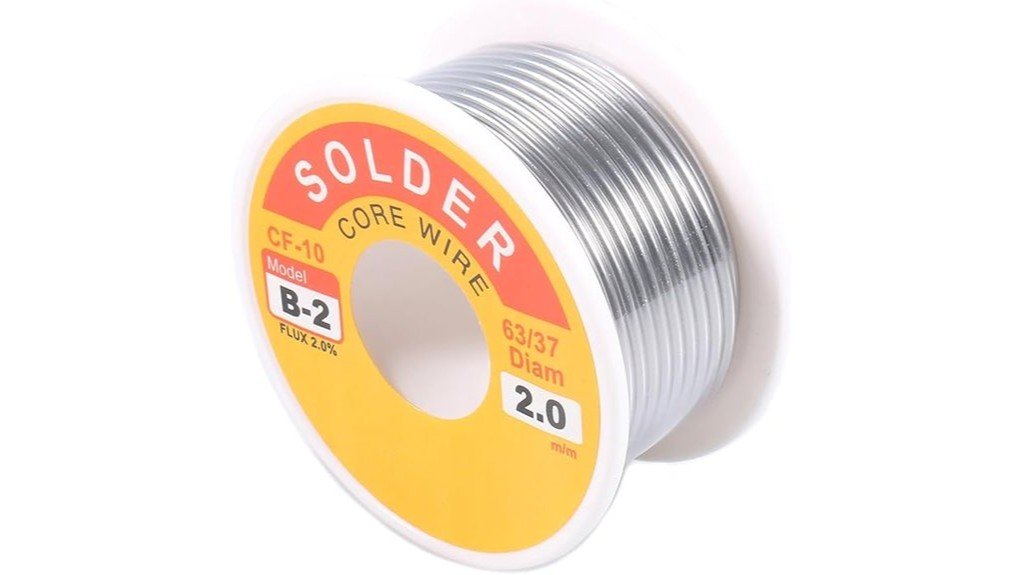
The 63/37 Tin-Lead Rosin Core Solder Wire stands out for its balanced composition of 63% tin and 37% lead, providing effective bonding in various applications. With a melting point of 183°C, it flows easily, which is essential for precision work. The addition of 2% RMA rosin flux aids in preventing oxidation and enhances the soldering process. Many users find it versatile for DIY projects and repairs, making it a popular choice. But what specific features set it apart from other options?
Key Takeaways
- The 63/37 tin-lead alloy composition ensures effective soldering with reliable bonding properties.
- With a low melting point of 183°C, this solder wire flows smoothly for quick connections.
- The 2mm diameter is ideal for precision applications, catering to both beginners and experienced technicians.
- Its 2% RMA rosin flux content prevents oxidation, enhancing durability and performance during soldering.
- Customers rate this solder wire an average of 4.0 stars, appreciating its versatility and effectiveness in various projects.
Essential Features of 63/37 Tin-Lead Solder Wire
The 63/37 Tin-Lead Rosin Core Solder Wire stands out in the domain of soldering materials due to its unique alloy composition, which consists of 63% tin and 37% lead.
The 63/37 Tin-Lead Rosin Core Solder Wire excels in soldering with its optimal tin-lead blend for superior performance.
This solder wire features a low melting point of 183°C, ensuring smooth flow and rapid application, ideal for various soldering techniques.
With a 2% RMA rosin flux content, it facilitates excellent bonding without corrosive effects.
At a diameter of 2mm, it is suitable for precise applications, including electronic repairs and DIY projects.
Its versatility makes it a preferred choice for both beginners and experienced technicians exploring different flux types.
What Is 63/37 Tin-Lead Rosin Core Solder Wire?
63/37 Tin-Lead Rosin Core Solder Wire is a widely recognized material in the field of soldering, known for its balanced alloy composition of 63% tin and 37% lead.
This solder wire features a 2% RMA rosin core, enhancing its non-corrosive properties, which makes it ideal for various solder applications.
With a melting point of 183°C (361°F), it allows for smooth flow and quick welding.
Historically significant, this solder wire has been a staple for electronics enthusiasts, technicians, and DIYers, facilitating effective connections in home appliances, circuit boards, and stained glass projects, thereby embodying the spirit of innovation and craftsmanship.
How to Get the Best Results With 63/37 Solder Wire
Achieving ideal results with 63/37 Tin-Lead Rosin Core Solder Wire requires a combination of proper technique and suitable equipment. Employing effective soldering techniques, such as maintaining a clean surface and using a temperature-controlled soldering iron, enhances performance. Understanding the flux properties is essential for preventing oxidation and guaranteeing strong connections.
| Technique | Benefits |
|---|---|
| Clean surfaces | Promotes better bonding |
| Proper heat application | Guarantees smooth flow |
| Controlled soldering | Enhances precision |
Customer Feedback on 63/37 Tin-Lead Solder Wire
Customer feedback on the 63/37 Tin-Lead Rosin Core Solder Wire reveals a generally positive reception among users, with an average rating of 4.0 out of 5 stars based on 24 reviews.
Many customers express satisfaction with its low melting point of 183°C, which facilitates smooth flow and quick welding. Users appreciate its versatility for various soldering techniques, including electronic repairs and DIY projects.
The 2mm diameter is noted for providing precision, appealing to both beginners and experienced technicians.
Comparing Solder Wire Options: Why Choose This One?
When considering solder wire options, the 63/37 Tin-Lead Rosin Core Solder Wire stands out as a reliable choice among various products on the market.
Its unique composition provides excellent solder wire durability, making it suitable for a range of applications, from electronic repairs to DIY projects.
With a low melting point of 183°C, it allows for smooth flow and quick connections.
In melting point comparison, this solder wire offers advantages over higher-melting alternatives, ensuring efficiency in work.
For those seeking reliable performance and ease of use, the 63/37 solder wire represents an ideal solution for diverse soldering needs.
Frequently Asked Questions
Is This Solder Wire Safe for Electronics?
The solder wire, with its tin-lead composition, guarantees safety and compatibility for electronics. Users can confidently utilize it for various applications, knowing it meets industry standards while facilitating liberation in their creative and technical endeavors.
Can I Use This Solder Wire for Stained Glass Projects?
Like a painter with a brush, this solder wire dances gracefully in stained glass projects. Its precision enables intricate solder techniques, allowing artisans to liberate their creativity and craft beautiful, illuminated pieces with ease.
What Type of Soldering Iron Is Recommended?
A temperature-controlled soldering iron with appropriate wattage, typically between 20-60 watts, is recommended. This allows for ideal soldering techniques, ensuring precise application and smooth flow for various projects, empowering users to achieve professional results effortlessly.
How Should I Store the Solder Wire?
For ideal preservation, the solder wire should be stored in a dry environment with humidity control, ensuring the best storage conditions. This prevents degradation, empowering users to maintain their supplies for future creative endeavors.
Is This Solder Wire Rohs Compliant?
The solder wire’s composition includes lead, which is not ROHS compliant. This raises environmental impact concerns, as lead can harm ecosystems. Users seeking eco-friendly alternatives should consider lead-free solder options for responsible craftsmanship and sustainability.