BLUEFIRE Brazing Rods are designed for exceptional performance in metalworking applications. With a tensile strength of up to 37,700 PSI, they provide robust and reliable joints, suitable for materials like aluminum and brass. Their easy flow alloy enhances the brazing process, while a versatile melting point accommodates various heat sources. Users appreciate their effectiveness and ease of use, making them a preferred option. As we explore their features further, you might find insights that could influence your choice.
Key Takeaways
- BLUEFIRE Brazing Rods achieve reliable joint strength of up to 37,700 PSI, ensuring durability in various metalworking applications.
- The easy flow brazing alloy simplifies the brazing process for aluminum and zinc-based materials, enhancing user experience.
- Customers report strong joint performance across materials like aluminum, brass, and cast iron, showcasing the rods’ versatility.
- With a melting point range of 1634°F to 1661°F, these rods are compatible with multiple welding methods, enhancing usability.
- Compared to competitors, BLUEFIRE rods offer superior tensile strength and flow characteristics, making them a preferred choice for professionals and DIY enthusiasts.
What Are BLUEFIRE Brazing Rods?
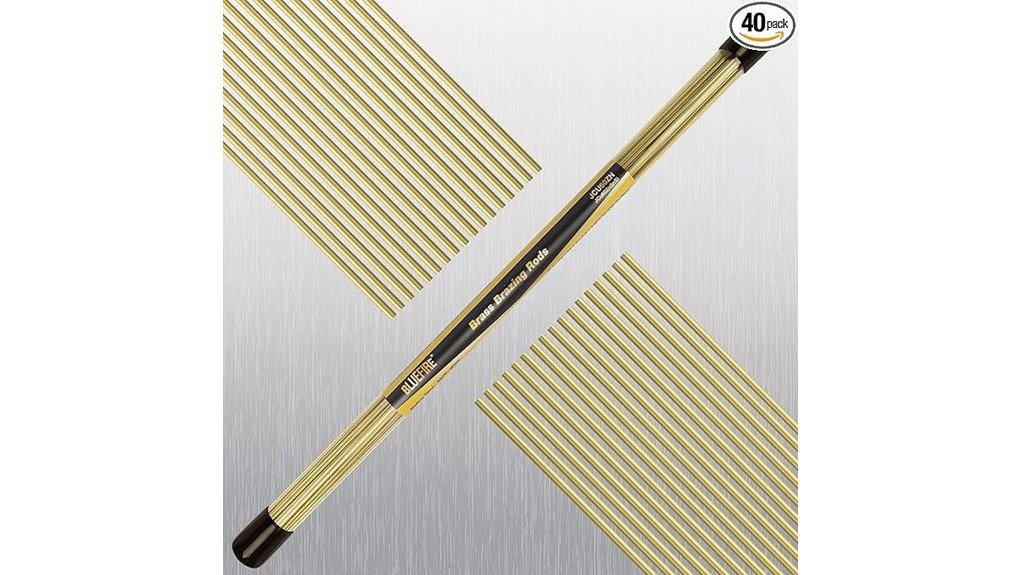
BLUEFIRE Brazing Rods represent a versatile solution for various welding needs, specifically crafted for use with metals such as aluminum and zinc-based materials.
These rods come in different brazing rod types, with each rod measuring 1/16” in diameter and 14” in length. Weighing a total of 1/2 lb, they are composed of copper, tin, silicon, and zinc, ensuring durability and strength.
With a melting point of 1634°F to 1661°F, they perform best at a recommended temperature of 1724°F. Suitable for MAPP, MAP, propane, and oxygen acetylene welding, these rods meet multiple rod specifications for effective use across various applications.
Top Features of BLUEFIRE Brazing Rods That Boost Performance
The performance of brazing rods is particularly enhanced by several key features, making them an invaluable tool for various metalworking tasks.
BLUEFIRE Brazing Rods offer significant performance enhancements through their easy flow brazing alloy, which simplifies the brazing process for aluminum and zinc-based metals.
With a melting point between 1634°F and 1661°F, they guarantee reliable joint strength, reaching up to 37,700 PSI.
With a melting point of 1634°F to 1661°F, these rods ensure strong joints, achieving up to 37,700 PSI.
Additionally, the rods’ flowability advantages, especially when paired with high-quality flux, improve fluid movement during application, resulting in stronger joints.
This combination of features positions BLUEFIRE Brazing Rods as a preferred choice for diverse repair tasks.
Where to Use BLUEFIRE Brazing Rods?
When considering the appropriate applications for brazing, one finds that BLUEFIRE Brazing Rods are exceptionally versatile and effective across a variety of tasks.
These rods excel in repairing irrigation pipes, aluminum boats, and lawn mower housings. Best practices include using BLUEFIRE rods with the recommended flux for ideal joint strength.
Application examples extend to brass, bronze, and low carbon steel, showcasing their utility in diverse metalwork projects.
With a melting point between 1634°F and 1661°F, they are suitable for various heat sources, ensuring reliability and performance.
What Customers Are Saying About BLUEFIRE Brazing Rods
Customers have expressed a generally positive reception of BLUEFIRE Brazing Rods, highlighting their effectiveness and versatility in various metalworking applications.
Many customer experiences note the rods’ ability to flow easily during the brazing process, providing strong joints in aluminum, brass, and cast iron. Users appreciate the high joint tensile strength of up to 37,700 PSI, which guarantees durability for repairs.
The melting point, ranging from 1634°F to 1661°F, allows for effective use with various welding methods.
Comparing BLUEFIRE Brazing Rods to Other Brands
In the landscape of brazing rods, BLUEFIRE Brazing Rods stand out for their specific advantages, particularly when compared to other brands.
A performance analysis reveals that BLUEFIRE rods, with a tensile strength of up to 37,700 PSI, excel in joint integrity. Their melting point ranges from 1634°F to 1661°F, making them versatile for various applications.
While some competitors may offer lower temperatures or weaker alloys, BLUEFIRE’s formulation, which includes copper and tin, enhances flow and bonding.
This brand comparison indicates that BLUEFIRE rods provide superior ease of use and reliability, making them a preferred choice for both professionals and DIY enthusiasts.
Frequently Asked Questions
Are BLUEFIRE Brazing Rods Suitable for Beginners?
Bluefire brazing rods are indeed suitable for beginners, offering a user-friendly experience akin to learning to ride a bike. With helpful beginner tips and careful rod selection, novices can confidently explore the art of brazing.
How Should I Store BLUEFIRE Brazing Rods?
Brazing rod storage should occur in a cool, dry environment, ideally maintaining an ideal temperature to prevent moisture absorption. Proper storage guarantees longevity and maintains the rods’ effectiveness for future projects, promoting efficient craftsmanship.
Can I Use These Rods for Vertical Applications?
Yes, these rods can be used for vertical applications. Proper rod performance evaluation indicates that employing vertical brazing techniques can yield strong, reliable joints, enhancing the user’s freedom to tackle various challenging projects effectively.
What Safety Gear Is Recommended When Using BLUEFIRE Brazing Rods?
When using brazing rods, safety precautions include wearing protective equipment such as safety goggles, gloves, and flame-resistant clothing. Proper gear guarantees protection from heat, sparks, and harmful fumes, promoting a liberated approach to safe metalworking practices.
Do BLUEFIRE Brazing Rods Require Special Handling?
Certainly, handling BLUEFIRE brazing rods requires no special treatment—just the usual precautions. However, mastering brazing techniques involves respecting rod temperature, as ignorance in this domain may lead to unintended metal mishaps and fiery escapades.