As an Amazon Associate, Garage Welding may earn from qualifying purchases. This does not change the price you pay.
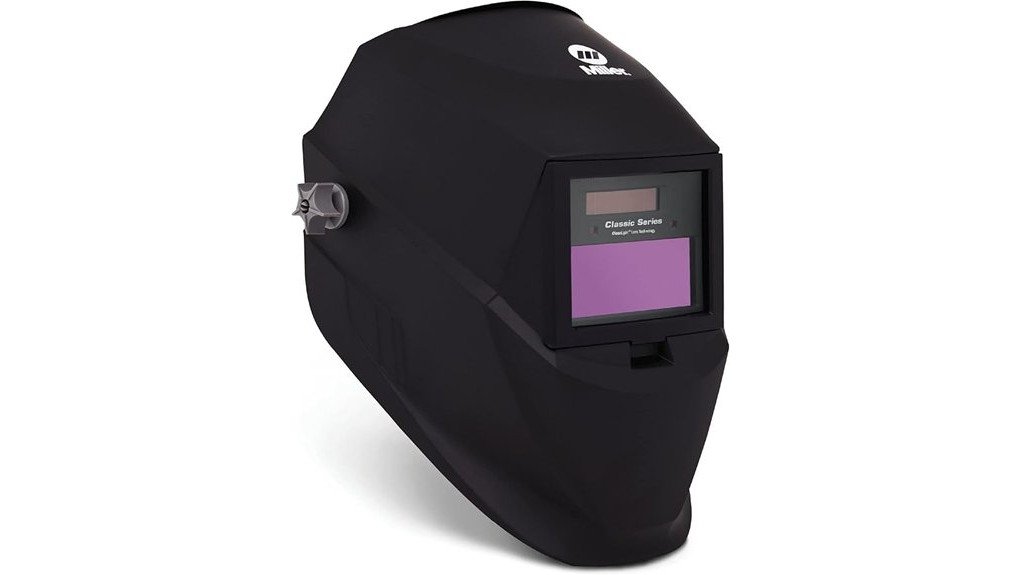
The Miller 287803 Classic Series helmet is a black, auto-darkening welding helmet with a ClearLight lens, a variable weld shade range of 8 to 13, and a 6 square inch viewing area. It is worth considering if you do MIG, stick or general fabrication work at home or in a small shop and want a recognised brand without a high price. Skip it if you mostly do very low-amp TIG, need a much larger lens, or want features like a side-view window.
This review draws on Miller-style spec sheets and retailer listings, not hands-on testing. Confirm the current specs and warranty on the Amazon listing before you buy.
Miller 287803 specs at a glance
| Item | Detail |
|---|---|
| Model | Miller 287803 Classic Series (VS) helmet with ClearLight lens |
| Viewing area | 6.0 sq in (per retailer spec) |
| Weld shades | 8 to 13 variable |
| Cut shade | 5 to 8 |
| Light state | Shade 3 (ClearLight) |
| Switching speed | 1/23,000 s (per retailer spec) |
| Sensors | 2 independent arc sensors |
| TIG rating | Low-amp rating of about 5 A (per retailer) |
| Weight | Listed as 16 oz by a retailer; some listings show 2 lb, which may be shipping weight |
Check current price on Amazon →
What the Miller 287803 is and who it suits
The Classic Series is Miller’s lower-priced auto-darkening line. This version uses the ClearLight lens, which Miller says lets more visible light through in the light state for a brighter, clearer view of the work before the arc. The nylon shell is lightweight and designed for general welding rather than extreme-environment use.
Variable shade 8 to 13 covers most arc welding. A separate cut range of 5 to 8 supports plasma and oxy-fuel cutting at the lower end, though you should check the shade chart for your current.
- Suits: hobbyists, farm and garage welders, and small shops doing MIG, stick and flux-core.
- Less suited to: very low-amp TIG below the helmet’s rating, and people who want a very large viewing window.
How to check it fits your welding and head
- Match the process. Check your amperage against the shade chart. Variable 8 to 13 handles most MIG and stick, while precision TIG at low amps may need a more sensitive filter.
- Check the controls. Verify on the spec sheet or listing which controls are on the helmet (shade, sensitivity, delay) and whether it uses solar with a replaceable battery.
- Try the headgear. Look for ratchet headgear adjustment for your head size and if you wear a respirator or cap.
- Plan for covers. Outside and inside cover lenses are model-specific. Check Miller’s part numbers before ordering extras, for example the Miller 231410 inside lens cover.
- Note the wearing weight. Retailer figures put it at about 16 oz, which is light.
Check current price on Amazon →
Pros and limitations
Pros
- Recognised brand with parts and covers widely available.
- ClearLight lens gives a brighter light state than many budget filters.
- Shade 8 to 13 and a cut range cover most hobby and shop work.
- Fast 1/23,000 s switching spec for an entry helmet.
Limitations
- A 6 sq in viewing area is modest compared with large-view helmets.
- A 5 A TIG rating suggests it is not ideal for very delicate low-amp TIG.
- It is an entry-level model, so premium features like extra sensors or a bigger window are limited.
- Prescription glasses fit depends on your frame, so try it.
Safe use and care
Test the auto-darkening on scrap before real work, with sensitivity set so the lens reacts to your arc but not to ambient light. Replace cracked shells or lenses, and keep spare cover lenses so the filter stays clean.
Store the helmet away from heat, and check any battery or solar function per Miller’s manual. A helmet does not replace fume control, so use ventilation or a respirator suited to the fumes you create. A grind mode is for light-state glare control, not for grinding eye protection, so wear safety glasses or a face shield under or over it.
Alternatives and related guides
- Classic Series VS vs WCL for a comparison inside the same line.
- Amber front cover lens for a replacement front cover.
- High-definition welding helmet for another auto-darkening option.
- TRQWH large view welding helmet if you want a larger window.
Frequently Asked Questions
What shade range does the Miller 287803 cover?
Retailer specs list weld shades 8 to 13 and a cut range of 5 to 8, with a shade 3 light state. That covers most MIG, stick and flux-core work. Check the shade chart for your amperage and process.
How fast is the Miller 287803 auto-darkening?
The listed switching speed is 1/23,000 of a second. That is fast for an entry-level helmet. Real-world comfort also depends on sensor placement and sensitivity settings, so test the helmet on scrap before relying on it.
Is the Miller Classic Series good for TIG welding?
It can work for general TIG, but the helmet is rated for low-amp TIG at about 5 amps per the retailer spec. For very delicate, low-amperage TIG, a helmet built with a more sensitive filter and extra sensors may suit you better.
Can I replace the lens covers on this helmet?
Yes, outside and inside cover lenses are consumables. They are model-specific, so buy covers listed for the Miller Classic Series. Check the part number on Miller’s site before ordering and avoid generic covers that do not seat flush.
Conclusion
The Miller 287803 is a straightforward entry-level auto-darkening helmet with a bright ClearLight lens and a useful shade range for general welding. Verify the controls and battery details on the listing, and choose another model for large-view or delicate TIG work.
Check current price on Amazon →