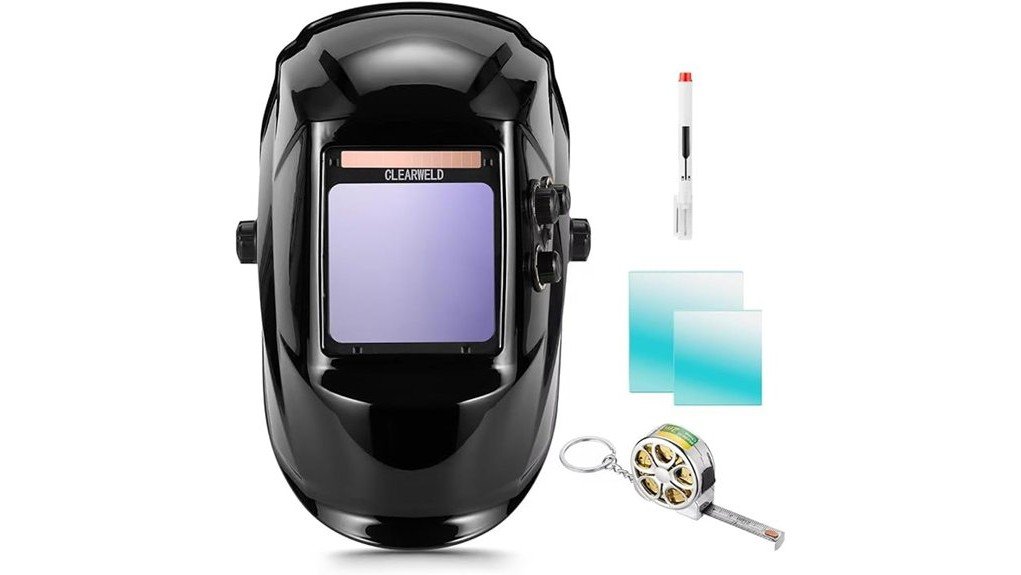
This high definition welding helmet is a variable-shade, auto-darkening hood that the Amazon listing describes as lightweight (about 2.05 lb), with a wide viewing screen, solar-plus-battery power and a grind mode. On paper it suits MIG, stick, TIG and grinding for hobbyists and small shops. The listing does not tie the helmet to a known brand, so treat the safety claims as seller claims and confirm the markings on the helmet itself.
High definition welding helmet at a glance
| Item | Detail |
|---|---|
| Type | Variable-shade auto-darkening welding helmet |
| Switching speed | Listed as 1/30,000 s |
| Shade range | Listed as 3/5-9/9-13: a light state plus two selectable dark ranges (5-9 and 9-13) |
| Viewing screen | Listed as about 4 x 4 in with a wide-angle view; the “180 degree” figure is a seller claim |
| Power | Solar cells plus a replaceable CR2450 battery, per the listing |
| Grind mode | Listed, with the filter held at a light shade for grinding |
| Weight | About 2.05 lb, per the listing |
| Safety standard | Listing mentions ANSI Z87.1 and CSA; check for the markings on the helmet and ask the seller for documentation |
What the specs mean
The shade notation 3/5-9/9-13 is the usual way auto-darkening filters show a light state (3), a low range (5 to 9) used for lower-current work such as plasma or low-amp TIG, and a high range (9 to 13) for typical arc welding. A selector switch picks the range, and a knob sets the exact shade.
A switching speed of 1/30,000 s means the filter should darken quickly after the arc starts. Faster is better, but real comfort depends on sensitivity and delay settings and on how well the sensors see the arc.
How to check the helmet suits your work
- Match the shade to the job. Many MIG and stick jobs at mid amperage fall around shade 10 to 13, low-amp TIG may use 9 to 10, and plasma cutting often needs a lighter shade. Follow the maker’s chart.
- Look for a grind mode. It should hold the filter light, not darken, while you grind. Never weld in grind mode.
- Look at sensitivity and delay controls. They help with low-amp TIG and bright shop conditions.
- Check the markings. Look for ANSI Z87.1 (or EN 379) on the filter and shell. If they are missing, do not rely on the product.
- Check the headgear adjustments (tilt, distance, tension) and how it fits with your safety glasses.
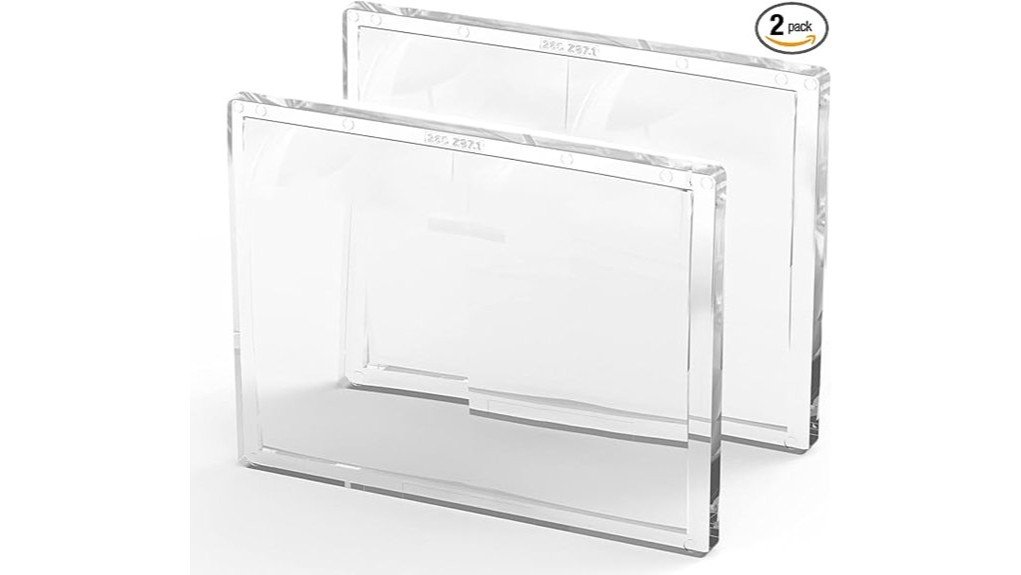
- Check the availability of cover lenses. Because the brand is unclear, make sure you can buy spares in the right size.
Pros and limitations
Pros
- Variable shade with a grind mode in one helmet.
- Large viewing screen for the price class, per the listing.
- Solar plus battery power for fewer dead-battery moments.
- Light enough for long sessions if the headgear is adjusted well.
Limitations
- No recognized brand, so the warranty and parts support are less clear.
- Speed, view angle and certification claims come from the seller, not independent tests.
- Cheaper filters may have a narrower sweet spot for angle and optical clarity than premium brands.
- Spare lenses and headgear may be hard to source.
Setting up and using the helmet safely
- Insert or check the CR2450 battery and clean the solar cells.
- Set the range and shade for the job and set sensitivity to match the lighting.
- Test on a scrap piece: the lens should darken as soon as the arc strikes, with no flicker.
- Check the cover lenses, and replace them if pitted.
- Always wear safety glasses, gloves, flame-resistant clothing and a neck cover.
- Ventilate the work area and wear a respirator when fumes are a concern.
If the lens ever fails to darken, stop welding at once and fix or replace it before you continue.
Alternatives and related guides
- True color welding helmet – a lighter hood to compare
- TRQWH large-view welding helmet – another large-window option
- Miller Classic Series Street Sparks helmet – a branded variable-shade alternative to compare
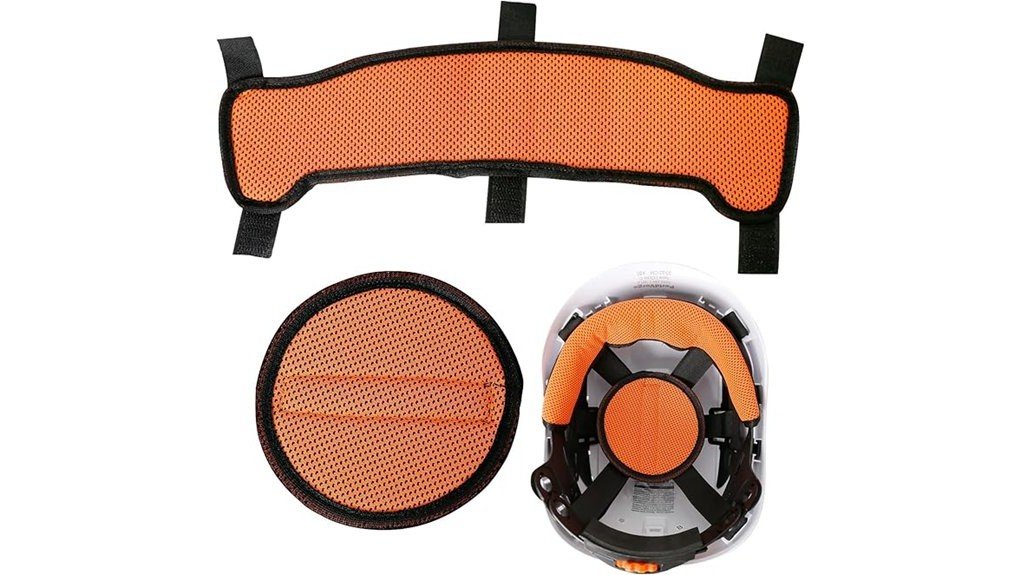
- Helmet rear sweatband – comfort add-on
Frequently Asked Questions
What does the shade range 3/5-9/9-13 mean?
It describes the helmet’s filter: a light state around shade 3, a low dark range of 5 to 9 and a high range of 9 to 13. You choose the range with a switch and set the exact shade with a knob. Follow the maker’s chart for your process.
Can I grind with this helmet?
The listing says it has a grind mode, which holds the filter at a light shade. Use that mode only for grinding and never for welding. For heavy grinding, wear a face shield and safety glasses as well.
How does the battery work in a solar auto-darkening helmet?
The listing describes solar cells plus a replaceable CR2450 battery. Solar helps power the filter, while the battery covers low-light conditions. Check the battery and clean the solar cells regularly, and replace the battery when response gets slow.
Is an unbranded auto-darkening helmet safe?
It can be, if it is properly made and marked. Look for ANSI Z87.1 or EN 379 markings on the helmet and filter and test it on scrap. Do not rely on a helmet that lacks markings or darkens unreliably.
Conclusion
This helmet looks like a feature-rich budget option for hobby and light shop work. Verify the safety markings and shade controls, keep spare lenses on hand and test it on scrap before a real job.