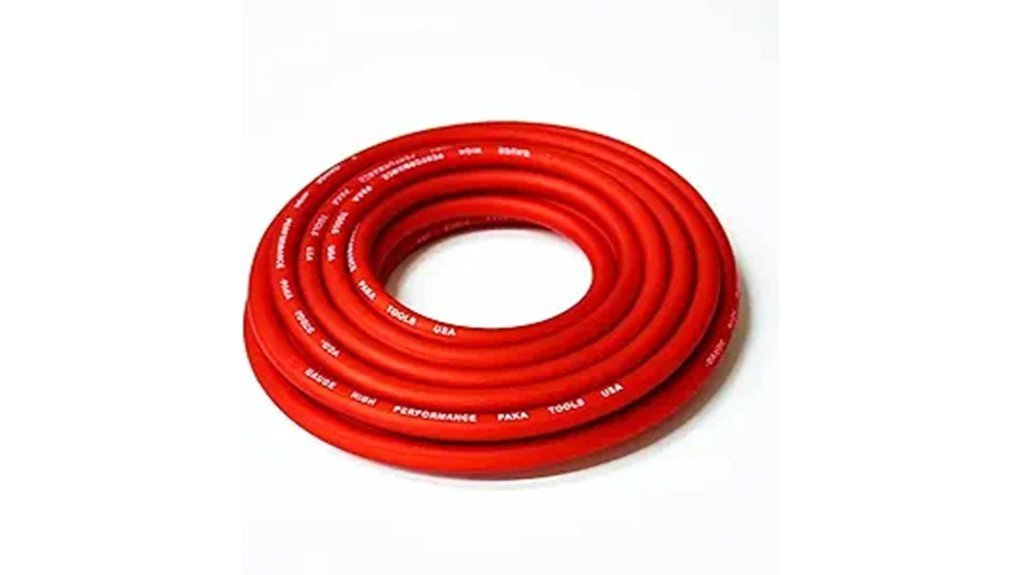
The PAKA TOOLS welding lead is a 10 ft, 2/0 gauge copper cable sold for welding and heavy battery connections. It is a reasonable pick if you need a short, flexible lead for a stick, MIG or TIG machine and your connectors match; skip it if you need a longer run, or if you have not confirmed what ends and lugs the cable comes with. The PAKA TOOLS 2/0 welding lead is heavy cable for building welding leads.
The notes below come from the seller’s Amazon listing and general welding-cable practice. Check the live listing for terminations, current specs and warranty before ordering.
Quick specs at a glance
| Item | Detail |
|---|---|
| Item | Welding lead / cable, 2/0 gauge (AWG), copper |
| Listed length | 10 ft |
| Listed strand count | 1,196 fine strands (per the listing) |
| Listed outer diameter | About 0.564 in |
| Listed jacket properties | Described as resistant to cuts, abrasion, water, oil and flame; confirm the exact rating |
| Listed weight | 2.33 lb; this looks low for 10 ft of 2/0 copper, so treat it with caution |
| To confirm | End terminations (bare, lugs or connectors), insulation voltage rating, warranty terms |
What it is and who it suits
Welding cable is made from many fine copper strands inside a flexible rubber or similar jacket, so it can be dragged and bent without kinking like stiff building wire. The 2/0 size is a heavy gauge, commonly used for the electrode lead and work lead on higher-current machines or for long runs where voltage drop matters.
This lead may suit:
- Owners replacing a damaged ground (work) lead or electrode lead on a stick or MIG machine.
- Fabricators building a short extension between a machine and a ground clamp.
- Shops making up custom battery or power-distribution jumpers, if the lead is terminated properly.
It is less suited to people who need a very light, small hobby lead; 2/0 is stiff and heavy compared with 6 or 4 AWG.
How to check it fits your setup
- Read your welder’s manual for the recommended cable size at your output current and total lead length. Charts normally list 2/0 for high-amp or long runs; smaller machines often use a thinner cable.
- Check the connectors on your machine: Dinse-style, Tweco-style, Camlock or a bolted lug each need a different termination. Do not assume the cable has the right ends.
- If the cable is sold bare, plan on proper crimp lugs sized for 2/0 and a hydraulic or heavy hammer crimper, and use heat-shrink or insulating boots over the crimp.
- Confirm 10 ft is long enough. Total circuit length is electrode lead plus work lead, and longer total length means more voltage drop.
- Do not treat this as a stand-in for ordinary automotive battery cable. Welding cable has a different strand count and jacket made for repeated bending and hot spatter.
Pros and limitations
Pros
- Heavy 2/0 copper cross section for high-current welding or low voltage drop.
- Very fine stranding, listed at 1,196 strands, which keeps the cable flexible for its size.
- The jacket is described as resistant to abrasion, oil and heat; welding cable is generally built for shop abuse.
Limitations
- 2/0 cable is heavy and stiff compared with smaller sizes, and feedback on similar products often mentions weight and handling.
- Termination details are not clear from the information provided, so you may need to add your own lugs and connectors.
- The listed weight and some other figures should be double-checked before you rely on them.
- Warranty terms need to be read directly on the listing; do not rely on summaries.
Using and caring for a welding lead
- Keep connections tight and clean. A loose lug or dirty work clamp creates heat and resistance, which is a common cause of poor arc starts and warm cables.
- Uncoil the cable fully while welding. A coiled lead can heat up and act like an inductor.
- Inspect the jacket for cuts, soft spots and exposed copper before each job. Replace or repair damaged sections; do not tape over bare copper at high current.
- Keep leads away from sharp edges, hot metal and moving vehicles, and do not drag them through puddles when the machine is live.
- Do not exceed the machine’s rated duty cycle just because the cable can carry more; the limit usually sits with the welder.
Alternatives and related guides
- Heavy-duty welding cable lead reel: a longer reeled option if 10 ft is too short
- 2 AWG welding battery cable: a lighter gauge for smaller machines and battery use
- Lemotech cable clips: for tidy cable routing around the work area
- Magnetic welding ground clamp: a ground clamp to pair with a work lead
Frequently Asked Questions
What does 2/0 gauge mean for a welding cable?
2/0 (pronounced two-aught) is a large American Wire Gauge size, thicker than 1/0 and far thicker than 4 or 6 AWG. A thicker cable has lower resistance and carries more current with less heating, so it is used for higher amperage or longer welding leads.
Can I use this lead as a battery cable?
Often yes in practice, because welding cable is flexible copper. But check the terminations and the insulation rating, and use proper lugs and protection. For vehicles, follow the manufacturer or code guidance and use fuses where required.
Does the cable come with lugs or connectors?
The information available is unclear, so check the live listing and its photos. If it is bare, buy 2/0 crimp lugs or machine-side connectors that match your welder, and crimp them with a suitable tool.
How long can a 2/0 welding lead be?
It depends on your current and acceptable voltage drop. Charts in welder manuals show recommended cable size by amperage and total length. A 10 ft lead is short enough that 2/0 is usually well within limits for common shop machines.
Final verdict
The PAKA TOOLS welding lead offers a heavy, flexible 2/0 copper option for high-current work, as long as you confirm the ends and are comfortable with its weight. Check the connectors, read the warranty on the listing, and match the size to your welder’s manual.