As an Amazon Associate, Garage Welding may earn from qualifying purchases. This does not change the price you pay.
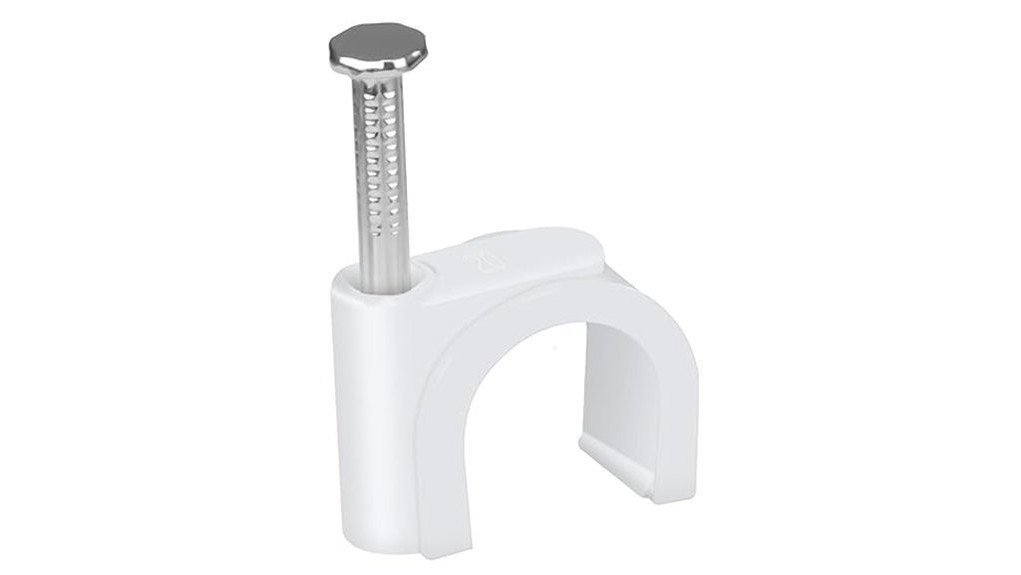
LeMotech cable clips are small plastic clips with steel nails, sold for tacking Ethernet, coax, USB and power cables to walls, wood and masonry. They suit anyone tidying workshop or garage wiring, such as tool power cords, lighting runs and network cable. This LeMotech cable clips review is based on the Amazon listing and focuses on what to check before you buy.
Quick specs at a glance
| Item | Per the listing |
|---|---|
| Type | Nail-in cable clips |
| Material | PE plastic clip with carbon steel nail |
| Width | Listing mentions 0.5 inch; also 20 mm in places, so verify |
| Cable types listed | Ethernet (Cat 7 / Cat 8), coax (RG8X, RG58, RG59, RG11), USB, power cable up to 2 AWG |
| Surfaces listed | Wood, cement, plaster, brick |
Check the current price on Amazon →
What it is and who it suits
A nail-in cable clip holds a round cable against a surface with a curved plastic saddle and a pre-fitted nail. You position the clip, then drive the nail with a hammer.
These clips are a good fit for garages and workshops with cable runs along studs, joists or block walls. They are a poor fit for surfaces you cannot nail into, such as glass, tile or fresh paint you want to keep.
How to check it fits your setup
- Measure your cable’s outside diameter, including its jacket, using calipers or a ruler.
- Compare with the clip size in the listing. The cable should sit snugly without being squeezed.
- Check the surface. Wood takes a nail easily; brick, block and concrete need care and sometimes a masonry nail.
- Check the nail length against the thickness of the material.
- Count the clips needed. Plan one every foot or so on light cables, closer on vertical runs.
Pros and limitations
- Pro: inexpensive, quick way to lift cables off the floor.
- Pro: works on several surfaces that adhesive clips do not grip.
- Pro: a wide range of light cable types can be tacked along a wall.
- Limitation: nails leave holes and make removal messy.
- Limitation: small clips can crush soft cables if you over-drive the nail.
- Limitation: not designed to support heavy welding leads or extension cords under load.
Installation and safety tips
- Check behind the surface for pipes and live wiring before hammering.
- Seat the cable in the saddle, then drive the nail straight and stop when the clip is snug.
- Do not put the nail through the cable or clip down hard on the jacket.
- Keep clips away from hot surfaces, exhausts and welding spatter.
- For fixed building wiring, use fasteners that comply with your local electrical code.
- Do not pinch a cable that moves, such as a tool cord that needs slack.
If you need a cable run to last in a hot work area, route it away from the torch, grinding sparks and any open flame, and inspect it from time to time.
Alternatives and related guides
- For heavier welding leads, see the welding cable lead reel review.
- For a replacement lead, read the Paka Tools welding lead review.
- For a replacement power plug, see the Journeyman-Pro 2715 L14-30 plug review.
- For a TIG torch lead, read the flexible 25ft TIG torch power cable review.
Frequently Asked Questions
Are LeMotech cable clips nail-in or adhesive?
The listing describes nail-in clips with carbon steel nails, intended for wood, brick, plaster or cement. Some listing text elsewhere mentions adhesive, which does not match, so read the current Amazon listing and photos before you buy for a surface that cannot take nails.
Can these clips hold a welder’s work lead or power cord?
They can tidy light cables along a wall, but they are not rated as welding-cable supports. Heavy, hot or frequently moved welding leads are better on hooks, hangers or a reel, and electrical code rules apply to permanent wiring.
What size cable fits a 0.5 inch clip?
Check the clip’s internal diameter in the listing. The product is described for cables from Ethernet and coax up to 2 AWG power cable, but the real fit depends on jacket thickness. Compare your cable’s outside diameter to the clip size.
How far apart should cable clips be spaced?
There is no single rule for every cable. For light cables, many installers place a clip every 12 to 18 inches on horizontal runs and closer on vertical runs. For building wiring, follow your local electrical code instead.
Conclusion
LeMotech cable clips are a budget, nail-in way to organise light cables on wood, brick and cement. Check the clip size against your cable and make sure your surface can take a nail.
Check the current price on Amazon →