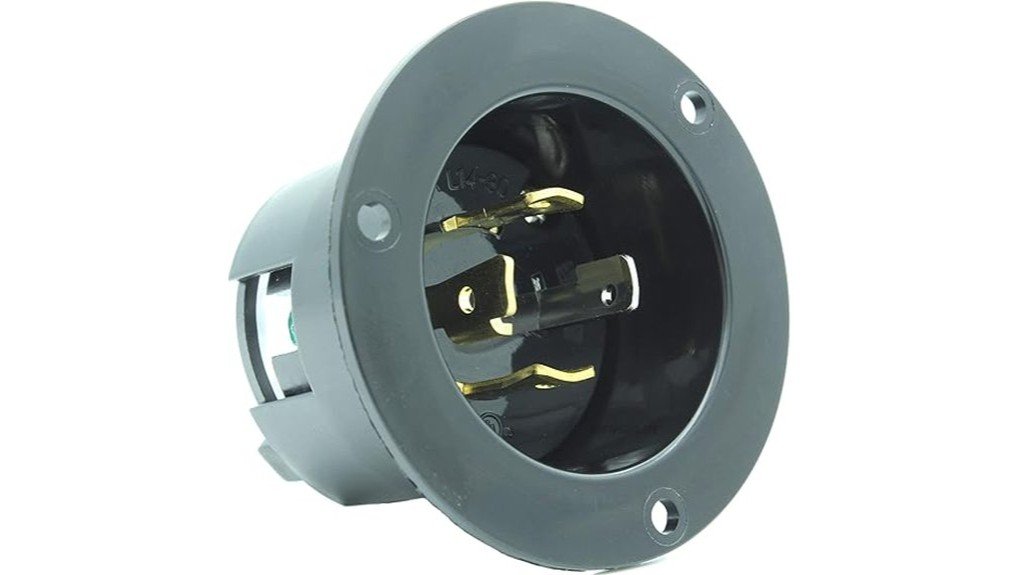
The Journeyman-Pro 2715 plug is a wire-on NEMA L14-30P locking plug rated 30 A at 125/250 V, aimed at generator cords, transfer-switch connections and other 4-wire 30 A equipment. It is a sensible choice if you are building or repairing a cord for an L14-30 generator outlet; it is the wrong plug for a standard 6-50 welder outlet or a household receptacle.
This review is based on the Amazon listing details. Wiring a plug is electrical work, so follow local rules and use a qualified person if you are not experienced.
Quick specs at a glance
| Item | Detail |
|---|---|
| Item | Wire-on locking plug, NEMA L14-30P (male) |
| Listed rating | 30 A, 125/250 V, up to about 7,500 W |
| Poles / wires | 4-wire: two hots, neutral and ground |
| Listed wire range | 8 to 14 AWG |
| Listed construction | Black nylon body with a clear, see-through wiring block and colour-coded clamps |
| Listed motor rating | 2 HP |
| Not stated here | Certification marks, wet-location rating, warranty length |
What it is and who it suits
The L in L14-30 means locking: the plug twists and locks into the receptacle so it cannot be pulled out accidentally. The 14 means 125/250 V, 4-wire, and 30 is the amp rating. This layout is very common on portable generators for 120/240 V output.
This plug suits:
- Anyone building a generator cord or replacing a damaged L14-30P plug end.
- Shop owners wiring a 30 A cord from a generator to a transfer switch or inlet.
- Electricians and experienced DIYers who want a see-through wiring block to check conductor seating.
Some 240 V welders can run from a generator, but most come with their own plug, often a 6-50P or 6-30P. The L14-30 pattern only helps if your welder or distribution box is wired for it.
How to check it fits your setup
- Confirm your receptacle is NEMA L14-30R. Other locking patterns look similar but are different; for example, L14-20 and L5-30 are not compatible.
- Match the wire size to the load and cord length. A 30 A circuit normally needs 10 AWG copper. The plug accepts 8 to 14 AWG, but a smaller conductor limits the safe current for the whole cord.
- Check the cord outer diameter against the plug’s strain relief so the clamp grips the jacket.
- Make sure the cord type (for example, a flexible 4-conductor cord with a ground) matches the voltage and duty. Never use lightweight household cord.
- Check local code and the generator manual; some generators need a specific cord or bonding arrangement.
Pros and limitations
Pros
- Locking design prevents the cord from being kicked or pulled out of a generator receptacle.
- The clear block lets you see that each conductor is fully seated before closing up the plug.
- Tough nylon body is common for tools and generators used in a workshop or on a job site.
Limitations
- It is a plug only; you supply the cord and need the skill to wire it correctly.
- The listing does not make a clear wet-location claim, so keep it dry.
- An L14-30 plug will not fit a 6-50, 14-50 or dryer receptacle.
- Rated for 30 A; do not use it for equipment that needs more.
Wiring and safety tips
- Unplug everything and confirm no power at the cord before opening the plug.
- Identify each conductor by colour and the letters stamped on the terminals. Do not guess; swapping a hot and ground is dangerous.
- Strip the insulation to the length marked in the plug, with no loose strands outside the terminal.
- Tighten the clamp screws firmly and fit the strain relief on the outer jacket, not on the individual wires.
- Test continuity and, if possible, verify wiring with a plug tester or a multimeter before powering a welder or tool.
- Inspect the plug regularly for discoloured contacts, cracks or loose screws, and replace it at the first sign of overheating.
Alternatives and related guides
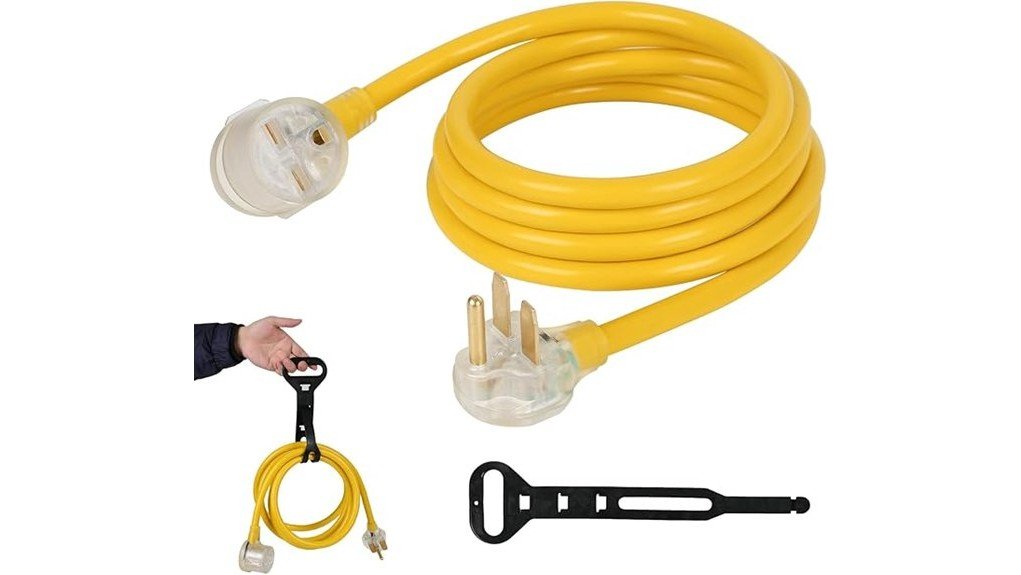
- NEMA L14-30P extension cord: a ready-made cord if you do not want to wire your own plug
- 219258 multi-voltage adapter plug: a different 6-50P plug for Miller multi-voltage welders
- NEMA 10-30P to 6-50R adapter: for plug conversions at older dryer outlets
- Heavy-duty welding cable lead reel: for the output side of a welder, not the power cord
Frequently Asked Questions
What is a NEMA L14-30P plug used for?
It is a 4-wire, 30 A, 125/250 V locking plug commonly used on portable generators, transfer-switch cords and some 240 V equipment. It provides two hots, a neutral and a ground, and its twist-lock design stops it from being pulled out.
Can I use this plug with a welder?
Only if your welder or its distribution box is designed for an L14-30 connection. Most welders use 6-30 or 6-50 plugs instead. Check the welder manual and the generator output before wiring any plug.
What wire size should I use with this plug?
The listing says it accepts 8 to 14 AWG. For a 30 A circuit, 10 AWG copper is the usual choice. Smaller wire reduces the safe current for the whole cord, so size the cable for the load and length.
Is the Journeyman-Pro 2715 weatherproof?
The listing information does not clearly give a wet-location rating. Keep the plug and receptacle dry, use covers or an enclosure outdoors, and do not connect it with wet hands or standing water.
Final verdict
The Journeyman-Pro 2715 plug is a straightforward way to terminate a 30 A, 4-wire generator cord with a locking connection. Check that your outlet really is L14-30, use properly sized cord, and take your time on the wiring, because the plug is only as safe as the connections inside it.