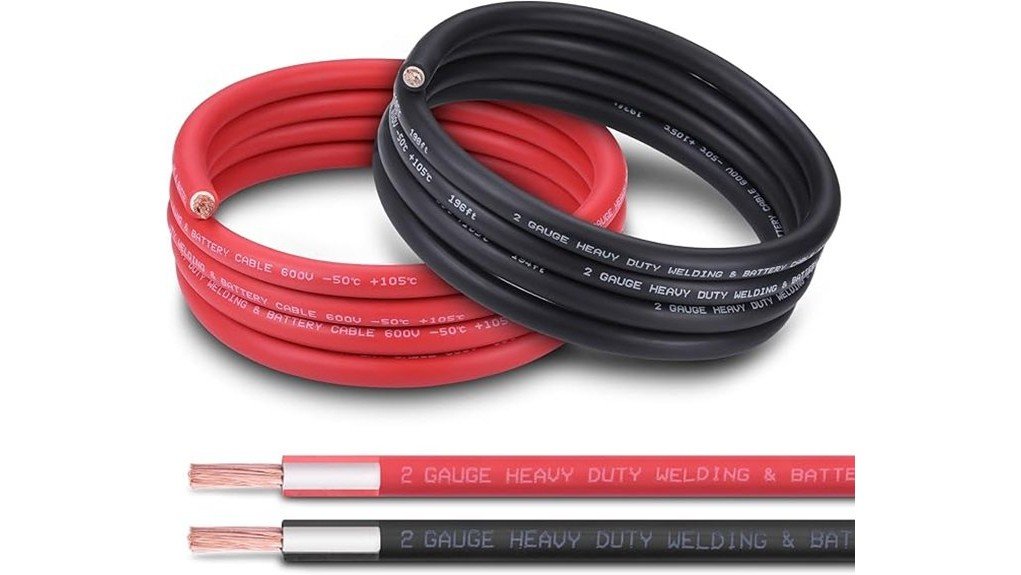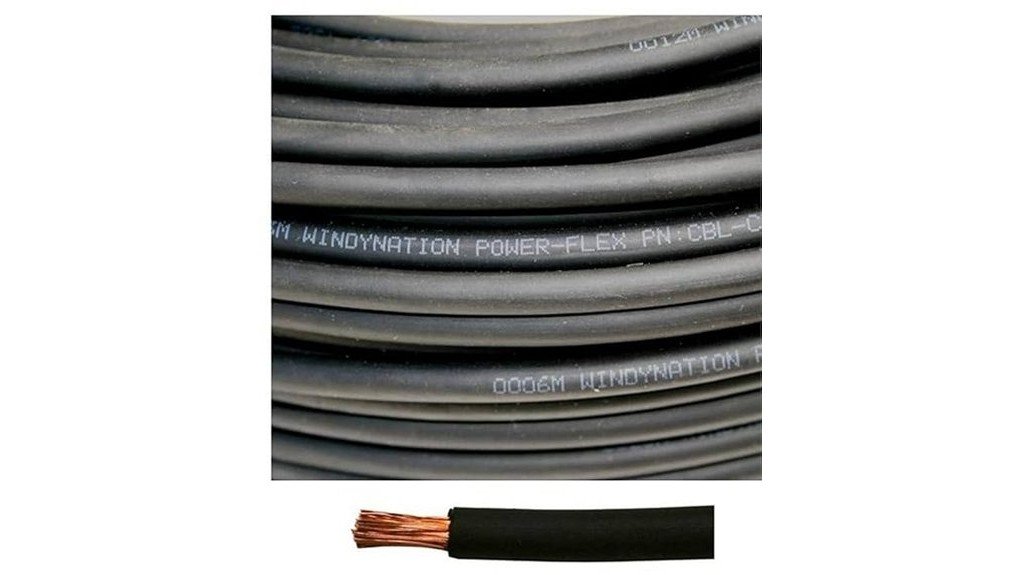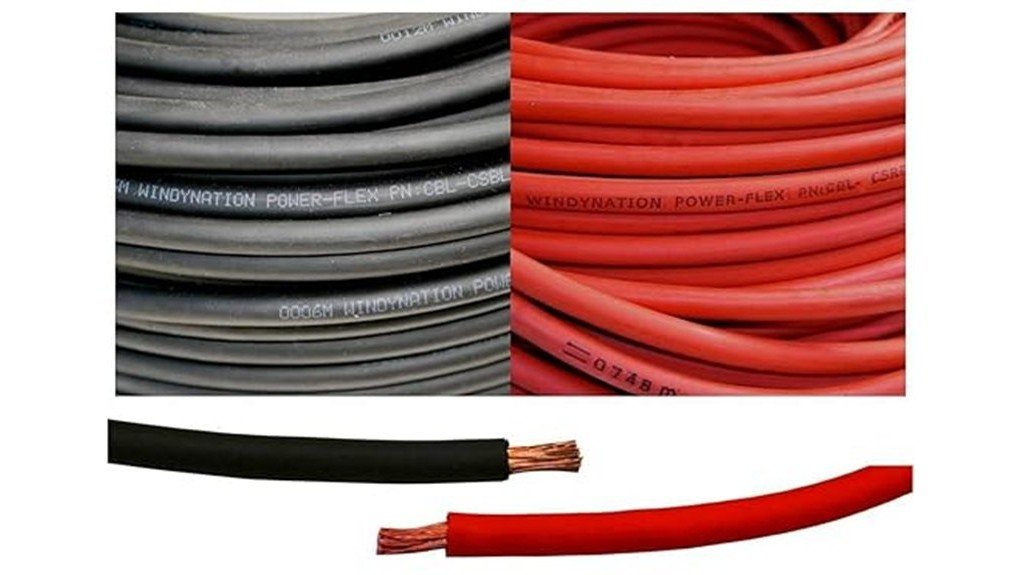
This 2 AWG welding battery cable is a flexible, rubber-jacketed copper cable sold for welder leads, battery interconnects, inverters, RV and solar wiring. This review is based on the Amazon listing, not hands-on testing. It is a good fit when you need a flexible 2 AWG cable for low-voltage DC runs of moderate length. It is not the right cable for household AC wiring, and a 2 AWG lead has limits for high-amp welding at long lengths.
Quick specs at a glance
| Item | Detail |
|---|---|
| Size | 2 AWG (2 gauge) |
| Conductor | High-strand-count copper, per listing (check the listing for tinned or bare) |
| Insulation | EPDM jacket, per listing |
| Listed temperature range | -50 C to +105 C |
| Typical uses | Welding leads, battery cables, inverters, RV and solar |
| Length and colour | Check the listing; these vary by variant |
Specs are taken from the seller listing and may change; confirm them on the current listing before you buy.
What this 2 AWG welding battery cable is
Welding cable and automotive battery cable look similar but are not the same. True welding cable uses very fine strands for flexibility and a jacket made for abrasion and heat. Battery cable usually has coarser strands. This listing is titled welding battery cable and says it uses a high strand count with an EPDM jacket, which is closer to welding cable construction. Even so, check for a printed rating on the jacket and ask the seller if you need a specific standard.
If the cable is for a welder, confirm the machine maker’s recommended lead size for your amperage and lead length. If it is for a battery bank, size it by current and fuse it.
How to check that 2 AWG is the right size
- Estimate maximum current. Inverter or welder current is the starting point. Do not guess; look at the rating plate.
- Check length. Longer runs raise resistance and voltage drop. For low-voltage DC systems, keep cable runs as short as practical.
- Check duty cycle. Welding is intermittent, so a cable can carry higher peak current than for continuous loads. Use the welder maker or a cable ampacity chart.
- Check temperature. The 105 C rating helps near hot equipment, but do not run cable at its limit.
- Check lug and terminal size. 2 AWG lugs and connectors must match; use crimp lugs with the right die, plus heat shrink.
- Add overcurrent protection. For battery and inverter circuits use a fuse or breaker rated for the cable and the load.
For higher-current welders, 1/0 or 2/0 may be a better choice.
Safe installation tips
- Cut cable cleanly with a proper cable cutter and strip carefully so you do not nick strands.
- Use correctly sized crimp lugs and a hydraulic or hammer crimper, not pliers. A loose lug heats up and can start a fire.
- Cover terminals with heat shrink or boots; a dropped wrench across battery terminals can weld itself.
- Place the main fuse close to the battery positive.
- Route cables away from sharp edges and moving parts, with grommets where they pass through metal.
- Do not use this cable for mains AC wiring or as a replacement for the power cord of a welder.
Pros and limitations
- Flexible jacket and strand construction make routing easier than stiff cable
- 2 AWG fits many RV, solar and inverter runs
- Wide temperature range, per listing
- Marine, UV and warranty claims are not confirmed in the listing details we have; check the listing before relying on them
- Heavier and thicker than smaller gauges, so lugs and tools must be sized to match
- Not enough for high-amp welding on long leads
Related guides and alternatives
- Shirbly 2 AWG battery cable review for a 10 ft red and black pair of 2 AWG cable.
- Heavy-duty welding cable lead reel review for a longer lead on a reel.
- Welding lead review another welding lead to compare.
- Battery post repair mold review if the battery post, not the cable, is damaged.
- 300 amp ground clamp review a ground clamp to terminate a lead.
Frequently Asked Questions
Is 2 AWG enough for welding?
It depends on your welder amperage, duty cycle and lead length. 2 AWG is common on smaller machines at short lengths, but higher-amp welding or long leads usually call for 1/0 or larger. Follow the welder maker recommendation.
Is battery cable the same as welding cable?
Not exactly. Welding cable has finer strands and a tougher, more flexible jacket. This listing describes a high-strand-count welding battery cable, but check the jacket markings and ask the seller if you need a specific rating.
Can I use it for solar or an inverter?
Often yes, if the size is right for the current and length, and the circuit is fused near the battery. Calculate voltage drop for your run, use proper lugs and consult an installer for large systems.
Do I need to fuse the circuit?
For battery and inverter circuits, yes. A fuse or breaker protects the cable from overheating in a fault. Size it to protect the cable and match the load, and place it close to the battery.
Bottom line
This 2 AWG welding battery cable is a flexible option for moderate-current DC wiring, short welding leads and battery runs. Size it to your current and length, crimp lugs properly and fuse battery circuits. Check the current listing for length options.