Disclosure: As an Amazon Associate, we earn from qualifying purchases. If you click a link on this page and make a purchase, we may receive a small commission at no extra cost to you.
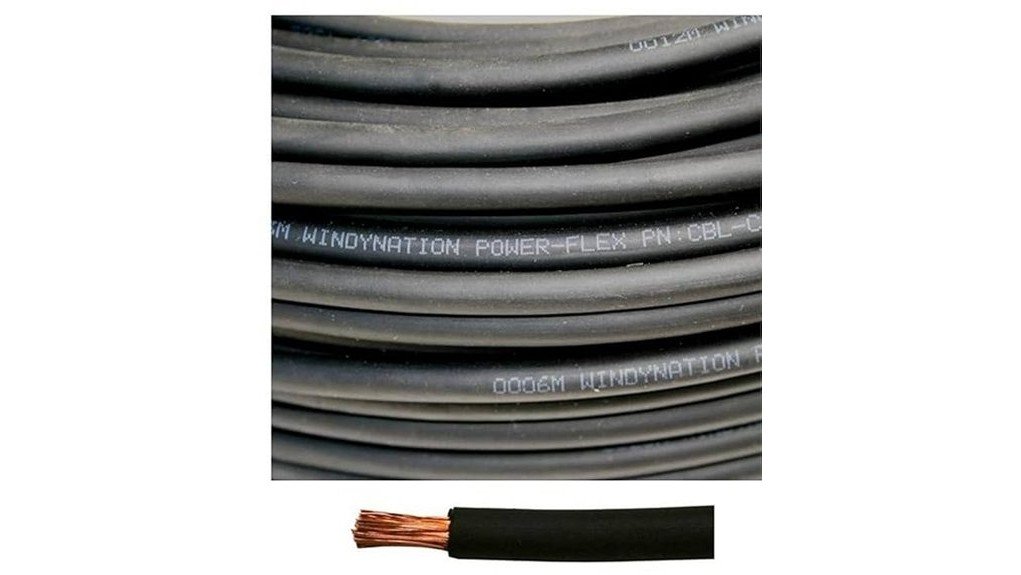
Choosing battery or welding cable is not only about picking a thick wire. You also need the right conductor material, gauge, insulation, length, and terminations for the current your system must carry. The WindyNation Power-Flex 4 Gauge Welding Battery Cable reviewed here is the 10-foot black 4 AWG version, model 4-AWG-10B, built with fully annealed pure copper and flexible EPDM insulation. Its biggest strengths are flexibility, material quality, and a broad -50°C to +105°C operating range, but 4 AWG is not automatically the correct size for every battery, inverter, solar, automotive, or welding setup.
Quick Verdict
Rating: 8.5/10, Recommended with caveats
Best For: Buyers who need flexible pure-copper 4 AWG cable for correctly sized battery, inverter, solar, automotive, or welding circuits.
Bottom Line: The pure copper conductor and flexible EPDM jacket make this a practical choice for routing heavy cable through vehicles, battery banks, and equipment. The main limitation is that you still have to confirm that 4 AWG and a 10-foot run are suitable for your actual current, voltage-drop, and installation requirements.
| Specification | Detail |
|---|---|
| Brand | WindyNation |
| Product line | Power-Flex |
| Model | 4-AWG-10B |
| Product type | Welding and battery cable |
| Gauge | 4 AWG |
| Length / color | 10 ft, black |
| Conductor | Fully annealed pure copper |
| Insulation | Flexible EPDM jacket |
| Voltage rating | Up to 600 V |
| Temperature range | -50°C to +105°C (-58°F to +221°F) |
| Compliance listed | SAE J1127; IEC and RoHS compliance are also listed for this cable family |
| Manufacturing | Made in the USA |
| Typical uses | Battery wiring, inverter connections, RV systems, solar installations, automotive wiring, and welding applications when 4 AWG is appropriately sized |
What Is the WindyNation 4 Gauge Welding Battery Cable?
This product is a length of 4 AWG WindyNation Power-Flex cable designed for welding and battery-related electrical work. The linked version is a 10-foot black cable using a flexible, high-strand-count pure copper conductor inside an EPDM insulation jacket.
The flexible construction matters when you need to route a heavy conductor around battery boxes, vehicle panels, inverter compartments, welding equipment, or other confined spaces. It gives you a more manageable cable than a stiff conductor of similar size, while the pure copper construction is intended to provide dependable electrical conductivity.
This is still a component of an electrical system rather than a universal ready-made solution. Your circuit design, current demand, run length, allowable voltage drop, fuse protection, terminal size, and equipment instructions determine whether 4 AWG is appropriate.
Key Takeaways
- Pure copper conductor: The cable uses fully annealed copper rather than copper-clad aluminum.
- Flexible construction: Its high strand count and pliable EPDM jacket make heavy cable easier to route through confined areas.
- 10-foot black 4 AWG version: The linked ASIN is identified as model 4-AWG-10B.
- Broad environmental rating: It is specified for temperatures from -50°C to +105°C and for up to 600 volts.
- Multiple practical uses: The cable is intended for welding and battery installations and can also serve correctly designed inverter, RV, solar, and automotive circuits.
- Sizing still matters: A 600-volt insulation rating does not tell you how much current your specific installation can safely carry.
Who Should Buy It?
Best For
- Battery or inverter installations that specifically call for 4 AWG copper cable.
- Vehicle, RV, solar, or equipment projects where flexible routing is useful.
- DIY builders who plan to cut and terminate cable for a custom installation.
Skip If
- Your equipment manual or electrical calculations require a larger conductor such as 2 AWG, 1/0, or heavier.
- You need a ready-made cable with factory-installed lugs rather than raw cable for custom termination.
- You need a specific marine, outdoor UV, or other certification that is not documented for this exact listing.
Before You Buy: Do not choose cable size from the 600 V rating alone. Confirm conductor gauge using your equipment requirements, expected current, cable length, voltage drop, fuse or breaker protection, and applicable electrical standards.
Why This 4 AWG Cable Stands Out
The strongest reason to choose this cable is its combination of pure copper and flexibility. High-current wiring often needs to bend around batteries, enclosures, chassis components, or inverter mounting areas, so a pliable conductor can make routing and termination less frustrating.
WindyNation uses a high strand count with a soft EPDM jacket. The manufacturer describes the Power-Flex cable as resistant to tears, cuts, abrasion, moisture, and oil-based solvents, which makes the construction better suited to working environments than ordinary light-duty hookup wire.
The 10-foot length also gives you room to cut the cable to suit a custom project, but measure your route before ordering. Tight bends, terminal locations, service loops, and routing around heat or moving components can consume more cable than a straight-line measurement suggests.
Materials and Build Quality
Fully Annealed Pure Copper
The conductor is specified as fully annealed pure copper. For a buyer comparing this with cheaper copper-clad aluminum cable, the conductor material is an important distinction because the electrical and mechanical properties are different.
The annealed, fine-strand construction also contributes to flexibility. That is useful when you need to bend the cable close to battery terminals or route it through an equipment compartment without fighting a rigid conductor.
Flexible EPDM Insulation
The outer jacket is EPDM, a flexible insulating material used here to protect the conductor while allowing the cable to bend. WindyNation states that this cable resists abrasion, cuts, moisture, and oil-based solvents.
The specified operating range of -50°C to +105°C (-58°F to +221°F) gives it a broad temperature envelope. That rating does not mean the cable should be routed directly against exhaust parts, heaters, sharp edges, or other hazards, so normal cable protection and routing practices still apply.
600-Volt Rating
The insulation is rated for up to 600 volts. This is an insulation voltage rating, not an ampacity figure. Safe current capacity depends on conductor size, installation method, ambient temperature, run length, allowable voltage drop, bundling, and the requirements of the connected equipment.
Pro Tip: Measure the complete cable route before cutting, then leave enough length for bends, terminal positioning, and a small service allowance. A cable that is stretched tightly between terminals is harder to service and can place unnecessary stress on connections.
Common Uses for 4 Gauge Welding Battery Cable
WindyNation rates the Power-Flex line for both welding and battery installations. The 4 AWG version can also be useful in related high-current systems when your electrical design specifically supports that conductor size.
- Automotive battery wiring: Custom battery leads, grounding runs, auxiliary power systems, or electrical upgrades where 4 AWG meets the circuit requirements.
- Inverter systems: Short DC connections between batteries and appropriately sized inverters when 4 AWG satisfies the inverter manufacturer’s cable recommendation.
- RV electrical systems: Battery-bank or auxiliary-power wiring where flexibility helps with routing through compact compartments.
- Solar battery systems: Connections in the battery side of an off-grid or mobile solar installation when current and voltage-drop calculations support 4 AWG.
- Welding applications: Flexible welding cable installations that call for this conductor gauge.
How It Performs in Real Use
Automotive and Auxiliary Battery Projects
The flexible jacket is useful when you have to route cable around engine-bay or interior obstacles. Pure copper construction also makes this more attractive than a cheaper conductor when you are building a high-current connection and want predictable material quality.
RV and Mobile Power Systems
RV battery compartments can be cramped, so flexibility has a practical benefit. The cable can bend around batteries and equipment more easily than a rigid conductor, but you still need abrasion protection wherever the cable passes through panels or near sharp surfaces.
Solar and Inverter Installations
For battery-based solar systems, the key issue is not simply whether 4 AWG can connect the equipment. You need to check the maximum continuous current, surge requirements, circuit protection, and total cable run. If the current or distance is too high, a larger cable can reduce voltage drop and heating.
Workshop and Welding Use
High strand count is valuable in a workshop because flexible cable is easier to move and position than stiff wire. However, welding lead sizing depends on the welding machine, current, duty cycle, and total lead length, so use the machine manufacturer’s requirements rather than assuming 4 AWG fits every welder.
How Does 4 Gauge Stack Up Against Other Sizes?
American Wire Gauge works in the opposite direction from what some buyers expect: a lower AWG number means a larger conductor. That means 2 AWG is larger than 4 AWG, while 6 AWG and 8 AWG are smaller.
A 4 AWG cable can be a useful middle ground when a system needs more conductor area than 6 or 8 AWG but does not require the size and added bulk of 2 AWG, 1/0, or heavier cable. The correct choice cannot be made by gauge alone because current, cable length, voltage drop, insulation rating, installation method, and equipment instructions all matter.
WindyNation currently offers its Power-Flex welding and battery cable family in multiple sizes from 8 AWG through 4/0 AWG. That makes it easier to stay within the same cable family if your electrical calculations point to a different conductor size.
Installing Your 4 Gauge Welding Battery Cable
Good cable can still perform poorly when the terminations are loose, undersized, poorly crimped, or exposed to abrasion. Plan your installation before cutting the 10-foot cable.
- Confirm that 4 AWG is the correct size for your equipment and circuit.
- Measure the complete routing path rather than the straight-line distance.
- Use terminals or lugs specifically sized for the conductor and connection stud.
- Use a crimping method suitable for heavy-gauge cable and the selected lug.
- Protect completed connections with appropriate insulation or heat-shrink where required.
- Secure the cable so vibration cannot rub the jacket against sharp metal edges.
- Keep wiring away from moving parts and excessive heat sources.
- Inspect the finished circuit for loose connections, damaged insulation, or excessive heating.
For vehicle, battery-bank, inverter, or other high-current electrical work, follow the equipment manufacturer’s instructions and applicable electrical standards. If you are unsure about conductor sizing or overcurrent protection, have the installation checked by a qualified technician or electrician.
Compatibility and Safety
The cable’s EPDM insulation and broad temperature rating support demanding installations, but those specifications do not make it universal. Verify that the conductor gauge, insulation type, and installation method are accepted for your specific vehicle, machine, inverter, battery system, or local electrical requirements.
The original article described the cable as suitable for marine applications and resistant to UV exposure. Those specific claims could not be confirmed for this exact listing, so you should not assume a dedicated marine or sunlight-exposure rating unless current WindyNation documentation states it. Applications exposed to saltwater, continuous sunlight, or other harsh conditions may require cable and terminals carrying additional ratings.
Pros and Cons
Pros
- Fully annealed pure copper conductor.
- High strand count gives the 4 AWG cable useful flexibility.
- EPDM jacket is designed to resist abrasion, moisture, and oil-based solvents.
- Rated for temperatures from -50°C to +105°C.
- Designed for both welding and battery installation applications.
Cons
- 4 AWG may be too small or unnecessarily large for some electrical systems.
- You may need to supply and install appropriate lugs, heat-shrink, protection, and circuit hardware for your project.
- A dedicated marine rating, UV rating, and specific warranty period were not verified for this exact listing.
Is It Worth the Price?
This WindyNation cable makes the most sense as a quality-first rather than budget-first choice. You are buying a documented pure copper conductor, flexible EPDM insulation, a broad operating-temperature range, and a cable family intended for demanding welding and battery work.
It offers stronger value when flexibility and conductor material matter to your installation. It may be unnecessary if a smaller, less expensive conductor fully satisfies your equipment requirements, and it is not the most convenient option when you would rather buy finished cables with terminals already installed.
How It Compares to Alternatives
If your circuit needs less conductor area, WindyNation also sells 6 AWG Power-Flex cable. If your current demand or cable length requires more conductor area, the company’s 2 AWG, 1/0, 2/0, and 4/0 Power-Flex options are worth comparing.
The advantage of the 4 AWG version is its balance between conductor size and manageable flexibility. The correct alternative is determined by your electrical requirements, not by choosing the thickest or cheapest cable available.
Frequently Asked Questions
Is this really pure copper or copper-clad aluminum?
The WindyNation Power-Flex cable is specified as fully annealed pure copper. That is one of its main advantages for buyers trying to avoid copper-clad aluminum cable in demanding electrical applications.
Is 4 AWG large enough for my inverter or battery bank?
It may be, but the answer depends on maximum current, cable length, voltage, voltage-drop limits, installation conditions, and the equipment manufacturer’s requirements. Do not choose the conductor solely because this cable has a 600 V insulation rating.
Can I use it for automotive battery wiring?
Yes, battery installations are an intended use for the Power-Flex cable family. You still need correctly sized lugs, secure crimps, appropriate circuit protection, and safe routing away from heat, sharp edges, and moving parts.
Can this cable be used for welding?
WindyNation describes Power-Flex as dual-use welding and battery cable. Confirm the required conductor size against your welder’s current, duty cycle, and lead-length recommendations before using 4 AWG.
Is it suitable for marine installations?
The EPDM jacket is described as moisture-resistant, but a dedicated marine certification for this exact listing was not verified. If your boat or marine electrical standard requires tinned conductors, marine-rated cable, or specific terminal construction, select components that explicitly meet those requirements.
Is the insulation UV resistant?
A specific UV-resistance rating for this exact ASIN was not verified. For permanent outdoor exposure, check the current manufacturer specifications and protect the cable from prolonged sunlight when the installation requires it.
What tools do I need to terminate 4 AWG cable?
A typical custom installation may require a cable cutter, correctly sized terminals, an appropriate heavy-cable crimper, and insulation or heat-shrink materials. Use components that match both the 4 AWG conductor and the stud or connector used by your equipment.
What warranty does the cable include?
A specific warranty period for ASIN B01MY9RG68 was not verified during this review. Check the current Amazon seller information and WindyNation warranty terms before buying if warranty coverage is important to your decision.
The Bottom Line
The WindyNation Power-Flex 4 AWG 10 ft black welding and battery cable is a strong option when you specifically need flexible pure-copper 4 AWG wire for a custom battery, inverter, automotive, RV, solar, or welding installation. Its main strengths are the annealed copper conductor, flexible EPDM jacket, and broad temperature rating, while its main limitation is that you must still determine whether 4 AWG is the correct electrical size for your particular system.
Buy it when those specifications match your design and you are comfortable making or arranging proper terminations. Skip it in favor of another gauge or a pre-terminated cable assembly when your equipment requirements point elsewhere.