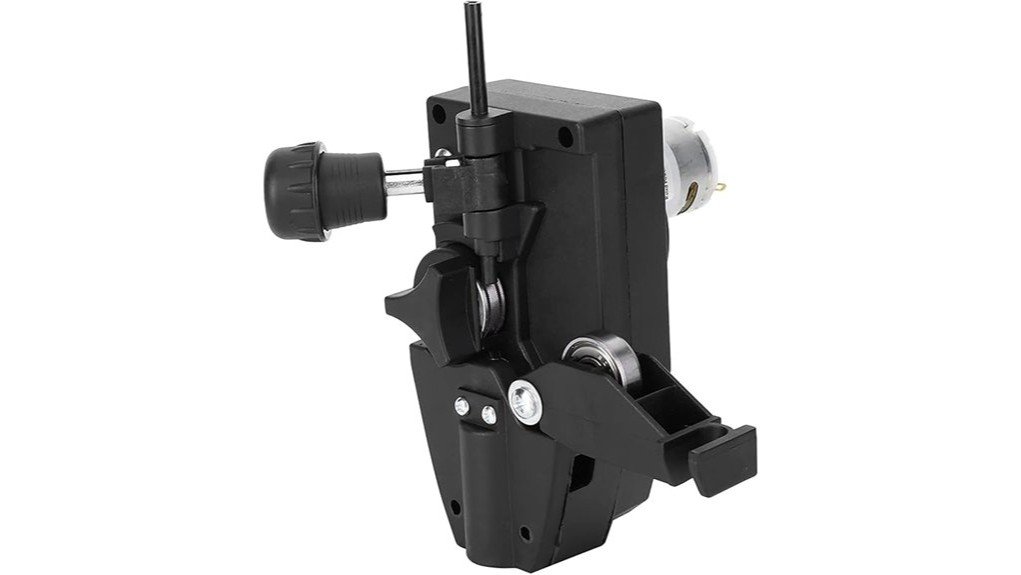
The AUNMAS soldering wire feeder is a small 24V DC wire-feed unit, not a complete welder. Per the listing it feeds wire at an adjustable 2 to 13 meters per minute, draws 10 W, weighs about 415 g and takes 0.8 mm and 1.0 mm wire. This page covers what the unit does, what you still have to supply, and what to check before you buy.
Quick Verdict
Best For: DIY builders and repairers who need a compact 24V DC wire feeder for 0.8 mm or 1.0 mm wire and are comfortable wiring a power supply and speed control.
Bottom Line: The numbers on the listing suit light-duty wire feeding. The catch is fit: a feeder only moves wire, so power, controller, torch connection and wire size must all match your setup before it is useful.
| Specification | Detail (per the listing unless noted) |
|---|---|
| Brand | AUNMAS |
| Product type | Wire feeder unit for MIG and soldering wire |
| Amazon ASIN | B0B5YS2242 |
| Power | DC 24V, 10 W motor |
| Wire speed | Adjustable, 2 to 13 meters per minute (about 79 to 512 inches per minute) |
| Wire sizes | 0.8 mm and 1.0 mm |
| Weight | 415 g (about 0.9 lb) |
| Noise | Described as low noise |
| Not verified | Dimensions, connector type, included controller or power supply, and warranty. Confirm these on the live listing. |
What Is the AUNMAS Soldering Wire Feeder?
The AUNMAS soldering wire feeder is a compact feeder that pushes welding or soldering wire at a set speed. Similar listings for this style of product describe a DC 24V, 10 W wire-feed roller motor, which fits the figures given here. At 10 W it can only be the wire-moving part of a setup.
Do not expect a power source, torch, gas valve or control board unless the listing shows them. Treat it as a building block for a custom or repaired wire-feed system.
Who Should Buy It?
- Hobby builders assembling a small wire-feed rig who already have a 24V DC supply and a speed controller.
- Repairers who need to match a feeder to a known 24V, 0.8 mm or 1.0 mm setup.
- Users who want a light unit (about 415 g) that is easy to mount or move.
Skip it if you want a ready-to-weld machine, need thicker wire, or cannot confirm the voltage and connector on your equipment.
Compatibility Checklist Before You Buy
Work through these points on the listing and in your own equipment manual:
- Voltage: the motor is listed for DC 24V. Do not run it from a different voltage.
- Wire size and type: 0.8 mm and 1.0 mm are listed. Check that the drive roll groove suits your wire, since solid and flux-cored wire need different rolls.
- Speed range: 2 to 13 meters per minute is roughly 79 to 512 inches per minute. Compare that with the wire feed speed your welding chart calls for.
- Controller: confirm whether a speed control is included or whether you must add one.
- Mounting and wire path: check the mounting holes, spool support and how the wire reaches your torch liner.
Setup and Safety Tips
Disconnect power before connecting or changing anything. Fuse the 24V supply and keep the wiring away from heat, spatter and moving parts.
The drive rolls can pinch fingers and clothing, so keep hands clear while the wire is feeding. Test the feed with the torch tip away from any grounded metal, then adjust roll tension until the wire feeds steadily without crushing it.
Wire feed speed is only one part of a weld. Amperage, voltage, shielding gas and travel speed still decide quality, so follow your wire maker chart.
Where It Fits and Where It Does Not
A light feeder like this suits small fabrication, repair projects and DIY builds with thin wire. It is not aimed at heavy industrial duty, large spools or high-amperage welding. Check the listing and the manual of any machine you plan to pair it with before relying on it for production work.
Pros and Limitations
Pros
- Compact and light at about 415 g per the listing.
- Wide adjustable speed range of 2 to 13 meters per minute.
- Low-voltage 24V DC design that suits small DIY power supplies.
- Takes both 0.8 mm and 1.0 mm wire per the listing.
Limitations
- It is a component, not a complete welder or soldering station.
- Dimensions, connector type and warranty are not verified here.
- A 10 W motor is a light-duty choice, so thick wire or heavy spools are out.
- You may need to add the power supply, speed control and torch connection yourself.
Related guides: Metal inert gas welding basics | How to set up a MIG welder with gas | What shielding gas is and why welding needs it
Frequently Asked Questions
Is the AUNMAS soldering wire feeder a complete welder?
No. The listing describes a wire feeder with a 10 W, 24V DC motor. You still need a power source, a way to control speed, and a torch or wire guide, unless the listing shows them as included.
What wire sizes does it take?
The listing gives 0.8 mm and 1.0 mm wire. Confirm the drive roll groove matches your wire type before you buy.
What power supply does it need?
It is listed for DC 24V. Use a supply rated for that voltage and fuse it, and check the current rating and connector on the live listing.
Will it work with my MIG machine?
Only if the voltage, connector, wire size and mounting match. Check your machine manual, and do not assume a universal fit.
What about warranty and returns?
This page has not verified a warranty or return window. Check the seller and Amazon return terms on the listing before ordering.
The Bottom Line
The AUNMAS soldering wire feeder is worth a look if you are building or repairing a small wire-feed system and your setup runs on 24V DC with 0.8 mm or 1.0 mm wire. Skip it if you want a ready-to-use machine or cannot confirm voltage, connector and wire size. The figures here come from the listing and have not been tested or independently verified.
Ready to Buy?
Check the current price and listing details before you decide.