What Is MIG Welding?
What’s in This Article
MIG welding can look simple from the outside, but your results depend on wire, gas, heat, and setup. A small setting error can lead to spatter, weak fusion, or porous welds. This guide explains what MIG welding is, how it works, and how you can choose the right setup with more confidence.
Quick Answer
MIG welding, also called metal inert gas welding or gas metal arc welding, uses a continuous wire electrode and an electric arc to join metal. A shielding gas protects the molten weld pool from air contamination. You can use MIG welding on carbon steel, stainless steel, and aluminum when you match the wire, gas, and settings to the metal.
Key Takeaways
- MIG welding uses a continuous wire feed, electric arc, and shielding gas to create a fused joint.
- Your wire, gas, voltage, and wire speed must match the base metal and material thickness.
- Clean metal, steady gas flow, and good torch control help reduce porosity and spatter.
- MIG welding works well for many steel, stainless steel, and aluminum jobs, but it has limits outdoors and on very thick metal.
- You should use proper ventilation, eye protection, gloves, and fire-safe work practices every time you weld.
MIG Welding Definition
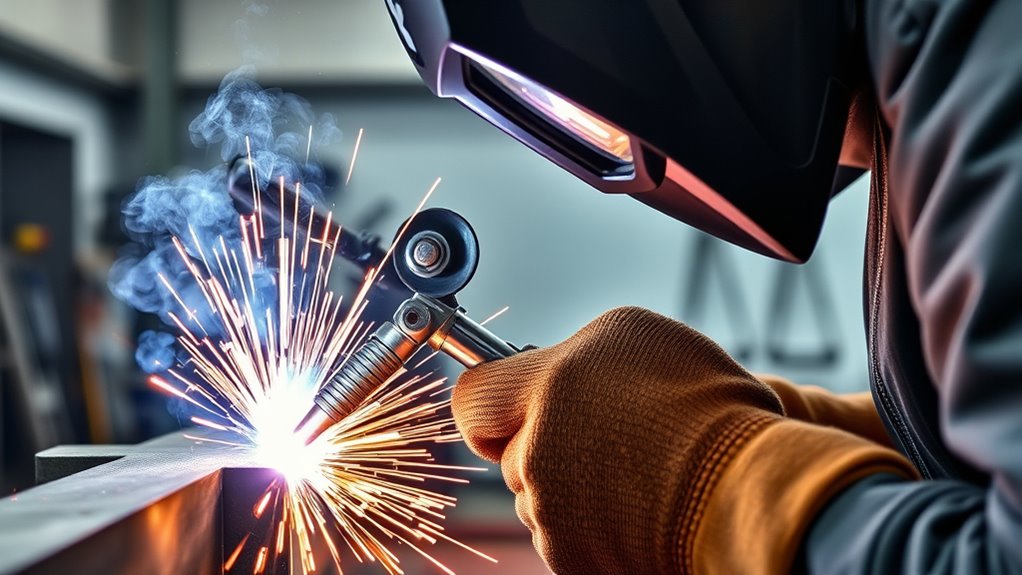
MIG welding, or metal inert gas welding, uses an electric arc to melt and fuse metals. A shielding gas protects the weld pool from oxygen, nitrogen, moisture, and other contamination in the air.
You feed a continuous wire from a spool into the joint, so you can keep the arc going with fewer stops. The process became common after its development in the 1940s, and you can now use it for carbon steel, stainless steel, and aluminum.
A continuous wire feed helps you weld faster and maintain consistent results across common metals.
You’ll usually shield the arc with argon, carbon dioxide, or a gas mix. These gases help protect weld quality, reduce defects, and support a stable arc.
The main MIG welding benefits include speed, versatility, and easier handling for many shop and repair jobs. Proper safety precautions also matter because welding fumes, heat, and arc rays can harm you.
To use MIG welding responsibly, control heat, manage fumes, and protect your eyes and skin from arc exposure. The process can give you repeatable welds without giving up precision.
How MIG Welding Works
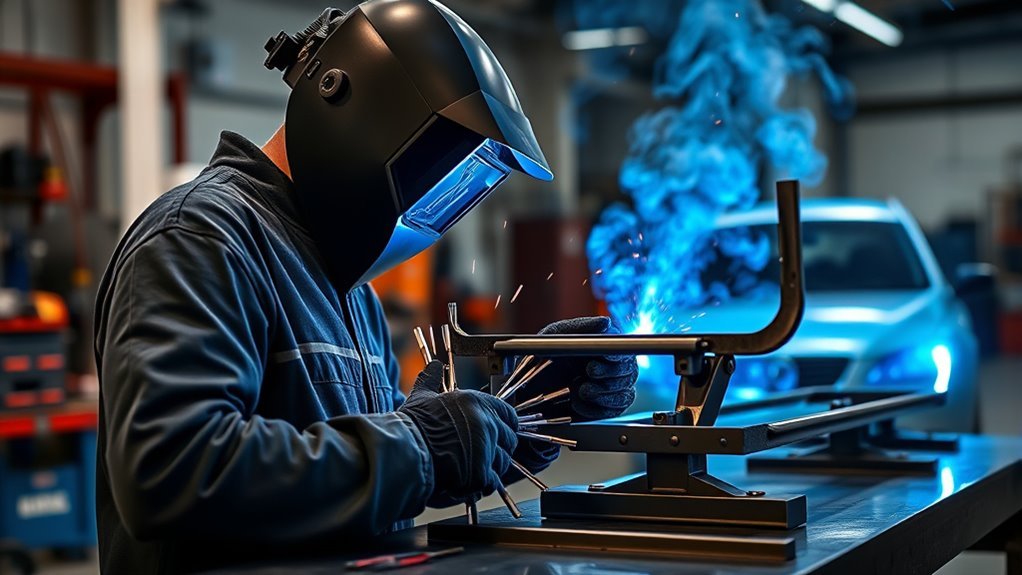
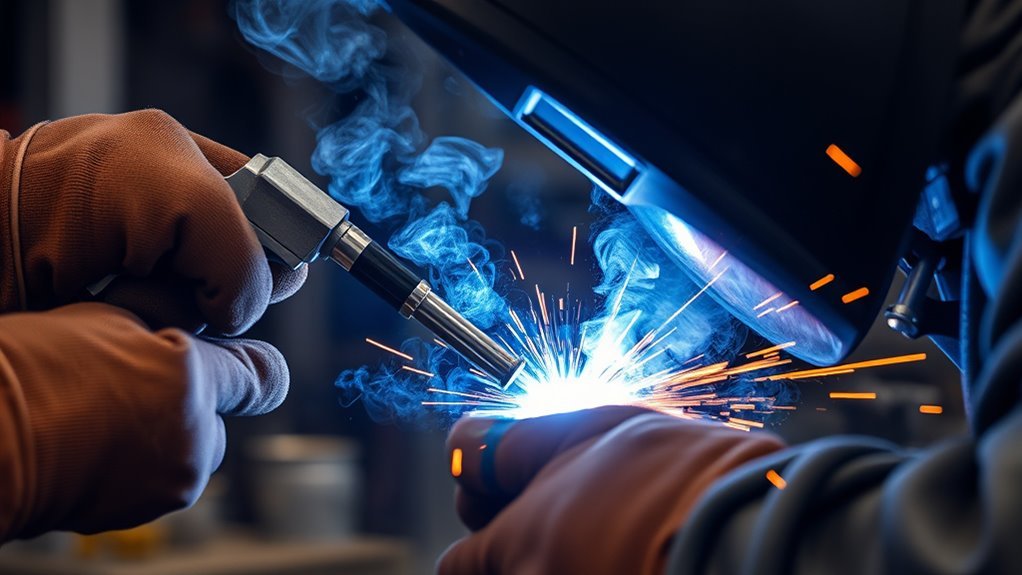
You feed a continuous consumable wire electrode through the welding gun. The wire touches the workpiece, forms an electric arc, and creates enough heat to melt the wire and base metal.
The molten metal forms a weld pool that cools into a fused joint. A shielding gas, often argon, carbon dioxide, or a blend, protects that pool while it stays hot.
This protection helps create strong mild steel welds when your wire, gas, and settings match the job.
Wire Feed and Arc
A consumable wire electrode feeds through the welding gun and melts into the joint. The electric arc forms between the wire and the workpiece, creating a molten weld pool.
You choose wire based on material type, metal thickness, and joint design. The wire affects deposition rate, weld chemistry, and the final strength of the joint.
Stable arc performance depends on steady feed speed, correct voltage, and a clean contact tip. When these details stay consistent, you can control heat input and fusion more easily.
Because the wire feeds automatically, you can focus on torch angle, travel speed, and joint tracking. That makes MIG welding faster than processes that need separate hand-fed filler metal.
Gas Shielding Process
As the wire feeds through the gun, the arc melts the filler wire and base metal. The gun also releases shielding gas through the nozzle to cover the weld pool.
This gas flow blocks oxygen, nitrogen, and moisture while the metal stays fluid. Good gas coverage helps reduce porosity, oxidation, and weak fusion.
- It protects the arc and molten metal.
- It helps you weld faster with fewer defects.
- It supports stainless steel, mild steel, and aluminum work.
- It helps the pool cool into a cleaner fused joint.
Because you control wire speed, gas flow, voltage, and torch angle, you can shape a strong joint with less cleanup. MIG welding gives you speed and control in one efficient process.
MIG Welding Equipment and Setup
MIG welding relies on a torch, power source, wire feeder, ground clamp, contact tip, nozzle, and shielding gas. These parts work together to feed the consumable wire electrode and protect the molten weld pool.
You guide the torch so it delivers wire and gas to the workpiece. The arc then joins the wire and base metal into one fused bead.
Set the polarity to match your wire and process. Direct current electrode positive, often called DCEP, works for many solid-wire MIG setups, while direct current electrode negative, or DCEN, applies to some special cases.
Before you strike an arc, clean the joint area. Remove rust, paint, oil, mill scale, and other contaminants to improve fusion and weld integrity.
Warning: Welding can expose you to fumes, arc rays, hot metal, sparks, and fire hazards, so use proper protection and ventilation.
Keep your workspace well ventilated to support welding safety, reduce fume exposure, and protect gas coverage. Check cable connections, nozzle condition, drive roll tension, and gas flow before you weld.
Routine equipment maintenance keeps the torch, feeder, and power source reliable. Proper gas flow rates also help you prevent porosity during the welding process.
Products Worth Considering

Package Including 10pcs x 0.035" Contact Tip, 2pcs x Gas Nozzle, 2pcs x Gas Diffuser.

COMPATIBILITY: Designed for Lincoln Magnum 100L (K530 series) and Tweco Mini/#1 welding torches. This kit is also a direct fit for YESWELDER FLUX-135PRO Old Version/MIG-140DS PRO/YWM-160/MIG-165DS PRO/MIG-185DS PRO/MIG-205DS PRO/MIG-250PRO/MCT-520.

Spiral design: Features a durable spiral design specifically engineered for effective residue removal, ensuring thorough cleaning and superior welding performance.
How to Choose MIG Wire
Choosing the right MIG wire starts with the base metal and job requirements. Wire composition, diameter, and type all affect weld strength, penetration, and appearance.
For many carbon steel jobs, ER70S-6 works well because it handles common shop conditions. Good welding wire selection also means choosing solid, flux-cored, or metal-cored wire based on your workspace and weld needs.
Wire diameter matters because it changes heat input, penetration, and travel speed. Common sizes such as .023, .030, .035, and .045 inches each suit different metal thicknesses.
Use smaller wire for thin material and finer control. Use larger wire when you need more deposition on thicker stock.
Always confirm that the wire works with your shielding gas. Then follow the manufacturer’s guidelines and match your wire speed and voltage settings to the job.
- Match the wire to the base metal.
- Choose the wire type by application.
- Set the diameter for penetration and control.
- Verify the manufacturer’s settings before welding.
Pro tip: Run a short test bead on scrap metal before welding the final part.
Products Worth Considering

ER70S-6 MIG WIRE: It's the most common wire of the copper-coated mild steel GMAW (MIG) wires for single or multiple pass welding.

High-quality: ARCCAPTAIN's ER70S-6 mig welding wire .035" meets industry standards(Net Weight: 10lbs), ensuring consistent performance, superior strength. With its smooth feeding and stable welding parameters, you can achieve optimal penetration, high deposition rates, and exceptional overall welding performance.

High-quality: ARCCAPTAIN's ER70S-6 mig welding wire .030" meets industry standards(Net Weight: 10lbs), ensuring consistent performance, superior strength. With its smooth feeding and stable welding parameters, you can achieve optimal penetration, high deposition rates, and exceptional overall welding performance.
Best Shielding Gases for MIG Welding
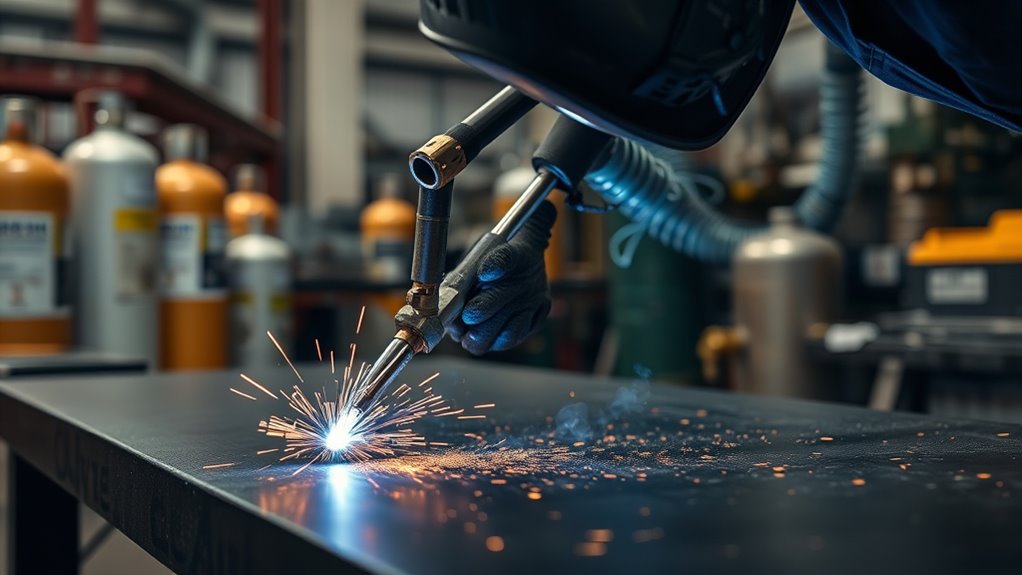
The shielding gas you choose affects arc stability, spatter, penetration, and final weld quality. For many MIG jobs, you’ll use argon, carbon dioxide, or a blend of both.
Argon-rich blends often give you smoother arc control and less spatter. Carbon dioxide can give deeper penetration on mild steel, but it often creates a harsher arc and more cleanup.
When you weld mild steel, argon and carbon dioxide mixes often balance arc smoothness with useful penetration. For aluminum, pure argon or argon-helium blends usually work better than carbon dioxide.
Pure helium appears less often in everyday MIG welding, but you may use it when you need higher heat input on thicker sections. The right gas also depends on wire type, transfer mode, and base metal.
Some cutting processes use different gases, and nitrogen for cutting belongs to that separate discussion. For MIG welding, follow the wire and machine manufacturer’s gas recommendations before you start.
Metals You Can MIG Weld
Steel, stainless steel, and aluminum rank among the most common metals you can weld with MIG. This makes the process highly versatile for fabrication, repair, and production work.
You can also weld mild steel, some aluminum alloys, and certain copper alloys when you match filler, shielding gas, and machine settings. Each metal needs its own setup, so avoid using one setting for every job.
For carbon steel, ER70S-6 suits many general welding jobs and supports a stable arc transfer. For aluminum, you usually need proper wire, clean material, and the right gun setup to reduce feeding problems.
Aluminum usually performs best with pure argon or argon-helium blends. These gases support better heat control and cleaner weld appearance.
Stainless steel needs careful gas and wire matching to control oxidation and preserve joint quality to produce clean welds. Copper welding often demands specialized consumables because copper conducts heat quickly and can resist fusion.
- Match consumables to the base metal.
- Verify shielding gas before striking the arc.
- Tune settings to the metal thickness.
- Follow manufacturer guidance for cleaner and safer results.
MIG Welding Uses and Limits
You’ll find MIG welding in automotive manufacturing, construction, farm repair, home shops, and fabrication work. It joins steel, stainless steel, and aluminum quickly when you use the right setup.
You can use it for thin-to-medium material and some thicker sections with proper preparation. Its limits show up with windy outdoor work, very thick material, and metals that need specialized control.
Shielding gas can lose protection outdoors unless you use windbreaks. Understanding welding process selection helps you decide when MIG fits the job and when another process works better.
Common Industrial Applications
MIG welding works across many industries because it combines fast deposition with reliable joint quality. You can use it in automotive applications to weld body panels, brackets, frames, and repair parts.
- Use it in shipbuilding to join large sections quickly.
- Use it in structural fabrication to build steel members and assemblies.
- Use it in custom sheet metal work for steel, stainless steel, and aluminum parts.
- Use wind protection outdoors so shielding gas stays around the weld pool.
Best Material Matches
Because MIG welding has a stable arc and broad filler-metal support, it works well on carbon steel, stainless steel, and aluminum. Some magnesium and copper jobs need more specialized setup, consumables, and skill.
You can use MIG welding on thin sheet metal and many medium-thickness parts. Your joint design still matters because thicker sections need careful beveling, bead placement, and filler selection.
| Material | Typical fit | Use case |
|---|---|---|
| Carbon steel | Excellent | Structural fabrication |
| Stainless steel | Excellent | Corrosion-resistant assemblies |
| Aluminum | Excellent | Lightweight components |
| Magnesium | Specialized | Specialty parts |
| Copper | Specialized | Conductive hardware |
Choose MIG when you want speed, cleaner results, and a setup that many welders can learn. Use a different process when the job needs extreme precision, deep penetration, or better outdoor control.
Process Limitations
When weld thickness climbs, gas metal arc welding may need joint preparation, multiple passes, or a different process. TIG, stick, or flux-cored welding may fit better when you need more control or deeper penetration.
You’ll also face limits outdoors because wind can strip shielding gas and weaken your joint. Vertical and overhead positions also need stronger pool control than flat welding.
- Thick sections may need beveling, multiple passes, or another welding process.
- Reactive metals such as titanium need specialized control and procedures.
- Vertical or overhead welds need careful travel speed and pool management.
- Spatter may require cleanup, so plan your work area and safety steps.
Choose MIG when you want speed, clean wire feeding, and accessible operation on thin-to-medium stock. Skip it when precision, deep penetration, or harsh outdoor conditions matter more.
Common MIG Welding Mistakes to Avoid
Many MIG welding problems start before you strike the arc. Dirty metal, loose ground connections, wrong polarity, and poor gas coverage can all weaken the weld.
You can prevent many defects by checking setup details first. Clean the joint, confirm your wire and gas, set the right voltage, and test your wire speed on scrap metal.
- Keep the contact tip clean and correctly sized.
- Set gas flow high enough for coverage, but not so high that it creates turbulence.
- Hold a steady torch angle and travel speed.
- Watch for porosity, undercut, burn-through, and poor fusion.
Note: If a weld looks clean on top, it still may lack fusion underneath, so test critical welds properly.
Frequently Asked Questions
Is MMA stronger than MIG?
Manual metal arc welding, often called MMA or stick welding, can work better on thicker steel and outdoor repairs. MIG can still make strong welds when you use the right wire, gas, joint prep, and machine settings.
What is inert gas in simple words?
An inert gas does not react easily with other materials. In MIG welding, gases such as argon and helium help protect the hot weld pool from air contamination.
Can you MIG weld without gas?
You cannot use standard solid-wire MIG welding without shielding gas. You can use self-shielded flux-cored wire for some jobs, but that process works differently and often creates more smoke and slag.
Is MIG welding good for beginners?
MIG welding suits many beginners because the machine feeds the wire for you. You still need practice, clean metal, proper safety gear, and correct settings to create strong welds.
Why do MIG welds get porosity?
Porosity often comes from poor gas coverage, dirty metal, wind, moisture, or the wrong settings. Check gas flow, clean the joint, and protect the weld area from drafts before welding again.
Safety Disclaimer: This article is for informational purposes only and does not replace hands-on training or professional welding guidance. Always follow your equipment manual, local safety rules, and proper personal protective equipment requirements before welding.
Conclusion
MIG welding gives you a fast and flexible way to join many common metals. Your results depend on clean material, the right wire, proper gas, and careful machine settings.
Start with a safe setup, then test your weld on scrap before working on the final part. With steady practice and close attention to detail, you can turn a basic MIG setup into cleaner and more reliable welds.