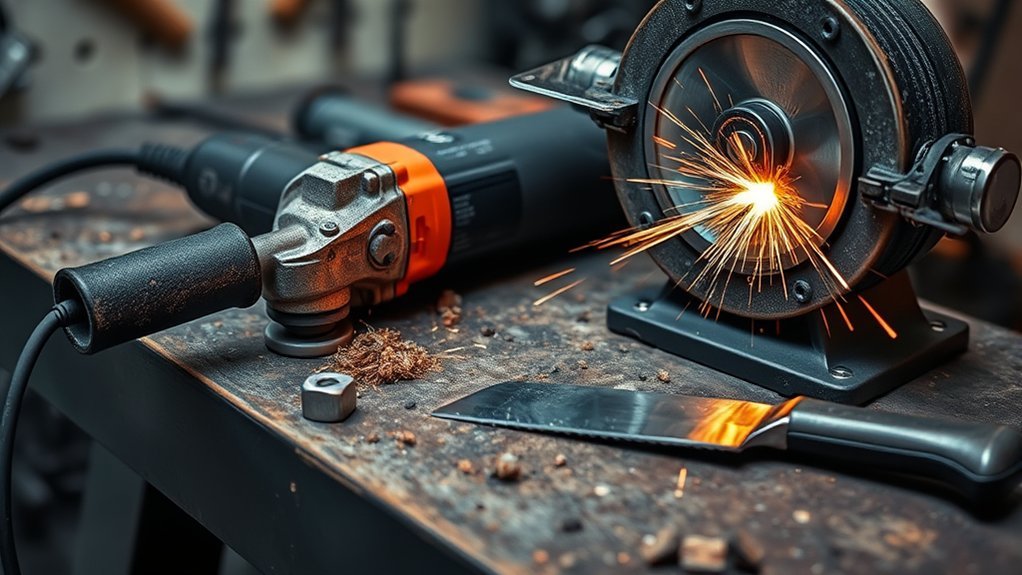
Choosing between an angle grinder and a bench grinder depends on how and where you need to work. An angle grinder is the better choice for portable cutting, grinding, rust removal, tile cutting, and work in tight spaces. A bench grinder is better for stable sharpening, shaping, deburring, and repeatable tool maintenance at a fixed workstation.
Quick Answer
Use an angle grinder when you need portable cutting, grinding, or surface prep on metal, masonry, concrete, tile, or outdoor materials. Use a bench grinder when you need stable, controlled sharpening, shaping, deburring, or polishing at a workbench. The angle grinder is more versatile; the bench grinder is more controlled.
Key Takeaways
- Choose an angle grinder for cutting, grinding welds, removing rust, trimming tile, and working away from a bench.
- Choose a bench grinder for sharpening chisels, drill bits, lawn tools, and other small metal parts that need steady support.
- Angle grinders need more active control because kickback, sparks, disc breakage, and wrong-disc use can cause serious injuries.
- Bench grinders still need careful setup, including guards, correctly adjusted work rests, and wheels rated for the machine speed.
- The safest choice is the tool that matches the task, not simply the tool that feels more powerful or convenient.
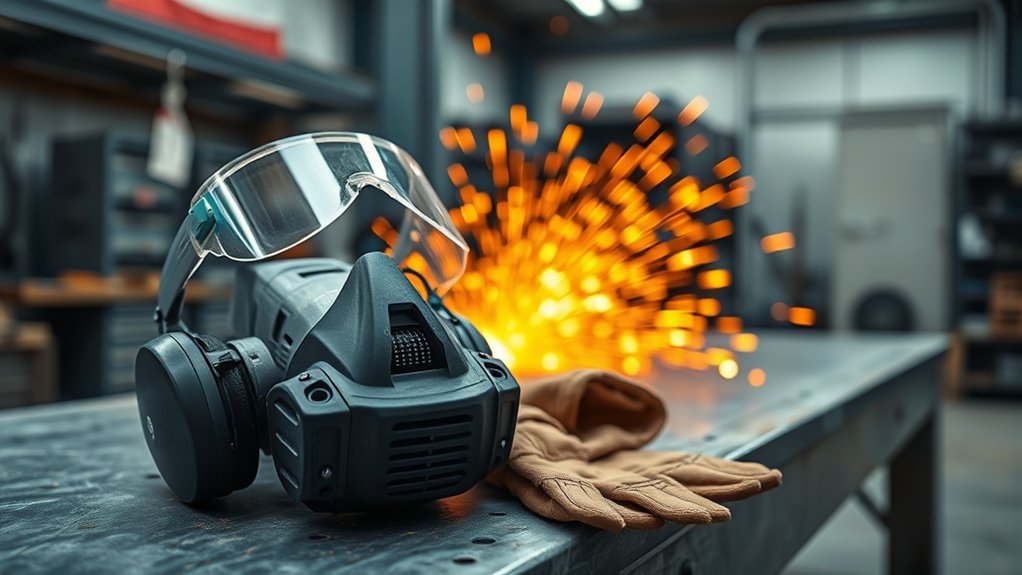
Warning: Never remove a grinder guard, never use a cutting disc for grinding, and never mount a wheel rated below the grinder’s speed. Follow the tool manual, wear eye and face protection, protect your hearing, and clamp the work whenever possible.
Angle Grinder vs Bench Grinder at a Glance
| Feature | Angle Grinder | Bench Grinder |
| Best For | Cutting, grinding welds, rust removal, masonry work, tile trimming, and mobile jobs | Sharpening, deburring, shaping small metal parts, and repeatable tool maintenance |
| Portability | Handheld and easy to move around a job site | Stationary and usually bolted or placed on a bench |
| Control | More flexible, but requires firm two-handed control | More stable because the machine stays fixed |
| Common Accessories | Cutting discs, grinding wheels, flap discs, wire wheels, diamond blades, polishing pads | Grinding wheels, wire wheels, buffing wheels, dressing tools, tool rests |
| Main Safety Risks | Kickback, disc shatter, sparks, dust, vibration, wrong-disc use | Wheel breakage, workpiece jamming, poor rest adjustment, sparks, heat buildup |
| Best Buyer | DIYers, welders, mechanics, contractors, tile workers, and fabricators who need mobility | Woodworkers, metalworkers, mechanics, and shop users who sharpen or shape tools often |
What Is an Angle Grinder and Its Key Features?
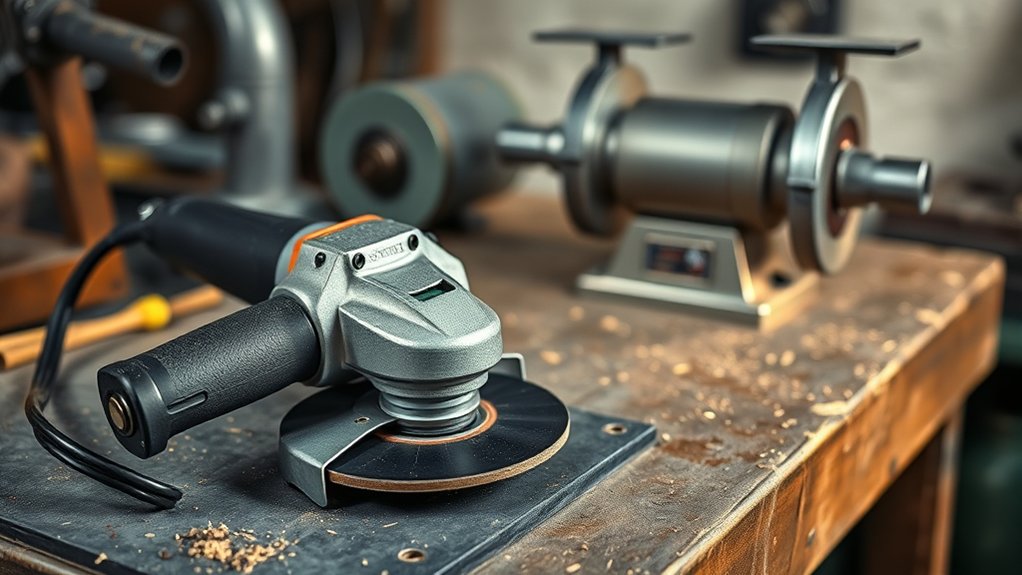
An angle grinder is a handheld power tool that spins a disc at high speed for cutting, grinding, sanding, polishing, rust removal, and surface preparation. You can use it on metal, concrete, masonry, tile, and other materials when you choose the correct disc for the job.
The main advantage is mobility. You can bring an angle grinder to a vehicle, fence, weld joint, patio stone, pipe, bracket, or job-site repair instead of bringing the workpiece to a stationary machine. Angle grinders can be corded, cordless, or pneumatic, so the best power source depends on whether you need runtime, portability, or compressed-air compatibility.
Angle grinders are also adaptable. You can swap between a grinding wheel, cut-off wheel, flap disc, wire cup, diamond blade, or polishing pad. That flexibility is useful, but it also raises the risk of using the wrong accessory. A wheel must fit the grinder size, arbor, guard, material, and speed rating. OSHA guidance for portable abrasive wheels says the machine spindle speed must not exceed the maximum operating speed marked on the wheel.
Note: Higher speed is not automatically better. Match the wheel to the grinder, let the tool reach speed before touching the work, and use only wheels made for that material and task.
What Is a Bench Grinder and Its Key Features?
A bench grinder is a stationary grinding machine with one or two abrasive wheels mounted on a motor. It is usually placed on a workbench or stand and used for sharpening, shaping, deburring, cleaning, and polishing small metal tools or parts.
The fixed setup gives you better control for repeatable work. Instead of guiding the whole tool through the material, you bring the workpiece to the wheel and support it on a tool rest. That makes a bench grinder useful for sharpening chisels, drill bits, punches, mower blades, scrapers, and other hand tools.
Many common bench grinders use 6-inch or 8-inch wheels, but the right machine depends on your shop space, wheel type, motor power, and the kind of tools you maintain. A slow-speed grinder can be useful when you want to reduce heat buildup while sharpening edge tools. A higher-speed grinder removes material faster but can overheat thin edges if you press too hard.
Bench grinders still need careful setup. OSHA abrasive wheel machinery requirements call for guards and adjustable work rests on offhand grinding machines. Keep the work rest close to the wheel, secure it after adjustment, and never adjust it while the wheel is moving.
Key Design Elements
- Dual wheel setup: Many bench grinders have two wheels, so you can keep a coarse wheel on one side and a finer wheel or wire wheel on the other.
- Stable base: A fixed machine gives you better support for small tools and repetitive sharpening.
- Tool rests: Adjustable rests help you hold the work at a steady angle.
- Guards and shields: Wheel guards, eye shields, and spark deflectors help reduce exposure to fragments, sparks, and debris.
- Wheel options: Different grits and wheel materials suit different metals and finishes.
Common Applications Today
Bench grinders are common in garages, fabrication shops, repair shops, farms, woodworking spaces, and metalworking areas. You can use one to sharpen dull tools, round sharp corners, clean small parts with a wire wheel, remove burrs after cutting, or shape metal before fitting and welding.
Because the wheel stays in one place, a bench grinder works best on smaller parts you can hold safely. It is not the right tool for cutting long pipe, grinding welds on a frame, trimming tile, or reaching into tight spaces. Those jobs usually fit an angle grinder better.
Angle Grinders: Enhancing Mobility and Versatility
An angle grinder is the better choice when the work is too large, fixed, awkward, or far from your bench. Its handheld design lets you cut, grind, clean, and finish material in place.
Choose an angle grinder when you need to:
- Cut metal: Trim rebar, bolts, brackets, angle iron, sheet metal, or pipe with the correct cut-off wheel.
- Grind welds: Smooth weld beads, remove slag, or blend a repair area with a grinding wheel or flap disc.
- Remove rust or paint: Use a wire wheel or abrasive disc to prep metal before coating or welding.
- Cut masonry or tile: Use a suitable diamond blade for brick, concrete, pavers, or tile.
- Work in tight areas: Reach places that a bench grinder cannot access.
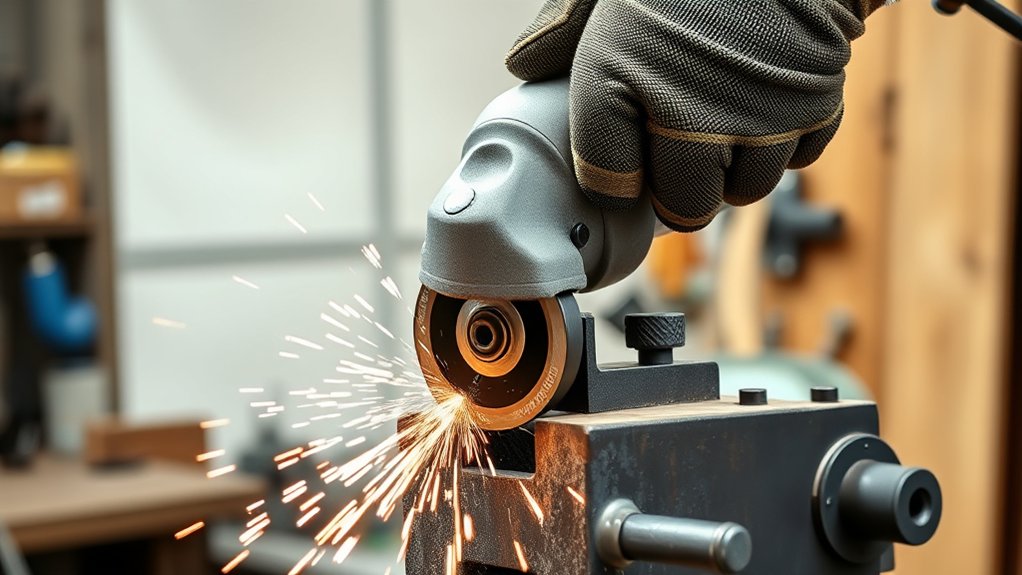
The tradeoff is control. An angle grinder can kick back if the disc binds, grabs the material, or is used at the wrong angle. SafeWork SA warns that kickback can cause severe cuts and that discs can shatter or disintegrate. Keep the guard installed, use two hands, hold a balanced stance, and keep the disc path away from your body.
Bench Grinders: Key Features for Precision and Control
A bench grinder is the better choice when you want steady support, repeated angles, and controlled pressure. It is especially helpful when sharpening tools because you can hold the edge against a rest instead of balancing a handheld grinder over the work.
Choose a bench grinder when you need to:
- Sharpen hand tools: Restore edges on chisels, punches, scrapers, mower blades, and similar tools.
- Deburr small parts: Clean sharp edges after cutting or drilling.
- Shape metal gradually: Remove small amounts of material with better control.
- Clean hardware: Use a wire wheel to clean bolts, brackets, and small metal parts.
- Polish small parts: Use the correct buffing wheel and compound when the grinder is designed for that use.
Pro Tip: Keep a light touch when sharpening. If the edge turns blue or straw-colored, it may be overheating and losing hardness. Cool the tool often and avoid forcing it into the wheel.
Common Uses for Angle Grinders in Construction and DIY
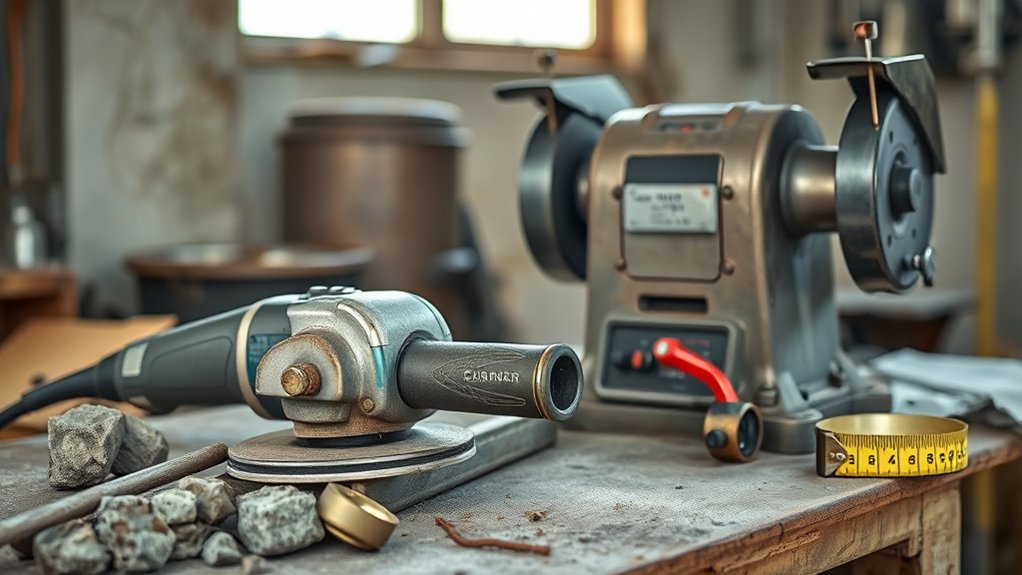
Angle grinders are common in construction, welding, automotive repair, metal fabrication, masonry, and DIY work because they solve many mobile cutting and grinding problems with one tool body and several accessory types.
- Cutting metal: A cut-off wheel can slice through bolts, rod, sheet metal, pipe, or brackets.
- Grinding metal: A grinding wheel can remove weld buildup, clean rough edges, or shape thick stock.
- Blending and finishing: A flap disc can smooth welds and reduce scratches better than a hard grinding wheel.
- Rust removal: Wire cups and wire wheels can clean rust from frames, gates, tools, and hardware.
- Tile and masonry cutting: Diamond blades can cut tile, stone, pavers, brick, and concrete when used with the right guard and dust controls.
Angle grinders create sparks, noise, dust, and flying debris. Wear eye and face protection, hearing protection, fitted clothing, gloves that still allow a firm grip, and respiratory protection when dust exposure is possible. The CDC/NIOSH noise guidance treats 85 dBA or higher as hazardous noise, so hearing protection is a smart habit when grinding.
Sharpening and Shaping: Applications for Bench Grinders
A bench grinder is best for controlled sharpening and shaping because the machine stays fixed while you guide the workpiece. That makes it easier to hold a consistent angle and remove small amounts of metal.
Use a bench grinder for tasks such as:
- Sharpening chisels and blades: Maintain a steady bevel using the tool rest.
- Refreshing drill bits: Restore cutting edges when you understand the correct point angle and relief.
- Cleaning small parts: Use a wire wheel for rust, scale, and surface dirt.
- Deburring metal: Remove sharp edges after cutting, drilling, or filing.
- Shaping parts before fitting: Fine-tune small brackets or metal pieces before assembly.
Check the wheel before use. Look for cracks, chips, glazing, or wobble. Dress the wheel when it becomes loaded or uneven, and replace any damaged wheel. Use the correct wheel for the material because soft metals can load some abrasive wheels and create unsafe conditions.
Safety Considerations: Angle Grinders vs Bench Grinders
Both tools can injure you if you use the wrong wheel, remove guards, skip PPE, or force the work. The safety risks are different, so your setup should match the tool.
Angle Grinder Safety Checklist
- Keep the guard installed: Position it between you and the disc path when possible.
- Use the side handle: Two-handed control helps reduce kickback risk.
- Match the disc to the job: Use cutting discs for cutting, grinding wheels for grinding, and diamond blades only for suitable materials.
- Check the speed rating: The wheel or disc must be rated for the grinder’s speed.
- Inspect the disc: Do not use a cracked, dropped, warped, or damaged disc.
- Clamp the work: Loose work can grab the wheel and cause kickback.
- Let the disc stop: Never set the grinder down while the disc is still spinning.
Bench Grinder Safety Checklist
- Use guards and shields: Do not operate the grinder with missing guards.
- Adjust the work rest: Keep it close to the wheel and tighten it after adjustment.
- Do not adjust while running: Move rests and guards only after the wheel has stopped.
- Stand to the side at startup: Let the wheel reach full speed before grinding.
- Use the wheel face correctly: Do not grind on the side of a wheel unless that wheel is designed for side grinding.
- Dress uneven wheels: A loaded or out-of-round wheel reduces control and finish quality.
- Cool the work: Light pressure and frequent cooling help prevent overheating.
The HSE abrasive wheel safety guide also emphasizes training, wheel characteristics, mounting procedures, guards, portable grinder considerations, and protective equipment. Treat abrasive wheels as consumable safety parts, not just accessories.
Cost Comparison: Angle Grinders vs Bench Grinders
Angle grinders are often cheaper at the entry level because a basic corded model is compact and simple. Cordless models cost more once you include batteries and chargers, but they give you freedom on job sites or outdoor projects.
Bench grinders usually cost more than the cheapest angle grinders, but they may last a long time in a workshop because they stay mounted and handle repeatable sharpening tasks. The real cost also includes wheels, dressers, guards, stands, eye protection, hearing protection, and dust control.
Think about value by task, not just purchase price. If you cut, grind, and prep material in different locations, an angle grinder gives you more flexibility. If you sharpen tools every week, a bench grinder can save time and improve consistency.
Products Worth Considering
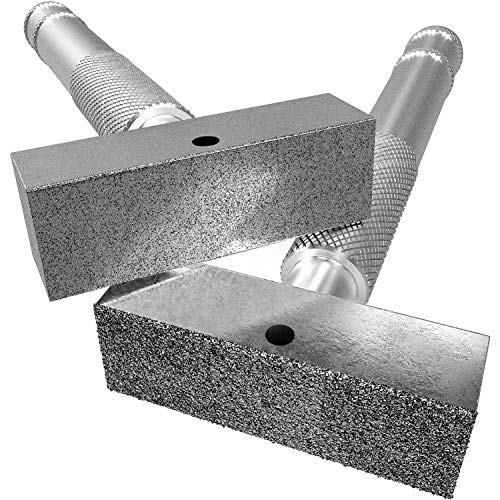
Save Time, Save Money – The ATLIN grinding wheel dresser removes loaded up material, fixes imperfections, trues, and sharpens the grains of your grinding wheels. The result is less heat buildup, faster grinding, and a superior finish on your work pieces

Wide Compatibility: VEVOR multi-grind sharpening kit is compatible with 6" and 8" bench grinders, ideal for sharpening chisels, gouges, parting tools, carving tools, plane irons, lathe turning tools and more. (Note: The bench grinder is not included)

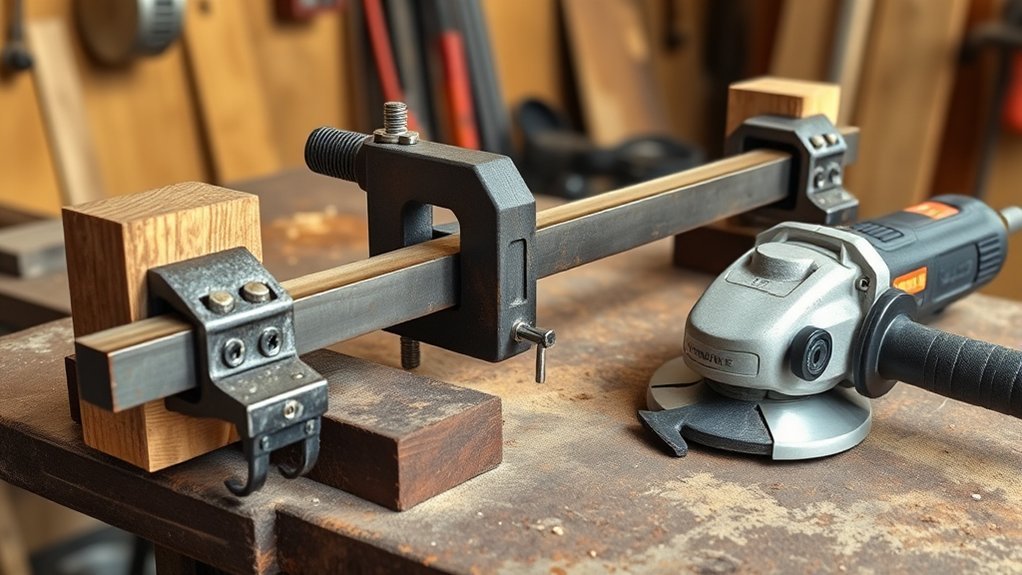
Wide Compatibility: VEVOR sharpening tool rest jig is compatible with most 6" and 8" manual or electric bench grinders, as well as sanders, and angle grinders. It accommodates blades and chisels up to 2.5 inches wide. (Bench Grinder Not Included)
Choosing the Right Grinder: Angle vs Bench
Use this simple rule: choose an angle grinder when the tool must move to the work, and choose a bench grinder when the work can safely move to the tool.
The right grinder is the one that gives you control. More speed or power does not help if the wheel, guard, work support, or body position is wrong.
Ask these questions before choosing:
- Do I need to cut material? Choose an angle grinder with the correct cut-off wheel or blade.
- Do I need to sharpen a tool edge? Choose a bench grinder with the correct wheel and rest setup.
- Is the work fixed in place? Choose an angle grinder.
- Is the part small enough to hold safely at a bench? Choose a bench grinder.
- Do I need a clean, repeatable angle? Choose a bench grinder.
- Do I need to remove heavy material quickly? Choose an angle grinder, but use the correct wheel and guard.
- Am I working around sparks, dust, or flammable material? Stop and set up shields, ventilation, and fire controls first.
Products Worth Considering
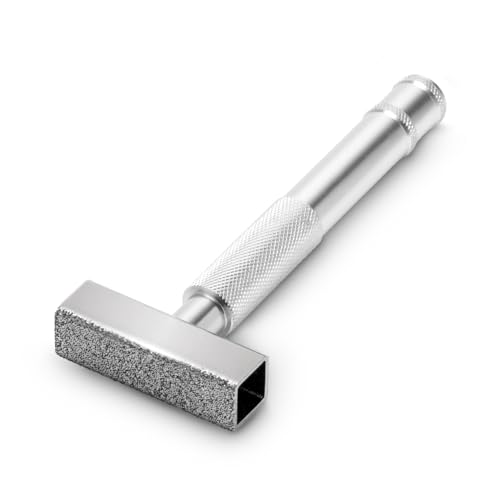
PRECISE DIAMOND DRESSING TOOL – Powertec bench grinder wheel features 36-grit diamond chips in a compact 4⅝″ long and 1/2" x 1-3/4" diamond surface with guide bars, engineered to conveniently clean grinding wheels with accuracy and ease.

Wide Compatibility: VEVOR pro grind sharpening kit fits 6" and 8" bench grinders, expertly sharpening chisels, gouges, and woodturning tools for lathe (e.g., parting tools, carving tools). Ideal for wood lathe tools and accessories and plane irons. (Bench grinder not included)

【Must-Have Tool for Watch Enthusiasts】: Our wristwatch screwdriver sharpener is an essential tool for individuals wearing watches, watchmakers, and watch repair shops.With our screwdriver sharpening tool, you can ensure that your screwdrivers are always sharp and
When to Use a Bench Grinder vs Angle Grinder?
Use a bench grinder for sharpening, controlled shaping, small-part deburring, and tool maintenance. Use an angle grinder for cutting, grinding, sanding, polishing, and surface preparation on larger or fixed materials. They overlap in some finishing tasks, but they are not interchangeable for every job.
Bench Grinder Applications
A bench grinder works best when stability matters more than reach. It is the better choice for:
- Sharpening tools: Chisels, punches, scrapers, mower blades, and some drill bits.
- Deburring edges: Small metal pieces after drilling, cutting, or filing.
- Wire brushing hardware: Bolts, nuts, brackets, and compact metal parts.
- Light shaping: Gradual material removal where you want steady support.
- Repeat work: Tasks where you want the same angle or finish over and over.
Angle Grinder Advantages
An angle grinder works best when mobility matters more than bench stability. It is the better choice for:
- Cutting in place: Pipe, rebar, bolts, sheet metal, brackets, tile, brick, or pavers.
- Grinding welds: Smoothing beads or cleaning repair areas after welding.
- Surface prep: Removing rust, paint, scale, or old coatings.
- Outdoor and job-site work: Tasks where you cannot bring the material to a bench.
- Versatile finishing: Switching from a hard grinding wheel to a flap disc or wire wheel when the task changes.
Disc and Wheel Compatibility
Disc and wheel choice matters as much as tool choice. A grinder body is only safe and useful when the accessory is right for the machine and material.
- Cut-off wheel: For cutting only. Do not use it for side grinding.
- Grinding wheel: For grinding and shaping metal, not for deep cutting.
- Flap disc: For blending, smoothing, and finishing metal surfaces.
- Wire wheel or cup: For rust, paint, and scale removal. Wear full eye and face protection because wires can shed.
- Diamond blade: For masonry, concrete, tile, or stone when the blade is rated for that material.
- Bench grinding wheel: For supported sharpening and shaping. Match the grit and bond to the material and task.
Before installing any accessory, confirm the diameter, arbor size, wheel type, guard compatibility, and maximum RPM rating. If any of those details do not match, do not use it.
Frequently Asked Questions
What is the difference between a bench grinder and a portable grinder?
A bench grinder is fixed to a bench or stand and is best for sharpening, shaping, deburring, and cleaning small parts. A portable grinder, such as an angle grinder, is handheld and better for cutting, grinding, and surface prep on larger or fixed materials.
Are bench grinders safer than angle grinders?
Bench grinders are often easier to control for sharpening because the machine is stationary, but they are not automatically safe. They still need guards, correctly adjusted work rests, safe wheels, eye and face protection, and careful pressure. Angle grinders need even more active control because kickback and disc breakage can happen quickly.
Is an oscillating tool better than a grinder?
An oscillating tool is better for small plunge cuts, trim work, scraping, and controlled detail cuts in wood, drywall, plastic, or soft materials. A grinder is better for abrasive cutting, grinding, sharpening, rust removal, and metal or masonry work. They solve different problems.
What are the disadvantages of an angle grinder?
Angle grinders can kick back, throw sparks, create hazardous dust, produce loud noise, and break discs if used incorrectly. They also require steady two-handed control and the right accessory for each task. They are less stable than a bench grinder for repeat sharpening.
Can you sharpen tools with an angle grinder?
You can sharpen some large tools with an angle grinder, such as mower blades or axes, but it is easy to overheat the edge or change the angle. For chisels, drill bits, and smaller tools, a bench grinder usually gives better control.
Can you use a cutting disc for grinding?
No. A cutting disc is made for edge cutting, not side pressure. Using it for grinding can cause the disc to break. Use a grinding wheel for grinding, a cut-off wheel for cutting, and a flap disc for blending or finishing.
Conclusion
The best choice between an angle grinder and a bench grinder comes down to the job. Pick an angle grinder when you need portable cutting, weld cleanup, rust removal, or work on large materials. Pick a bench grinder when you need stable sharpening, small-part shaping, deburring, or repeatable tool maintenance.
If you do a mix of shop and job-site work, owning both tools makes sense. Use the bench grinder for controlled sharpening at the workbench and the angle grinder for mobile cutting and surface prep. Whichever tool you choose, match the wheel to the task, keep guards installed, wear proper PPE, and never force the grinder beyond what it is designed to do.
Sources
- OSHA 1910.243, Guarding of portable powered tools — supports portable abrasive wheel guard, inspection, and speed-rating guidance.
- OSHA 1910.215, Abrasive wheel machinery — supports bench grinder guard and work-rest setup guidance.
- SafeWork SA, Angle grinders — supports kickback, guard, two-handed control, disc selection, and PPE guidance.
- HSE HSG17, Safety in the use of abrasive wheels — supports abrasive wheel training, mounting, guard, portable grinder, and PPE considerations.
- CDC/NIOSH, About Occupational Hearing Loss — supports hazardous-noise and hearing protection guidance.