Angle Grinder vs Die Grinder: Which Tool Should You Use?
What’s in This Article
- How Does a Die Grinder Work?
- Die Grinder Uses: Metalworking, Woodworking, and Detail Work
- Advantages and Limitations of Die Grinders
- How Does an Angle Grinder Work?
- When Should You Use an Angle Grinder?
- Advantages and Limitations of Angle Grinders
- Cutting and Grinding: Die Grinder vs Angle Grinder
- Choose a Die Grinder If…
- Choose an Angle Grinder If…
- Which Tool Is Right for Your Project?
- Safety Tips for Angle Grinders and Die Grinders
- Frequently Asked Questions
Choosing the wrong grinder can slow your work, scar the surface, or make a simple job harder than it needs to be. A die grinder gives you speed and control for detail work. An angle grinder gives you power for cutting, grinding, and heavy material removal. This guide compares angle grinders and die grinders so you can pick the right tool for your project.
Quick Answer
Choose a die grinder for detail work, tight spaces, polishing, deburring, and small shaping tasks. Choose an angle grinder for cutting metal, grinding concrete, removing rust, and handling larger materials. If your job needs control, use a die grinder. If your job needs force, use an angle grinder.
Key Takeaways
- Use a die grinder when you need precision, reach, and control in small spaces.
- Use an angle grinder when you need cutting power or fast material removal.
- Die grinders run at higher revolutions per minute, but they use smaller bits.
- Angle grinders use larger discs for metal, masonry, concrete, tile, and rust removal.
- Both tools need the right attachment, the right speed rating, and proper safety gear.
How Does a Die Grinder Work?
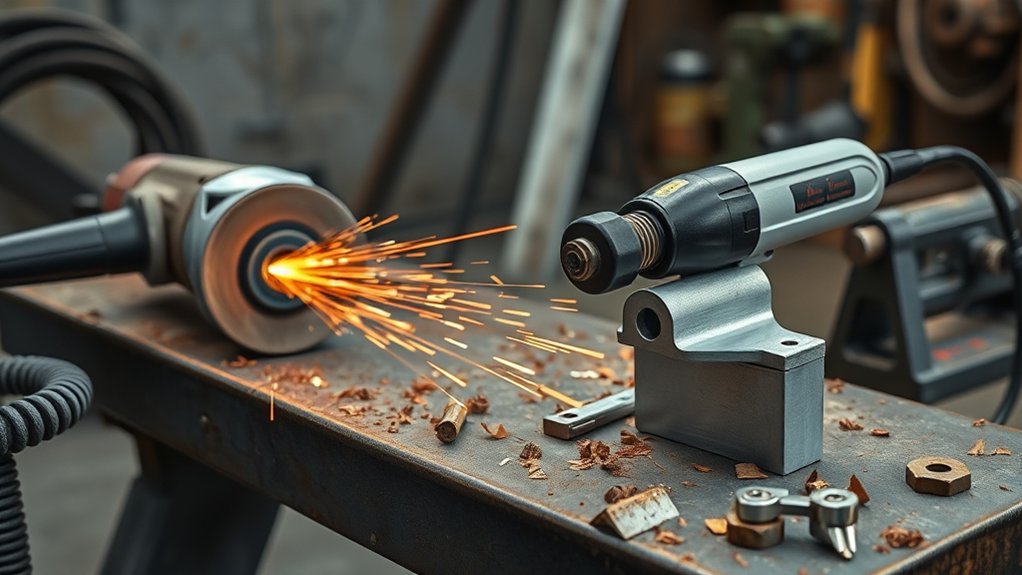
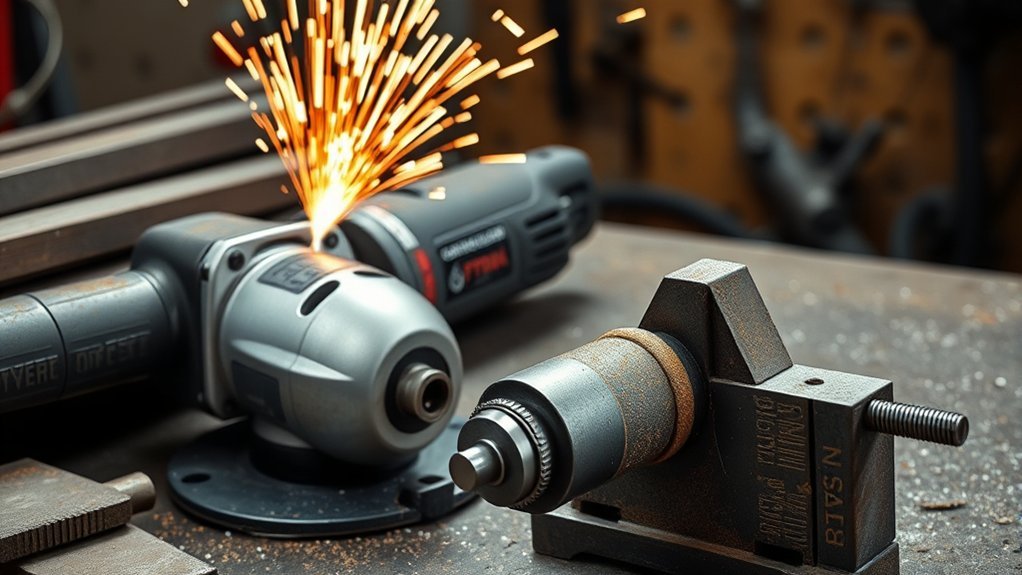
A die grinder uses a fast rotating spindle that holds small bits, stones, burrs, sanding drums, and polishing pads. You can use it for sanding, polishing, engraving, deburring, and shaping with a high level of control.
Many die grinders reach speeds above 20,000 revolutions per minute (RPM). That speed helps with fine work when you use the correct bit. The small body also helps you work inside tight spaces where larger grinders can’t fit.
You can choose between electric and air-powered models. Air-powered models need an air compressor, while electric models only need a cord or battery.
Most die grinders use common collet sizes of 1/4 inch and 1/8 inch. These collets hold different bits, so you can match the tool to the job. With the right bit and steady control, you can smooth welded joints, clean small parts, and shape detailed surfaces.
Die Grinder Uses: Metalworking, Woodworking, and Detail Work
Die grinders work best when the job needs accuracy instead of brute force. You can use them on metal, wood, plastic, and other materials when you match the bit to the surface.
They shine in small areas, curved shapes, and detail work. A larger grinder can remove too much material too fast, but a die grinder lets you work with more care.
Precision Work in Metalworking
In metalworking, a die grinder helps with deburring, smoothing welds, cleaning ports, and shaping small metal parts. Its high RPM gives you a clean finish when you use the right burr, stone, or sanding attachment.
The compact size helps you reach edges, holes, corners, and tight welds. This makes the tool useful for automotive work, fabrication, repair, and small shop projects.
You can switch between burr bits, sanding drums, grinding stones, and polishing pads. That range makes the die grinder useful for both rough shaping and final cleanup.
Detail Carving in Woodworking
For detail carving in woodworking, a die grinder gives you speed and control. You can shape edges, carve recesses, smooth tight curves, and refine small design details.
Its light weight helps reduce fatigue during long carving or finishing sessions. You can also guide the bit more easily than you can guide a larger grinder.
Use a bit made for wood, and work in light passes. This helps prevent gouges, burn marks, and rough cuts.
Advantages and Limitations of Die Grinders
Die grinders offer precision, speed, and control. They work well for detailed grinding, engraving, polishing, porting, deburring, and surface cleanup.
Most models weigh much less than an angle grinder. That lighter design helps you work longer with less strain, especially when you need careful hand control.
Die grinders also accept many small attachments, including burr bits, sanding drums, grinding stones, wire brushes, and polishing pads. This makes them useful across metalworking, woodworking, repair, and craft work.
But a die grinder has clear limits. It doesn’t suit large cutting jobs, deep grinding, or fast removal from broad surfaces. For thick metal, masonry, or concrete, an angle grinder gives you more power and a larger disc.
Note: A die grinder can cut with the right wheel, but it can’t replace an angle grinder for heavy cutting.
How Does an Angle Grinder Work?
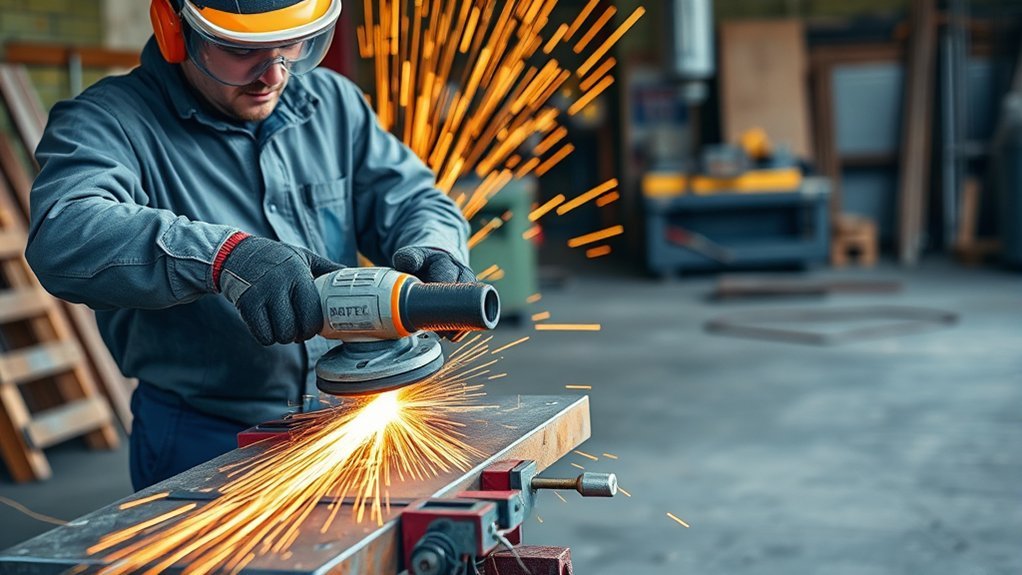
An angle grinder uses a spinning disc mounted at a right angle to the tool body. That design gives you leverage for cutting, grinding, sanding, polishing, and surface cleaning.
Many angle grinders run between 6,000 and 12,000 RPM. They usually spin slower than die grinders, but their larger discs and stronger motors remove more material.
Angle grinders often use 4-1/2 inch, 5 inch, 7 inch, or 9 inch discs. Smaller grinders suit home shops and repair work, while larger models suit heavier cutting and grinding.
Power and Speed: How Each Grinder Removes Material
Angle grinders focus on torque and disc size more than extreme speed. That makes them useful for heavy-duty tasks such as cutting steel, grinding welds, trimming tile, and smoothing masonry.
Die grinders focus on high speed and small contact points. This gives them better control for precision work, but it limits how fast they can remove large amounts of material.
- Angle grinder: Best for heavy cutting, rough grinding, and surface prep on larger materials.
- Die grinder: Best for detail work, deburring, polishing, and shaping small areas.
- Power source: Both tools need steady power and the correct attachment to work safely.
How an Angle Grinder Cuts and Grinds
An angle grinder cuts or grinds by spinning an abrasive disc against the material. You choose the disc based on the job and the surface you need to cut, grind, clean, or finish.
Use cutting wheels for metal, diamond blades for tile or masonry, grinding wheels for rough removal, and flap discs for smoothing. The right disc improves control and reduces kickback risk.
| Disc Type | Use Case | Material Type |
|---|---|---|
| Cutting Wheels | Metal cutting | Steel, Aluminum |
| Grinding Wheels | Surface smoothing | Concrete, Masonry |
| Flap Discs | Finishing edges | Wood, Metal |
| Diamond Blades | Hard materials | Tile, Stone |
| Wire Brush Wheels | Rust removal | Metal |
When Should You Use an Angle Grinder?
Use an angle grinder when the job needs power, a larger cutting surface, or fast material removal. It works well on metal, concrete, masonry, tile, and other tough materials.
Choose an angle grinder for these tasks:
- Cutting: Slice through metal, rebar, bolts, tile, or masonry with the correct disc.
- Rust removal: Clean metal surfaces with a wire wheel or abrasive disc.
- Grinding and polishing: Smooth rough edges, welds, concrete spots, or metal surfaces.
An angle grinder can complete heavy jobs quickly, but it demands firm control. Always match the disc speed rating to the grinder speed rating before use.
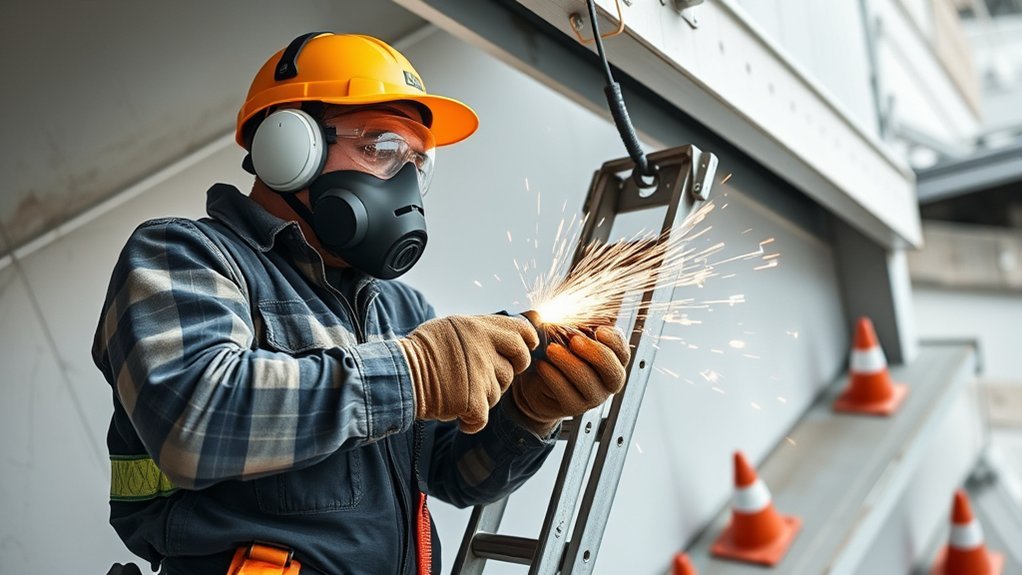
Warning: Wear eye protection, hearing protection, gloves, and a face shield when cutting or grinding.
Advantages and Limitations of Angle Grinders
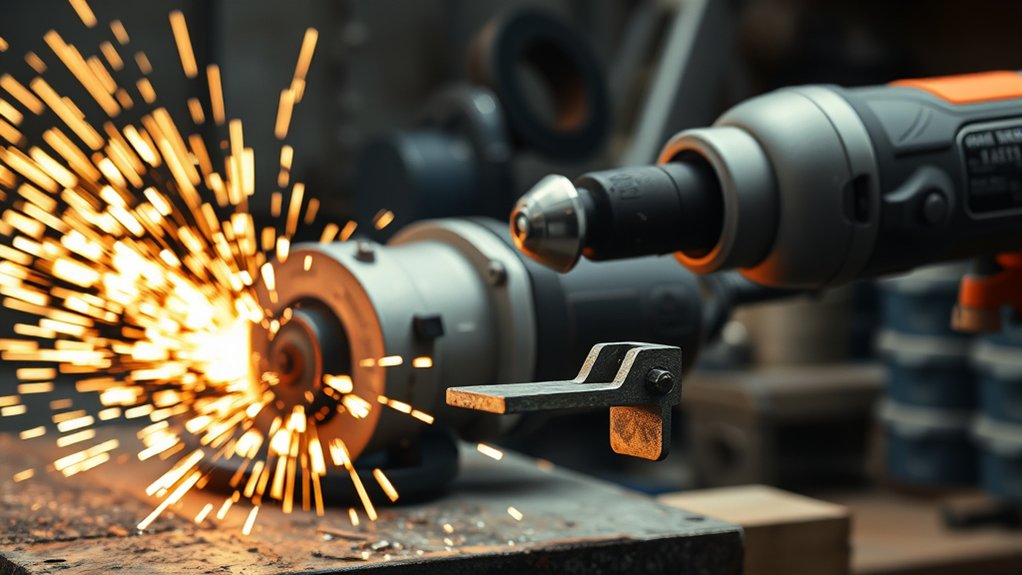
Angle grinders offer power and speed for demanding work. They can cut metal, grind concrete, remove rust, clean welds, and prepare surfaces for finishing.
Their disc options make them very versatile. With the right disc, you can cut, grind, sand, brush, or polish many surfaces.
But angle grinders have limits. Their size and weight make them harder to control in tight spaces. Many models also need two-handed control, especially during cutting or rough grinding.
Angle grinders don’t match the finesse of a die grinder. They remove material quickly, so they can damage small parts or detailed surfaces if you use too much pressure.
Cutting and Grinding: Die Grinder vs Angle Grinder
Both tools cut and grind, but they handle those jobs in different ways. The main difference comes from disc size, attachment type, speed, and control.
| Feature | Die Grinder | Angle Grinder |
|---|---|---|
| Best use | Detail work and tight spaces | Cutting and heavy grinding |
| Common speed range | Often above 20,000 RPM | Often 6,000 to 12,000 RPM |
| Attachment size | Small bits and wheels | Larger discs and wheels |
| Control level | High control for small work | Strong control needed for large work |
| Material removal | Light to moderate | Moderate to heavy |
- Cutting power: Angle grinders handle thicker materials better because they use larger discs.
- Detail control: Die grinders handle small cuts, shaping, and cleanup with more accuracy.
- Grinding range: Angle grinders cover broad surfaces, while die grinders focus on small areas.
Choose a Die Grinder If…
Choose a die grinder if your project needs precision, speed, and light pressure. It suits small parts, weld cleanup, engraving, polishing, deburring, and shaping in tight spaces.
A die grinder also works well when you need to reach inside holes, ports, corners, or curved areas. Use it when control matters more than fast material removal.
Products Worth Considering
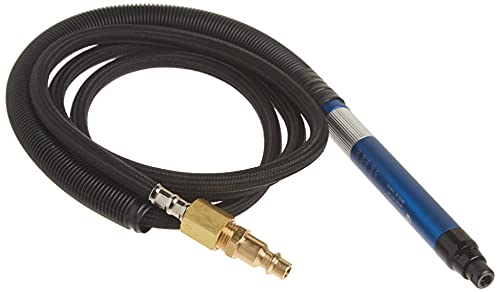
Lightweight and ideal for tight spots

Ideal for precision hand finish polish, grinding deburring, ect

1/4 inch angle die grinder has a free speed of up to 20,000 RPM with 0.32HP motor, small size, and high power, suitable for working in tight spaces.
Choose an Angle Grinder If…
Choose an angle grinder if your project needs cutting power or fast grinding. It suits metal cutting, masonry cutting, weld grinding, rust removal, tile trimming, and concrete surface work.
An angle grinder also works better when the material has thickness or size. Use it when you need a larger disc and more force than a die grinder can provide.
Products Worth Considering

Premium and Value: This 20-pack 4-1/2 x 7/8-inch metal/stainless steel cut-off wheel set is specially formulated for fast cutting in metals and stainless steel

4-1/2 Inch indestructible multi-material cut off disc for Angle Grinders, 7/8" arbor with 5/8" bushing, 3 Pack

Premium and Value: This 10-pack 4-1/2 x 7/8-inch metal/stainless steel cut-off wheel set is specially formulated for fast cutting in metals and stainless steel
Which Tool Is Right for Your Project?
Your best choice depends on the job, the material, and the finish you want. A die grinder gives you control for small details, while an angle grinder gives you power for bigger tasks.
For intricate work, choose a die grinder. For cutting thick metal, grinding concrete, or removing rust from a large surface, choose an angle grinder.
Many workshops benefit from owning both tools. They don’t replace each other. They solve different problems.
Pro tip: Start with light pressure and let the bit or disc do the work.
Safety Tips for Angle Grinders and Die Grinders
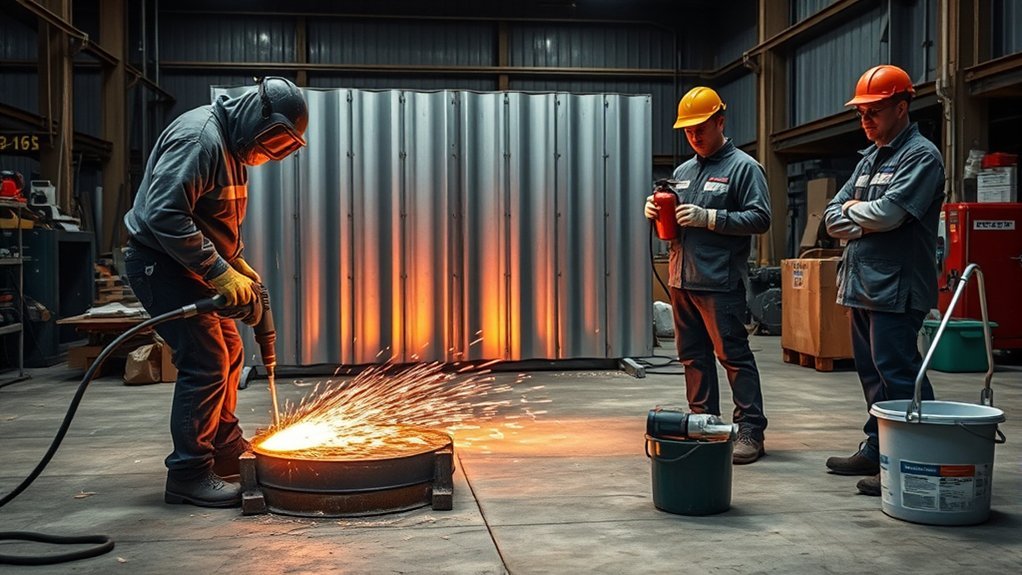
Both tools can throw sparks, chips, dust, and broken abrasive pieces. Before you start, inspect the tool, check the attachment, and remove loose items from your work area.
- Wear safety glasses and a face shield when grinding or cutting.
- Use hearing protection during long or loud jobs.
- Check the attachment’s speed rating before you turn on the tool.
- Keep guards in place on angle grinders whenever the job allows it.
- Clamp the workpiece so it can’t shift during the cut.
Stop using the tool if you feel strong vibration, see cracks in the wheel, or hear an unusual sound. Replace damaged attachments before you continue.
Frequently Asked Questions
What Is the Difference Between a Die Grinder and an Angle Grinder?
A die grinder uses small bits for precision work, polishing, deburring, and detail shaping. An angle grinder uses larger discs for cutting, grinding, sanding, and removing material from bigger surfaces.
Can I Use a Die Grinder for Cutting?
Yes, you can use a die grinder for cutting when you use the right small cut-off wheel. It works best on small stock, tight spaces, and light cuts, not thick metal or masonry.
Is a Cut-Off Grinder the Same as an Angle Grinder?
A cut-off grinder focuses on cutting, while an angle grinder handles cutting, grinding, sanding, and polishing. Some angle grinders can use cut-off wheels, but you must match the wheel to the tool and material.
Can an Angle Grinder Be Used for Cutting?
Yes, an angle grinder can cut metal, tile, concrete, masonry, and other materials with the correct disc. Use steady pressure, keep both hands on the tool, and let the disc reach full speed before it touches the work.
Which Grinder Should a Beginner Buy First?
Buy an angle grinder first if you plan to cut metal, remove rust, grind welds, or work on home repair projects. Buy a die grinder first if you plan to do small metalwork, carving, polishing, or detail cleanup.
Conclusion
The right grinder depends on whether your project needs control or power. Choose a die grinder for detail work, tight spaces, and fine finishing. Choose an angle grinder for cutting, grinding, rust removal, and heavy material removal.
Before you start, match the attachment to the material and check the tool’s speed rating. Use light pressure, keep the work secure, and choose the tool that fits the size of the job. With the right setup, you’ll work faster, safer, and with better results.