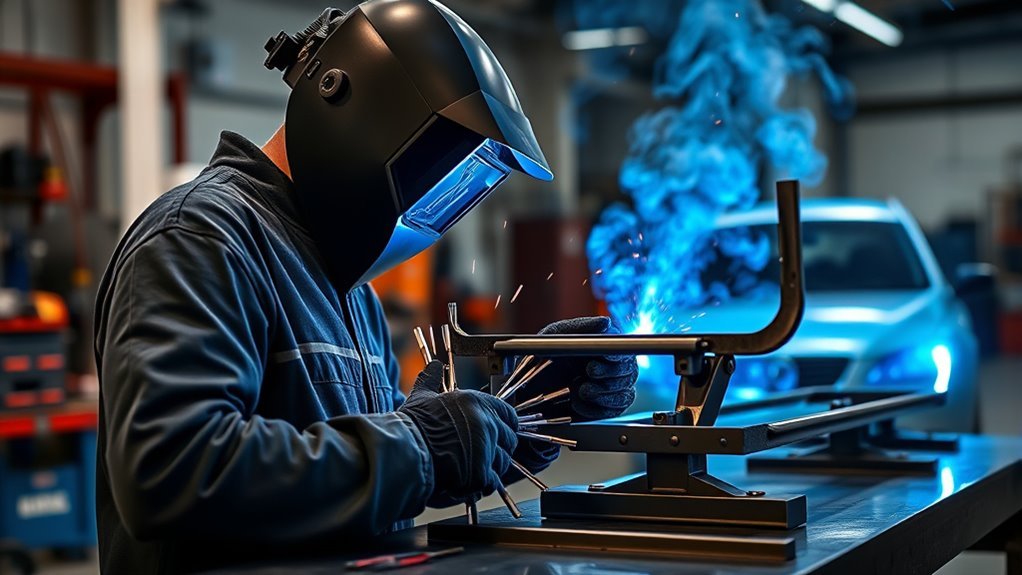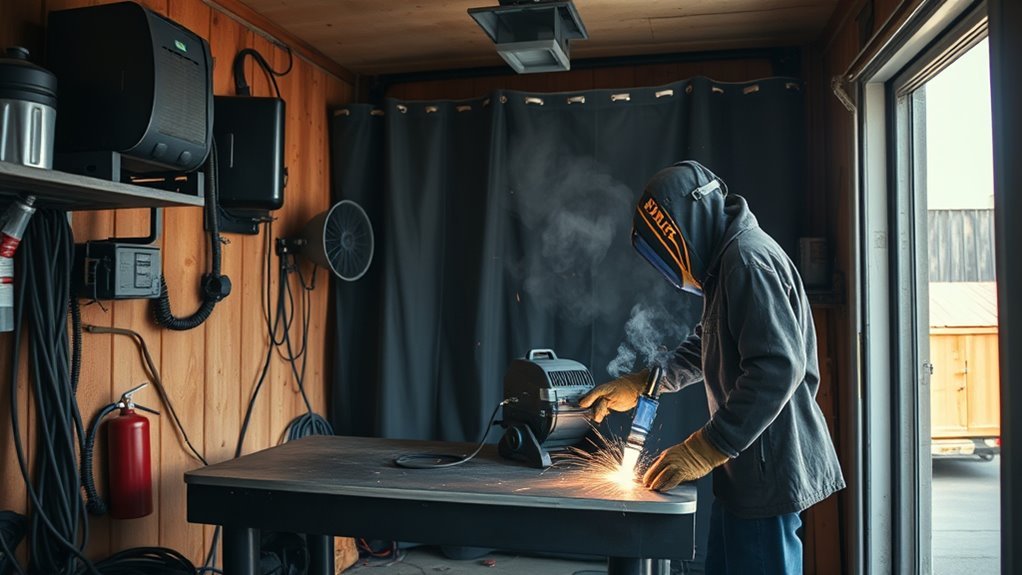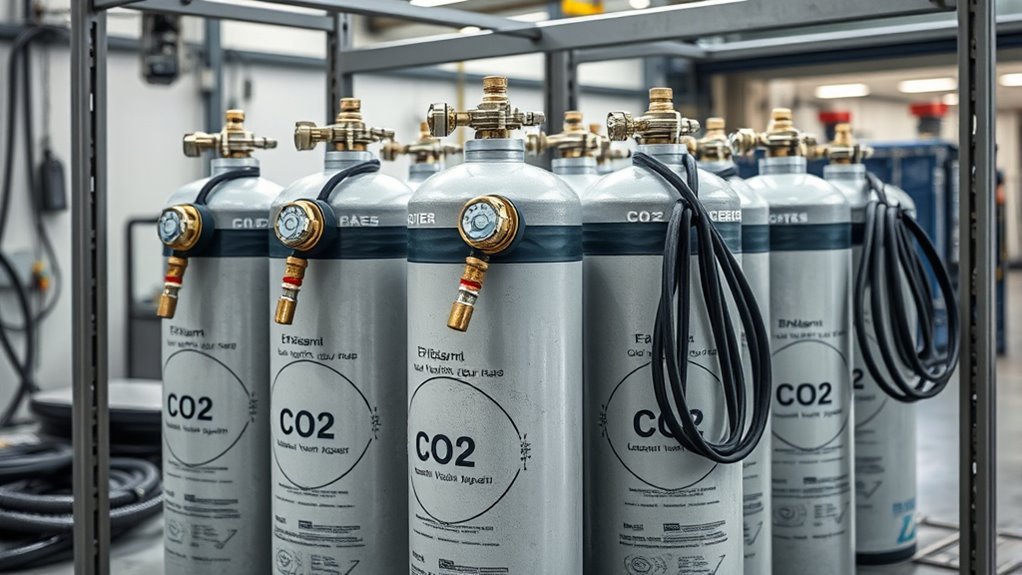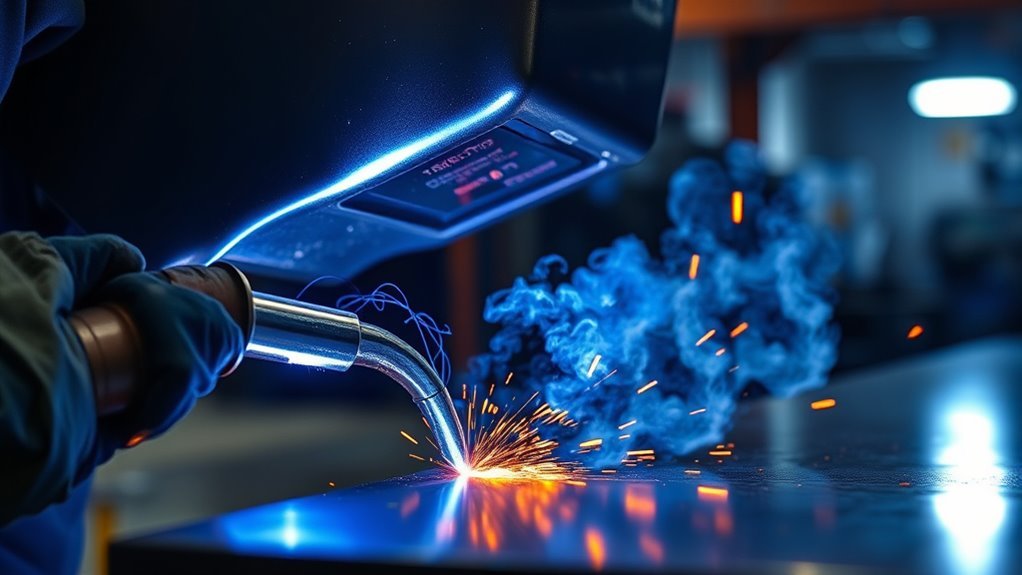
Poor shielding can turn a clean-looking weld into a porous, oxidized joint. Shielding gas protects the hot arc, electrode, and weld pool from the surrounding air, but the gas type and flow must match the process, metal, filler wire, joint, and work area. This guide explains the main gases, practical starting flow rates, setup steps, troubleshooting, and safety checks.
Quick Answer
Shielding gas keeps oxygen, nitrogen, water vapor, and other airborne contaminants away from the arc and molten weld pool. Argon, carbon dioxide, helium, and process-specific blends affect arc stability, penetration, heat, spatter, and bead shape. Always match the gas and flow rate to the welding process, filler metal, and manufacturer’s instructions.
Key Takeaways
- Shielding gas prevents the atmosphere from contaminating the hot weld zone.
- Pure argon is the common all-around TIG gas, while carbon-steel MIG normally uses carbon dioxide or an argon-carbon dioxide blend.
- Helium increases heat transfer and can help on thick aluminum, copper, and other heat-conductive metals.
- Too little flow leaves the weld exposed, but too much can create turbulence that pulls air into the gas shield.
- The wire data sheet, welder manual, welding procedure specification, and local safety rules take priority over generic settings.
At a Glance
| Time Required | About 5–10 minutes to select, inspect, and set the gas before a test weld |
| Difficulty | Beginner to intermediate; specialty alloys and code work require a qualified procedure |
| Tools Needed | Correct gas cylinder, compatible regulator/flowmeter, hose, torch or gun, nozzle cleaning tool, PPE, and optional torch-end flow tester |
| Cost | Varies by gas, cylinder size, refill or rental plan, and local supplier |
What Is Shielding Gas?
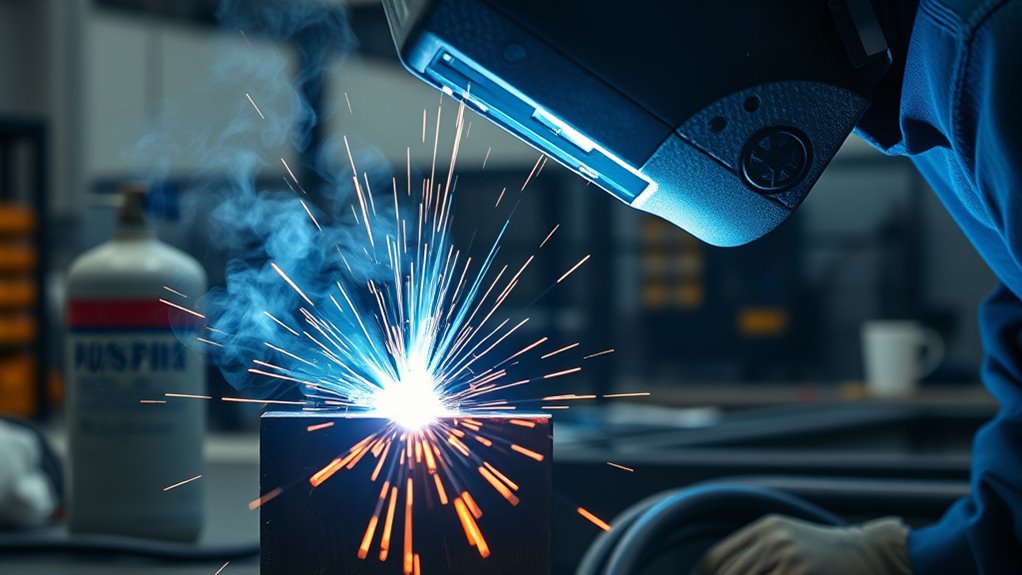
Shielding gas is the protective atmosphere around the arc, electrode, and molten weld pool. It keeps oxygen, nitrogen, water vapor, and other airborne contaminants from reacting with hot metal. Without enough coverage, the weld may develop porosity, oxidation, an unstable arc, or poor mechanical properties.
Welding gases are not all chemically alike. Argon and helium are inert gases. Carbon dioxide and small additions of oxygen are active gases because they take part in arc and weld-metal reactions. Many shop gases are blends designed to balance arc stability, heat transfer, penetration, wetting, spatter, and bead shape.
The gas travels from the cylinder through a regulator or flowmeter and hose to the torch or gun. The nozzle then directs the gas over the joint. Good coverage depends on more than the number on the flowmeter: nozzle size, stickout, torch angle, travel speed, joint shape, drafts, leaks, and spatter buildup all matter.
Your gas must match the process and filler metal. A blend that works well for carbon-steel MIG may contaminate a TIG weld or damage aluminum results. For a focused comparison, see this guide to the best gas for MIG welding mild steel.
Why Shielding Gas Matters in Welding
Molten metal reacts quickly with the surrounding atmosphere. Shielding gas limits that exposure so the arc and weld pool can remain controlled while the bead forms and begins to cool.
Correct coverage supports weld quality, fusion, bead shape, and repeatability. Poor coverage can lead to surface or internal porosity, oxidation, excessive spatter, tungsten contamination in TIG welding, and extra grinding or rework.
More gas is not always more protection: excessive flow can turn smooth gas coverage into turbulent flow that draws surrounding air toward the weld.
Gas selection also changes arc behavior. Argon supports easy arc starting and a stable TIG arc. Helium transfers more heat. Carbon dioxide can provide strong penetration in carbon-steel MIG welding, but it usually creates a harsher arc and more spatter than argon-rich blends.
Stainless steel needs special care because the gas blend can affect arc behavior, oxidation, carbon pickup, and corrosion performance. Follow the filler-wire data sheet and machine guidance when you MIG weld 304 stainless steel.
Common Shielding Gases and Their Uses
No single gas is best for every process. The safest choice is the gas named by the filler-metal manufacturer, welder manual, or approved welding procedure specification.
- Argon: The common all-around gas for TIG welding. It is also widely used for MIG welding aluminum and silicon bronze. For carbon-steel solid-wire MIG, pure argon is normally a poor choice; use the recommended active blend instead.
- Carbon dioxide: A low-cost active gas used for many carbon-steel MIG and gas-shielded flux-cored applications. It can increase penetration, but it normally produces more spatter and a less stable arc than an argon-rich blend.
- Helium: An inert gas with high thermal conductivity. It raises heat transfer and can help on thick aluminum, copper, nickel alloys, and other metals that pull heat away quickly. It costs more and often needs a higher flow rate than argon.
- Argon-carbon dioxide blends: Common for carbon-steel MIG. A 75% argon/25% carbon dioxide blend is widely used for short-circuit transfer, while more argon-rich blends are used for certain spray or pulsed processes. Use the mix approved for the wire and machine.
- Oxygen blends: Small oxygen additions to argon can improve arc stability and wetting on selected steels. Do not use these blends on aluminum or magnesium, and do not substitute them without checking the procedure.
- Hydrogen blends: Small hydrogen additions are used in limited, controlled applications involving some austenitic stainless steels, nickel alloys, or root shielding. Hydrogen can cause cracking or porosity in unsuitable metals, so use it only when a qualified procedure specifically allows it.
Shielding gas is different from the cutting gas used by plasma equipment. The correct plasma cutter gas depends on the torch, consumables, material, and cut-quality target.
Products Worth Considering

APPLICATION: The ARCCAPTAIN gas pressure regulator can be used with argon, helium, and carbon dioxide gas tanks.

All HP cylinders come with a 10 year hydrotest date stamped.

APPLICATION: The ARCCAPTAIN gas pressure regulator can be used with argon, helium, and carbon dioxide gas tanks.
How to Choose Shielding Gas for Your Project
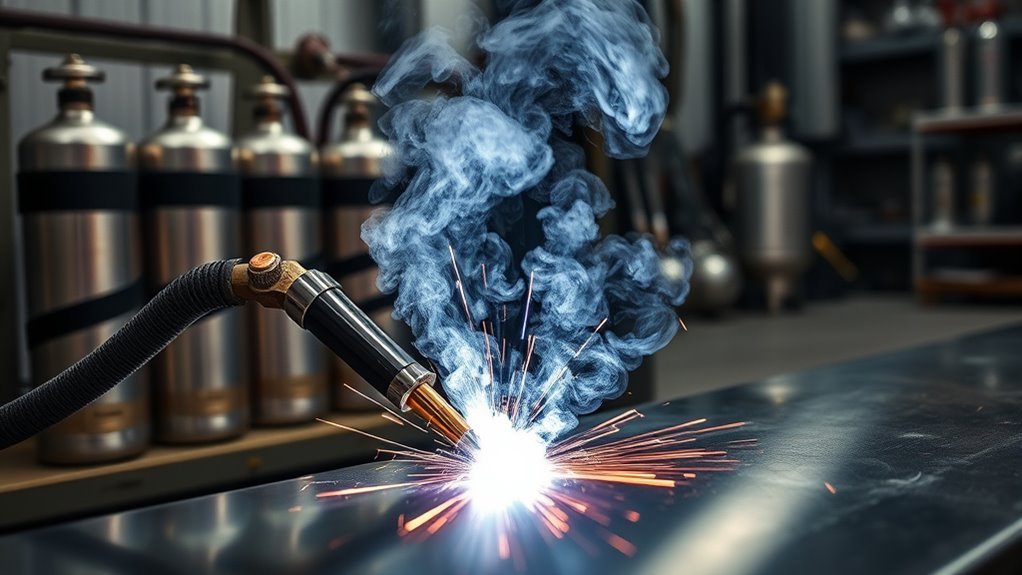
Start with the welding process, then confirm the base metal, filler metal, thickness, transfer mode, position, joint design, and finish requirements. Never choose a gas only because the cylinder is already in the shop.
| Process and metal | Common starting choice | Important limit |
|---|---|---|
| TIG, most metals | 100% argon | Use argon-helium when more heat is needed and the procedure allows it. |
| MIG, carbon steel | Argon-carbon dioxide blend or 100% carbon dioxide | The transfer mode and wire approval determine the usable blend. |
| MIG, stainless steel | Process-specific tri-mix or low-active-gas argon blend | Do not assume a carbon-steel blend will preserve stainless properties. |
| MIG, aluminum | 100% argon; argon-helium for some thick sections | Do not use carbon dioxide or oxygen-containing steel blends. |
| Flux-cored welding | No cylinder for self-shielded wire; specified gas for gas-shielded wire | The exact wire classification controls whether gas is required. |
For aluminum and many other nonferrous metals, argon gives a stable arc and good control. Helium or an argon-helium blend can add heat for thicker stock, but the best mix depends on the equipment and procedure.
For carbon steel, 100% carbon dioxide can provide strong penetration at lower gas cost. An argon-carbon dioxide blend usually gives a smoother arc, less spatter, and easier cleanup. According to Linde’s carbon-steel GMAW guidance, pure inert gas is generally not suitable for solid-wire carbon-steel GMAW because an oxidizing blend is needed for a stable, well-wetting arc.
Some flux-cored wires create their own shield, while dual-shield or gas-shielded wires still need cylinder gas. Check whether your wire is self-shielded before welding; this guide explains when flux-core welding requires gas.
Note: The filler-wire data sheet or welding procedure specification is the controlling source. A familiar gas blend may still be wrong for a different wire classification, transfer mode, or alloy.
Products Worth Considering

APPLICATION: It can be used with argon, helium and CO2 gas tanks

Genuine VICTOR Full Brass Flowmeter with High-Impact Lexan Flowtube.
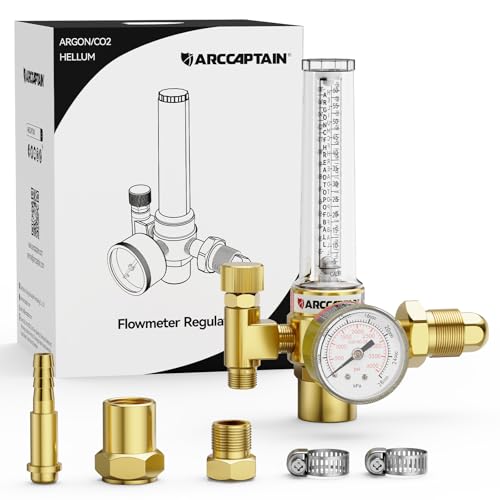
APPLICATION: The ARCCAPTAIN gas pressure regulator can be used with argon, helium, and carbon dioxide gas tanks.
How to Set Up Shielding Gas
- Confirm the required gas. Read the wire or filler-metal label, welder manual, and welding procedure before connecting a cylinder.
- Secure the cylinder. Keep it upright and restrained with a chain, strap, or approved cart. Keep it away from sparks, hot slag, and areas where it can be struck.
- Inspect the system. Check the regulator, flowmeter, hose, fittings, torch connection, diffuser, and nozzle. Replace damaged parts and remove spatter that can block gas flow.
- Connect the correct regulator. Use equipment rated and fitted for the cylinder and gas. Open the cylinder valve slowly while standing to the side of the regulator, not in front of it.
- Set flow while gas is moving. Use the machine’s purge function or briefly trigger the gun as directed by the manual. A static flowmeter reading may not show the actual delivery during welding.
- Make a test weld. Check arc behavior, bead appearance, oxidation, and porosity. Change only one variable at a time and stay within the manufacturer’s recommended range.
Pro Tip: A torch-end flow tester can reveal leaks, restrictions, or a poorly seated MIG gun that a regulator-mounted flowmeter does not show.
Shielding Gas Flow Rates and Safety Guidelines
Flow rate depends on the process, gas density, cup or nozzle size, transfer mode, joint shape, torch angle, travel speed, and air movement. Generic numbers are only starting points.
- MIG short-circuit starting range: Miller recommends about 25–35 cubic feet per hour, or roughly 12–17 L/min, for many short-circuit applications.
- TIG starting range: Miller lists a broad typical range of about 10–35 cubic feet per hour, or roughly 5–17 L/min, depending on the torch consumables and conditions. Many general TIG setups begin near 15–20 cubic feet per hour, or about 7–9.5 L/min.
- Other MIG transfer modes: Some applications run above 35 cubic feet per hour, but the correct value must come from the machine, wire, nozzle, and procedure guidance.
- Helium-rich blends and aluminum MIG: These often need more flow than argon TIG. Use the wire or equipment recommendation rather than copying an argon setting.
Use the lowest flow that gives complete, stable coverage. Raising the flow to fight drafts can make the gas stream turbulent and waste gas. Block the wind, move the work, or use a process designed for outdoor conditions instead.
Flow rate is only one part of the welding setup. Wire speed, voltage, inductance, stickout, and travel speed also affect the arc. This MIG wire-speed and voltage guide explains how those settings work together.
Warning: OSHA warns that argon, helium, and carbon dioxide can displace oxygen and create a deadly atmosphere, especially in pits, tanks, vessels, or other enclosed spaces. General shop ventilation may not make a confined space safe. Follow the applicable confined-space program, atmospheric testing requirements, ventilation plan, and respiratory-protection rules.
Shielding Gas Cylinder and Welding Safety
- Secure cylinders upright: Use an approved chain, strap, rack, or cart so the cylinder cannot fall.
- Protect cylinders from heat and damage: Keep them away from sparks, slag, flames, electrical circuits, traffic, and falling objects.
- Close the valve: Close the cylinder valve when work is finished, the cylinder is empty, or the cylinder is moved. Remove the regulator and install the valve-protection cap when required for transport.
- Use ventilation: Shielding gas does not remove welding fumes. Use suitable general or local exhaust ventilation without placing the airflow so close that it strips gas from the weld.
- Protect your eyes and face: Use safety glasses under a welding helmet and choose the filter shade for the process and amperage. OSHA’s shade table lists different minimum values for MIG, flux-cored, and TIG welding.
- Check the safety data sheet: Read the gas supplier’s SDS and follow workplace hazard-communication rules.
Common Shielding Gas Mistakes to Avoid
Many gas-coverage problems look like voltage, wire-speed, or machine faults. Check the gas system before changing several electrical settings at once.
- Running too little gas: Low flow may leave the weld pool exposed and cause porosity or oxidation.
- Running too much gas: High flow can create turbulence, waste gas, and pull air into the shield.
- Using the wrong gas: A gas suitable for carbon steel may contaminate TIG welding or produce poor results on aluminum or stainless steel.
- Ignoring drafts: Fans, open doors, fume-extractor placement, and outdoor wind can push shielding gas away from the joint.
- Using a long stickout or poor torch angle: Moving the nozzle too far from the puddle or aiming it poorly reduces effective coverage.
- Skipping equipment checks: Leaky hoses, loose fittings, a poorly seated gun, damaged O-rings, blocked diffusers, and dirty nozzles can restrict or divert gas.
- Setting flow without gas moving: Adjusting a flowmeter while the solenoid is closed may not show the true welding flow.
Shielding Gas Troubleshooting
| Symptom | Likely gas-related causes | What to check first |
|---|---|---|
| Porosity | Low or excessive flow, leaks, drafts, wrong gas, dirty metal, long stickout | Verify gas type, test flow at the torch, inspect fittings and nozzle, clean the joint |
| No gas at the nozzle | Closed cylinder, empty cylinder, wrong gas port, kinked hose, blocked diffuser, loose gun connection | Check cylinder pressure, purge function, hose path, machine port, and gun seating |
| Heavy spatter or harsh arc | Wrong blend, too much carbon dioxide for the intended procedure, unstable coverage | Confirm the approved gas, then verify voltage, wire speed, polarity, and stickout |
| TIG tungsten or bead discoloration | Wrong gas, low flow, leaks, excessive flow, short preflow or postflow, drafts | Confirm argon-based gas, inspect the cup and O-rings, and review preflow and postflow settings |
A simple inspection can save filler metal and rework. Confirm the gas label, flow at the torch, nozzle condition, work-area drafts, and joint cleanliness before blaming the power source.
Frequently Asked Questions
Why do welders need shielding gas?
Shielding gas keeps oxygen, nitrogen, water vapor, and other airborne contaminants away from the hot arc and molten weld pool. Correct coverage supports a stable arc, cleaner weld metal, and fewer defects such as oxidation and porosity.
What happens if I weld without shielding gas?
If the process requires external gas, welding without it can cause an unstable arc, oxidation, porosity, spatter, contamination, and weak or unacceptable weld metal. Self-shielded flux-cored wire and stick electrodes are exceptions because their flux creates protection during welding.
Can too much shielding gas cause porosity?
Yes. Excess flow can create turbulence around the nozzle and draw surrounding air into the gas stream. It can also waste gas. Use the lowest effective flow within the manufacturer’s recommended range and control drafts instead of turning the flow up without limit.
Is argon or carbon dioxide better for MIG welding?
For carbon-steel MIG, an argon-carbon dioxide blend usually gives a smoother arc and less spatter, while 100% carbon dioxide costs less and can provide strong penetration with a harsher arc. Pure argon is commonly used for aluminum MIG, not solid-wire carbon-steel MIG.
Can I use the same gas for MIG and TIG welding?
Sometimes, but not as a general rule. Pure argon can work for TIG and for MIG welding aluminum or silicon bronze. A common argon-carbon dioxide MIG blend should not be used for TIG because the active gas can contaminate the tungsten and weld.
What shielding gas flow rate should I use?
Use the value in the welder or filler-metal instructions. As a general starting point, many short-circuit MIG jobs use about 25–35 cubic feet per hour, while many TIG setups fall within about 10–35 cubic feet per hour. Nozzle size, gas, drafts, and joint shape can change the correct setting.
Why is my weld porous even though the gas is on?
The gas may not be reaching the weld correctly. Check for low or excessive flow, leaks, a blocked nozzle, a loose gun connection, wrong gas, drafts, long stickout, dirty metal, moisture, and contaminated filler. Measure flow at the torch when possible.
Why can welding damage eyesight?
A welding arc produces intense visible light, ultraviolet radiation, infrared radiation, sparks, and hot metal. These hazards can injure the eyes and surrounding tissue. Wear safety glasses under a welding helmet and select the filter shade for the welding process and arc current.
Conclusion
The right shielding gas protects the weld zone and helps the arc behave as intended. Match the gas to the process, filler metal, base metal, transfer mode, thickness, and approved procedure before striking an arc.
Check the cylinder, regulator, hose, torch connection, nozzle, flow at the torch, ventilation, and work-area drafts before each job. Start within the manufacturer’s flow range, use the lowest setting that gives stable coverage, and correct the source of drafts or leaks instead of relying on more gas.
Sources
- Miller Electric: Best Practices for Proper Shielding Gas in TIG Welding — TIG gas choices, flow ranges, turbulence, and gas-lens guidance.
- Miller Electric: What Type of Gas Is Best for MIG Welding? — MIG gas selection, starting flow rates, wind protection, and gas-system troubleshooting.
- Linde: Industrial Gases and Technologies for Arc Welding — how argon, helium, carbon dioxide, oxygen, and hydrogen affect arc welding.
- OSHA: Controlling Hazardous Fume and Gases During Welding — ventilation, fumes, gas displacement, and confined-space hazards.
- OSHA 29 CFR 1926.350: Gas Welding and Cutting — cylinder restraint, handling, placement, and valve safety.
- OSHA 29 CFR 1910.133: Eye and Face Protection — welding filter-lens shade requirements.