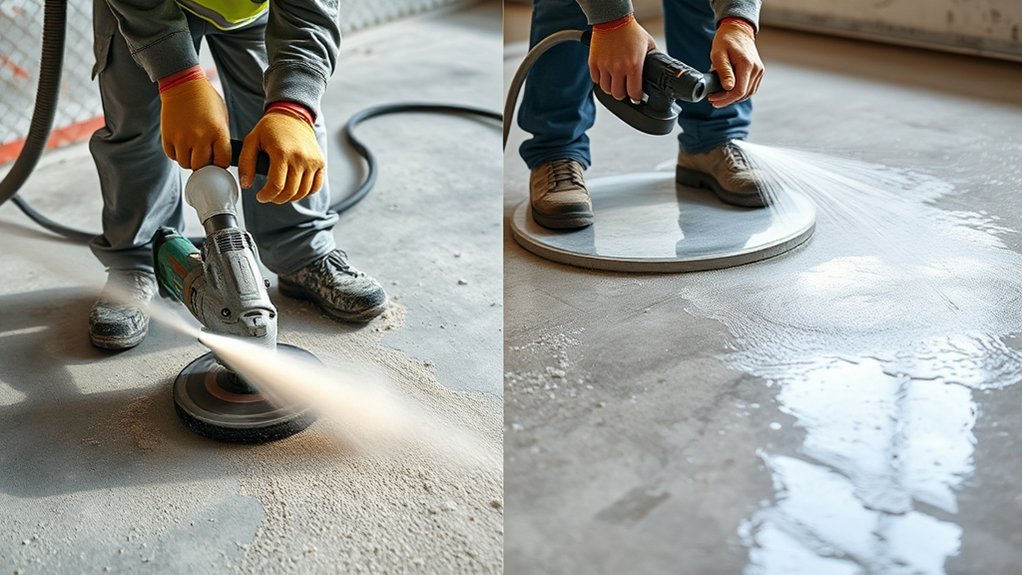
Concrete dust control is not just about keeping your work area clean. When you grind, cut, polish, or abrade concrete, you can release respirable crystalline silica, a fine dust that can reach deep into your lungs. The two main control methods are a vacuum shroud with a dust extractor and wet grinding. The better choice depends on whether you are working indoors or outdoors, how much dust the task creates, whether you can manage slurry, and which safety rules apply to your job.
Quick Answer
For most dry concrete grinding, a vacuum shroud connected to a rated dust extractor is the cleaner default because it captures dust at the tool. Wet grinding can suppress dust very well, especially outdoors, but it creates slurry that must be contained and cleaned up before it dries.
Key Takeaways
- Vacuum shrouds work best when the shroud seals tightly, the extractor has enough airflow, and filters are cleaned before suction drops.
- Wet grinding reduces airborne dust by keeping particles wet, but it adds slip hazards and slurry-disposal work.
- A standard household vacuum or unrated shop vac is not enough for concrete silica dust.
- For regulated work, check your local silica rules, exposure limits, written-control-plan requirements, and respirator requirements before starting.
At a Glance
| Time Required | 10–30 minutes for setup and checks, plus grinding and cleanup time based on area size. |
| Difficulty | Moderate. The grinding is straightforward, but silica control requires careful setup. |
| Tools Needed | Concrete grinder, compatible shroud or water-fed grinder, rated dust extractor or wet vacuum, PPE, hose, filters, and cleanup supplies. |
| Cost | Varies by rental or purchase. A rated extractor or water-fed system costs more than basic cleanup tools, but it is the safer setup for silica dust. |
The Dangers of Concrete Dust and Why Control Matters

When you grind concrete, you are not only smoothing or shaping a surface. You may also release respirable crystalline silica, which is small enough to be inhaled deep into the lungs. NIOSH warns that excessive exposure can cause serious diseases, including silicosis, lung cancer, chronic obstructive pulmonary disease, certain autoimmune diseases, and chronic renal failure.
Concrete dust control matters because dust can stay airborne, settle on nearby surfaces, and become airborne again during cleanup. It can also clog tools, damage extractor filters, reduce visibility, and slow the job. The safest plan is to control dust at the source, keep the work area clean as you go, and avoid cleanup methods that throw settled dust back into the air.
Warning: Do not dry sweep concrete dust or blow it with compressed air. Use wet cleanup or a vacuum system rated for fine concrete and silica dust. A normal household vacuum can leak fine dust back into the air.
Vacuum Shroud vs Wet Grinding: Which Controls Dust Better?
A vacuum shroud usually works better for indoor dry grinding because it captures dust at the grinder and keeps the floor drier. Wet grinding can reduce airborne dust very effectively when water reaches the grinding surface continuously, but it creates slurry that must be collected before it dries. Neither method is automatic. A loose shroud, weak suction, clogged filters, poor water flow, or sloppy cleanup can still leave you with unsafe dust.
| Factor | Vacuum Shroud | Wet Grinding |
|---|---|---|
| Best use | Indoor dry grinding, edge work, small repairs, and jobs where slurry is hard to manage. | Outdoor grinding, polishing, and work where water control and slurry cleanup are practical. |
| Main strength | Captures dust at the source and keeps the surface dry. | Suppresses dust before it becomes airborne. |
| Main drawback | Performance drops quickly if the shroud leaks, filters clog, or suction is too low. | Creates slurry, slip risk, and disposal concerns. |
| Cleanup | Empty dust safely and clean filters according to the extractor manual. | Collect slurry while wet and keep it from drying into dust. |
| Compliance fit | Often aligns with on-tool extraction requirements when the extractor, airflow, and filter setup match the task. | Often aligns with wet-method controls when the tool continuously feeds water to the contact point. |
Products Worth Considering

High Compatibility:Suitable for Angle Grinder under main brand 4-1/2''/5",adapt to 48-51mm Angle grinder front cap and easy to install.Allows collection of harmful dust suface grinding application.

Angle grinder dust extraction suitable for the front cover of most 48-51mm angle grinders. Can be installed on most 5"/4.5" angle grinders.The thickness of Diamond Grinding Disc should not more than 25mm or less than 15mm.
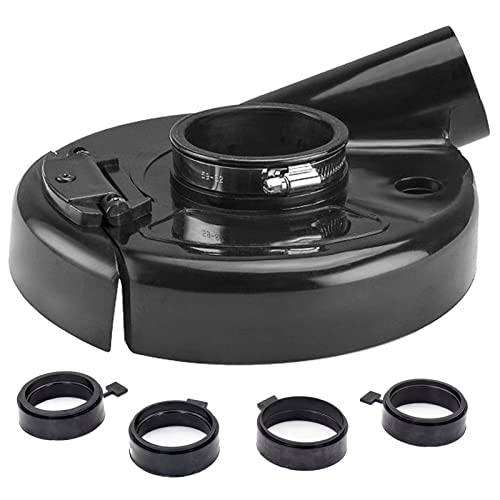
★High Efficiency Work: The dust cover of this 7-inch angle grinder can reduce the burden of cleaning and improve the efficiency of polishing. The dust generated on the working surface is introduced into the dust suction port in one go.
Effective Wet Grinding Techniques for Dust Control
Wet grinding controls dust by keeping particles damp and turning them into slurry instead of letting them float through the air. It works best when the grinder has an integrated water delivery system or a reliable water feed that reaches the grinding surface. Spraying water nearby is not the same as feeding water directly where the dust is created.
Maintain Consistent Water Flow
Use enough water to keep the grinding point damp and visibly reduce dust. If you see dust clouds, the water flow is too low, the water is not reaching the contact point, or the tool is moving too aggressively. OSHA’s construction silica rule says that when wet methods are used, water must be applied at flow rates sufficient to minimize visible dust release.
Do not flood the work area. Too much water can hide the surface, create a slip hazard, damage nearby materials, and make slurry harder to collect. The goal is steady wetting, not uncontrolled runoff.
Control Slurry Before It Dries
The biggest wet-grinding mistake is letting slurry dry on the floor. Once it dries, it can become fine dust again during scraping, sweeping, or foot traffic. Use a wet-rated vacuum, squeegee, containment berm, or absorbent cleanup method that fits your work area. Keep slurry away from drains unless your local rules allow that disposal method.
Note: Wet grinding is not a “no-cleanup” method. It changes airborne dust into wet waste, so your safety plan must include slurry collection and disposal.
Equipment Selection Tips
Select equipment that is designed for wet concrete work. The grinder, water delivery system, electrical protection, extension cords, and cleanup vacuum all need to be suitable for wet conditions. Never connect a dry dust extractor to wet slurry unless the manufacturer says it is rated for wet pickup.
| Equipment Feature | Why It Matters |
|---|---|
| Integrated water feed | Gets water to the grinding surface where dust is created. |
| Wet-rated electrical setup | Reduces shock risk when water is used around power tools. |
| Wet vacuum or slurry collection system | Keeps slurry from drying and becoming dust again. |
| Non-slip work controls | Helps prevent falls on wet concrete and slurry. |
Vacuum Shrouds for Dust Control: How They Work
A vacuum shroud surrounds the grinding wheel and connects to a dust extractor through a hose. The shroud creates a partial enclosure around the tool so suction can pull dust away as the wheel cuts the concrete. This method works only when the shroud fits the grinder, sits close to the surface, and has enough airflow through the hose and extractor.
Key Components Explained
A good shroud setup has three parts: the shroud, the hose path, and the dust extractor. The shroud should match the grinder size and wheel diameter. The hose should be wide enough, short enough, and free of kinks. The extractor should be rated for fine concrete dust and have a filter-cleaning system or pre-separator when the task requires it.
| Component | Function | What to Check |
|---|---|---|
| Shroud body | Encloses the grinding wheel and directs dust toward the extraction port. | Correct grinder fit, no cracks, no missing fasteners. |
| Brush ring or skirt | Helps maintain contact with the concrete surface. | Worn bristles, gaps, lifting at edges. |
| Extraction port and hose | Moves dust from the shroud to the extractor. | Loose couplers, crushed hose, clogs, poor airflow. |
| Dust extractor | Filters and stores collected dust. | Filter rating, suction, filter cleaning, bag level. |
Airflow and Filter Factors
Airflow is the weak point in many shroud setups. Under OSHA Table 1, handheld grinders used for non-mortar grinding with a shroud and dust collection system must use a dust collector that provides at least 25 cfm of airflow per inch of wheel diameter, or more if the tool manufacturer requires it. The dust collector must also use a filter with 99% or greater efficiency and a filter-cleaning mechanism or cyclonic pre-separator for the listed task.
HEPA filtration is a higher standard. OSHA defines a HEPA filter as at least 99.97% efficient in removing 0.3 micrometer particles. For silica dust, choose the extractor and filters required by your task, local rules, and manufacturer instructions.
Pro Tip: Use a cyclonic pre-separator when grinding a lot of concrete. It collects heavier dust before it reaches the extractor filter, which helps maintain suction longer.
How to Choose Between a Vacuum Shroud and Wet Grinding
The best method depends on the job conditions, not on one method being “always better.” Use the method that controls dust at the source and lets you clean up safely.
Products Worth Considering

Soft brushes prevent dust from escaping and help move the tool over the surface

UNIVERSAL FIT DUST SHROUD- suitable for angle grinder 4-1/2''/5" under main brand Hitachi Makita Milwaukee Craftsman, etc., reduce and prevent dust leakage during operation and create a dust-free comfortable working environment
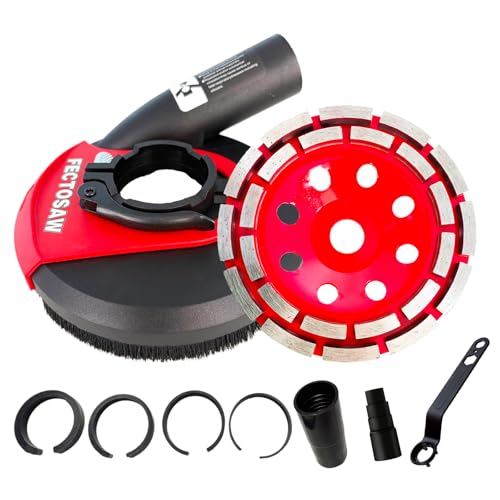
Complete Grinding & Dust Control Kit Includes a dust shroud and diamond grinding cup wheel, providing efficient surface grinding and dust collection in one ready-to-use set.
Use a Vacuum Shroud When
- You are grinding indoors or in an enclosed area.
- You need to keep the surface dry.
- Slurry would damage finishes, walls, drains, wiring, or nearby equipment.
- You can use a compatible shroud and a rated dust extractor with enough airflow.
- You can stop and clean filters before suction drops.
Use Wet Grinding When
- You are working outdoors or in a space where water is easy to control.
- The grinder is designed to feed water directly to the grinding surface.
- You have a safe way to collect slurry before it dries.
- The surface finish benefits from wet grinding or polishing.
- You can manage slip hazards and electrical safety.
Can You Combine Both Methods?
Some jobs use a layered approach, such as wet methods for heavy dust generation and vacuum cleanup after slurry collection. Do not assume every vacuum can handle wet slurry. Use only equipment rated for the material and condition you are collecting. If you switch from wet to dry work, clean the area first so dried slurry does not become airborne dust.
How to Comply With Health and Safety Regulations
Silica rules vary by country, state, and job type. In the United States, OSHA’s respirable crystalline silica standard for construction requires covered employers to limit worker exposure and use specified controls, exposure assessment, training, a written exposure control plan, and other protections when applicable. OSHA’s permissible exposure limit is 50 μg/m³ as an eight-hour time-weighted average.
In Australia, Safe Work Australia lists the workplace exposure standard for respirable crystalline silica as 0.05 mg/m³ as an eight-hour time-weighted average. That standard must not be exceeded under applicable WHS laws.
For construction work, do not treat these numbers as “safe dust targets” you can judge by sight. Airborne silica cannot be measured accurately by looking at the air. If you are unsure about exposure levels, arrange air monitoring through a qualified provider and follow the rules for your location.
If visible dust is escaping the shroud or rising from wet grinding, your control method is not working well enough. Stop and fix the setup before continuing.
Tips for Using Vacuum Shrouds Effectively
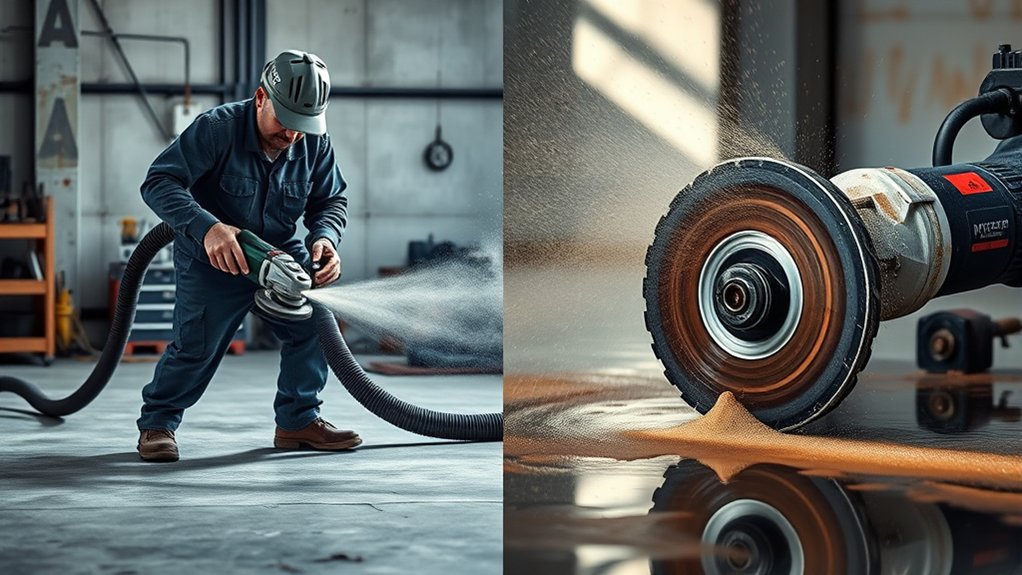
To get good results from a vacuum shroud, start with fit. The shroud must match the grinder, wheel size, and mounting system. A small gap can let fine dust escape. Before grinding, turn on the extractor and check whether the shroud pulls firmly toward the surface. If dust escapes from one side, adjust the angle, brush skirt, hose position, or grinding speed.
- Check the shroud seal: Replace worn brush rings or cracked shrouds.
- Keep hoses clear: Avoid crushed hoses, sharp bends, and loose couplers.
- Watch filter load: Clean or pulse filters before suction drops.
- Use the right bag or container: Fine concrete dust can overload poor collection bags.
- Vacuum during breaks: Remove settled dust with the extractor instead of sweeping.
- Use proper PPE: Wear eye protection, hearing protection, gloves, and respiratory protection when required by the task and exposure assessment.
Top Wet Grinding Practices for Dust Control
Wet grinding works best when water control, surface control, and cleanup are planned together. The water should reach the grinding zone before dust leaves the wheel. Keep the slurry contained, and clean it while it is still wet.
- Feed water at the point of contact: The water must reach the place where the wheel meets the concrete.
- Control runoff: Use berms, mats, or containment methods so slurry does not spread across the job site.
- Use wet-rated cleanup tools: Collect slurry with a wet vacuum or approved cleanup system.
- Prevent slip hazards: Keep walk paths dry and mark wet areas.
- Protect nearby materials: Cover walls, finished floors, drains, and electrical components.
- Finish with safe cleanup: Do not let slurry dry and then sweep it.
Maintenance for Dust Control Equipment
Dust control equipment works only when it is maintained. A shroud with a damaged skirt, a clogged hose, or a loaded filter can look fine while allowing dust to escape. Make maintenance part of the job, not something you do only after performance drops.
- Before work: Inspect shroud fit, hose connections, filter condition, water lines, cords, and vacuum bags.
- During work: Watch for visible dust, weak suction, filter alarms, low water flow, or slurry buildup.
- After work: Empty dust or slurry containers safely, clean filters according to the manual, and store hoses without crushing them.
- On longer jobs: Schedule filter checks and water-system checks instead of waiting for failure.
If your extractor has automatic filter cleaning, let the system cycle as designed. If it has manual filter cleaning, stop and clean it before suction drops enough to release dust. Never knock dusty filters in open air where others can breathe the dust.
When to Call Professionals for Concrete Dust Management
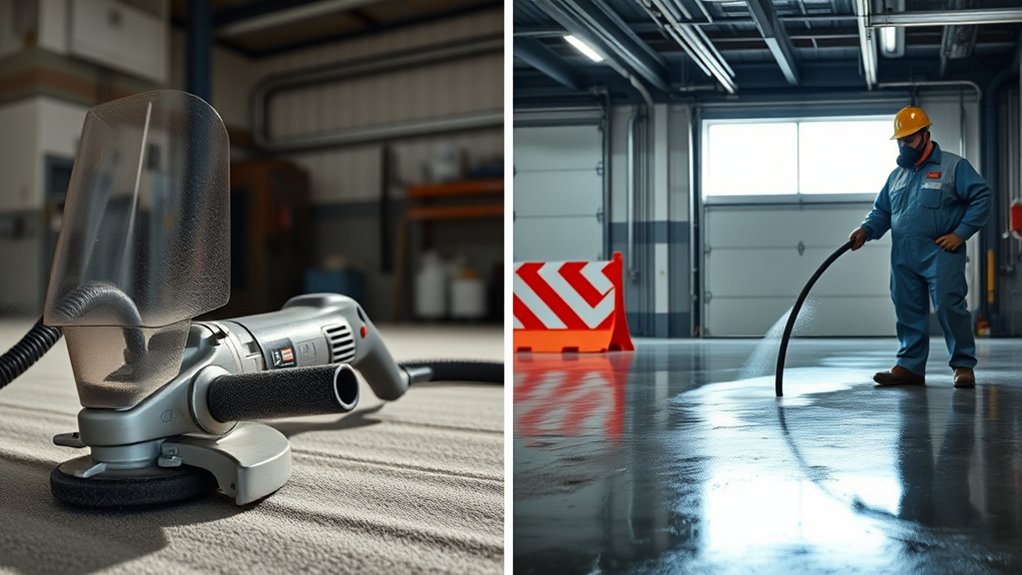
Call a professional when the job is large, indoors, regulated, or difficult to control with basic equipment. Professional concrete grinding and remediation teams can provide industrial extractors, water-fed systems, containment, air monitoring, and documented work practices.
- You are grinding indoors for an extended period.
- Visible dust continues even after you adjust the shroud or water flow.
- You need exposure monitoring or written documentation for compliance.
- The work is in an occupied building, school, healthcare facility, shop, or shared workspace.
- You are removing coatings, adhesives, or unknown materials in addition to concrete.
- You do not have the right extractor, filters, respirator program, or slurry-disposal plan.
Frequently Asked Questions
What are the two best forms of dust suppression for concrete grinding?
The two most common source-control methods are a vacuum shroud connected to a rated dust extractor and wet grinding with continuous water delivery. Vacuum shrouds capture dust at the tool, while wet grinding keeps dust damp so it is less likely to become airborne.
What is the best tool to grind down concrete?
For small areas, a handheld concrete grinder or angle grinder with a diamond cup wheel and compatible shroud is common. For larger floors, use a walk-behind floor grinder with a manufacturer-recommended dust collection system or integrated water delivery system. Match the tool to the area, finish, power supply, and dust-control method.
How do you minimize dust when grinding concrete?
Use dust control at the source. For dry grinding, use a tight-fitting shroud, rated extractor, clean filters, and enough airflow. For wet grinding, feed water continuously to the grinding surface and collect slurry before it dries. Avoid dry sweeping and compressed-air cleanup.
Is wet grinding better than a vacuum shroud?
Wet grinding can be better when water is easy to control and slurry cleanup is practical. A vacuum shroud is often better indoors or where water would create damage, slip risk, or disposal problems. The better method is the one that controls visible dust and fits the job conditions.
Can I use a regular shop vac for concrete dust?
Do not rely on a regular shop vac for silica-containing concrete dust unless it is specifically rated and equipped for that work. Fine dust can pass through poor filters or leak from the vacuum. Use a dust extractor designed for concrete dust, with the filter and airflow required for your task.
Do I still need a respirator if I use a shroud or wet grinding?
You may still need respiratory protection depending on the task, exposure level, work duration, enclosure, and local rules. Engineering controls should come first, but respirators may be required when controls alone do not reduce exposure enough or when the applicable regulation requires them.
Will concrete turn to dust in a vacuum?
Concrete does not turn into dust because it is inside a vacuum. The dust is created by grinding, cutting, drilling, or abrading the material. The vacuum’s job is to capture that dust before it spreads through the work area.
Conclusion
For concrete dust control, vacuum shrouds and wet grinding are both useful, but they solve the problem in different ways. A vacuum shroud captures dust as it leaves the grinder, making it a strong choice for indoor dry work. Wet grinding suppresses dust with water, making it useful when slurry can be controlled and cleaned up safely. For the safest result, choose the method that fits the job, verify that the setup is working, maintain the equipment, and follow the silica rules that apply in your area.
Sources
- OSHA: Silica, Crystalline – Construction — construction silica control duties, exposure control plans, training, housekeeping, and compliance overview.
- OSHA 29 CFR 1926.1153: Respirable Crystalline Silica — PEL, action level, HEPA definition, Table 1 grinder controls, airflow, filters, and wet-method requirements.
- NIOSH/CDC: Silica and Worker Health — health risks, where silica is found, and why respirable crystalline silica must be controlled.
- Safe Work Australia: Workplace Exposure Standard for RCS — Australian eight-hour TWA workplace exposure standard for respirable crystalline silica.
- HSE: Construction Dust — construction dust health risks and the need to assess, control, and review exposure controls.