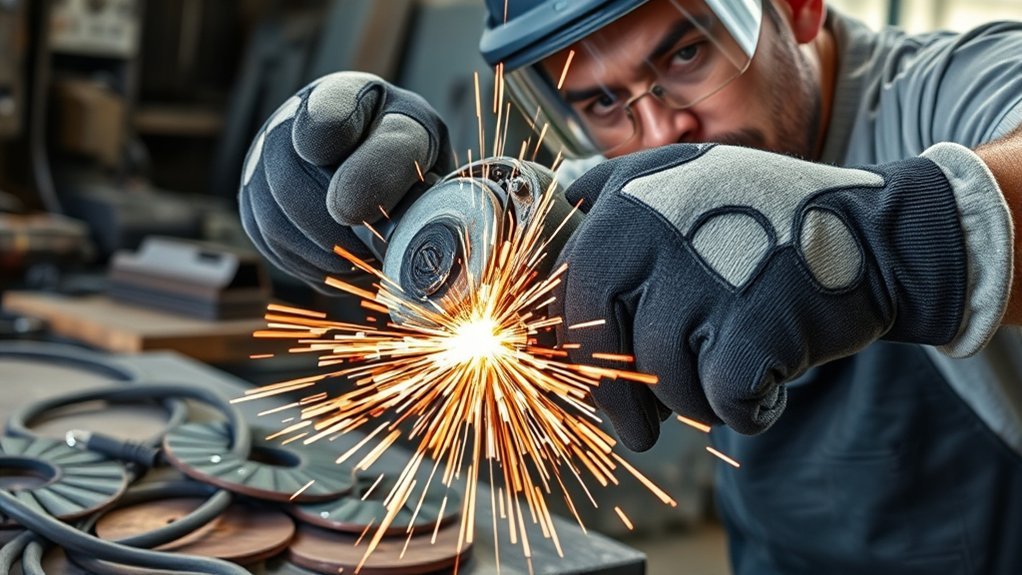
Picking the wrong abrasive disc can waste time, overheat the workpiece, remove too much material, or leave scratches that take longer to repair. Flap discs and sanding discs can both shape and smooth surfaces, but they may use different tools, mounts, abrasive grains, and working techniques. The best choice starts with the machine and material, then the removal rate and finish you need.
Quick Answer
Use a flap disc on an angle grinder for weld blending, deburring, beveling, and moderate-to-heavy metal removal. Use a sanding disc for controlled surface prep and finer finishing on wood, paint, plastic, or metal. Before starting, confirm the tool, mounting system, diameter, arbor, guard, and maximum RPM.
Key Takeaways
- Choose the disc by tool and mounting system first. A resin-fiber sanding disc needs a backing pad, while most flap discs have an integrated backing plate.
- Use flap discs for weld blending, deburring, beveling, edge work, and controlled metal stock removal.
- Use hook-and-loop or pressure-sensitive sanding discs for broad, flat, and finish-sensitive surfaces.
- Type 27 flap discs favor flatter finishing work; Type 29 discs favor more aggressive stock removal.
- Never exceed the disc’s maximum RPM, remove the required guard, or use a damaged disc or backing pad.
At a Glance
| Time Required | About 2–5 minutes to identify and mount the correct disc; actual sanding or grinding time varies by job. |
| Difficulty | Easy to select; moderate skill is needed to control an angle grinder without gouging or overheating the surface. |
| Tools Needed | Compatible grinder or sander, correct disc, required guard or backing pad, side handle, work clamp, eye and face protection, hearing protection, and suitable dust control. |
| Cost | Varies by diameter, grain, backing, and pack size. Basic paper discs often cost less per piece, while premium flap, fiber, film, mesh, and ceramic discs can cost more. |
Understanding Flap Discs and Sanding Discs
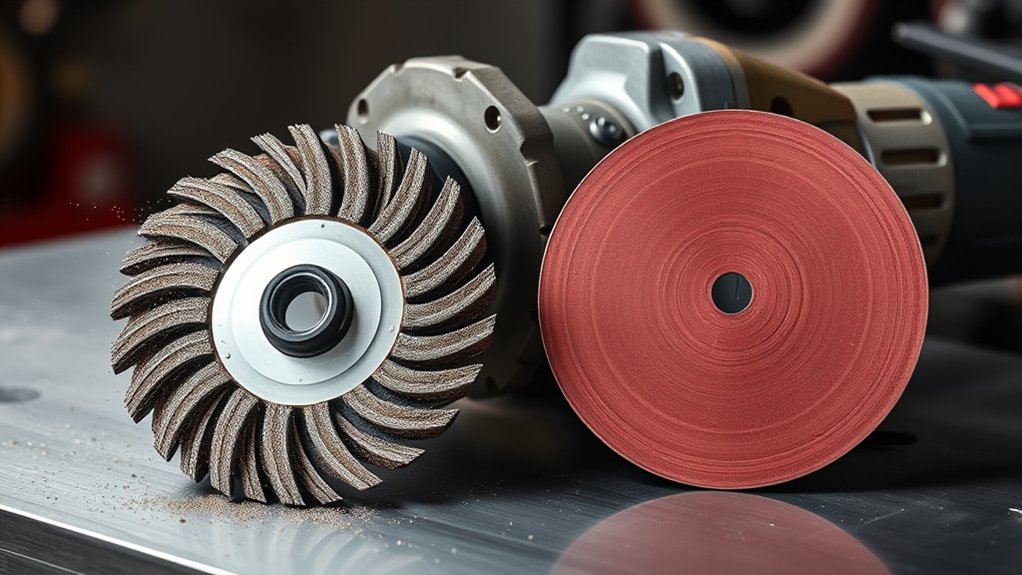
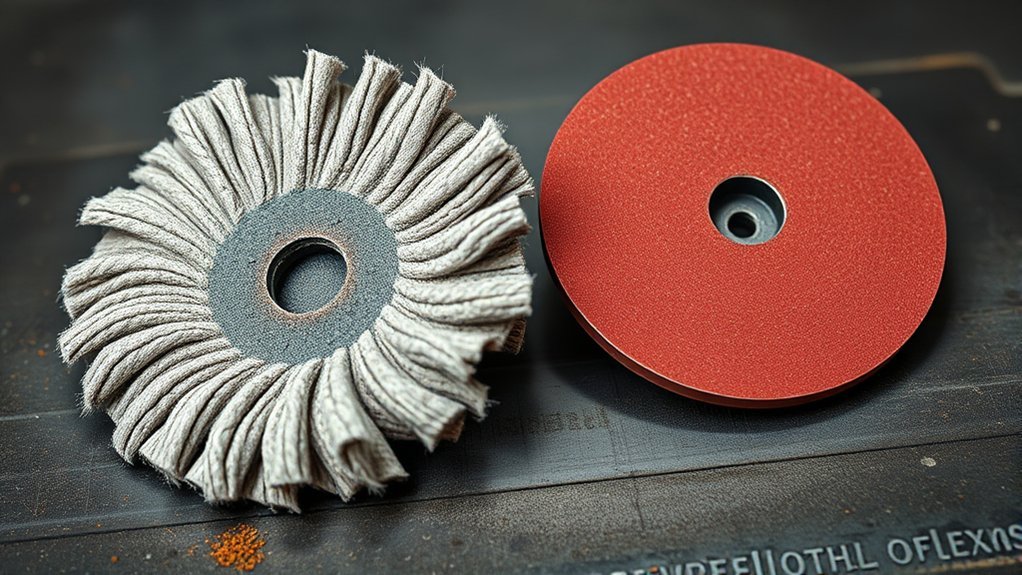
Flap discs use overlapping pieces of abrasive-coated cloth attached to a rigid backing plate or hub. As the outer edges wear, fresh abrasive is exposed. This construction helps a flap disc maintain a useful cutting action while conforming better to welds, edges, curves, and contours than many rigid grinding wheels.
The term sanding disc covers several products. A hook-and-loop or pressure-sensitive adhesive disc usually mounts on a random-orbit, dual-action, or disc sander. A resin-fiber sanding disc is a tougher angle-grinder accessory that must be supported by the correct backing pad and retaining hardware.
Flap discs are most closely associated with angle grinders and metal fabrication. Sanding discs are used across woodworking, automotive refinishing, paint preparation, plastics, composites, and metalworking. Some sanding discs are made for light finishing, while heavy paper, cloth, film, mesh, ceramic, and fiber products can remove material quickly.
Note: Never mount a hook-and-loop or pressure-sensitive orbital-sander disc on an angle grinder. A grinder-mounted fiber disc also requires the backing pad and hardware specified by its manufacturer.
Flap Disc vs. Sanding Disc: Performance, Durability, and Cost
The broad term “sanding disc” can hide important differences. The table below separates the two common sanding formats so you can compare them accurately with a flap disc.
| Feature | Flap Disc | Resin-Fiber Sanding Disc | Hook-and-Loop or PSA Sanding Disc |
|---|---|---|---|
| Typical tool | Angle grinder | Angle grinder with approved backing pad | Random-orbit, dual-action, or disc sander |
| Best uses | Weld blending, beveling, deburring, edge work, and moderate-to-heavy metal removal | Fast metal sanding, weld blending, rust removal, and surface preparation | Wood sanding, paint prep, broad flat surfaces, plastics, and controlled finishing |
| Surface shape | Flat, curved, contoured, or edged surfaces, depending on disc shape | Mostly flat or gently contoured areas | Flat and broad surfaces; soft interface pads can help on gentle curves |
| Cutting action | Combines grinding and blending with a more forgiving feel than many rigid wheels | Can cut very quickly because the abrasive face is fully exposed | More controlled and better suited to progressive finish sanding |
| Required support | Integrated backing plate or hub | Compatible backing pad and retaining nut | Matching hook-and-loop or adhesive sanding pad |
| Finish quality | Good balance of removal and blending | Depends strongly on grit, backing-pad hardness, and technique | Best choice for predictable scratch refinement and fine finishing |
| Disc life and value | Often provides long useful life in sustained metal blending, but results vary by mineral, density, pressure, and heat | Can offer fast removal and good cost per job when matched to the correct pad and task | Basic paper discs may cost less per piece but can load, tear, or wear quickly in heavy work |
For metal fabrication, the real choice is often between a flap disc, a fiber disc, and a rigid grinding wheel. For wood and paint preparation, the better comparison is usually between different sanding-disc backings and grit sequences rather than between a sander and an angle grinder.
Products Worth Considering

【Professional Flap Disc】The 50pcs flap discs 4 1/2 for angle grinder include 20pcs for 40 grit, 10pcs for 60 grit, 5pcs for 80 grit, 5pcs for 120 grit, and 10pcs for 40 grit flap disc T27. Covering grits from 40 to 120 for versatile material removal and finishing.

PREMIUM QUALITY: These angled flap discs, also known as cut off wheels 4 1/2 inch, are constructed with industrial grade premium zirconia abrasive for strength, durability, and extended disc life as it holds up to high temperatures and pressure.

STRONGEST FIBER BACKING THAN OTHER PRODUCTS:4 1/2 grinding wheels made for TOP-LEVEL Hard zirconia.Good material for griding wheel. This Flap Disc is constructed of industrial grade high density premium zirconia material, increased durability than standard flap discs, built for a more robust and economical grinding wheel
Applications in Metalworking, Woodworking, Paint, and Plastic
In metalworking, flap discs handle weld blending, deburring, beveling, edge shaping, rust removal, and surface preparation. Their layered construction can combine removal and refinement in one step, reducing tool changes on many fabrication jobs.
Resin-fiber sanding discs also work well on metal when fast cutting is needed. Unlike a flap disc, the fiber disc must be supported by a compatible backing pad. Pad hardness changes how aggressively the disc cuts and how well it follows contours.
For broad wood surfaces, a random-orbit or geared sander with the correct sanding disc usually provides better control. It can remove saw marks, flatten filler, smooth edges, and prepare wood for paint, stain, or clear finish without the concentrated cutting action of an angle grinder.
A flap disc can shape wood quickly, but it can also dig grooves, round edges, burn the surface, or remove more material than intended. Festool’s documented paint-removal process uses progressive sander grits and notes that angle grinders can create grooves in wood.
Use sanding discs on plastics at controlled speed and pressure. Heat can soften or smear some plastics, so test a hidden area and stop if the surface becomes tacky, discolored, or distorted.
For stainless steel or aluminum, choose an abrasive product whose label specifically lists that material. Do not assume every general-purpose flap or sanding disc is suitable for every metal.
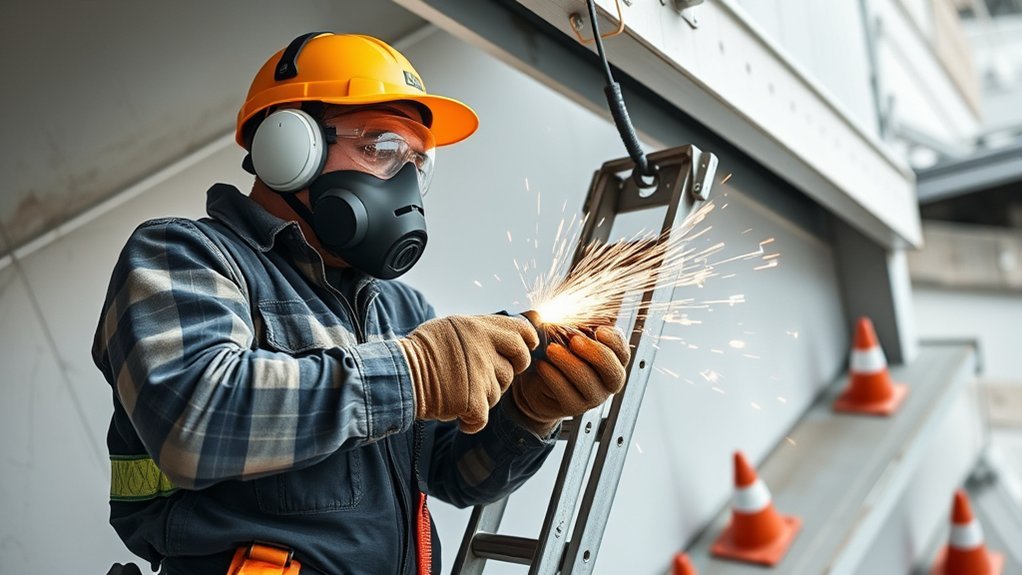
Warning: Disconnect the tool from power before mounting a disc. Use the correct guard, side handle, backing pad, diameter, arbor, and hardware. Confirm that the disc’s maximum RPM is at least as high as the tool’s no-load speed. Wear safety glasses with side protection and add a face shield for impact protection; a face shield does not replace primary eye protection. Control dust and keep sparks away from fuel, solvents, sawdust, and other combustible material.
Choose Flap Discs for Metal Removal and Blending
Choose a flap disc when you need strong cutting action with more blending control than a rigid grinding wheel normally provides. Common uses include weld cleanup, bevel preparation, edge shaping, deburring, and smoothing transitions between a weld and the surrounding base metal.
Flap discs also help on curved or irregular surfaces because the abrasive flaps can flex slightly. The result is not automatically gouge-free, however. Coarse grit, high pressure, a steep angle, or pausing in one spot can still remove too much material.
Type 27 vs. Type 29 Flap Discs
Type 27 flap discs have a flatter profile. They suit flat surfaces, outside edges, light blending, and finishing at a relatively shallow working angle.
Type 29 flap discs have a conical profile. The angled flap layout concentrates more abrasive at the contact area, making the disc better suited to aggressive stock removal, contours, and jobs that use a steeper working angle.
The manufacturer may specify a particular angle range for each product. Follow that printed range rather than forcing a Type 27 or Type 29 disc to work at an angle it was not designed to use. The 3M flap-disc selection guide identifies Type 27 for smooth finishes on flat areas or outside edges and Type 29 for more aggressive stock removal on flats or contours.
Flap-Disc Abrasive Minerals
- Aluminum oxide: A common general-purpose choice for many mild-steel and maintenance applications when the product is labeled for the task.
- Zirconia alumina: A durable option often selected for sustained grinding and stock removal on ferrous metals.
- Ceramic abrasive: Common in premium discs made for demanding metal removal, stainless steel, alloys, and higher-production work.
The mineral name alone does not guarantee performance. Flap density, cloth weight, backing material, adhesive, grinder power, pressure, and workpiece material all affect cutting speed and usable life.
Choose Sanding Discs for Controlled Surface Preparation
Choose a sanding disc when the main goal is smoothing, scratch refinement, coating preparation, or controlled material removal. Sanding systems are especially useful on wood panels, sheet metal, painted surfaces, fillers, plastics, and broad flat areas.
Hook-and-loop discs are easy to change and are common on random-orbit sanders. Pressure-sensitive adhesive discs attach to a smooth pad and can provide firm, even support. Match the hole pattern to the tool’s dust-extraction pad so airflow is not blocked.
Resin-fiber discs are different. They are grinder-mounted coated abrasives for metalworking and require a backing pad. They can remove material quickly, so they should not be treated like a low-speed orbital-sander disc.
Aluminum oxide is widely used in general-purpose sanding products for wood and metal. Heavy-backed paper discs can also perform aggressive sanding rather than only light finishing. Product-specific backing, coating, and load resistance matter as much as the abrasive mineral.
Avoid pressing harder when a sanding disc stops cutting. Excess pressure can stall an orbital sander’s movement, clog the abrasive, create heat, deepen scratches, and shorten the life of both the disc and pad.
Grit Guide by Task and Material
Grit numbers are starting points, not universal rules. A ceramic 60-grit flap disc can behave differently from a basic aluminum-oxide 60-grit paper disc. Always test on scrap or an inconspicuous area and follow the coating or finish manufacturer’s surface-preparation requirements.
| Task | Typical Starting Range | Refining Range | Important Note |
|---|---|---|---|
| Heavy weld or stock removal on thick mild steel | 36–40 grit flap disc or an approved grinding product | 60–80 grit | Do not grind deeply into the base metal or use this range blindly on thin sheet. |
| Weld blending and deburring | 60–80 grit flap or fiber disc | 80–120 grit if a finer scratch is needed | Use light pressure near corners and edges. |
| Metal preparation before coating | 80–120 grit | As required by the coating data sheet | Remove dust, oil, and loose residue before coating. |
| Rust or paint removal from metal | 40–80 grit sanding, fiber, flap, or purpose-made stripping disc | 80–120 grit for surface refinement | Use a less aggressive product on thin metal to reduce gouging and heat distortion. |
| Leveling rough bare wood | 60–80 grit sanding disc | 100–150 grit | Keep the sander moving and avoid rounding panel edges. |
| Wood preparation for paint or clear finish | 100–150 grit | 150–180 grit or the finish manufacturer’s recommendation | Sanding too finely can reduce the grip of some finishes. |
| Between compatible finish coats | 180–220 grit or finer | Follow the coating instructions | Allow the previous coat to cure before sanding. |
| Plastic surface preparation | 180 grit or finer | Progress as needed | Use low pressure and watch closely for melting or smearing. |
How to Choose the Right Disc for Your Project
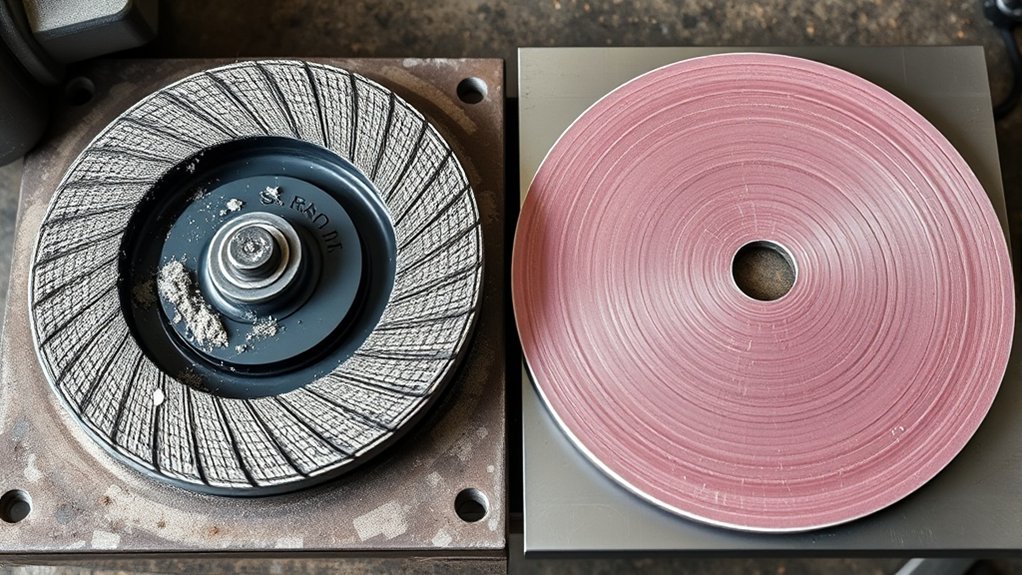
Select the right disc by matching the machine, mounting system, material, task, and desired finish. A disc that removes a weld quickly may leave unacceptable scratches on sheet metal, wood, plastic, or a painted panel.
- Identify the tool: Determine whether you are using an angle grinder, random-orbit sander, dual-action sander, or another machine.
- Confirm the mounting system: Check whether the accessory mounts directly, uses a threaded hub, needs a retaining nut, or requires a hook-and-loop, adhesive, or resin-fiber backing pad.
- Check the material: Choose a product specifically rated for mild steel, stainless steel, aluminum, wood, plastic, paint, or the other material you are working.
- Match the task: Use a flap disc for metal grinding and blending, a fiber disc for fast grinder-based sanding, or an orbital sanding disc for controlled surface preparation and finishing.
- Select the grit: Start only as coarse as needed, then use intermediate grits to remove the previous scratch pattern.
- Verify compatibility: Confirm the disc diameter, arbor or thread, backing pad, retaining hardware, guard type, and maximum RPM.
- Test before committing: Make a short pass on scrap or an inconspicuous area and inspect the cut, heat, scratch depth, and surface shape.
Pro Tip: Start with the least aggressive disc that can complete the job in a reasonable time. It is easier to make another pass than to restore metal, wood, paint, or plastic that has already been gouged or overheated.
Products Worth Considering
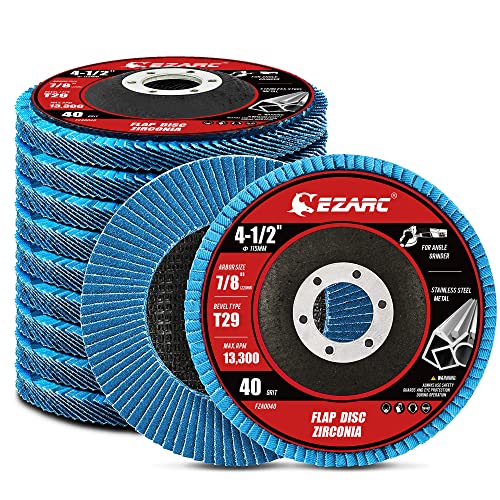
【Great Performance】EZARC flap sanding discs are made of hard zirconia material which lasts longer than standard aluminum oxide abrasive material, built for a more robust and economical grinding wheel
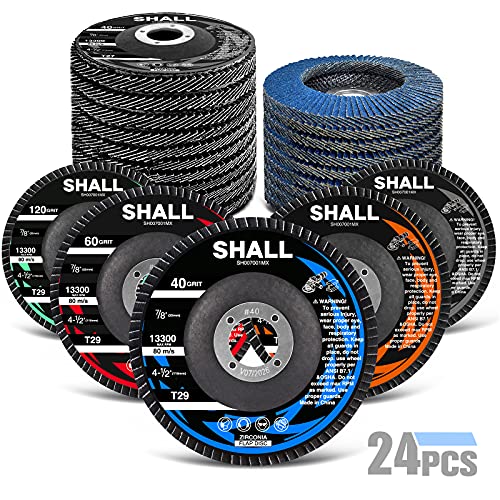
Extreme Durability and Value : Made of hard zirconia alumina material which lasts longer than standard aluminum oxide abrasive material; These flap discs also feature durable fiberglass backing plates requiring less pressure for heavy stock removal and provides with extra secure safe assurance - absorbing vibrations without smear during usage

[Various Grit Flap Discs]: Including 4-1 2 inch Flap discs with 40/60/80/120 4 different grits. This angle grinder flap disc set contains 2 x 40 grit, 1 x 60 grit, 1x 80 grit, 1 x120 grit. This sanding discs set is a great choice for grinding various metals, perfectly meets all you need.
How to Get the Best Results With Flap and Sanding Discs
Flap-Disc Technique
Use two hands, keep the side handle installed, and hold a stable stance. Bring the disc into contact smoothly rather than striking the workpiece. Keep it moving so heat and removal remain even.
Use the working angle specified for the disc’s Type 27 or Type 29 shape. A Type 27 disc generally works at a shallower angle, while a Type 29 disc is designed for a steeper and more aggressive contact angle. Do not flatten a conical disc or stand a flat disc too steeply simply to make it cut faster.
Use 36–40 grit only when substantial removal is truly needed. Switch to 60–80 grit for blending and 80–120 grit when the next process requires a finer scratch pattern.
Sanding-Disc Technique
Let an orbital sander reach operating speed before placing it flat on the surface, unless the tool manual instructs otherwise. Keep the pad flat, move at a steady pace, and avoid tipping onto an edge.
With a grinder-mounted fiber disc, use the correct backing pad and the working angle recommended by the disc and pad manufacturers. Do not run the abrasive beyond the pad, use a cracked pad, or substitute improvised mounting hardware.
Use dust extraction when the tool and disc support it. Match the disc’s hole pattern to the pad, empty dust containers as directed, and do not allow combustible dust to build up near sparks.
When to Replace an Abrasive Disc
Stop and inspect the accessory if it tears, cracks, sheds flaps, vibrates, becomes badly loaded, glazes, overheats, or stops cutting with normal pressure.
Replace a flap disc before the abrasive wears into the backing plate or hub. Replace a sanding disc when the abrasive is worn smooth, torn, contaminated, or no longer produces a consistent scratch. Replace a backing pad if it is cracked, warped, burned, badly worn, or unable to hold the disc securely.
Abrasive Disc Safety Checklist
- Read the tool manual and the disc label before use.
- Disconnect the cord or remove the battery before mounting, adjusting, or inspecting the accessory.
- Use only a disc designed for the machine and operation.
- Confirm that the accessory diameter and arbor or thread match the tool.
- Never exceed the disc’s marked maximum RPM.
- Install the required guard and position it between your body and the disc.
- Keep the grinder’s side handle installed and use two-handed control.
- Use the correct backing pad, retaining nut, flange, and mounting hardware.
- Inspect the disc and pad for cracks, tears, moisture damage, distortion, contamination, or missing flaps.
- Clamp or secure the workpiece before grinding or sanding.
- Wear safety glasses with side protection; add a face shield for flying-particle protection.
- Use hearing protection and clothing that will not catch in the rotating accessory.
- Select respiratory protection and dust controls for the actual material and coating hazard.
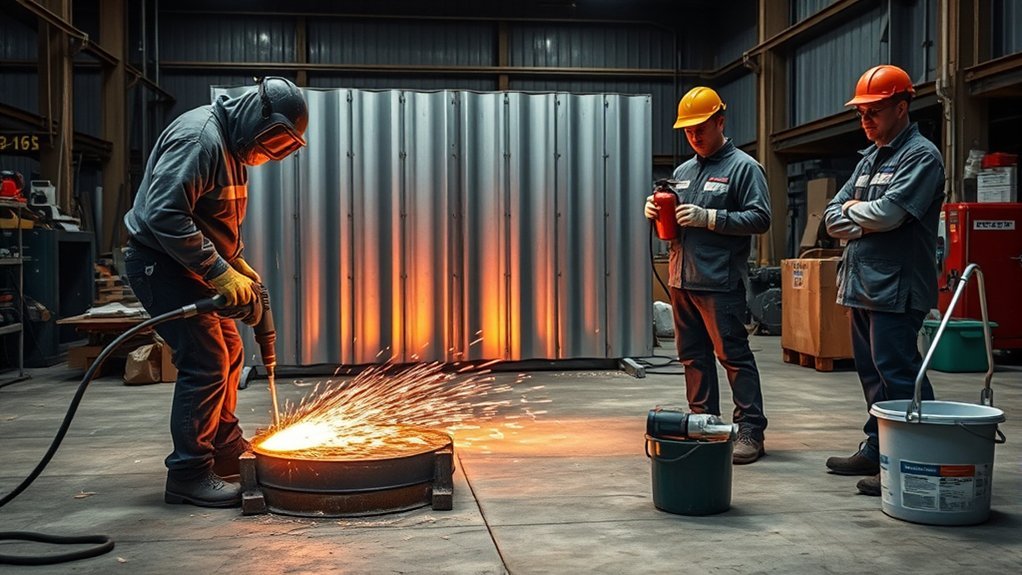
- Direct sparks away from people, cords, hoses, vehicles, glass, fuel, solvents, sawdust, and other combustible material.
- Do not use a disc that has been dropped, damaged, soaked, altered, or stored contrary to its instructions.
The OSHA grinder checklist specifically calls for compatible wheel and grinder RPM ratings and appropriate eye or face protection. OSHA’s PPE assessment guidance also states that a face shield should be combined with safety spectacles or goggles where impact protection is needed.
Common Mistakes to Avoid
Most poor results come from a mismatched accessory, excessive pressure, the wrong working angle, or skipping too many grit stages. A correctly selected disc should cut without severe chatter, smoke, uncontrolled vibration, or repeated stalling.
- Do not treat all products called “sanding discs” as interchangeable.
- Do not mount an orbital-sander disc on an angle grinder.
- Do not use a resin-fiber disc without its approved backing pad.
- Do not use a flap disc when a very fine, flat wood finish is required.
- Do not force a light sanding disc to perform heavy weld removal.
- Do not use a coarse flap disc on thin sheet without testing the removal rate.
- Do not press harder when a disc stops cutting; inspect or replace it.
- Do not jump directly from a deep coarse scratch to a very fine grit and expect the fine disc to erase it quickly.
- Do not ignore the Type 27 or Type 29 working-angle guidance.
- Do not use an oversized disc, remove the guard to create clearance, or exceed the marked RPM.
- Do not trim a backing plate unless the product is specifically designed and labeled as trimmable.
- Do not sand an unknown coating until its dust and chemical hazards have been identified.
Frequently Asked Questions
Are flap discs better than grinding discs?
Flap discs are better when you want a balance of stock removal, control, and surface blending. Rigid grinding wheels can be better for maximum removal on suitable heavy material. The correct choice depends on the metal thickness, weld size, finish requirement, and operator control.
Are flap discs good for removing paint?
A flap disc can remove paint from metal, but a coarse disc can also cut into the base material and overheat thin panels. For delicate metal, wood, or finish-sensitive surfaces, an orbital sanding disc or purpose-made stripping disc usually gives better control.
What is the best grinding disc for removing welds?
A 36- or 40-grit flap disc is a practical starting point for many weld-removal jobs on sufficiently thick steel. A rigid grinding wheel may remove a large weld faster, while a 60- or 80-grit flap disc is better for blending the remaining transition. Avoid grinding into the base metal.
Are flap discs good for sanding wood?
Flap discs can shape or strip wood quickly, but they can gouge, burn, or round the surface. A random-orbit or geared sander with progressive sanding discs is normally the better choice for flat panels and final finish preparation.
Can you use flap discs on an angle grinder?
Yes. Flap discs are commonly designed for angle grinders, but the disc diameter, arbor or thread, guard, attachment system, and maximum RPM must match the grinder. Follow both the grinder manual and the disc label.
Do sanding discs need a backing pad?
Many do. Resin-fiber discs require a compatible grinder backing pad and retaining hardware. Hook-and-loop and pressure-sensitive discs attach to a matching sander pad. A flap disc normally has its own integrated backing plate or threaded hub.
What is the difference between Type 27 and Type 29 flap discs?
Type 27 flap discs have a flatter profile for flat surfaces, outside edges, blending, and smoother finishing. Type 29 discs have a conical profile that supports a steeper working angle and more aggressive stock removal. Use the angle specified on the individual product.
Can you use a flap disc on aluminum?
Use only a flap disc that the manufacturer specifically lists for aluminum or nonferrous metal. An unsuitable abrasive can load with soft metal, increase heat, and stop cutting efficiently. Use light pressure and replace a badly loaded disc rather than forcing it.
Conclusion
Your best choice depends on the tool, mounting system, material, removal rate, and finish. Choose a flap disc for controlled metal grinding, weld blending, beveling, and curved or edged surfaces. Choose an orbital sanding disc for broad wood, paint, plastic, and finish-sensitive work. Consider a resin-fiber disc when you need fast grinder-based sanding with the correct backing pad.
Start with the least aggressive compatible disc that can complete the job. Check the diameter, arbor, backing system, guard, and maximum RPM before use, then test the abrasive on scrap or a hidden area. That approach gives you more control, fewer unwanted scratches, less heat, and a safer final result.
Sources
- OSHA — Checklist for Abrasive Wheel Equipment Grinders — supports RPM compatibility, inspection, dust collection, and eye or face protection guidance.
- OSHA — Personal Protective Equipment Assessment — supports hazard assessment and the use of face shields with primary eye protection for impact hazards.
- 3M — Standard Abrasives Flap Disc Selection Guide — supports flap-disc construction, pressure categories, abrasive minerals, and Type 27 versus Type 29 applications.
- Norton Abrasives — Choosing the Right Abrasive for Welding and Metal Fabrication — supports application-specific abrasive formats and common grit ranges for weld removal, blending, and finishing.
- 3M — Paper Disc 363I Technical Information — supports the use of heavy-backed aluminum-oxide sanding products for aggressive wood and metal sanding.
- Festool — Removing Paint and Preparing Wood for New Coatings — supports progressive sanding and cautions that angle grinders can create grooves in wood.