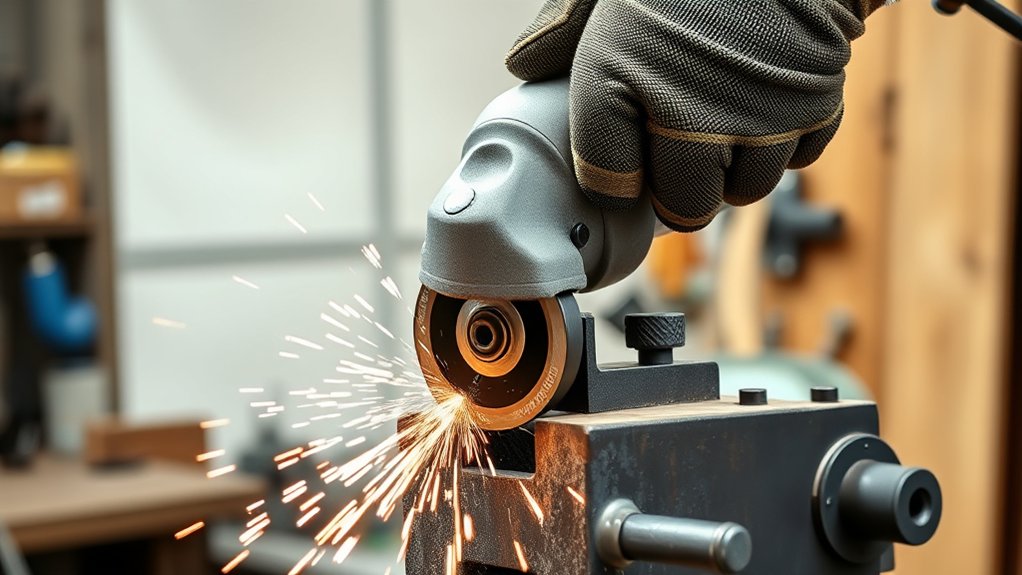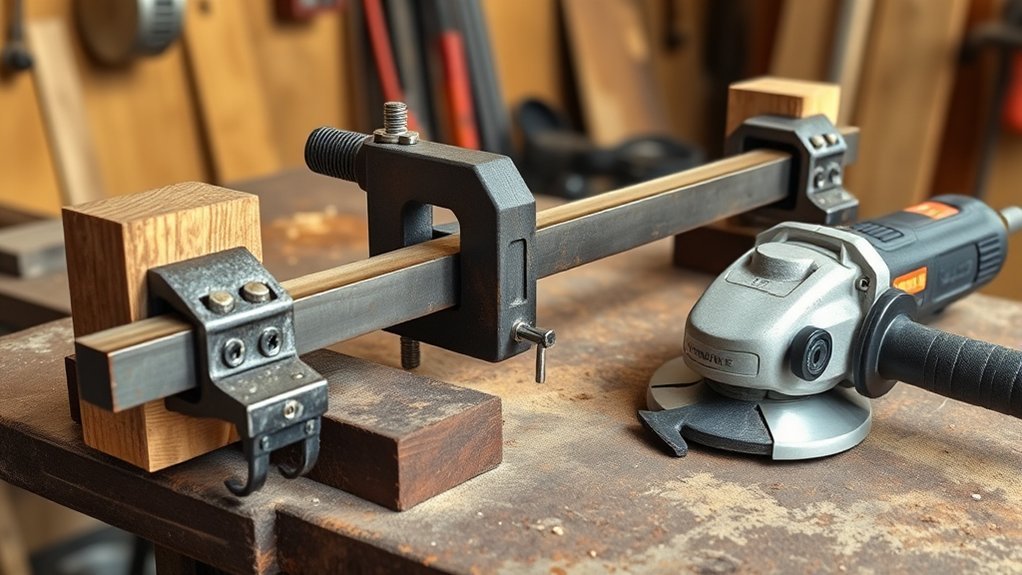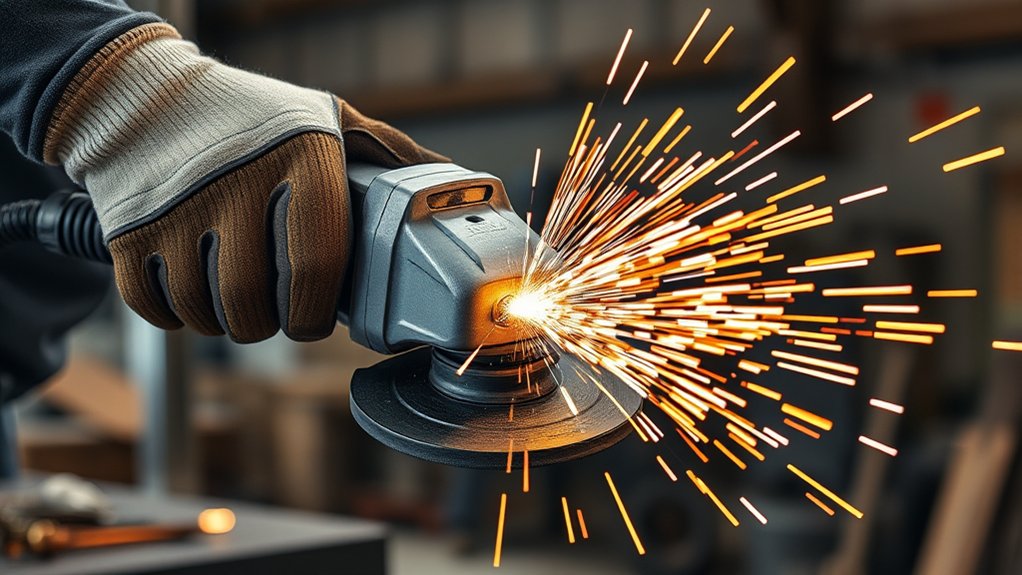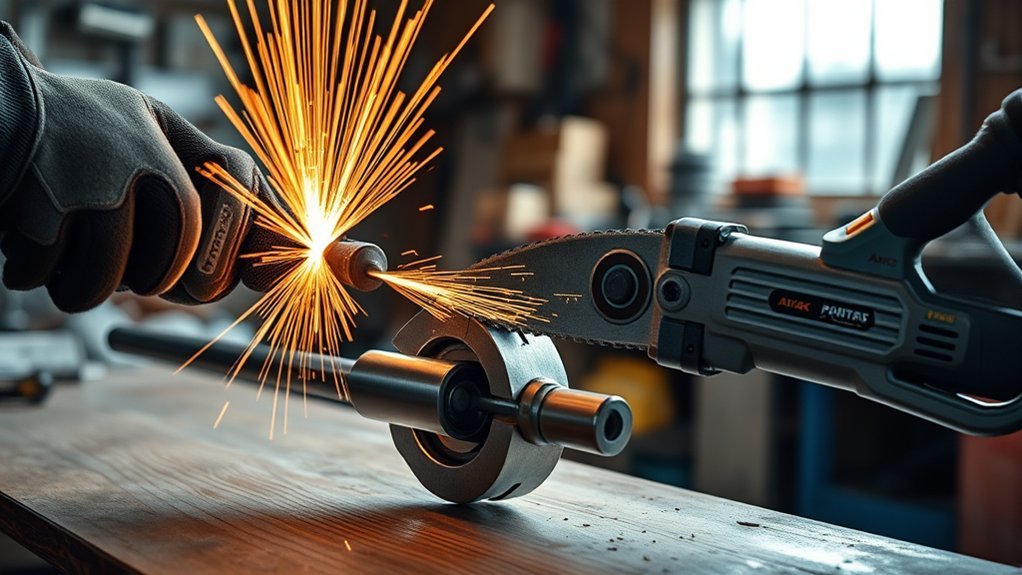
An angle grinder and a reciprocating saw can both cut metal, but they solve different problems. An angle grinder is often faster on open, straight cuts, while a reciprocating saw is usually easier to position for demolition, flush cuts, pipes, and cramped spaces. The best choice depends on the material, cut shape, required finish, available clearance, and hazards around the work area.
Quick Answer
For most open, straight cuts in steel, an angle grinder with the correct cut-off wheel is usually faster. A reciprocating saw is generally better for demolition, flush cuts, pipe near walls, and cramped areas. Neither tool is universally safer; accessory choice, work support, PPE, spark control, and operating technique determine the risk.
Key Takeaways
- Choose an angle grinder for fast cuts in accessible steel, rebar, bolts, plate, and tubing when sparks can be safely contained.
- Choose a reciprocating saw for demolition, pipe removal, flush cuts, irregular shapes, and locations where a round wheel cannot be positioned correctly.
- A grinder’s RPM and a saw’s strokes per minute measure different motions and do not directly reveal which tool will cut faster.
- Match every wheel or blade to the tool, metal type, stock thickness, and manufacturer’s instructions.
- Both tools can kick, bind, throw debris, damage nearby surfaces, and cause serious injury when the workpiece or accessory is poorly controlled.
Angle Grinder vs. Reciprocating Saw: Side-by-Side Comparison
| Factor | Angle Grinder | Reciprocating Saw |
| Typical strength | Fast, direct abrasive cuts in accessible metal | Demolition, flush cuts, pipes, and confined access |
| Cutting action | Rotating abrasive wheel removes material | Toothed blade moves back and forth |
| Speed | Often faster on straight cuts in open areas | Can be slower, but speed improves with the correct carbide or bi-metal blade |
| Cut finish | Can follow a straight marked line, but usually leaves heat discoloration and burrs | Usually rougher and more likely to wander unless the blade and shoe are controlled |
| Flush cutting | Limited by wheel diameter, guard, and tool body | A major advantage when the saw and blade support flush positioning |
| Sparks and heat | Common when cutting ferrous metal; requires strict fire control | Usually fewer visible sparks, but the blade and metal can still become hot |
| Vibration | High rotational forces and possible kickback if the wheel binds | Can chatter strongly when the shoe is not held against the work |
| Accessory life | Cut-off wheels become smaller as they wear and must be discarded if damaged | Blades may dull, bend, lose teeth, or break when poorly matched or forced |
| Best environment | Open, controlled workspace with a safe spark path | Demolition and constrained areas with a clear blade path |
What Are Angle Grinders?
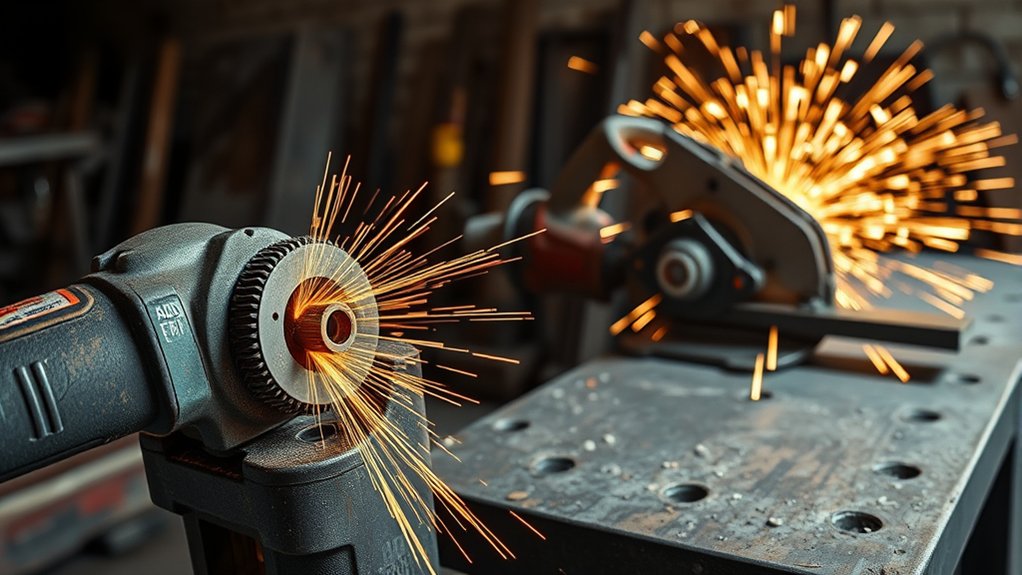
An angle grinder is a handheld rotary tool used with task-specific wheels and attachments for cutting, grinding, sanding, cleaning, and polishing. During metal cutting, a thin abrasive cut-off wheel removes material along a narrow line. The action creates friction, heat, debris, and—when cutting many ferrous metals—a stream of hot sparks.
Grinder speed varies with the tool and wheel diameter. Some compact models operate at up to 12,000 no-load RPM, while larger grinders commonly operate more slowly. The number printed on the tool is not a target for every accessory: the wheel’s maximum rated speed must equal or exceed the grinder’s maximum speed.
A grinder can perform several jobs with one motor, but each job requires the correct accessory. A grinding wheel, flap disc, wire wheel, and thin cut-off wheel are not interchangeable. Use only accessories specifically labeled for the tool, material, wheel size, spindle system, guard, and intended operation.
Warning: Never remove the grinder guard to gain extra cutting depth or access. OSHA requires portable-grinder guards to be positioned between the operator and the wheel so fragments from a failed wheel are directed away from the user.
Key Advantages of Angle Grinders for Metal Cutting
Choosing an angle grinder usually means prioritizing cutting speed, direct line-of-sight, and the ability to grind or deburr the edge with the same tool after changing accessories. Its strongest advantages appear when the metal is accessible and the spark path can be controlled.
Speed and Efficiency
A properly equipped grinder is often faster than a reciprocating saw on straight cuts through bolts, rebar, bar stock, plate, and accessible tubing. The rotating wheel removes metal continuously, while a saw blade must reverse direction during every stroke.
That does not make the grinder faster in every situation. A worn wheel, weak battery, oversized workpiece, poor body position, or unsuitable wheel can slow the cut. A reciprocating saw may complete a confined cut sooner if the grinder cannot reach the marked line with its guard correctly installed.
Versatile Cutting Capabilities
After cutting, the grinder can accept a suitable grinding wheel or flap disc to smooth burrs, blend welds, or soften a sharp corner. This reduces the number of tools needed for basic fabrication and repair work.
The ability to change functions also creates a safety responsibility. Never cut with a wheel intended only for face grinding, and never apply heavy side pressure to a thin cut-off wheel. Thin wheels are designed to cut mainly with their edge and may break if twisted, pinched, dropped, or side-loaded.
Compact and Maneuverable Design
Many small grinders have a compact head that gives the operator a clear view of a marked cut. However, angle grinders are not automatically lighter than reciprocating saws. Actual weight depends on the tool, wheel size, battery, handle, and guard.
The wheel should perform the cutting without heavy force. Pushing harder does not guarantee a faster cut and may increase heat, wheel wear, binding, and loss of control.
What’s a Reciprocating Saw?
A reciprocating saw drives a straight blade in a rapid push-and-pull motion. It can cut metal, wood, plastic, drywall, and other materials when fitted with the correct blade. “Sawzall” is Milwaukee’s trademarked product name, although the word is often used informally for reciprocating saws in general.
Key Features Explained
Reciprocating saws are strongly associated with demolition because the narrow blade can enter spaces that do not provide room for a circular wheel. Certain models also use multi-position blade clamps that support flush cutting. A pivoting shoe provides a contact point against the workpiece and helps limit vibration.
The tool is simple to start, but clean metal cutting still requires practice. A long flexible blade may wander, and a poorly supported pipe can shake violently. Hold the shoe firmly against the work whenever the cut allows it, maintain two-handed control, and keep the blade path clear behind the material.
Blade Types Available
Bi-metal blades are a common choice for mild steel, tubing, conduit, and mixed demolition. Carbide-tooth blades are often selected for thick, hard, abrasive, or difficult metals such as cast iron, stainless steel, heavy pipe, and rebar. Use the blade manufacturer’s material and thickness chart rather than choosing by the word “metal” alone.
Teeth per inch, or TPI, must suit the stock thickness:
- Higher TPI: Commonly used on thinner metal so several teeth remain engaged and the blade does not grab the edge.
- Medium TPI: A general choice for tubing, conduit, angle iron, and medium-thickness steel.
- Lower TPI with carbide teeth: Often designed for thick or extreme metal where larger gullets help remove chips.
A lower TPI is not automatically rough and a higher TPI is not automatically better. Tooth material, blade thickness, tooth geometry, stroke speed, and the workpiece all affect cutting performance. Milwaukee, for example, lists lower-TPI carbide blades for thick metal and higher-TPI products for thinner or medium stock in its reciprocating-blade range.
Ideal Cutting Applications
A reciprocating saw is especially useful for removing pipe, cutting fasteners in an assembly, reaching behind framing, and making demolition cuts where appearance is secondary. It can also cut close to a wall when the tool and blade clamp support the required position.
Clamp loose metal whenever possible. When clamping is impossible, brace the work so it cannot swing into the blade. Support both the main workpiece and the offcut so the kerf does not close and pinch the blade.
Benefits of Using a Reciprocating Saw for Metal Cuts
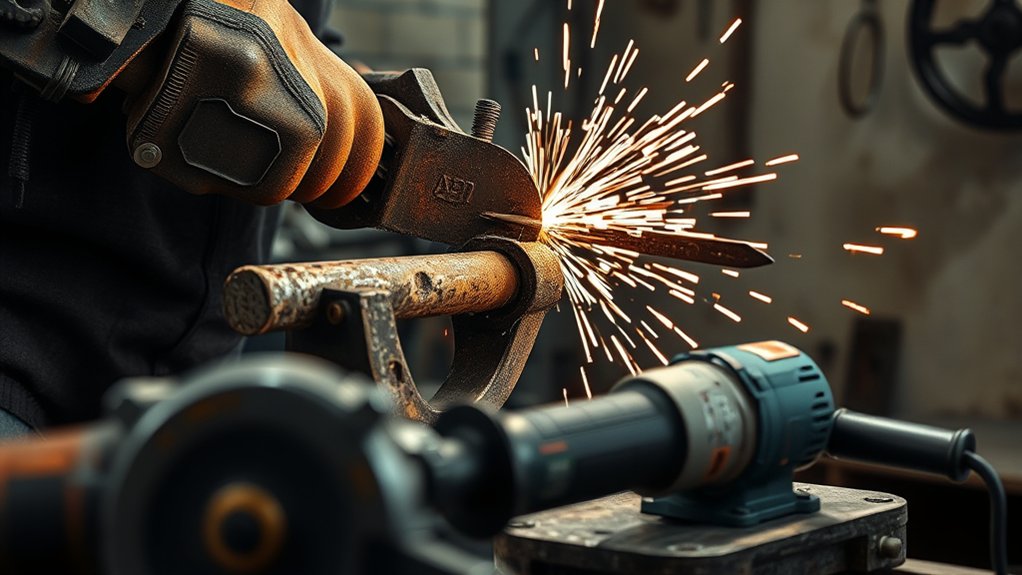
A reciprocating saw fits into many awkward locations where a round grinder wheel, guard, or gear housing cannot be positioned correctly. Blade changes are quick on many current models, and metal-cutting blades are available in several lengths, thicknesses, tooth patterns, and materials.
A toothed blade often produces fewer visible sparks than an abrasive wheel. It may also concentrate less abrasive heat in the cut, but it is not a cold-cutting process. The blade, chips, workpiece, and offcut can become hot. Friction rises quickly when a blade is dull, the speed is wrong, or excessive feed pressure is used.
The saw’s ability to accept wood, demolition, pruning, plastic, and metal blades also makes it useful beyond metalworking. However, every blade must be matched to the material. A wood blade used on solid metal may strip its teeth, bind, or become damaged almost immediately.
Which Tool Is Better for Common Metal-Cutting Jobs?
| Job | Usually Better | Why |
| Cutting an exposed bolt or rebar | Angle grinder | Usually fast when the spark path is open and controlled |
| Cutting pipe close to a wall | Reciprocating saw | A suitable blade can extend beyond the saw body for a flush or near-flush cut |
| Demolishing mixed wood and metal | Reciprocating saw | Demolition blades can tolerate nails, screws, framing, and irregular access |
| Following a straight line on accessible plate | Angle grinder | The wheel gives a direct view of the cut line, though a guide and steady technique are still needed |
| Cutting thin sheet with minimal distortion | Neither may be ideal | A shear, nibbler, or properly equipped metal-cutting saw may produce a cleaner result |
| Working near finished surfaces | Reciprocating saw, when suitable | Usually creates fewer spark trails, but chips and the moving blade can still damage nearby surfaces |
| Making repeated square cuts in stock | Neither may be ideal | A band saw, cold saw, or metal-cutting chop saw provides better repeatability |
Products Worth Considering
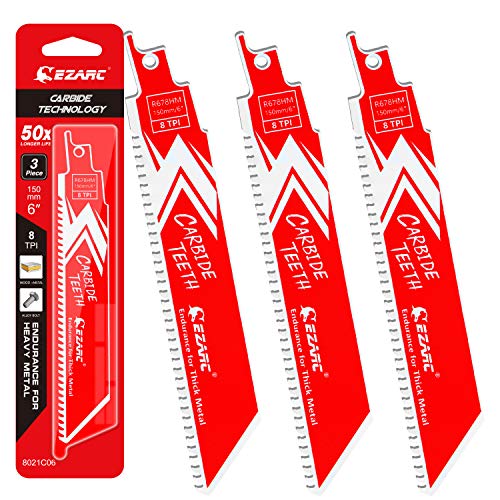
【Carbide Technology】Up to 50x longer life than bi-metal reciprocating saw blades

【EXCELLENT CUTTING SKILLS】- Bi-metal reciprocating saw blades metal with sturdy cobalt edge provide effortless cutting into sheet metal, metal pipe and profile. Blades cut through medium to thick sheet metals 0.1- 0.3 inch (2-8 mm), solid pipes/profiles diameter < 7 inch.

【Professional 6PCS Cutting Set】Includes 6 pieces of 9-inch 14TPI reciprocating blades, ideal for cutting through steel pipes, rebar, and thick metal sheets. Suitable for professional projects and home use
Comparing Cutting Speeds: Angle Grinder vs. Reciprocating Saw
An angle grinder is often faster when making a short, straight cut through exposed steel. A reciprocating saw may take longer because each tooth removes a chip during a back-and-forth stroke. However, access can reverse the result. A saw can be quicker when a grinder would require disassembly, a guard change, or an unsafe cutting angle.
Do not compare grinder RPM directly with reciprocating-saw strokes per minute. RPM measures wheel rotation. Strokes per minute measures the blade’s back-and-forth cycles. Actual cutting speed depends on:
- Tool power and battery condition
- Wheel or blade design
- Metal type, shape, hardness, and thickness
- Cutting depth and available access
- Workpiece support
- Accessory sharpness or remaining wheel diameter
- Feed pressure and operator control
The fastest tool on paper is not always the fastest tool in the work area. Safe access, correct support, and the right accessory often matter more than the motor’s speed rating.
How to Choose the Correct Wheel or Blade
Choosing an Angle Grinder Cut-Off Wheel
Check every item below before mounting a wheel:
- Operation: The wheel must be labeled for cutting, not only grinding.
- Material: Use a wheel intended for the metal being cut. Do not assume one abrasive formulation suits steel, stainless steel, aluminum, masonry, and every other material.
- Diameter: The wheel must fit the grinder and its approved guard.
- Spindle or mounting system: Confirm the arbor, flange, thread, or quick-change system is compatible.
- Maximum speed: The wheel’s maximum RPM must meet or exceed the tool’s rated maximum speed. OSHA includes this check in its abrasive-wheel grinder checklist.
- Condition: Reject cracked, chipped, dropped, water-damaged, expired, or otherwise suspect wheels.
- Guard: Install the guard specified for the cut-off wheel and position it between your body and the wheel.
Choosing a Reciprocating Saw Blade
Select a blade according to material, thickness, access, and required durability:
- Bi-metal blade: A practical general-purpose choice for many steels, pipes, studs, and demolition cuts.
- Carbide-tooth blade: Better suited to many thick, hard, abrasive, or difficult metals, provided the manufacturer lists the application.
- Short blade: Usually stiffer and easier to control when it still clears the work throughout the stroke.
- Long blade: Useful for deep cuts and flush positioning, but more likely to flex or strike hidden objects.
- Fine tooth pitch: Commonly used for thin stock to keep several teeth in the cut.
- Coarser tooth pitch: Often used for thicker metal when the blade is designed for that material.
Pro Tip: Use the shortest blade that completely clears the material at the far end of the stroke. Excess blade length adds flex, vibration, and the chance of striking an object behind the work.
Essential Safety Tips for Both Tools
Both tools can cause serious cuts, impact injuries, burns, hearing damage, fires, and loss of control. Read the manual for the exact tool and accessory before use. Workplace users must also follow applicable employer procedures and regulations.
Personal Protective Equipment
- Primary eye protection: Wear safety glasses with side protection or appropriate goggles.
- Face protection: For abrasive cutting and other high-impact debris hazards, wear a face shield over—not instead of—primary eye protection. OSHA’s PPE assessment guidance explains that face shields should be combined with safety glasses or goggles for impact hazards.
- Hearing protection: Use properly fitted earplugs or earmuffs when noise exposure may be hazardous. NIOSH notes that many power tools can produce noise around or above levels that require attention.
- Hand and body protection: Wear snug, task-appropriate gloves and nonflammable clothing. Avoid loose sleeves, jewelry, drawstrings, and anything that could contact a moving wheel or blade.
- Foot protection: Wear sturdy closed-toe footwear and keep hot offcuts from falling onto your feet.
- Respiratory protection: Do not assume a basic disposable dust mask is suitable for every metal or coating. Use ventilation, dust control, and respiratory protection selected for the actual hazard.
Grinding or cutting painted, galvanized, plated, contaminated, or unknown metal can release hazardous dust or fumes. OSHA requires ventilation controls where dry grinding exposures exceed applicable limits and emphasizes selecting respiratory protection for the identified hazard.
General Safe Operating Procedures
- Identify the metal, coatings, nearby utilities, and objects hidden behind the cut.
- Disconnect the cord or remove the battery before installing or changing an accessory.
- Inspect the tool, cord, battery, guard, shoe, handle, switch, wheel, or blade.
- Clamp the work when possible and support both sides of the planned cut.
- Position the offcut so it cannot fall, swing, trap the accessory, or strike anyone.
- Remove flammable liquids, sawdust, paper, rags, insulation, and other combustibles from the spark and chip path.
- Keep bystanders outside the debris path and use screens when necessary.
- Maintain stable footing and a balanced body position.
- Keep both hands on the designated grips unless the tool’s approved design and procedure state otherwise.
- Allow the accessory to stop completely before setting the tool down.
Angle Grinder Safety Procedures
- Use the side handle and maintain two-handed control.
- Install the correct cut-off guard and position it between your body and the wheel.
- Confirm the wheel is designed for cutting and rated for the grinder’s maximum RPM.
- Stand out of the wheel’s direct plane during startup and follow the manufacturer’s no-load inspection procedure.
- Guide the wheel straight through the cut. Do not twist it or use its side as a lever.
- Do not force a wheel that slows sharply, chatters, or begins to bind.
- Keep the cord, battery, clothing, and body away from the wheel and spark stream.
- Never defeat the switch, remove the guard, or use an oversized wheel.
OSHA’s portable-tool standard states that a right-angle grinder guard must be located between the operator and wheel during use. Keep the factory safety guard installed and correctly adjusted.
Reciprocating Saw Safety Procedures
- Use a blade long enough to clear the material throughout the entire stroke, but avoid unnecessary excess length.
- Keep the saw’s shoe firmly against the work whenever the cut allows it.
- Check behind the material for wiring, plumbing, gas lines, fasteners, and finished surfaces.
- Do not begin a metal plunge cut unless the tool manual, blade, and procedure specifically permit it.
- Use reduced or appropriate speed where the manufacturer recommends it for metal.
- Stop if the blade bends sharply, loses teeth, turns blue from heat, or begins striking the shoe or surrounding structure.
- Wait for the blade to stop before withdrawing it from a tight cut or setting the saw down.
Note: Fewer visible sparks do not make a reciprocating saw harmless. Sharp chips, a protruding blade, hot metal, hidden utilities, blade breakage, and severe vibration remain significant hazards.
Choosing the Right Tool: Angle Grinder or Reciprocating Saw?
Evaluate the complete cutting setup instead of choosing by speed alone:
- Access: Can the tool, guard, handle, and accessory reach the cut without being misused?
- Cut shape: Is it a straight exposed cut, a flush cut, or an irregular demolition cut?
- Material and thickness: Is an approved wheel or blade available for the exact stock?
- Finish: Does the edge need to be square and repeatable, or is a rough demolition cut acceptable?
- Spark path: Can sparks and hot particles be directed away from people, vehicles, glass, wiring, finishes, and combustibles?
- Work support: Can the material and offcut be secured without closing the kerf?
- Clearance behind the work: Could a long saw blade hit a hidden object?
- Cleanup: Will the edge need filing, grinding, or another finishing operation?
Choose the grinder when it can be used with its guard and side handle in an open, controlled position. Choose the reciprocating saw when its blade geometry provides safer access and the shoe can be supported against the work. Choose a different tool when neither setup offers acceptable control or cut quality.
Products Worth Considering

Super Power : Equipped with a 4 Amps motor along with a 500 W maximum power output, the unique power output of this 4-1/2 angle grinder can produce a no-load speed of 11000 RPM, giving it fast cutting and grinding capacity


Powerful & Longer Service Life: This metal grinder is equipped with a 900W 7.5-Amp motor delivering up to 12,000 RPM, providing consistent power and efficiency for home DIY projects and light to medium tasks. Extra carbon brushes are readily available to extend motor running time
Noise, Spark, and Dust Management
Both tools generate noise, vibration, and debris. Actual sound levels vary by model, accessory, material, and work environment. NIOSH identifies power tools as a common source of potentially hazardous workplace noise and recommends controlling exposure and using properly fitted hearing protection when needed. See the agency’s noise and hearing-loss guidance.
An angle grinder cutting ferrous metal commonly throws a concentrated stream of hot sparks and abrasive debris. Position the guard and your body so the stream travels into a cleared, noncombustible area. Sparks can travel, bounce, collect in cracks, and ignite material after the cutting stops.
A reciprocating saw usually creates fewer visible sparks, but it still throws chips and can damage nearby finishes. A blade may also strike objects behind the cut. Use barriers that do not interfere with the tool, inspect the opposite side of the work, and protect surfaces from both chips and blade travel.
Metal dust deserves separate attention. Dust from aluminum and certain other metals can be combustible, while coatings or alloying elements may create toxic exposure. Never mix unknown metal dusts, and use appropriate collection and housekeeping methods for the material.
Cut Quality, Heat, and Burrs
An angle grinder can follow a marked line closely, but a hand-guided abrasive wheel does not automatically create a precision-machined edge. Expect some combination of burrs, heat tint, taper, and surface marks. A thin wheel can also drift if it is twisted or allowed to wear unevenly.
A reciprocating saw often leaves a rougher edge because the blade can flex and each tooth exits the material repeatedly. A thick, short blade and firm shoe contact help produce a straighter cut. Letting the work vibrate usually increases chatter and edge damage.
After either tool completes the cut:
- Allow the metal and offcut to cool before touching them with bare hands.
- Remove burrs with an appropriate file, deburring tool, or correctly guarded grinding accessory.
- Inspect the cut for cracks, heavy gouges, sharp projections, and unacceptable heat damage.
- Clean chips and abrasive debris without brushing them toward your face or using bare hands.
When Neither Tool Is the Best Choice
An angle grinder and reciprocating saw are versatile, but another tool may give a cleaner or more repeatable result:
- Portable or stationary band saw: Good for controlled cuts in pipe, bar, conduit, and structural shapes with relatively few sparks.
- Metal-cutting circular saw: Useful for faster straight cuts in sheet, plate, and profiles when fitted with the correct blade and chip collection.
- Abrasive chop saw: Suitable for repeated crosscuts in stock when the machine is properly secured and guarded.
- Cold saw: Produces accurate, repeatable cuts with a controlled toothed blade and suitable coolant system.
- Shear or nibbler: Often better for thin sheet where minimizing heat and distortion matters.
- Plasma cutter: Useful for fast freehand or shaped cuts in conductive metal, but it introduces a different set of electrical, fume, fire, and eye hazards.
Troubleshooting Common Cutting Problems
The Grinder Wheel Cuts Slowly
- Confirm the wheel is intended for the metal and cutting operation.
- Check whether the wheel is glazed, contaminated, damaged, or nearly worn out.
- Verify that the battery is charged or the power supply is adequate.
- Reduce excessive pressure and keep the wheel aligned with the cut.
- Stop if the tool speed falls sharply or the motor overheats.
The Grinder Wheel Binds or Kicks
- Stop the tool and let the wheel come to a complete halt.
- Check whether the offcut moved and closed the kerf.
- Reposition the supports so the cut opens rather than pinches.
- Replace any wheel that was twisted, chipped, or damaged during the bind.
- Do not restart while the wheel remains trapped in the cut.
The Reciprocating Saw Chatters Violently
- Press the shoe firmly against the work.
- Clamp or brace the material more securely.
- Use a shorter, thicker, or more appropriate blade.
- Select a tooth pitch that keeps several teeth engaged.
- Reduce speed if the blade manufacturer recommends it for the metal.
The Saw Blade Loses Teeth or Dulls Quickly
- Check that the blade is rated for the metal and thickness.
- Do not use a coarse blade on very thin stock unless its manufacturer approves the application.
- Reduce forcing and let the teeth remove chips.
- Use an approved cutting lubricant when the blade or tool manufacturer recommends one.
- Replace a blade that is bent, cracked, missing teeth, or no longer cutting efficiently.
The Cut Wanders Off the Mark
- Use a clear, visible layout line.
- Start with a shallow guide groove when appropriate.
- Use a stiff blade or keep the grinder wheel straight rather than twisting it.
- Improve body position so the tool can follow the entire line without overreaching.
- Choose a guided saw when the finished cut must be highly square or repeatable.
Maintaining Your Angle Grinder and Reciprocating Saw
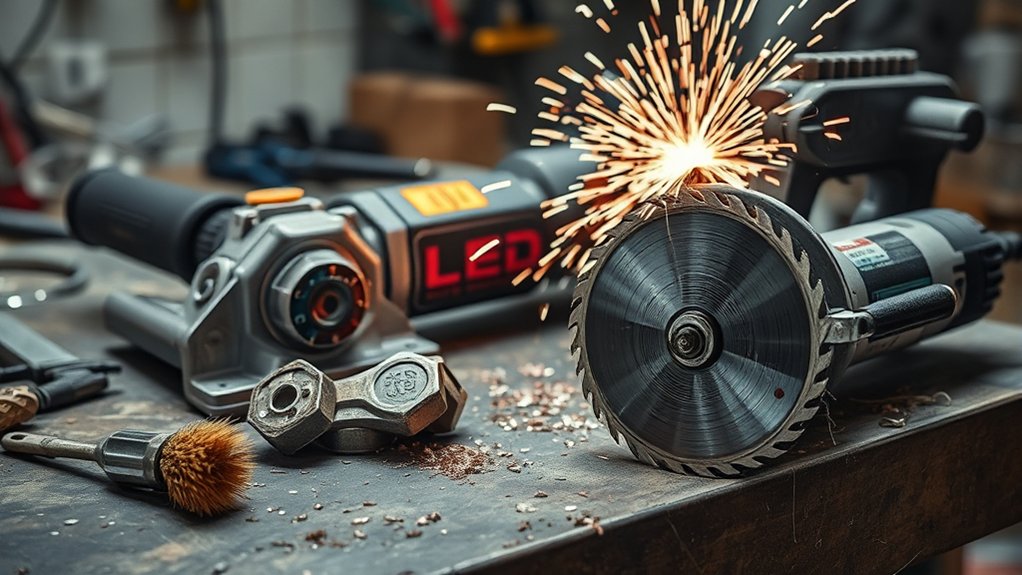
Inspect an angle grinder and its wheel before every use. Discard any cracked, chipped, badly worn, dropped, contaminated, or otherwise questionable abrasive wheel. Check that the guard locks securely, the side handle is tight, the flanges are clean, and the wheel is mounted according to the manual.
For a reciprocating saw, inspect the blade clamp, shoe, vents, cord, battery interface, and blade. Remove chips from the clamp so the blade can seat fully. Lubricate only the points and mechanisms identified in the manufacturer’s maintenance instructions; excessive or incorrect lubricant can attract debris or damage components.
Disconnect power before cleaning or servicing either tool. Use the manufacturer’s recommended method for clearing vents rather than directing debris into the motor. Store the tools and accessories in a dry location where abrasive wheels cannot be crushed, bent, exposed to moisture, or struck by other equipment.
Always verify that the blade or wheel is fully secured before starting. Basic inspection reduces the chance of accessory release, poor cuts, overheating, and mid-project failure.
Common Mistakes to Avoid When Using Cutting Tools
- Using the wrong accessory: A wood blade is not a metal blade, and a grinding-only wheel is not a cut-off wheel.
- Ignoring the wheel’s maximum RPM: An underspeed-rated wheel can fail when mounted on a faster grinder.
- Removing the grinder guard: Extra access does not justify losing the barrier designed to redirect fragments and sparks.
- Forcing the tool: Excessive pressure bends saw blades, overheats accessories, slows motors, and increases binding.
- Failing to support the offcut: A closing kerf can trap a wheel or blade and cause sudden movement.
- Holding loose metal by hand: The work can spin, vibrate, fall, or pull the accessory off line.
- Using a blade that is too long: Excess length increases flex and may strike hidden objects.
- Starting without checking the opposite side: A blade can enter wiring, plumbing, fuel lines, or finished surfaces.
- Working near combustibles: Grinder sparks and hot metal can ignite material beyond the immediate cutting point.
- Touching the offcut immediately: Both abrasive and toothed cutting can leave metal hot enough to burn skin.
Final Thoughts on Tool Selection for Metal Cutting
An angle grinder is usually the stronger choice for a fast, open cut through steel when the correct cut-off wheel, guard, side handle, and spark controls can be used. A reciprocating saw is often better for demolition, pipe removal, flush cutting, and cramped spaces where its straight blade can reach the work.
Neither tool wins every category. The grinder usually offers speed and direct line control. The reciprocating saw offers access and flexible blade positioning. A band saw, shear, nibbler, or guided metal-cutting saw may be better when accuracy, low sparks, low distortion, or repeatability matters more than portability.
Frequently Asked Questions
When should you use an angle grinder instead of a reciprocating saw?
Use an angle grinder for fast, accessible cuts in bolts, rebar, bar stock, plate, and tubing when the correct cut-off wheel and guard fit the application and the spark path can be cleared. It is also useful when you need to grind or deburr the edge afterward.
When is a reciprocating saw better for cutting metal?
Choose a reciprocating saw for demolition, flush or near-flush pipe cuts, irregular assemblies, and confined spaces where a grinder wheel and guard cannot be positioned correctly. Use a blade designed for the metal and keep the saw’s shoe against the work to reduce vibration.
What is the fastest way to cut through metal?
For a short, open cut in common steel, an angle grinder with a compatible thin cut-off wheel is often faster than a reciprocating saw. For repeated square cuts, a band saw, cold saw, or metal-cutting chop saw may be faster overall because it controls and repeats the cut more accurately.
Are reciprocating saws good for cutting metal?
Yes. A reciprocating saw can cut sheet, tubing, conduit, pipe, studs, rebar, cast iron, and other metals when fitted with an appropriate bi-metal or carbide-tooth blade. Blade material, TPI, length, thickness, speed, and work support all affect the result.
Which tool makes a cleaner metal cut?
A carefully guided angle grinder often follows a straight marked line better than a flexible reciprocating-saw blade, but both tools normally leave burrs. A band saw, cold saw, or guided metal-cutting circular saw is usually better when squareness and repeatability are priorities.
Does a reciprocating saw produce sparks when cutting metal?
It usually produces fewer visible sparks than an abrasive grinder, but sparking can still occur. The blade and metal also create hot chips and friction heat. Remove combustibles, protect nearby surfaces, and treat the offcut as hot.
Can you use a grinding wheel to cut metal?
Only use a wheel for cutting when the manufacturer explicitly marks it for that operation. A wheel designed solely for face grinding should not be used as a thin cut-off wheel. Match the wheel type, diameter, mounting system, maximum RPM, material rating, and guard to the grinder.
Conclusion
Choosing between an angle grinder and a reciprocating saw comes down to access, material, cut shape, finish, and worksite hazards. An angle grinder is often faster for exposed steel and straight cuts. A reciprocating saw usually offers better access for demolition, pipe removal, and flush cutting.
Use neither tool until the material is supported, the cut path is clear, the accessory matches the application, and the required guard and PPE are in place. Matching the complete setup to the job produces a faster, cleaner, and more controlled result than choosing by motor speed alone.
Sources
- OSHA 29 CFR 1910.243: Guarding of Portable Powered Tools — portable-grinder guard positioning and requirements.
- OSHA Abrasive-Wheel Grinder Checklist — wheel-speed compatibility, guarding, and eye or face protection checks.
- OSHA Personal Protective Equipment Assessment — eye, face, hand, and respiratory PPE selection.
- NIOSH Noise and Hearing Loss Guidance — hazardous noise recognition and hearing protection.
- DEWALT DWE4120 Angle Grinder Specifications — example of a compact grinder rated at 12,000 RPM.
- Milwaukee SAWZALL Reciprocating-Blade Guide — blade materials and tooth pitches for different metal applications.