

Disclosure: As an Amazon Associate, we earn from qualifying purchases. If you click a link on this page and make a purchase, we may receive a small commission at no extra cost to you.
Drag cutting should make it easier to follow a straightedge, stencil, or marked line. However, poor air quality, the wrong consumables, limited input power, or an unsuitable torch setup can still leave you with heavy dross and uneven edges.
This guide compares five LOTOS plasma cutters that support drag cutting. The options cover high-output shop work, CNC integration, home fabrication, dual-voltage use, and an all-in-one model with a built-in compressor.
Quick Verdict
The LOTOS LTP8500 is the strongest overall option when you have 220/240V power, a suitable external compressor, and regular work on thicker metal. Choose the LTP6300DCNC for CNC compatibility, the LTP6300D for everyday value, the LTP6010D for lighter home-shop projects, or the LTP5600CD when built-in air is more important than maximum portability or cutting capacity.
Editor’s Pick: LOTOS LTP8500
Its 85A output, 1-inch published clean-cut capacity, drag-cut support, and front-mounted controls make it the most capable general shop option in this group. It requires 220/240V power and an external source of clean, dry compressed air.
Top Picks
| Category | Product | Best For | Published Full-Power Capacity | Main Limitation | Amazon |
|---|---|---|---|---|---|
| Best High Power | LOTOS LTP8500 | Thicker metal and regular shop use | 85A; 1″ clean, 1.5″ sever | 220/240V and external air required | Check Price |
| Best CNC-Ready | LOTOS LTP6300DCNC | CNC tables and low-EMI arc starting | 63A; 3/4″ clean, 1″ sever | CNC hardware and setup are still required | Check Price |
| Best Value | LOTOS LTP6300D | Everyday garage fabrication | 63A; 3/4″ clean, 1″ sever | Drag shield set may be sold separately | Check Price |
| Best for Hobbyists | LOTOS LTP6010D | Sheet metal, art, and home repairs | 60A; 5/8″ clean, 3/4″ sever | External compressor required | Check Price |
| Best Built-In Air | LOTOS LTP5600CD | Quick jobs without a separate compressor | Up to 1/2″ with internal air; 5/8″ clean with external air | Heavy and demanding on the electrical circuit | Check Price |
Capacity note: Published cut ratings normally assume suitable input power, clean and dry air, fresh consumables, and favorable cutting conditions. Your results can vary with material type, travel speed, air pressure, technique, and electrical supply.
Before You Buy a Drag-Cut Plasma Cutter
- Confirm the drag consumables: A machine may be drag-cut ready even when the required drag shield or drag cup is sold separately.
- Check your circuit: Full cutting capacity normally requires 220/240V. Household 110/120V operation produces less output on dual-voltage models.
- Plan the air supply: External-air models need a compressor that can maintain the pressure and airflow listed in the manual.
- Use dry, filtered air: Moisture and oil can shorten consumable life and reduce cut consistency.
- Match the start system to the job: A non-HF blowback system is generally the better choice near CNC controls and sensitive electronics.
- Separate clean cut from severance: A severance rating describes the thickest material the machine may separate, not the thickness that will always produce a smooth finished edge.
How We Chose These Cutters
We compared the machines using published amperage, clean-cut and severance ratings, input-voltage requirements, arc-start design, drag-cut support, air requirements, controls, portability, and CNC compatibility.
We gave extra weight to details that affect everyday use. These include reduced capacity on 110/120V, the need for separate drag consumables, internal-compressor limitations, and whether high-frequency ignition may interfere with nearby electronics.
This comparison is based on available product information and buyer-focused specifications. It does not claim hands-on testing of every machine.
Clean Cut vs. Severance Capacity
A clean-cut rating is the thickness the manufacturer says the machine can cut with a more usable edge under suitable conditions. A severance rating is the maximum thickness it may be able to separate at a slower speed, usually with more dross, bevel, and cleanup.
For regular work, choose a machine whose clean-cut rating is comfortably above the material you normally cut. Do not buy solely around the maximum severance number.
Detailed Reviews
Best for: Fabricators who regularly cut thicker material and already have 220/240V power and a suitable external compressor.
Why you’ll like it: The LTP8500 provides the highest output and strongest published capacity in this group. It is the better choice when lower-powered machines would force you to slow down or spend more time cleaning a rough severance edge.
Its HF pilot arc helps establish the arc on painted, rusty, or uneven metal. The front regulator and LED controls also keep important adjustments within easy reach.
Who should avoid it: Skip this model if you only have a standard household outlet, need a lightweight machine, or plan to place the cutter close to sensitive CNC electronics. High-frequency arc starting can create more electromagnetic interference than a non-HF blowback system.
Pros
- Highest amperage and cutting capacity in the comparison
- Published 1″ clean-cut and 1.5″ severance ratings
- Drag-cut support for tracing and freehand work
- Front-mounted regulator and LED controls
Cons
- Requires 220/240V input
- Requires an external source of clean, dry compressed air
- HF ignition is not the preferred design near sensitive CNC controls
- More machine than most thin-sheet hobby projects require
Ease of use
| Feature | Ease Level |
|---|---|
| Initial setup | Moderate |
| Controls and display | Easy |
| Power requirements | Advanced shop setup |
| Air management | Moderate |
| Consumable changes | Moderate |
Safety note: Use the circuit, outlet, grounding procedure, air pressure, and protective equipment specified in the manual. Keep HF ignition away from equipment that may be affected by electrical interference.
Package note: Confirm whether the current Amazon package includes the drag shield and other drag-cut consumables you need. Listing bundles can differ.
Check Product Details on Amazon
Best for: Buyers who want to drag cut by hand now and connect the cutter to a CNC table later.
Why you’ll like it: The non-HF blowback start creates less electromagnetic interference than an HF start, making this the most appropriate choice in the group for use around CNC controllers and shop computers.
The machine supports automatic 110/120V and 220/240V input. Full output and the published 3/4-inch clean-cut capacity require the higher-voltage supply. On 110/120V, output and practical material capacity are significantly lower.
Who should avoid it: Do not pay extra for this model if you have no interest in CNC work. CNC-ready does not mean a table, controller, torch-height system, or configuration work is included.
Pros
- THC and ARC OK connections for CNC integration
- Non-HF blowback start reduces interference around electronics
- Dual-voltage input
- Drag-cut support for manual work
- Published 3/4″ clean-cut and 1″ severance ratings at full power
Cons
- Full cutting performance requires 220/240V
- External compressed air is required
- CNC integration requires compatible equipment and setup knowledge
- Drag consumables may not be included in every package
Ease of use
| Feature | Ease Level |
|---|---|
| Manual setup | Moderate |
| Controls and display | Easy |
| CNC integration | Moderate to advanced |
| Voltage flexibility | Easy |
| Air management | Moderate |
Safety note: Non-HF starting reduces EMI, but correct grounding, cable routing, ventilation, eye protection, and CNC-interface wiring are still essential. Follow both the cutter and CNC-controller instructions.
Check Product Details on Amazon
Best for: Home garages and small fabrication shops that want the LTP6300 platform without paying for CNC connections.
Why you’ll like it: The LTP6300D combines useful full-power capacity with dual-voltage operation and a non-HF blowback start. It is suited to auto-body repairs, brackets, mild-steel projects, HVAC work, and metal art.
At 220/240V, the published capacity reaches approximately a 3/4-inch clean cut and 1-inch severance. At 110/120V, output falls to about 35A, with published capacity around a 3/8-inch clean cut and 1/2-inch severance.
Who should avoid it: Choose a CNC model instead if automated cutting is part of your plan. Choose the LTP8500 if you routinely work near the upper end of this machine’s capacity.
Pros
- Strong capacity for its position in the lineup
- Automatic dual-voltage operation
- Non-HF pilot arc for painted, rusty, or expanded metal
- Reduced EMI compared with HF-start cutters
- LED controls for pilot-arc and post-flow settings
Cons
- External air compressor required
- Full capacity is not available on 110/120V
- No CNC connections
- Compatible DC6309 drag-cut consumables may need to be purchased separately
Ease of use
| Feature | Ease Level |
|---|---|
| Initial setup | Moderate |
| Controls | Easy |
| Voltage selection | Easy |
| Air management | Moderate |
| Drag-cut preparation | Check consumables first |
Safety note: Use a correctly rated circuit and compressor. Disconnect power before inspecting the torch or changing consumables, and never touch the workpiece or torch parts during operation.
Check Product Details on Amazon
Best for: DIY fabricators working on sheet metal, automotive patches, signs, brackets, and home-shop projects.
Why you’ll like it: The LTP6010D gives you most of the setup features found on the larger models while keeping its output closer to what many home users actually need.
It supports 110/120V and 220/240V input. Published capacity is approximately a 5/8-inch clean cut and 3/4-inch severance at full 240V output. On household voltage, practical capacity falls to about a 3/8-inch clean cut and 1/2-inch severance.
Who should avoid it: Choose a higher-output model if you regularly cut material near 5/8 inch or want faster work on thick plate. This model also requires an external compressor.
Pros
- Useful capacity for home fabrication
- Dual-voltage operation
- Drag-cut support
- Pilot arc for rough, painted, and rusty surfaces
- Front regulator and LED controls
Cons
- External compressor required
- Full output requires 220/240V
- Less capacity than the LTP6300D and LTP8500
- Current package contents should be checked for drag consumables
Ease of use
| Feature | Ease Level |
|---|---|
| Initial setup | Moderate |
| Controls | Easy |
| Voltage flexibility | Easy |
| Air management | Moderate |
| Consumable changes | Moderate |
Safety note: Do not assume that a standard household outlet can support full output. Follow the breaker, plug, cable, and duty-cycle requirements in the manual.
Check Product Details on Amazon
Best for: Quick repairs, mobile work areas, and garages where buying or moving a separate compressor would be inconvenient.
Why you’ll like it: The internal compressor gives you an all-in-one setup for lighter jobs. You can also connect an external compressor when you need more airflow and access to the machine’s higher published capacity.
With its internal compressor, the published cutting limit is approximately 1/2 inch. With suitable external air and full electrical input, the machine is rated for up to a 5/8-inch clean cut and 3/4-inch severance.
Who should avoid it: This is not the lightest choice. It is also demanding on the electrical supply because the cutter and internal compressor draw power together. Choose a separate-air model if you already own a capable compressor and want a lighter cutter.
Pros
- Built-in compressor for quick plug-and-cut setup
- Can also use an external compressor
- Dual-voltage input
- Non-touch pilot arc
- Drag-cut support and LED controls
Cons
- Internal air limits practical thickness to about 1/2 inch
- External air is needed for the full 5/8-inch clean-cut rating
- Heavier than the separate-air models
- The combined compressor and cutter load requires a suitable circuit
Ease of use
| Feature | Ease Level |
|---|---|
| Basic setup with internal air | Easy |
| Controls | Easy |
| External-air connection | Moderate |
| Moving the machine | More difficult |
| Power planning | Moderate |
Safety note: Voltage sag and undersized circuits can cause unstable operation. Use the outlet, breaker, extension-cord limits, and input voltage specified by the manufacturer. Keep the air intake clear and allow the machine to cool according to its duty cycle.
Check Product Details on Amazon
How to Choose the Right Model
Choose the LTP8500 for thicker material
The LTP8500 makes the most sense when cutting power is your first priority. It requires the most demanding shop setup but gives you the largest clean-cut and severance ratings.
Choose the LTP6300DCNC for automation
The LTP6300DCNC is the logical choice when a CNC table is already part of your shop or likely to be added later. Its non-HF blowback start is better suited to working around CNC electronics than an HF-start cutter.
Choose the LTP6300D for overall value
The LTP6300D gives you most of the manual-cutting capability of the CNC version without making you pay for connections you may never use. Remember to check whether the compatible drag shield is included.
Choose the LTP6010D for lighter home projects
The LTP6010D is easier to justify when most of your work involves sheet metal, brackets, signs, automotive patches, and occasional medium-thickness cuts.
Choose the LTP5600CD for an all-in-one air setup
The LTP5600CD reduces the amount of separate equipment needed for lighter work. Its internal compressor is convenient, but an external compressor is still required to reach the highest published thickness rating.
FAQ
Do I need an external compressor?
The LTP8500, LTP6300DCNC, LTP6300D, and LTP6010D require an external source of clean, dry compressed air. The LTP5600CD has an internal compressor for lighter jobs, but external air is needed to reach its full published cutting capacity.
Does pilot arc mean I can drag the standard nozzle?
No. Pilot arc and drag-cut hardware are related but separate features. Pilot arc helps establish the arc without first touching clean bare metal. Directly dragging the torch may require a compatible drag shield, drag cup, or other consumable. Check the package contents and manual before resting the nozzle on the workpiece.
What power outlet should I use?
Use the voltage, breaker, outlet, plug, and cable size listed in the manual. Dual-voltage models can operate on 110/120V, but their output and thickness capacity are lower. Full published capacity normally requires 220/240V and a suitable dedicated circuit.
How do I get cleaner drag cuts?
Use the correct drag consumables, secure the ground clamp to clean metal, maintain the recommended air pressure, and keep the torch moving at a steady speed. Heavy bottom dross often means the travel speed is too slow, the amperage is too low, or the air supply is wet or unstable.
How can I make consumables last longer?
Use clean, dry, oil-free air. Avoid repeated starts with damaged consumables, do not exceed the machine’s duty cycle, and replace worn electrodes and nozzles as a matched set when the manufacturer recommends it. Avoid piercing material near the machine’s maximum thickness unless your consumable setup is designed for that work.
What shade lens should I use for plasma cutting?
When the plasma arc is clearly visible, OSHA lists shade 8 as the minimum protective shade for plasma arc cutting below 300 amps. Start with a darker shade and move lighter only when you can see the work clearly without going below the required minimum. Follow the machine manual and applicable workplace standards. Wear suitable safety glasses with side protection under the face shield or helmet.
Can these machines cut stainless steel and aluminum?
Yes. The manufacturers list mild steel, stainless steel, aluminum, and copper among the supported conductive metals. Actual cut quality depends on thickness, amperage, travel speed, air quality, consumable condition, and input power.
Is a severance cut the same as a clean cut?
No. A clean-cut rating describes a more practical working thickness. A severance rating describes the upper limit at which the cutter may separate the material slowly. A severance cut usually needs more grinding and edge cleanup.
Which model is best for expanded metal?
A pilot arc helps maintain cutting across gaps in expanded metal. The LTP6300D and LTP6300DCNC use non-HF blowback starting, while the LTP8500 provides higher output. Choose based on material thickness, electrical supply, and whether CNC compatibility is needed.
Wrapping Up
The LOTOS LTP8500 is the best overall choice when you need the strongest published cutting capacity and already have the required 220/240V and compressed-air setup.
The LTP6300DCNC is the better long-term choice for CNC work, while the LTP6300D offers a more practical value for manual fabrication. The LTP6010D fits lighter home-shop projects, and the LTP5600CD is the most convenient option when built-in air matters more than low weight.
Before ordering, check your available voltage, compressor capacity, normal metal thickness, and whether the current package includes the drag shield or drag-cut consumables you need.
Final Recommendation
Choose the LOTOS LTP8500 for the strongest all-around drag-cut capability in this comparison. Choose one of the lower-output models only when its voltage, air setup, CNC features, or built-in compressor better matches your workshop.
Detailed Specifications at a Glance
| Product | Image | Maximum Published Capacity | Input Power | Air Setup | Best For | Amazon |
|---|---|---|---|---|---|---|
| LOTOS LTP8500 |
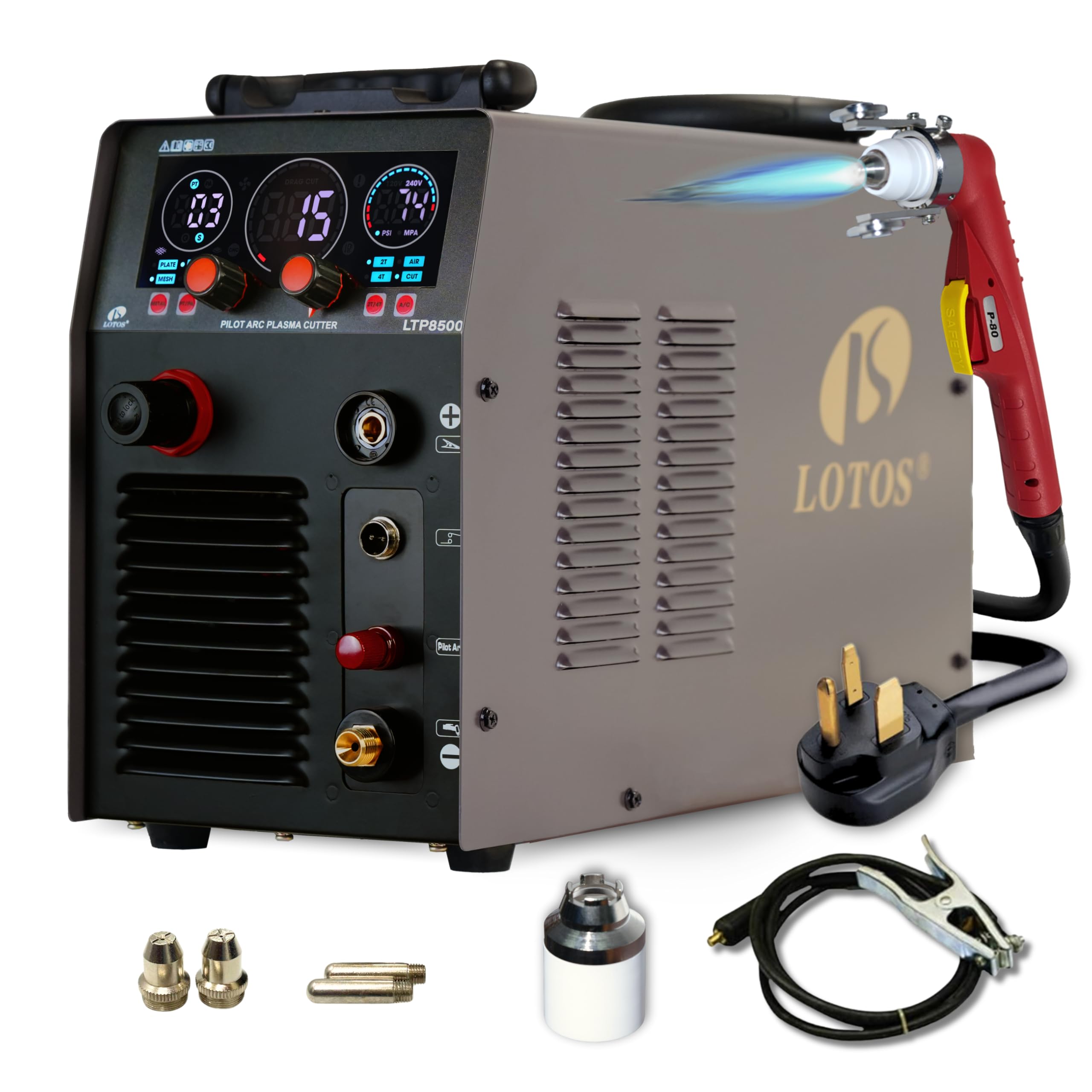 |
1″ clean; 1.5″ sever | 220/240V AC | External compressor | High-output shop cutting | Check Price |
| LOTOS LTP6300DCNC |
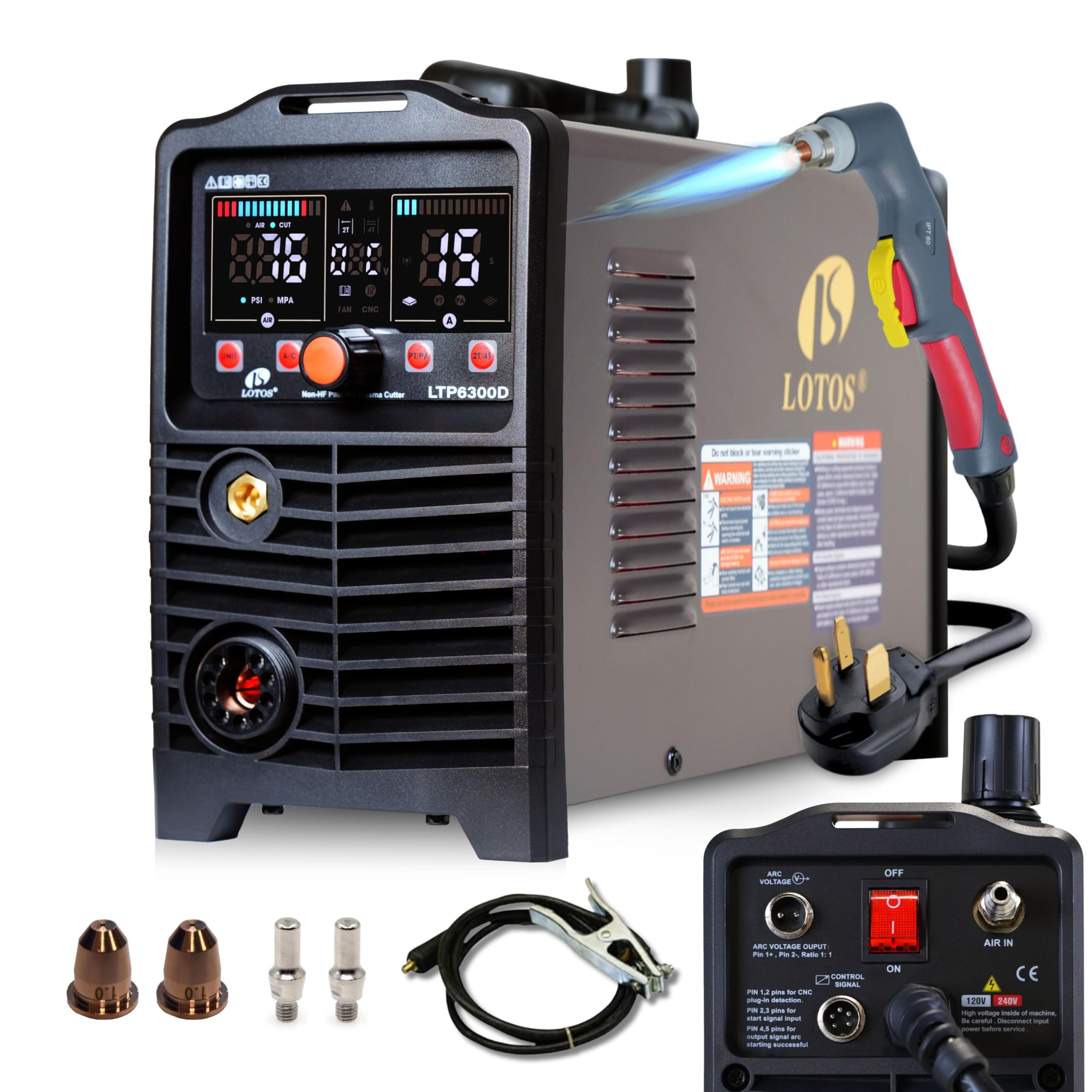 |
3/4″ clean; 1″ sever at full power | 110/120V or 220/240V AC | External compressor | CNC and manual cutting | Check Price |
| LOTOS LTP6300D |
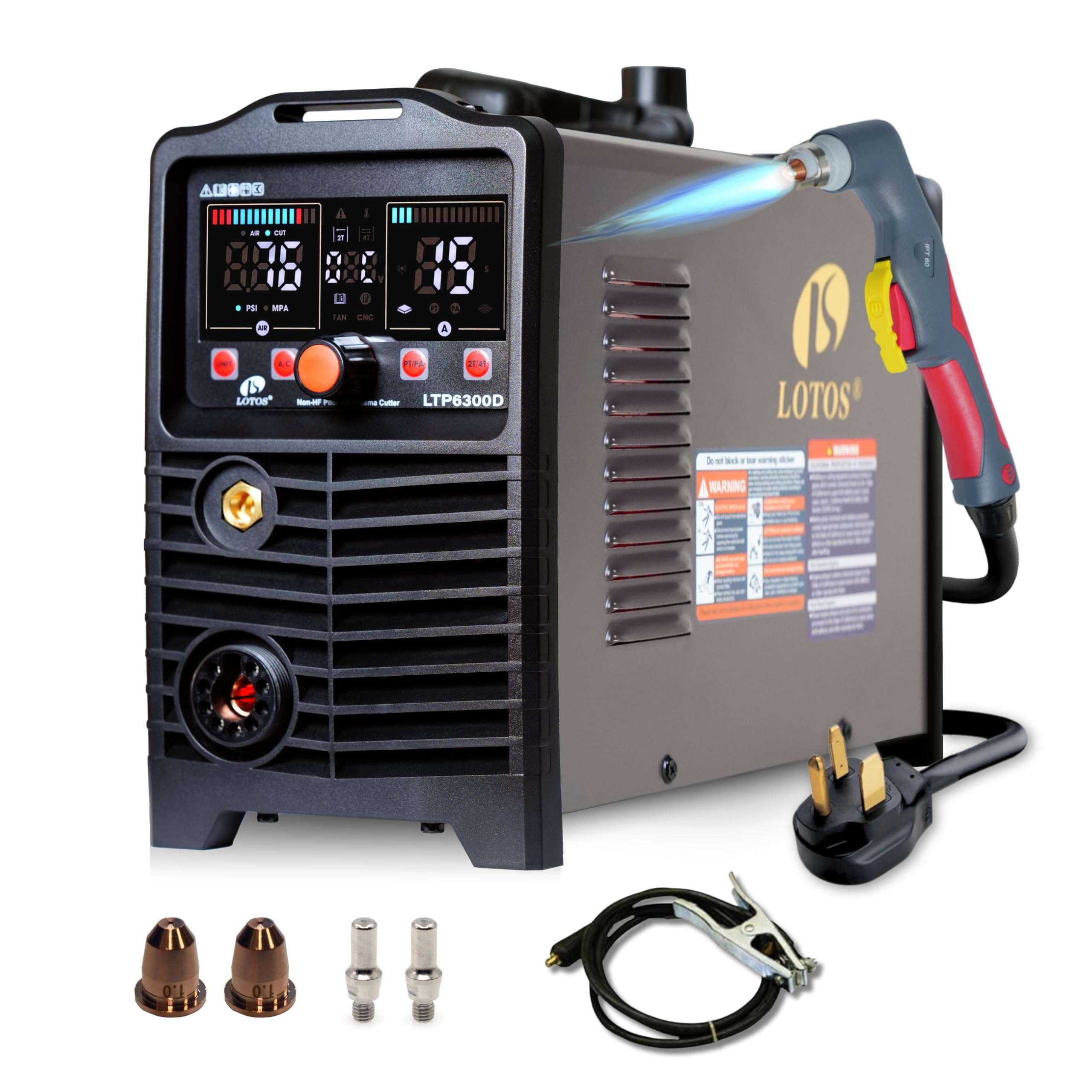 |
3/4″ clean; 1″ sever at full power | 110/120V or 220/240V AC | External compressor | General garage fabrication | Check Price |
| LOTOS LTP6010D |
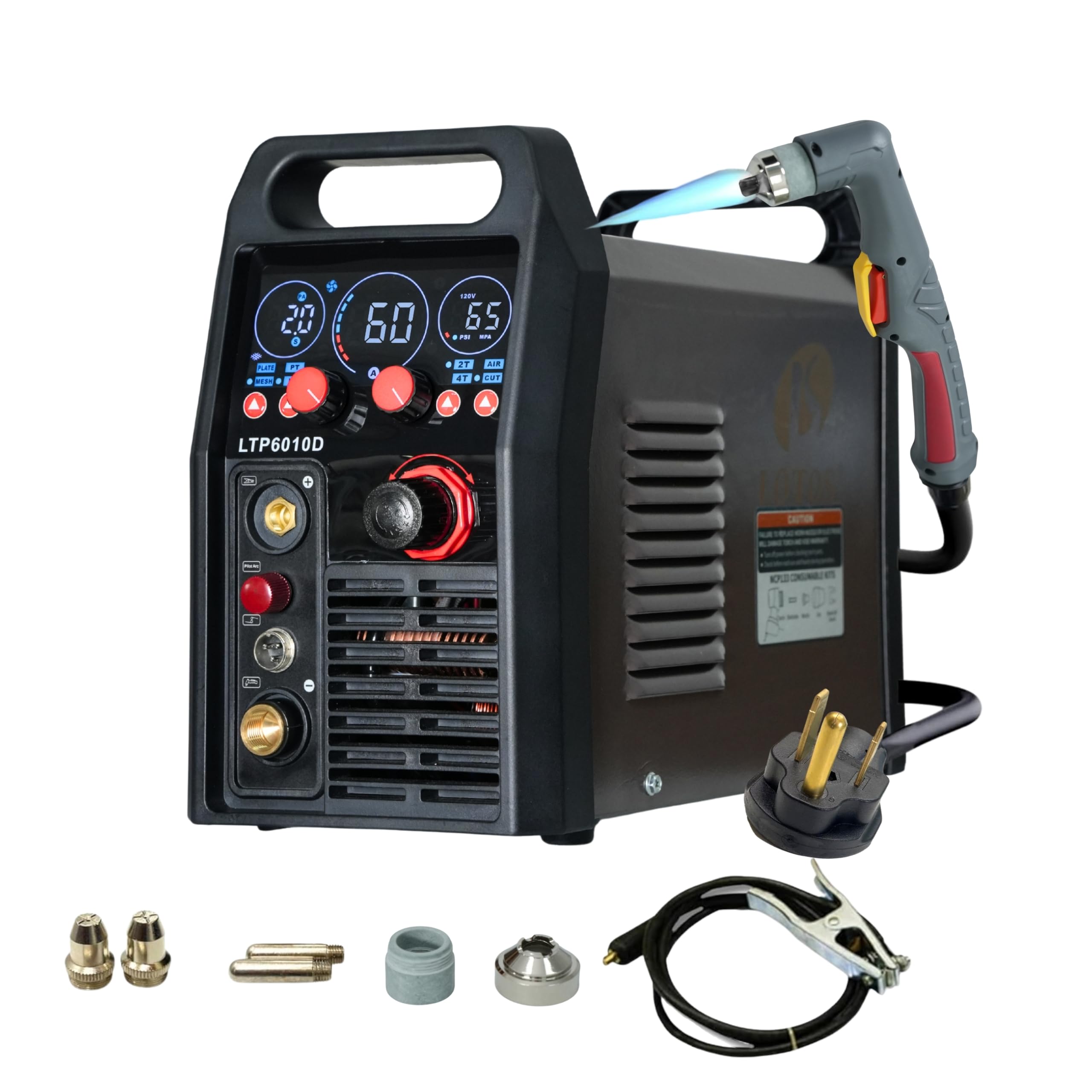 |
5/8″ clean; 3/4″ sever at full power | 110/120V or 220/240V AC | External compressor | Hobby and lighter shop work | Check Price |
| LOTOS LTP5600CD |
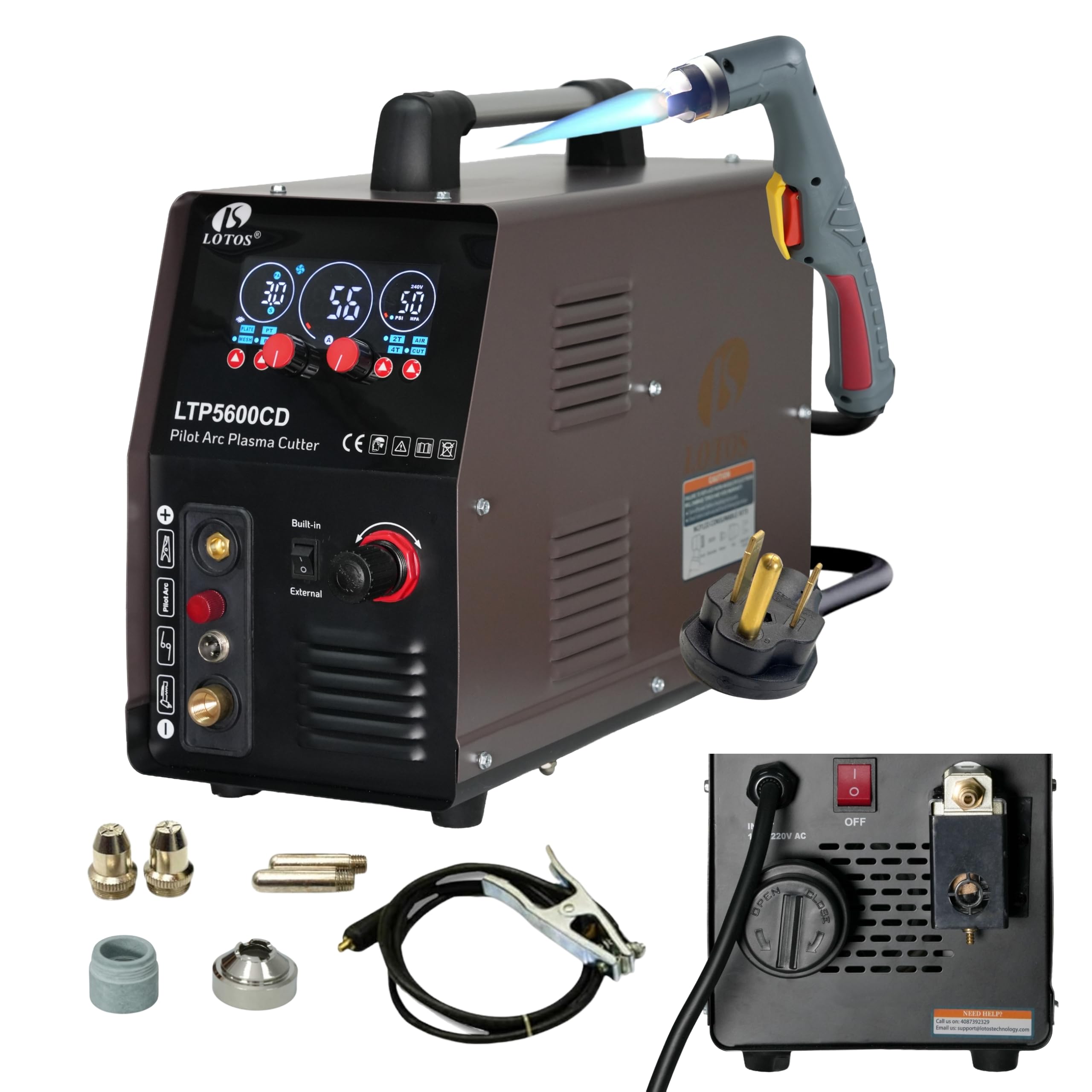 |
About 1/2″ with internal air; 5/8″ clean and 3/4″ sever with external air | 110/120V or 220/240V AC | Built-in compressor or external air | All-in-one setup and quick jobs | Check Price |
This roundup is reader-supported. When you click qualifying affiliate links, we may earn a referral commission at no extra cost to you.


