Last updated: July 17, 2026 · Specifications reviewed against current manufacturer information. This roundup is reader-supported. When you click an Amazon link, we may earn a referral commission on qualifying purchases at no extra cost to you.
The best welding helmet should protect your eyes and face while giving you a clear, comfortable view of the puddle. Your ideal model depends on the welding process, amperage, work position, session length, and whether you value a wide lens, low weight, simple controls, or premium headgear.
This guide compares nine relevant auto-darkening helmets using published specifications and buyer-focused use cases. It does not claim hands-on testing that was not performed, and it avoids changing Amazon prices, star ratings, and review totals.
Top Picks
| Category | Product | Best For | Main Trade-Off |
|---|---|---|---|
| Best Overall | Lincoln Viking 3350 | Frequent and professional welding | Premium cost compared with hobby helmets |
| Best Entry-Level Brand Pick | Miller Classic | DIY welding, training, and light shop work | Smaller view than large-window helmets |
| Best Lightweight Premium Pick | ESAB Savage A40 | Maintenance, construction, mobile work, and mixed processes | Medium-size viewing window |
| Best for Tight Spaces | Jackson Insight HSL100 | Confined access, fabrication, maintenance, and multi-process work | Heavier than ultra-light budget models |
| Best Large-View Value | YESWELDER M800H | Hobbyists and side-gig welders who want a large front window | Headgear feels less refined than premium systems |
| Best Peripheral Awareness | YESWELDER Q800D | Training, busy work areas, and jobs where side awareness helps | Side windows do not auto-darken |
| Best Budget | YESWELDER L600A | Beginners, students, and occasional DIY welding | Only two sensors |
| Best Smart Features | ARCCAPTAIN RL-600LA / TriView X400 | Tech-focused welders who change processes and settings frequently | Newer platform with less long-term history |
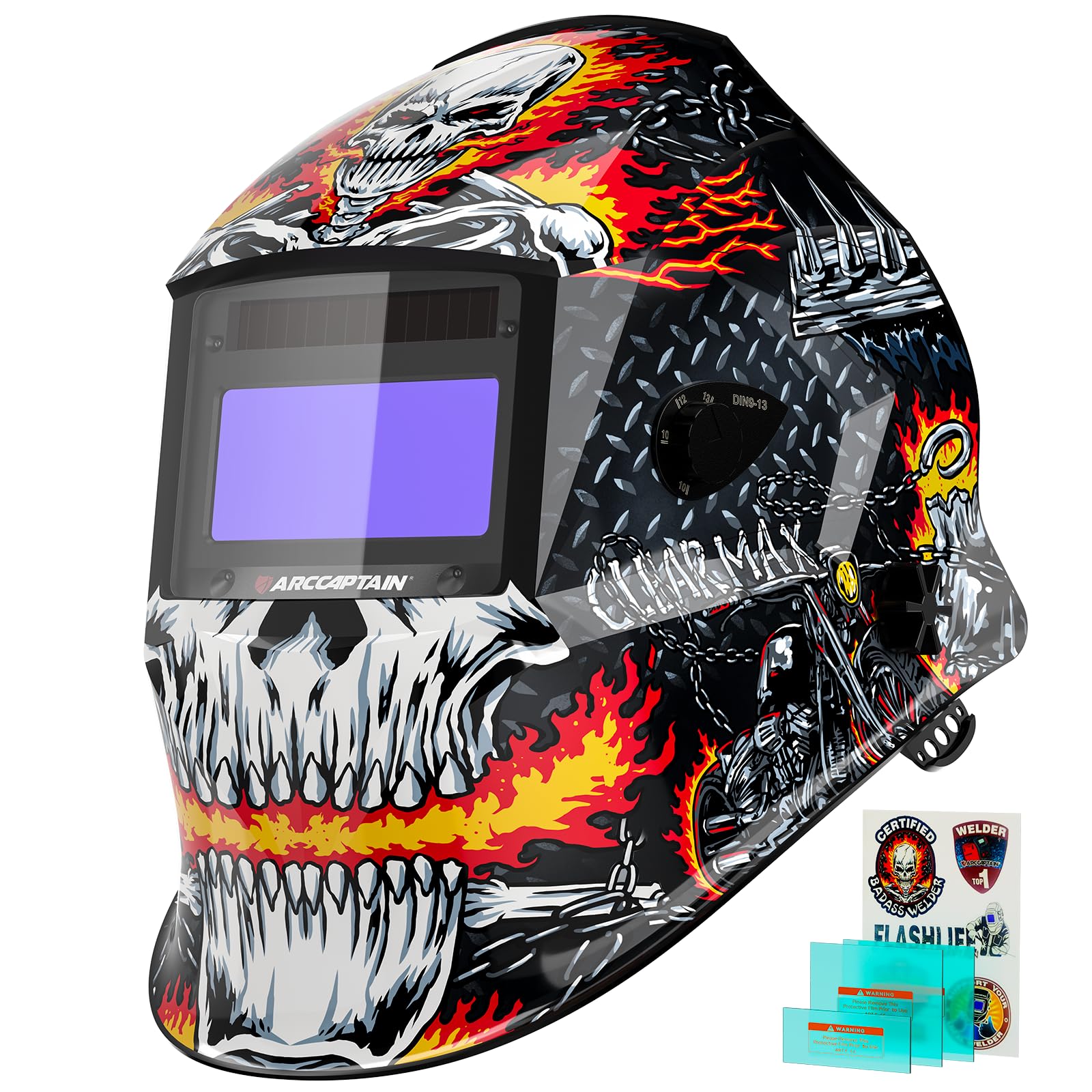
| Best Graphic Style | ARCCAPTAIN Skeleton HSH-S800 | Students, hobbyists, backup-helmet buyers, and users who want a light graphic shell | Small viewing window |
How We Evaluated These Helmets
We compared viewing dimensions, optical classifications, shade ranges, sensor counts, published switching speeds, helmet weight, headgear design, battery type, warranty coverage, safety markings, and replacement-part availability. Product names and specifications were matched to the linked models where manufacturer information was available.
No numerical score was assigned because a large panoramic helmet and a compact lightweight hood solve different problems. The recommendations instead explain who each model fits, where it falls short, and which specifications should influence your choice.
Quick Welding Helmet Comparison
| Product | Image | Optics | Viewing Area | Sensors | Shade Range | Switching | Weight | Warranty | Action |
|---|---|---|---|---|---|---|---|---|---|
| Lincoln Viking 3350 |
 |
1/1/1/1 | 12.5 sq. in. | 4 | 5–13 | 1/25,000 sec. | About 1.4 lb | 3 years | View on Amazon |
| Miller Classic |
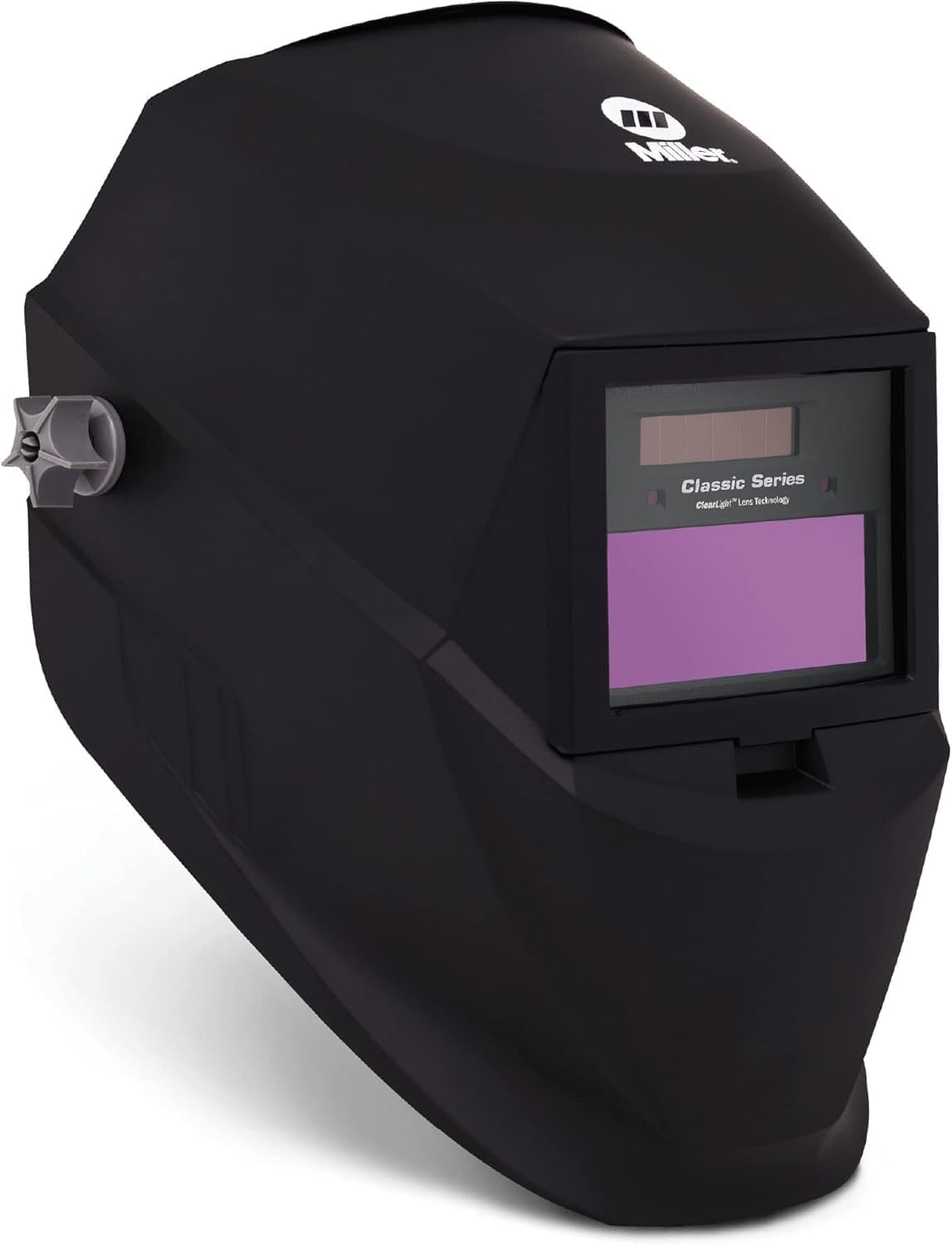 |
ClearLight lens | 6 sq. in. | 2 | 5–8 / 8–13 | 1/23,000 sec. | 16 oz | 3 years | View on Amazon |
| ESAB Savage A40 |
 |
1/1/1/2 | 3.93 x 1.96 in. | 4 | 9–13 | Manufacturer controlled | 500 g | Check seller terms | View on Amazon |
| Jackson Insight HSL100 |
 |
1/1/1/1 | 9.3 sq. in. | 4 | 4 / 9–13 | 1/10,000 sec. | About 2 lb | 2 years | View on Amazon |
| YESWELDER M800H |
 |
True-color; verify exact version | 3.93 x 3.66 in. | 4 | 4 / 5–9 / 9–13 | Up to 1/30,000 sec. | Version dependent | Check seller terms | View on Amazon |
| YESWELDER Q800D |
 |
1/1/1/1 main ADF | 3.94 x 3.23 in. main | 4 | 4 / 5–9 / 9–13 | Up to 1/30,000 sec. | Version dependent | Check seller terms | View on Amazon |
| YESWELDER L600A |
 |
1/1/1/1 | 3.64 x 1.67 in. | 2 | 4 / 5–9 / 9–13 | 1/30,000 sec. | About 1.9 lb listed shipping weight | Check seller terms | View on Amazon |
| ARCCAPTAIN RL-600LA / TriView X400 |
 |
1/1/1/1 | 4.6 x 3.2 in. main + sides | 7 | DIN 3–13 platform | 1/30,000 sec. | About 600 g | 180 days listed | View on Amazon |
| ARCCAPTAIN Skeleton HSH-S800 |
 |
1/1/1/1 | 3.86 x 1.69 in. | 4 | 4 / 9–13 | 1/10,000 sec. | About 1 lb | 180 days | View on Amazon |
Lincoln Viking 3350: Best Overall
Who should buy it: Frequent and professional welding.
Who should skip it: You weld only a few times per year or strongly prefer a compact hood.
Lincoln’s 4C lens system and 1/1/1/1 optical classification are designed to show the puddle and surrounding metal with less color distortion. The 12.5-square-inch viewing area also gives you more room to track joint position without moving your head as often.
The X6 headgear spreads contact across several adjustment points, which can improve balance during longer sessions. An external grind control makes process changes faster, but you should always confirm the helmet has returned to weld mode before striking an arc.
Key Specifications
- 12.5 sq. in. auto-darkening viewing area
- 4C lens technology with 1/1/1/1 optical classification
- Four arc sensors
- External grind control
- Current Lincoln product material lists a three-year warranty
Pros
- Large, clear viewing area
- Supportive multi-point headgear
- External grind control
- Strong fit for daily shop work
Cons
- Premium cost compared with hobby helmets
- Larger shell than compact models
- Grind mode requires a careful status check
Miller Classic: Best Entry-Level Brand Pick
Who should buy it: DIY welding, training, and light shop work.
Who should skip it: You need a panoramic lens, four sensors, or a model specifically rated for demanding low-amp TIG work.
The Classic combines ClearLight lens technology with a 3.0 light state, weld shades 8–13, cut shades 5–8, and a dedicated grind mode. Its two sensors and six-square-inch viewing field suit straightforward bench and garage work.
At about 16 ounces, the helmet stays relatively light. Miller also lists replaceable cover lenses, a low-battery indicator, auto-on operation, and a three-year warranty, which gives this model a clearer ownership path than many generic budget hoods.
Key Specifications
- 6 sq. in. viewing field
- Weld shades 8–13 and cut shades 5–8
- Two independent arc sensors
- 1/23,000-second reaction time
- Approximate helmet weight: 16 oz
- Three-year manufacturer warranty
Pros
- Lightweight shell
- Simple digital controls
- Replaceable lenses and parts
- Established manufacturer support
Cons
- Smaller view than large-window helmets
- Only two arc sensors
- Not the strongest choice for awkward-position welding
ESAB Savage A40: Best Lightweight Premium Pick
Who should buy it: Maintenance, construction, mobile work, and mixed processes.
Who should skip it: You want a 1/1/1/1 lens or one of the largest viewing areas available.
ESAB gives the Savage A40 a 3.93-by-1.96-inch true-color viewing area, four light sensors, adjustable sensitivity and delay, and an externally activated grind mode. The external DIN 9–13 shade dial is useful when your work changes between light and heavier welding.
The published weight is 500 grams, or about 1.1 pounds. Its 1/1/1/2 optical classification is one step below 1/1/1/1 in angle dependence, but the helmet still targets welders who want clear optics without a heavy shell.
Key Specifications
- 3.93 x 1.96 in. viewing area
- 1/1/1/2 optical classification
- Four light sensors
- External DIN 9–13 shade adjustment
- External grind-mode button
- Published weight: 500 g
Pros
- Low published weight
- External shade and grind controls
- Four sensors
- Cheater-lens accessories available
Cons
- Medium-size viewing window
- 1/1/1/2 rather than 1/1/1/1
- Costs more than basic hobby helmets
Jackson Insight HSL100: Best for Tight Spaces
Who should buy it: Confined access, fabrication, maintenance, and multi-process work.
Who should skip it: You prioritize the fastest published switching speed or the lightest possible shell.
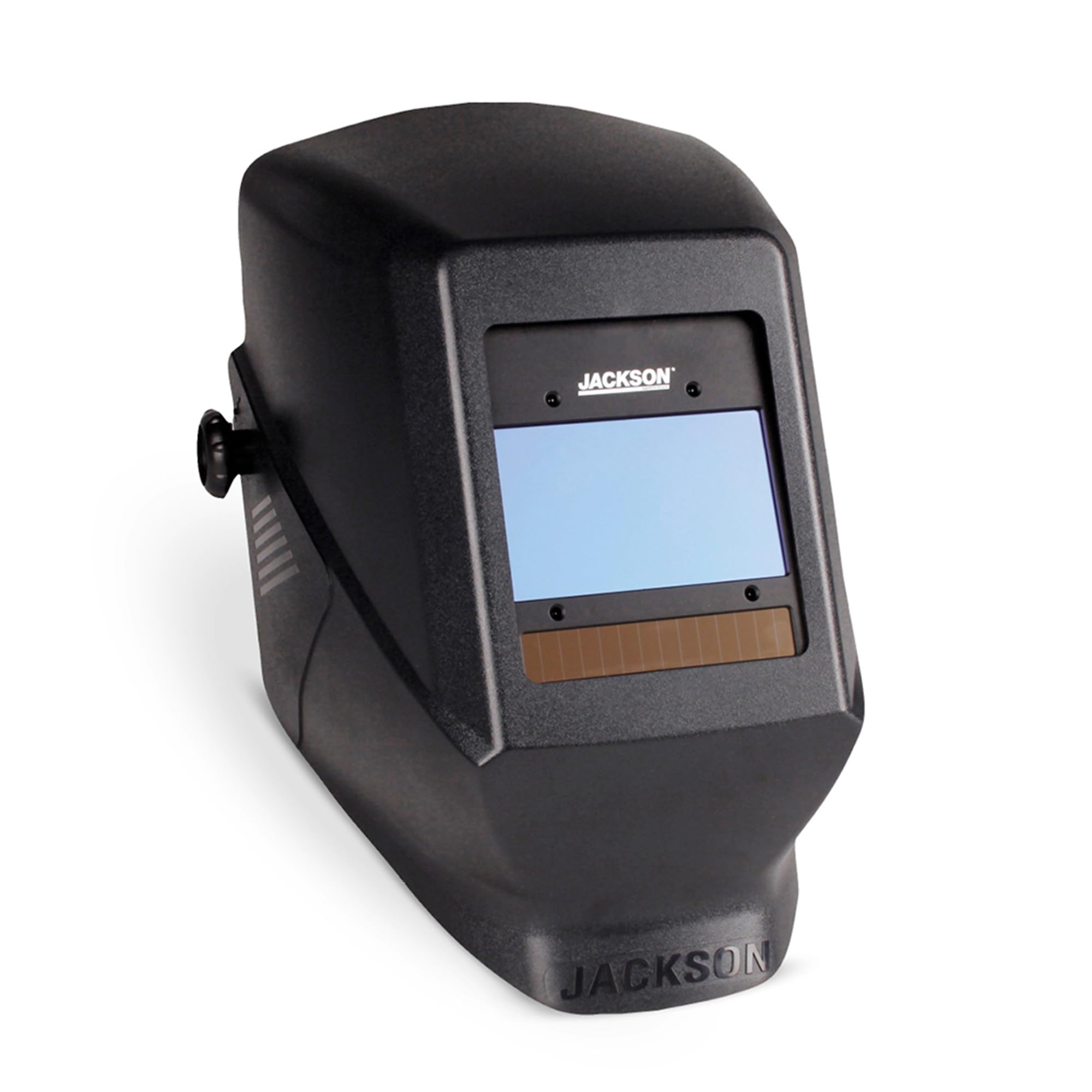
The Insight uses a 9.3-square-inch viewing area, 1/1/1/1 optical classification, four sensors, and Jackson’s 370 Speed Dial ratcheting headgear. Its HSL shell is shaped for work where a wide panoramic hood can feel awkward.
Digital internal controls cover welding, cutting, grinding, sensitivity, and delay. Jackson lists a 5-amp TIG rating and a two-year warranty, making the model a practical option for mixed fabrication rather than a style-focused hobby helmet.
Key Specifications
- 3.8 x 2.35 in. viewing area, about 9.3 sq. in.
- 1/1/1/1 optical classification
- Four arc sensors
- Shade 4 light state and variable shades 9–13
- 1/10,000-second switching speed
- 5-amp TIG rating
- Two-year warranty
Pros
- Narrow shell for restricted spaces
- Clear 1/1/1/1 lens
- Comfort-focused ratchet headgear
- Integrated magnification-lens holder
Cons
- Heavier than ultra-light budget models
- Internal controls require lifting the hood
- Published switching speed is slower than some rivals
YESWELDER M800H: Best Large-View Value
Who should buy it: Hobbyists and side-gig welders who want a large front window.
Who should skip it: You expect premium-grade headgear, controls, and long-term parts support.
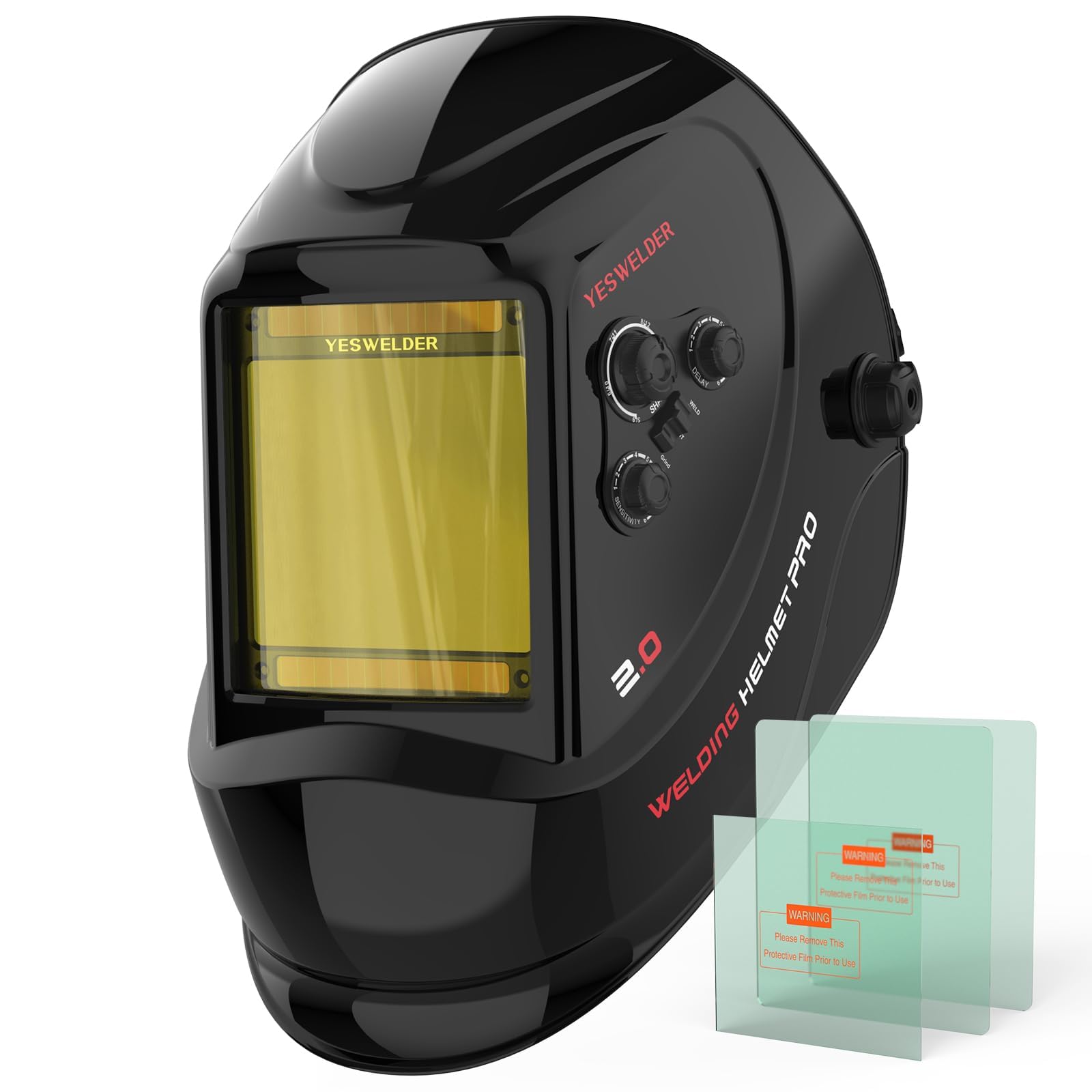
Its 3.93-by-3.66-inch front window gives you substantially more vertical visibility than narrow budget lenses. Four sensors, true-color viewing, adjustable sensitivity and delay, and weld, cut, and grind modes make it flexible for garage fabrication.
YESWELDER lists a solar-assisted replaceable battery, low-voltage indicator, and replaceable cover lenses. The main compromise is the value-oriented control and headgear system, so daily professionals may prefer a more serviceable premium platform.
Key Specifications
- 3.93 x 3.66 in. viewing area
- Four arc sensors
- DIN 4 light state
- Variable dark shades 5–9 and 9–13
- Listed response time under normal conditions: up to 1/30,000 second
- Solar cell with replaceable battery
Pros
- Extra-large front window
- Four-sensor coverage
- Wide process range
- Replacement battery and lenses available
Cons
- Headgear feels less refined than premium systems
- Large shell can feel bulky
- Exact optical-class listings have varied by version
YESWELDER Q800D: Best Peripheral Awareness
Who should buy it: Training, busy work areas, and jobs where side awareness helps.
Who should skip it: You work around strong side reflections or want the smallest, lightest shell.
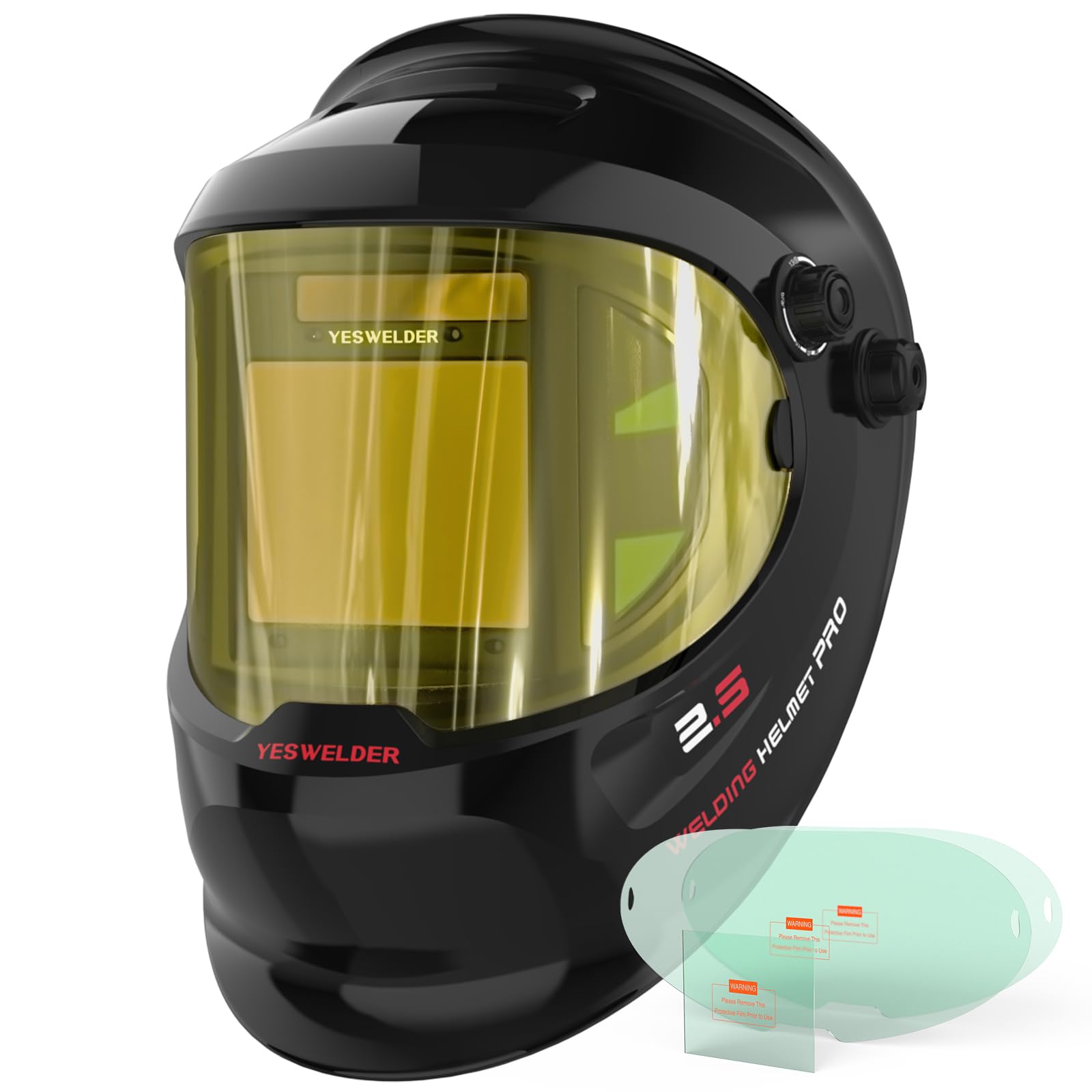
The main auto-darkening window measures about 3.94 by 3.23 inches and uses four arc sensors. The two side windows increase peripheral awareness, but they remain fixed at shade 5 and do not auto-darken.
This distinction matters in reflective or confined environments. Use the side panels for awareness rather than direct arc viewing, and follow the manual’s shade and positioning instructions. The helmet also provides weld, cut, and grind ranges with adjustable sensitivity and delay.
Key Specifications
- Approx. 3.94 x 3.23 in. main viewing area
- Four arc sensors
- Fixed-shade DIN 5 side windows
- Side windows are not auto-darkening
- Variable dark shades 5–9 and 9–13
- Solar-assisted replaceable battery
Pros
- Wide main viewing area
- Extra peripheral awareness
- Four sensors
- Useful weld, cut, and grind ranges
Cons
- Side windows do not auto-darken
- Larger shell than standard hoods
- Passive side panels require careful use around reflections
YESWELDER L600A: Best Budget
Who should buy it: Beginners, students, and occasional DIY welding.
Who should skip it: You weld daily, work out of position often, or want four sensors and premium headgear.
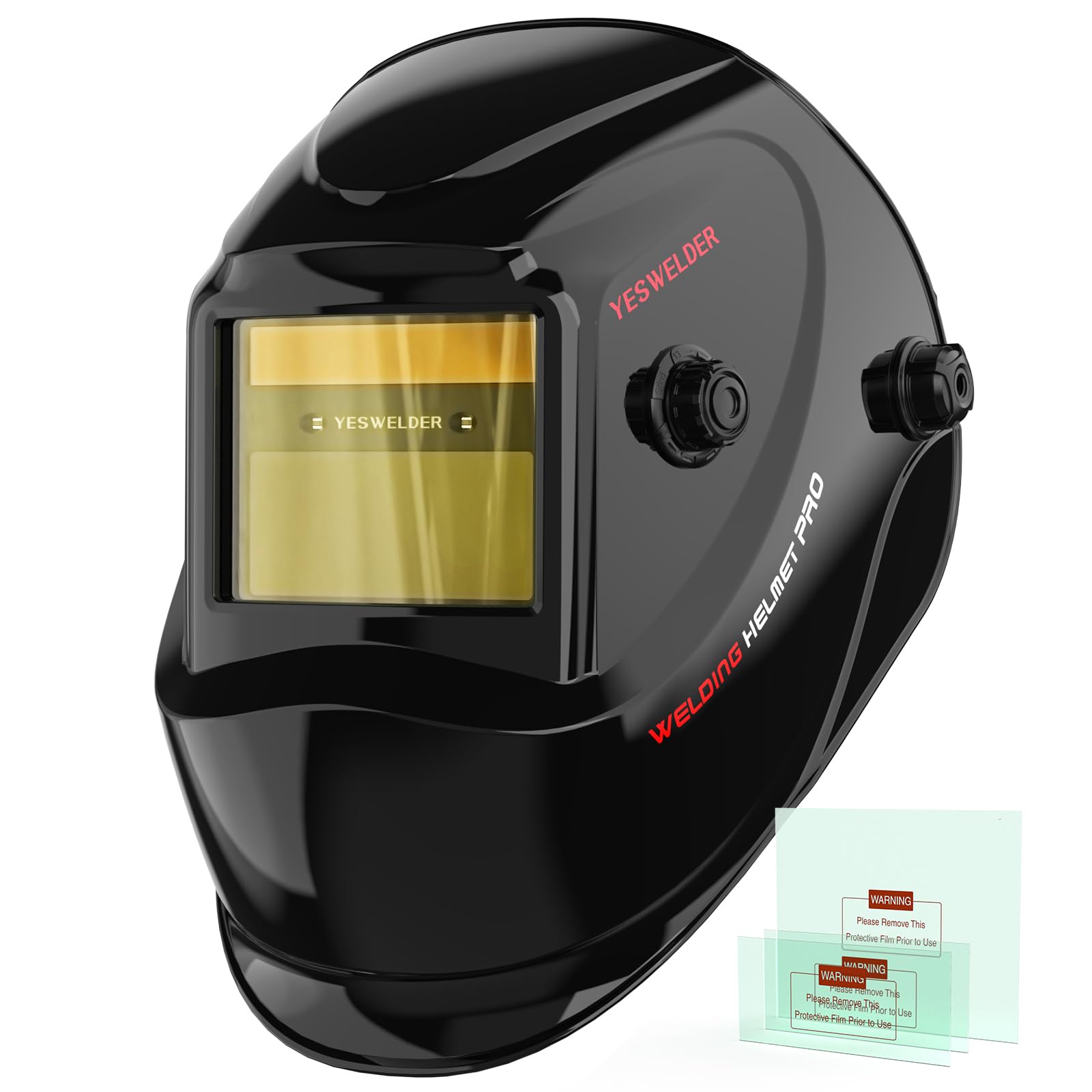
The L600A provides a 3.64-by-1.67-inch viewing area, two sensors, 1/1/1/1 optical classification, and a replaceable CR2450 battery. Its modes cover TIG, MIG, stick, cutting, and grinding for general garage use.
A cheater or magnifying lens can be fitted, which helps users who need close-up correction. The smaller view and two-sensor design remain the main compromises, especially when your torch or workpiece can block one sensor.
Key Specifications
- 3.64 x 1.67 in. viewing area
- 1/1/1/1 optical classification
- Two arc sensors
- Replaceable CR2450 battery with solar assist
- Cheater-lens compatible
- Variable shades for cut and weld modes
Pros
- Affordable entry point
- Clear optical classification
- Replaceable battery
- Magnifying-lens compatibility
Cons
- Only two sensors
- Narrower viewing area
- Headgear requires careful adjustment
ARCCAPTAIN RL-600LA / TriView X400: Best Smart Features
Who should buy it: Tech-focused welders who change processes and settings frequently.
Who should skip it: You need long-proven durability, easy cheater-lens support, or widely stocked proprietary lenses.
ARCCAPTAIN’s current intelligent panoramic platform is presented as the TriView X400, while marketplace listings may use the RL-600LA name. The published platform uses a 4.6-by-3.2-inch main lens, two 1.3-by-2.5-inch side lenses, seven sensors, and up to nine memory settings.
A rechargeable 500mAh battery supports USB charging and solar assist. The built-in LED helps during setup, but newer proprietary designs can make cover-lens sourcing more important, so confirm compatible consumables before purchase.
Key Specifications
- 4.6 x 3.2 in. main lens with two 1.3 x 2.5 in. side lenses
- 1/1/1/1 optical classification
- Seven arc sensors
- 1/30,000-second auto-darkening speed
- Up to nine memory settings
- 500mAh rechargeable battery with USB and solar assist
- Built-in manually activated LED
Pros
- Extensive panoramic view
- Seven-sensor detection
- Memory and automatic adjustment
- Rechargeable power and work light
Cons
- Newer platform with less long-term history
- Proprietary cover lenses may be harder to source
- More controls than occasional welders need
ARCCAPTAIN Skeleton HSH-S800: Best Graphic Style
Who should buy it: Students, hobbyists, backup-helmet buyers, and users who want a light graphic shell.
Who should skip it: You need a large view, a long warranty, or premium professional headgear.
ARCCAPTAIN currently groups this platform under the ClearLite X100 name. It uses a 3.86-by-1.69-inch true-color window, 1/1/1/1 optical classification, four sensors, adjustable shade and sensitivity, and a replaceable battery.
The manufacturer lists the helmet at about one pound and supports compatible replacement headgear. The main limitation is its 180-day helmet warranty, which is much shorter than the coverage offered by several established premium brands.
Key Specifications
- 3.86 x 1.69 in. viewing area
- 1/1/1/1 optical classification
- Four arc sensors
- 1/10,000-second listed switching time
- Approximate weight: 1 lb
- Cheater-lens compatible
- 180-day standard helmet warranty
Pros
- Lightweight design
- Four sensors
- Clear optical classification
- Distinctive graphic shell
Cons
- Small viewing window
- Short warranty
- Less suitable for heavy daily abuse
Which Welding Helmet Fits Your Process?
For MIG Welding
Prioritize comfortable headgear, a clear view around the joint, and easy grind-mode access. MIG work often includes frequent setup, tack welding, and cleanup, so controls that you can identify quickly reduce mistakes. The Lincoln Viking 3350, Miller Classic, and YESWELDER M800H cover different budget levels for this use.
For Low-Amperage TIG
Check the manufacturer’s minimum TIG amperage and sensitivity guidance. Low-current arcs can be harder for an auto-darkening filter to detect, especially when your torch, filler hand, or workpiece blocks a sensor. The Jackson Insight lists a 5-amp TIG rating, while ESAB specifically highlights sensitivity adjustment for low-amp TIG.
For Stick Welding
Look for dependable shade coverage, enough shell coverage for sparks and spatter, and controls that remain practical while you wear gloves. A clear lens helps you track the puddle, but headgear stability and neck coverage can matter just as much during awkward positions.
For Cutting and Grinding
A dedicated grind mode improves visibility, but it also creates a serious setup risk if you forget to switch back. Choose a helmet with a clear grind indicator or an external control that you can confirm before every arc strike. Continue wearing suitable safety glasses or goggles beneath the helmet for impact hazards.
For Tight Spaces
A narrow shell usually works better than a panoramic hood around pipe racks, frames, and confined fabrication. The Jackson Insight is the strongest match in this list. Large side-window helmets offer more awareness but may create extra bulk and reflections in tight surroundings.
How to Choose the Best Welding Helmet
Understand Optical Classification
The four optical numbers assess distortion, light diffusion, shade consistency, and angle dependence. Lower numbers are better, so 1/1/1/1 represents the highest class across all four categories. A well-designed 1/1/1/2 lens can still work well, especially when weight, controls, or price better match your needs.
Match Shade Range to Process and Amperage
Do not choose a shade only by comfort or guesswork. Match it to the welding process, electrode size, and arc current using your helmet manual and workplace safety requirements. Start dark enough for protection, then move lighter only without going below the required minimum.
Compare Switching Speed Carefully
Manufacturers publish switching speed under controlled conditions, and faster numbers do not automatically make one helmet safer in every situation. Sensor placement, sensitivity, battery condition, temperature, maintenance, and whether the arc is blocked all affect real-world response.
Choose the Right Number of Sensors
Two sensors can suit flat bench work when both remain exposed to the arc. Four sensors add detection angles for out-of-position welding. Seven-sensor panoramic models add coverage and automation, but they also introduce more electronics and proprietary parts.
Balance Viewing Area Against Shell Size
A large window helps you see the puddle, joint, and nearby work. It can also add weight and shell bulk. Compact helmets are often easier to position in restricted areas, while panoramic models work best when workspace awareness matters more than a narrow profile.
Check Weight and Headgear Together
A heavier helmet with well-balanced headgear can feel better than a lighter helmet with poor pressure distribution. Look for crown depth, eye-to-lens distance, ratchet quality, pivot resistance, and replacement sweatbands. Fit remains personal, so adjust every point before judging comfort.
Confirm Battery Type and Low-Battery Features
Solar assist extends battery life but does not always replace the need for a battery. Replaceable CR2450 systems are easy to service, while rechargeable designs remove battery swaps but require charging. A low-battery indicator and self-check function reduce unpleasant surprises.
Check Cover Lenses and Cheater-Lens Compatibility
Cover lenses are consumable parts. Confirm that replacements are easy to buy before choosing a less common panoramic shape. Users who need magnification should also verify the exact cheater-lens size and mounting method rather than assuming a universal lens will fit.
Verify Standards and Markings
Check the exact helmet and filter for the applicable safety markings in your market. ANSI/ISEA Z87.1 covers occupational eye and face protection requirements in the United States, while CSA and European standards may also appear. A marketing page should not replace the product label or manual.
Frequently Asked Questions
Which welding helmet is best for beginners?
The Miller Classic and YESWELDER L600A are the easiest starting points here. The Miller provides a lighter shell, established parts support, and a three-year warranty. The L600A costs less and adds a 1/1/1/1 optical classification, but its two-sensor layout and headgear are more basic.
Which helmet has the clearest and largest view?
The Lincoln Viking 3350 combines a 12.5-square-inch viewing area with 1/1/1/1 optics. The ARCCAPTAIN intelligent panoramic model adds side lenses and a wider overall field, but its newer platform relies on more electronics and proprietary replacement parts.
Is a 1/1/1/1 optical rating necessary?
No. It is a useful quality indicator, but comfort, shade range, sensors, low-amp response, shell coverage, and replacement parts also matter. The ESAB Savage A40 uses a 1/1/1/2 lens while offering low weight and convenient external controls.
Are panoramic side windows auto-darkening?
Not always. The YESWELDER Q800D uses fixed-shade DIN 5 side windows, so only the main front filter auto-darkens. Other panoramic designs may use different systems. Read the manual for the exact model and never assume every transparent panel reacts to an arc.
Should you wear safety glasses under a welding helmet?
Yes when required for primary impact protection, and especially where grinding fragments, slag, wire-wheel debris, or other flying particles are present. A welding helmet protects your face and filters radiant energy, but it should not automatically be treated as your only eye protection.
Are expensive welding helmets worth it?
Premium helmets make the most sense when you weld frequently. Better headgear, easier replacement parts, broader warranties, clear controls, and consistent optics can improve daily comfort. Occasional users may get better value from a simpler helmet that still fits the process and carries the correct markings.
How long does an auto-darkening welding helmet last?
Service life depends on shell damage, filter electronics, battery design, headgear wear, heat exposure, storage, and parts availability. Replace scratched cover lenses as needed and stop using the helmet if the filter responds inconsistently. Do not rely on a fixed number of years for every model.
Can one helmet handle MIG, TIG, stick, cutting, and grinding?
Many variable-shade helmets support all of these processes, but compatibility does not guarantee equal performance. Check low-amperage TIG sensitivity, available cut shades, grind-mode operation, and the manual’s process limits before using one helmet for every task.
How do you test an auto-darkening helmet before welding?
Follow the manufacturer’s self-test and inspection procedure. Check the batteries, clean every sensor, inspect the cover and filter lenses, confirm sensitivity and delay, and verify the selected mode. Do not use improvised tests as a substitute for the manual.
Final Recommendations
The Lincoln Viking 3350 is the best overall option for frequent welding because it combines a large 1/1/1/1 lens, supportive headgear, and straightforward professional features. The Miller Classic is the better entry-level brand choice when you want a light helmet and an established replacement-parts path.
Choose the ESAB Savage A40 when low weight and external controls matter, the Jackson Insight for tight access, and the YESWELDER M800H for a large front view at a value-focused level. The YESWELDER Q800D adds passive side awareness, while the ARCCAPTAIN intelligent panoramic model is the feature-heavy choice for users who value memory settings and automatic adjustment.
Before buying, confirm the current model number, warranty, lens availability, safety markings, and manual specifications. Product revisions can change without making older marketplace descriptions disappear.