Disclosure: As an Amazon Associate I earn from qualifying purchases. Buying through these links costs you nothing extra.
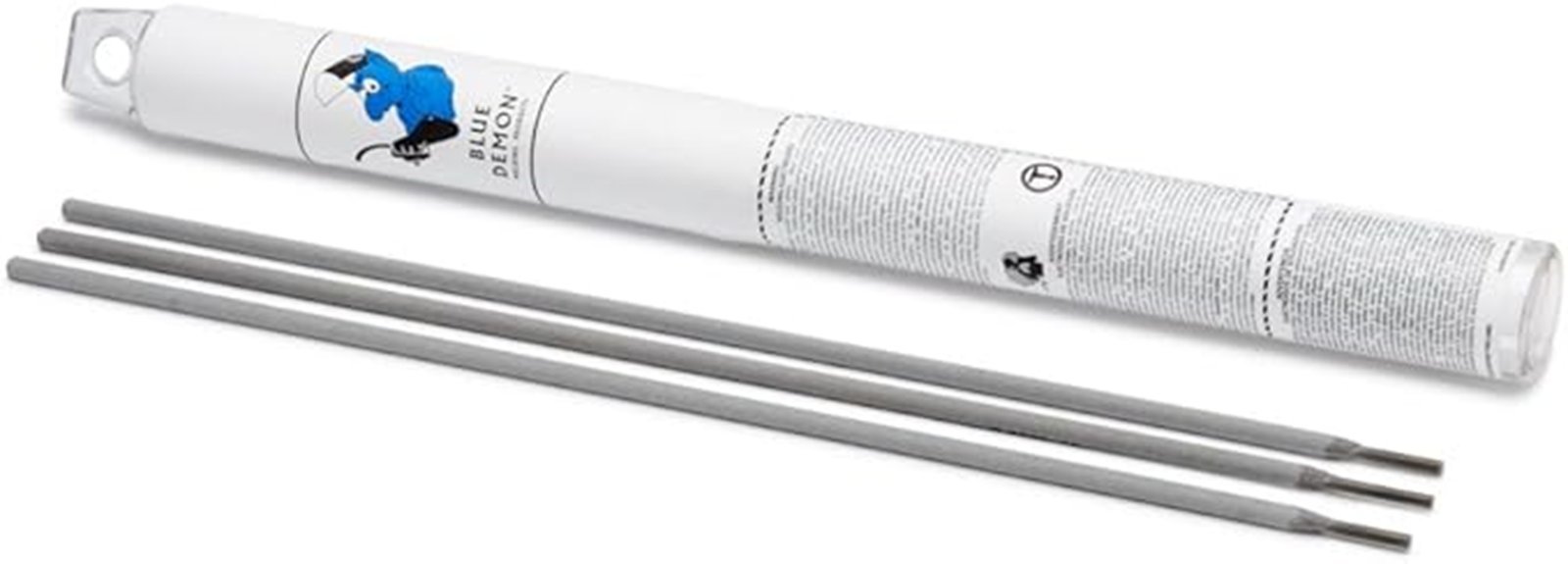
The Blue Demon E308L-16 is a stainless steel stick electrode for welding 304L, 321 and 347 stainless on AC or DC electrode positive power. It is an all-position rod with a low-carbon deposit, so it is a sensible default for general stainless repair and fabrication with a stick welder. This Blue Demon E308L-16 review covers the specs, who it suits, how to check the listing and how to run it.
Blue Demon E308L-16 specs at a glance
| Item | Detail (per retailer and listing data) |
|---|---|
| Classification | AWS A5.4 E308L-16 |
| Current | AC or DCEP |
| Positions | All positions: flat, horizontal, vertical, overhead |
| Base metals | 304L, 321 and 347 stainless steel |
| Sizes in the line | 1/16 in (12 in long) up to 3/16 in (14 in long); 1 lb and 5 lb tubes |
| Minimum strength | 75,000 psi tensile, 54,000 psi yield, 35% elongation |
| Uses | General stainless work, food and pharmaceutical equipment, architectural fabrication |
The line comes in several diameters, so check the Amazon listing for the exact size and weight you are buying. The maximum carbon figure on the retailer page was unclear, so confirm it on the manufacturer data sheet if it matters for your job.
What E308L-16 is and who it suits
E308L is the standard filler for welding 304 and 304L stainless to itself. The L means low carbon, which reduces the risk of chromium carbide forming in the heat-affected zone and so helps keep corrosion resistance. The -16 coating runs on AC and DCEP with a smooth arc and easy slag removal.
- Good for: food and beverage equipment, tanks, railings, architectural stainless and repair of 304 or 304L parts.
- Less suited to: joining stainless to carbon steel (E309L is the usual choice), molybdenum grades such as 316L (use E316L), and very high-temperature service.
How to check the listing and your setup
- Diameter: match the rod to the plate thickness and your machine range. Thin stainless needs 1/16 in or 3/32 in rod.
- Base metal: confirm you are welding 304, 304L, 321 or 347, not 316 or carbon steel.
- Current: AC or DCEP, with settings from the package or the manufacturer data sheet.
- Pack size: rods are sold by weight, so the count per tube varies. Compare rod count across listings.
- Storage: keep rods dry, since damp coatings cause porosity and poor arc starts.
How to weld stainless with it
- Clean the joint with a stainless-only brush or abrasive and remove oil and paint.
- Keep the arc short and use stringer beads or a light weave. Stainless holds heat, so avoid overheating the part.
- Use the lowest current that gives good fusion to limit distortion and discoloration.
- Let slag cool, then chip and brush it off before the next pass.
- Clean and pickle or passivate if the application needs full corrosion resistance.
Welding stainless produces fumes that contain chromium, including hexavalent chromium. Use ventilation or local exhaust, a proper respirator where required, a welding helmet, gloves and flame-resistant clothing.
Pros and limitations
Pros
- Low-carbon deposit for 304L, 321 and 347 stainless.
- Runs on AC or DCEP in all positions, per retailer data.
- Several diameters, including thin sizes for light stainless.
Limitations
- Wrong choice for 316 or for stainless-to-carbon steel joints.
- The stick process makes more slag and cleanup than TIG.
- Moisture-sensitive coating, so storage matters.
Alternatives and related guides
Compare the Harfington E308L-16 welding rod review and the YESWELDER E308L-16 electrodes review. For dissimilar joints see the E309L-16 welding electrode review, and for process basics read how to weld stainless steel with a stick welder.
Frequently Asked Questions
What is the recommended welding position for E308L-16?
Retailer data lists all positions: flat, horizontal, vertical and overhead. Use settings from the package for each position.
Can E308L-16 be used with a MIG welder?
No. It is a stick electrode. Stainless MIG welding uses a different wire, such as ER308L solid wire or an E308LFC-O flux-cored wire.
Which stainless grades is it for?
The listing data gives 304L, 321 and 347. It is also used on 304. For 316 stainless use an E316L electrode, and for stainless to carbon steel use E309L.
How should I store the electrodes?
Keep them sealed in a dry place. If a rod coating has absorbed moisture, follow the maker guidance on drying rather than guessing.
Can I use it outdoors?
Stick welding is more wind tolerant than gas-shielded processes, but stainless still needs a clean joint and careful heat control. Shelter the arc from strong wind where you can.
Verdict
The Blue Demon E308L-16 is a straightforward stainless stick electrode for 304L, 321 and 347 work on AC or DCEP. It fits repair and light fabrication. Confirm the diameter and pack on the listing, and pick E309L or E316L if your joint needs them.
{“@context”:”https://schema.org”,”@type”:”FAQPage”,”mainEntity”:[{“@type”:”Question”,”name”:”What is the recommended welding position for E308L-16?”,”acceptedAnswer”:{“@type”:”Answer”,”text”:”Retailer data lists all positions: flat, horizontal, vertical and overhead. Use settings from the package for each position.”}},{“@type”:”Question”,”name”:”Can E308L-16 be used with a MIG welder?”,”acceptedAnswer”:{“@type”:”Answer”,”text”:”No. It is a stick electrode. Stainless MIG welding uses a different wire, such as ER308L solid wire or an E308LFC-O flux-cored wire.”}},{“@type”:”Question”,”name”:”Which stainless grades is it for?”,”acceptedAnswer”:{“@type”:”Answer”,”text”:”The listing data gives 304L, 321 and 347. It is also used on 304. For 316 stainless use an E316L electrode, and for stainless to carbon steel use E309L.”}},{“@type”:”Question”,”name”:”How should I store the electrodes?”,”acceptedAnswer”:{“@type”:”Answer”,”text”:”Keep them sealed in a dry place. If a rod coating has absorbed moisture, follow the maker guidance on drying rather than guessing.”}},{“@type”:”Question”,”name”:”Can I use it outdoors?”,”acceptedAnswer”:{“@type”:”Answer”,”text”:”Stick welding is more wind tolerant than gas-shielded processes, but stainless still needs a clean joint and careful heat control. Shelter the arc from strong wind where you can.”}}]}