A butt weld in auto body repair joins two metal panels edge to edge, with little or no overlap, so the finished repair can be sanded smooth and sealed cleanly. You use it when a sectioned panel needs a flush repair line, less filler, and less risk of moisture being trapped between two layers of steel. Good results depend on clean metal, accurate fitment, careful tack welds, and strict heat control.
Quick Answer
A butt weld in auto body repair is an edge-to-edge weld used to join two panel sections in the same plane. It gives a smooth repair line, but it takes precise cutting, clean bare metal, tight alignment, small tack welds, and slow stitch welding to avoid burn-through and panel warping.
Key Takeaways
- A butt weld joins panels edge to edge, while a lap weld overlaps one panel over another.
- Use butt welding only when the repair location, metal type, and OEM repair procedure allow it.
- Clean both sides to bare metal, keep the gap small and even, and tack the seam before final welding.
- Short stitch welds, cooling pauses, and careful grinding help prevent burn-through and distortion.
- Prime, seal, and protect the backside of the weld to reduce rust risk after the repair.
At a Glance
| Time Required | 1 to 4 hours for a small patch, longer for a quarter-panel section or complex curve |
| Difficulty | Intermediate to advanced, especially on thin exterior panels |
| Tools Needed | MIG or TIG welder, welding helmet, gloves, respirator when needed, grinder, flap disc, clamps, panel gap tools, hammer and dolly, approved cleaner, primer, seam sealer, and cavity wax |
| Cost | Low if you already own welding tools; higher if you need clamps, abrasives, corrosion products, or professional equipment |
Warning: Welding on a vehicle can ignite seam sealer, insulation, fuel vapors, undercoating, carpet, wiring, or hidden debris. Wear proper welding PPE, control fumes, keep fire protection nearby, disconnect power where required, and follow the vehicle maker’s repair procedure before welding structural panels, high-strength steel, aluminum, EV components, airbags, sensors, or areas near fuel lines.
What Is a Butt Weld in Auto Body Repair?
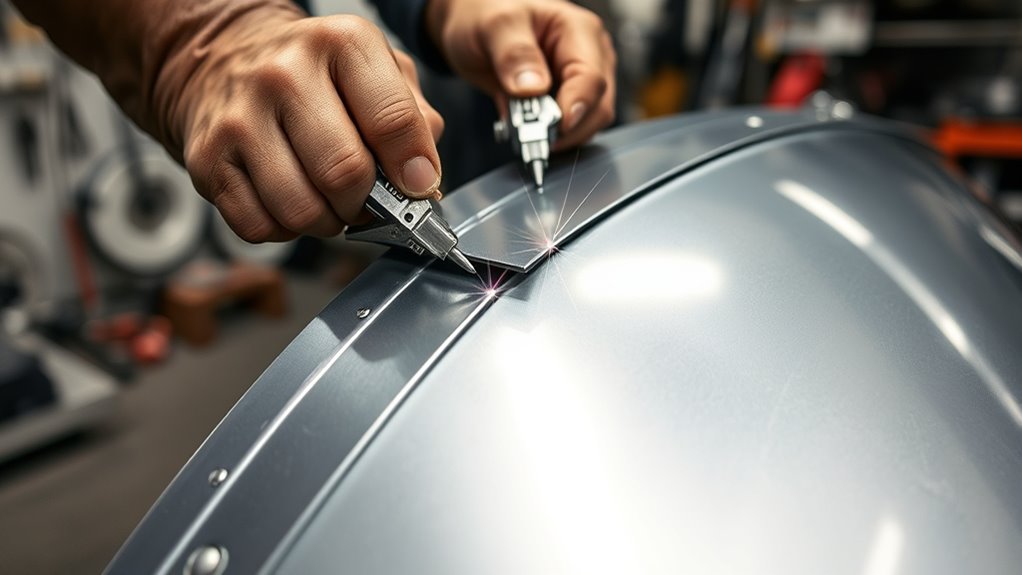
A butt weld in auto body repair joins two metal panels edge to edge so the surfaces sit in the same plane. The Welding Institute explains that a butt weld is formed by placing two pieces of metal end to end and welding along the joint, with the workpieces nearly parallel and not overlapping, unlike a lap joint. TWI’s butt weld definition is a useful reference for the basic joint design.
In body repair, that edge-to-edge layout matters because the final panel can be ground, lightly filled, sealed, and painted without a raised overlap. It also avoids creating a hidden pocket between two layers of metal where water and road salt can sit.
The tradeoff is precision. A butt weld gives you less room for poor cutting, uneven gaps, dirty metal, or excess heat. If the edges do not fit well, the weld can burn through, sink, crack, or pull the panel out of shape.
Why Pros Prefer Butt Welding for Panels
Pros often prefer butt welding for visible exterior panels because it can create a flatter and cleaner repair than an overlapped joint. You get one panel thickness at the repair line, which makes the area easier to metal-finish, skim with minimal filler, block sand, and paint.
Butt welding also helps with corrosion control. A lap weld can be strong and useful in the right place, but the overlap must be sealed well because it can trap moisture. A butt weld does not have that same built-in overlap pocket, so there is less hidden area to rust if you clean, prime, seal, and protect both sides correctly.
That does not mean a butt weld is always the best choice. On many modern vehicles, the correct repair method depends on the panel material, sectioning location, joining method, and current OEM repair procedures. If the manufacturer calls for adhesive, squeeze-type resistance spot welding, MIG brazing, plug welds, or full replacement, follow that procedure.
Butt Weld vs Lap Weld: What’s the Difference?
You use a butt weld when two panel edges meet in the same plane. You use a lap weld when one panel overlaps another. Both can be useful, but they solve different repair problems.
| Joint Type | How Panels Meet | Best Use | Main Risk |
| Butt weld | Edge to edge, same plane | Visible patch panels, quarter-panel sections, custom sheet-metal work | Burn-through, distortion, poor fit-up |
| Lap weld | One panel overlaps another | Flanges, hidden seams, plug weld areas, some repair-procedure locations | Moisture trapped in the overlap if not sealed |
Products Worth Considering

Value Pack: The package includes 24 packs of butt welding clamps, enough quantity to meet your daily needs and replacements. Each butt welding clamps is individually wrapped in a small bag, convenient to carry and use.

ANGLED REACH: These pliers are essential for any body shop, featuring an angled design that easily accesses tight spots like doorposts and rear windows. Streamline your automotive repairs by reaching narrow spaces with precision and ease.

【Even Pulling Force】 This universal auto body pull and weld clamp set helps spread pulling force across steel panels for more consistent dent and frame correction work.
Butt Weld Basics
Butt welds need tight edge fitment and clean metal. The pieces should meet evenly, with a small, consistent gap only if your welding method, panel thickness, and clamp setup call for it. On thin auto body sheet metal, an oversized gap makes burn-through much more likely.
Use small tack welds first. Tacks lock the panel in position before you add more heat. Once the panel is stable, use short stitch welds, skip around the seam, and let the metal cool between welds.
Lap Weld Differences
A lap weld is easier to fit because one panel can sit over the other. That makes it more forgiving when your cut is not perfect. It can also be the correct repair where the factory panel has a flange or the OEM procedure calls for plug welds or spot welds.
The downside is the overlap. If you do not seal and protect it, moisture can collect between the layers. That is why lap joints need careful primer, weld-through coating where specified, seam sealer, and backside corrosion protection.
When to Use Butt Welding on Quarter Panels
Quarter panels are common candidates for butt welding when you are sectioning a visible area and the repair procedure allows an edge-to-edge seam. A clean butt weld can preserve the body line, reduce filler thickness, and avoid a moisture-trapping overlap on the outer skin.
Use a butt weld when the panel section must finish smooth, the joint can be accessed for corrosion protection, and the vehicle maker’s repair procedure allows that joining method.
It is especially useful on restoration work, patch panels, and older vehicles where you need to replace rusted metal while keeping the original panel shape. It also works well when you can reach the backside of the repair for cleaning, primer, seam sealing, or cavity wax.
Do not assume every quarter-panel section should be butt welded. Some modern panels use high-strength steel, adhesives, brazing, spot welds, or special sectioning locations. Always check the service information before cutting into a structural or late-model panel.
When Not to Use a Butt Weld
Do not use a butt weld just because it looks clean. Avoid it when the vehicle procedure calls for a different joining method, when the panel is structural and you do not have the right procedure, or when the backside cannot be protected from corrosion after welding.
- Do not butt weld over paint, rust, heavy galvanizing, seam sealer, undercoating, or contamination.
- Do not butt weld near fuel lines, foam, insulation, wiring, or battery components until the area is made safe.
- Do not weld EV or hybrid high-voltage areas unless the system has been disabled according to the manufacturer’s procedure.
- Do not weld high-strength steel, ultra-high-strength steel, aluminum, or heat-sensitive factory joints without the correct repair information.
- Do not weld if you cannot control fumes, sparks, or fire risk.
Tools and Materials You Need
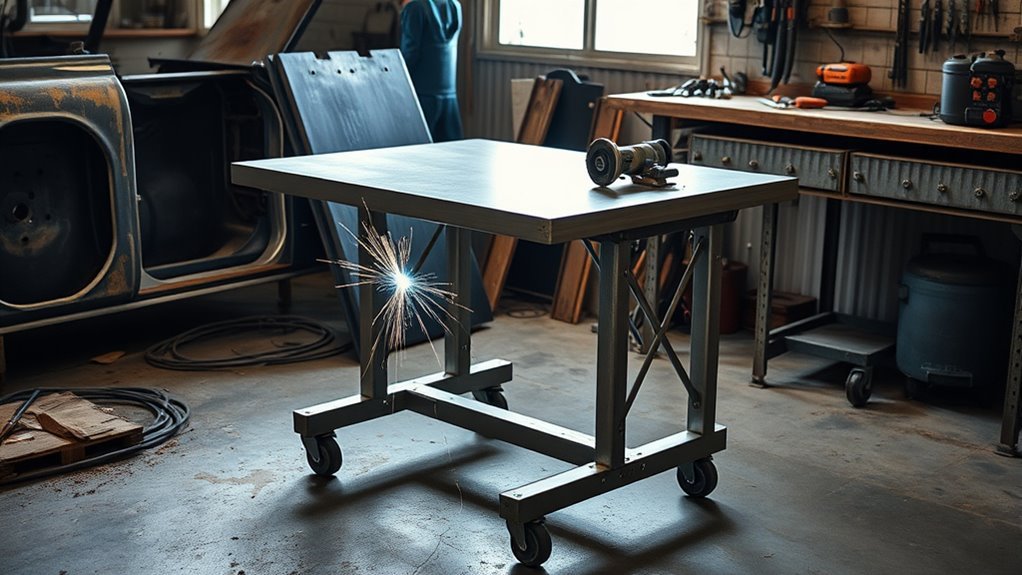
Good butt welding is mostly about preparation and control. Set up everything before you strike an arc so you are not fighting panel movement, dirty metal, or heat buildup mid-repair.
- MIG or TIG welder suited for thin sheet metal
- Auto-darkening welding helmet, welding gloves, jacket or sleeves, and eye protection
- Respirator or local exhaust when fumes cannot be controlled by ventilation
- Grinder, cut-off wheel, flap disc, sanding disc, and wire brush
- Butt-weld clamps, magnets, clecos, or temporary sheet-metal screws where appropriate
- Copper backer or heat sink for thin panels when access allows
- Hammer and dolly for minor distortion correction
- Approved cleaner, epoxy primer or rust-inhibiting primer, seam sealer, and cavity wax
- Fire extinguisher and fire watch when required
Products Worth Considering

Adaptability: Our butt welding clamps are suitable for both straight panels or curved panels. Maintains 0.40" gap between panels for edge-to-edge welding.They will work well in these 2 kinds of p

Welding Clamps : for Floors Door Panels etc Repair and Renovation

16-Pack Welding Clamps Set: Includes 16 butt welding clamps designed for precise edge-to-edge welding, ideal for body repair, floor patching, door skins, and sheet metal alignment.
How to Prep Metal for a Butt Weld
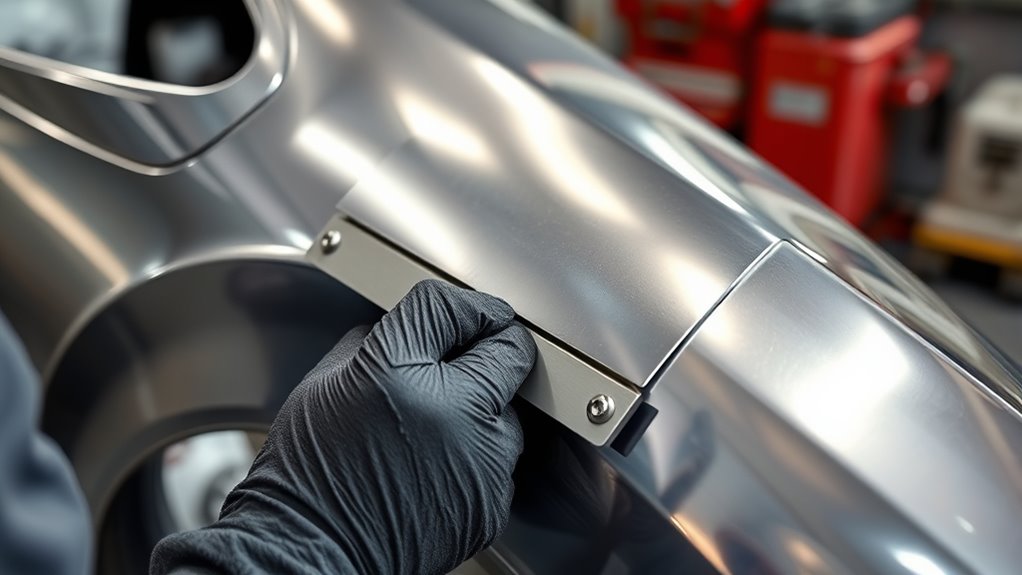
Start by cleaning both panel edges until the weld zone is bare, bright metal. Remove paint, rust, primer, undercoating, seam sealer, adhesive, oil, and grinding residue from the front and backside of the joint. Clean metal helps prevent porosity, weak fusion, and contamination in the weld pool.
- Mark the cutline carefully and trim slowly so the repair patch fits the opening.
- Deburr both edges after cutting.
- Keep the panel gap small and even; do not leave a wide gap on thin sheet metal.
- Test-fit the panel before welding and check the body line from several angles.
- Clamp the panels flush so the joint does not step up or sink down.
Thin exterior panels usually do not need preheating. They need the opposite: low heat, short welds, and time to cool. If you are working on thicker brackets, reinforcements, or structural parts, follow the welding procedure or OEM repair manual instead of guessing.
Pro Tip: Make the patch fit before you start welding. If you rely on weld metal to fill a wide or uneven gap, you will add heat, increase shrinkage, and make burn-through more likely.
How to Clamp and Tack a Butt Weld
Clamp the panels so the edges sit flush and the gap stays consistent. Butt-weld clamps work well on straight seams, while magnets, clecos, or temporary fasteners can help on curved panels. Avoid clamping so tightly that the panel bows or the seam steps out of alignment.
| Step | Action | Goal |
| 1 | Position clamps along the seam | Hold the panels flush |
| 2 | Check the body line and panel height | Prevent a stepped repair |
| 3 | Place small tack welds several inches apart | Lock the seam without soaking it with heat |
| 4 | Recheck alignment after each group of tacks | Catch pulling before it gets worse |
Do not run a continuous bead on thin body panels. Tacks and short stitches give you more control and reduce the chance of warping the panel.
How to Weld a Butt Joint Without Burn-Through
Fit and clamp the panels first, then tack the seam. Once the joint is stable, weld it in short sections instead of one long pass. Move around the seam so heat is not concentrated in one area.
Fit and Clamp Properly
Burn-through often starts before welding begins. A dirty edge, wide gap, unsupported panel, or poor clamp setup forces you to add more heat than the panel can handle.
- Keep the seam flush and steady.
- Use a small, even gap only as needed for penetration and fit.
- Use a copper backer behind thin sheet metal if you can reach the backside.
- Practice on scrap of the same thickness before welding the vehicle panel.
Control Heat Input
Thin sheet metal reacts fast to heat. Use a short arc, quick trigger pulls, and cooling pauses. With MIG, use short stitch welds and avoid building a large puddle. With TIG, keep the arc tight and add only enough filler to fuse the joint without swelling the bead.
If the panel starts to discolor heavily, sink, oil-can, or pull out of shape, stop and let it cool. More heat will not fix a moving panel. It will usually make the distortion worse.
Tack and Stitch Weld
Start with widely spaced tack welds. Then add short stitches between the tacks, moving to different parts of the seam each time. Keep checking the panel with your hand, a straightedge, and your eyes. The goal is an even, fused seam with the least heat needed.
- Skip around the seam instead of welding in one direction.
- Let each area cool before returning to it.
- Grind only after the seam is fully welded and inspected.
- Use hammer-and-dolly work carefully if the weld shrinks and pulls the panel.
Common Butt Weld Problems and How to Fix Them
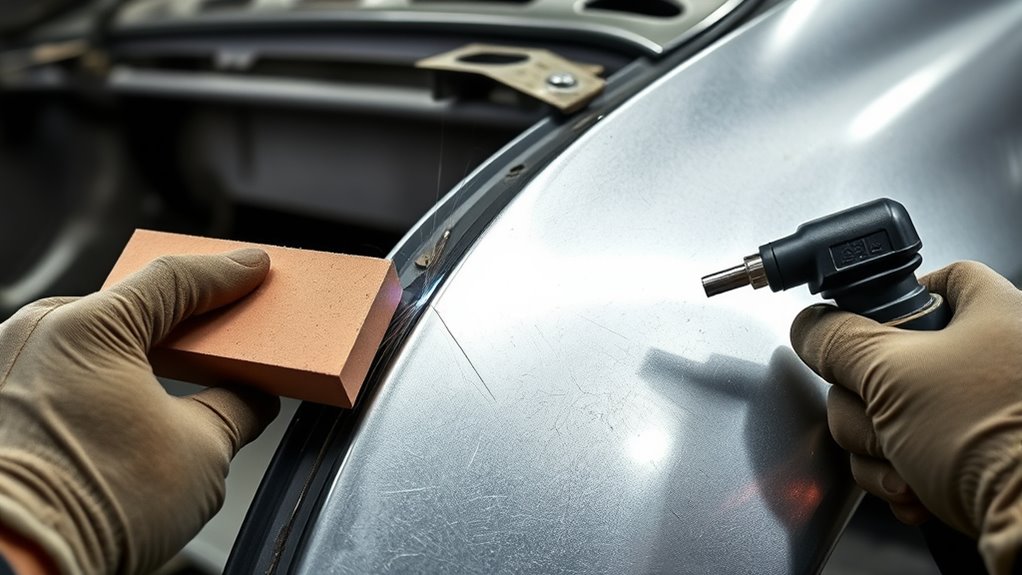
Even a clean-looking butt weld can hide problems if the fit-up, settings, or heat control are off. Inspect the weld before grinding it flat so you can see what actually happened at the seam.
| Problem | Likely Cause | Fix |
| Burn-through | Too much heat, wide gap, slow travel, unsupported thin metal | Lower heat, shorten weld time, tighten fit, use a copper backer |
| Porosity | Contamination, poor shielding gas, wind, dirty nozzle | Clean to bare metal, verify gas flow, block drafts, clean consumables |
| Lack of fusion | Too cold, moving too fast, poor edge contact | Tune settings on scrap, improve fit-up, watch the puddle tie into both edges |
| Warping | Too many welds in one area, long bead, no cooling time | Skip weld, cool between stitches, planish carefully as needed |
| Undercut | Arc too hot or travel too fast along the edge | Adjust heat and travel speed, then repair the edge before finishing |
A good butt weld is not just flat after grinding. It should show sound fusion, minimal porosity, controlled heat, and a panel shape that still matches the surrounding body line.
How to Finish and Inspect a Butt Weld
Inspect the weld before you grind it smooth. Look for pinholes, skipped spots, cracks, undercut, uneven penetration, and panel movement. If you can reach the backside, inspect that side too.
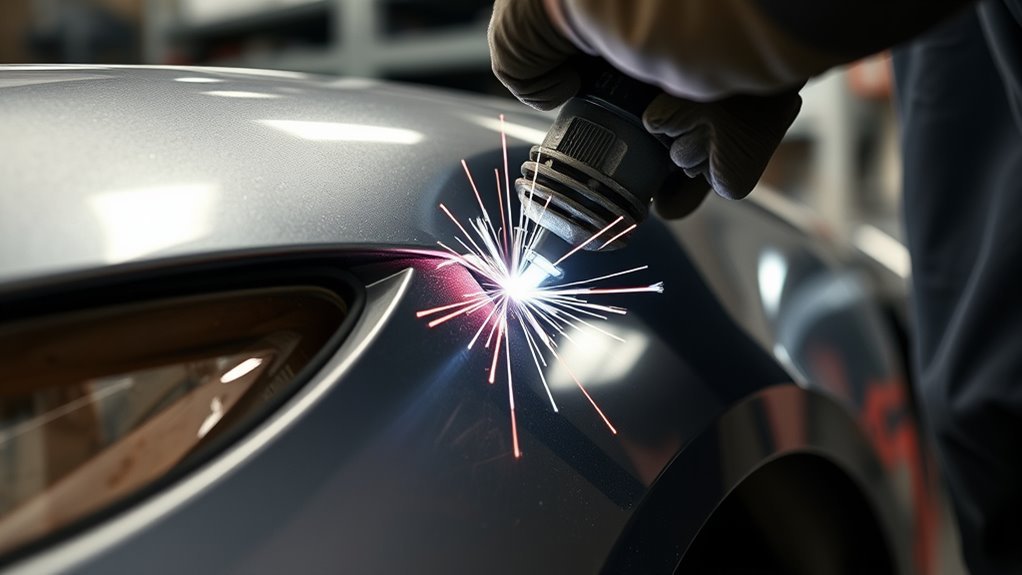
- Use a grinder or flap disc lightly; do not thin the surrounding panel.
- Grind only enough to level the weld bead.
- Check the panel with a straightedge and by feel.
- Correct small waves with careful hammer-and-dolly work before filler.
- Clean grinding dust and residue before primer or sealer.
Do not grind the weld so aggressively that you weaken it. A smooth surface is useful, but removing too much metal can make the repair weaker and more likely to crack.
How to Prevent Rust After Butt Welding
After butt welding, rust prevention is as important as the weld itself. Bare welded steel starts oxidizing quickly, and the backside of the repair is easy to forget. Clean both sides of the joint, apply the correct primer or coating, seal seams where needed, and protect hidden cavities.
3M’s collision repair corrosion guidance notes that corrosion protection is important to the long-term integrity of the vehicle structure and that cavity wax is used to restore protection in internal body areas such as rocker panels, pillars, and closed cavities. You can review its collision repair corrosion protection resources for general process guidance.
Clean Backside Protection
Once the weld cools, clean the backside of the joint if you can access it. Remove spatter, dust, residue, oil, and burned coating. Then apply the corrosion protection system that fits the repair and coating product instructions.
- Clean the front and backside with an approved cleaner.
- Apply epoxy primer or a rust-inhibiting primer where appropriate.
- Use seam sealer where water could enter the joint or flange area.
- Apply cavity wax inside closed panels when backside access is limited.
- Recheck drain paths so water does not sit inside the panel.
Seal and Prime
A fresh butt weld should not stay bare. After the repair cools and passes inspection, clean the area and apply primer according to the coating system. If the seam is in a water-exposed area, use compatible seam sealer after primer when the product instructions call for it.
Let primer and sealer cure before topcoat. Rushing the coating stage can hurt adhesion and leave gaps where moisture can reach the metal.
Note: Weld-through primer, seam sealer, and cavity wax are not interchangeable. Use each product only where the repair procedure and product maker specify it.
Butt Welding Safety Checklist
Welding safety is not optional. OSHA’s welding, cutting, and brazing guidance covers hazards such as fire prevention, protective equipment, fumes, and ventilation. The OSHA welding, cutting, and brazing overview is a good starting point, and OSHA 1910.252 gives detailed workplace requirements.
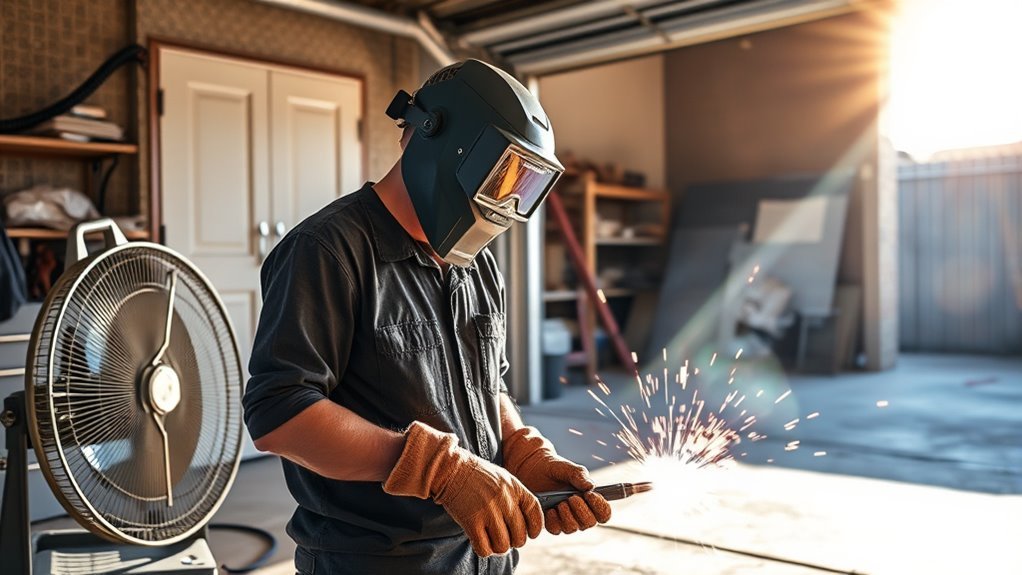
- Wear a welding helmet with the correct shade, welding gloves, protective clothing, and eye protection.
- Use ventilation or fume extraction, especially inside shops or tight spaces.
- Keep flammable material away from the weld zone.
- Use welding blankets or shields to protect glass, wiring, upholstery, and adjacent panels.
- Keep a suitable extinguisher nearby and use a fire watch when sparks could reach hidden areas.
- Never use oxygen as ventilation in a confined space.
- Check the vehicle for fuel, battery, airbag, sensor, and high-voltage hazards before welding.
Welding fumes can contain metal particles, including manganese. NIOSH notes that inhaled manganese is a concern because it can bypass the body’s normal defense mechanisms. Review the CDC/NIOSH welding fumes guidance when planning ventilation and respiratory protection.
Frequently Asked Questions
What is the difference between seamless and butt weld?
“Seamless” usually describes the finished look of the repair, while a butt weld describes the joint type. A butt weld joins two pieces edge to edge. If it is fitted, welded, ground, and finished well, it can look nearly seamless after primer and paint.
Is a butt weld better than a lap weld for auto body repair?
A butt weld is often better for visible exterior patch panels because it finishes flatter and does not create an overlap pocket. A lap weld can still be correct on flanges, hidden seams, or repair locations where the OEM procedure calls for overlap, plug welds, adhesive, or spot welds.
How big should the gap be for a butt weld on thin auto body metal?
Keep the gap small and even. Some clamp systems create a slight gap, but thin panels should not have a wide opening. A large gap requires extra filler metal and heat, which increases burn-through and distortion risk.
Is MIG or TIG better for butt welding auto body panels?
MIG is faster and common for collision and restoration work. TIG gives more puddle control and can produce a cleaner bead, but it is slower and can add heat if you dwell too long. The best choice depends on panel thickness, access, skill, and the required repair method.
Can you butt weld over rust or paint?
No. Remove rust, paint, primer, seam sealer, undercoating, oil, and coating residue from the weld zone first. Contaminated metal can cause porosity, weak fusion, fumes, and poor corrosion protection after the repair.
How do you stop a butt weld from rusting later?
Clean the weld, inspect both sides, apply compatible primer or coating, seal water-exposed seams, and protect hidden cavities with cavity wax where appropriate. The backside of the weld matters because rust often starts where you cannot easily see it.
Conclusion
A butt weld can give you a clean, factory-style auto body repair when the panels fit well and the repair procedure allows it. The key is to slow down before welding: clean the metal, align the edges, tack carefully, stitch weld with controlled heat, inspect the seam, and protect both sides from rust. Small mistakes such as poor fit-up, contamination, burn-through, and skipped corrosion protection can shorten the life of the repair, so treat finishing and sealing as part of the weld, not as an afterthought.
Sources
- TWI: What is a Butt Weld? — supports butt weld definition, same-plane joint design, tack weld use, gap sensitivity, and distortion notes.
- OSHA: Welding, Cutting, and Brazing — supports general welding safety context.
- OSHA 1910.252: General Requirements — supports PPE, fire prevention, fire watch, combustible control, and ventilation guidance.
- CDC/NIOSH: Welding Fumes and Manganese — supports welding fume and manganese exposure guidance.
- 3M Collision Repair: Corrosion Protection — supports corrosion protection, cavity wax, and hidden-area protection guidance.
- 3M Collision Repair: Seam Sealers and Coatings — supports OEM procedure awareness and seam-sealing guidance.