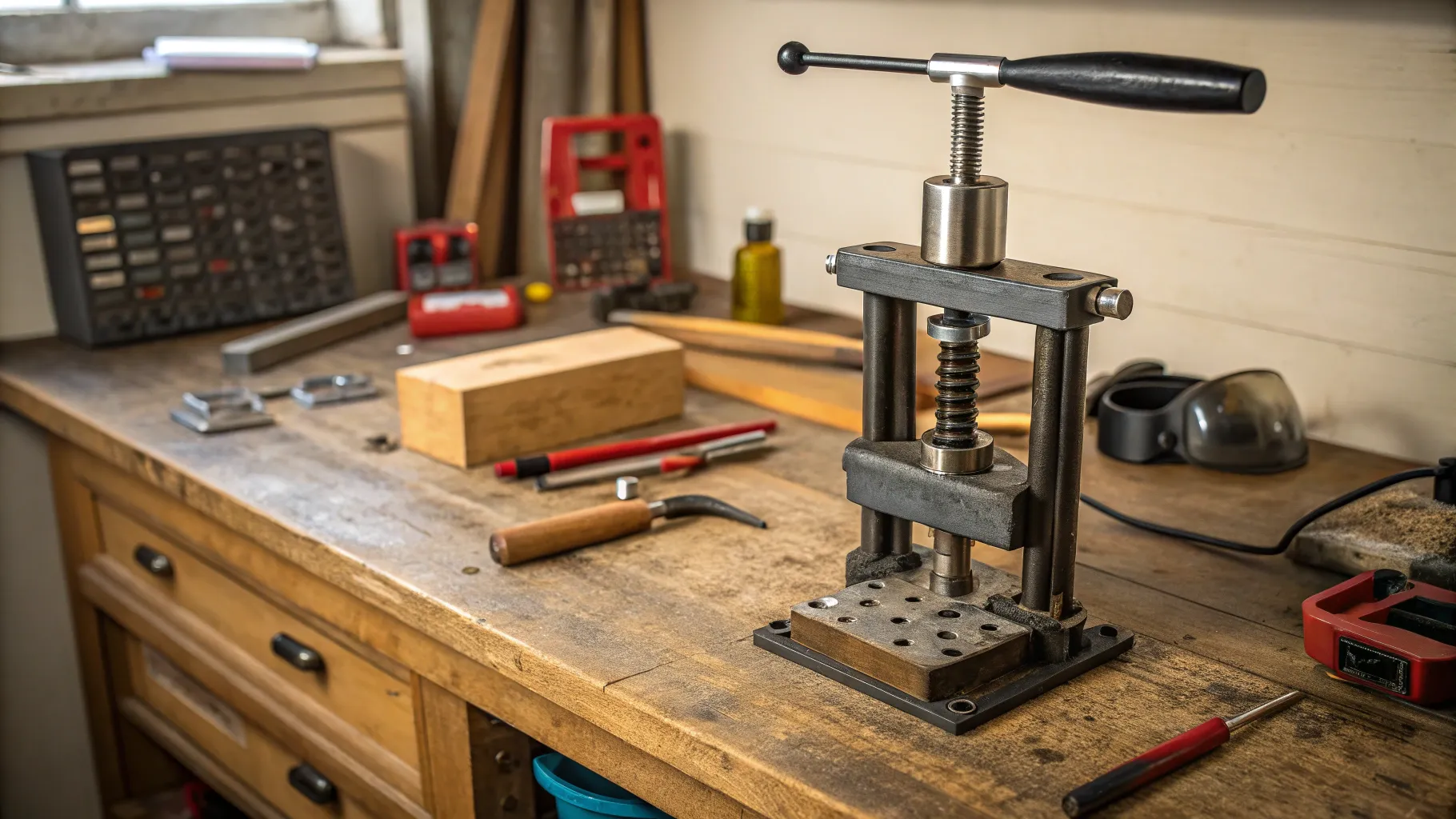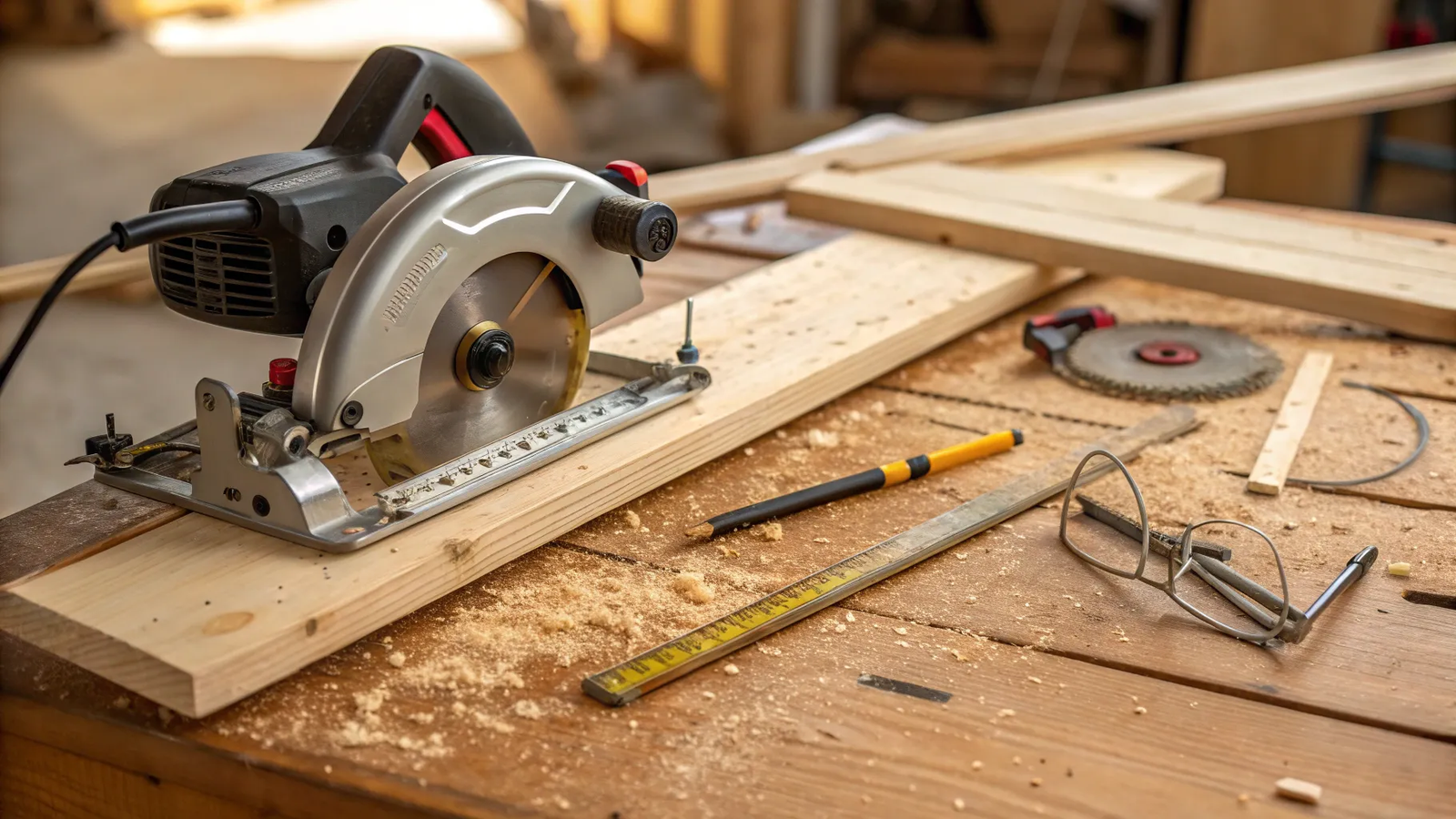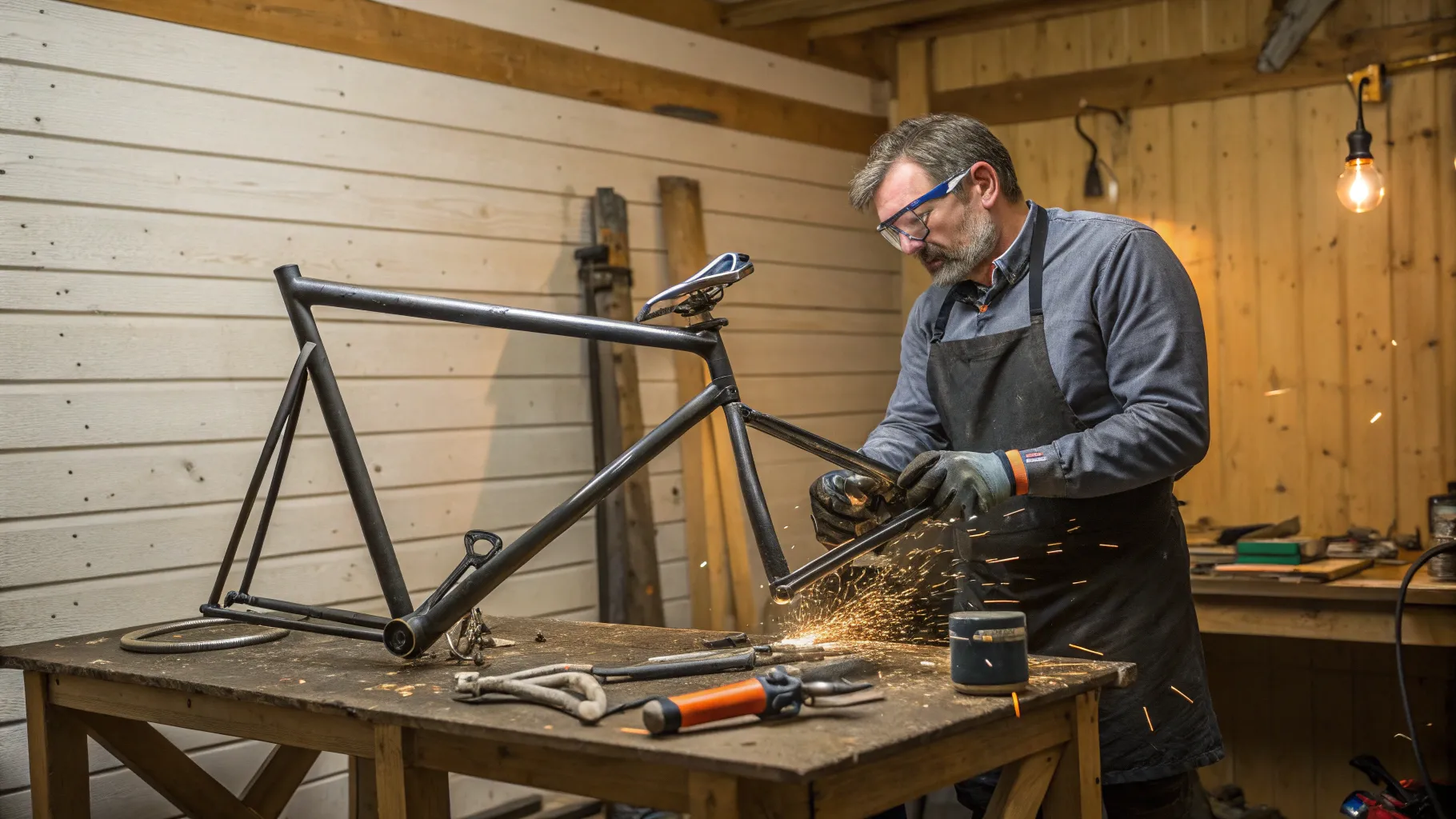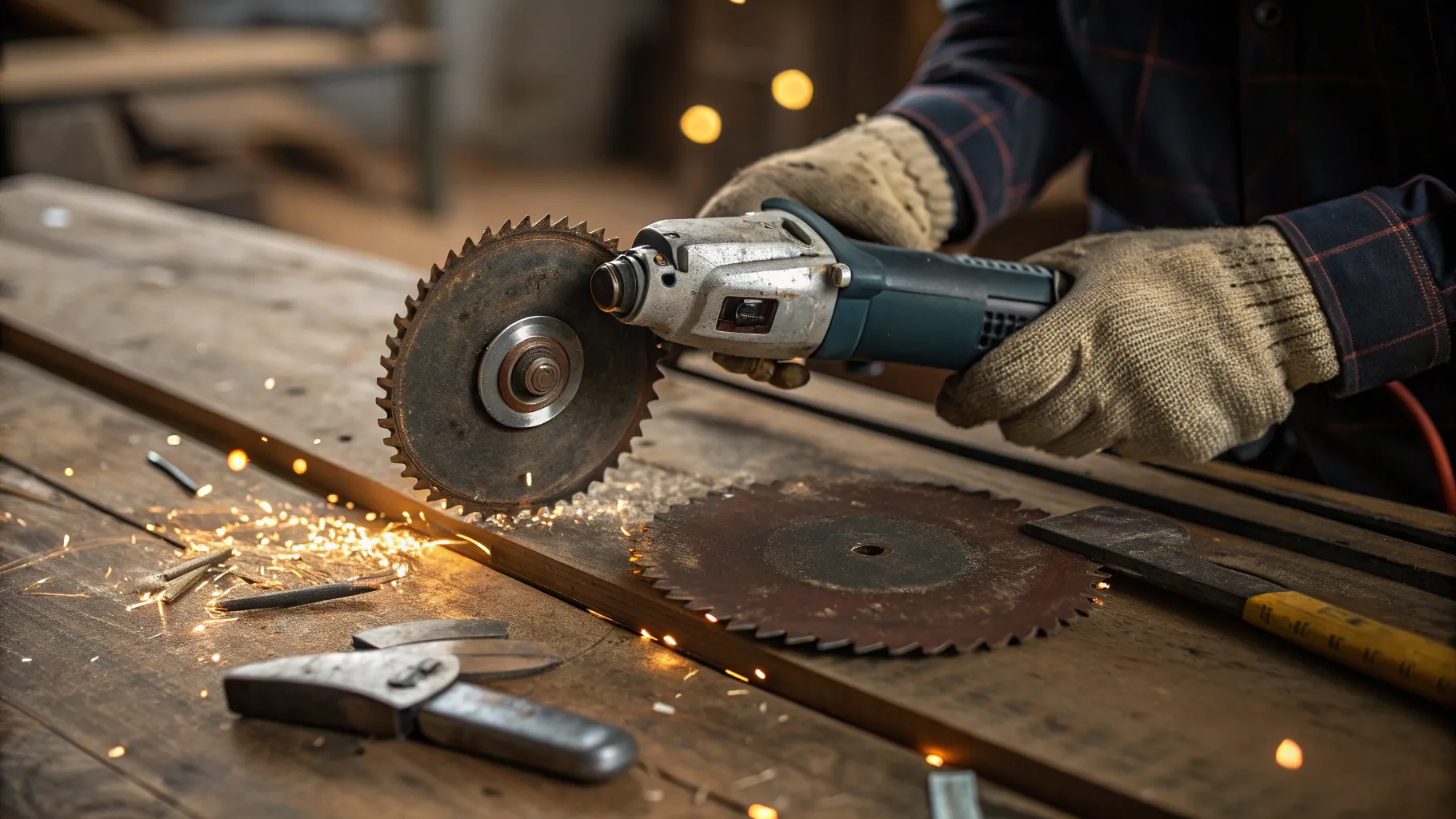
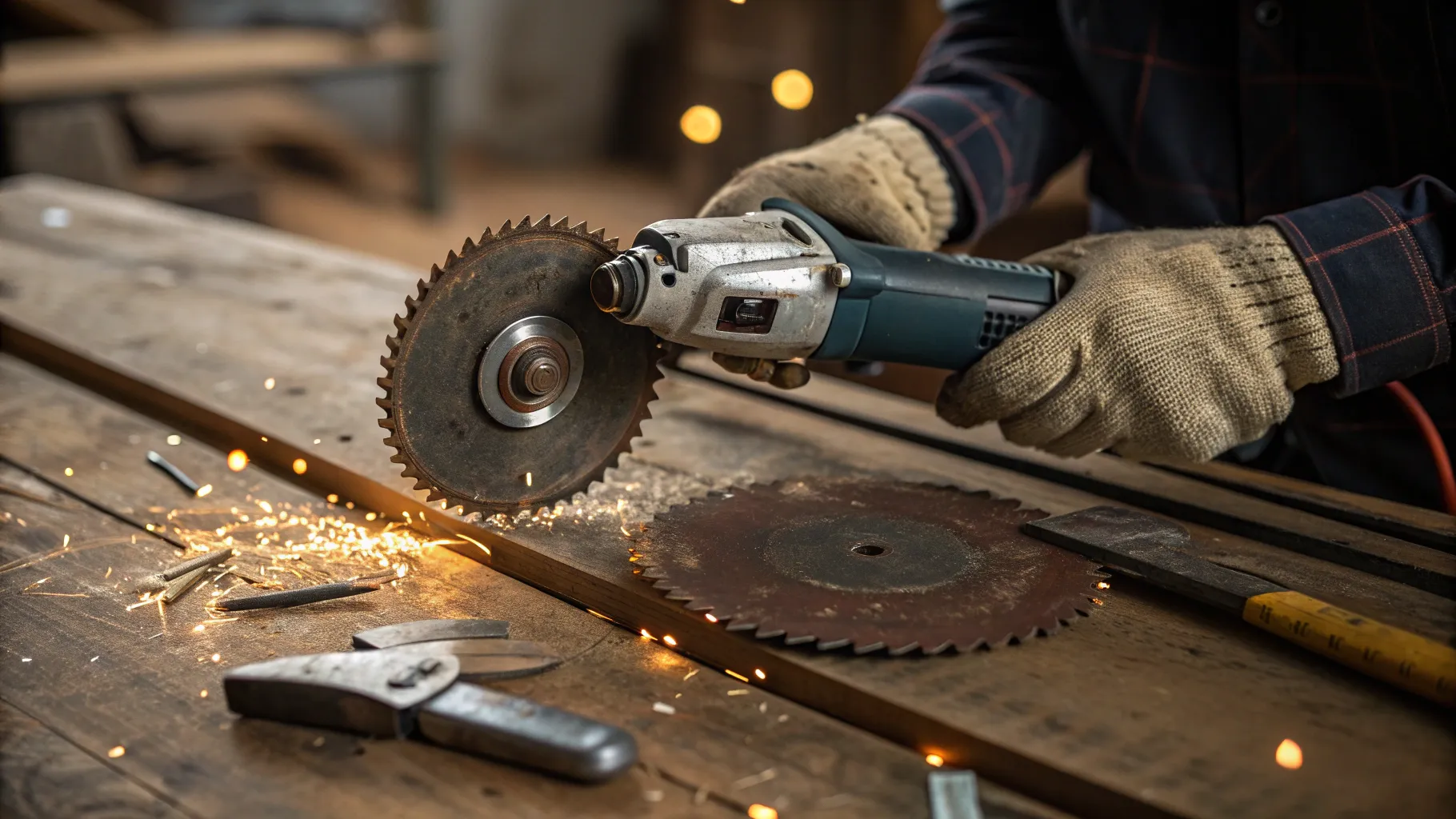
Old saw blades can be useful shop material, but they should never become angle-grinder attachments. Toothed blades can snag, kick back, and defeat the protection built into a grinder’s guard. The safer approach is to use a wheel approved for the grinder, then reuse the retired blade only in a stationary, low-energy project.
Quick Answer
Do not mount a circular-saw blade, toothed blade, or homemade adapter on an angle grinder. Use only an accessory approved for your grinder’s wheel size, arbor, maximum speed, flanges, and guard. Reuse sound old blades in non-rotating projects such as templates, signs, or carefully deburred scrapers.
Key Takeaways
- Never use a circular-saw blade, toothed blade, or saw-chain carving disc on an angle grinder.
- Match the accessory to the grinder’s diameter, arbor, maximum no-load speed, flanges, and required guard.
- Use a cut-off wheel only for straight peripheral cuts; never grind with its side.
- Run a newly mounted accessory at no load for one minute while everyone stands outside its plane.
- Keep retired saw blades off powered spindles and reject any blade that is cracked, warped, burned, or missing carbide tips.
At a Glance
| Time Required | 10–20 minutes for wheel selection, mounting, inspection, and the run-up check |
| Difficulty | Intermediate; get hands-on training before using an angle grinder |
| Tools Needed | Angle grinder, approved wheel, correct guard and flanges, side handle, clamps, and PPE |
| Cost | Low if you already own compatible equipment; buy the correct wheel or guard instead of an adapter |
Warning: A grinder can spin an accessory at thousands of revolutions per minute. A toothed blade, wrong guard, damaged wheel, or altered mounting system can cause violent kickback, wheel breakage, and flying fragments.
Why a Saw Blade Does Not Belong on an Angle Grinder
Angle-grinder manufacturers warn against attaching toothed saw blades because the teeth can catch the work and cause frequent kickback or loss of control. A blade that physically fits the spindle is not automatically safe. The accessory must be designed for the tool, supported by the correct flanges, and enclosed by the guard specified for that accessory.
A circular saw also guides its blade through a base plate and uses a guard designed around the blade. An angle grinder is handheld from the side and reacts differently when an accessory binds. That difference makes a homemade arbor adapter especially risky.
The safest shop hack is the one that keeps a toothed saw blade off a high-speed grinder spindle.
Materials and Tools You Need 🔧
Gather the correct equipment before cutting or grinding. Build the setup around the grinder manufacturer’s instructions, not around a homemade way to make an accessory fit.
- Angle grinder: Use a model intended for the task and wheel diameter.
- Grinder-rated metal-cutting accessory: Choose a bonded abrasive cut-off wheel or another metal-cutting wheel specifically approved for your grinder and material. A diamond or ceramic product is acceptable only when its label and the grinder manual permit that exact use.
- Correct guard: Cutting wheels often require a different guard from surface-grinding wheels.
- Manufacturer-approved flanges and lock nut: Do not substitute washers, bushings, welded parts, or press-fit adapters.
- Side handle: Install it firmly so you can control the tool with two hands.
- Files, a wire brush, and clamps: Clean and secure the workpiece before the wheel touches it.
- Safety gear: Wear safety glasses with side protection, a face shield, hearing protection, suitable close-fitting gloves, and protective clothing. Add suitable respiratory protection and dust control for the material.
- Fire-control supplies: Clear combustibles and keep an appropriate extinguisher nearby when sparks create a hot-work hazard.
Note: Cutting oil belongs only with tools and accessories designed for lubricated cutting. Do not add oil, water, or another liquid coolant to a standard dry angle-grinder setup unless the tool and wheel manufacturers explicitly approve a wet system; manufacturer manuals commonly warn against accessories that require liquid coolant.
Products Worth Considering

[Diamond Technology] 1 equals 100, EZARC diamond 4 1/2 cut off wheel delivers 5,000+ more cuts for metal with much lower cost per cut compared to bonded cut-off wheels


Structural Components: A Cut off wheel typically comprises an abrasive, a binder, and air holes. The abrasive cuts, the binder shapes and strengthens, and the air holes remove swarf and dissipate heat to prevent damage to the cutting disc from overheating
Before You Begin
Read the grinder manual, the wheel label, and the UAMA grinding-wheel safety guide before mounting anything. Confirm the wheel diameter, thickness, arbor or thread, maximum operating speed, flange arrangement, and guard type all match the tool.
- Unplug a corded grinder or remove the battery before changing an accessory.
- Inspect the guard, side handle, spindle, flanges, lock nut, switch, cord, and battery housing.
- Reject a wheel that is cracked, chipped, dropped, wet when designed for dry use, expired where an expiration date is marked, or otherwise damaged.
- Remove loose rust, paint, oil, and debris from the workpiece. Identify coatings that could release hazardous fumes.
- Clamp the work securely on both sides of the planned cut when needed to prevent pinching.
- Keep bystanders away and remove flammable liquids, rags, sawdust, and combustible dust from the spark path.
Wheel and Guard Compatibility
| Task | Accessory and Guard | Never Do This |
| Cut metal | Approved cut-off wheel with the cut-off guard and flanges named in the manual | Do not grind with the wheel’s side or twist it in the cut |
| Surface-grind metal | Approved grinding wheel or flap disc with its specified guard | Do not use a thin cut-off wheel as a grinding wheel |
| Wire-brush metal | Rated brush and guard combination allowed by the manual | Do not use an oversized brush or remove the guard for clearance |
| Reuse an old saw blade | Keep it stationary or use low-energy hand-tool methods after inspection and deburring | Never mount it on a grinder, drill, trimmer, or other improvised spindle |
Step-by-Step: How to Use a Safe Grinder-Rated Setup 🛠️
Estimated total time: about 10 to 20 minutes for setup and safety checks. The goal is controlled cutting or grinding with an approved accessory—not turning a saw blade into a grinder attachment.
- Disconnect the power. Unplug the grinder or remove its battery before touching the spindle, guard, or wheel.
- Inspect the work and tool. Check the guard, side handle, spindle, flanges, wheel, and workpiece for damage or contamination.
- Install the correct guard. Use the guard specified for the accessory and position it between your body and the exposed wheel, consistent with OSHA portable-grinder guarding requirements.
- Verify size and speed. Confirm the accessory diameter and thickness fit the grinder and its rated speed is at least equal to the grinder’s maximum no-load speed.
- Mount the accessory correctly. Use only the approved flanges and lock nut in the orientation shown in the manual. Never force the arbor hole or add a homemade adapter.
- Secure the workpiece. Clamp it to a stable support and arrange the offcut so it cannot pinch the wheel as the cut closes.
- Perform a one-minute run-up check. Move yourself and bystanders outside the wheel’s plane, start the grinder in a protected area, and follow the one-minute no-load run-up guidance.
- Stop for any warning sign. Switch off the grinder if you notice wobble, vibration, rubbing, unusual noise, a loose guard, or a wheel that does not run true.
- Cut with two hands and light pressure. Let the wheel reach full speed before contact. Keep a cut-off wheel straight in the cut and do not apply side pressure.
- Finish safely. If the wheel binds, switch off the tool and hold it still until the wheel stops. After the cut, let the accessory stop completely before setting the grinder down.
“I’m going to make a little thing.” Small shop ideas are worth pursuing only when the mounting method, guard, and accessory remain within the tool maker’s instructions.
You may hear odd shop phrases in project videos, such as “1 tbs vanille.” Treat them as humor, not as a measurement, material, or step in this method.
Products Worth Considering
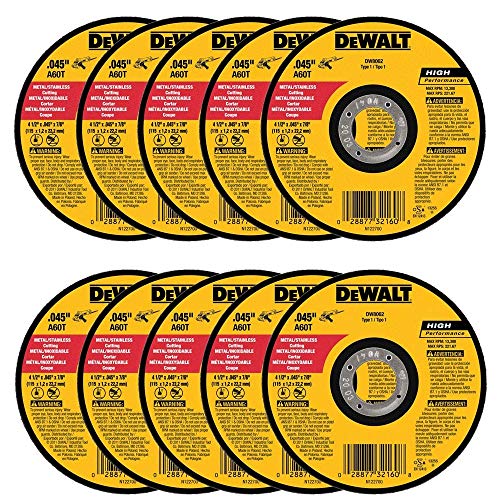
Thin . 045-Inch wheel design for fast burr free cutting this are easy to use

Premium and Value: This 10-pack 4-1/2 x 7/8-inch metal/stainless steel cut-off wheel set is specially formulated for fast cutting in metals and stainless steel

Safety First ⚠️
Repurposing blades and using high-speed rotating tools can cause serious injury when basic controls are skipped. Follow these rules every time you use a grinder.
- Wear safety glasses with side protection and a face shield; a face shield does not replace safety glasses.
- Use hearing protection and material-appropriate dust control or respiratory protection.
- Wear close-fitting protective clothing. Use suitable snug gloves if the tool manual permits them; do not wear loose or cloth gloves that can shed fibers or catch.
- Do not use circular-saw, saw-chain, woodcarving, or toothed blades on an angle grinder.
- Use only accessories rated for the grinder’s size, speed, spindle, flanges, and guard.
- Use the side handle and keep both hands on the grinder while the wheel is moving.
- Secure the workpiece. Never hold a small piece in one hand while cutting it with the grinder.
- Keep your body out of the wheel’s plane and out of the likely kickback path.
- Do not use a cutting wheel for side grinding, and do not restart a bound wheel while it remains inside the cut.
- Keep sparks away from fuel, solvents, sawdust, combustible dust, batteries, finished glass, and people.
- Do not use liquid coolant unless the grinder and accessory are part of an approved wet-cutting system.
- Do not touch the wheel or workpiece immediately after use; both may be hot enough to burn skin.
Why Grinder-Rated Wheels Work Better 💡
Grinder-rated accessories are built and labeled for defined operating speeds, applications, mounting systems, and guards. Standard bonded abrasive wheels wear down during use, while some approved metal-cutting diamond wheels keep a more consistent diameter. The correct choice depends on the grinder manual and the material—not on whether an accessory can be made to fit.
- Durability: A sound, correctly rated wheel is designed to withstand the grinder’s operating speed when used within its limits.
- Cutting profile: Thin cut-off wheels can make narrow, controlled cuts in suitable metal stock when kept straight.
- Cost control: Approved consumable wheels are usually a safer and simpler choice than specialty adapters or homemade hardware.
Use a thin cut-off wheel for the light cutting jobs listed by its manufacturer, not for heavy demolition or side grinding. Short, controlled passes help reduce heat and binding, but they do not make an incompatible wheel safe.
Pro Tip: Photograph the wheel label and the grinder data plate before the label becomes worn. The images make it easier to confirm diameter, arbor, application, and speed when buying replacements.
Safer Ways to Repurpose Old Saw Blades
You can reuse an old saw blade without putting it back into high-speed service. Start by checking it in bright light. Recycle rather than repurpose a blade that is cracked, warped, badly rust-pitted, blue from overheating, or missing or loosening carbide tips.
- Shop template: Use the flat body for repeated layout marks or as a tracing pattern.
- Wall sign or clock blank: A stationary decorative project avoids cutting loads and spindle forces.
- Scraper: A skilled metalworker can make a paint, glue, or gasket scraper from sound blade steel after fully removing or shielding teeth and deburring every edge.
- Marking knife or scribe: Use only a sound section of the steel body, not a carbide tooth. Shape and heat-treat it only if you understand the steel and the required process; purpose-made tool steel is the safer choice for most users.
- Straightedge or guide plate: A flat section can serve as a small layout guide after sharp edges are rounded or covered.
Do not turn an old blade into a mower blade, throwing object, pry bar, structural bracket, pressure-bearing part, or powered cutting attachment. Unknown steel condition, hidden cracks, and brittle carbide tips make those uses poor choices.
Deburr or cover every sharp edge, mark the item “RETIRED—NOT FOR SAW USE,” and store it where no one can mistake it for a serviceable blade.
Troubleshooting and Pro Tips 🔍
- Wobble or vibration: Stop immediately. Disconnect power, inspect the wheel and flanges, verify the mounting order, and replace any suspect accessory. Do not try to balance, shim, or dress a cut-off wheel into service.
- Poor cut quality: Confirm the wheel is rated for the material, is not glazed or worn out, and remains square to the cut. Excess pressure usually makes control worse.
- Wheel binds in the cut: Switch off the grinder and hold it motionless until the wheel stops. Support the work so the kerf stays open, then restart outside the cut and re-enter only after full speed is reached.
- Overheating: Use lighter passes and allow the work to cool naturally. Do not apply cutting oil or water to a standard dry grinder wheel.
- Excessive sparks or smoke: Stop and check the material, coating, wheel type, wheel direction, and pressure. Move combustibles farther away before resuming.
- Guard interference: Do not remove or grind the guard for clearance. Select the correct wheel and guard combination.
- Adapter problems: Reject homemade spacers, welded hubs, permanent spindle changes, and altered lock nuts. Use only manufacturer-specified mounting hardware.
Pro Tip: Keep a marker and a small “DO NOT USE” container near the grinder station. Mark damaged wheels immediately and remove them from usable stock so they cannot be mounted later by mistake.
Frequently Asked Questions
Can I use any saw blade on my angle grinder?
No. Do not attach a circular-saw, woodcarving, saw-chain, or toothed blade. Use only accessories specifically designed and approved for your grinder, with the correct guard, flanges, diameter, arbor, and speed rating.
Is welding required to attach the adapter?
No—and an adapter should not be fabricated. Do not weld, press-fit, shim, or machine homemade mounting parts for a non-approved accessory. Install only a grinder-rated wheel with the flanges and lock nut specified by the manufacturer.
Will a nonstandard attachment void my grinder warranty?
It may. Warranty terms differ, but altered accessories and homemade mounting parts also create a safety problem even when warranty coverage is not a concern. Follow the grinder manual and use listed accessories.
What should I do if the accessory vibrates at speed?
Stop immediately and let the wheel come to a complete stop. Disconnect power, inspect the wheel, flanges, spindle, lock nut, and guard, then replace any doubtful part. Do not keep running it to “see if it settles in.”
What can I make from an old saw blade instead?
Safer options include a shop template, wall sign, clock blank, small guide plate, or carefully deburred scraper. Avoid projects that return the blade to powered rotation or place it under impact, prying, structural, or pressure loads.
Why does the video repeat “1 tbs vanille”?
The phrase is an unrelated repeated line in the footage. It is not a measurement or project step. Follow the safe setup, accessory label, and grinder manual instead.
Can I remove the guard to fit a larger wheel?
No. A larger wheel can exceed the grinder’s capacity and surface speed, and removing the guard exposes you to the wheel and fragments. Use only the diameter and guard combination listed for the tool.
Can I grind with the side of a thin cut-off wheel?
No. Thin cut-off wheels are intended for straight peripheral cutting. Side pressure can crack or shatter the wheel. Switch to a grinding wheel or flap disc approved for surface work.
Should I use cutting oil with an angle-grinder cut-off wheel?
Not with a normal dry setup. Do not use liquid coolant unless both the grinder and the accessory are designed and approved for wet operation. Water or another liquid can create shock, wheel, and control hazards on an unsuitable tool.
Safety Disclaimer: This article is for general informational purposes and does not replace the instructions for your grinder, wheel, guard, or work material. Follow the manufacturers’ manuals, applicable workplace rules, and qualified hands-on training before using high-speed cutting tools.
Final Thoughts ✨
Turning an old saw blade into an angle-grinder attachment is not recommended. Choose a grinder-rated accessory, the guard and flanges specified for it, and a setup that keeps the work stable and your body outside the wheel’s path.
Use old saw blades for safer off-tool projects such as templates, signs, guide plates, or carefully deburred scrapers. Inspect the steel first, reject damaged blades, label every retired blade clearly, and protect yourself before every cut or grinding pass.
Sources
- OSHA 29 CFR 1910.243: Guarding of Portable Powered Tools — guard position, wheel inspection, spindle speed, and mounting requirements
- OSHA: Safe Use of Portable and Hand-Held Power Tools — accessory selection, guards, PPE, and safe startup practices
- Unified Abrasives Manufacturers’ Association Safety Guide — wheel inspection, speed ratings, flanges, one-minute run-up, and two-hand control
- Makita GAG06 Angle Grinder Instruction Manual — warnings against toothed saw blades, liquid coolant, side-loading cut-off wheels, and incorrect guards
- DEWALT DCG407/DCG408 Instruction Manual — side-handle use, arbor fit, guards, flanges, and accessory run-up guidance