Affiliate disclosure: As an Amazon Associate, we may earn from qualifying purchases made through links in this article, at no extra cost to you.
Last updated: July 20, 2026
If you cut rebar, plate, pipe, brackets, or structural steel, a plasma cutter can save time compared with repeated grinder cuts. The right machine depends on more than amperage. You also need a compatible circuit, enough clean and dry compressed air, suitable consumables, and a start method that matches the condition of the metal.
This guide compares eight relevant plasma cutters for rebar and metal fabrication. It includes simple contact-start units for clean material, pilot-arc cutters for rust and paint, and higher-output multi-mode machines for thicker plate, expanded metal, gouging, and marking.
Quick Verdict
ARCCAPTAIN CUT55 MP is the best overall choice for mixed fabrication because it combines a non-HF blowback pilot arc with multiple cutting modes. Choose the ARCCAPTAIN CUT50 for simple beginner work on clean metal, the ARCCAPTAIN CUT60 or YESWELDER CUT-65DS PLUS for more output, and the Reboot RBC6000D when budget matters more than pilot-arc convenience.
Safety Note
Plasma cutting creates ultraviolet radiation, sparks, hot metal, fumes, and electrical hazards. Wear suitable eye, face, hand, hearing, skin, and respiratory protection; remove fire hazards; provide ventilation; and follow the machine manual. Never cut sealed containers, unknown coated metals, or material near flammable vapor.
Top Picks
| Category | Product | Best For |
|---|---|---|
| Best Overall | ARCCAPTAIN CUT55 MP | Mixed fabrication, expanded metal, rust removal, and gouging |
| Best Beginner Value | ARCCAPTAIN CUT50 | Clean rebar, sheet steel, and occasional garage fabrication |
| Best Smart Control | ARCCAPTAIN CUT55 Pro | Users who want app control and non-touch pilot arc |
| Best Pilot Arc Value | ARCCAPTAIN CUT55 Pilot | Rusty rebar, painted stock, and expanded metal |
| Best Higher-Output Pick | ARCCAPTAIN CUT60 | Thicker rebar, plate, and users who want more cutting headroom |
| Best Workhorse | YESWELDER CUT-65DS PLUS | Farm repairs, heavier plate, pipe, grid cutting, gouging, and marking |
| Best Simple Pilot-Arc Setup | Bestarc 50A Pilot Arc Plasma Cutter | DIY users who want pilot arc with integrated air monitoring |
| Best Budget Pick | Reboot RBC6000D | Clean rebar, scrap, and occasional light fabrication on a tighter budget |
Check the Beginner Pick on Amazon ➜
How We Picked These Plasma Cutters
This is an editorial comparison based on published product information, the supplied source material, and buyer-focused suitability. It is not presented as a hands-on laboratory test. We prioritized clear product identity, rebar and fabrication relevance, start method, input voltage, listed cutting range, air setup, control simplicity, mode selection, consumable support, and honest limitations.
We removed products whose current identity or affiliate destination could not be verified clearly enough for publication. We also removed unsupported star ratings, review counts, and numerical scores because those values can change and the source did not provide a transparent scoring method.
What to Check Before Buying
- Start type: Contact-start cutters are fine for clean metal. Non-touch pilot arc is more convenient for rust, paint, expanded metal, and interrupted cuts.
- HF versus non-HF: High-frequency pilot arc starts easily but can interfere with sensitive electronics. Non-HF blowback is the safer choice around CNC controls and electronic equipment when the manufacturer approves the setup.
- Power supply: Many dual-voltage cutters reduce output on 110/120V. Use the required 220/240V circuit when you need the machine’s higher listed capacity.
- Air compressor: Match both PSI and CFM. Pressure alone does not tell you whether the compressor can sustain a long cut.
- Clean cut versus maximum cut: A maximum or severance rating is not the same as a smooth, production-ready cut. Base your purchase on the clean-cut rating for your material.
- Consumables: Confirm the torch model and availability of matching electrodes, tips, cups, shields, and mode-specific parts.
- Electrical setup: Check breaker size, receptacle, plug, wiring, grounding, and extension-cord limits in the manual.
- Material condition: Rebar coatings, heavy rust, paint, scale, and moisture can affect starting, fumes, cut speed, and consumable life.
Before You Buy
Check the machine manual and live listing for the exact voltage range, amperage available at each voltage, clean-cut rating, maximum cut rating, required PSI and CFM, torch model, included plug or adapter, consumables, warranty terms, and duty cycle. These details can vary by production revision.

The CUT50 makes the most sense when you want a straightforward machine for clean rebar, sheet, brackets, and light plate. Its simple front panel reduces setup friction, while the built-in air regulation helps you match pressure to the job without adding as many external parts.
Its main limitation is the contact-start torch. You need a clean electrical path at the cut, so it is less convenient on heavily rusted, painted, or expanded material than a pilot-arc model. Use 220V when you need the machine’s stronger listed cutting range, and verify the required breaker, plug, air pressure, and airflow before use.
What People Say
The source summary describes easy setup, readable controls, and useful performance for hobby work. It also notes some reports of support or reliability problems, so this is better positioned as a garage-value option than a production machine.
Source-summary sentiment: Generally positive

Ease of Use
| Feature | Ease Level |
|---|---|
| Initial setup | Easy |
| Controls and settings | Easy |
| Air-pressure adjustment | Easy |
| Starting on dirty metal | Moderate |
| Moving around the shop | Easy |
Safety and Setup Notes
Post-flow helps cool the torch after a cut, and the regulator helps keep air pressure within the selected range. Because this is a contact-start model, clean the contact area first and confirm the work clamp has a solid connection.
Why You’ll Like It
- Simple controls for first-time plasma-cutter owners
- Dual-voltage flexibility for light garage work and stronger 220V output
- Pre-installed regulator reduces air-setup complexity
- Good fit for clean rebar, sheet, brackets, and occasional light plate
Pros and Cons
- Pros: Simple interface, compact body, dual voltage, and onboard air regulation.
- Cons: Contact start is less convenient on rust, paint, mesh, and expanded metal.

This model solves two common setup problems: starting on less-than-perfect metal and keeping settings easy to review. The non-touch pilot arc is useful on rusty or coated rebar, while the app and front display give you two ways to adjust and monitor the machine.
The added electronics make it more feature-rich than a basic CUT50, but they also add a learning step. Treat the app as a convenience rather than a substitute for checking the manual, air supply, ground connection, torch consumables, and electrical circuit.
What People Say
The source summary highlights cutting power, the clear display, and the convenience of app control. It also mentions occasional air-fitting and durability concerns, which reinforces the need for dry air, correct pressure, and realistic duty expectations.
Source-summary sentiment: Generally positive

Ease of Use
| Feature | Ease Level |
|---|---|
| Initial setup | Easy |
| Front-panel controls | Easy |
| App connection | Moderate |
| Air hookup | Moderate |
| Pilot-arc starting | Easy |
Safety and Setup Notes
Non-touch pilot arc reduces the need to strike the torch tip against dirty material. Post-flow supports torch cooling, but safe use still depends on correct PPE, dry compressed air, a sound work clamp, and a circuit that matches the manual.
Why You’ll Like It
- Non-touch starting for rusty, painted, or uneven stock
- App and LED controls make settings easier to review
- Dual voltage supports both lighter garage work and stronger shop output
- 2T/4T modes help with short cuts and longer continuous passes
Pros and Cons
- Pros: Smart controls, pilot arc, dual voltage, and a useful power step above basic 50A units.
- Cons: More setup complexity than a simple knob-controlled cutter.
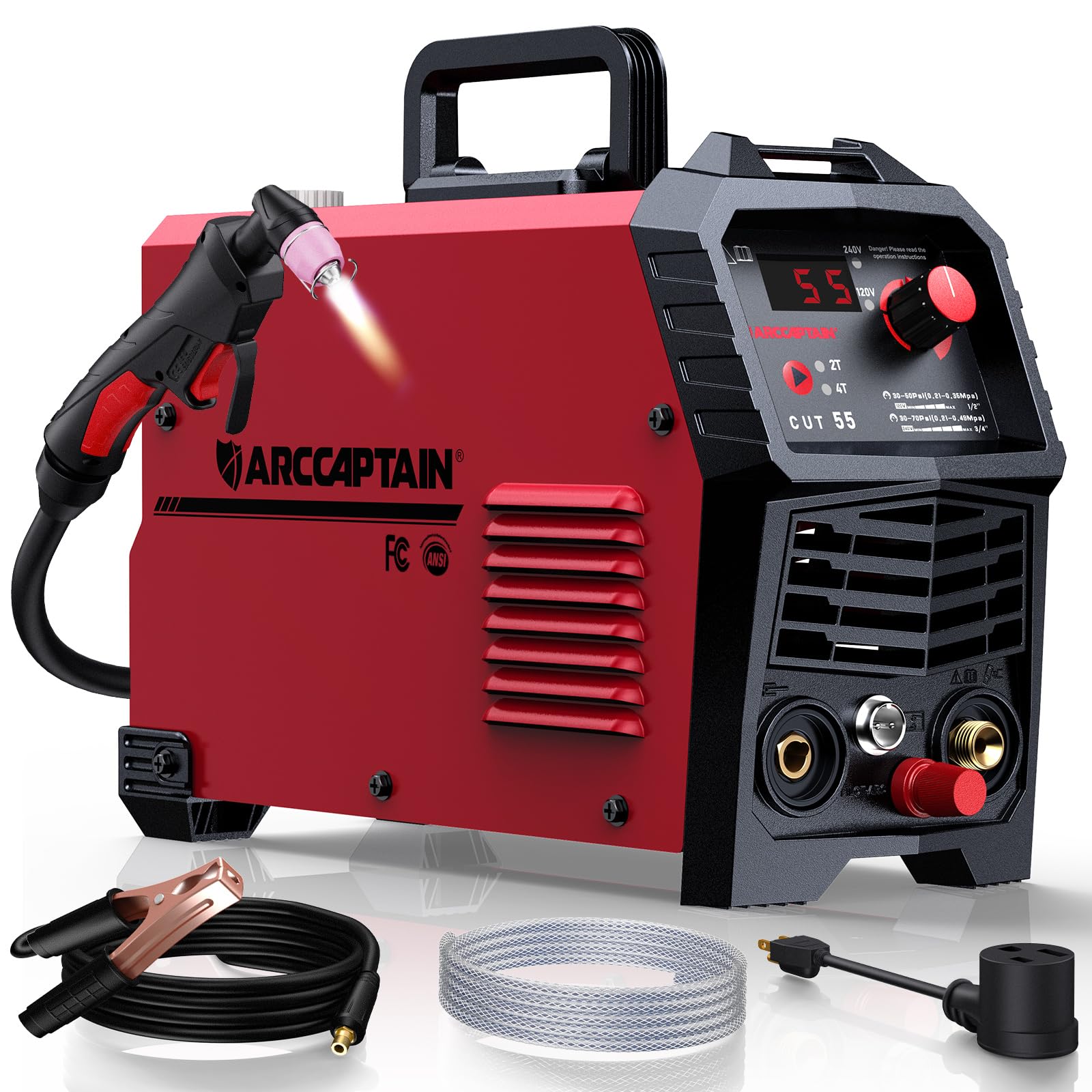
This cutter is aimed at buyers who want reliable arc starting on rebar that is not perfectly clean. The torch can establish the arc without touching the work, which makes it more convenient for rust, paint, uneven surfaces, and expanded metal than a basic contact-start unit.
The tradeoff is its high-frequency start system. It may be a poor match near sensitive electronic controls or CNC equipment unless the manufacturer specifically approves the setup. For manual garage work, it offers a useful balance of pilot-arc convenience and moderate output.
What People Say
The source summary reports positive feedback for setup, clean cutting, and pilot-arc performance. Some buyers reportedly encountered fitting or support issues, so confirm connector compatibility and inspect the included air hardware before the first cut.
Source-summary sentiment: Generally positive

Ease of Use
| Feature | Ease Level |
|---|---|
| Initial setup | Easy |
| Manual controls | Easy |
| Air hookup | Moderate |
| Starting on rusty stock | Easy |
| Longer cuts | Moderate |
Safety and Setup Notes
Pilot arc reduces repeated tip contact, while post-flow helps cool the torch. Because the start method is high frequency, keep it away from sensitive electronics unless the installation guidance says otherwise.
Why You’ll Like It
- Non-touch pilot arc for rust, paint, and expanded metal
- Dual-voltage operation for garage and shop circuits
- 2T/4T modes reduce trigger fatigue on longer cuts
- Included regulator/filter simplifies the initial air setup
Pros and Cons
- Pros: Strong start reliability on dirty metal, simple controls, and useful included air hardware.
- Cons: High-frequency starting may not suit electronics-sensitive work areas.
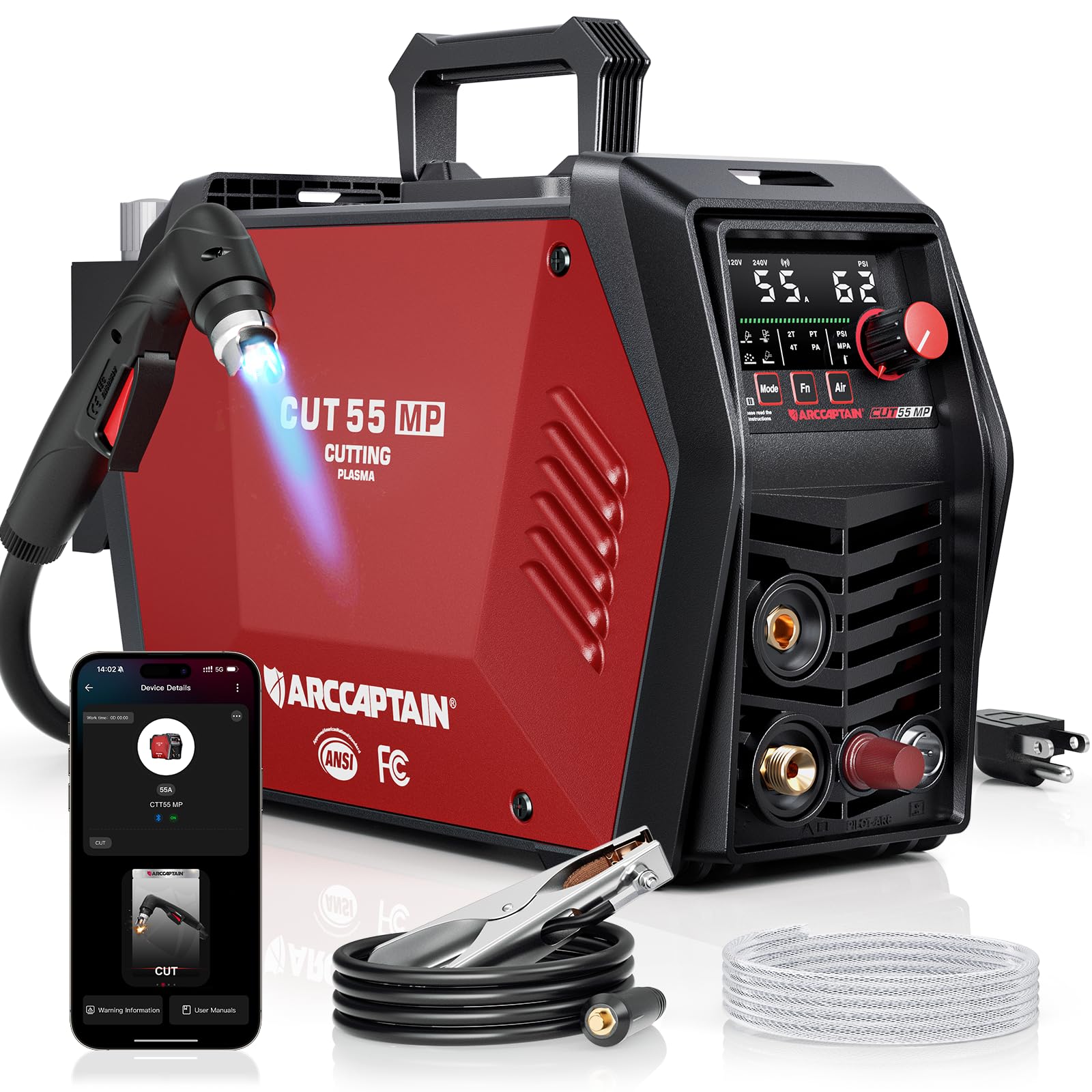
The CUT55 MP is the strongest all-around fit in this list because it combines a non-HF pilot arc with modes that address several common fabrication jobs. It can start without touching rusty or coated material, switch into a grid-style mode for interrupted cuts, and support gouging when you need to remove weld metal or surface material.
Those features are most useful when your work changes from day to day. For simple clean rebar, the extra modes may be unnecessary. For a garage or small shop that cuts plate, mesh, rusty stock, and occasional weld repairs, the broader control set can reduce the need for separate tools.
Products Worth Considering

【Non-Touch Pilot Arc Function】The ARCCAPTAIN 55A plasma cutter features a pilot arc function. It utilizes a high-frequency non-touch arc starting mode. The torch head does not need to touch the metal plate, reducing energy consumption during non-cutting work, minimizing electrode burning, and extending service life. NOTE: Do not switch voltages until the screen turns off and the fan stops.

POWERFUL CUTTING CAPACITY: Featuring a 20-55A current output, it delivers deep cutting thickness. Ideal clean cut: 19/64''@110V, 25/64''@220V, max cut: 9/16''@110V, 17/24''@220V. Uses non-hazardous compressed air to cut stainless steel, alloy steel, mild steel, copper, and aluminum.

[Powerful Cutting Ability] Dual voltage 110/220V good for home, workshop and hardware shop use. Professional performance1/2” clean cuts on Iron, Steel aluminum and copper with Inverter IGBT technology. Very powerful for DIY and heavy duty project. The Maximum cutting thickness is recommended to 1/2” (12mm)@35A 110V 50PSI; 3/4” (18mm)@55A 220V 65PSI. Dry and compressed air is required. Power breaker up to 40A@110V 35A; Up to 30A@220V 55A.
What People Say
The source summary describes strong versatility, useful controls, and good performance on rusty or expanded material. It also notes isolated fitting and durability complaints, so protect the machine with clean, dry air and avoid treating a compact inverter cutter like a continuous industrial unit.
Source-summary sentiment: Generally positive

Ease of Use
| Feature | Ease Level |
|---|---|
| Initial setup | Easy |
| Mode selection | Moderate |
| App control | Moderate |
| Expanded-metal cutting | Easy |
| Moving around the shop | Easy |
Safety and Setup Notes
The non-HF blowback start is friendlier around electronics than a traditional HF pilot arc, and pressure detection can alert you to air-supply problems. Always follow the manual for mode-specific consumables and torch setup.
Why You’ll Like It
- Non-HF blowback pilot arc for dirty or coated material
- Multiple modes for plate, grid, rust removal, and gouging
- App and LED controls provide flexible parameter access
- Pressure detection helps identify air-supply problems before cut quality drops
Pros and Cons
- Pros: Broad feature set, non-HF pilot arc, smart controls, and strong fit for mixed fabrication.
- Cons: Extra modes and app features create a steeper learning curve.
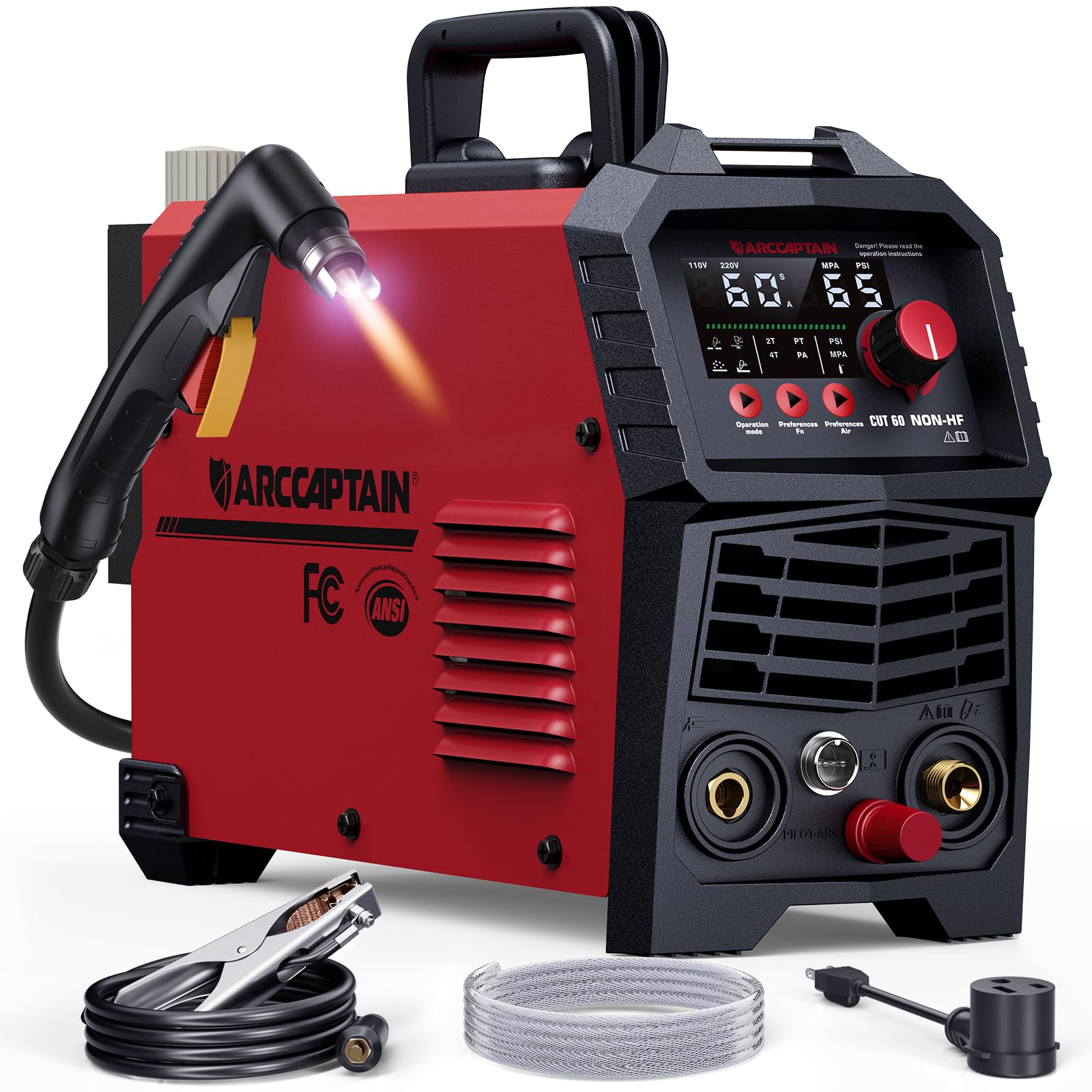
The CUT60 is for buyers who have outgrown entry-level output but still want a portable inverter machine. Its extra current gives you more headroom for larger rebar and thicker plate, while the blowback pilot arc helps maintain easier starts on coated or uneven stock.
Higher output only helps when the rest of the setup can keep up. Check the required airflow, pressure, breaker size, plug configuration, extension-cord limits, and duty cycle before buying. A weak compressor or undersized circuit can turn a capable cutter into a frustrating one.
Products Worth Considering

3-IN-1 CUTTING MODES: Supports plate cutting, expanded-metal cutting, and rust removal — one machine for virtually every metal project. Expanded-metal mode maintains a steady arc on mesh materials for cleaner, uninterrupted cuts. Rust-clean mode quickly removes corrosion, rust, or coatings without grinding, saving time and reducing prep work. Perfect for home, workshop, or DIY use.

【4-IN-1 CUTTING MODES】: Supports plate cutting, expanded-metal cutting, rust/paint removal, and plasma gouging — giving you one machine for almost any metal job. Expanded-metal mode keeps a steady arc on mesh materials for cleaner, uninterrupted cuts. Rust-clean mode removes corrosion and coatings without grinding, saving time and reducing cleanup. Gouging mode removes old welds, fixes defects, and prepares bevels for faster, easier repairs. (Replace nozzle when using gouging mode.)

【Precise 50-60 PSI Working Pressure】Professionally calibrated for 50-60 PSI optimal working air pressure, the machine maintains consistent plasma arc stability during long-hour cutting. Standard air pressure setting effectively reduces slag adhesion, avoids uneven cutting and arc breaking issues, and ensures smooth, neat cutting edges for all applicable metal materials.
What People Say
The source summary points to strong cutting performance and convenient controls. It also mentions air-fitting quirks and concerns about hard daily use, so this model is best viewed as a higher-output garage or small-shop cutter rather than an industrial production system.
Source-summary sentiment: Generally positive

Ease of Use
| Feature | Ease Level |
|---|---|
| Initial setup | Moderate |
| Mode selection | Easy |
| Air hookup | Moderate |
| Cutting thicker stock | Moderate |
| Portability | Easy |
Safety and Setup Notes
Pressure detection and post-flow support more consistent operation, but the higher output raises the importance of correct wiring, breaker capacity, ventilation, PPE, and compressor sizing.
Why You’ll Like It
- 60A output provides more headroom than common 50A and 55A machines
- Non-HF pilot arc works well for rust, paint, and interrupted cuts
- Multiple modes support plate, mesh, rust removal, and gouging
- Pressure monitoring helps you catch air issues that can damage consumables
Pros and Cons
- Pros: Higher output, non-HF pilot arc, useful modes, and portable shop-friendly design.
- Cons: Requires more air and electrical support than smaller cutters.
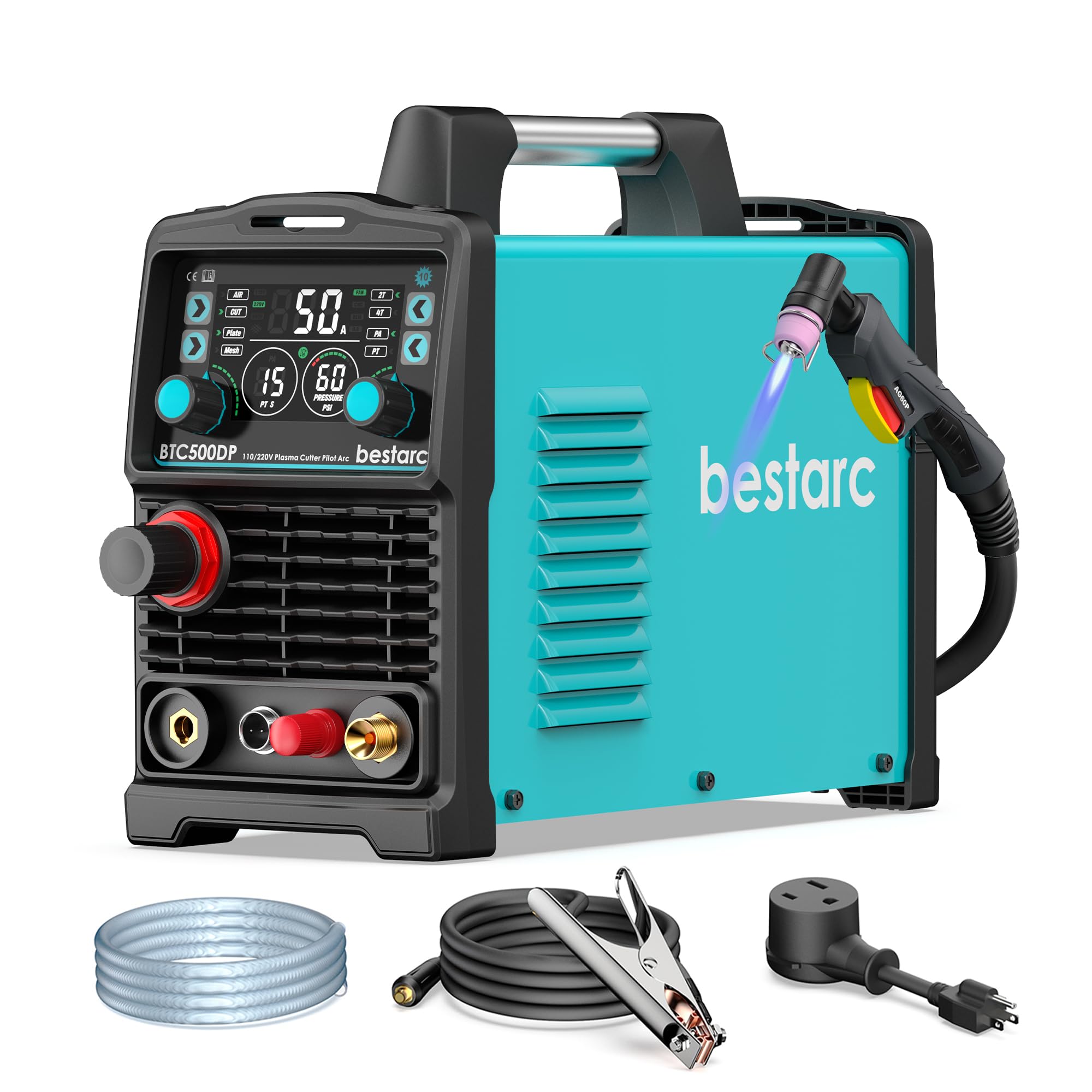
This Bestarc model focuses on making pilot-arc cutting approachable. The integrated air sensor and regulator reduce setup guesswork, while the non-touch start is better suited to rusty rebar and coated stock than a basic contact-start cutter.
Its 50A class keeps it aimed at DIY and light shop use. It is a practical middle ground when you want easier dirty-metal starts but do not need the extra modes or higher current of the CUT55 MP, CUT60, or YESWELDER CUT-65DS PLUS.
What People Say
The source summary emphasizes quick setup, a readable display, and consistent cuts on common steel. It also notes that longer runs demand a capable compressor and that some hardware feels lighter than heavier shop equipment.
Source-summary sentiment: Generally positive

Ease of Use
| Feature | Ease Level |
|---|---|
| Initial setup | Easy |
| Front-panel controls | Easy |
| Air management | Easy |
| Pilot-arc starting | Easy |
| Extended cutting | Moderate |
Safety and Setup Notes
The air sensor can help identify low-pressure conditions, while post-flow supports torch cooling. Verify the correct air fitting, pressure range, and compressor output before the first cut.
Why You’ll Like It
- Pilot arc for rusty, painted, or uneven surfaces
- Integrated air sensor and regulator simplify setup
- Dual voltage supports common garage and shop power
- Large display and 2T/4T modes keep operation straightforward
Pros and Cons
- Pros: Easy air management, non-touch starting, clear controls, and good DIY usability.
- Cons: Not designed for long industrial cutting sessions.
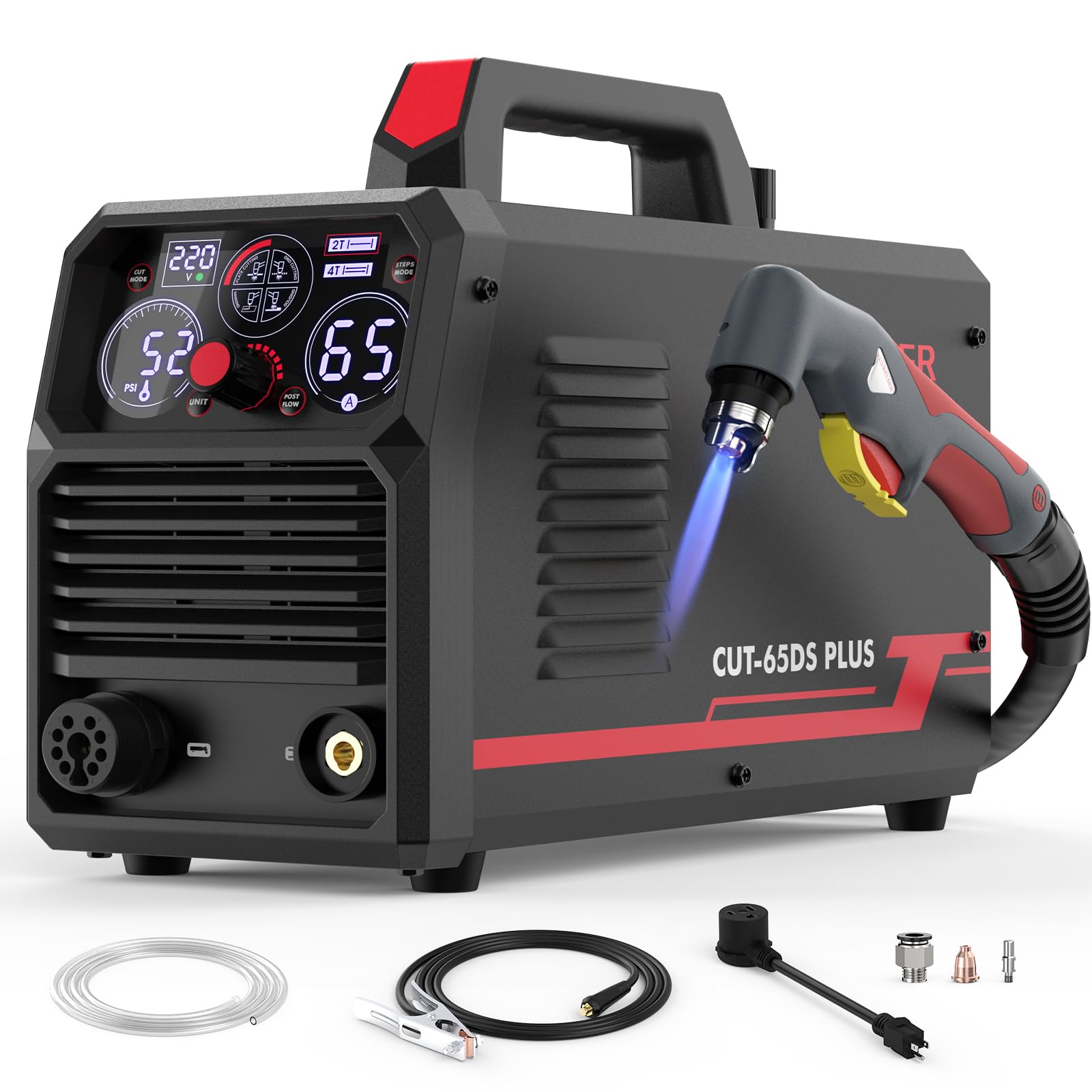
The CUT-65DS PLUS is the most work-oriented option here. Its higher output and four operating modes make it a stronger fit for farm repairs, thicker plate, pipe work, expanded metal, weld removal, and layout marking than a basic 50A cutter.
It also asks more from your support equipment. Before buying, confirm that your compressor can sustain the required airflow and that your 220V circuit, breaker, receptacle, and wiring match the manual. The listing also notes that different functions may use different torch accessories, so match consumables to the selected mode.
What People Say
The source summary describes strong cutting power and good results on plate and pipe, especially on 220V. It also reports higher air demand and some mixed reliability feedback, making careful setup and realistic duty expectations especially important.
Source-summary sentiment: Mixed to positive

Ease of Use
| Feature | Ease Level |
|---|---|
| Initial setup | Moderate |
| Mode selection | Moderate |
| Air management | Moderate |
| Thicker cuts | Moderate |
| Gouging and marking | Moderate |
Safety and Setup Notes
The non-HF start reduces electromagnetic interference compared with HF pilot-arc designs. Use the correct torch parts for each mode, maintain dry air, and follow the manual’s electrical and duty-cycle limits.
Why You’ll Like It
- Highest output in this roundup for more demanding material
- Four modes cover plate, grid, gouging, and marking
- Non-HF pilot arc supports dirty metal and electronics-sensitive work areas
- Dual voltage keeps it flexible, although 220V is the better fit for heavier work
Pros and Cons
- Pros: High output, versatile mode set, non-HF starting, and strong fit for farm or shop work.
- Cons: Greater air demand, more setup complexity, and mixed reliability feedback in the source summary.
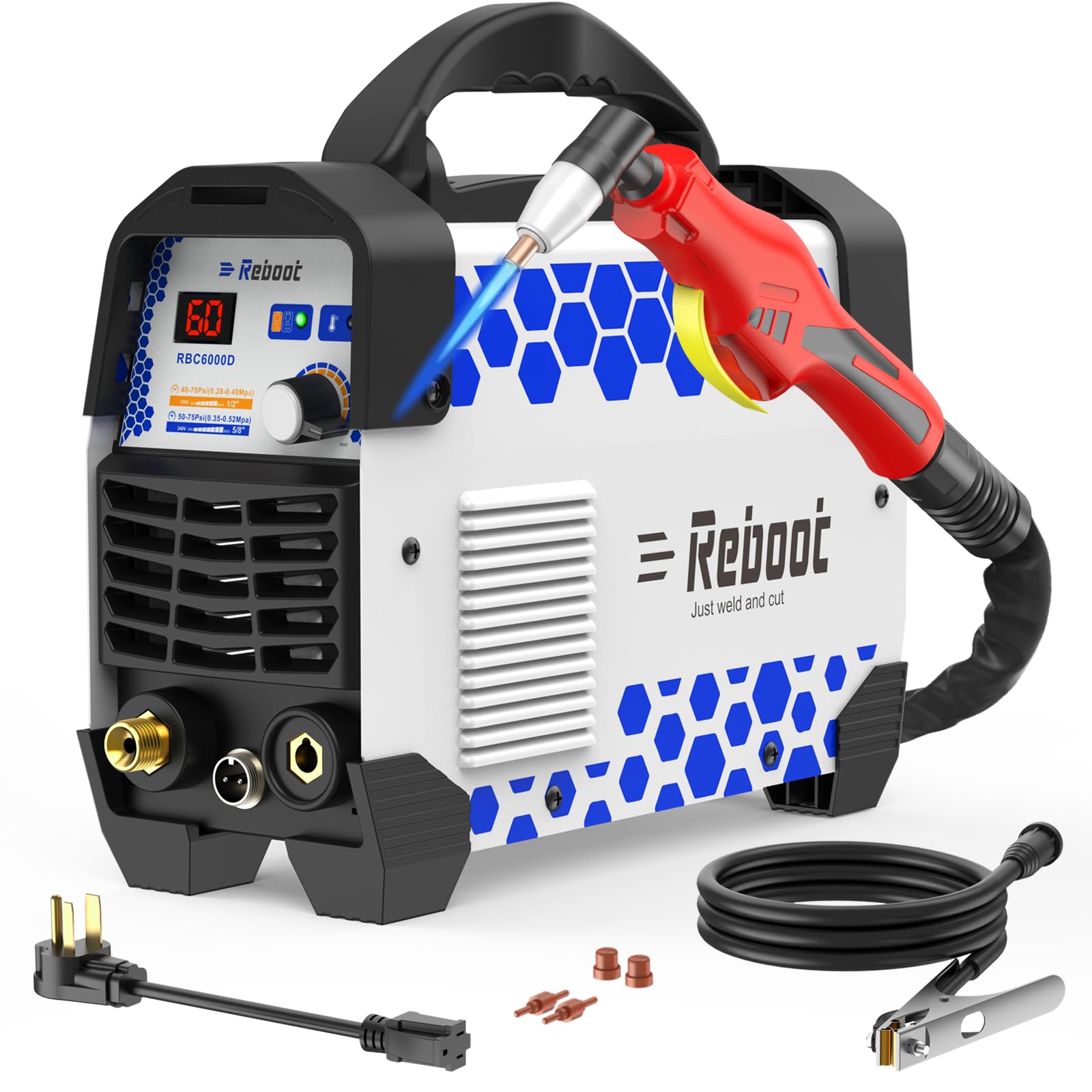
The RBC6000D is the budget choice for buyers who mainly cut clean material. Its dual-voltage design lets you use a common outlet for lighter work and move to 240V when the job and circuit call for more output. The pre-installed regulator also reduces the number of parts you need to assemble before testing the machine.
The key compromise is touch starting. You need a clean contact area, and the torch is less convenient on interrupted surfaces than a pilot-arc model. It is best for occasional trimming, scrap breakdown, brackets, and clean rebar rather than frequent work on rusty mesh or coated plate.
What People Say
The source summary reports straightforward setup, useful portability, and clean cuts when power and air are correct. Because budget cutters can vary in quality control, inspect the fittings, torch, ground clamp, and consumables before relying on it for an important job.
Source-summary sentiment: Generally positive

Ease of Use
| Feature | Ease Level |
|---|---|
| Initial setup | Easy |
| Power hookup | Moderate |
| Air setup | Easy |
| Torch handling | Easy |
| Starting on dirty material | Moderate |
Safety and Setup Notes
The regulator helps control air pressure, and post-flow supports torch cooling. Clean the starting point, attach the work clamp to bare metal, and verify the correct PT31 consumables before cutting.
Why You’ll Like It
- Budget-focused route into plasma cutting
- Dual voltage for light garage work and stronger 240V operation
- Pre-installed regulator reduces setup time
- Portable design for occasional shop and jobsite use
Pros and Cons
- Pros: Affordable positioning, simple air setup, dual voltage, and easy portability.
- Cons: Contact start is less effective on rust, paint, mesh, and expanded metal.
Which Plasma Cutter Should You Choose?
| Buyer Need | Best Fit | Why It Fits |
|---|---|---|
| Best all-around feature set | ARCCAPTAIN CUT55 MP | Non-HF pilot arc plus modes for plate, mesh, rust removal, and gouging. |
| Simple beginner setup | ARCCAPTAIN CUT50 | Straightforward controls and integrated air regulation for clean material. |
| Rusty or painted rebar | ARCCAPTAIN CUT55 Pilot or CUT55 Pro | Non-touch pilot arc starts without dragging the tip across the work. |
| Thicker rebar and plate | ARCCAPTAIN CUT60 or YESWELDER CUT-65DS PLUS | Higher output provides more cutting headroom when air and power are adequate. |
| Simple pilot-arc DIY use | Bestarc 50A Pilot Arc Plasma Cutter | Integrated air monitoring and a clear control panel. |
| Budget clean-metal cutting | Reboot RBC6000D | Portable dual-voltage design, with contact-start limitations clearly understood. |
FAQ
What Should I Look for When Buying a Plasma Cutter for Rebar?
Start with the rebar diameter and condition. For clean, smaller rebar, a basic 50A contact-start cutter may be enough. For rusty, painted, or coated rebar, a non-touch pilot arc is easier to start. Then confirm the clean-cut rating, available amperage at your voltage, duty cycle, required airflow, torch consumables, and circuit requirements.
Can a Plasma Cutter Cut Rusty or Painted Rebar?
Yes, but a pilot-arc cutter is usually the better choice because it can establish the arc without direct tip contact. Heavy contamination can still reduce cut quality and create hazardous fumes, so remove loose scale and unknown coatings when it is safe to do so, provide ventilation, and wear suitable respiratory protection.
Is 110V or 120V Enough for Cutting Rebar?
It can be enough for smaller rebar and lighter work, but most dual-voltage cutters provide less current on 110/120V. For larger rebar, thicker plate, cleaner edges, or longer cuts, the manufacturer-listed 220/240V setup is usually the better fit. Never change voltage connections while the machine is energized.
How Large Should My Air Compressor Be?
Use the cutter manufacturer’s required pressure and airflow, not tank size alone. A compressor may reach the required PSI but still lack enough CFM for a sustained cut. Dry air also matters because moisture and oil can shorten consumable life and reduce cut quality.
What Is the Difference Between Clean-Cut and Maximum-Cut Thickness?
Clean-cut thickness is the range where the machine should produce a more controlled edge at an appropriate travel speed. Maximum or severance thickness is the upper limit the arc may get through, often with slower speed, more dross, a rougher edge, and more cleanup. Buy around the clean-cut rating for the material you use most.
Do I Need Pilot Arc for Rebar?
No. A contact-start cutter can work well on clean rebar with a solid work-clamp connection. Pilot arc becomes more valuable when the surface is rusty, painted, scaled, uneven, or interrupted, and when you cut expanded metal or mesh.
Can I Use a Plasma Cutter on Any Metal?
Plasma cutters are intended for electrically conductive metals such as carbon steel, stainless steel, aluminum, copper, and similar materials. Cut quality and consumable choice vary by material. Avoid cutting unknown coatings or containers that may release toxic fumes or ignite.
Final Recommendation
Choose the ARCCAPTAIN CUT55 MP when you want the best balance of pilot-arc starting, non-HF operation, smart controls, and multiple fabrication modes. Pick the ARCCAPTAIN CUT50 for simple beginner cutting on clean material. Step up to the ARCCAPTAIN CUT60 or YESWELDER CUT-65DS PLUS when thicker rebar, plate, pipe, gouging, or marking justify more output and a stronger air-and-power setup.
For a lower-cost machine, the Reboot RBC6000D is the budget option, but its contact-start design is best on clean metal. Whichever model you choose, verify the live manual, product revision, air requirement, circuit requirement, and included consumables before ordering.