Disclosure: As an Amazon Associate, we earn from qualifying purchases. If you click a link on this page and make a purchase, we may receive a small commission at no extra cost to you.
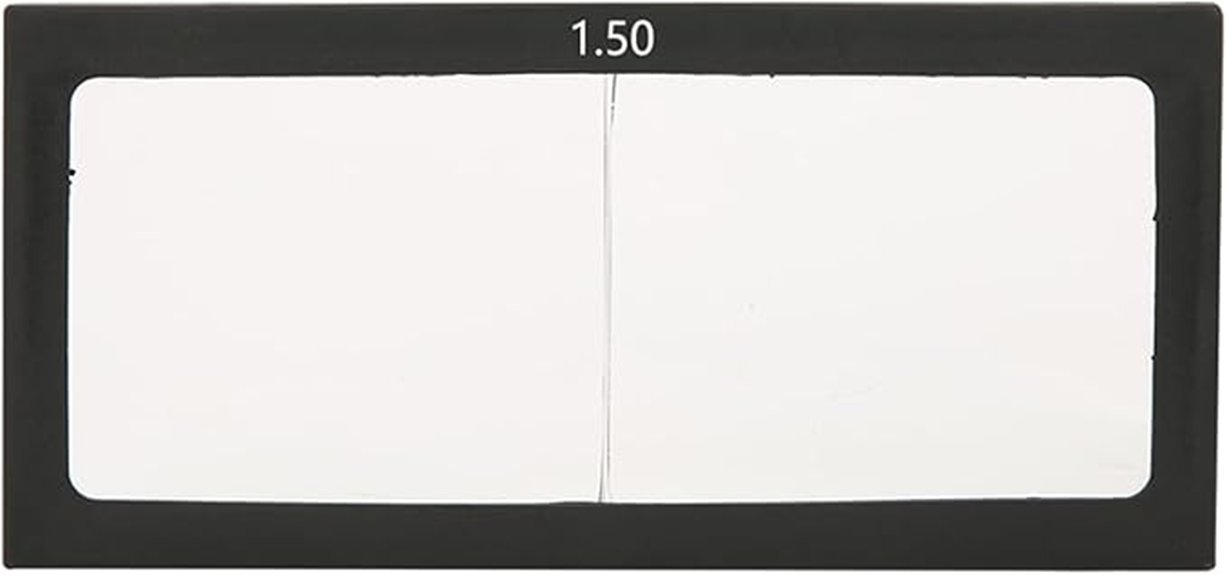
Small weld details can be hard to see once your helmet is down, especially during tack placement, bead starts, repair work, and tight fabrication. The 2" x 4.25" Magnification Welding Lens gives you a closer view through a compatible welding helmet without forcing you to lift your hood or lean too close to the work. This review helps you decide if its insert size, 1.5 magnification, and listed diopter options match your helmet and working distance. It can be a useful visibility aid for detail work, but it is not a standalone safety lens or a replacement for your helmet’s proper welding filter.
Quick Verdict
Rating: 8.4/10, Recommended with caveats
Best For: Welders who use a compatible 2" x 4.25" helmet lens slot and need extra help seeing small joints, tack locations, and bead starts.
Bottom Line: This magnification lens is a simple, low-bulk way to improve close-up visibility during welding tasks. The main tradeoff is that fit and focus depend on your helmet, your chosen diopter, and your normal working distance.
| Specification | Detail |
|---|---|
| Product type | Magnification welding lens insert |
| Design | Insert-style cheater lens for compatible welding helmets |
| Lens size | 2" x 4.25" |
| Magnification | 1.5 magnification stated in the source article |
| Diopter options | 1.0, 1.5, 2.0, 2.5, and 3.0 options stated in the source article |
| Compatibility | Most standard-sized welding helmets that accept a 2" x 4.25" lens insert |
| Best use | Close-up welding, tack placement, small repairs, fit-up checks, inspection, and fabrication tasks |
| Setup note | Install only in a secure holder or insert slot inside a compatible helmet |
| Care note | Clean with a soft cloth and avoid grit, abrasive pads, and rough towels |
| Safety note | Use only with a proper welding helmet, shade, cover lens, and protective filter for your process |
| Package note | Confirm the selected diopter and quantity on the seller page before ordering |
What Is the 2" x 4.25" Magnification Welding Lens?
The 2" x 4.25" Magnification Welding Lens is an add-on insert for welders who want a closer view of the workpiece while wearing a welding helmet. It is made for helmet setups that accept the common 2" x 4.25" lens format, so the first question is not performance. The first question is fit.
The main purpose is magnification. The review details list 1.5 magnification and diopter options from 1.0 to 3.0, giving you a way to match the lens to your vision and normal welding distance. That can help when you are trying to see the edge of a joint, line up a tack, follow a scribe mark, or inspect the start of a bead.
This lens should work as a visibility aid inside a complete helmet setup. It should not replace your welding helmet, shade lens, cover lens, safety glasses, or process-specific protective equipment.
Before You Buy: Check your helmet lens slot before ordering. A 2" x 4.25" magnifier will not fit every helmet, and the wrong diopter can make your view feel distorted instead of clearer.
Who Should Buy It?
Best For
- Welders using a helmet that accepts 2" x 4.25" lens inserts.
- Detail-focused work such as tack welding, small repairs, thin material, and close joint alignment.
- Users who want magnification inside the helmet instead of wearing separate reading glasses under the hood.
Skip If
- Your helmet does not support a 2" x 4.25" insert or cheater lens.
- You need a full welding filter lens, shade lens, or helmet replacement.
- You are unsure which diopter strength matches your eye position and working distance.
Lens Size and Helmet Compatibility
The lens size is the main buying factor. A 2" x 4.25" insert is common in many welding helmet setups, but it is not universal. Before you order, measure your helmet slot or check your helmet manual to confirm that this exact insert size is supported.
The product details in this review say the lens works with most standard-sized welding helmets. That can include many fixed-front, passive-style, and compatible auto-darkening helmet setups, but you still need to confirm the insert location, holder style, and clearance inside your specific hood.
Fit also affects safety and comfort. A lens that sits loose, rubs against another lens, or shifts when you nod the helmet down can distract you while you work. It should sit flat, stay secure, and avoid blocking the main viewing area.
Magnification and Diopter Options
The lens is described with 1.5 magnification, which can help enlarge the puddle area, edge line, and joint fit-up. This is most useful when your work depends on precise placement, not when you need a wide view across a large workpiece.
The review details also list five diopter choices: 1.0, 1.5, 2.0, 2.5, and 3.0. Lower diopters are usually easier to adapt to because they keep a wider usable focus range. Stronger options can help with closer detail, but they may feel less forgiving if your head position changes often.
Your best choice depends on your eyesight, helmet position, and distance from your eyes to the weld area. If you already use reading glasses, compare that strength with the available diopter options before you choose.
Pro Tip: If you are between strengths, start with the lower diopter unless you already know you need stronger magnification. Too much magnification can narrow your useful viewing range and make head position more critical.
Clarity During Detail Work
A magnification lens is most useful when it helps you see small details without changing your welding posture too much. For many welders, that means easier starts, cleaner tack placement, and better control when following a tight joint line.
The benefit is not just comfort. Better close-up visibility can reduce guesswork when you line up parts, check fitment, or work around small gaps. It may also reduce how often you lift your helmet just to inspect the work area.
The limitation is that magnification does not fix every visibility issue. If your helmet lens is dirty, your shade is too dark, your lighting is poor, or your work angle is wrong, this insert may only solve part of the problem.
Setup and Installation
Installation should be simple in a compatible helmet because this type of lens normally slides into a holder or insert slot behind the main viewing area. The lens should not sit in a loose position or press against parts of the helmet that can scratch it.
Before installing it, clean the insert gently and make sure the helmet holder is free of grit. Small particles can scratch the surface or stop the lens from sitting flat. After you install it, move the helmet through your normal positions and check that the insert does not shift.
Test the focus before striking an arc. Put the helmet on, look at a non-active workpiece, and check whether the joint line is clear at your normal welding distance. If you need to lean far forward or backward to focus, the diopter may not be right for your setup.
How It Performs in Real Use
For Tack Welding
During tack welding, the main benefit is better close-up alignment. The magnified view can help you place a tack at the exact joint edge instead of guessing through a standard helmet view.
For Small Repair Work
For small repairs, the 1.5 magnification can make cracks, edges, and narrow gaps easier to see. This is useful when you are working on brackets, thin stock, small parts, or tight repair areas where the weld path is short.
For Fabrication and Fit-Up
When you are fitting parts before welding, the lens can help you check contact points and line up the start of a bead. It is especially helpful when the workpiece has scribe marks, small tabs, or close tolerances.
For Longer Welding Sessions
For longer sessions, the value depends on focus comfort. If the diopter matches your working distance, you may spend less time straining to see the puddle. If the diopter is too strong, your eyes may fatigue faster because the clear focus range is narrower.
How to Use It Correctly
First, confirm that the insert sits securely in your helmet. A loose lens can shift during work, which makes the view distracting and unsafe. It should stay flat and stable when you nod the helmet down.
Second, match the lens to your normal position, not an awkward test position. Sit or stand the way you usually weld, put your helmet down, and look at the joint line from your normal distance. A good match should let you focus without crowding the workpiece.
Third, keep the lens clean. Use a soft cloth and a mild cleaning solution when needed. Avoid abrasive pads, shop grit, dirty gloves, or rough paper towels because scratches can scatter light and reduce clarity.
Common Mistakes to Avoid
Do not buy only by magnification strength. A stronger diopter is not automatically better, and it can make the view harder to use if your working distance is longer than expected.
Do not assume every helmet has room for an insert. Some helmets may use a different lens size, a different holder design, or a setup that leaves no secure place for a cheater lens.
Do not use the insert as eye protection by itself. It belongs inside a proper helmet system with the correct shade, filter, cover lens, and safety equipment for the welding process.
Compatibility and Safety Notes
This lens should be used as a magnifying insert inside a suitable welding helmet. It should not be used by itself as eye protection, and it should not replace the required welding shade, filter lens, cover lens, or safety equipment for your welding process.
Do not treat magnification as arc protection. Your welding helmet and filter lens are the main protection against arc exposure, sparks, and optical radiation. Always follow your helmet manufacturer’s instructions and the safety requirements for your welding process.
If you notice glare, distortion, looseness, cracks, deep scratches, or reduced visibility, stop using the insert until the issue is fixed. Clear vision is part of safe welding, not just a convenience feature.
Care and Storage
Store the lens where it will not rub against metal tools, grinding dust, or loose hardware. A small scratch may not seem serious at first, but scratches can catch light and make the view less clear under the hood.
Clean both the magnifier and your helmet’s main viewing area before you judge performance. A dirty cover lens, smoke film, or spatter marks can make a good magnifier seem worse than it is.
Pros and Cons
Pros
- 2" x 4.25" size fits many standard welding helmet lens setups.
- 1.5 magnification can improve visibility for close-up welding tasks.
- Multiple diopter options give you more flexibility than a one-strength lens.
- Simple insert-style design is easy to add to a compatible helmet.
- Useful for tack welding, small repairs, fit-up checks, and detail work.
Cons
- Not compatible with every welding helmet.
- Wrong diopter strength can cause distortion or eye strain.
- Not a replacement for a proper welding filter lens or full helmet protection.
Is It Worth the Price?
This lens is worth considering if your main issue is close-up visibility inside a compatible welding helmet. It is a small accessory, so the value comes from solving a focused problem rather than adding a major new feature to your welding setup.
It makes the most sense for welders who often work on small parts, detailed joints, or repair areas where a clearer view helps with accuracy. If you only weld large, open joints and do not struggle with close-up focus, you may not notice as much benefit.
The biggest value limitation is fit and diopter selection. If either one is wrong, the lens can become frustrating instead of helpful.
How It Compares to Alternatives
Compared with wearing reading glasses under a welding helmet, this insert keeps the magnification inside the helmet and may feel less bulky. Compared with buying a new helmet, it is a simpler add-on if your current helmet already accepts a 2" x 4.25" insert.
If your real problem is shade control, a small viewing window, dirty cover lenses, or weak arc sensors, a different helmet or maintenance fix may help more. This lens makes the most sense when your helmet already works well and you only need help seeing fine details more clearly.
Frequently Asked Questions
Will this lens fit every welding helmet?
No. It is made for helmets that accept a 2" x 4.25" lens insert. Measure your helmet slot or check your helmet manual before buying.
Is this a replacement for a welding filter lens?
No. This is a magnification insert, not a complete welding filter or helmet. Use it only with the correct welding helmet, shade, cover lens, and protective filter setup for your process.
Which diopter should you choose?
The review details list 1.0, 1.5, 2.0, 2.5, and 3.0 options. Choose based on your normal working distance and vision needs. A stronger diopter is not always better because it can narrow your focus range.
Where should the magnifier sit in the helmet?
It should sit in the helmet’s proper holder or insert slot, not loose behind the viewing area. After installing it, check that it stays flat and does not move when you tilt or nod the helmet.
Can you use it for work besides welding?
It may help with close-up inspection, small shop tasks, or detailed crafting when used safely. For any task involving welding arcs, sparks, or grinding debris, you still need proper protective equipment.
How should you clean the magnifier lens?
Use a soft cloth and mild cleaning solution. Avoid abrasive pads, rough towels, dirty gloves, and shop grit because scratches can reduce clarity and make glare worse.
Is the lens scratch-resistant?
The available article details do not provide a verified scratch-resistance rating. Treat the lens carefully, store it away from grit, and clean it with non-abrasive materials to protect visibility.
Who should skip this lens?
Skip it if your helmet does not accept a 2" x 4.25" insert or if you need a full protective welding lens. You should also skip it if you cannot confirm the correct diopter for your viewing distance.
The Bottom Line
The 2" x 4.25" Magnification Welding Lens is a practical add-on for welders who need a clearer close-up view inside a compatible helmet. Its strongest benefit is improved detail visibility, while its main limitation is that fit and diopter choice must be correct. Skip it if you need a full welding filter lens, a new helmet, or verified compatibility for a non-standard setup.