As an Amazon Associate I earn from qualifying purchases. Buying through these links costs you nothing extra.
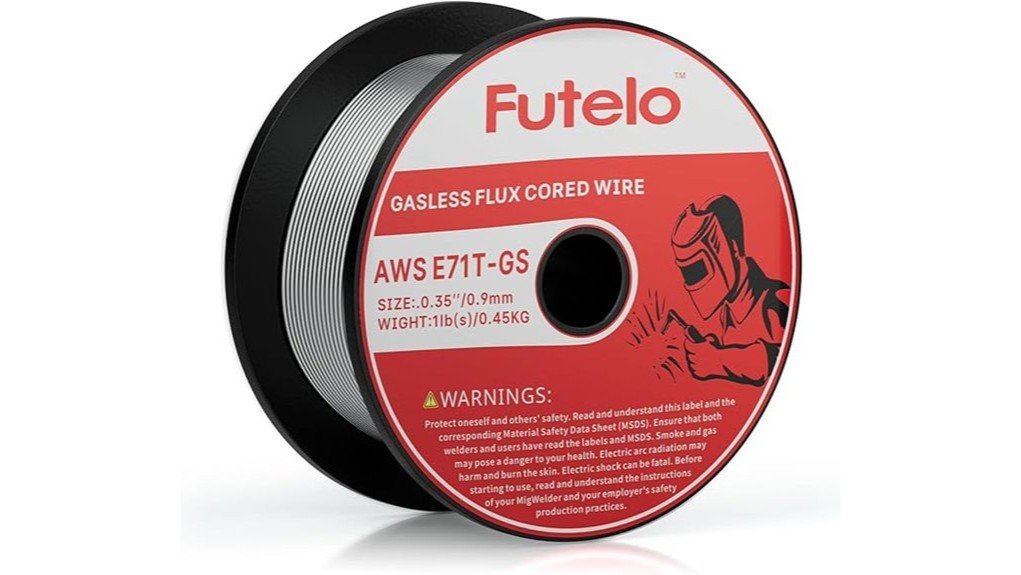
This E71T-GS .035 flux core wire is a self-shielded (gasless) wire for mild steel, so it runs without a gas cylinder. That suits outdoor repairs, brackets, gates and light fabrication. Before you order, check that your welder supports 0.035-inch flux core wire, the spool size on the listing and the polarity the wire label asks for. This page uses the listing’s details and does not quote ratings or review counts.
E71T-GS .035 Flux Core Wire Specs (Per the Listing)
| Item | Per the listing |
|---|---|
| Wire type | Flux core, self-shielded (no external gas) |
| Diameter | .035 inch |
| Classification | E71T-GS |
| Intended metal | Mild (carbon) steel |
| Spool weight and exact composition | Not confirmed here, so check the listing and the wire label |
Specs come from the seller’s listing and can change. Confirm them on the current page before you buy.
Who It Suits and Who Should Skip It
- Good fit: hobby and farm welders with a flux core capable MIG machine who weld mild steel outdoors or in drafts.
- Good fit: anyone who wants to skip a gas cylinder and regulator.
- Skip it: if you weld aluminum or stainless steel, which need different wire.
- Skip it: if you mainly weld thin sheet metal. A smaller wire such as .030 is usually easier to control.
- Skip it: if the job needs a specific code-approved filler metal.
How to Set Up and Use .035 Flux Core Wire
- Check the machine. Confirm in the manual that it runs .035 flux core wire and accepts the spool size.
- Match the hardware. Use a contact tip and drive roll sized for .035 wire. Knurled drive rolls are the usual choice for flux core, because the soft tubular wire can be crushed by tight pressure.
- Set the polarity. Self-shielded flux core wire normally runs with the electrode negative, but follow the wire label and your manual.
- Thread the wire. Set drive roll tension just high enough to feed without slipping.
- Start from the settings chart. Use the chart inside your machine, then fine-tune voltage and wire speed on scrap of the same thickness.
- Weld with a drag angle. Pull the gun, keep a steady stick-out as the manual suggests, and chip or brush the slag between passes.
Safety Tips for Flux Core Welding
- Flux core makes more smoke and spatter than solid wire, so weld with good ventilation or fume extraction.
- Wear a welding helmet, gloves and flame-resistant clothing, and keep flammables away from the spatter.
- Let welds cool before chipping slag, and wear safety glasses under the helmet.
- Do not weld galvanized or coated metal without proper fume protection.
Common Problems and Fixes
- Porosity or worm tracks: clean rust, oil and paint from the joint, and keep the wire dry. See the guide to worm tracks linked below.
- Excess spatter: check the polarity, lower the voltage slightly and keep the stick-out consistent.
- Wire tangles at the drive roll: reduce tension, check the liner and tip size, and make sure the spool turns freely.
- Rusty or damp wire: store the spool sealed and dry, and replace wire that has visible rust.
Pros and Limitations
Pros
- Self-shielded design means no gas cylinder, per the listing.
- E71T-GS is a general-purpose class for mild steel repair work.
- Handles outdoor and drafty jobs better than gas-shielded solid wire.
Limitations
- More smoke, spatter and slag than solid wire.
- Spool size and exact composition are not confirmed here.
- Not for aluminum, stainless or code-specific work.
Related reading: .035 flux core welding wire review (10 lb spool) | How to fix worm tracks in flux core welding | How to reduce spatter when flux core welding
Frequently Asked Questions
What can I weld with this wire?
The listing describes it for mild steel. That covers common repair and light fabrication jobs such as brackets, gates and frames, as long as the joint and your machine suit the wire.
Does it need shielding gas?
No. It is listed as self-shielded, which means the flux inside the wire creates the shielding. Always follow the label and your welder manual for final setup.
Can I use it outdoors?
Yes, self-shielded wire is a common choice outdoors. Strong wind can still disturb the arc, so use a wind break where you can.
Will it work in any MIG welder?
No. The machine must support .035 flux core wire, the spool size and the right polarity. Check the manual before buying.
How should I store the spool?
Keep it dry, sealed and away from humidity, oil and dust. Damp or rusty wire feeds badly and welds poorly.
Conclusion
This E71T-GS .035 flux core wire is a practical gasless option for mild steel repairs if your welder supports it. Verify the spool size and polarity before ordering.
{“@context”:”https://schema.org”,”@type”:”FAQPage”,”mainEntity”:[{“@type”:”Question”,”name”:”What can I weld with this wire?”,”acceptedAnswer”:{“@type”:”Answer”,”text”:”The listing describes it for mild steel. That covers common repair and light fabrication jobs such as brackets, gates and frames, as long as the joint and your machine suit the wire.”}},{“@type”:”Question”,”name”:”Does it need shielding gas?”,”acceptedAnswer”:{“@type”:”Answer”,”text”:”No. It is listed as self-shielded, which means the flux inside the wire creates the shielding. Always follow the label and your welder manual for final setup.”}},{“@type”:”Question”,”name”:”Can I use it outdoors?”,”acceptedAnswer”:{“@type”:”Answer”,”text”:”Yes, self-shielded wire is a common choice outdoors. Strong wind can still disturb the arc, so use a wind break where you can.”}},{“@type”:”Question”,”name”:”Will it work in any MIG welder?”,”acceptedAnswer”:{“@type”:”Answer”,”text”:”No. The machine must support .035 flux core wire, the spool size and the right polarity. Check the manual before buying.”}},{“@type”:”Question”,”name”:”How should I store the spool?”,”acceptedAnswer”:{“@type”:”Answer”,”text”:”Keep it dry, sealed and away from humidity, oil and dust. Damp or rusty wire feeds badly and welds poorly.”}}]}