As an Amazon Associate I earn from qualifying purchases. Buying through these links costs you nothing extra.
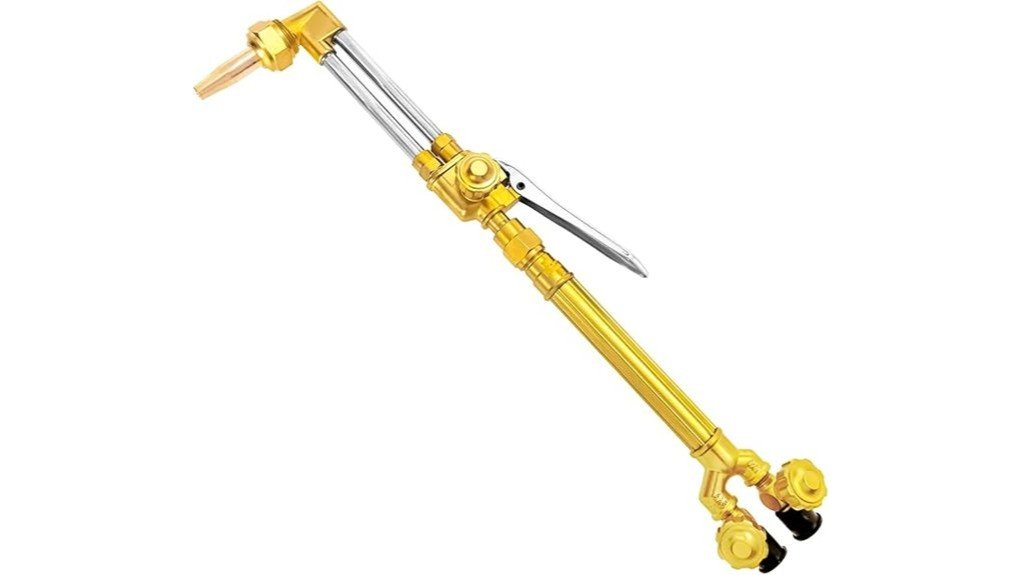
The Victor CA1350 cutting attachment is a medium-duty oxy-fuel add-on, not a complete torch. It clips onto a compatible Victor 100-series torch handle (retailers list the 100FC) and turns an oxy-fuel setup into a cutting rig for steel up to several inches thick. It is a good fit if you already own a Victor-style handle and want a rugged brass-head attachment; skip it if you need a standalone kit with regulators and hoses.
This review uses manufacturer-style and retailer specs rather than hands-on testing, and flags what to confirm on the Amazon listing before you order.
Victor CA1350 Cutting Attachment Specs
| Spec | Detail (per retailer listings) |
|---|---|
| Type | Medium-duty oxy-fuel cutting attachment |
| Head | 90 degree die-forged brass |
| Length | About 8 in |
| Weight | About 13 oz |
| Tip series | Victor Series 3 cutting tips |
| Handle compatibility | Victor 100-series handles (100FC listed) |
| Fuel gases | Retailer pages list acetylene, propane, butane, MAPP, natural gas and other fuel gases; check the manual for your gas and tip |
| Maximum thickness | Retailers quote roughly 5 to 6 in with the right tip; practical thickness depends on tip, pressure and gas |
| Features | Spiral mixer, pull-type cutting lever, stainless steel tubes, double O-ring coupling nut |
These figures come from retailer product pages and were not independently verified. Confirm the part number, tip included and package contents on the Amazon listing, because older listings and look-alike attachments use similar names.
What You Need to Run It
The attachment does nothing on its own. A working cutting setup needs:
- A compatible torch handle, such as a Victor 100FC-style handle.
- Oxygen and fuel gas cylinders with regulators rated for each gas.
- Twin hose with flashback arrestors and check valves.
- The correct cutting tip for your fuel gas and steel thickness.
- A tip cleaner set to keep the orifices clear. See our cutting torch tip cleaner review.
If you need everything in one box, compare the oxy-acetylene torch kit review instead.
Features That Matter
- Brass head: Handles the heat of repeated cutting and heating work.
- Spiral mixer: Blends oxygen and fuel gas before the tip.
- Rear cutting lever: Keeps your hand position natural when cutting along a line.
- Coupling nut with O-rings: Retailers describe a quick gas-tight connection without a wrench, but always leak test with soapy water.
- Stainless tubes: Add strength and heat resistance.
How to Set It Up Safely
- Check every fitting, hose and O-ring for damage before connecting.
- Attach the cutting attachment to the handle and hand tighten the coupling nut as the manual directs.
- Open the cylinder valves slowly with the regulators backed off and set pressures from the tip chart for your tip size.
- Leak test every joint with a soap solution before lighting.
- Light with a striker, never a lighter, and follow the manufacturer’s lighting and shutdown sequence.
- Wear cutting goggles with the lens shade recommended for oxy-fuel work, leather gloves, flame resistant clothing and keep a fire extinguisher nearby.
Please read the Victor operating manual and your gas supplier’s guidance. This summary is not a substitute.
Who Should Buy the CA1350
Good fit
- Owners of a compatible Victor handle who need a replacement or second cutting attachment.
- Fabricators and farm shops cutting plate, bar and heavy stock by hand.
- Users who want a metal-bodied attachment with replaceable tips.
Consider something else
- Beginners with no regulators, hoses or handle. A complete kit may be simpler than sourcing each part separately.
- Anyone who cuts thin sheet all day; a plasma cutter is cleaner and faster. Read is a plasma cutter better than a torch and plasma cutter vs oxy-fuel before deciding.
Pros and Limits
Pros
- Medium-duty brass construction.
- Works with several fuel gases when paired with the right tip.
- Cuts thick steel that most plasma cutters cannot.
- Replaceable tips and parts are widely stocked.
Limits
- Needs a separate handle, regulators and hoses.
- Cutting speed and edge quality depend on tip choice, pressure and your technique.
- Oxy-fuel carries fire and flashback risks that need proper safety gear.
Frequently Asked Questions
What gases work with the Victor CA1350 cutting attachment?
Retailer pages list acetylene, propane, butane, MAPP and natural gas, among other fuel gases. Always match the tip and pressures to the fuel gas in the Victor manual.
Can the CA1350 weld as well as cut?
No. It is a cutting attachment. For welding you need a welding tip or torch head for your handle, which is sold separately.
Does it include a torch handle?
Retailers describe it as an attachment for a Victor 100-series handle such as the 100FC. Confirm what is in the box on the Amazon listing before you buy.
How thick can the CA1350 cut?
Retailers quote a maximum of roughly 5 to 6 inches with the right tip, but real capacity depends on the tip, gas pressure and your setup. Use the tip chart for your gas.
What is the CA1350 made of?
Retailer pages list a die-forged brass head and stainless steel tubes with a brass coupling nut.
{“@context”:”https://schema.org”,”@type”:”FAQPage”,”mainEntity”:[{“@type”:”Question”,”name”:”What gases work with the Victor CA1350 cutting attachment?”,”acceptedAnswer”:{“@type”:”Answer”,”text”:”Retailer pages list acetylene, propane, butane, MAPP and natural gas, among other fuel gases. Always match the tip and pressures to the fuel gas in the Victor manual.”}},{“@type”:”Question”,”name”:”Can the CA1350 weld as well as cut?”,”acceptedAnswer”:{“@type”:”Answer”,”text”:”No. It is a cutting attachment. For welding you need a welding tip or torch head for your handle, which is sold separately.”}},{“@type”:”Question”,”name”:”Does it include a torch handle?”,”acceptedAnswer”:{“@type”:”Answer”,”text”:”Retailers describe it as an attachment for a Victor 100-series handle such as the 100FC. Confirm what is in the box on the Amazon listing before you buy.”}},{“@type”:”Question”,”name”:”How thick can the CA1350 cut?”,”acceptedAnswer”:{“@type”:”Answer”,”text”:”Retailers quote a maximum of roughly 5 to 6 inches with the right tip, but real capacity depends on the tip, gas pressure and your setup. Use the tip chart for your gas.”}},{“@type”:”Question”,”name”:”What is the CA1350 made of?”,”acceptedAnswer”:{“@type”:”Answer”,”text”:”Retailer pages list a die-forged brass head and stainless steel tubes with a brass coupling nut.”}}]}