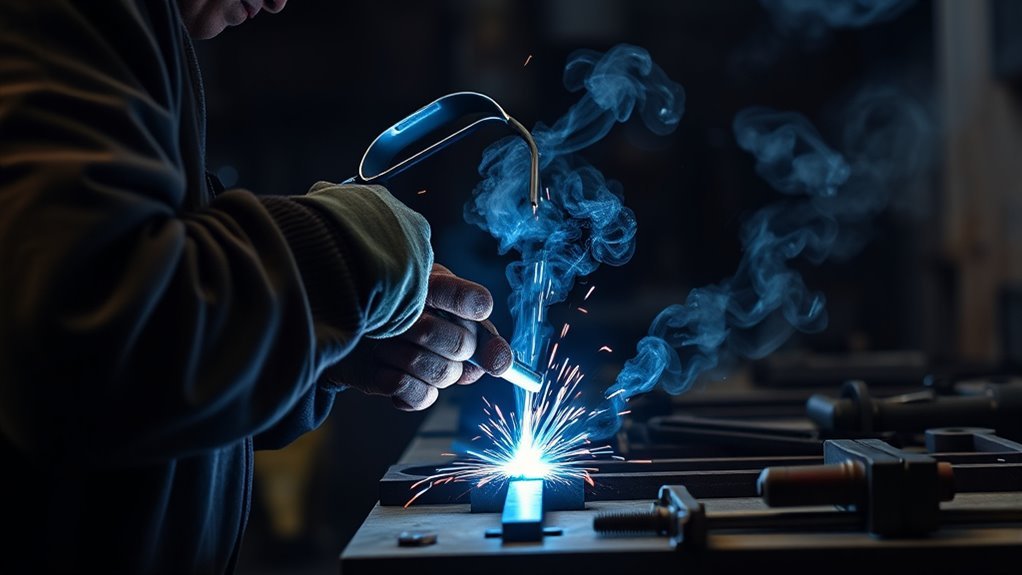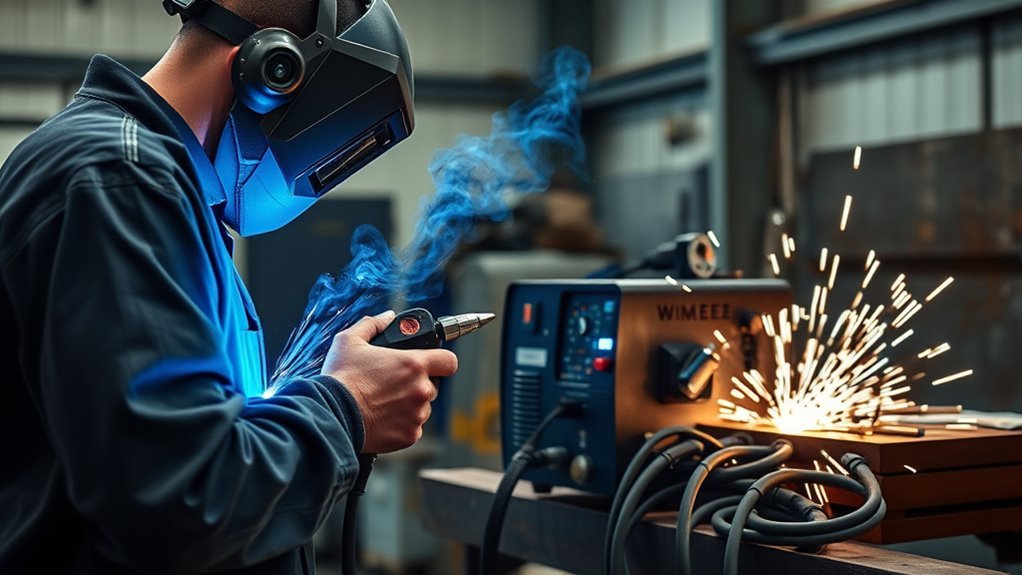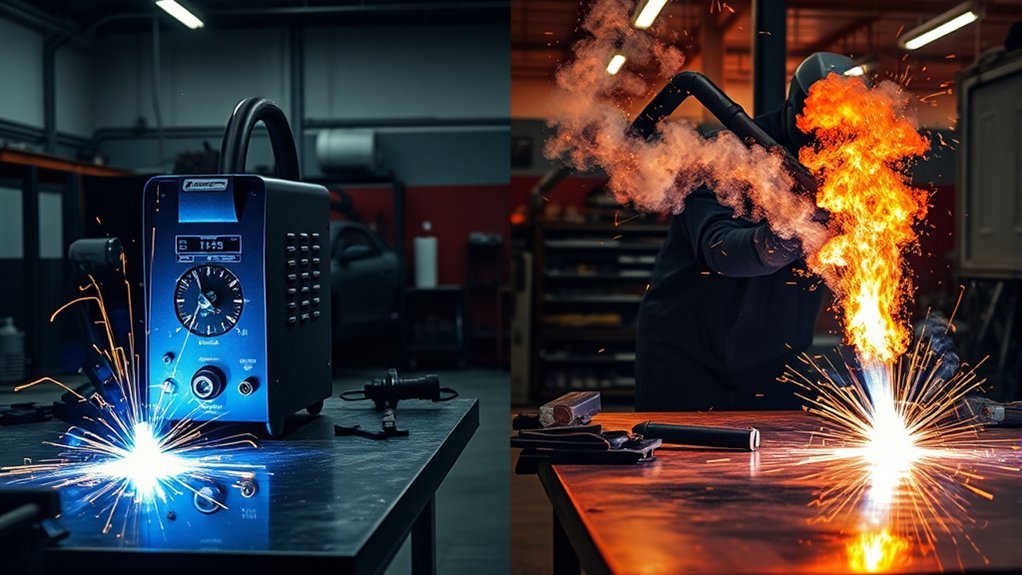
When you compare a plasma cutter with an oxy-fuel cutter for auto body work, the main question is not which tool is more powerful. It is which tool gives you the cleanest cut with the least panel damage, the safest setup, and the best control for the metal in front of you. For most thin automotive sheet metal, plasma cutting is the better choice. Oxy-fuel still has a place, but mainly on thicker mild steel where rougher edges and more heat are acceptable.
Quick Answer
For most auto body work, a plasma cutter is better than oxy-fuel because it cuts thin steel, stainless steel, and aluminum faster with less heat spread and cleaner edges. Use oxy-fuel mainly for thicker mild steel brackets, scrap cutting, heating, or rough fabrication where precision and panel warping are less critical.
Key Takeaways
- Choose plasma for thin body panels because it uses a focused arc and narrow kerf, which helps reduce heat distortion.
- Choose oxy-fuel for thicker mild steel when you need heat, portability, or rough cutting more than a clean edge.
- Do not treat oxy-fuel as a universal metal cutter. Standard oxy-fuel cutting works best on carbon steel and is not the normal choice for aluminum or stainless steel.
- Safety matters with both methods. Plasma brings electrical, arc, fume, and spark hazards, while oxy-fuel adds compressed-gas, flashback, flame, and cylinder hazards.
At a Glance
| Best For | Plasma: thin panels, patch cuts, stainless, aluminum, clean trim work. Oxy-fuel: thicker mild steel, heating, rough cutting, seized parts, and fabrication. |
| Cut Quality | Plasma usually gives a narrower, cleaner cut on sheet metal. Oxy-fuel often leaves more scale, slag, and heat discoloration. |
| Heat Distortion | Plasma has a smaller heat-affected area when set correctly. Oxy-fuel spreads more heat and can warp thin panels quickly. |
| Setup Needs | Plasma needs power, dry compressed air or gas, a clean ground, and consumables. Oxy-fuel needs oxygen, fuel gas, regulators, hoses, tips, flashback protection, and safe cylinder storage. |
| Cost | Plasma often costs more upfront. Oxy-fuel can be cheaper to buy, but oxygen and fuel refills add ongoing cost. |
Key Differences Between Plasma and Oxy-Fuel Cutting
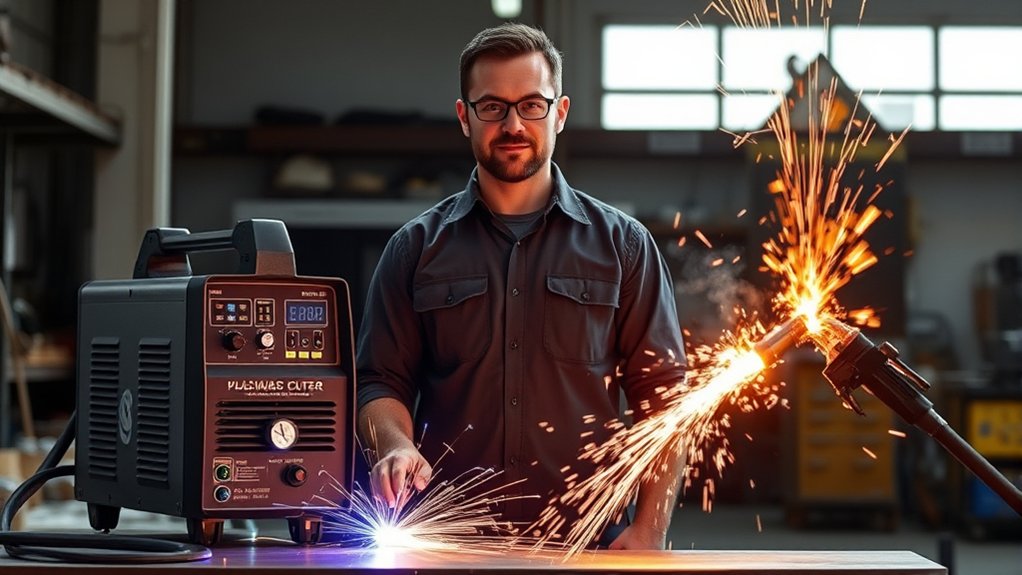
The biggest difference is how each process cuts metal. Plasma cutting uses an electric arc and a high-speed gas stream to melt and blow metal out of the cut. That makes it useful on electrically conductive metals, including mild steel, stainless steel, and aluminum.
Oxy-fuel cutting works differently. It heats steel to kindling temperature, then uses a stream of oxygen to oxidize the hot iron and blow the molten oxide out of the kerf. Because that reaction depends on iron oxidation, standard oxy-fuel cutting is strongest on mild and medium-carbon steel. It is not the normal choice for aluminum or stainless body parts.
For auto body work, those differences matter. Most body panels are thin enough that heat control matters more than raw cutting capacity. Plasma cutting can trim patch panels, remove damaged sections, and cut brackets with less heat spread when you set the amperage, air pressure, torch angle, and travel speed correctly. Oxy-fuel can cut thick mild steel, but it heats a wider area and can warp thin panels before you finish the cut.
For thin automotive sheet metal, cut control matters more than maximum thickness capacity. A small, clean, low-heat cut usually beats a hotter cut that needs extra grinding and panel straightening.
Pros and Cons of Plasma Cutting for Auto Body Work
Plasma cutting is usually the stronger choice when you need speed, clean edges, and control on thin conductive metal. It is especially useful for floor pan patches, rocker panel sections, brackets, light fabrication, and trimming sheet metal before welding.
Precision and Accuracy
A well-set-up plasma cutter can make accurate cuts, especially when you use a straightedge, circle guide, template, or CNC table. However, you should not assume every handheld plasma cut will hold machine-shop tolerances. Cut quality depends on amperage, consumable condition, standoff distance, air quality, travel speed, and your hand control.
| Plasma Advantages | Plasma Limitations |
|---|---|
| Clean cuts on thin sheet metal | Needs electrical power and a clean ground |
| Cuts mild steel, stainless steel, and aluminum | Needs dry air or the right cutting gas |
| Fast cutting with low heat spread when set correctly | Consumables wear and affect cut quality |
| Less grinding than many rough torch cuts | Still creates fumes, bright arc light, sparks, and molten metal |
Cutting Speed Efficiency
Plasma is fast on thin automotive metal because it does not need the long preheat step that oxy-fuel needs. On clean sheet steel, you can often pierce and move quickly once the settings are dialed in. That speed helps when you need to cut long seams, remove damaged panels, or make several patch pieces in one session.
Speed is still not the only goal. Moving too slowly can widen the kerf, create more dross, and add heat. Moving too fast can leave an incomplete cut. Make a test cut on scrap of the same thickness before cutting a vehicle panel.
Minimal Heat Distortion
Plasma cutting can reduce heat distortion because the arc is concentrated and the cut happens quickly. That matters on door skins, quarter panels, floor pans, wheel tubs, and other thin automotive sheet metal. A smaller heat-affected area means less chance of oil-canning, panel movement, and extra bodywork after the cut.
Pro Tip: For cleaner plasma cuts, use dry air, fresh consumables, a solid work clamp, and a guide. If the cut starts beveling, dragging, or leaving heavy dross, check consumables and settings before blaming the machine.
Pros and Cons of Oxy-Fuel Cutting for Auto Body Work
Oxy-fuel cutting is older, simple, and useful, but it is not the best choice for most thin body-panel cuts. It shines when you need to cut thicker mild steel, heat a seized part, bend or straighten metal, braze, or rough-cut scrap. It struggles when you need a cool, narrow, precise cut on thin sheet metal.
On thin panels, the wide heat input can warp the metal. Paint, seam sealer, adhesives, sound deadener, undercoating, and galvanized coatings can also create fumes or fire hazards when heated. If you cut coated or galvanized steel, remove coatings from the cut area when practical and use proper ventilation. This is especially important around zinc-bearing coatings, paint, and old underbody materials.
| Oxy-Fuel Advantages | Oxy-Fuel Limitations |
|---|---|
| Good for thicker mild steel | Too much heat for many thin panels |
| Useful for heating, bending, brazing, and freeing stuck parts | Rougher edges and more cleanup |
| Works without electrical power at the cut site | Requires oxygen and fuel-gas cylinders |
| Lower entry cost in many small shops | Not the right standard process for aluminum or stainless cutting |
Comparing Cutting Speeds: Plasma vs. Oxy-Fuel
Plasma usually wins on cutting speed for thin auto body metals. It starts quickly, cuts with a focused arc, and does not require the same preheat cycle as oxy-fuel. This can save time when trimming patch panels or cutting out rusted sheet metal.
Cutting Speed Comparison
On thin sheet metal, plasma can move much faster than oxy-fuel because the arc melts the metal directly and the gas stream clears the kerf. Oxy-fuel must first heat the steel to the right temperature, then maintain the oxygen reaction through the cut. That preheat step slows the process, especially on short cuts, curved cuts, and repeated small cuts.
On thicker mild steel, oxy-fuel becomes more competitive. For heavy plate or rough structural fabrication, a torch can still be practical and cost-effective. But that is not the same job as trimming body panels or making clean weld-ready patches.
Efficiency in Metal Thickness
Think by thickness and material:
- Thin body panels: plasma is usually the better choice because it cuts quickly with less heat spread.
- Aluminum panels or brackets: plasma can cut aluminum because it cuts conductive metal; standard oxy-fuel cutting is not the right process.
- Stainless trim or fabrication pieces: plasma is usually better because stainless does not cut like mild steel with a standard oxy-fuel torch.
- Thicker mild steel brackets or scrap: oxy-fuel can work well if edge finish is not critical.
- High-strength structural steel on a vehicle: check the OEM repair procedure before cutting, heating, or sectioning.
Note: Maximum cut thickness claims vary by machine. For auto body work, the cleaner question is usually, “Can this tool cut my panel cleanly without warping it?” not “What is the thickest plate this tool can sever?”
Precision in Auto Body Applications: Plasma vs. Oxy-Fuel
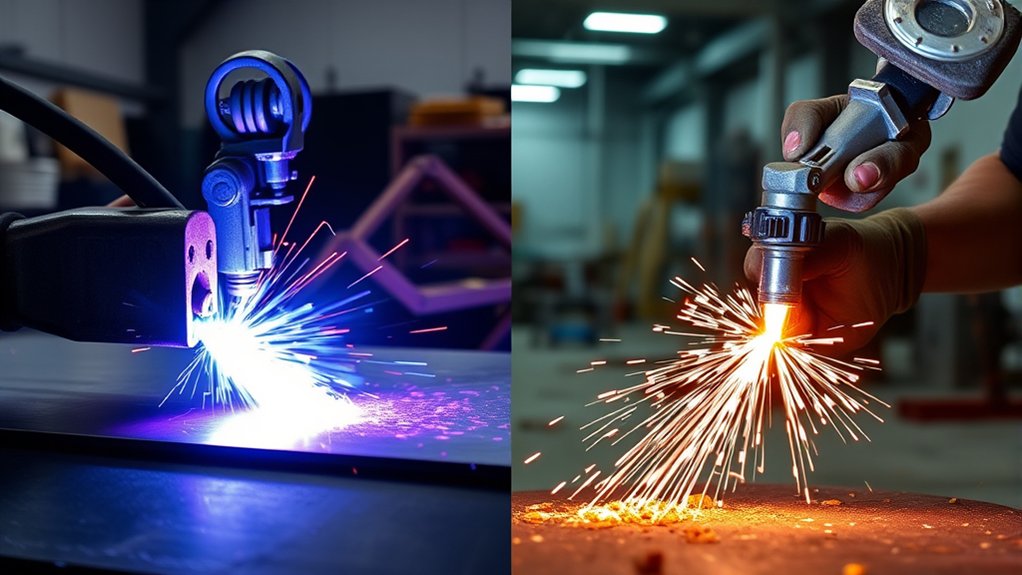
Precision in auto body work means the patch fits, the gap is controlled, and the surrounding panel stays flat. Plasma cutting helps because it can make a narrow cut with less heat spread than oxy-fuel. You still need good technique. A shaky hand, worn electrode, wet air, or poor ground can make a plasma cut look rough.
Oxy-fuel cutting can follow a line, but the kerf is hotter and usually wider. It often leaves more slag and a rougher edge, which means more grinding before welding. That extra grinding can thin the panel or change the fit of a patch.
For better accuracy with either method, mark both sides of the cut, support the panel, protect glass and wiring, and make relief cuts only where needed. For visible body panels, leave a small amount of material for final trimming rather than trying to cut exactly to the finished line in one pass.
Heat Distortion and Panel Warping
Heat distortion is one of the biggest reasons plasma beats oxy-fuel for body panels. Automotive sheet metal moves fast when overheated. Once the panel stretches or warps, you may spend more time shrinking, hammering, grinding, and filling than you saved by cutting quickly.
Plasma reduces that risk when you use the right amperage and move at the right speed. Oxy-fuel puts more heat into the surrounding metal, so it is easier to warp thin panels, burn paint farther from the cut, or ignite hidden materials behind the panel.
Warning: Before cutting on a vehicle, check behind the panel. Fuel lines, brake lines, wiring, airbags, insulation, seam sealer, carpet, glass, and undercoating can be damaged or ignited by sparks and heat.
Evaluating Cost: Plasma vs. Oxy-Fuel for Auto Body Work
Plasma cutters often cost more upfront, especially when you add a compressor, dryer or filter, consumables, and proper electrical service. The tradeoff is speed and cleaner cuts, which can save labor time and reduce cleanup on thin metal.
Oxy-fuel equipment can be cheaper to buy, and it is useful for more than cutting. You can heat stuck fasteners, bend brackets, braze, and rough-cut heavy mild steel. But oxygen and fuel-gas refills are ongoing costs. You also need safe cylinder storage, regulators, hoses, flashback protection, and training.
If you mainly cut body panels, patch pieces, and thin brackets, plasma is usually the better long-term buy. If you work on heavier mild steel, farm equipment, trailers, or general fabrication, oxy-fuel can still earn its place in the shop.
Products Worth Considering

Drag-Cut Control (HVAC/Thin Sheet/Art): Glide the torch directly on the workpiece for straight templates and smooth freehand lines; use LOTOS DC6309 drag consumables (sold separately) for best edges.

Industrial-Grade Cutting Capacity: SSimder 50 Amp CUT-50Pro plasma cutter cuts up to 1/2" Clean, 3/4" Severance on Mild Steel. Easily handles 1/4" Stainless Steel & 16GA Aluminum (common metal fabrication materials). Engineered for tough jobs like auto body repair (sheet metal) & structural steel modification (steel beams).

50 amp plasma cutter delivers clean cuts up to 1/2 inch and severance cuts up to 3/4 inch on mild steel. Cuts stainless steel and aluminum for everyday shop and fabrication work. Ideal for auto body panel repair, trailer frame cutting, farm equipment maintenance, and metal art projects — no need for multiple cutting tools
Safety and Convenience: Plasma vs. Oxy-Fuel Cutting
Both tools are hot-work tools, so neither is “safe” just because it is familiar. Plasma cutting brings arc light, electrical shock risk, molten metal, sparks, noise, compressed air, and fumes. Oxy-fuel adds open flame, oxygen and fuel-gas cylinders, regulator and hose hazards, flashback risk, and a wider hot zone.
OSHA’s welding and cutting rules call for fire prevention steps such as moving fire hazards, guarding combustibles when they cannot be moved, keeping suitable fire extinguishing equipment ready, and using fire watch where a fire could develop. OSHA also requires proper eye protection for arc cutting and oxygen cutting operations, plus ventilation controls where fumes, gases, or dusts can become hazardous.
For oxy-fuel systems, follow the rules for oxygen and fuel-gas equipment. Keep oxygen away from oil and grease, secure cylinders upright, use approved regulators and torches, and do not use acetylene above the safe pressure limits stated in OSHA 1910.253.
- PPE: wear the correct shade eye protection, face protection, flame-resistant clothing, gloves, hearing protection, and closed leather footwear.
- Ventilation: use local exhaust or strong ventilation, especially on painted, coated, galvanized, stainless, or dirty metal.
- Fire control: remove combustibles, shield upholstery and glass, keep an extinguisher nearby, and watch the area after cutting.
- Vehicle prep: disconnect the battery when appropriate, protect electronics, and follow OEM procedures for airbags, sensors, high-voltage systems, and structural sections.
- Work area: never cut near fuel vapors, solvent containers, aerosol cans, or hidden insulation.
How to Choose the Right Cutting Method for Your Auto Body Project?
Start with the metal, thickness, and location of the cut. If you are cutting thin conductive sheet metal and want a clean edge, choose plasma. If you are cutting thicker mild steel, heating a seized part, or rough-cutting scrap, oxy-fuel may be practical.
Use this decision guide:
- Rust repair panels: choose plasma, a cutoff wheel, or shears depending on access and finish needs.
- Floor pans and rocker sections: choose plasma if you can protect the backside from sparks and heat.
- Aluminum body parts: choose plasma or mechanical cutting methods; do not rely on standard oxy-fuel cutting.
- Stainless parts: choose plasma or abrasive/mechanical cutting.
- Thick mild steel brackets: plasma or oxy-fuel can work, depending on desired edge quality and available setup.
- Structural vehicle sections: follow OEM repair procedures before cutting or heating. Some steels should not be heated or sectioned outside approved locations.
- Near fuel, batteries, airbags, sensors, or wiring: stop and plan the repair. Shield, disconnect, remove, or reroute hazards before cutting.
If you are a beginner, plasma is usually easier to learn for clean cuts, but it still takes practice. Set up scrap metal of the same thickness and make several test cuts before you touch the vehicle. Check the backside after each test so you understand how far sparks and molten metal travel.
Products Worth Considering

【Industrial Performance】The air drying system features two rugged 3/4“ NPT air ports and 1/4” NPT gauge ports to handle high-pressure environments (up to 240 PSI) for a variety of industrial applications. Note: To prevent air leakage, please wrap the sealing tape around the threads appropriately before connecting the screws.

PT-31 Plasma Cutter Machine Torch Complete

Frequently Asked Questions
Which is better for auto body work, a plasma cutter or oxy-acetylene?
A plasma cutter is better for most auto body work because it cuts thin conductive metal faster and with less heat spread. Oxy-acetylene is still useful for thicker mild steel, heating, brazing, and rough cutting, but it can warp thin panels quickly.
Is a plasma cutter recommended for body repair?
Yes, a plasma cutter is recommended for many body repair cuts, especially patch panels, floor pans, rocker sections, and light brackets. It is not the only option, though. A cutoff wheel, air saw, shears, or spot-weld cutter may be better when you need less spark, tighter access, or more control near hidden parts.
What are the main advantages of plasma cutting over oxy-fuel cutting?
The main advantages are faster cutting on thin metal, a narrower kerf, cleaner edges, less heat distortion, and the ability to cut conductive metals such as mild steel, stainless steel, and aluminum. These benefits are especially useful on auto body panels.
What is a disadvantage of plasma cutting?
A plasma cutter needs electrical power, dry air or cutting gas, consumables, and a clean work clamp connection. It also creates fumes, sparks, arc light, and molten metal, so you still need PPE, ventilation, and fire protection.
Can oxy-fuel cut aluminum or stainless auto parts?
Standard oxy-fuel cutting is not the normal choice for aluminum or stainless steel. It works best on mild and medium-carbon steel because the cutting action depends on iron oxidation. Use plasma or a mechanical cutting method for aluminum and stainless parts.
Should you use either tool near a fuel tank or EV battery?
Do not cut near a fuel tank, fuel line, EV battery, high-voltage cable, or airbag component without following the vehicle maker’s repair procedure and removing or shielding the hazard. Sparks and heat can travel farther than expected, especially inside boxed panels and underbody cavities.
Conclusion
For most auto body work, choose plasma cutting when you need speed, cleaner edges, and less heat distortion on thin conductive metals. It is the better fit for patch panels, trimming, stainless pieces, aluminum parts, and light fabrication. Choose oxy-fuel when you need to cut thicker mild steel, heat parts, braze, or work where electrical power is not available. Whichever method you use, plan the cut, protect the vehicle, control fire risk, ventilate the area, and follow OEM repair procedures for structural or safety-related sections.
Sources
- OSHA 1910.252, General Requirements for Welding, Cutting, and Brazing — fire prevention, fire watch, PPE, ventilation, and hot-work precautions.
- OSHA 1910.253, Oxygen-Fuel Gas Welding and Cutting — oxygen and fuel-gas cylinder handling, acetylene pressure, and oxy-fuel equipment safety.
- OSHA 1910.254, Arc Welding and Cutting — electrical equipment selection, grounding, machine operation, and maintenance requirements.
- Plasma Cutting — overview of the plasma cutting process, conductive metals, and cut-quality variables.
- Oxy-Fuel Welding and Cutting — overview of the oxy-fuel cutting process, steel oxidation, fuel gases, and safety considerations.