You’re choosing between plasma cutting and oxy-acetylene cutting, so start with the metal, thickness, work location, and finish you need. Plasma is usually the better fit for fast, accurate cutting on conductive metals. Oxy-acetylene remains valuable for thick carbon steel, remote field work, and jobs that also require heating or bending.
Quick Answer
Choose plasma for fast, clean cuts on steel, stainless steel, aluminum, copper, and other conductive metals. Choose oxy-acetylene for very thick carbon steel, off-grid work, or jobs that also need heating and bending. Actual capacity depends on the machine, tip, gas, duty cycle, and manufacturer’s cut chart.
Key Takeaways
- Plasma cuts electrically conductive metals and usually gives the best speed and edge quality on sheet and medium plate.
- Oxy-acetylene is mainly a carbon-steel process and remains practical for thick plate, heating, bending, and remote repairs.
- Do not choose by thickness alone; compare rated cut capacity, severance capacity, duty cycle, input power, air demand, tip size, and cut charts.
- Plasma avoids fuel-gas storage, but it still creates electrical, ultraviolet, fume, noise, and hot-metal hazards.
- Oxy-fuel work requires trained gas handling, leak checks, approved backflow or flashback protection, secure cylinders, and strict fire control.
What’s in This Article
- Overview of Cutting Methods
- Quick Verdict: Plasma vs Oxy-Acetylene
- Plasma Cutting Basics
- Oxy-Acetylene Cutting Basics
- Cut Quality and Precision
- Speed and Productivity
- Cost Breakdown: Upfront and Operating
- Safety Considerations and Risks
- Portability and Power Requirements
- Choosing the Right Tool for Your Metals and Thicknesses
- Choose Plasma Cutting If
- Choose Oxy-Acetylene Cutting If
- Final Decision Checklist
- Frequently Asked Questions
- Conclusion
- Sources
Overview of Cutting Methods
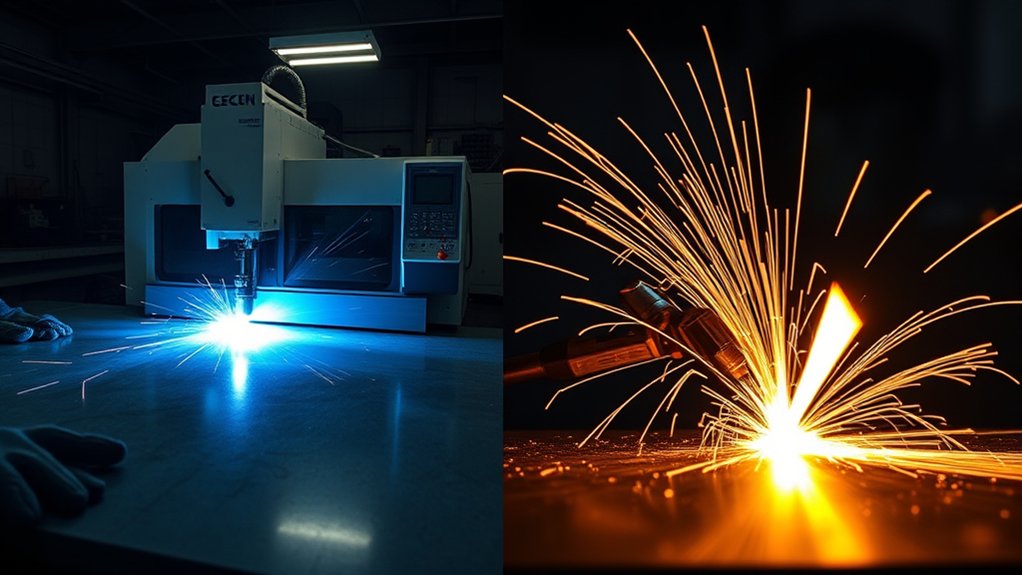
Both processes cut metal with heat, but they use different reactions and suit different jobs.
With oxy-acetylene cutting, the preheat flame brings carbon steel to its ignition temperature. A high-purity oxygen jet then oxidizes the hot iron and blows the oxides from the kerf. Because the cut depends on rapid iron oxidation, conventional oxy-fuel cutting works mainly on mild and low-alloy steels. It does not cut aluminum or stainless steel effectively.
Plasma cutting uses an electric arc and a high-speed stream of ionized gas to melt and eject metal. According to Miller’s handheld plasma guide, it can cut any metal that conducts electricity, including carbon steel, stainless steel, aluminum, copper, and bronze. A solid work-lead connection and a suitable power source are essential.
Plasma normally starts without a preheat cycle and is often faster on thin and medium material. It also tends to create a narrower kerf and a smaller heat-affected zone. However, cut width, edge angle, dross, and maximum thickness vary widely by machine, amperage, consumables, gas, torch height, and travel speed. Use the manufacturer’s cut chart instead of a universal kerf number.
Oxy-acetylene usually places more heat into the work and often needs more slag cleanup, but it remains useful for thick carbon-steel sections and sites without practical electrical power or compressed air.
Note: “Best thickness” is not a fixed dividing line. A high-output plasma system may outperform oxy-fuel on plate that is far beyond a small portable cutter’s capacity. Always compare the exact machine and torch data.
Quick Verdict: Plasma vs Oxy-Acetylene
Choose plasma if you value speed, accuracy, cleaner edges, and the ability to cut several metal types. Choose oxy-acetylene if you cut thick carbon steel, need off-grid use, or rely on the same torch outfit for heating, bending, brazing, and repair work.
| Factor | Plasma Cutting | Oxy-Acetylene Cutting |
|---|---|---|
| Best use | Fast, accurate cuts on conductive metals | Thick carbon steel, heating, and remote cutting |
| Metal range | Carbon steel, stainless, aluminum, copper, bronze, and other conductive metals | Mainly mild and low-alloy carbon steel |
| Cut quality | Usually a narrower kerf and smaller heat-affected zone on suitable thicknesses | Often a wider kerf and more slag, but good square cuts are possible on properly set thick steel |
| Setup needs | Correct electrical supply plus clean, dry, oil-free air or the gas specified by the manufacturer | Oxygen, acetylene, regulators, hoses, approved safety devices, and a cutting torch |
| Portability | Compact if power and air are available | Independent of grid power, but cylinders are bulky and must be secured |
| Main safety risks | Electric shock, arc radiation, fumes, noise, sparks, and hot metal | Fire, gas leaks, backfire or flashback, oxygen enrichment, cylinder damage, and hot slag |
Plasma Cutting Basics
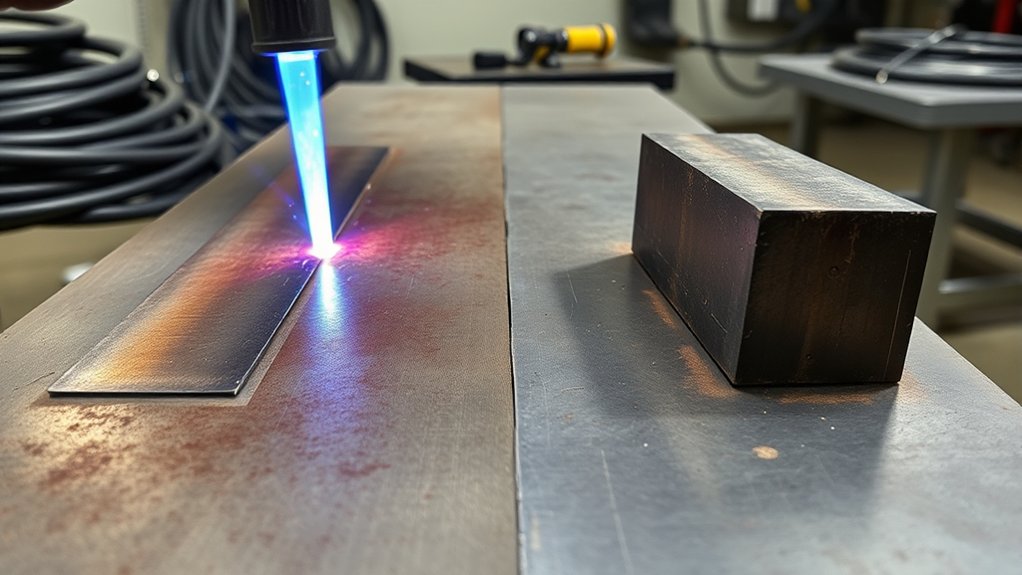
A plasma cutter sends gas through a small torch opening and energizes it with an electric arc. The constricted plasma jet reaches very high temperature and velocity, melts the metal, and blows the molten material out of the cut.
Most portable air-plasma machines need a stable 120- or 240-volt supply, although exact voltage and circuit demand vary. Larger shop systems may require higher-capacity single-phase or three-phase service. Follow the nameplate and manual; do not assume that a receptacle is adequate because the plug fits.
What Plasma Is
Plasma is a partially ionized gas containing charged particles that can conduct electricity. In a transferred-arc plasma cutter, the cutting arc travels from the torch electrode to the workpiece. That is why the workpiece must be electrically conductive and the work lead must make a dependable connection.
| Property | Why It Matters | Safety or Quality Check |
|---|---|---|
| Electrical conductivity | Completes the cutting circuit | Attach the work lead to clean metal and keep leads dry and intact |
| High heat | Melts metal rapidly | Use proper shade, face protection, gloves, and flame-resistant clothing |
| High gas velocity | Ejects molten metal from the kerf | Secure the work and keep sparks away from people and combustibles |
| Consumable condition | Affects arc shape, edge angle, and dross | Inspect the electrode, nozzle, shield, and swirl ring as the manual directs |
Many shop-grade plasma cutters handle sheet and medium stock well. Industrial systems can cut much thicker plate, but capacity must be checked against the specific power supply, torch, gas process, and cut chart.
Power and Air Requirements
Two essentials drive most portable plasma systems: electricity and clean compressed air. Hypertherm specifies clean, dry, oil-free gas for its Powermax air-plasma systems. Moisture and oil can shorten consumable life and cause unstable or rough cuts. Check your own manual for required pressure and flow.
Use a circuit and extension cord rated for the cutter’s input current and cable length. Undersized cords can cause voltage drop, overheating, poor arc performance, or nuisance trips. Never bypass overcurrent protection or grounding.
A compressor must supply the required pressure while air is flowing, not only at tank pressure. Add filtration and a moisture separator when the air system cannot meet the cutter’s gas-quality requirement.
Pro Tip: Before blaming amperage for poor cuts, check the work-lead connection, air pressure under flow, moisture in the line, consumable wear, torch height, and travel speed. These setup problems cause many beginner cut-quality issues.
Rated Cut, Severance Capacity, and Duty Cycle
Do not treat every advertised thickness as a normal production capacity. Manufacturers may list several numbers:
- Recommended or rated cut: The thickness range intended for good speed and usable edge quality.
- Maximum or quality cut: A slower cut near the machine’s upper practical limit.
- Severance cut: The thickest material the machine may separate under favorable conditions, usually with slow travel and rougher results.
- Pierce capacity: The thickness the torch can pierce without an edge start; this is often lower than edge-start capacity.
- Duty cycle: The percentage of a stated test period that the machine can cut at a listed output and temperature before cooling is required.
Compare these ratings at the same input voltage. A dual-voltage machine may have lower output and capacity on 120 volts than on 240 volts.
Oxy-Acetylene Cutting Basics
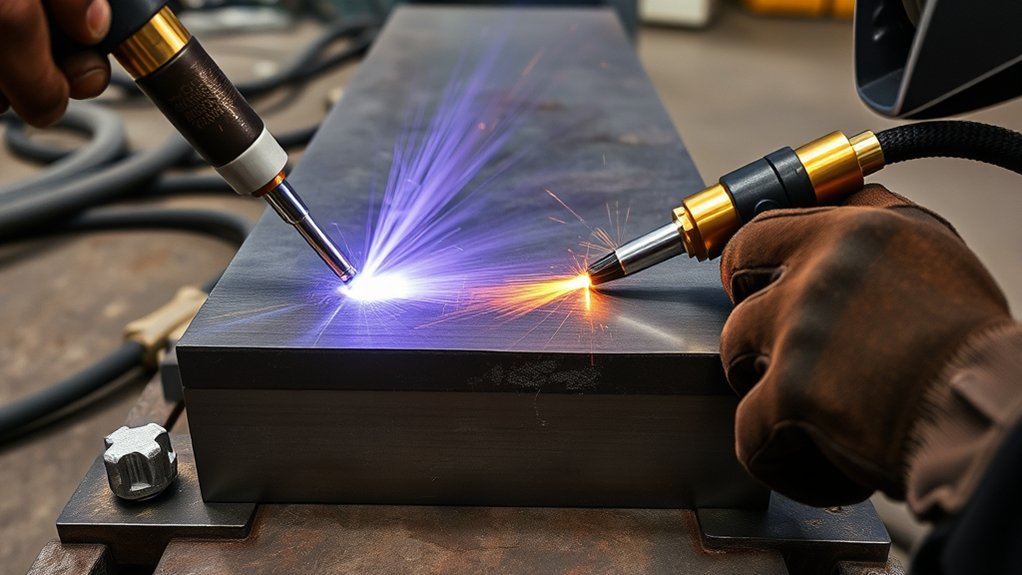
Oxy-acetylene cutting preheats ferrous metal with an oxygen-fuel flame, then uses a high-velocity oxygen jet to continue the oxidation reaction and expel iron oxides from the kerf. Tip size, gas pressure, preheat-flame adjustment, standoff, and travel speed must match the steel thickness and torch manufacturer’s chart.
The process is best suited to mild and low-alloy carbon steels. Aluminum, stainless steel, and many high-alloy materials form oxides that interfere with conventional oxy-fuel cutting, so plasma or another process is normally a better choice.
- Inspect and secure the equipment: Keep cylinders upright and secured. Check hoses, torch seats, regulators, tips, check valves, and flashback protection. Never use oxygen equipment contaminated with oil or grease.
- Leak-test the system: Use an approved leak-detection solution and the procedure in the equipment manual. Never test with a flame.
- Set pressures from the tip chart: Use the exact manufacturer values for the selected fuel gas, tip, hose length, and plate thickness. OSHA states that acetylene must not be used above 15 psig.
- Light and adjust the torch correctly: Follow the torch maker’s lighting sequence and use a friction lighter, not matches or a cigarette lighter.
- Preheat and cut: Heat the starting point evenly, press the cutting-oxygen lever, and move only when the oxygen jet penetrates the plate.
- Shut down and relieve pressure: Follow the manufacturer’s valve-closing, purging, and regulator-relieving sequence after work.
Warning: Never use oxygen as a substitute for compressed air, never lubricate oxygen fittings, and never operate acetylene above 15 psig. Oxygen enrichment can make clothing and ordinary combustibles ignite violently.
Cut Quality and Precision
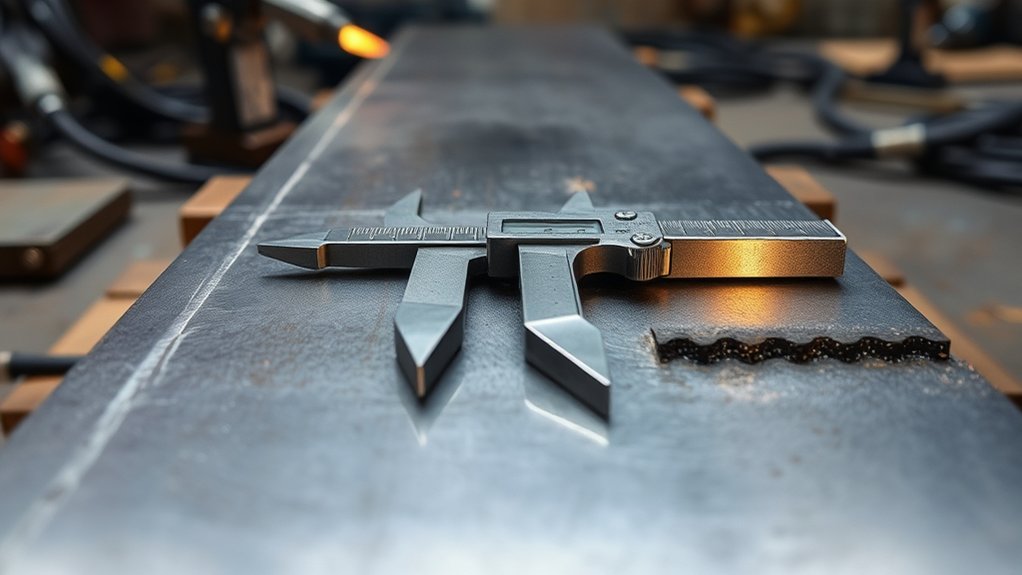
Cut quality depends on more than the process name. Material grade, thickness, machine output, gas, consumables, torch angle, standoff, travel speed, and operator skill all matter.
On sheet and medium plate within the machine’s rated range, plasma usually creates a narrow kerf, a small heat-affected zone, and limited distortion. It is often the easier process for curved shapes, small parts, and weld fit-up.
Oxy-acetylene generally creates a wider kerf and puts more heat into the plate. On thin material, that can increase warping. On thick carbon steel, however, a properly selected tip and steady travel can produce a straight, square cut that is practical for fabrication or demolition.
| Metric | Plasma | Oxy-Acetylene |
|---|---|---|
| Kerf width | Usually narrower within rated capacity; use the machine cut chart for actual values | Usually wider and strongly affected by tip size and oxygen-jet condition |
| Heat-affected zone | Usually smaller because travel is faster and no preheat is needed | Usually larger because the work is preheated and the process moves more slowly |
| Dross or slag | Can be low when speed, height, gas, and consumables are correct | Iron-oxide slag is common and may need chipping or grinding |
| Edge angle | Some bevel is normal; worn consumables and wrong torch height increase it | Can be square on thick steel when the tip and travel speed are correct |
| Shape cutting | Well suited to curves, holes, templates, and CNC motion | Best for straight or broad-radius cuts; fine detail is harder |
For repeatable results, inspect consumables and tips, verify gas quality and pressure, secure the work, and make a test cut on matching scrap before cutting the final part.
Speed and Productivity
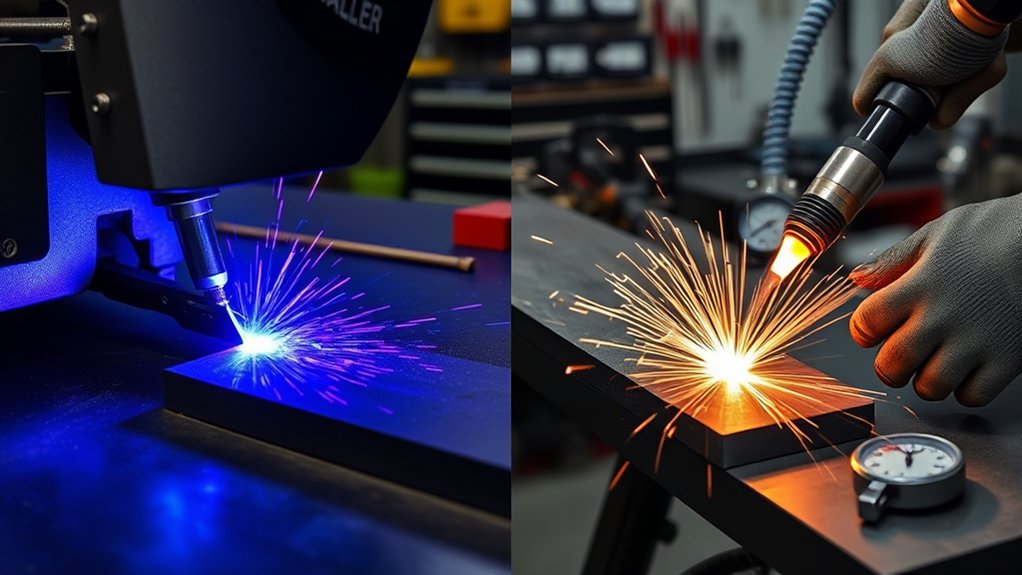
Time on the torch affects labor, workflow, consumable cost, and operator fatigue. Plasma often provides higher throughput on thin and medium stock because it starts without preheating and can travel quickly.
- Start time: Plasma can begin once power, gas, and the work lead are ready. Oxy-fuel must preheat the start point.
- Travel speed: Plasma is commonly faster on thinner material, but the advantage changes with thickness and machine output.
- Piercing: Plasma can pierce quickly within its rated pierce capacity. Oxy-fuel piercing becomes slow on thick plate.
- Post-cut work: Correctly set plasma often reduces slag removal and grinding.
- Repeatability: Plasma pairs naturally with guides and CNC tables for repeated profiles.
The fastest process is the one that delivers an acceptable edge without forcing you to spend the saved time on grinding, rework, or overheated consumables.
Oxy-acetylene still earns its place on heavy carbon steel, especially when the work is a long straight cut and the jobsite lacks suitable power or air.
Cost Breakdown: Upfront and Operating
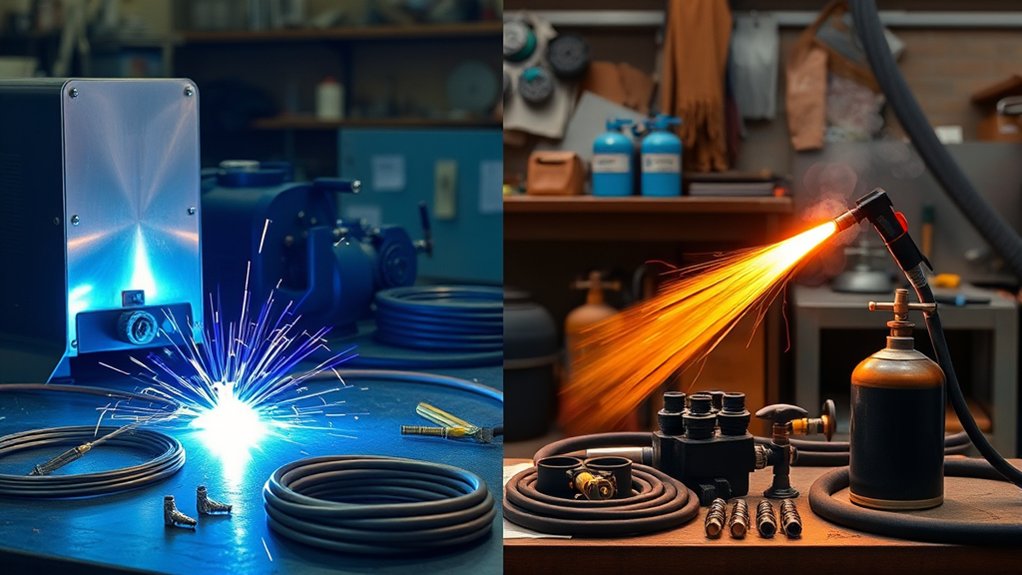
Costs vary by brand, capacity, duty cycle, consumables, electrical service, compressor size, cylinder ownership or rental, and local gas-refill prices. Do not compare only the purchase price.
A basic oxy-fuel outfit may have a lower equipment cost if you already own approved cylinders and transport equipment. Plasma may cost more upfront, especially when you must add a compressor, dryer, or electrical circuit, but faster cutting and less cleanup can lower labor cost.
| Cost Area | Plasma | Oxy-Acetylene |
|---|---|---|
| Equipment | Power supply, torch, work lead, compressor or gas supply, filtration, and possibly a circuit upgrade | Cylinders, cart, regulators, hoses, torch, tips, approved check valves or flashback arrestors, and storage provisions |
| Recurring inputs | Electricity, compressed air or process gas, electrodes, nozzles, shields, and filters | Oxygen and acetylene refills or rental, tips, seals, and maintenance parts |
| Labor | Often lower on repeat thin- and medium-gauge work because cutting and cleanup are faster | Can be economical on occasional thick-steel field cuts but may require more setup and cleanup |
| Hidden costs | Wet air, undersized power, premature consumable wear, and downtime at low duty cycle | Cylinder transport, storage compliance, refill minimums, leak losses, and fire-control requirements |
For a fair comparison, estimate cost per finished part: equipment allocation, gas or electricity, consumables, setup, cutting time, slag removal, grinding, and scrap. That calculation is more useful than a single national price estimate.
Products Worth Considering

High-Quality:The Oxygen Acetylene Torch Welding and Cutting Kit is made of high quality stainless steel and brass for durability. This oxygen & acetylene torch kit comes complete with hoses, welding and cutting torches, goggles, tip cleaner and spark igniter, and more A 17-piece professional-grade portable oxygen acetylene oxy welding cutting torch kit that includes everything you need to weld or cut accurately,allowing you to cut, weld, braze, and fuse accurately and efficiently!

Complete Kit: Medium-Duty Cutting & Welding - This versatile Oxy Acetylene Torch Kit is built for medium-duty projects. Achieve clean cuts up to 6 inches and precise welding/brazing on materials up to 1/2 inch thick with the appropriate tips
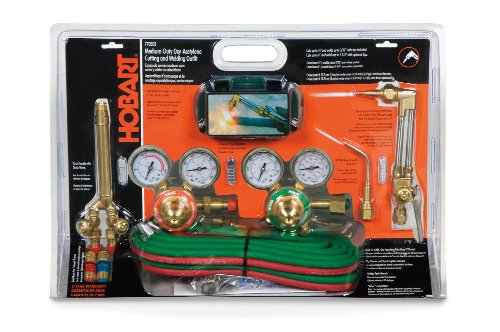
Versatile Medium-Duty Performance – The Hobart 770502 Kit offers a reliable, cost-effective solution for farming, automotive work, light fabrication, and more—ideal for both professionals and DIYers.
Safety Considerations and Risks
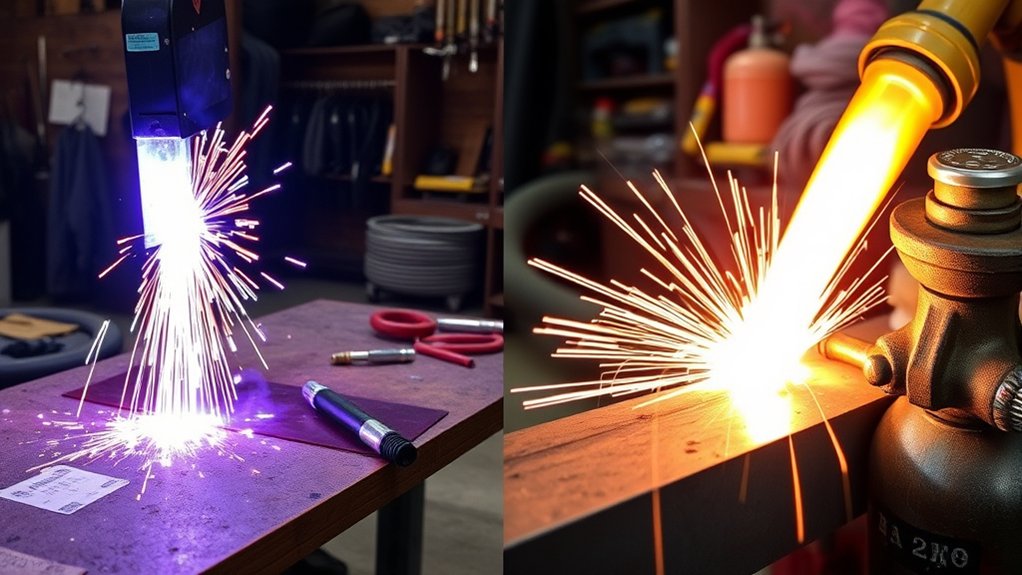
Both tools can cause serious injury. Plasma avoids fuel gas and an open preheat flame, but it still exposes you to electric shock, ultraviolet and infrared radiation, fumes, noise, sparks, molten metal, and fire. Oxy-acetylene adds pressurized cylinders, oxygen enrichment, fuel-gas leaks, backfire, flashback, and flame hazards.
Warning: Do not cut a drum, tank, pipe, wheel, or other closed or previously used container until a qualified procedure confirms it is cleaned, vented, isolated, and safe for hot work. Residue can release toxic vapor or explode when heated.
Personal Protective Equipment
Use safety glasses with side protection under a cutting shield or helmet, and select the filter shade for the process and amperage or plate thickness using OSHA’s hot-work PPE guidance. OSHA lists process-specific minimum shades; a generic clear face shield is not enough for plasma-arc radiation.
Wear dry welding gloves, flame-resistant clothing without cuffs, sturdy leather footwear, and hearing protection selected for the measured or expected noise. Keep synthetic clothing, lighters, and exposed skin away from sparks and slag.
Fumes, Coatings, and Ventilation
Cutting painted, galvanized, plated, oily, or coated metal can release hazardous fumes and decomposition products. Identify the base metal and coating before work. Remove coatings where required, use local exhaust ventilation, and follow an exposure assessment and respiratory-protection program when ventilation alone cannot control the hazard.
Do not cut near chlorinated solvents or degreasing vapors. Never use either process in a confined space without the required atmospheric testing, ventilation, attendant, rescue plan, and permit controls.
Fire and Cylinder Controls
- Clear the hot-work area: Remove or shield combustibles. Follow OSHA hot-work fire-prevention requirements, assign a trained fire watch when conditions require one, and keep suitable extinguishing equipment ready.
- Secure cylinders: Keep cylinders upright, protected from damage, and secured during use and transport. Install valve-protection caps when required and regulators are removed.
- Separate stored gases: OSHA requires stored oxygen cylinders to be separated from fuel-gas cylinders or combustible materials by at least 20 feet, or by a compliant noncombustible barrier.
- Keep oxygen clean: Keep oxygen valves, regulators, hoses, and fittings free of oil and grease.
- Use approved protective devices: Install and maintain the backflow and flashback protection required by the equipment design, applicable rules, and manufacturer instructions.
- Inspect before use: Check hoses, fittings, regulators, tips, torch valves, plasma leads, work clamps, air filters, and consumables.
- Follow shutdown procedures: Isolate energy, close cylinder valves, relieve pressure as directed, and mark hot metal so others do not touch it.
Note: Workplace rules, hot-work permits, fire codes, and manufacturer manuals may be stricter than this overview. Those requirements control the job.
Portability and Power Requirements
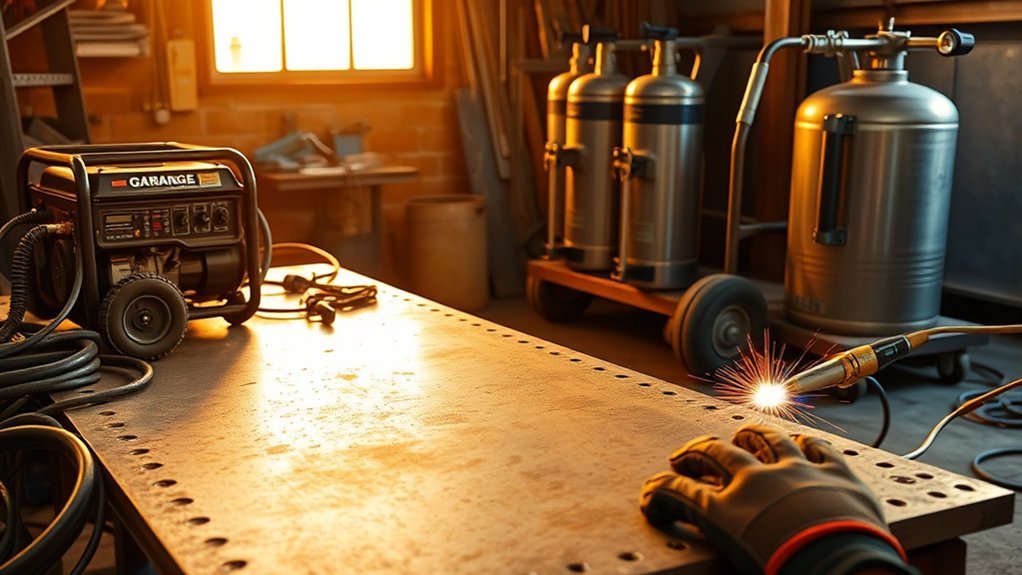
Both processes can move between a shop and a field site, but their support needs are different.
A small plasma cutter may be easy to carry, yet the complete system also includes a suitable circuit or generator, air compressor, dryer or filter, cables, and spare consumables. Confirm that a generator can supply the cutter’s required continuous and starting power without unstable voltage.
Oxy-acetylene does not need electrical power, which helps in remote work. The tradeoff is transporting and securing oxygen and acetylene cylinders, regulators, hoses, torch parts, and fire-control equipment. Cylinders must never be left loose in a vehicle or exposed to damaging heat.
| Factor | Practical Implication |
|---|---|
| Weight and footprint | Plasma power supplies can be compact; oxy-fuel needs protected cylinder and hose space |
| Utilities | Plasma needs adequate electricity and gas flow; oxy-fuel carries its oxygen and fuel supply |
| Weather | Wind can disturb both processes; plasma equipment, leads, and the work area must be kept dry |
| Deployment | Plasma can be fast to set up; oxy-fuel requires cylinder placement, inspection, pressure setting, leak checks, and safe lighting |
Choosing the Right Tool for Your Metals and Thicknesses
Match the tool to the material first, then compare thickness, finish, utilities, production rate, and safety controls.
Products Worth Considering
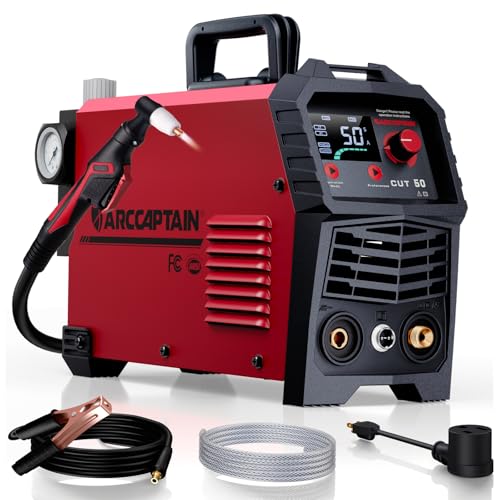
【Powerful Cutting Ability】Switch effortlessly between 110V and 220V for home or workshop use. Achieve professional 1/2" clean cuts on steel, aluminum, and copper with advanced LGBT technology. Perfect for DIY projects and heavy-duty tasks. Recommended maximum cutting thickness: 12mm @ 35A / 110V / 55 PSl; 18mm @ 50A / 220V / 75 PSI. Note: Requires compressed air (compressor sold separately).

[Powerful Cutting Ability] Dual voltage 110/220V good for home, workshop and hardware shop use. Professional performance 1/2" clean cuts on Iron, Steel aluminum and copper with Inverter IGBT Technology. Very powerful for DIY and heavy duty project. The Maximum cutting thickness is recommended to 1/2" @35A 110V 50PSI; 2/3" @50A 220V 65PSI. Dry and compressed air is required. Power breaker up to 60A@110V 35A; Up to 50A@220V 50A.

【Powerful Cutting Ability】Dual voltage plasma cutter 110 220 operation is perfect for home garages, workshops, and hardware shops. Delivers professional performance 1/2" clean cuts on iron, steel, aluminum and copper using Inverter IGBT Technology. Suitable for both DIY and heavy-duty projects. Maximum recommended cutting thickness: 1/2" @ 35A 110V 50 PSI; 2/3" @ 50A 220V 65 PSI. Requires dry, compressed air. Recommended power breakers: 40A @ 110V; 30A @ 220V.
Metal Type Compatibility
- Carbon steel: Either process can work. Plasma is usually preferred for sheet and medium plate; oxy-fuel remains useful for thick sections and heating work.
- Stainless steel: Use plasma or another process designed for stainless. Conventional oxy-acetylene cutting is not effective.
- Aluminum: Use plasma, saw cutting, waterjet, laser, or another suitable process. Do not use conventional oxy-fuel cutting.
- Copper and bronze: Plasma can cut them if the machine and consumables are rated for the material, but high thermal conductivity may reduce capacity.
- Coated or plated metal: Identify the coating and control fumes before selecting either hot-cutting process.
Thickness Range Sweet Spots
Use plasma on thin to medium stock when speed, shape flexibility, and reduced heat input matter. Use oxy-acetylene on thick carbon steel when the torch tip and gas supply are sized for the job and a wider kerf or more cleanup is acceptable.
Do not rely on a generic thickness crossover. Compare the plasma machine’s recommended cut and pierce ratings with the oxy-fuel tip chart for the exact plate thickness. Also account for edge-start access, required bevel, duty cycle, and the finish needed after cutting.
Field vs. Shop Setup
In field work, plasma is practical when you have a correctly sized generator and enough clean, dry air. Without those utilities, oxy-acetylene may be the more dependable option, provided the cylinders can be transported, secured, and used in compliance with site rules.
In a shop, plasma often wins for speed, repeat shapes, cleaner edges, and CNC use. Oxy-acetylene still adds value for thick ferrous plate, preheating, bending, brazing, and repair.
Choose Plasma Cutting If
Plasma cutting fits you best when you work with several conductive metals and care about speed, edge quality, and repeatability.
- You cut stainless steel, aluminum, copper, bronze, or mixed conductive metals.
- You work with sheet or medium plate where excess heat can distort the part.
- You need curves, holes, templates, or CNC profiles.
- You want a narrow kerf and less post-cut grinding within the machine’s rated range.
- You have reliable electricity and the specified clean, dry gas supply.
- You can maintain consumables and operate within the machine’s duty cycle.
- You want to avoid storing fuel gas, while still managing arc, fume, electrical, and fire hazards.
Choose Oxy-Acetylene Cutting If
Oxy-acetylene fits you best when you cut thick carbon steel, work away from electrical utilities, or need one torch outfit for several heating operations.
- You cut heavy mild or low-alloy carbon steel.
- You work in remote areas without a suitable power source or compressor.
- You need heating, straightening, bending, brazing, or limited gas welding from the same outfit.
- You already have correctly sized, inspected, and safely stored cylinders and equipment.
- You can perform leak checks, set pressures from the tip chart, and maintain approved backflow or flashback protection.
- You can control the larger hot-work area, slag stream, and fire exposure.
Final Decision Checklist
Answer these questions before buying equipment or starting the cut:
- What is the exact base metal and coating?
- What is the thickest normal cut, and do you need to pierce or start from an edge?
- What edge quality, tolerance, bevel, and cleanup are acceptable?
- Will you make straight cuts, freehand shapes, templates, or CNC parts?
- What input voltage, circuit capacity, generator power, and compressed-air flow are available?
- How long must the machine cut continuously, and what duty cycle is required?
- What are the local costs for electricity, consumables, cylinder rental, and gas refills?
- Can the site meet ventilation, hot-work, fire-watch, PPE, cylinder-storage, and training requirements?
If most answers point to mixed metals, precise shapes, and regular shop production, plasma is usually the stronger choice. If they point to thick carbon steel, remote access, and heating work, oxy-acetylene may be more practical.
Frequently Asked Questions
How do weather conditions affect outdoor plasma or oxy-acetylene cutting?
Wind can disturb both a plasma jet and an oxy-fuel flame, reducing cut quality and pushing sparks or slag in an unsafe direction. Keep plasma equipment, leads, gloves, and the work area dry. Use wind shielding only when it does not trap fumes or create a fire hazard.
What accessories improve cut quality and workflow for each method?
For plasma, useful accessories include straight-edge and circle guides, drag shields approved for the torch, air dryers, filters, spare consumables, and a correctly sized compressor. For oxy-fuel, use the correct cutting tips, tip cleaners, quality regulators, approved backflow or flashback devices, a cylinder cart, and approved leak-detection solution.
How loud are these tools, and is hearing protection required?
Both processes can produce hazardous noise, especially during long cuts, high-amperage plasma work, slag removal, and grinding. Use hearing protection selected for the exposure and workplace program. Do not assume that short cuts are safe simply because they feel tolerable.
Can either method be used for artistic engraving or etching?
Plasma works well for artistic profile cutting, templates, and CNC shapes. Some systems also support marking consumables, but ordinary cutting consumables should not be treated as engraving tools unless the manufacturer allows it. Oxy-acetylene can create broad textures and freehand shapes on steel but is less suitable for fine detail.
What are common beginner mistakes and quick troubleshooting tips?
For plasma, check worn consumables, poor work-lead contact, wet air, low pressure under flow, wrong amperage, bad torch height, and travel speed. For oxy-fuel, check the tip chart, tip cleanliness, flame adjustment, oxygen-jet condition, standoff, travel speed, and leaks. Practice on matching scrap before cutting the final part.
Which process is better for CNC cutting?
Plasma is usually the better choice for small and medium CNC tables because it starts quickly, cuts many conductive metals, and handles complex profiles. Industrial oxy-fuel CNC systems remain useful for very thick carbon-steel plate and can carry several torches for repeated straight or nested cuts.
Can plasma cut painted, rusty, or galvanized metal?
A plasma arc may cut through light surface contamination, but paint, rust, oil, and zinc can hurt grounding, cut quality, and consumable life. More importantly, coatings can release hazardous fumes. Clean the work-lead area, identify and remove coatings as required, and use proper ventilation and respiratory controls.
Safety Disclaimer: This article is for informational purposes only and does not replace hands-on training, workplace rules, equipment manuals, a hot-work permit, or professional safety guidance. Follow the machine and torch manuals, applicable OSHA rules, local fire codes, and qualified site procedures before cutting metal.
Conclusion
Plasma cutting usually gives fabricators the best mix of speed, clean edges, shape flexibility, and metal compatibility. Oxy-acetylene still makes sense for thick carbon steel, off-grid cutting, and work that also requires heating, bending, brazing, or repair.
Choose with machine-specific data, not a broad rule. Check the base metal, coating, normal and maximum thickness, rated cut and pierce capacity, duty cycle, electrical service, air supply, consumable cost, cylinder logistics, and safety controls.
When you match the process to the actual job, you reduce rework, control heat, improve cut quality, and create a safer workflow.
Sources
- OSHA 29 CFR 1910.252 — General Requirements for Welding, Cutting, and Brazing — fire prevention, ventilation, coatings, containers, PPE, and hot-work controls.
- OSHA 29 CFR 1910.253 — Oxygen-Fuel Gas Welding and Cutting — acetylene pressure, cylinder storage, oxygen cleanliness, regulators, hoses, and operating practices.
- OSHA Hot-Work PPE Selection — plasma and gas-cutting hazards involving radiation, fumes, noise, electrical current, and hot metal.
- Miller — How to Select and Operate a Hand-Held Plasma Cutter — conductive-metal compatibility, heat-affected zone, kerf, input power, duty cycle, and operating factors.
- Hypertherm — Plasma vs. Oxyfuel — process differences, preheat, speed, material compatibility, and thickness considerations.
- Miller — Safe Oxy-Fuel Torch Setup — inspection, ventilation, leak testing, check valves, flashback arrestors, lighting, and shutdown.