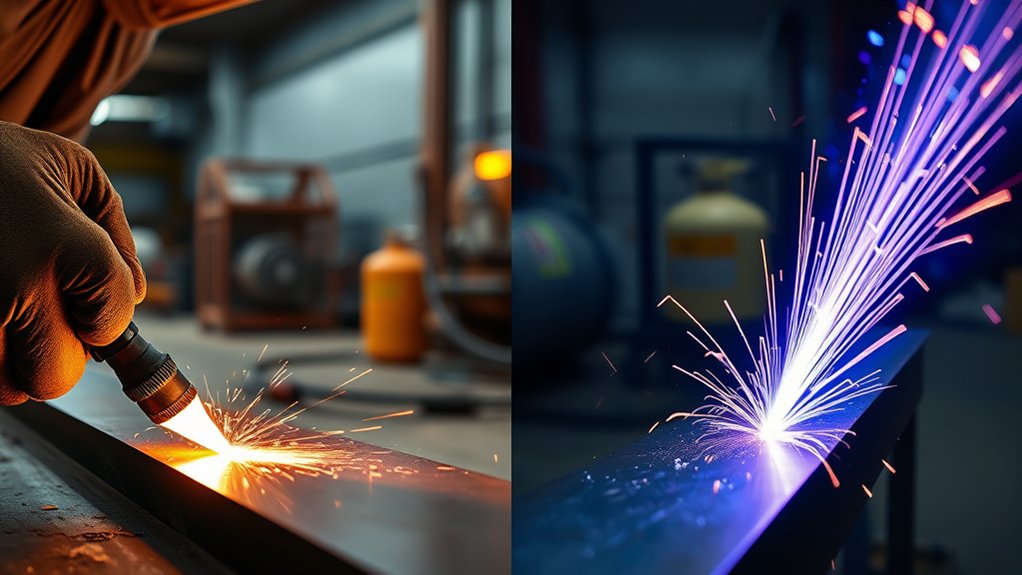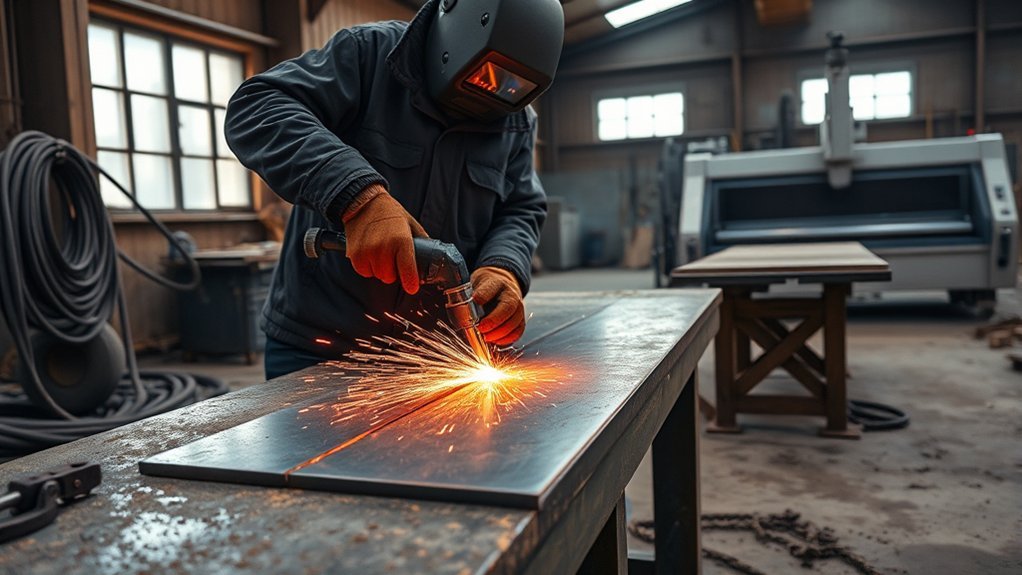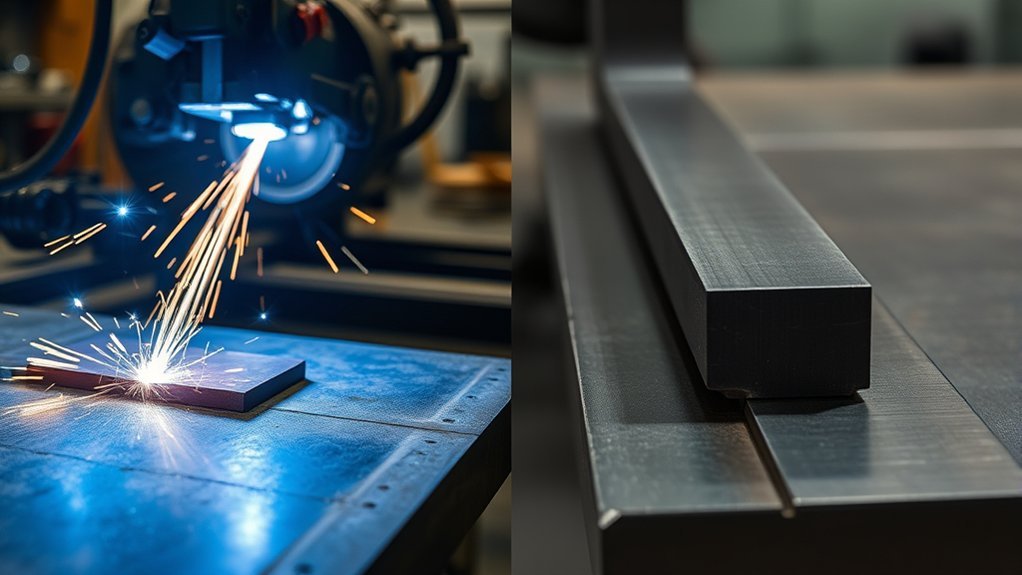
A band saw and a plasma cutter can both separate metal, but they solve different problems. A band saw is usually the stronger choice for straight, square cut-to-length work on bar, tube, angle, channel, and solid stock. A plasma cutter is usually better for fast contours, holes, and freeform shapes in electrically conductive plate. The right choice depends on the material form, thickness, required edge quality, production volume, and shop setup—not on one universal tolerance or thickness number.
Quick Answer
For straight cut-to-length work on tube, bar, angle, and solid stock, choose a metal-cutting band saw. It makes a cool cut and works well with stops or automatic feeds. Choose plasma when speed and freeform shapes in electrically conductive plate matter more than a square, finish-ready edge.
Key Takeaways
- Accuracy is machine-specific. A rigid, well-set band saw often gives more repeatable straight cut lengths and squareness, while a properly maintained CNC plasma system can produce accurate profiles.
- Band saws do not create a thermal heat-affected zone. Plasma is a thermal process, although modern systems can keep the HAZ small when settings are correct.
- Plasma is usually faster for plate profiling. Band saws are usually more efficient for bars, tubes, profiles, bundles, and repeated cut-to-length work.
- Do not compare maximum thickness alone. Use the manufacturer’s recommended cut capacity, duty cycle, power, air, and cut-quality data.
- Total cost includes finishing and infrastructure. Consumables, blades, compressed air, electrical service, ventilation, fixturing, labor, and scrap can matter more than purchase price.
Band Saw vs. Plasma Cutter Comparison
| Factor | Band Saw | Plasma Cutter |
| Best material forms | Bar, tube, pipe, angle, channel, beams, solid stock, and bundles | Flat plate, sheet, expanded metal, grating, and shapes that need contour cutting |
| Typical strength | Straight, square, repeatable cut-to-length work | Fast holes, contours, bevels, and freeform profiles |
| Heat input | Mechanical cut; no thermal HAZ | Thermal cut; produces a HAZ whose size depends on the process and settings |
| Edge condition | Usually square with saw marks and a small burr when the blade and feed are correct | May show taper, striations, dross, oxide, or top spatter; optimized systems can minimize them |
| Production advantage | Automatic feeds, bundle cutting, and unattended cut-to-length cycles | CNC nesting and rapid 2D plate profiling |
| Main shop needs | Stable support, correct blade, guarding, chip control, and sometimes coolant | Suitable electrical service, clean dry gas or air, grounding, PPE, spark control, and fume extraction |
Cutting Accuracy: Tolerances and Repeatability
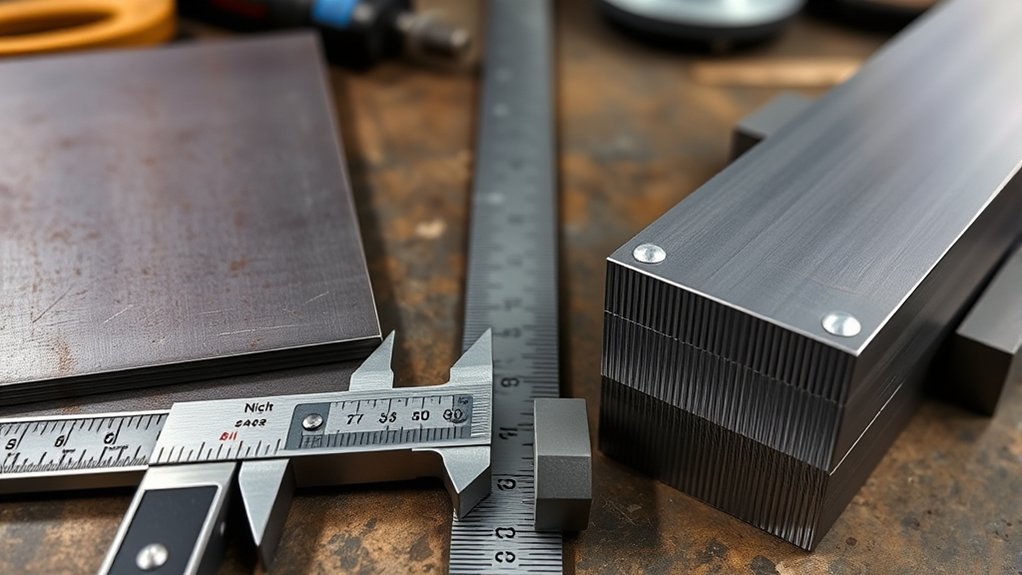
There is no defensible universal rule that every band saw holds one tolerance and every plasma cutter holds another. Accuracy changes with the machine, blade or consumables, material thickness, support, feed, torch height, travel speed, calibration, operator skill, and how the finished part is measured.
For straight cut-to-length work, a rigid horizontal band saw with a sharp blade, correct tooth pitch, controlled feed, solid clamping, and a calibrated stop can produce consistent lengths and square faces. Automatic machines add powered material feeds and programmed batch lengths. For example, industrial automatic band saws are built specifically for repeated cuts in solid stock, tubes, and profiles.
Plasma accuracy must be judged as a complete system. On a CNC table, motion accuracy, torch-height control, kerf compensation, consumable condition, cut direction, lead-ins, plate flatness, and the cut chart all affect part size. Hypertherm identifies cut angularity, edge finish, and attached dross as key cut-quality measures and notes that worn consumables can change kerf width and part size.
Do not buy either tool based on a generic tolerance claim. Ask for a sample cut in your alloy and thickness, then measure length, squareness, taper, hole size, and edge condition.
What Improves Band Saw Repeatability?
- Correct blade selection: Match tooth pitch, blade width, and blade material to the stock and alloy.
- Stable clamping and support: Long or heavy stock must not move, sag, or twist during the cut.
- Controlled feed: Excessive feed can make the blade wander; too little feed can rub and shorten blade life.
- Blade condition: Missing teeth, poor break-in, low tension, worn guides, or chip-packed gullets reduce cut quality.
- Verified stops: Check the stop or automatic feed against a calibrated measuring tool before a production run.
What Improves Plasma Repeatability?
- Use the manufacturer’s cut chart: Match amperage, gas, consumables, speed, and torch-to-work distance to the material.
- Maintain torch height: Incorrect standoff changes kerf width, bevel, and dross.
- Replace worn consumables: A damaged or enlarged nozzle opening can alter the arc and part dimensions.
- Set kerf compensation correctly: The programmed toolpath must account for the material removed by the arc.
- Control the plate: Rust, scale, coatings, warping, and heat buildup can change the result across a nest.
Edge Finish: Burrs, HAZ, and Post-Processing Needs
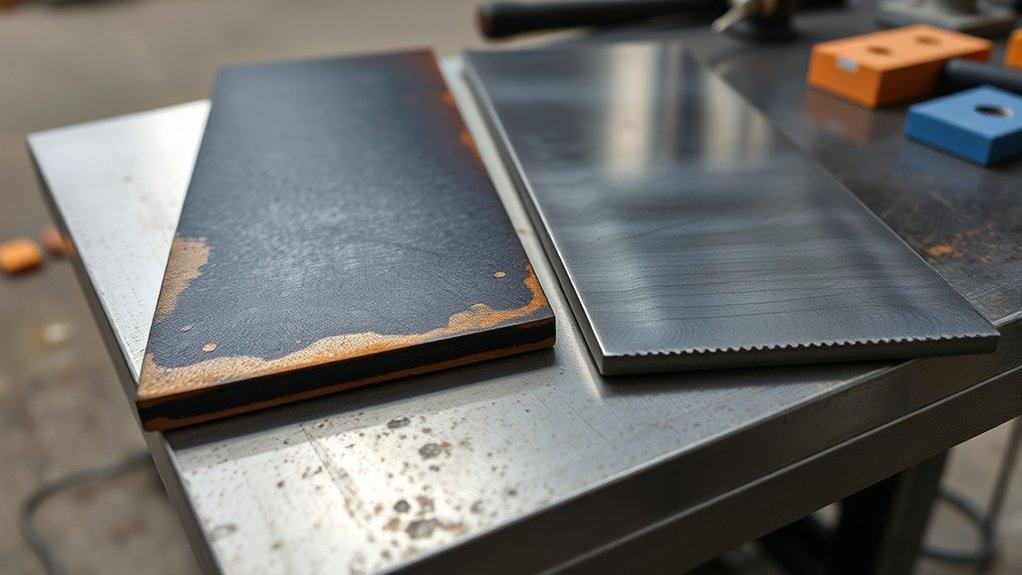
A band saw removes metal with teeth, so it does not create a thermal heat-affected zone. The cut face may show tooth marks, and a burr can form at the exit side, but a well-selected blade and proper feed usually leave a square edge that needs limited cleanup.
Plasma melts the metal and uses a high-velocity gas jet to eject it from the kerf. The cut may have a small HAZ, edge taper, striations, oxide, or re-solidified metal called dross. These effects are not automatically severe. Modern plasma systems can produce low-dross, narrow-kerf cuts when the process is correctly selected and maintained.
Burr and Dross Formation
Band saw burr size depends on blade sharpness, tooth form, feed pressure, support, and the alloy. A dull or poorly matched blade can leave a rough face, wander, or tear thin-wall tubing.
Plasma dross depends on cutting speed, amperage, standoff distance, consumable condition, material type, thickness, surface condition, and temperature. Hypertherm describes a minimum-dross or dross-free operating window between cutting too slowly and too quickly. That means “plasma always needs grinding” is too broad: some cuts need substantial cleanup, while optimized cuts may need little or none.
Pro Tip: Compare total finishing time, not just cutting time. A faster plasma cut can lose its advantage if every part needs heavy grinding, while a slower saw cut can win when it goes directly to fit-up or machining.
Heat-Affected Zone Impact
Because plasma is a thermal process, it changes the temperature of the material next to the cut. The HAZ size and effect depend on the alloy, thickness, amperage, speed, gas selection, and heat input. Thin or heat-sensitive parts can distort if too much heat builds up. Stainless steel and coated metals also require careful fume control.
A band saw avoids a thermal HAZ, which is useful when the next step is welding, heat treatment, precision machining, or testing that is sensitive to edge metallurgy. However, the saw can still introduce mechanical burrs, residual stress from poor clamping, or surface damage if the setup is wrong.
Cost Breakdown: Equipment, Consumables, and Operating Expense
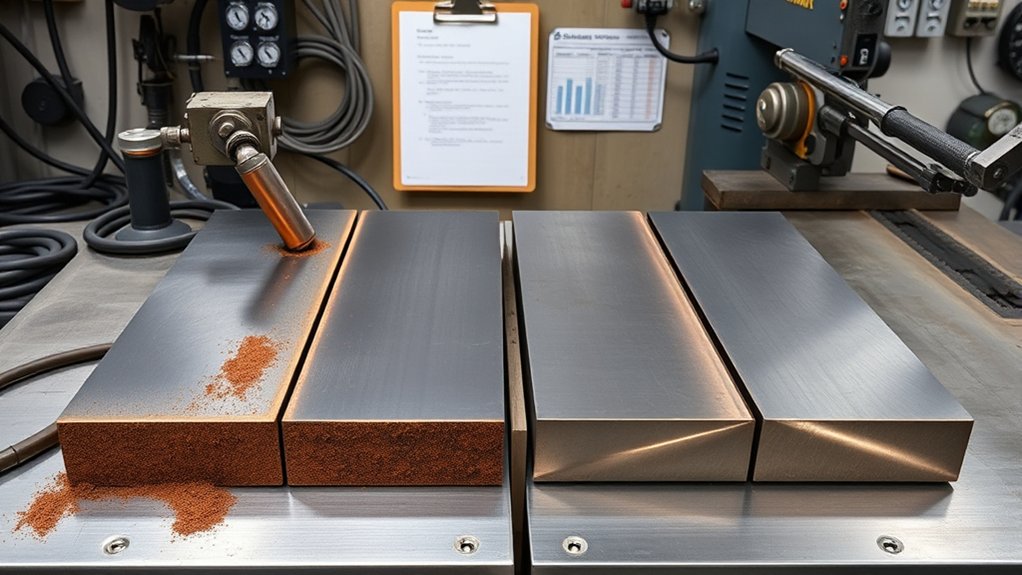
Exact purchase prices and annual consumable costs are not useful without a defined machine class and workload. A portable band saw, a small horizontal shop saw, an automatic production saw, a hand plasma cutter, and a CNC plasma table sit in very different price tiers.
Products Worth Considering
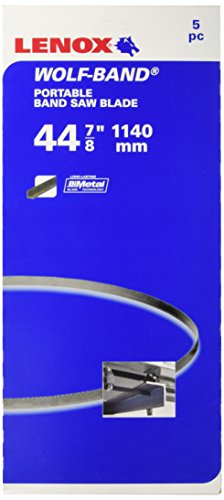
High speed steel teeth provide a strong, long lasting cutting edge

Matrix II high speed steel edge of the band saw blade is designed for heat and wear resistance

Size:44-7/8 Inch Inch long, 1/2 Inch wide, 0.020 Inch thick, 10-14 TPI blade has a hook teeth profile Portable Bandsaw Blade,113.9825cm*1.27cm*0.0508cm Band Saw Blades .Fits all band saws requirling a 44-7/8-Inch long portaband blades.
Upfront Equipment Costs
For simple straight cuts, a portable or small horizontal band saw often has the lowest entry cost because it may run from ordinary shop power and needs no compressed-air system or cutting table. A production band saw costs much more but may add hydraulic clamping, powered feeds, bundle capacity, coolant, and unattended cycles.
A handheld plasma system adds the cost of suitable electrical service, a clean and dry air or gas supply, torch leads, consumables, PPE, and fume control. A CNC plasma installation also needs a motion table, controller, torch-height control, nesting software, grounding, and either a downdraft or water-table strategy.
Consumables and Upkeep
Band saw operating costs center on blades, cutting fluid where used, guide wear, chip brushes, wheel maintenance, and setup labor. Blade life varies sharply with the alloy, section size, tooth selection, speed, feed, break-in, coolant, and operator practice.
Plasma operating costs include cartridges or electrodes and nozzles, gas or compressed air, filters and dryers, electricity, torch service, table maintenance, slag removal, and finishing labor. Consumable life also varies with amperage, piercing technique, arc starts, air quality, standoff, and cut duration.
A useful cost comparison is:
Cost per finished part = machine time + labor + consumables + energy + finishing + scrap + maintenance allocation.
Note: The lowest purchase price is not always the lowest-cost process. A more expensive machine can pay back quickly when it removes setup, handling, or finishing time from every part.
Material Capabilities: Thickness, Profiles, and Alloys
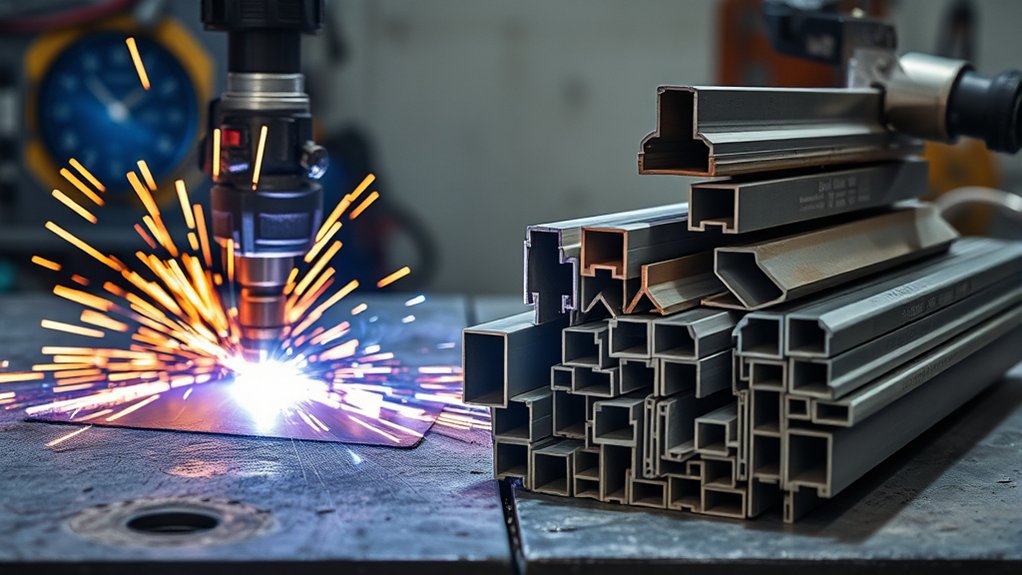
Neither process has one universal thickness limit. Capacity depends on the exact machine and on whether the manufacturer is quoting a recommended production cut, a maximum cut, a pierce rating, or a slow severance cut.
Band Saw Material Range
Metal-cutting band saws are well suited to carbon steel, stainless steel, aluminum, tool steel, and difficult alloys when the correct blade and cutting data are used. Machine envelopes range from compact portable tools to industrial saws that accept sections hundreds of millimeters across. The practical limit is the machine’s throat or vise capacity, blade system, power, feed control, and the time allowed for each cut.
Band saws are especially useful for:
- Round, square, and rectangular bar
- Pipe and tubing
- Angle, channel, I-beam, and other structural profiles
- Forgings, billets, and solid alloy stock
- Bundles of similar sections on machines designed for nesting
Plasma Material Range
Plasma cuts electrically conductive materials, including carbon steel, stainless steel, aluminum, copper, and brass. It is most at home on plate and sheet, but it can also cut pipe, grating, and structural shapes when the torch has access and the work is properly supported.
When comparing plasma systems, prioritize the recommended cut capacity for the thickness you cut most often. A severance rating describes a slower cut at the edge of the machine’s capability and should not be treated as a normal production rating. Current Hypertherm Powermax systems illustrate how widely ratings vary by model, power input, and duty cycle.
Thin Material and Heat-Sensitive Parts
Thin sheet can be difficult on both tools. A coarse band saw blade may snag or deform thin-wall material, while plasma can warp thin sheet if heat input and travel speed are not controlled. Fine-tooth blades, stacked support, lower-amperage plasma processes, proper torch height, and fast travel can improve results.
Aluminum and Stainless Steel
A band saw is often the better choice for aluminum or stainless bar, tube, and structural stock when a square cut and no thermal HAZ are priorities. Plasma is better when those metals are in plate form and the job needs contours or holes. Gas selection, cut charts, ventilation, and cleanup requirements can differ from mild steel.
Throughput and Workflow: Setup, Nesting, and Batch Production
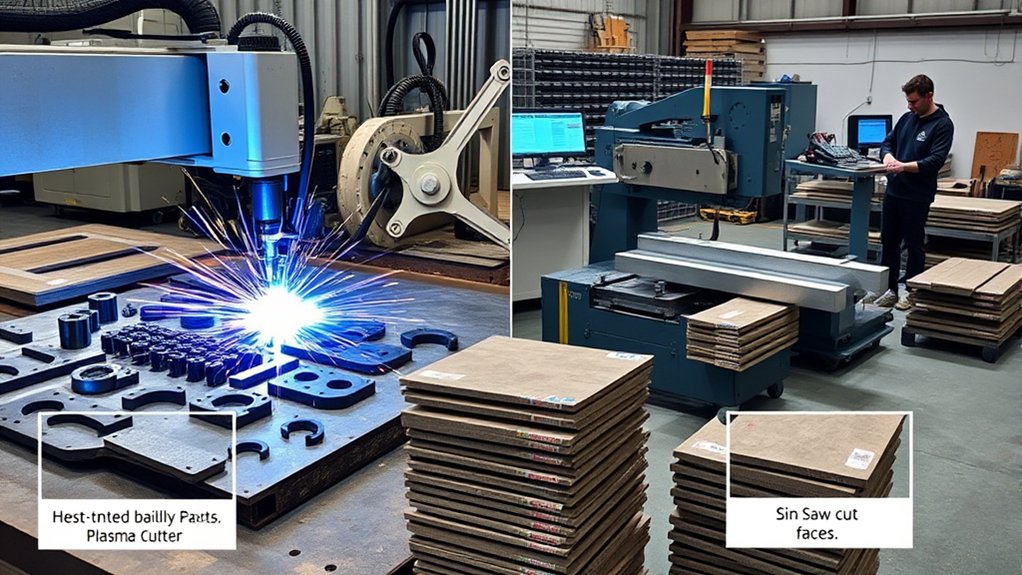
Throughput does not favor one process in every job. It depends on what is being cut and what happens before and after the cut.
When a Band Saw Has the Workflow Advantage
Band saws are highly efficient for repeated cut-to-length work. Automatic machines can clamp, feed, cut, and repeat programmed lengths in solid material, tube, and profiles. Some machines can bundle compatible stock so one blade stroke produces several parts. This is a strong workflow for fabrication shops, service centers, and machine shops processing long stock.
Band saws also simplify downstream handling when the part needs a square face and little cleanup. The trade-off is that they normally follow one cut path through the stock and cannot nest many unrelated 2D shapes across a plate.
When Plasma Has the Workflow Advantage
Plasma is usually faster for cutting many different profiles from flat plate. CNC nesting software can arrange parts to improve material use, and the torch can move from one contour to another without physically sawing through the full stock width. It can also pierce internal holes where a horizontal band saw cannot start.
Plasma productivity falls when the plate needs heavy handling, the pierce count is high, the consumables are worn, the material is outside the system’s productive range, or every edge needs grinding. For accurate estimating, include loading, programming, piercing, cutting, unloading, slag removal, grinding, and inspection.
Single Cuts and Field Work
A portable band saw is convenient for tube, rod, conduit, and structural pieces that fit its capacity. A handheld plasma cutter is more flexible on large plate or installed metal because the torch is not limited by a saw throat. However, plasma still needs suitable power, a work connection, safe spark control, and the required air or gas supply.
Safety, Noise, and Shop Environment Considerations
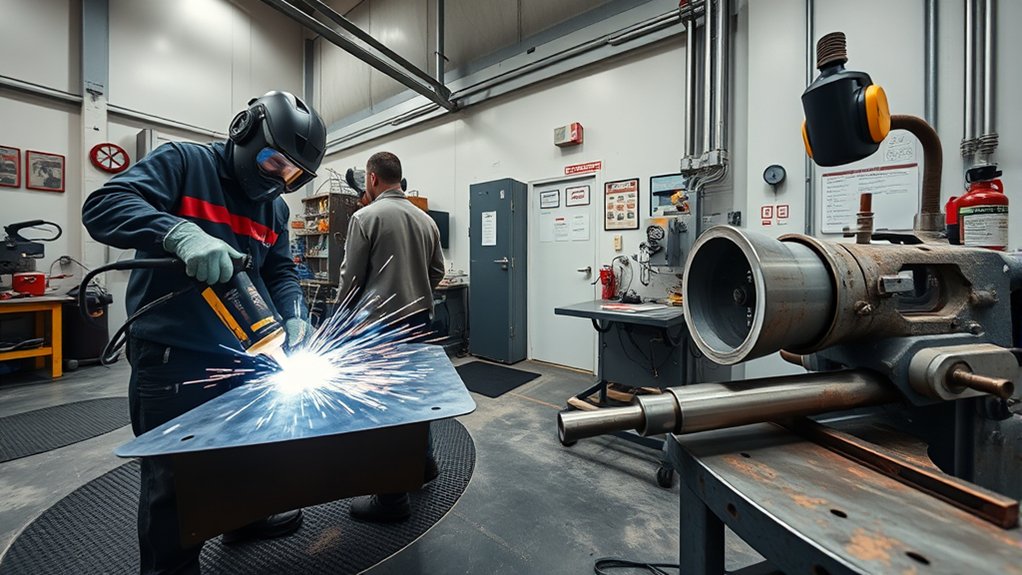
Warning: Plasma cutting can expose the operator to electric shock, intense light and UV radiation, hot metal, fire, noise, and hazardous fumes. Band saws can cause severe blade-contact, pinch, entanglement, and chip injuries. Follow the machine manual, use required guards and PPE, and apply your workplace’s hot-work and ventilation rules.
Plasma Cutter Hazards
- Fumes and gases: The material, coatings, and contaminants can release hazardous airborne substances. Use source capture or other ventilation selected for the material and exposure.
- Radiation and eye injury: The arc produces intense visible and ultraviolet radiation. Use the shade and protective clothing required by the manufacturer and applicable safety rules.
- Electric shock: The torch and workpiece are part of an electrical circuit. Keep equipment dry, inspect leads, ground the system correctly, and disconnect power before service.
- Fire and burns: Sparks, hot slag, and cutoffs can travel beyond the immediate cut. Remove combustibles, control the hot-work area, and keep an appropriate extinguisher available.
- Noise: Hearing protection may be required based on the system, enclosure, cutting table, and measured exposure.
Band Saw Hazards
- Blade contact: Guard the blade except at the point of operation and keep the guide close to the stock.
- Pinch and crush points: Keep hands clear of vises, feed rolls, hydraulic clamps, descending saw heads, and heavy stock.
- Entanglement: Secure loose clothing, jewelry, gloves where prohibited, and long hair around rotating wheels and moving stock.
- Chips and coolant: Wear eye protection, remove chips with a brush or tool after the blade stops, and control slippery coolant leaks.
- Blade breakage and coasting: Use correct tension and guards, inspect the blade, and wait for all movement to stop before reaching into the machine.
Ventilation and Shop Cleanup
Plasma needs a ventilation plan based on the material, coating, process, and workplace exposure. Galvanized, stainless, painted, plated, or contaminated metal can require stronger controls than clean mild steel. Never cut a closed container or a container that held flammable or toxic material unless it has been evaluated and prepared under an approved procedure.
Band saw waste is mainly chips, short remnants, and used coolant. It is easier to localize than plasma fume and airborne oxide, but it still requires housekeeping, spill control, and safe chip handling.
Choosing the Right Tool for Your Application and Budget
Start with the part, not the machine. The material form and finished-edge requirement usually make the choice clear.
Products Worth Considering

Huge Cutting Capacity: The cutting capacity of the band saw: without base: 4.7"x4.7" deep-cut capacity for rectangular stock, 5" capacity for round stock. With base: 3.9"x3.2" deep-cut for rectangular stock, 3.93" for round stock.
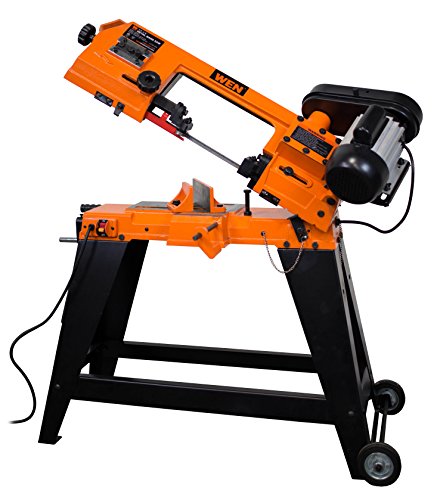
Automatic shut-off turns the band saw off after a cut has been completed

Ideal for metal cutting: Equipped with 10 Amp motor deliver reliable power for cutting various metal, no sparks, no burrs, and lower noise.
Choose a Band Saw When
- You are cutting bar, tube, pipe, angle, channel, beam, billet, or bundled stock.
- The cut is straight or mitered rather than a complex 2D profile.
- A square face, repeatable length, and no thermal HAZ matter.
- The next operation is welding, machining, facing, or assembly with little edge cleanup.
- You want automatic feeding or repeated cut-to-length production.
- Your shop does not have the power, air, spark-control, or ventilation setup needed for plasma.
Choose a Plasma Cutter When
- You are cutting electrically conductive plate or sheet.
- You need holes, slots, brackets, signs, artwork, contours, or irregular profiles.
- Fast travel and CNC nesting are more important than a saw-square edge.
- The material is too large or awkward to pass through a saw’s capacity.
- You can manage electrical, air or gas, fume, UV, noise, and hot-work hazards.
- The selected system has a recommended cut rating and duty cycle suited to your normal workload.
Consider Another Process When
Neither tool is ideal for every part. A cold saw may be better for fast, highly repeatable cutoffs on smaller stock. Laser can offer fine detail and high speed on suitable sheet thicknesses. Waterjet can produce complex profiles without a thermal HAZ. Oxyfuel remains useful for very thick carbon steel. Compare the finished-part requirement, not just the cutting step.
A Practical Buying Checklist
- List your common materials: Include alloy, coating, form, smallest thickness, and largest section.
- Define the finished edge: State acceptable taper, squareness, roughness, burr or dross, and HAZ.
- Estimate the real batch: Count pieces, profiles, pierces, stock changes, and setup frequency.
- Check infrastructure: Confirm electrical service, compressed air or gas, ventilation, floor space, material handling, and guarding.
- Request sample cuts: Use your actual material and inspect the part after the normal cleanup process.
- Calculate cost per finished part: Include labor, consumables, finishing, scrap, maintenance, and handling.
Frequently Asked Questions
How portable are entry-level plasma cutters versus benchtop band saws?
A compact plasma cutter can be easy to carry, but the complete setup may also include torch leads, a work cable, compressed air or gas, filters, PPE, and suitable power. A benchtop horizontal band saw is heavier and normally stays on a stand, while a portable band saw is often easier for tube and structural work in the field. Compare the full working system, not the power unit alone.
What power requirements differ between plasma cutters and band saws?
Power requirements depend on the model. Many small band saws use common single-phase shop power. Professional plasma systems may require higher-current single-phase or three-phase service, and their output and duty cycle can change with input voltage. Plasma also needs the specified air or gas flow and pressure. Verify the nameplate and manual before purchase.
How do maintenance schedules compare over a year of weekend use?
There is no reliable universal calendar. Inspect either tool before use and follow its manual. A band saw needs blade, guide, tension, wheel, vise, chip-brush, and coolant checks. A plasma cutter needs consumable, torch, lead, air-quality, filter, grounding, and ventilation checks. Actual replacement intervals depend on starts, cut time, material, settings, and maintenance quality.
Can either tool integrate with CNC or digital templates easily?
Plasma integrates naturally with 2D CNC tables, CAD/CAM files, nesting software, and torch-height control. Automatic band saws use CNC or NC controls mainly for feed length, quantity, miter angle, clamping, and cut cycles. They are excellent for programmed cutoffs but do not replace a CNC plasma table for arbitrary plate profiles.
Can a band saw cut curves like a plasma cutter?
A vertical band saw can cut curves when the blade width, tooth pattern, throat depth, and minimum radius suit the shape. It cannot pierce an enclosed internal hole without an entry cut or blade-welding setup. Plasma can start inside plate and is better for tight contours, holes, and large freeform profiles.
What training or skill level is needed for consistent results?
Both tools require machine-specific training. Band saw users must understand blade selection, clamping, feed, guarding, and stock handling. Plasma users must also understand electrical safety, air or gas quality, consumables, cut charts, torch height, UV protection, fume control, and fire prevention. Competence should be based on demonstrated safe operation, not a fixed number of practice hours.
Which tool is faster?
Plasma is usually faster for cutting profiles from plate, especially with CNC nesting. A band saw can be faster overall for repeated bar, tube, or bundle cutoffs because it clamps and feeds the stock automatically and may leave less edge cleanup. Compare total cycle time from loading through finished-part inspection.
Which tool produces a better weld-ready edge?
A properly set band saw often leaves a square, cool edge that needs little more than burr removal. Plasma can also produce weld-ready cuts, but the result depends on gas, amperage, speed, consumables, bevel, oxide, dross, and the welding procedure. Clean and inspect either edge before welding.
Conclusion
A band saw is the practical winner for straight, repeatable cuts in bar, tube, structural profiles, and solid stock. It avoids a thermal HAZ and often reduces edge cleanup. A plasma cutter is the better tool for rapid holes, contours, and freeform shapes in conductive plate. It also offers strong CNC nesting potential.
Do not base the decision on universal tolerance, kerf, price, maintenance, or thickness claims. Compare specific machines using your actual material, required finish, production volume, infrastructure, and cost per finished part. When possible, request sample cuts before buying.
Sources
- Hypertherm: Troubleshooting plasma cut quality — factors affecting dross, angularity, incomplete cuts, and hole quality.
- Hypertherm: Powermax45 SYNC specifications — example of recommended, severance, pierce, power, and duty-cycle ratings.
- Hypertherm Safety and Compliance Manual — electric shock, fumes, gas-cylinder, noise, fire, and PPE guidance for plasma systems.
- OSHA: Welding, Cutting, and Brazing Hazards and Solutions — metal fume, UV, burns, eye damage, and electrical hazards.
- OSHA: Band Saw Machine Guarding — blade guarding, guide adjustment, feed-roll guarding, and point-of-operation safety.
- KASTO: KASTOwin A 4.6 automatic band saw — example of automated batch cutting for solids, tubes, and profiles.