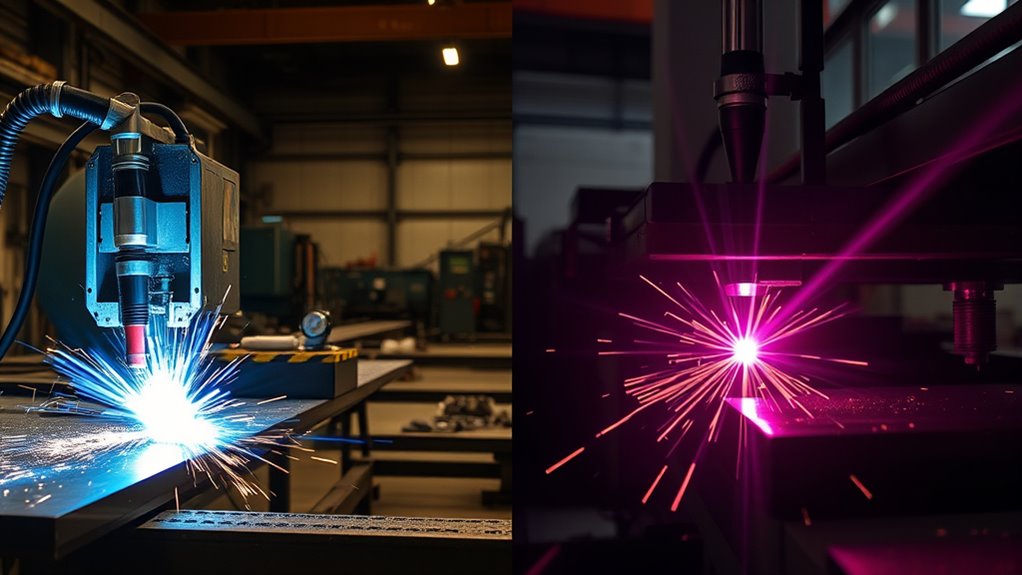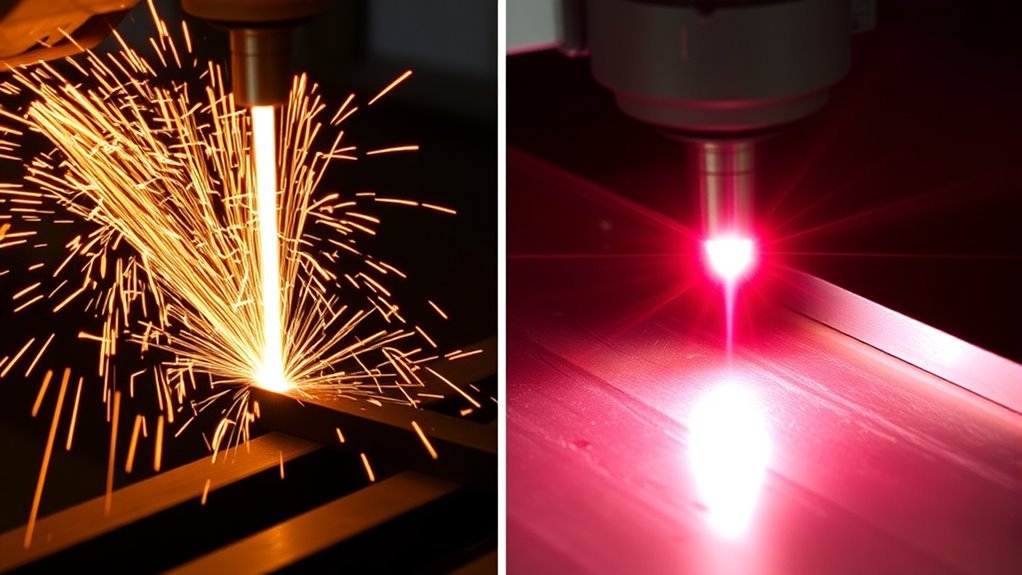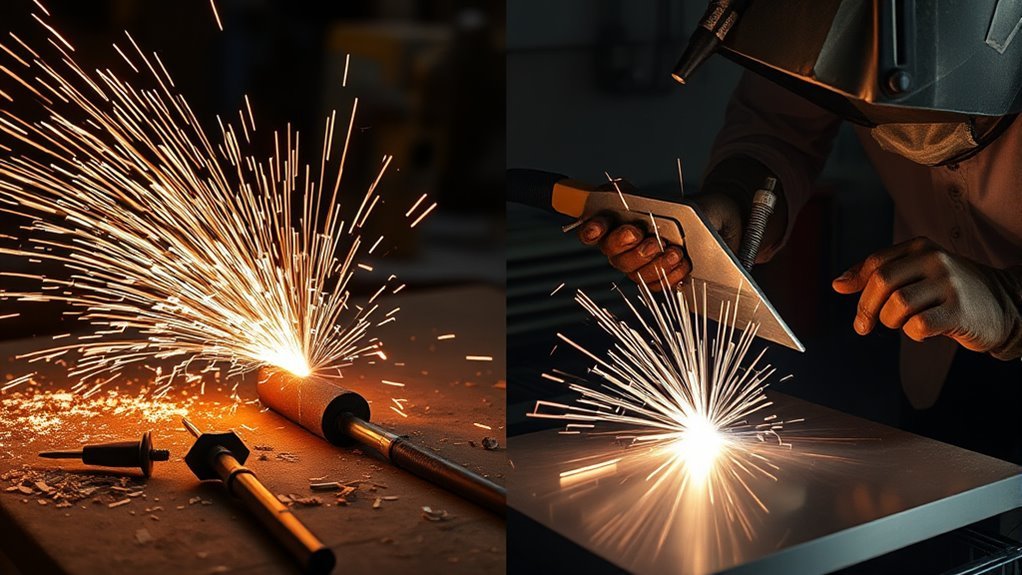
Choosing between a plasma cutter and a TIG welder starts with one simple question: do you need to cut metal or join it? A plasma cutter separates electrically conductive metal with a high-heat plasma arc. A TIG welder joins metal with a controlled arc, a tungsten electrode, and shielding gas. Both tools can be precise, but they solve very different shop problems.
Quick Answer
Use a plasma cutter when you need fast, accurate cuts in steel, stainless steel, aluminum, copper, or other conductive metals. Use a TIG welder when you need clean, controlled welds on thin or precision parts. Plasma cuts pieces apart; TIG joins pieces together.
Key Takeaways
- Plasma cutters are for cutting electrically conductive metals quickly, especially plate, sheet, brackets, tabs, and shapes.
- TIG welders are for welding when appearance, heat control, and clean weld quality matter.
- Plasma edge quality depends on amperage, travel speed, standoff, gas pressure, consumable condition, and material thickness.
- TIG weld quality depends on clean base metal, steady torch control, proper shielding gas, correct tungsten prep, and heat control.
- The right choice is usually not either/or: many fabrication shops use plasma to cut parts and TIG to weld the finished assembly.
Plasma Cutter vs TIG Welder: Core Difference
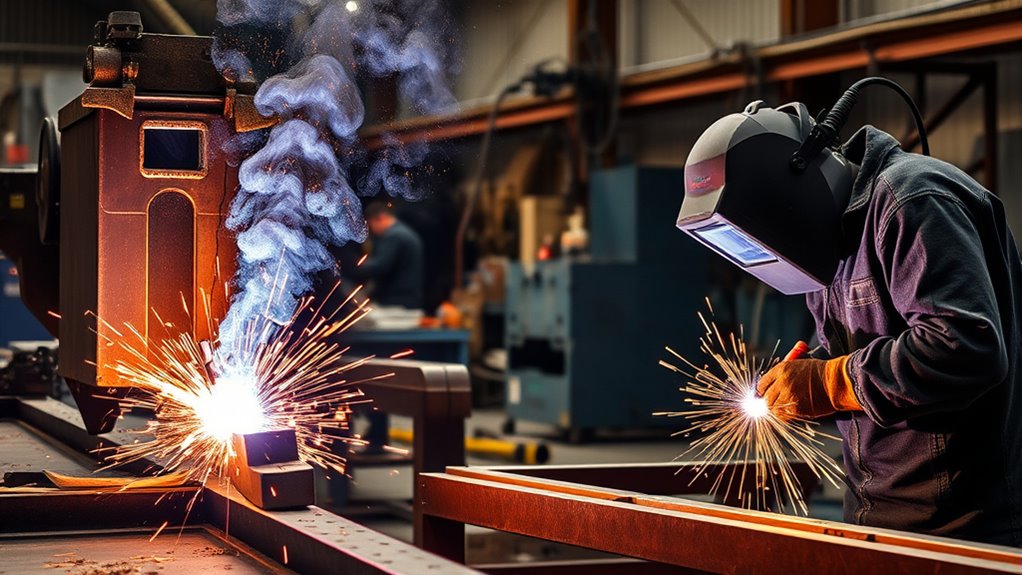
A plasma cutter uses a focused arc and high-speed gas to melt and blow metal out of the cut path. It is best for cutting profiles, trimming plate, opening holes, cutting brackets, and preparing parts before welding. Plasma cutting works only on electrically conductive materials.
A TIG welder, also called GTAW or gas tungsten arc welding, uses a non-consumable tungsten electrode to create a weld pool. Argon or helium shielding gas protects the weld area from air contamination. TIG is best for clean welds on stainless steel, aluminum, chromoly, titanium, copper alloys, and thin-gauge parts.
| Feature | Plasma Cutter | TIG Welder |
|---|---|---|
| Main job | Cuts metal apart | Joins metal together |
| Best output | Clean cut edge with a kerf | Clean, controlled weld bead |
| Materials | Conductive metals such as steel, stainless, aluminum, brass, and copper | Most weldable metals, especially stainless, aluminum, titanium, and thin steel |
| Speed | Fast cutting, especially with templates or CNC | Slower, but highly controlled |
| Setup needs | Power, work clamp, torch consumables, and clean dry air or cutting gas | Power, torch, tungsten, shielding gas, filler rod, and clean workpieces |
| Best for | Fabrication cuts, plate work, brackets, repair trimming, CNC profiles | Precision welds, thin material, visible welds, stainless and aluminum projects |
How Plasma Cutters and TIG Welders Work
Plasma cutting creates an electrical arc through gas and turns that gas into plasma. The torch forces the hot plasma through a small nozzle, melting the metal in a narrow path. The high-speed gas stream then pushes molten metal out of the kerf, which is the slot left by the cut.
TIG welding works differently. The tungsten electrode makes the arc but does not melt into the joint under normal use. You control the weld pool with torch angle, arc length, amperage, travel speed, and filler rod. Shielding gas protects the hot weld from oxygen and moisture, which helps prevent porosity and contamination.
Warning: Both tools are hot-work equipment. Wear the correct helmet lens shade, safety glasses, gloves, flame-resistant clothing, and hearing protection as needed. Use ventilation, keep flammables away, and never cut or weld on closed containers, fuel tanks, or unknown coated metals without proper professional controls.
Cut Edge Quality vs Weld Bead Finish
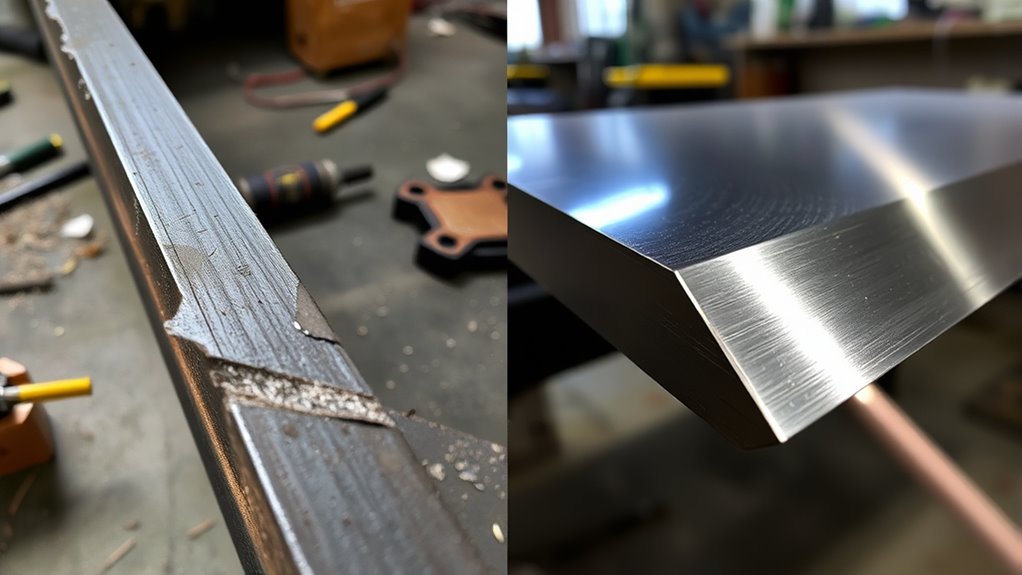
Plasma cutters and TIG welders should not be judged by the same finish standard. A plasma cutter leaves a cut edge. A TIG welder leaves a weld bead. Good plasma work gives you a square, smooth edge with little dross. Good TIG work gives you a clean, even bead with proper fusion and little discoloration.
Plasma cut quality depends on the machine setting, torch standoff, travel speed, gas pressure, material thickness, and consumable condition. If the torch moves too slowly, the edge can collect dross. If it moves too fast, the cut may not fully separate. A worn nozzle or wet air can also make the edge rough.
TIG finish depends on clean material, the right tungsten, steady gas coverage, and heat control. Oil, moisture, paint, mill scale, or poor gas shielding can cause porosity, soot, oxidation, and weak welds.
Edge Smoothness Comparison
Use this comparison when the visible result matters:
| Result | Plasma Cutting | TIG Welding |
|---|---|---|
| Surface left behind | Cut edge | Weld bead and heat tint |
| Common defect | Dross, bevel, rough kerf, incomplete cut | Porosity, tungsten contamination, lack of fusion, overheating |
| Cleanup needed | Often light grinding or deburring | Usually brushing or passivation for stainless, depending on finish needs |
| Best appearance use | Clean part profiles and templates | Visible welds on stainless, aluminum, titanium, and custom fabrication |
Finish Quality Assessment
If you need a decorative metal sign, bracket, gusset, or sheet-metal profile, plasma cutting is usually the better tool. If you need a clean joint on an exhaust tube, tank, intercooler pipe, bike frame, stainless bracket, or aluminum part, TIG welding is usually the better tool.
The mistake is expecting one machine to do both jobs well. A plasma cutter can make the parts. A TIG welder can assemble them. In many shops, the cleanest workflow is to cut with plasma, deburr the pieces, clean the joint area, and then weld with TIG.
Pro Tip: For TIG-ready plasma-cut parts, leave a little material for cleanup on critical edges. Then grind or file to final fit so the TIG weld starts on clean, bright metal instead of dross or oxide.
Cost and Budget Considerations
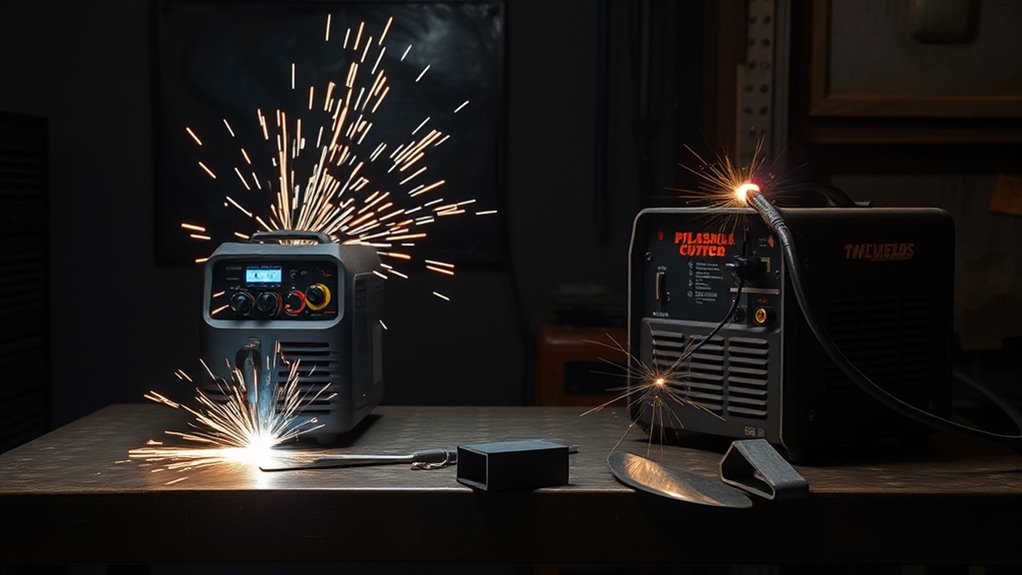
Do not compare only the sticker price. Compare the full setup. A small plasma cutter may seem simple, but it often needs enough electrical capacity, clean dry air, replacement tips, electrodes, nozzles, cups, and moisture control. A TIG welder needs shielding gas, tungsten electrodes, cups, collets, filler rods, a regulator, and often a foot pedal or fingertip control.
Plasma cutters can save labor when you cut many parts or work with plate often. TIG welders can save rework when weld quality, appearance, or heat control matters. The cheaper tool is the one that matches the work you actually do.
Products Worth Considering

Package Include: 10 Shield Cups, 50 Nozzles, 20 Swirl Baffle, and 30 Electrodes.

[Achieve Precise Cuts] PT31 Plasma Cutting Consumables – Your Essential Tool for Efficient Cutting! Whether you're working with sheet metal, steel, or any other material, superior cutting performance ensure clean, accurate, and smooth cuts.

High-Quality Material:Made of high quality material to ensure a longer lifespan and superior performance.
Initial Investment Costs
Entry-level machines cost far less than industrial machines, but capability changes quickly with price. A hobby plasma cutter may handle light sheet and occasional plate work. A production CNC plasma system costs much more because it adds a cutting table, torch height control, software, ventilation, and higher-duty power.
TIG welders also vary widely. Basic DC TIG units suit steel and stainless. AC/DC TIG machines cost more but are the common choice for aluminum because they give the control needed to manage aluminum oxide and heat input.
Maintenance and Upkeep
Plasma maintenance focuses on consumables and air quality. Inspect the electrode, nozzle, shield cup, swirl ring, torch lead, work clamp, and air filter. Wet or dirty air shortens consumable life and can hurt cut quality.
TIG maintenance focuses on gas purity, tungsten condition, torch parts, cable condition, and clean connections. A contaminated tungsten can make the arc wander and leave inclusions in the weld. A leaking gas hose or drafty work area can ruin the shielding gas coverage.
Consumable Expenses
Plasma consumables include electrodes, nozzles, cups, shields, and air-system filters. TIG consumables include tungsten electrodes, ceramic cups, collets, gas lenses, filler rod, and shielding gas. Plasma may use consumables faster during heavy cutting. TIG may use more gas and prep time, especially on stainless, aluminum, and titanium work.
Material Compatibility and Versatility
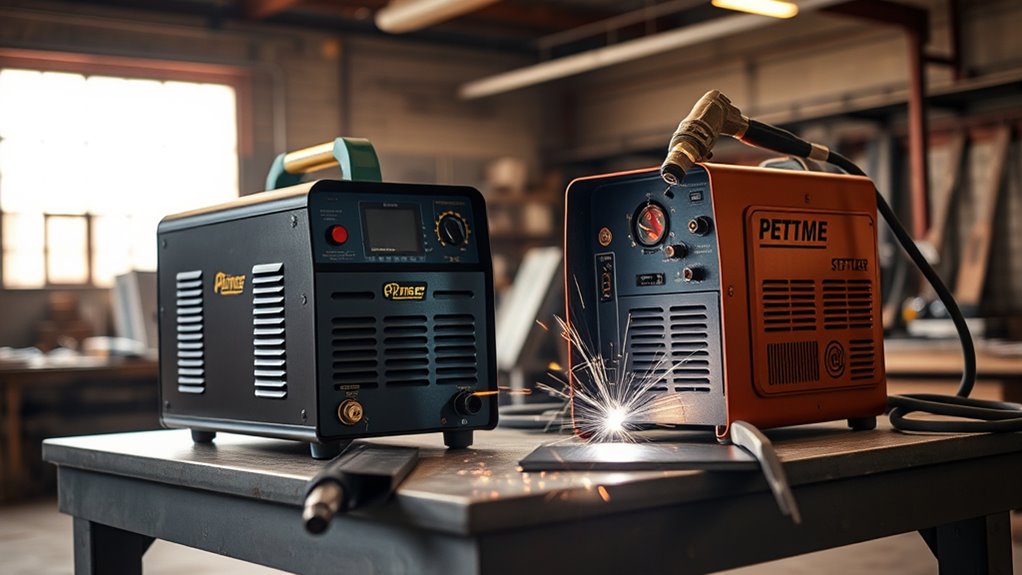
Plasma cutters work on electrically conductive metals. That includes mild steel, stainless steel, aluminum, copper, brass, and many alloys. They do not cut wood, plastic, glass, ceramic, or non-conductive materials in the same way. They also do not weld two parts together.
TIG welders can join many weldable metals, including stainless steel, mild steel, aluminum, magnesium, titanium, nickel alloys, and copper alloys. TIG is especially useful when the part is thin, the weld will be visible, or the metal needs careful heat control.
Thickness is machine-dependent for both tools. A plasma cutter’s real capacity depends on amperage, torch design, air or gas supply, duty cycle, and the cut quality you expect. A TIG welder can handle more than thin sheet, but thicker material often requires beveling, preheat when appropriate, multiple passes, and more time.
Products Worth Considering

【Born for Aluminum Welding】AC TIG mode is perfect for dealing with Aluminum and Aluminium alloy.

POWERFUL 7-IN-1 TIG WELDER AC/DC: The Welder is capable of welding with DC TIG / DC Pulse TIG / AC TIG / AC Pulse TIG / AC Pulse TIG Square / AC Pulse TIG Triangular / STICK /SPOT TIG Methods. AC TIG is used in finesse welding various aluminum alloys, magnesium alloys, and other non-ferrous metals. DC TIG provides low-temperature control. You need precise welding for various types of steel: stainless steel, carbon steel, copper.

Comes with lift TIG torch, E6013 welding rods and welding gloves, capable of either Stick welding or Lift TIG welding.
Speed and Efficiency in Operation
Plasma cutting is usually much faster than TIG when the job is separating metal. You can follow a line, guide, template, or CNC path and cut shapes in seconds or minutes. That speed makes plasma useful for brackets, repair patches, plate layouts, and repetitive fabrication work.
TIG welding is slower because the goal is different. You are controlling the puddle, filler rod, torch movement, arc length, and heat input. That slower pace is a benefit when you need precision, but it is not efficient for rough cutting or quick part separation.
Plasma is the speed tool for cutting. TIG is the control tool for welding. Use the process that matches the job instead of forcing one machine to do both.
Skill Level and Training Requirements
Plasma cutting is easier to learn at a basic level, but good results still require skill. You need to set amperage correctly, maintain torch standoff, move at the right speed, use clean dry air, and keep the work clamp secure. A shaky hand, poor ground, worn nozzle, or wrong speed can ruin the cut.
TIG welding has a steeper learning curve. You may need to coordinate both hands and a foot pedal while watching the weld pool. You also need to clean the metal, choose the right tungsten, set polarity, manage filler rod, and protect the weld from drafts. TIG rewards practice because small changes in angle, distance, and heat show up immediately in the bead.
Industrial Applications and Use Cases
Plasma cutters are common in fabrication shops, automotive repair, metal art, HVAC work, farm repair, salvage, construction, and CNC cutting. They are helpful when you need to cut sheet or plate quickly without using a saw, grinder, or oxy-fuel torch.
TIG welders are common in aerospace, motorsports, food-grade stainless work, sanitary tubing, custom exhaust fabrication, bicycle frames, aluminum tanks, and visible stainless work. They are chosen when the finished weld must be clean, controlled, and strong.
- Choose a plasma cutter for cutting brackets, tabs, sheet metal, plate profiles, rusty panels, repair patches, and CNC shapes.
- Choose a TIG welder for thin stainless, aluminum, titanium, chromoly, visible welds, tubing, tanks, and precise repair work.
- Use both when you need to cut parts first and then weld them into a finished assembly.
Equipment Setup and Maintenance Needs
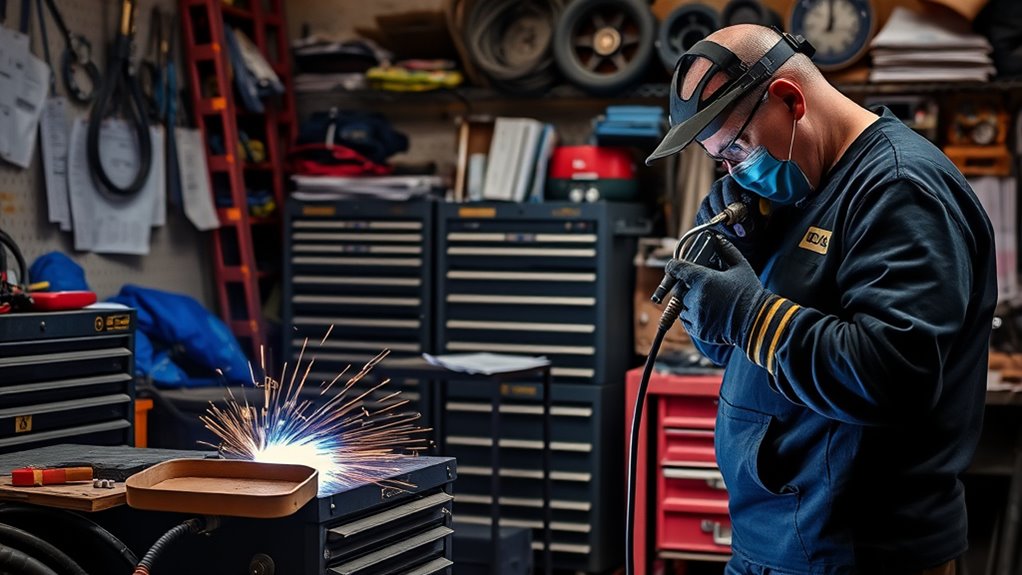
A plasma setup usually includes the machine, torch, work clamp, consumables, power supply, and clean dry air or a specified cutting gas. Many small plasma cutters run on compressed air, but the air must be dry enough to protect the consumables and keep the arc stable.
A TIG setup usually includes the welder, torch, work clamp, tungsten, cup, collet, shielding gas cylinder, regulator, filler rod, and amperage control. For aluminum, you usually want an AC-capable TIG machine. For steel and stainless, DC TIG is common.
Setup Requirements Overview
For plasma cutting, check the material type, thickness, amperage range, air pressure, torch parts, and ground connection before you cut. Match the nozzle and electrode to the amperage range. Keep the torch at the correct distance from the work unless your consumables are designed for drag cutting.
For TIG welding, clean the base metal until it is bright and free of oil, paint, moisture, and oxide. Set the correct polarity, select the proper tungsten type and size, adjust shielding gas flow, and use filler rod that matches the base metal and service conditions.
Routine Maintenance Essentials
For plasma cutters, replace worn electrodes and nozzles before they damage cut quality. Drain the compressor, check filters, inspect the torch lead, and keep the work clamp clean. A poor clamp can make the arc unstable and shorten consumable life.
For TIG welders, inspect cables, gas hoses, torch parts, and regulator fittings. Grind or replace contaminated tungsten. Keep filler rods clean and stored dry. If welds look gray, sooty, porous, or sugary, check shielding gas coverage and metal cleanliness before changing random settings.
Note: Cleanliness matters for both processes. Plasma can tolerate dirt and rust better than TIG, but clean metal still improves cut quality. TIG is much less forgiving and usually needs bright, clean metal for reliable welds.
Future Trends and Technological Advancements
Plasma cutting continues to improve through better inverter power supplies, CNC controls, nesting software, torch height control, and longer-lasting consumables. These upgrades help shops cut more accurately with less waste and less cleanup.
TIG welding is improving through pulse controls, AC wave-shape adjustment, data logging, orbital TIG systems, automation, and training tools. These features help with repeatability, heat control, and operator consistency, especially in production and code-sensitive work.
For small shops, the most useful trend is not just automation. It is easier setup. Machines with clearer interfaces, stored programs, and better process guidance help newer users avoid basic mistakes while still giving experienced fabricators control.
Frequently Asked Questions
Are there safety concerns with plasma cutters and TIG welders?
Yes. Both create intense arc light, heat, hot metal, and electrical hazards. Plasma cutting can also throw sparks and produce noise, fumes, and dross. TIG welding can expose you to UV radiation, ozone, shielding gas hazards, and hot workpiece burns. Use proper PPE, ventilation, fire control, and training.
How do humidity and temperature affect both tools?
Humidity can add moisture to compressed air and shielding gas areas, which can hurt plasma consumable life and TIG weld quality. Cold or hot metal can also change fit-up and heat response. Keep air dry, store filler rods properly, and bring critical parts to a stable shop temperature when possible.
Can plasma cutters and TIG welders be used underwater?
Do not use standard shop plasma cutters or TIG welders underwater. Underwater cutting and welding require specialized commercial-diving equipment, procedures, power controls, and training. Most underwater welding is wet stick welding, and common underwater cutting methods are oxygen-arc or shielded metal-arc cutting.
Which tool is louder?
Plasma cutting is usually louder because the arc and air stream create a sharp cutting sound, especially at higher amperage. TIG welding is often quieter, but shop noise still depends on amperage, material, ventilation, grinders, compressors, and the surrounding workspace. Use hearing protection when noise is uncomfortable or sustained.
Which tool uses more power?
It depends on the machine size, amperage, duty cycle, and job. Plasma cutters can draw high power during cutting and may also require a compressor. TIG welders draw power based on welding amperage and duty cycle. Compare the actual input rating on the machine nameplate, not just the process name.
Should I buy a plasma cutter or a TIG welder first?
Buy the tool that solves your main bottleneck. If you already have a way to weld but cutting parts is slow, buy a plasma cutter. If you can cut parts but need clean welds on stainless, aluminum, tubing, or visible joints, buy a TIG welder.
Conclusion
A plasma cutter and a TIG welder are not competing versions of the same tool. A plasma cutter is the better choice when you need fast, accurate metal cutting. A TIG welder is the better choice when you need clean, controlled welding. For fabrication, the strongest workflow is often both: cut the parts with plasma, clean the edges, then TIG weld the assembly where precision and appearance matter.
Sources
- Plasma cutting process overview — supports plasma cutting principles, conductive materials, compressed gas use, cut capacity context, and cut-quality variables.
- Gas tungsten arc welding overview — supports TIG/GTAW process definition, shielding gas, tungsten electrode, materials, quality factors, and equipment needs.
- OSHA 1910.133 Eye and Face Protection — supports eye and face protection requirements for radiant energy during welding and cutting.
- OSHA Welding, Cutting, and Brazing — supports hot-work safety awareness for welding and cutting operations.
- Underwater cutting and welding overview — supports the FAQ correction about specialized underwater processes and hazards.