Choosing between plasma cutting and oxy-acetylene cutting affects safety, speed, cut quality, material range, portability, and operating cost. Plasma is usually the better shop tool for thin and medium conductive metals, while oxy-acetylene remains valuable for very thick carbon steel and field work without electrical service. The best choice depends on the metal, thickness, power available, and finish you need.
Quick Answer
Plasma cutting is usually better for speed, precision, and cutting mild steel, stainless steel, aluminum, and other conductive metals. Oxy-acetylene is usually better for very thick carbon steel and remote work without electricity. Neither method is automatically safe; each requires training, ventilation, fire control, and the correct protective equipment.
Key Takeaways
- Choose plasma for fast, narrow-kerf cuts on thin to medium electrically conductive metal.
- Choose oxy-acetylene for very thick carbon steel, especially where power and compressed air are unavailable.
- Conventional oxy-fuel cutting does not work well on stainless steel or aluminum.
- Compare rated production capacity, not only a machine’s maximum severance claim.
- Plasma avoids fuel-gas handling but still creates electrical, ultraviolet, fume, noise, fire, and hot-metal hazards.
- Oxy-acetylene requires strict cylinder, hose, regulator, backflow, flashback, and fire-prevention controls.
What’s in This Article
- How Each Cutting Process Works
- Key Differences in Safety
- Quick Verdict: Plasma vs Oxy-Acetylene
- Side-by-Side Comparison
- Understanding Cutting Capacity Ratings
- Analyzing Cutting Speed
- Evaluating Initial Costs
- Understanding Ongoing Expenses
- Comparing Metal Cutting Capabilities
- Precision and Cut Quality
- Setup and Operation Time
- Portability and Power Requirements
- Common Problems That Change Results
- Choose Plasma Cutting If…
- Choose Oxy-Acetylene If…
- Choosing the Right Tool for Your Needs
- Frequently Asked Questions
- Safety Disclaimer
- Conclusion
- Sources
How Each Cutting Process Works
How Plasma Cutting Works
A plasma cutter sends an electric arc through a gas, usually compressed air in a handheld system. The gas becomes an electrically conductive plasma jet that melts a narrow path through the workpiece and blows the molten metal out of the kerf. Because the process needs an electrical circuit, it cuts only electrically conductive materials.
How Oxy-Acetylene Cutting Works
An oxy-acetylene torch first heats carbon steel to its ignition temperature. A cutting-oxygen jet then reacts with the hot iron and pushes the resulting oxides out of the cut. This oxidation reaction is why conventional oxy-fuel cutting works well on carbon steel but poorly on stainless steel, aluminum, and many other alloys.
Key Differences in Safety
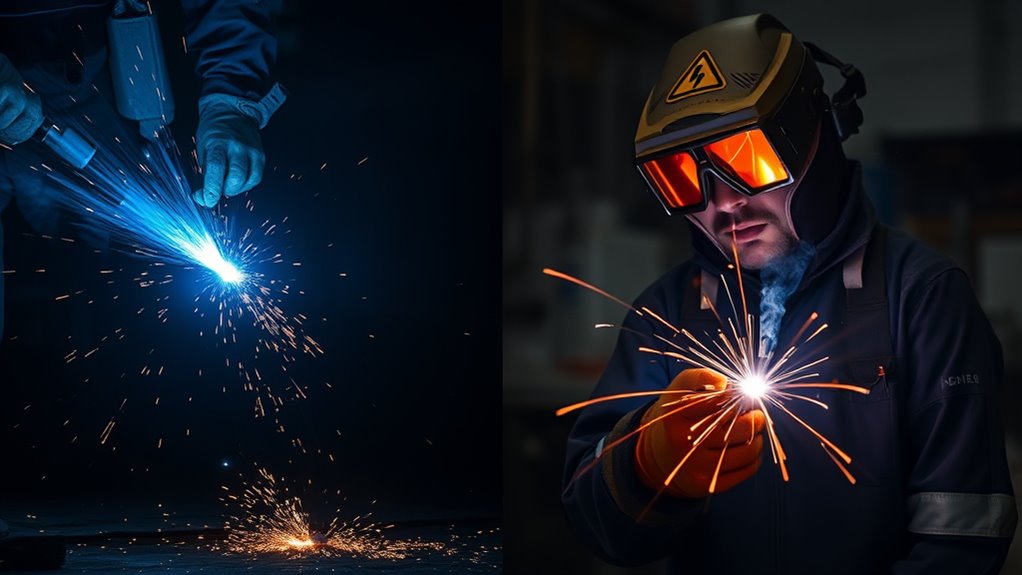
Plasma cutting removes the fuel-gas flame and the need for acetylene cylinders, so it eliminates gas leaks and torch flashbacks from that process. That does not make plasma risk-free. The Occupational Safety and Health Administration identifies metal fumes, ultraviolet radiation, burns, eye damage, electric shock, fire, and other hazards in welding and cutting work.
Plasma often creates a narrower heat-affected zone than oxy-fuel on thin and medium material. This can reduce distortion and metallurgical changes near the edge, but the workpiece, sparks, slag, and cut parts can still cause severe burns.
Plasma removes fuel-gas hazards, while oxy-acetylene removes dependence on electrical power. The safer choice is the system whose hazards your work area and training can control correctly.
Oxy-acetylene cutting requires careful gas handling, leak checks, sound hoses and regulators, approved backflow and flashback protection, correct tip selection, and secure cylinder storage. Oxygen can greatly accelerate combustion, so oil and grease must never contact oxygen equipment.
Warning: Never cut a drum, tank, pipe, or closed container unless a qualified procedure has confirmed that it is clean, vented, and free of flammable or toxic residues. Containers can explode even when they appear empty.
Hot-Work and Cylinder Checklist
- Remove or shield combustible material before cutting and keep suitable fire-extinguishing equipment ready.
- Use a fire watch when the work conditions require one. OSHA’s general hot-work requirements identify conditions involving combustibles within 35 feet and require continued fire watching after work when applicable.
- Use ventilation or local exhaust suited to the base metal, coatings, and work area. Never assume outdoor work automatically has enough ventilation.
- Wear eye and face protection with the shade specified by the equipment maker and applicable safety rules, plus flame-resistant clothing, gloves, hearing protection, and safety footwear.
- Keep plasma torches, leads, clamps, insulation, and grounding connections in safe condition. Do not operate standard handheld plasma equipment in rain, standing water, or underwater.
- Secure gas cylinders upright, protect valves, separate stored oxygen from fuel gas or combustibles as required, and keep oxygen equipment free of oil and grease.
- Follow the torch, regulator, flashback-arrestor, and check-valve manufacturer’s instructions. OSHA’s oxygen-fuel gas standard also prohibits using acetylene above 15 psig.
Quick Verdict: Plasma vs Oxy-Acetylene
Choose plasma cutting if you want fast setup, clean cuts, and broad versatility across mild steel, stainless steel, aluminum, and other conductive metals. It works best when the machine’s rated capacity matches the material and you have reliable electrical power plus the required air supply.
Choose oxy-acetylene cutting if you need to cut very thick carbon steel in the field. It also makes sense when electrical power is limited and a wider kerf or rougher edge is acceptable.
Side-by-Side Comparison
| Factor | Plasma Cutting | Oxy-Acetylene Cutting |
|---|---|---|
| Best use | Fast, clean cuts on thin to medium conductive metal | Very thick carbon steel and flame-heating work |
| Materials | Mild steel, stainless steel, aluminum, copper, and other conductive metals within machine limits | Primarily carbon steel and some low-alloy steels suited to the oxidation process |
| Main safety concerns | Electric shock, arc radiation, fumes, noise, sparks, fire, and hot metal | Fuel gas, oxygen-enriched fire, leaks, flashback, cylinders, fumes, sparks, and hot metal |
| Setup time | Usually fast with suitable power and air | More steps for cylinders, regulators, hoses, leak checks, tip, and flame adjustment |
| Cut quality | Narrower kerf and less heat spread on many thin and medium cuts | Wider kerf and more heat input; quality can be strong on properly prepared carbon steel |
| Portability | Compact machine, but power and air must be available | No electricity needed for cutting, but cylinders are heavy and require safe transport |
| Operating inputs | Electricity, air or process gas, and torch consumables | Oxygen, acetylene or another approved fuel gas, tips, regulators, and hose-system maintenance |
| Other functions | Cutting, piercing, beveling, and plasma gouging when equipped | Cutting, heating, bending, brazing, and gas welding with the correct equipment |
Understanding Cutting Capacity Ratings
Do not compare machines by a single maximum-thickness number. Plasma manufacturers may list a recommended or rated cut, a quality cut, and a maximum severance cut. A severance rating means the machine can separate the metal slowly, often with a rough edge and heavy cleanup. It does not mean the machine is productive at that thickness.
The Miller handheld plasma guide explains that cutting capacity varies by manufacturer and distinguishes rated cutting from maximum severance. Compare the cut-speed chart, duty cycle, input power, air demand, and expected edge quality at the thickness you cut most often.
Note: Thickness capability is machine-specific. A small handheld plasma cutter and a high-amperage mechanized plasma system should not be treated as one category.
Analyzing Cutting Speed
Plasma cutters often hold a clear speed advantage on thin and medium steel because they start without a preheat cycle. Hypertherm’s plasma-versus-oxy-fuel comparison reports large speed gains on thinner material, but actual travel speed depends on the machine, amperage, material, gas, consumables, and required cut quality.
Oxy-fuel cutting can still be productive on thick carbon steel. Its preheat phase slows each start, yet the process can reach thicknesses that exceed the practical capacity of many handheld plasma cutters.
Plasma Cutter Speed
Plasma cutters excel when you need speed on thinner materials. With the right machine and settings, plasma can cut 1/2-inch steel quickly and often outpace oxy-fuel on material around 1 inch thick.
High-amperage plasma systems can also handle thicker plate at useful speeds. Their concentrated arc often limits heat spread, which can reduce distortion and cleanup time.
| Material or Rating | What It Means for Plasma Performance |
|---|---|
| Thin sheet and plate | Usually the strongest speed advantage |
| 1/2-inch steel | Fast with a correctly sized machine and clean consumables |
| 1-inch steel | Often faster than oxy-fuel with sufficient output power |
| 2-inch steel | Depends heavily on machine class; many handheld units are not productive here |
| Severance rating | Slow separation with reduced edge quality and more cleanup |
Oxy-Fuel Cutting Speed
Oxy-fuel cutting offers a different strength: it can cut very thick carbon steel that many small plasma cutters cannot handle. The torch heats the steel to its ignition temperature before the oxygen jet drives the cut, so every pierce includes a preheat delay.
The kerf is usually wider than a plasma kerf, which can increase material loss and cleanup. For heavy plate, demolition, and remote repair, those trade-offs may still make sense.
Speed Efficiency Comparison
Plasma’s speed advantage usually grows as material gets thinner. It also tends to create less dross when the travel speed, amperage, standoff, air supply, and consumables are correct.
On thick carbon steel, compare the specific machines rather than assuming one process always wins. A high-amperage industrial plasma system can be very fast, but its purchase price and power requirements may be far beyond a repair shop’s needs.
Evaluating Initial Costs
Initial cost includes more than the cutter or torch. For plasma, include the machine, correct electrical circuit, air compressor or gas supply, air treatment, consumables, guides, and safety equipment. For oxy-acetylene, include cylinders or deposits, regulators, hoses, torch body, cutting attachment, tips, check valves or flashback protection as required, cart, fire controls, and safety equipment.
A basic oxy-fuel outfit can cost less to start than a professional plasma system, especially when a shop already owns approved cylinders and regulators. A plasma cutter can require a higher initial outlay, particularly when the work needs high amperage, three-phase power, a large compressor, or CNC automation.
Do not rely on generic price ranges. Equipment size, local cylinder policies, electrical work, compressor capacity, and regional gas pricing can change the real startup cost more than the process name does.
Understanding Ongoing Expenses
Ongoing expenses include energy or gas, consumables, maintenance, cylinder handling, air treatment, labor, edge cleanup, and lost time. A cheaper tool can cost more per finished part if it cuts slowly or leaves heavy cleanup.
Gas and Consumable Costs
Oxy-fuel systems use oxygen and fuel gas. Consumption changes with tip size, metal thickness, preheat time, cut length, and operator technique. Tips wear or become damaged, and contaminated seats, hoses, valves, or regulators can create performance and safety problems.
Plasma cutters use electrodes, nozzles, shields, retaining caps, and sometimes swirl rings. Consumable life depends on the system, piercing frequency, air quality, amperage, torch height, and technique. Faster cutting and less grinding can offset consumable cost in production work.
Electricity and Maintenance
Plasma input requirements must match the machine and material. Small dual-voltage models may run on common shop circuits with reduced output on the lower voltage, while larger systems may need dedicated 240-volt or three-phase service.
Plasma also needs the specified air flow and pressure. Dirty, wet, oily, or undersized air can shorten consumable life and reduce cut quality. Oxy-fuel systems avoid electrical input for the cutting reaction but require hose inspections, regulator care, leak tests, clean tips, secure cylinders, and safe gas storage.
Efficiency and Productivity
Efficiency often decides the better long-term value. Plasma can lower cost per finished part when fast travel, narrow kerf, and cleaner edges reduce labor. Oxy-fuel can win when the work is very thick carbon steel and a suitable plasma system would be too costly or power-hungry.
Pro Tip: Compare cost per finished cut. Include setup, cutting, gas or electricity, consumables, grinding, material loss, cylinder trips, and operator time.
Comparing Metal Cutting Capabilities
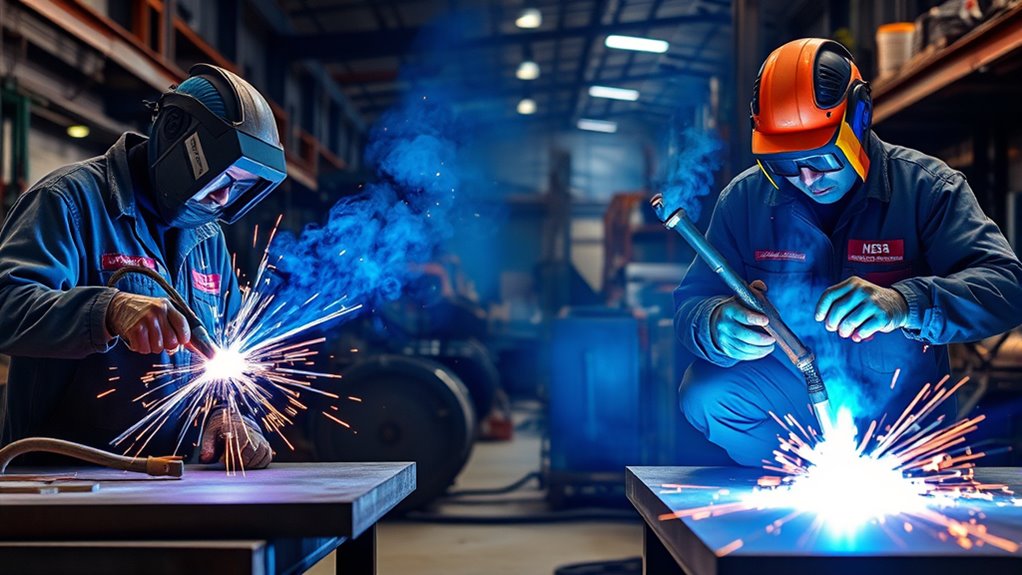
Material type comes first. Plasma can cut electrically conductive metals, including mild steel, stainless steel, aluminum, copper, and brass, provided the machine and consumables suit the job. The Hypertherm cutting-process guide identifies plasma as a process for conductive metals and oxy-fuel as a carbon-steel process.
Conventional oxy-acetylene cutting works best on carbon steel and certain low-alloy steels that support the oxidation reaction. Calling it suitable for all ferrous metal is too broad: stainless steel, cast iron, and high-alloy materials may require different methods or specialized techniques.
Plasma often handles thin to medium thicknesses with fast travel and no preheat. Oxy-fuel can cut much thicker carbon steel, but it runs slower and puts more heat into the plate.
Precision and Cut Quality
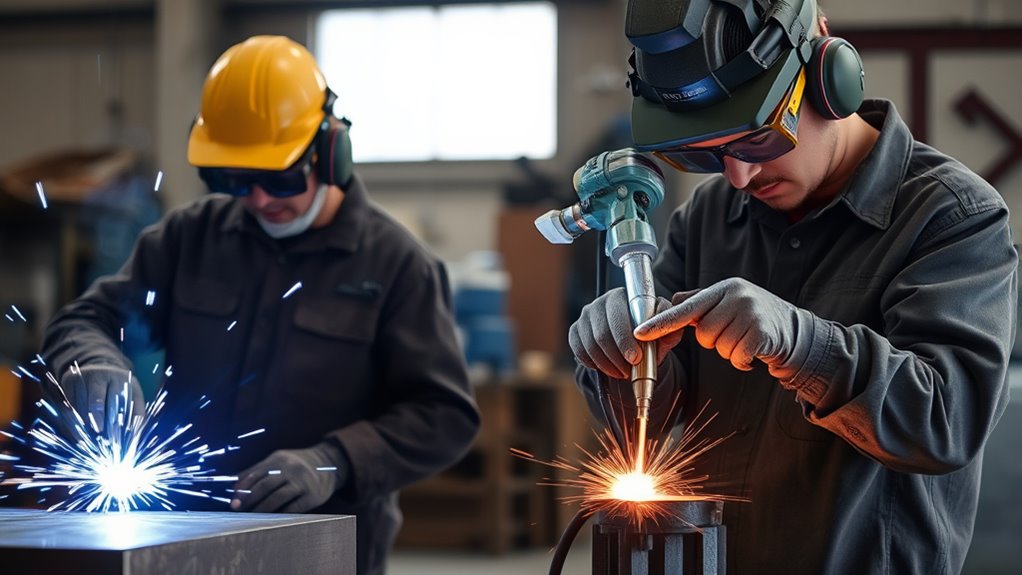
Precision and cut quality matter when parts need clean fit-up, small holes, narrow kerfs, or little grinding. Plasma often gives a narrower kerf and smaller heat-affected zone on thin and medium conductive metal.
A narrow plasma kerf can improve detail and reduce heat spread, but clean results still depend on correct speed, amperage, consumables, torch height, and air supply.
Oxy-acetylene generally creates a wider kerf and larger heat-affected zone. A skilled operator with the correct tip, oxygen pressure, preheat flame, speed, and torch angle can still produce a good square edge on carbon steel, especially at heavier thicknesses.
What Controls Plasma Cut Quality
- Machine output and duty cycle for the metal thickness
- Correct consumable set and consumable condition
- Clean, dry air or the specified process gas
- Correct air pressure, amperage, torch standoff, and travel speed
- A sound work-clamp connection close to the cut
- Correct cut direction when edge squareness matters
What Controls Oxy-Fuel Cut Quality
- Correct cutting tip for the gas and plate thickness
- Clean tip orifices and undamaged seating surfaces
- Gas pressures set from the equipment manufacturer’s chart
- Proper neutral preheat flame and complete preheating
- Steady travel speed, torch angle, and tip distance
- Steel chemistry and surface condition suitable for oxy-fuel cutting
Setup and Operation Time
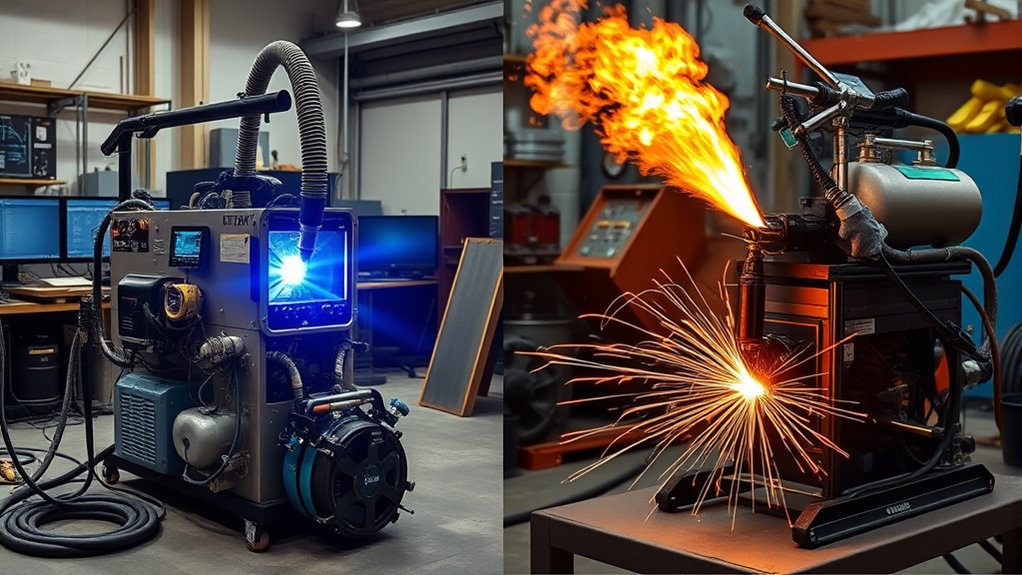
Plasma cutters usually provide faster setup. You connect the specified power and air, inspect the consumables and torch, attach the work clamp, set the output, verify air flow, and start cutting.
An oxy-acetylene system takes more setup steps. You need secure cylinders, correct regulators and hoses, serviceable protective devices, leak checks, the right tip, correct pressures, safe lighting, and flame adjustment.
Plasma also avoids a preheat cycle, which saves time on short cuts, repeated cuts, and jobs with many parts. Oxy-fuel demands more flame control and preheat management, but the same outfit can also heat, bend, braze, and gas-weld when fitted and operated correctly.
Portability and Power Requirements
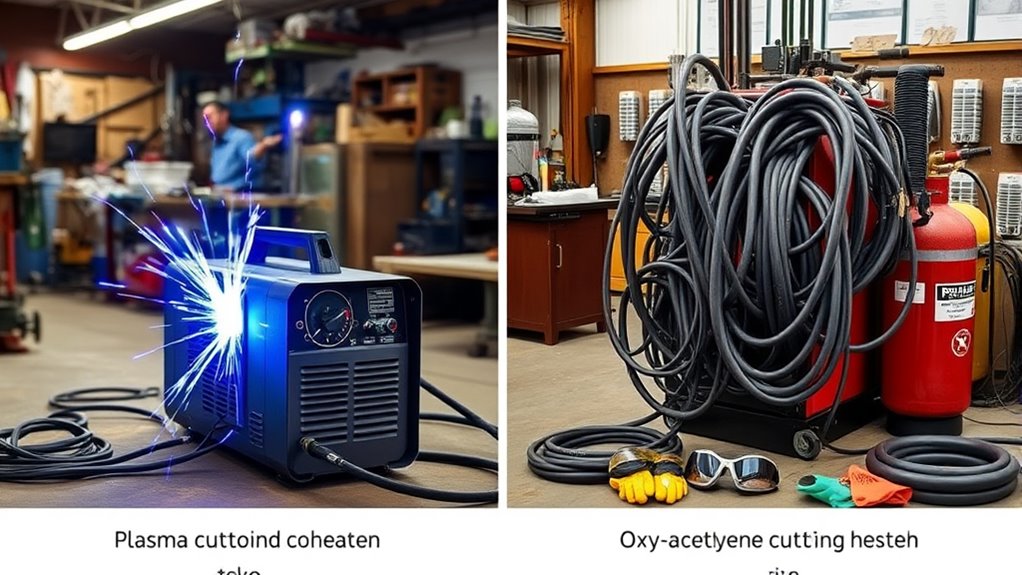
Compact inverter plasma cutters are easy to carry between benches, repair areas, and job sites. The full system may be less portable than the machine looks, however, because it also needs a suitable electrical source and enough clean, dry air.
Some plasma cutters include an air compressor, and others can run from a properly sized generator. Always confirm the required input power, generator output quality, breaker size, air flow, and air pressure in the manual before field use.
Oxy-acetylene relies on cylinders rather than electrical service, which helps in remote field repair and demolition. The trade-off is cylinder weight, bulk, storage, secure transport, regulator protection, and fire risk.
Common Problems That Change Results
Plasma Cutting Problems
- Heavy dross: Travel speed, amperage, standoff, air pressure, or consumables may be wrong.
- Arc stops or will not transfer: Check the work clamp, input power, air flow, torch parts, and safety interlocks.
- Short consumable life: Inspect air quality, piercing technique, torch height, output setting, and consumable compatibility.
- Beveled edge: Check consumables, torch angle, cut direction, speed, and whether the machine is near its capacity limit.
Oxy-Fuel Cutting Problems
- Cut will not start: The steel may not be hot enough, the tip may be wrong or dirty, or the material may not suit conventional oxy-fuel cutting.
- Rough edge or heavy slag: Check travel speed, oxygen pressure, tip distance, preheat flame, and tip condition.
- Popping or backfire: Stop safely and inspect the tip, seating surfaces, pressures, overheating, and gas system before continuing.
- Flashback: Shut down according to training and the equipment manual; do not relight until the cause and protective equipment have been checked by a competent person.
Choose Plasma Cutting If…
Choose plasma cutting if your work calls for speed, repeatability, and cleaner edges. It suits shops that cut sheet metal, plate, stainless steel, aluminum, brackets, repairs, and fabrication parts.
- You cut thin to medium conductive metals.
- You need fast starts without preheating.
- You want a narrow kerf and less cleanup.
- You have reliable power and the specified air supply.
- You want to avoid fuel-gas cylinder handling.
- You may add guides, a machine torch, or CNC cutting later.
Products Worth Considering
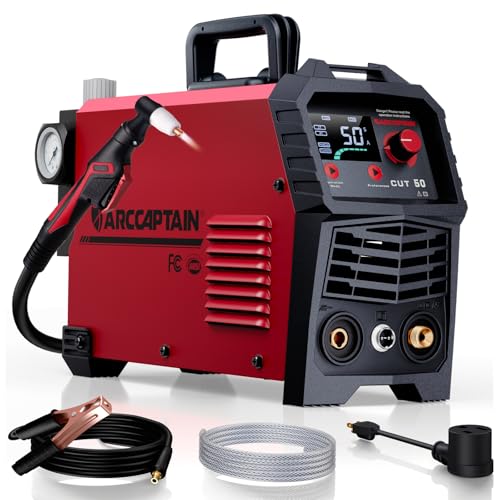
【Powerful Cutting Ability】Switch effortlessly between 110V and 220V for home or workshop use. Achieve professional 1/2" clean cuts on steel, aluminum, and copper with advanced LGBT technology. Perfect for DIY projects and heavy-duty tasks. Recommended maximum cutting thickness: 12mm @ 35A / 110V / 55 PSl; 18mm @ 50A / 220V / 75 PSI. Note: Requires compressed air (compressor sold separately).

【Non-Touch Pilot Arc Function】The ARCCAPTAIN 55A plasma cutter features a pilot arc function. It utilizes a high-frequency non-touch arc starting mode. The torch head does not need to touch the metal plate, reducing energy consumption during non-cutting work, minimizing electrode burning, and extending service life. NOTE: Do not switch voltages until the screen turns off and the fan stops.

CUTTING THICKNESS UP TO 20MM: Featuring a brand-new MCU technology upgrade, the plasma cutter machine has a high degree of internal integration, combining full digitalization for more precise control of cutting parameters such as current and voltage. This results in better cutting effects and improved stability. Cutting thickness: Quality 12mm (1/2"), maximum 20mm (3/4").
Choose Oxy-Acetylene If…
Choose oxy-acetylene cutting when you need strong cutting capacity on very thick carbon steel. It also helps when field conditions make electrical power or compressed air hard to use.
- You cut very thick carbon steel.
- You work in remote areas without suitable electrical power.
- You already have approved, maintained gas equipment and secure cylinder handling.
- You need heating, bending, brazing, or gas-welding functions from the same outfit.
- You can manage gas safety procedures with confidence and training.
Choosing the Right Tool for Your Needs
Choose a plasma cutter when you work with thin to medium conductive metals and need speed, repeatability, narrow kerfs, or cleaner edges. Plasma is also the practical choice when stainless steel and aluminum are common jobs.
Choose oxy-acetylene when your projects center on very thick carbon steel or when you need flame heating, bending, loosening seized parts, brazing, or gas welding. It remains useful where electricity and compressed air are unavailable.
Cost depends on the complete system. Oxy-fuel can cost less up front, while gas refills, cylinder handling, preheat time, and cleanup can raise long-term expense. Plasma needs power, air, and consumables, but faster cutting and less finishing may lower cost per part.
Before buying, write down the metal types, routine thickness, maximum thickness, cuts per week, required edge quality, available power, available air, indoor ventilation, field needs, and secondary uses. Then compare equipment manuals and cut charts against that list.
Note: Many fabrication shops keep both systems because they solve different problems. Plasma handles everyday precision and mixed metals; oxy-fuel handles heavy carbon steel and heating work.
Products Worth Considering

[POWERFUL CUTTING PERFORMANCE] : Get clean, efficient cuts with up to 3/10" clean cut at 110V and 1/2" at 220V, with a maximum cutting thickness of 1/2" at 110V and 2/3" at 220V. Designed for smooth and effective cutting across a variety of metalworking, repair and DIY applications.
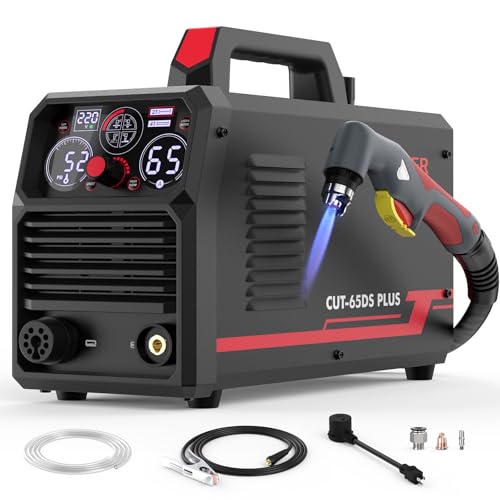
4 FUNCTIONS IN 1 MACHINE: Plate cutting, grid cutting, gouging, and marking give you more ways to handle fabrication, repair, and shop work. Plate Cutting delivers clean cuts on steel, stainless steel, and other conductive metals. Grid Cutting helps maintain a stable arc across grating and perforated metal. Gouging removes welds, rust, and damaged material. Marking creates clear guide lines for layout, hole positioning, and assembly.

Frequently Asked Questions
Can plasma cutting be used underwater?
Standard handheld plasma cutters should not be used underwater or in wet conditions unless the manufacturer specifically designed and approved the system for that use. Specialized mechanized plasma systems may cut over or beneath a water table, but underwater cutting requires purpose-built equipment, procedures, and trained personnel because electrical and gas hazards increase.
Is oxy-acetylene suitable for cutting non-metal materials?
No. Oxy-acetylene cutting depends on a controlled oxidation reaction in suitable steel. It is not an appropriate cutting method for wood, plastics, tile, glass, or composites, and applying the flame can create fire, toxic-fume, or material-failure hazards.
How does weather affect plasma cutting performance?
Rain, standing water, and wet surfaces create serious electric-shock hazards and can violate the equipment manual. Cold weather can affect compressors and moisture control, while humid air can increase water in the air line. Protect the machine, use dry air at the specified flow and pressure, and follow the manufacturer’s environmental limits.
What are common maintenance issues for oxy-acetylene equipment?
Common issues include leaking or damaged hoses, dirty or worn tips, damaged regulator components, loose connections, faulty check valves or flashback arrestors, and contaminated oxygen fittings. Inspect the system before use and have regulators and safety devices serviced according to the manufacturer rather than attempting unapproved repairs.
Are there environmental impacts of each cutting method?
Both methods can create metal fumes, noise, sparks, slag, and scrap. Plasma uses electricity and air or process gas; oxy-acetylene consumes oxygen and fuel gas. The largest practical differences often come from the electricity source, gas production and transport, coatings being cut, ventilation, consumable life, material waste, and how scrap and dust are collected.
Which method is better for beginners?
A correctly sized handheld plasma cutter often feels easier because it does not require flame adjustment or preheating. That does not remove the need for training. Oxy-acetylene adds gas-pressure, lighting, flame, cylinder, leak, backfire, and flashback procedures that should be learned from a qualified instructor.
Can oxy-acetylene cut stainless steel or aluminum?
Not effectively with the conventional oxygen-cutting reaction. Stainless steel and aluminum form oxides that interfere with normal oxy-fuel cutting. Plasma, laser, waterjet, saws, or specialized industrial processes are better choices, depending on thickness and finish requirements.
Which process is cheaper to operate?
There is no universal winner. Plasma often lowers labor and cleanup cost on thin and medium work, while oxy-fuel may be more economical for occasional very thick carbon-steel cuts. Compare local gas prices, electricity, consumables, compressor cost, cylinder handling, cut speed, and finishing time.
Safety Disclaimer
Safety Disclaimer: This article is for general information only. It does not replace hands-on training, workplace hot-work procedures, OSHA requirements, local fire codes, equipment manuals, ventilation assessment, or advice from a qualified safety professional. Use only approved equipment in serviceable condition and follow the manufacturer’s instructions for the exact cutter, torch, gas, consumables, and material.
Conclusion
Plasma cutting gives many shops the best mix of speed, precision, and material versatility. It is especially strong on thin and medium mild steel, stainless steel, and aluminum. Oxy-acetylene still makes sense for very thick carbon steel, remote work without electrical service, and jobs that also need flame heating, bending, brazing, or gas welding.
Before choosing, compare material type, routine thickness, true rated capacity, available power and air, ventilation, cut quality, portability, operator training, and cost per finished cut. The right process is the one that meets the job without pushing the equipment beyond its productive or safe limits.
Sources
- OSHA: Welding, Cutting, and Brazing — Hazards and Solutions — fume, ultraviolet radiation, burn, eye, electrical, and other cutting hazards.
- OSHA 29 CFR 1910.252: General Requirements — hot-work fire prevention, combustible control, fire watch, and training.
- OSHA 29 CFR 1910.253: Oxygen-Fuel Gas Welding and Cutting — acetylene pressure, oxygen cleanliness, cylinder storage, backflow, and flashback controls.
- Hypertherm: Plasma vs. Oxy-Fuel — comparative speed, preheat, cut quality, and process strengths.
- Hypertherm: Choosing a Cutting Process — material compatibility and process selection.
- Miller: How to Select and Operate a Handheld Plasma Cutter — rated versus severance capacity, input power, air supply, consumables, and setup.