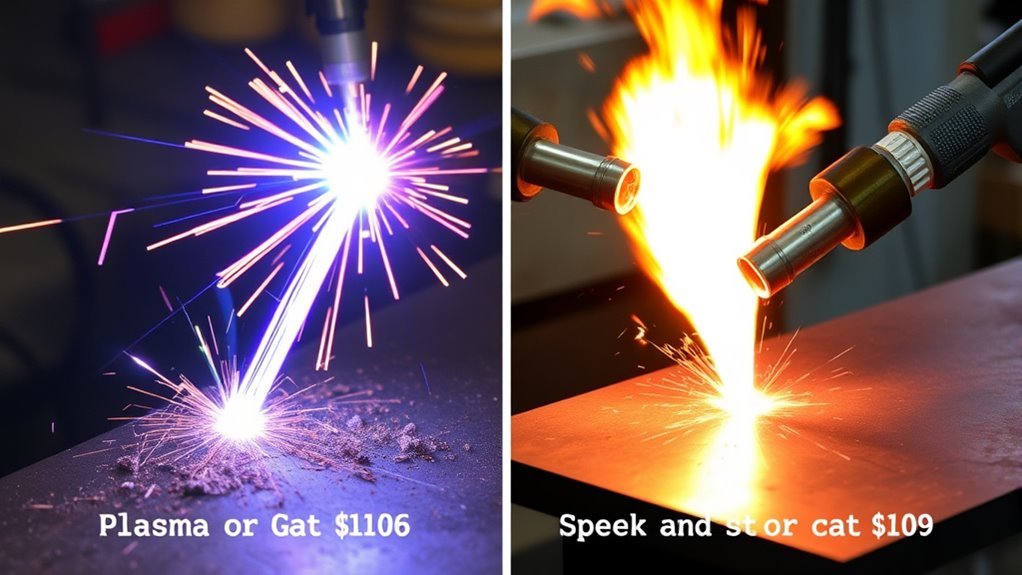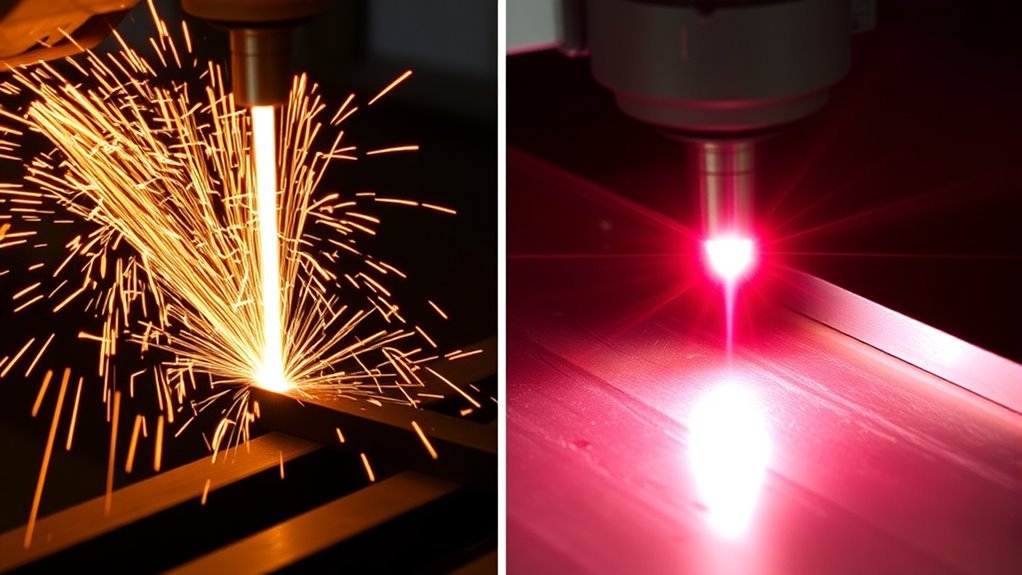
Choosing between plasma cutting and laser cutting comes down to your material, thickness, edge-quality target, budget, and design detail. Laser cutting is usually the better fit when you need a fine kerf, smooth edges, and intricate contours. Plasma cutting is usually better when you need fast, practical cutting on electrically conductive metal, especially thicker plate.
Quick Answer
Use laser cutting for detailed parts, clean edges, tight contours, and mixed material work. Use plasma cutting for lower-cost, high-speed cutting on conductive metals such as steel, stainless steel, aluminum, nickel alloys, and titanium. Neither method is best for every job, so match the process to thickness, finish, and budget.
Key Takeaways
- Laser cutting gives a fine kerf, smooth edges, and strong detail control, especially on sheet metal and intricate shapes.
- Plasma cutting is usually more affordable and faster on thicker electrically conductive metals, but it often leaves more dross and a wider kerf.
- Laser cutting can handle many metals and non-metals, while plasma cutting needs an electrically conductive workpiece.
- Thickness limits are not fixed. They depend on machine power, material, gas, consumables, and the cut quality you need.
- Both methods require ventilation, eye and face protection, fire control, and trained operators.
Plasma vs Laser Cutting: Side-by-Side Comparison
| Factor | Laser Cutting | Plasma Cutting |
| Best For | Detailed parts, tight contours, clean edges, small holes, thin to medium sheet work | Fast metal cutting, fabrication, repair work, thick conductive plate |
| Materials | Many metals and approved non-metals, including wood, plastics, ceramics, fabrics, and paper, depending on the laser and safety setup | Electrically conductive alloys only, such as carbon steel, stainless steel, aluminum, nickel alloys, and titanium |
| Edge Quality | Usually cleaner, narrower, and closer to burr-free when the machine is dialed in | Often wider kerf, more bevel, more dross, and more cleanup |
| Cost | Higher equipment cost and more demanding optics, cooling, gas, and maintenance needs | Lower entry cost and simpler setup, but consumables, air quality, and cleanup still matter |
| Main Limitation | Higher machine cost and material restrictions for unsafe plastics or poorly matched laser sources | Conductive materials only, rougher finish, more sparks, and more heat input than laser |
Products Worth Considering

【ACMER Studio Software Compatibility】Works with ACMER Studio for design editing, material settings, engraving setup, and machine control. The software provides tools to help you prepare and manage engraving projects in one workflow. Also compatible with LightBurn and LaserGRBL.


Fr*e Acmerstudio Engraving Software Included: The engraver is fully optimized for Acmerstudio, our self-developed engraving software, which is free to use and ready right out of the box. It also supports other popular engraving software for users who prefer alternative workflows.
Understanding Laser Cutting
Laser cutting uses a focused beam of light to heat, melt, burn, or vaporize material along a programmed path. A cutting gas helps clear the molten material from the kerf, leaving the cut line behind.
You usually choose laser cutting when the design has tight corners, small features, complex contours, or edge-quality requirements that would be difficult to meet with a rougher thermal process. The laser beam is narrow, so it can create a small kerf and reduce the amount of material lost in the cut.
Laser cutting is also versatile. Depending on the machine and material, it can cut many metals and approved non-metals, including plastics, wood, ceramics, fabrics, and paper. That makes it useful in sheet-metal fabrication, signs, electronics, automotive parts, aerospace components, prototypes, and decorative work.
Laser cutting works best when edge quality, detail, repeatability, and low material waste matter more than the lowest possible equipment cost.
Do not treat laser thickness capacity as one fixed number. The real limit depends on laser type, laser power, assist gas, material, reflectivity, part geometry, and the finish you need. Modern industrial systems can cut a wide range of sheet thicknesses, but a clean production edge at one thickness does not mean every shop can cut every material at that same thickness.
Understanding Plasma Cutting
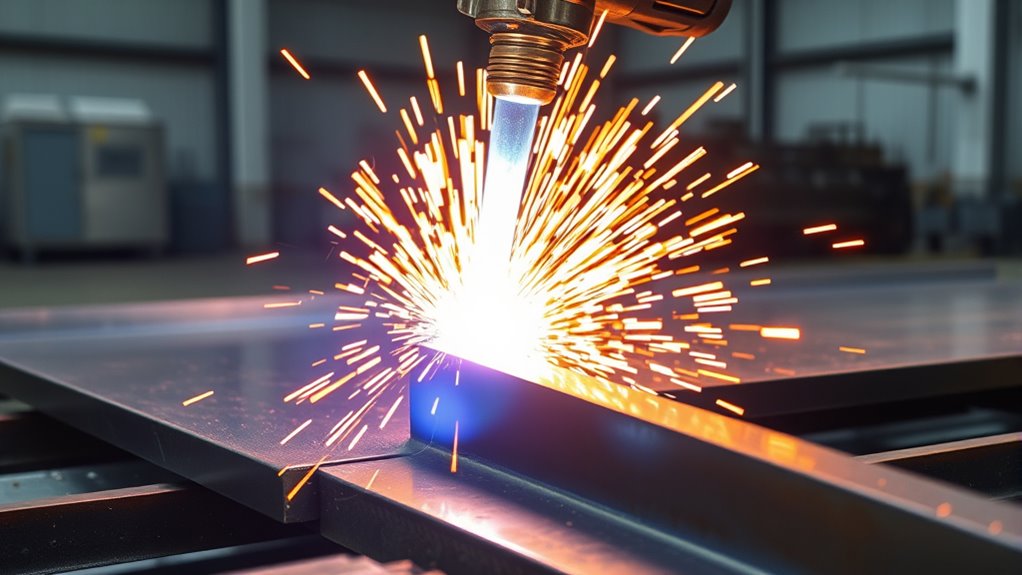
Plasma cutting, also called plasma arc cutting, uses an electric arc and a jet of ionized gas to melt metal and blow the molten material out of the cut. The plasma jet can reach temperatures above 20,000°C, which is why it can cut conductive metal quickly.
The key limitation is conductivity. Plasma cutting needs an electrically conductive workpiece, so it is used for metals such as carbon steel, stainless steel, aluminum, nickel alloys, and titanium. It is not the right method for wood, plastic, paper, fabric, or other non-conductive materials.
You can use plasma cutting with handheld torches, portable shop machines, or CNC cutting tables. It is popular in fabrication shops, auto repair, farm repair, structural work, salvage, and general metalwork because the equipment is usually less expensive than industrial laser systems and can cut thicker metal with practical speed.
Warning: Plasma and laser cutting can expose you to fumes, intense light, hot slag, sparks, burns, fire risk, electrical shock, and sharp edges. Use proper eye and face protection, gloves, flame-resistant clothing, ventilation or fume extraction, fire control, and trained operators. Follow your machine manual and workplace safety rules before cutting.
Advantages of Laser Cutting
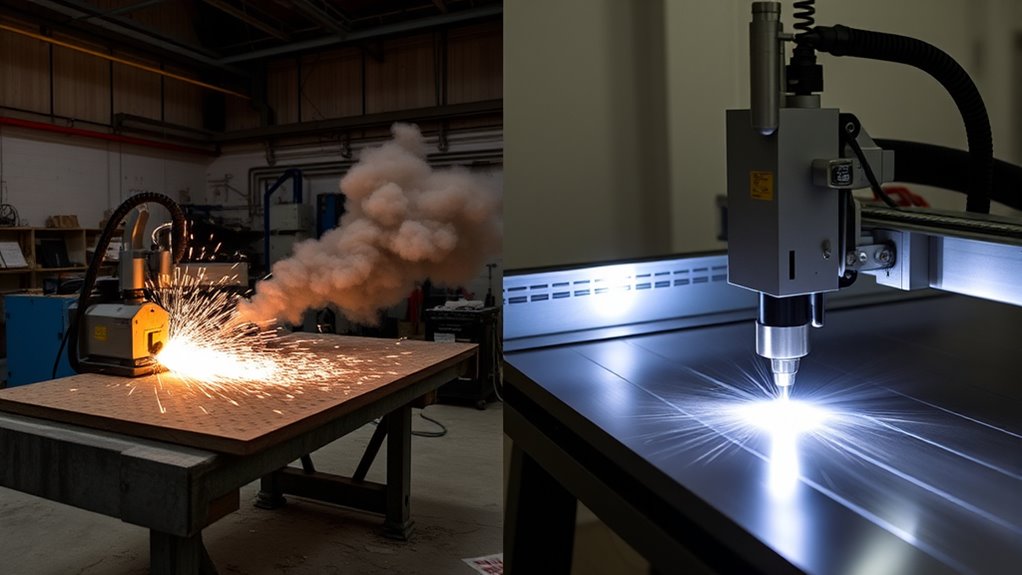
Precision and Accuracy
Laser cutting stands out when you need precise, repeatable cuts. The focused beam creates a narrow kerf, which helps with small holes, tight contours, detailed shapes, and parts that must fit together cleanly.
This does not mean every laser cutter can hold the same tolerance on every job. Tolerance depends on machine condition, beam quality, motion control, material thickness, heat input, and part geometry. Still, compared with plasma cutting, laser cutting usually gives better detail and smoother edges on thin to medium sheet material.
Material Versatility
Laser cutting gives you more material options than plasma cutting. It can work on many metals and approved non-metals when the correct laser source, power level, cutting gas, and ventilation are used.
Modern fiber lasers have also improved laser performance on reflective metals such as aluminum, copper, and brass. Those materials still need the right machine setup, but they are no longer a simple “laser cannot cut this” category.
Cleaner Edges and Less Finishing
Because the kerf is usually narrow and the heat is focused, laser cutting often produces cleaner edges with less burr, less dross, and less cleanup than plasma. That can save time when the part needs to be painted, powder coated, welded, assembled, or used as a finished visible component.
Pro Tip: Choose laser cutting when your part has small internal cutouts, fine lettering, close-fitting tabs, decorative details, or edges that need minimal cleanup.
Disadvantages of Laser Cutting
Laser cutting is precise, but it is not always the most practical or affordable option. Industrial laser systems cost more than most plasma setups, and they can require optics care, assist gases, cooling systems, filtration, software, and skilled maintenance.
Thickness can also become a limitation. Laser cutting can handle a broad range of sheet thicknesses, but the best results are usually on thinner to medium material where detail and edge quality matter. As the material gets thicker, cutting speed drops, gas use rises, and the cost per part can increase.
Material safety is another issue. Some plastics and coated materials can release hazardous fumes when cut. Never laser cut PVC or unknown plastics unless the material is approved for laser processing and the machine has proper fume extraction.
Laser cutting also needs the right laser source for the job. A CO2 laser, fiber laser, and ultrashort-pulse laser do not behave the same way on every material. That is why a shop’s advertised machine power alone does not tell you the full story.
Advantages of Plasma Cutting
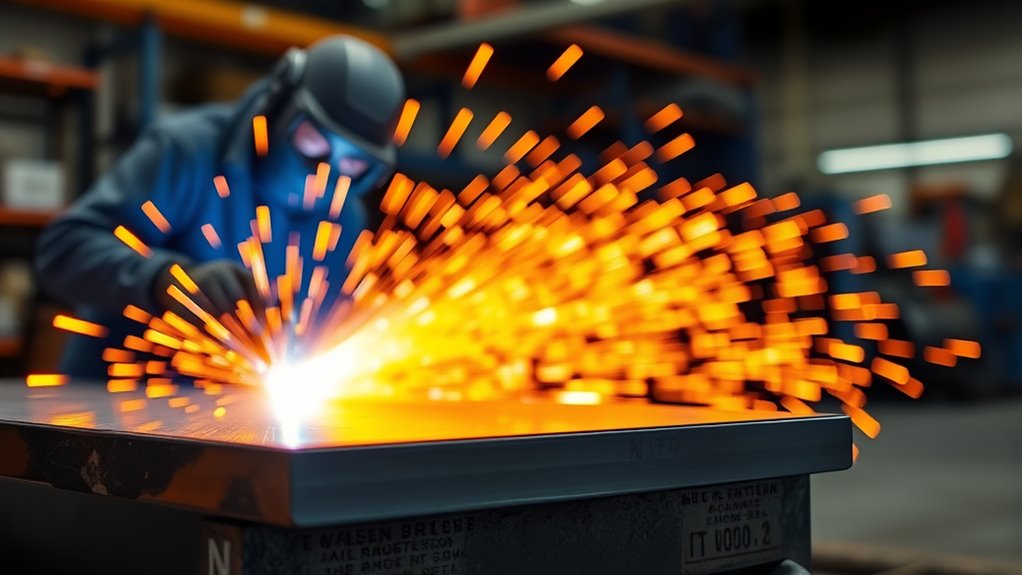
Efficient Thick Material Cutting
Plasma cutting is a strong choice when you need to cut conductive metal plate quickly and do not need a laser-fine edge. It can be especially practical for structural steel, repair work, brackets, frames, gussets, and heavy fabrication parts.
Do not rely on one universal thickness rating. A machine’s real cut capacity depends on amperage, duty cycle, material, gas or compressed-air quality, torch height, travel speed, and the quality level you need. A rough severance cut is not the same as a clean production cut.
Cost-Effective for Metalwork
Plasma systems are usually more affordable to buy and simpler to set up than industrial laser systems. For many shops, that lower entry cost matters more than the smoother edge a laser can provide.
Operating costs are also easier to manage on many metalwork jobs. You will still pay for consumables, compressed air or gases, electricity, cleanup, and maintenance, but plasma often remains the more budget-friendly choice for thick conductive metal and general fabrication.
Versatile Metal Applications
Plasma cutting works across many conductive alloys, including carbon steel, stainless steel, aluminum, nickel alloys, and titanium. It is also less sensitive than some laser setups when cutting dirty, painted, or less-than-perfect shop material, although clean metal still gives better results.
High-tolerance plasma arc cutting can improve precision on thinner material and may be a lower-cost alternative to laser cutting on some jobs. Still, laser usually wins when the part needs the smallest kerf, finest detail, or least post-processing.
Disadvantages of Plasma Cutting
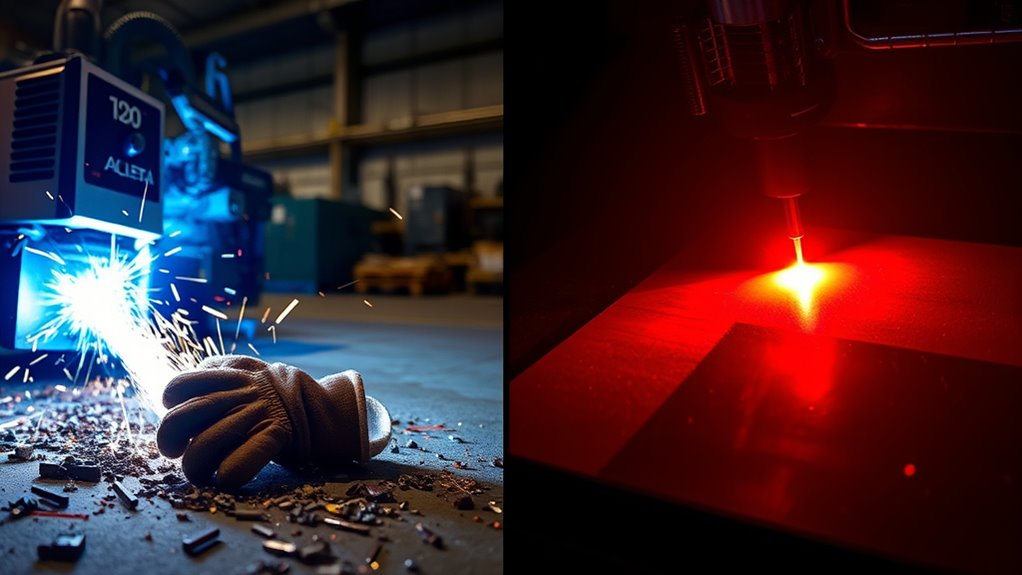
Plasma cutting has important limits. The biggest one is material type: it only works on electrically conductive materials. If you need to cut wood, acrylic, paper, fabric, ceramic, or other non-conductive stock, plasma is not the right tool.
Cut quality is another tradeoff. Plasma usually creates a wider kerf than laser cutting, and the cut can show edge bevel, drag lines, dross, or hardened areas depending on the material and settings. That can mean extra grinding or cleanup before welding, painting, or assembly.
Plasma also puts more heat into the workpiece than laser cutting. On thin sheet metal, that can increase the risk of warping. On heavier plate, the heat-affected zone is often acceptable, but you still need correct speed, torch height, amperage, and consumables.
Plasma cutting is about practical metal removal. Laser cutting is about fine control. The right choice depends on whether speed, cost, thickness, or finish matters most.
Choosing the Right Cutting Method for Your Needs
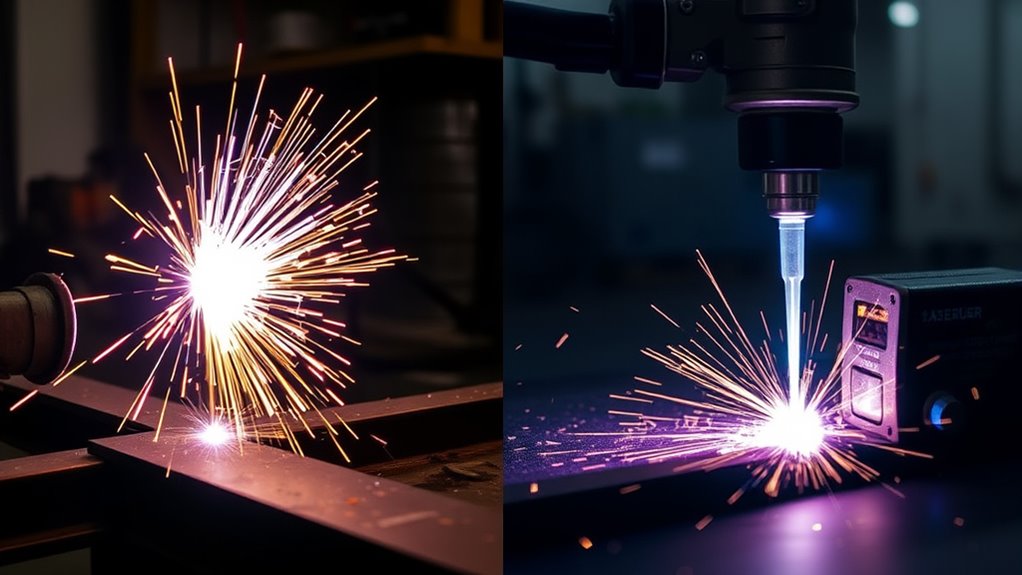
Start with the material. If it is not electrically conductive, plasma cutting is off the table. If it is metal, both methods may work, but the better choice depends on thickness, finish, and cost.
Products Worth Considering
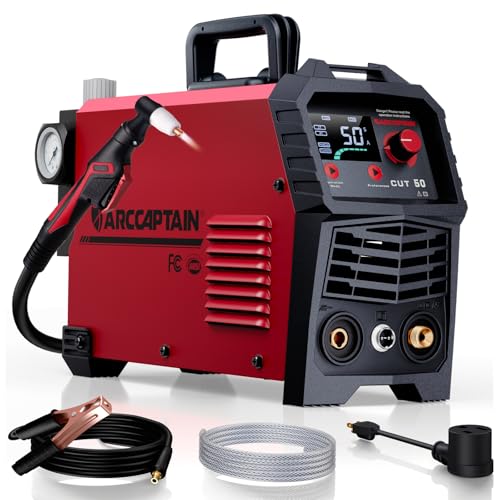
【Powerful Cutting Ability】Switch effortlessly between 110V and 220V for home or workshop use. Achieve professional 1/2" clean cuts on steel, aluminum, and copper with advanced LGBT technology. Perfect for DIY projects and heavy-duty tasks. Recommended maximum cutting thickness: 12mm @ 35A / 110V / 55 PSl; 18mm @ 50A / 220V / 75 PSI. Note: Requires compressed air (compressor sold separately).

【Non-Touch Pilot Arc Function】The ARCCAPTAIN 55A plasma cutter features a pilot arc function. It utilizes a high-frequency non-touch arc starting mode. The torch head does not need to touch the metal plate, reducing energy consumption during non-cutting work, minimizing electrode burning, and extending service life. NOTE: Do not switch voltages until the screen turns off and the fan stops.

POWERFUL CUTTING THICKNESS: This plasma cutter handles 1/2" (12mm) steel at 120V/35A and 5/8" (16mm) at 240V/60A. Dual voltage auto-detection (10-35A@120V / 30-60A@240V) with PSI guidance (70-75 PSI / 0.48-0.52MPa). Optimized for quick, efficient cuts in automotive repairs and metal fabrication
Choose Laser Cutting If
- You need a narrow kerf and clean edge.
- The design has small holes, lettering, tight curves, or detailed contours.
- The part needs little or no grinding after cutting.
- You are cutting thin to medium sheet material where precision matters.
- You need to cut approved non-metals as well as metals.
- Your budget supports higher equipment and maintenance costs.
Choose Plasma Cutting If
- You are cutting electrically conductive metal only.
- The material is thick enough that speed and cost matter more than a perfect edge.
- You need a practical shop tool for repair, fabrication, brackets, plate, or structural work.
- You can accept some dross, bevel, cleanup, and a wider kerf.
- You want a lower-cost entry point than industrial laser cutting.
- You need portable or handheld cutting flexibility.
Note: For production work, ask for sample cuts on your exact material and thickness before choosing a vendor or buying equipment. A chart rating is useful, but the real test is the edge quality, speed, cleanup time, and part accuracy you get on your own job.
Frequently Asked Questions
How do maintenance costs compare for plasma and laser cutting machines?
Plasma machines usually have lower maintenance costs, but they use consumables such as electrodes, nozzles, shields, and swirl rings. Laser machines often cost more to maintain because optics, assist gas systems, chillers, filters, alignment, and service support can be more demanding.
Can plasma or laser cutting be used for non-metal materials?
Laser cutting can be used on many approved non-metal materials, including wood, acrylic, fabric, paper, and some ceramics, depending on the laser and safety setup. Plasma cutting cannot cut non-conductive materials because the process needs an electrical arc through the workpiece.
What safety precautions are necessary for plasma and laser cutting?
Use the correct eye and face protection, gloves, flame-resistant clothing, ventilation or fume extraction, fire prevention, and machine guarding. Keep flammable materials away from sparks and hot slag. Do not cut unknown plastics, coated metals, or hazardous materials without confirming they are safe for the process.
How does energy consumption differ between plasma and laser cutting?
Energy use depends on machine type, power level, material, thickness, duty cycle, gas use, and cutting speed. Laser cutting can be efficient on precise sheet work, but industrial systems can require significant power, cooling, and assist gas. Plasma uses high current and compressed air or gas, especially on thicker metal.
Are there environmental impacts unique to plasma or laser cutting?
Both processes can create fumes, dust, heat, scrap, noise, and energy demand. Plasma may create more slag and cleanup waste. Laser cutting can reduce scrap on detailed parts, but cutting plastics or coated materials can create hazardous fumes if the material and ventilation are not properly controlled.
Which method gives the cleanest edge?
Laser cutting usually gives the cleanest edge, smallest kerf, and least post-processing, especially on thinner sheet material. Plasma cutting can still produce good shop-quality edges, but it is more likely to leave dross, bevel, and a wider kerf.
Which method is cheaper for a small shop?
Plasma cutting is usually cheaper for a small shop because the equipment is more affordable and simpler to start using. Laser cutting may still be worth the higher cost if your shop sells high-detail parts, clean finished edges, signs, prototypes, or production work where reduced cleanup saves time.
Is plasma or laser better for aluminum?
Both can cut aluminum. Plasma is practical for thicker conductive aluminum when edge perfection is not the top concern. Modern fiber laser systems can cut aluminum with cleaner detail, but the setup must match the material thickness, reflectivity, and finish requirement.
Conclusion
Laser cutting and plasma cutting solve different problems. Choose laser cutting when you need detail, a narrow kerf, cleaner edges, and less finishing. Choose plasma cutting when you need a lower-cost, fast, practical way to cut electrically conductive metal, especially thicker plate. The best choice is the one that fits your material, thickness, finish target, production volume, and safety setup.
Sources
- TRUMPF: Laser cutting — supports laser cutting process, material range, kerf, edge quality, and process parameters.
- TWI: What is Laser Cutting? — supports laser cutting basics, kerf discussion, material applications, advantages, and limitations.
- TWI: What is Plasma Cutting? — supports plasma cutting temperature, conductive material range, and high-tolerance plasma notes.
- OSHA: Welding, Cutting, and Brazing Hazards and Solutions — supports cutting hazards, fumes, UV radiation, burns, eye damage, electrical shock, and PPE needs.