Trying to make a TIG welder operate as a plasma cutter can damage the power source, defeat built-in safety protections, start a fire, or expose you to dangerous voltage. The two processes may both use an electric arc, but they require different torches, controls, gas systems, consumables, and operating characteristics. The safer answer is to use equipment that the manufacturer specifically rates for plasma-arc cutting.
Quick Answer
No—do not convert a standard TIG welder or Miller EconoTIG into a plasma cutter. The EconoTIG manual rates the machine for TIG and stick welding, not plasma cutting. Plasma cutting requires a purpose-built torch, arc-start and transfer controls, gas system, interlocks, and insulation. Use a dedicated or factory-rated multiprocess machine instead.
Key Takeaways
- A TIG power source is designed to maintain a welding arc, while a plasma cutter creates and controls a high-speed, constricted plasma jet.
- Open-circuit voltage alone is not enough; a plasma system also needs a matched torch, starting sequence, pilot-arc or transfer controls, gas timing, consumables, and safety interlocks.
- The Miller EconoTIG is documented as a TIG and stick welding power source, not a plasma-arc cutting machine.
- Most handheld air-plasma cutters need a compressor that can supply the specified flow and pressure with clean, dry air.
- A dedicated plasma cutter or a factory-rated plasma/TIG/stick machine is safer and more practical than a homemade conversion.
Why a TIG Power Supply Isn’t Built for Plasma Cutting
TIG welding and plasma cutting both use an electric arc, but the arc serves a different purpose in each process. A TIG welder creates a controlled arc between a nonconsumable tungsten electrode and the workpiece so the operator can form a weld pool. A plasma cutter forces ionized gas through a small torch opening to produce a narrow, high-speed jet that melts metal and blows it out of the cut.
That difference involves far more than output amperage. A purpose-built plasma system coordinates the power supply, torch, gas flow, starting method, pilot arc, transfer to the workpiece, current ramping, and postflow. Depending on the design, the arc may be initiated by high-frequency, contact, blowback, or another manufacturer-engineered method.
| Feature | TIG Welder | Plasma Cutter |
| Main purpose | Forms and controls a weld pool | Melts metal and ejects it from a narrow kerf |
| Torch design | Tungsten electrode, ceramic cup, shielding-gas path | Electrode, nozzle, swirl or gas-control parts, shield, and process-specific consumables |
| Gas function | Shields the tungsten and molten weld from the atmosphere | Is ionized, constricted, accelerated, and used to remove molten metal |
| Arc controls | Controls welding current and arc stability | Coordinates gas preflow, arc initiation, pilot operation, transfer, cutting current, and postflow |
| Approved use | Only the welding processes listed by the manufacturer | Only the cutting and gouging processes listed by the manufacturer |
A TIG machine may have an arc-start feature and an open-circuit voltage that appears useful on paper. That does not make it suitable for plasma cutting. The machine still lacks a tested plasma torch interface, pilot-arc path, gas-control sequence, torch-parts detection, current-transfer logic, process-specific insulation, and fault protection.
Warning: Do not remove covers, bypass interlocks, defeat protective grounding, connect an improvised torch, or add homemade high-voltage starting hardware. Internal welding and plasma equipment circuits can retain or produce dangerous voltage even when an operator-facing control appears to be off.
The correct question is not whether a TIG supply can produce an arc. It is whether the complete machine was designed, tested, documented, and rated to perform plasma-arc cutting. For a standard TIG welder or EconoTIG, the answer is no.
Electrical and Gas Requirements for Safe Plasma Operation
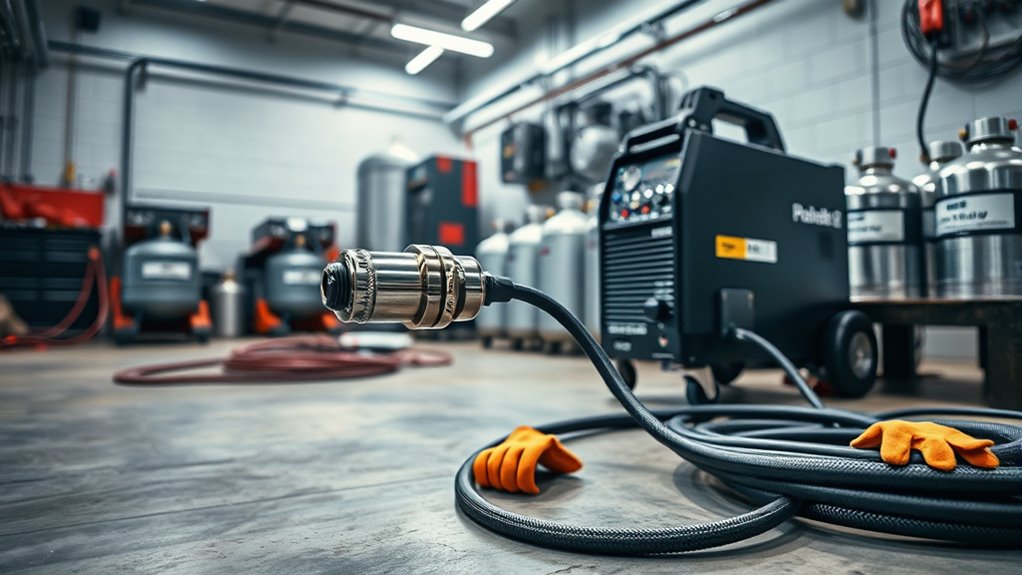
A plasma cutter needs an input circuit, output system, torch, and gas supply that work together. Follow the machine’s manual for input voltage, phase, branch-circuit protection, conductor size, receptacle, extension-cord limits, generator capacity, and equipment grounding. Do not assume a circuit that powers a TIG welder will automatically meet a plasma cutter’s requirements.
Arc Starting and Transfer Controls
Handheld plasma cutters use a manufacturer-designed starting sequence. The machine normally begins gas flow, creates a pilot arc, detects transfer to the workpiece, increases current to the selected level, and maintains gas flow after the cut to cool the torch and consumables. The exact sequence and starting technology vary by model.
A torch swap cannot add these functions to a TIG welder. It also cannot provide the correct nozzle-to-electrode spacing, current path, gas swirl, thermal protection, trigger safety circuit, or consumable detection.
Compressed-Air Requirements
Most handheld air-plasma cutters need a steady supply of clean, dry compressed air. The required pressure and flow are model-specific. Check the manual for the required cubic feet per minute or liters per minute at the specified inlet pressure.
- Correct dynamic pressure keeps the plasma jet focused while air is flowing.
- Adequate flow prevents pressure from collapsing during a long cut.
- Dry air reduces unstable arcs and premature consumable damage.
- Oil-free air is required when specified by the manufacturer.
- Filters and moisture separation help protect the torch when the compressor or shop piping introduces water, dirt, or oil.
Do not install a lubricator or add oil to the cutting-air supply unless the plasma cutter’s manufacturer explicitly requires it. Many plasma systems require air without oil contamination.
Equipment Grounding and the Work Lead
The input equipment-grounding conductor and the cutting work lead are not the same connection. The equipment ground is part of the electrical safety system. The work lead carries cutting current between the workpiece and the power source.
Verify the input ground according to the manual and applicable electrical requirements. Then attach the work clamp to clean, bare metal as close to the cutting area as practical. Paint, rust, scale, dirt, and a loose clamp can interfere with arc transfer and cutting performance.
Practical Risks and Costs of Converting an EconoTIG
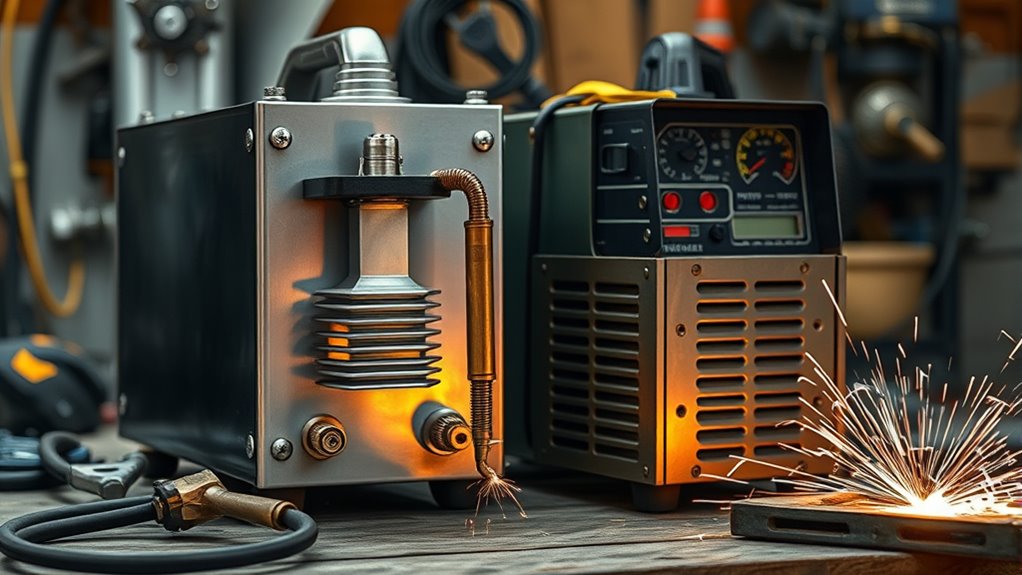
The Miller EconoTIG owner’s manual identifies the unit as an arc-welding power source for TIG and stick welding. It does not list plasma-arc cutting as an approved process or provide a plasma torch connection, cutting-air circuit, or plasma operating procedure.
Converting it would require much more than replacing the TIG torch. A functioning plasma system would need a compatible cutting torch and consumables, a purpose-built arc-start circuit, pilot-arc control, transfer-current detection, gas solenoid timing, suitable air plumbing, trigger and parts-in-place safety circuits, fault monitoring, enclosures, and insulation designed for the resulting electrical stress.
It would also require engineering validation. Internal spacing must prevent electricity from arcing across circuit boards or insulation. Components must tolerate heat, current, voltage, contamination, and repeated starting. The completed machine would need testing under normal use, foreseeable misuse, and fault conditions.
A higher open-circuit voltage does not turn a welding power source into a plasma cutter. The missing torch, start sequence, gas controls, interlocks, current-transfer logic, and tested insulation are equally important.
The cost of engineering, parts, fabrication, testing, and safety controls can exceed the price of a purpose-built cutter. A homemade alteration may also make manufacturer service unavailable and may affect any warranty coverage that still applies. Warranty consequences depend on the written terms, the machine’s age, the alteration, and the cause of any failure.
For most shops, the practical approach is to keep the EconoTIG for its approved TIG and stick processes and purchase a separate plasma cutter. If floor space is limited, choose a factory-built multiprocess machine that explicitly lists plasma cutting and the required welding processes.
Viable Alternatives: Dedicated, Multiprocess, and Non-Plasma Options
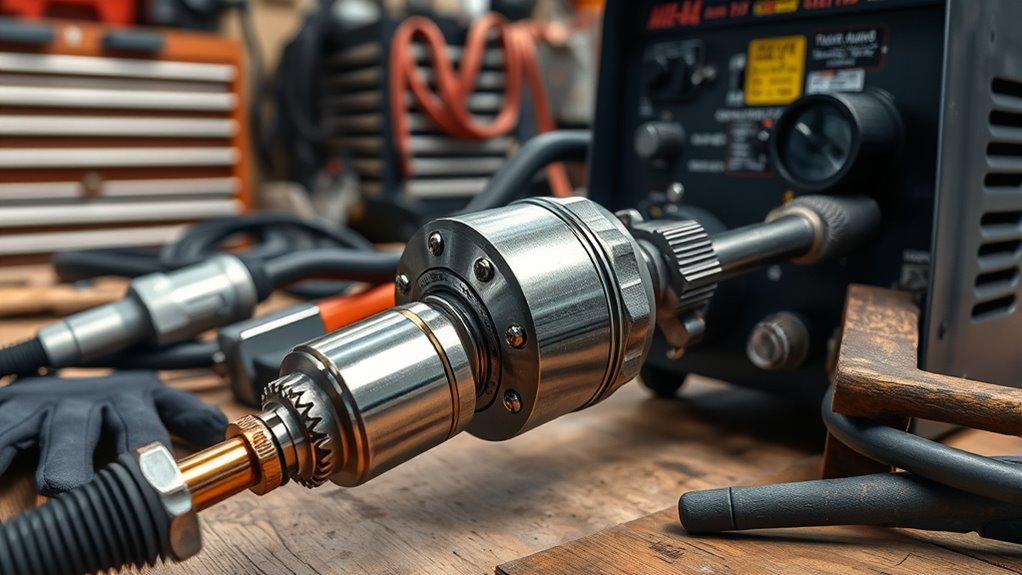
Choose a cutting method based on material type, thickness, cut volume, edge-quality needs, portability, available power, and air supply.
- Dedicated plasma cutter: Best when you need frequent, fast cuts in electrically conductive metal. The torch, consumables, air controls, and protection systems are matched to the cutting process.
- Factory-rated plasma/TIG/stick machine: Useful when space is limited and the manufacturer explicitly documents every process. Follow the supplied torch, polarity, gas, input-power, and duty-cycle instructions for each mode.
- Metal-cutting bandsaw or cold saw: A good choice for straight, repeatable cuts with less arc radiation and fewer hot sparks, although blades and cutting fluids introduce their own hazards.
- Abrasive saw or angle grinder: Suitable for occasional work when used with the correct guard, wheel, PPE, and spark control. These tools can create substantial dust, noise, and projectile hazards.
- Oxy-fuel cutting equipment: Appropriate for some carbon-steel applications when the operator is trained and the cylinders, regulators, hoses, flashback protection, ventilation, and fire controls meet applicable requirements.
Note: A machine is not a safe multiprocess unit merely because a seller describes it as “three-in-one.” Confirm that the manufacturer’s manual lists plasma cutting and each welding process, identifies the correct accessories, and provides complete setup and safety instructions.
Products Worth Considering

Huge Cutting Capacity: The cutting capacity of the band saw: without base: 4.7"x4.7" deep-cut capacity for rectangular stock, 5" capacity for round stock. With base: 3.9"x3.2" deep-cut for rectangular stock, 3.93" for round stock.

POWERFUL MOTOR - 3 speed, 1/2 HP motor driving heat-treated and ground steel worm gear with bronze drive gear to power through every cut
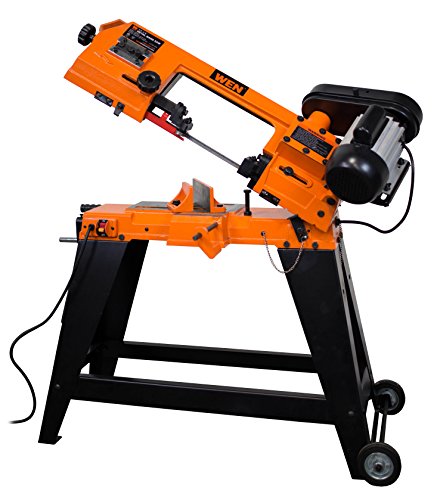
Automatic shut-off turns the band saw off after a cut has been completed
How to Choose a Safer Plasma Cutting Setup
Products Worth Considering
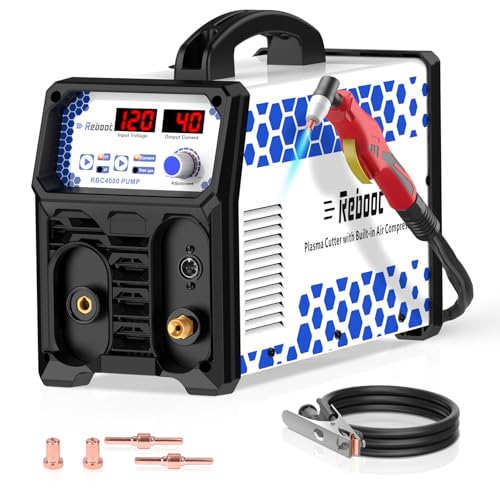
𝐁𝐔𝐈𝐋𝐓-𝐈𝐍 𝐀𝐈𝐑 𝐂𝐎𝐌𝐏𝐑𝐄𝐒𝐒𝐎𝐑, 𝐙𝐄𝐑𝐎 𝐄𝐗𝐓𝐄𝐑𝐍𝐀𝐋 𝐔𝐍𝐈𝐓𝐒 𝐍𝐄𝐄𝐃𝐄𝐃: Integrated high-efficiency air pump eliminates the need for separate air compressors. Start cutting immediately with simplified setup (Recommended for use 50A+ breaker)

COMPLETE BUILT-IN AIR SYSTEM: Equipped with an integrated high-performance air pump, this plasma cutter eliminates the need for an external air compressor—simply plug into power and start cutting with no extra equipment or complicated setup required

BUILT-IN AIR COMPRESSOR: With this plasma cutter machine, you're ready to cut as soon as you connect it to a power source, no additional air compressor needed. Designed for effortless outdoor work, it also offers compatibility with external compressors for versatile use
Use Recommended Cut Capacity, Not Only Severance Capacity
Start with the thickest material you cut regularly. A manufacturer’s recommended or production cut rating is more useful for routine work than its maximum severance rating. Severance capacity normally describes the thickest material the machine can separate under limited conditions, not the thickness it will cut quickly with a clean edge.
Check Input Power Before Buying
Match the cutter to the power available in your shop or work area. Check voltage, phase, breaker or fuse requirements, input amperage, plug type, extension-cord limits, and generator recommendations. Have permanent wiring or new receptacles installed by a qualified person where required.
Size the Compressor Under Flowing Conditions
A compressor’s tank size does not prove that it can keep up with the cutter. Compare the plasma cutter’s required airflow and pressure with the compressor’s delivered output at that pressure. Include pressure loss through long hoses, undersized fittings, filters, and moisture-control equipment.
Pro Tip: Check air pressure while the cutter is in its air-test or purge mode, not only while the system is idle. Static pressure can look acceptable even when the pressure and flow fall below specification during an actual cut.
Compare Duty Cycle and Support
Duty cycle states how long a machine can operate within a specified period and test condition before it must cool. Compare ratings at the amperage you expect to use, not just at a reduced setting.
Also review torch-lead length, replacement-consumable availability, consumable price, drag-cutting capability, gouging support, warranty terms, service network, parts availability, and whether the machine has built-in air regulation or fault indicators.
Pre-Cut Plasma Safety Checklist
Before each cutting session, complete a basic inspection and work-area check. The machine manual and your workplace procedures take priority over any general checklist.
- Inspect the power cord, plug, torch lead, work lead, clamp, torch body, trigger guard, and consumables.
- Install only the consumable set specified for the torch, amperage, and process.
- Confirm the correct input circuit and protective equipment ground.
- Connect the work clamp to clean, bare metal near the cut.
- Verify air pressure and flow while air is moving through the torch.
- Drain compressor moisture and inspect filters or dryers.
- Remove or protect combustible material in the spark and slag path, including material on the opposite side of the work.
- Keep suitable fire-extinguishing equipment immediately available and assign a fire watch when workplace conditions require one.
- Provide ventilation or local fume extraction that keeps smoke away from the breathing zone.
- Identify the base metal, plating, paint, coating, residue, and contamination before heating it.
- Wear flame-resistant clothing, dry insulated gloves, safety footwear, and eye and face protection with a filter shade appropriate for the cutting current and manufacturer instructions.
- Use hearing protection when noise exposure requires it and shield nearby people from sparks and arc radiation.
- Keep the torch, gloves, floor, and work area dry. Do not cut while standing in water or in another electrically hazardous condition.
Warning: Never plasma-cut a used drum, tank, pipe, vessel, sealed cavity, or unknown container merely because it appears empty. Flammable or toxic residue can remain and may explode or release hazardous fumes. OSHA’s hot-work rules require specific cleaning, isolation, venting, purging, and fire-prevention measures. Have this work evaluated and prepared by qualified personnel.
Painted, galvanized, plated, stainless, lead-bearing, cadmium-bearing, or contaminated metal can create hazardous fumes. Remove coatings only by an appropriate safe method, review the safety data for the material, and use engineering controls and respiratory protection where an exposure assessment requires them. Oxygen must never be used as a substitute for ventilation or compressed cutting air.
Best Practices for Welding and Cutting in Confined or Hard-to-Reach Spaces
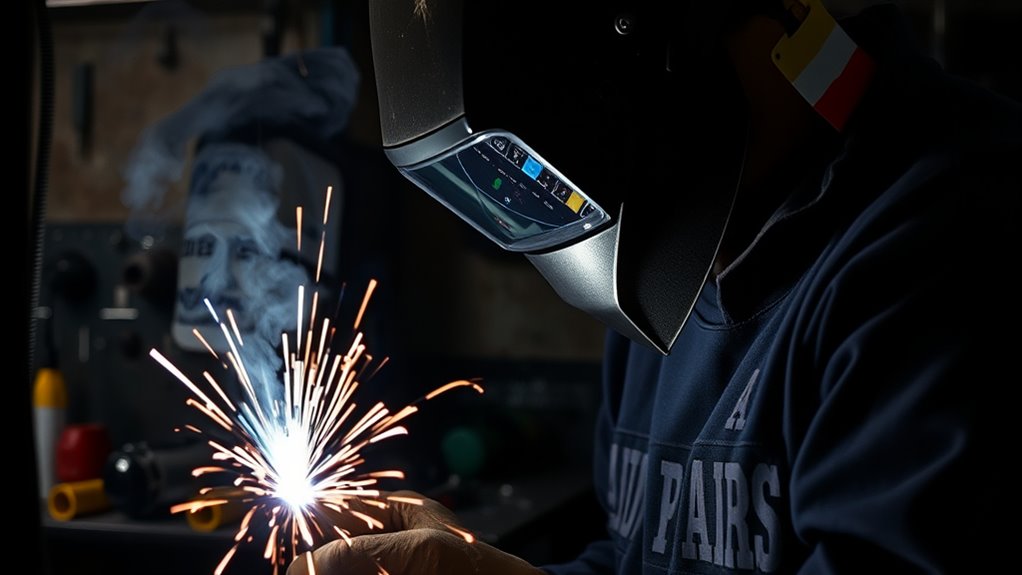
Purpose-built equipment does not remove the hazards created by a confined or restricted work area. Before anyone enters, identify the applicable workplace rule and have a qualified or competent person evaluate the space, the work, and the atmosphere.
For general-industry workplaces, review OSHA 29 CFR 1910.146. Construction work is covered by 29 CFR 1926 Subpart AA. Maritime and other industries may have separate requirements.
A confined-space plan may need to address:
- Atmospheric testing before and during entry
- Oxygen deficiency or enrichment
- Flammable gases, vapors, dust, and toxic fumes
- Ventilation or local exhaust placed close to the fume source
- Isolation and lockout or tagout of hazardous energy
- Entry permits and authorized entrants
- An attendant outside the space
- Reliable communication
- Rescue equipment and a rescue service capable of responding in time
- Heat stress, restricted movement, sharp edges, falls, and entrapment
- Removal of leads, torches, cylinders, or gas sources when required
Portable fume extraction can help only when it captures contaminants near the arc and does not interfere with safe movement or exhaust contaminated air into another occupied area. General airflow that merely moves smoke past the operator is not an adequate substitute for effective control.
Remote controls, mechanized torches, or extended torch leads may reduce the time a worker spends near a hazard, but only when the equipment is designed for that use and the change is included in the risk assessment. They do not replace atmospheric testing, ventilation, an attendant, rescue planning, or permit procedures.
If the space cannot be ventilated, monitored, entered, and rescued safely, postpone the work. Production speed never justifies skipping confined-space controls.
Frequently Asked Questions
Can a TIG torch be modified into a plasma torch without affecting warranty or support?
Do not assume so. Changing the torch, electrical connections, gas path, controls, or internal circuitry places the machine outside its documented configuration. That may void applicable warranty coverage or make manufacturer service unavailable. Check the written warranty and ask the manufacturer before attaching any nonstandard torch or adapter.
Is high open-circuit voltage enough to convert a TIG welder into a plasma cutter?
No. Open-circuit voltage is only one characteristic. A plasma cutter also needs a matched cutting torch, consumables, gas preflow and postflow, a safe arc-start method, pilot-arc and transfer controls, current sensing, fault protection, and insulation tested for the complete system.
Can I use a TIG argon regulator or shielding-gas line for air-plasma cutting?
Not as a substitute for the plasma cutter’s specified air system. Most handheld air-plasma cutters need compressed air at a stated flow and pressure, often with filtration and moisture control. Some industrial systems use other gases, but only with the torch, regulator, hoses, controls, and procedures approved by the manufacturer.
Are factory-built plasma, TIG, and stick combination machines safe to use?
They can be appropriate when the manufacturer explicitly rates the machine for all listed processes and supplies complete setup instructions, compatible torches, correct connections, and safety controls. Use only the accessories and operating modes specified in the manual.
How does plasma cutting affect nearby electronics and sensors?
Plasma cutting equipment and its arc-start system can produce electromagnetic interference. Keep sensitive equipment away when practical, route the torch and work leads according to the manual, keep leads together where recommended, use a secure work connection, and follow the manufacturer’s electromagnetic-compatibility instructions. Do not add filters or modify wiring without approved guidance.
Can I plasma-cut stainless steel without special consumables?
Many air-plasma systems can cut stainless steel with their standard manufacturer-approved air-cutting consumables. Air can leave a dark, oxidized edge, so the finish may differ from mild steel. Use only the gas, amperage, torch parts, and consumables listed for stainless by the equipment manufacturer.
Are compressed-air filters, dryers, or oilers necessary for plasma cutting?
Filters and moisture control are useful when the incoming air contains water, dirt, or oil. Some cutters include internal filtration but may still benefit from additional treatment when the compressor or piping produces wet air. Do not install an oiler unless the plasma-cutter manufacturer specifically requires lubricated air.
How long does a factory plasma torch last compared with a TIG-derived setup?
There is no valid service-life comparison because a homemade TIG-derived plasma torch is not an approved or rated product. A factory plasma torch has defined electrical, thermal, cooling, gas-flow, and consumable requirements. Its life depends on air quality, amperage, piercing technique, starts, maintenance, and replacement of worn parts.
Safety Disclaimer: This article is for informational purposes only and does not replace manufacturer instructions, electrical codes, OSHA requirements, workplace procedures, or advice from a qualified welding, electrical, ventilation, or safety professional. Only trained and authorized people should install, service, or operate high-voltage welding and plasma-cutting equipment.
Conclusion
You should not convert a standard TIG power supply or Miller EconoTIG into a plasma cutter. The EconoTIG was designed for TIG and stick welding, while plasma cutting requires a matched torch, consumables, air system, arc-start sequence, pilot and transfer controls, protective interlocks, and tested electrical construction.
Use a dedicated plasma cutter when cutting is a regular part of your work. A factory-rated multiprocess machine can also be suitable when its manual explicitly covers plasma cutting and each welding process. Before cutting, verify input power, equipment grounding, the work-lead connection, clean air delivery, consumables, ventilation, PPE, fire controls, and the condition of the material being cut.
Sources
- Miller EconoTIG Owner’s Manual — approved processes, connections, installation, grounding, maintenance, and manufacturer safety guidance.
- Miller: How to Select and Operate a Hand-Held Plasma Cutter — plasma operation, starting methods, air supply, cut capacity, and equipment selection.
- Hypertherm Plasma Gas Selection Guide — use of clean, dry air and alternative plasma gases.
- Hypertherm Air-Filter Guidance — compressor moisture, filtration, and air-quality control.
- OSHA 29 CFR 1910.252 — fire prevention, ventilation, personnel protection, containers, and welding or cutting safeguards.
- OSHA Confined-Space Standards — general-industry, construction, maritime, entry, ventilation, and rescue requirements.