If you’re using a plasma cutter with an internal compressor, you’re choosing a self-contained cutting setup instead of a separate shop air system. The built-in compressor draws in ambient air, pressurizes it, and sends it to the torch so the arc can form and blow molten metal out of the cut. That makes the machine easier to move and faster to set up, but it also adds limits for duty cycle, cooling, noise, moisture control, and maximum airflow.
Quick Answer
An internal compressor makes a plasma cutter more portable because you do not need a separate air compressor, hose, or regulator. It works best for light-duty cutting, field repairs, and small shops. The trade-off is lower sustained airflow, more heat buildup, and less continuous cutting time than a properly sized external compressor.
Key Takeaways
- A built-in compressor saves space, setup time, and transport weight because the air supply is inside the plasma cutter.
- Cut quality depends on steady air pressure, enough CFM or SCFM under load, clean consumables, correct torch height, and the right travel speed.
- Internal compressors are best for short cuts, thin to medium material, repair work, and mobile jobs.
- External compressors are better for long cuts, thick plate, CNC tables, high-duty-cycle work, and shops that already have dry filtered air.
- Always follow the machine’s manual for air pressure, airflow, input voltage, duty cycle, PPE, and maintenance.
At a Glance
| Time Required | Setup often takes only a few minutes; actual cutting time depends on material thickness, amperage, and duty cycle. |
| Difficulty | Beginner to intermediate, but safe cutting still requires PPE, grounding, ventilation, and fire control. |
| Tools Needed | Internal-compressor plasma cutter, ground clamp, clean workpiece, dry consumables, cutting guide if needed, helmet or face shield, gloves, and fire extinguisher. |
| Cost | Higher tool cost than some basic cutters, but no separate air compressor is needed for light-duty work. |
How an Internal Compressor Powers Plasma Cutting
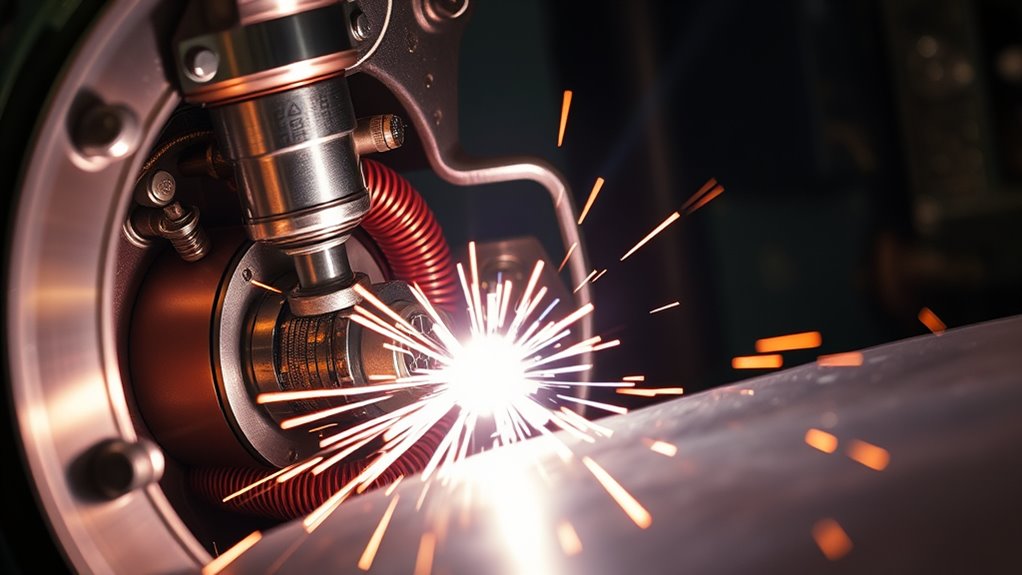
When you press the torch trigger, the internal compressor pulls in air, compresses it, and sends that air through the plasma cutter’s air path to the torch. The cutter then uses electrical energy and compressed gas to create the plasma stream that cuts conductive metal. The basic plasma cutting process melts the metal and uses high-velocity gas to blow the molten material out of the kerf.
That airflow matters because the arc is not doing the work alone. The torch needs enough air volume and pressure to start the arc, hold it steady, cool the torch parts, and clear molten metal from the cut. If the compressor falls behind, the arc can sputter, the cut can slow down, and dross can build up along the lower edge.
The built-in compressor does not make the plasma arc stronger by itself. It makes the cutter easier to use by giving the torch its own air supply.
Think of the internal compressor as a convenience feature with performance limits. It removes the need for a separate compressor, but it still has to meet the cutter’s required air demand while the arc is running. That is why the manual’s listed PSI, CFM or SCFM, duty cycle, and input voltage matter more than the phrase “built-in compressor” on the box.
Note: Do not assume one pressure range fits every plasma cutter. Use the pressure and airflow settings listed by the manufacturer for your exact machine, torch, and consumables.
Products Worth Considering

COMPLETE BUILT-IN AIR SYSTEM: Equipped with an integrated high-performance air pump, this plasma cutter eliminates the need for an external air compressor—simply plug into power and start cutting with no extra equipment or complicated setup required
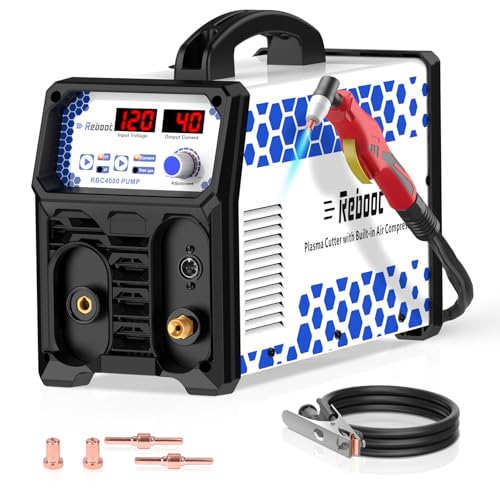
𝐁𝐔𝐈𝐋𝐓-𝐈𝐍 𝐀𝐈𝐑 𝐂𝐎𝐌𝐏𝐑𝐄𝐒𝐒𝐎𝐑, 𝐙𝐄𝐑𝐎 𝐄𝐗𝐓𝐄𝐑𝐍𝐀𝐋 𝐔𝐍𝐈𝐓𝐒 𝐍𝐄𝐄𝐃𝐄𝐃: Integrated high-efficiency air pump eliminates the need for separate air compressors. Start cutting immediately with simplified setup (Recommended for use 50A+ breaker)

BUILT-IN AIR COMPRESSOR: With this plasma cutter machine, you're ready to cut as soon as you connect it to a power source, no additional air compressor needed. Designed for effortless outdoor work, it also offers compatibility with external compressors for versatile use
Convenience and Portability Advantages
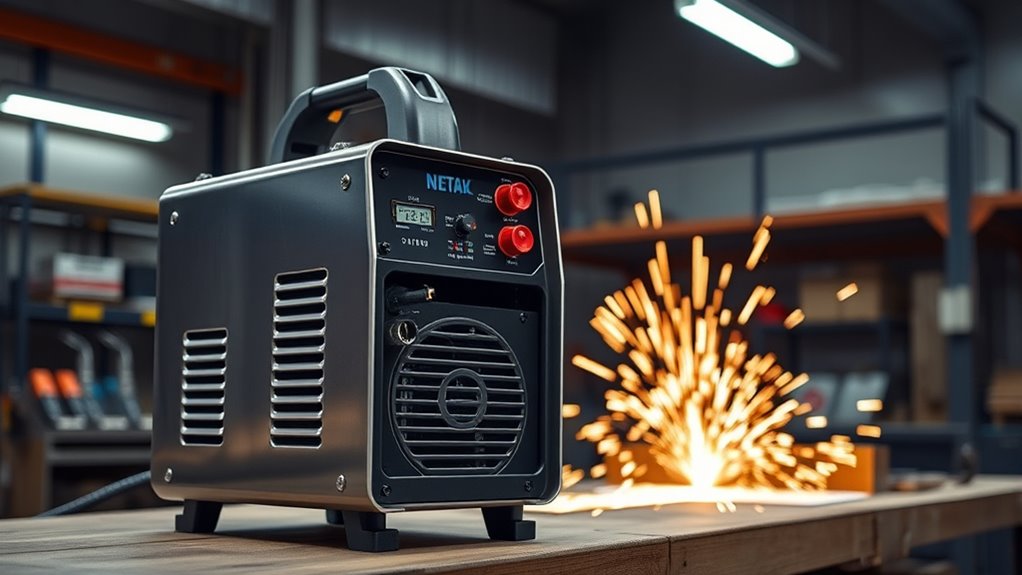
The biggest advantage of an internal compressor plasma cutter is simple setup. You do not need to roll out a separate compressor, connect an air hose, check a second power cord, or manage a separate regulator before cutting. For quick work, that can save more time than the actual cut takes.
This matters most when you move between job spots. If you repair gates, brackets, thin sheet, small frames, farm parts, or light fabrication pieces, carrying one self-contained unit can be much easier than hauling a plasma cutter plus a shop compressor.
Built-In Compressor Mobility
With a built-in compressor, one chassis holds the cutter, controls, air supply, and torch connection. You have fewer parts to load, fewer fittings to lose, and less setup clutter around the work area. That is useful in garages, service trucks, tight shops, and field repair sites where space is limited.
The downside is that the compressor inside the machine is usually small. It is designed to match that cutter’s light-duty or medium-duty operating range, not to feed multiple air tools or run long production cuts all day.
Faster Jobsite Setup
A separate compressor adds steps. You have to power it, wait for it to build pressure, drain moisture, set the regulator, connect the hose, and make sure the hose is not a trip hazard. A built-in compressor removes most of that work.
That faster setup is helpful for short cuts and repairs. It is less valuable if you plan to cut for long stretches, because the smaller onboard compressor and the plasma cutter itself may need cooldown breaks.
Pro Tip: A built-in compressor is most useful when your cuts are short and spread out. If you plan to make long continuous cuts, check the duty cycle before you buy.
Impact on Cutting Speed and Productivity
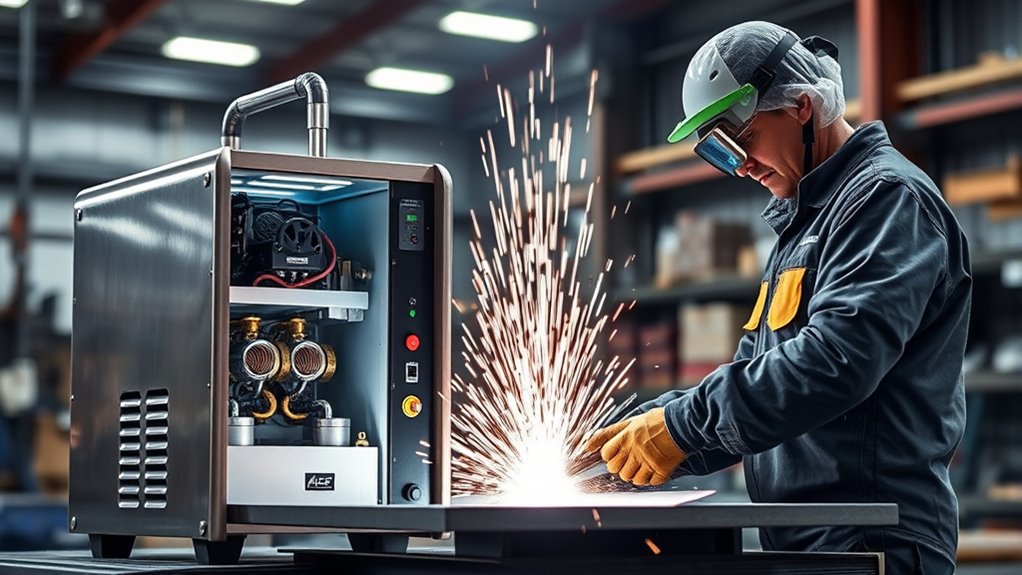
An internal compressor can improve productivity because it reduces setup time and keeps the air supply close to the torch. You spend less time preparing hoses and more time cutting. For quick repairs, this is often the main reason to choose a self-contained unit.
Cutting speed still depends on amperage, material type, thickness, torch height, consumable condition, and the cut quality you want. Plasma cutting is often faster than oxyfuel on many thin to medium conductive metals because it does not rely on the same preheat process, but no single speed claim applies to every job.
The practical productivity benefit is not just inches per minute. It is the complete workflow: carry the unit, plug it in, clamp the work, cut the part, and pack up without dragging a compressor across the shop.
For high-volume work, however, an internal compressor can become the limit. If the compressor or cutter reaches its duty-cycle limit, you have to stop and let the machine cool. In that situation, an external compressor with the right tank size, filtration, and flow capacity can support longer cutting sessions.
Effects on Cut Quality and Metal Deformation
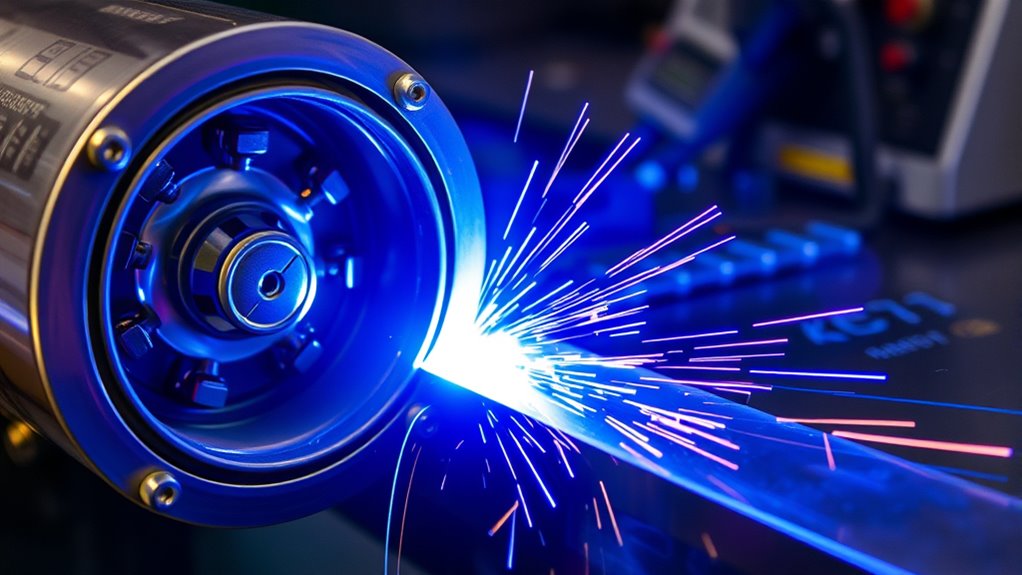
Cut quality depends on a stable arc and a clean air stream. When the compressor keeps up with the torch, the arc is easier to control, the kerf is more consistent, and molten metal clears the cut more cleanly. When airflow drops, the cut can become ragged, slow, or dross-heavy.
Airflow is only one part of the result. Torch height, travel speed, amperage, metal thickness, pierce technique, and consumable condition also affect bevel, dross, edge squareness, and heat input.
Heat-Affected Zone
The heat-affected zone, or HAZ, is the area beside the cut where heat changes the metal. A steady arc and correct travel speed help keep that area smaller because the torch is not dwelling too long in one spot.
If the internal compressor cannot supply enough air, the arc may lose energy or become unstable. You may slow down to finish the cut, which can increase heat input and leave a wider heat mark. The fix is not to force the cut. Check air output, consumables, ground connection, torch height, and the machine’s rated cut thickness.
Warping and Distortion
Warping happens when heat builds unevenly in the workpiece. Thin sheet metal is especially sensitive. Stable airflow helps because the torch clears molten metal quickly and lets you move at a steady speed. Poor airflow can make you pause, re-cut, or grind more, which adds heat.
- Keep travel speed steady: moving too slowly adds heat and increases dross.
- Use the right amperage: too much power on thin metal can widen the kerf and increase distortion.
- Let the cutter breathe: blocked vents or ignored cooldown breaks can reduce performance and shorten machine life.
Air Delivery: Pressure, CFM and Stability
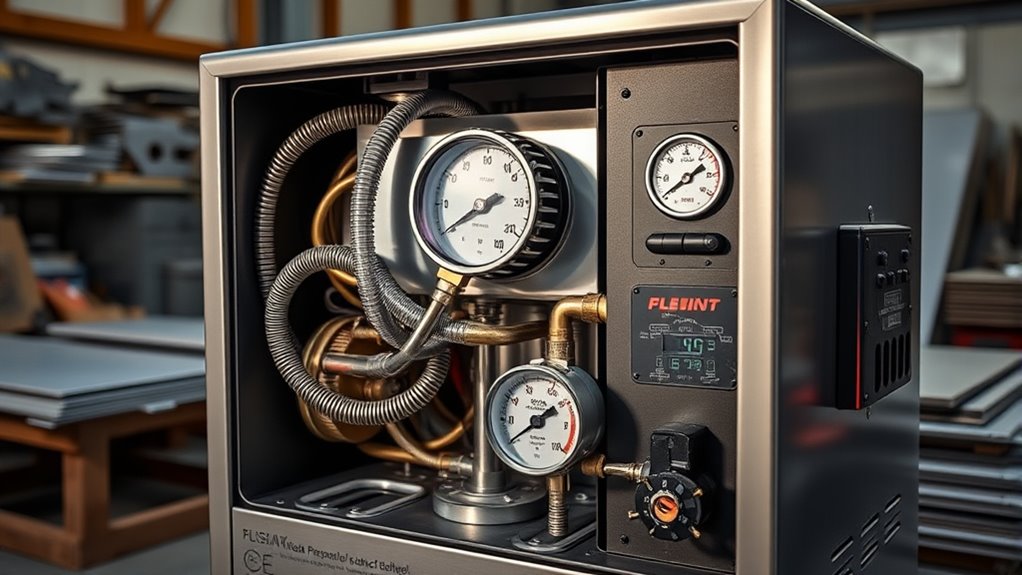
Air delivery is where many buyers get confused. Pressure and airflow are related, but they are not the same thing. PSI tells you pressure. CFM or SCFM tells you how much air volume the torch needs while cutting. A compressor can show pressure at idle and still fail to supply enough air under load.
For an internal compressor, the maker has already matched the compressor to that plasma cutter’s intended range. Your job is to stay inside the rated cut thickness, duty cycle, input voltage, and consumable setup. If you push beyond that range, the machine may still arc, but cut quality can drop quickly.
| Spec to Check | Why It Matters | Internal Compressor Note |
|---|---|---|
| Rated cut thickness | Best guide for clean, repeatable cuts. | Do not treat severance capacity as normal working capacity. |
| Duty cycle | Shows how long you can cut within a 10-minute period before cooling is needed. | Small onboard compressors make duty-cycle limits more important. |
| Input voltage | Affects available output power and cut capacity. | Dual-voltage machines may cut better on higher input voltage, if the manual allows it. |
| Air quality | Moisture and dirt shorten consumable life and hurt cut quality. | Drain moisture and service filters if your unit provides them. |
Signs of weak or unstable airflow include a sputtering arc, poor pierce starts, heavy bottom dross, a wider kerf than normal, fast electrode wear, or a cut that stops before the line is complete. When those signs appear, inspect the air path and consumables before assuming the plasma cutter is underpowered.
Maintenance, Reliability and Common Issues
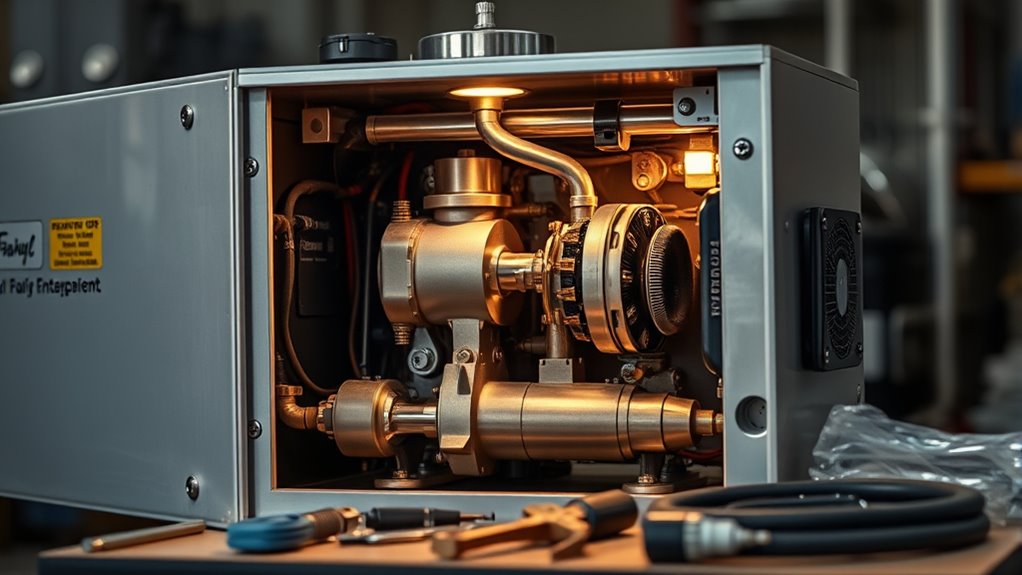
An internal compressor makes setup easier, but it gives you another system to maintain inside the cutter. Heat, dust, moisture, clogged filters, worn consumables, and air leaks can all reduce performance.
- Check filters: a restricted filter can reduce airflow and make the arc unstable.
- Drain moisture if the unit has a drain: water in the air path can shorten consumable life and create rough cuts.
- Inspect fittings and hoses: small leaks can lower pressure under load.
- Watch temperature: let the unit cool when it reaches its duty-cycle limit.
- Use clean consumables: worn tips and electrodes can mimic an air problem.
- Keep vents open: blocked airflow around the machine can cause overheating.
Log repeated problems. If the cutter begins to need longer cooldowns, struggles to pierce material it used to cut, or sounds different under load, the compressor, filter, fan, regulator, or torch consumables may need service.
Warning: Do not bypass pressure switches, safety covers, thermal protection, or grounding requirements. If the internal compressor fails, use manufacturer-approved service parts and follow the manual.
Noise, Power and Operational Trade-Offs
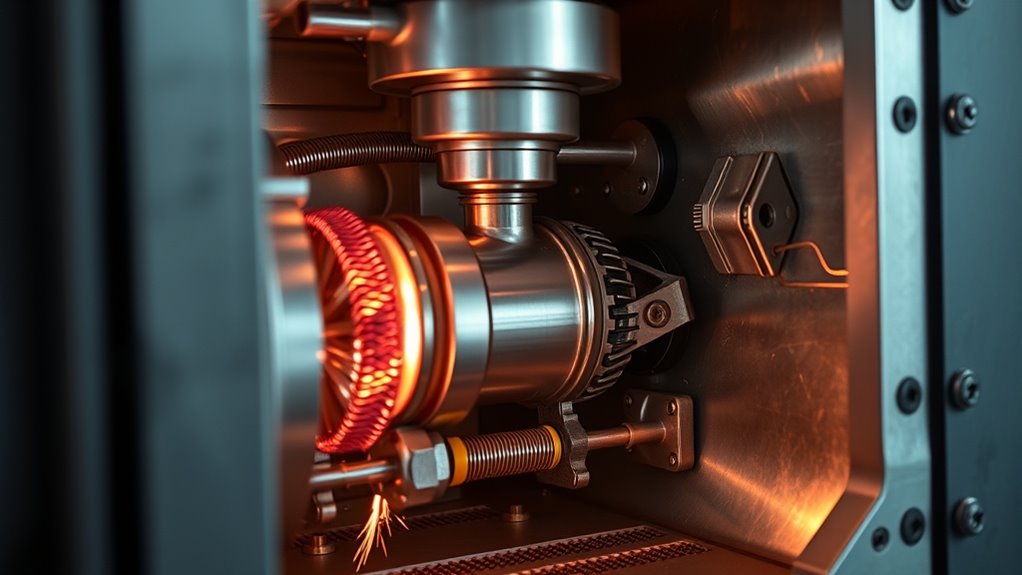
An internal compressor adds noise, heat, and electrical load inside the same machine. The exact sound level depends on the model, compressor type, cooling fan, enclosure, and workload, so check the listed dB rating instead of assuming a universal number.
Input power also matters. Some compact plasma cutters run on 120V, some run on 240V, and some are dual-voltage. Higher input voltage can allow better output and duty cycle on certain machines, but only if the model is designed for it. Use the plug, breaker, extension cord, and generator size recommended in the manual.
| Factor | Internal Compressor | External Compressor |
|---|---|---|
| Portability | Excellent, one unit to carry. | Lower, unless the compressor is already on site. |
| Setup speed | Fast, no air hose setup. | Slower, but more flexible in a shop. |
| Continuous cutting | Limited by small compressor and machine duty cycle. | Better when compressor CFM, tank size, and filtration are adequate. |
| Air quality control | Simple, but less expandable. | Can add better filters, dryers, and water separators. |
| Best fit | Repairs, hobby work, mobile jobs, short cuts. | Production work, CNC cutting, thick plate, long sessions. |
When to Choose an External Compressor Instead
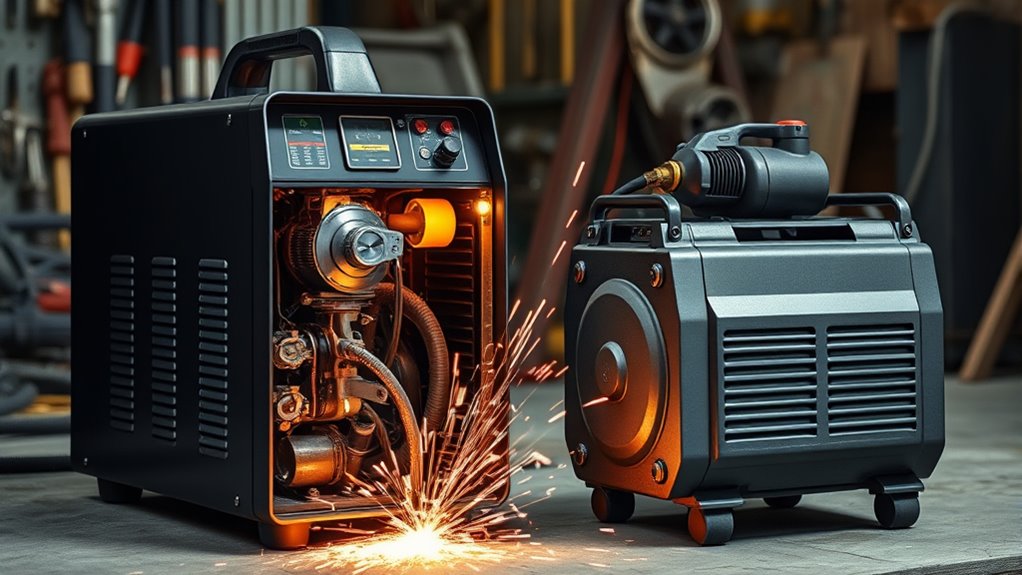
Choose an external compressor when sustained airflow matters more than portability. A well-sized external setup can provide more air volume, better moisture control, a larger reserve tank, and longer cutting time.
An external compressor is usually the better choice when you cut thick plate, run a CNC plasma table, make long straight cuts, work in production, or already have a dry shop-air system. It is also useful when several tools need air from the same source.
- Pick internal air when you need fast setup, easy transport, and short light-duty cuts.
- Pick external air when you need longer duty cycle, thicker cutting, better filtration, or shop-wide air use.
- Pick dual-capable equipment if the model supports both internal and external air and you want flexibility.
The best choice is not always the most powerful one. It is the setup that matches your material thickness, cut length, available power, and how often you move the machine.
Products Worth Considering
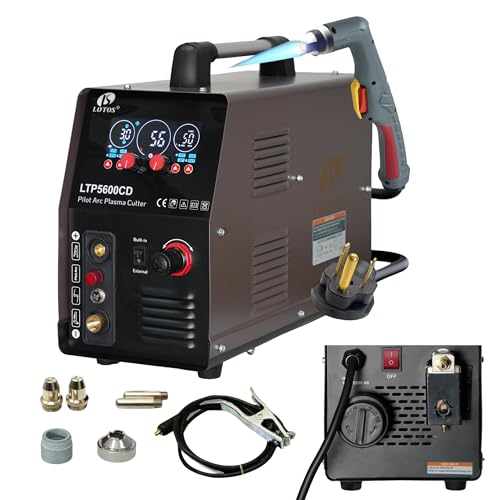
Drag-Cut Tracking for Shaky Hands (HVAC/Art): Rest and glide the torch nozzle directly on thin sheet metal templates or straightedges. Erases hand fatigue while ensuring exceptionally straight lines and smooth curves for custom ducts, stencils, and signmaking.

【Built in Air Compressor Save Costs & Space】:Complete Built in AIR SYSTEM,Zero External Units Needed,Integrated high-efficiency air pump eliminates the need for separate air compressors. Reduces equipment investment and maintenance by removing standalone compressors. Maximizes workshop space utilization,simply plug into power and start cutting with no extra equipment or complicated setup required.

BUILT-IN AIR PUMP & DUAL SOURCE AIR SUPPLY: This plasma cutter comes with an integrated air pump. No external air compressor required for immediate cutting, ideal for mobile service and field repair jobs. For long continuous cuts and cleaner cutting edges, connect an external 750W+ air compressor to handle heavy professional workloads.
Safety Checklist Before Cutting
Plasma cutting creates arc radiation, sparks, hot metal, fumes, noise, and electrical hazards. Treat it as hot work, even when the cutter is small and portable.
Warning: Wear proper eye and face protection, gloves, flame-resistant clothing, and closed-toe leather footwear. OSHA’s eye and face protection standard includes minimum shade guidance for plasma arc cutting.
- Control fire risk: move combustibles away or shield them before cutting. OSHA’s welding and cutting fire prevention rules call for fire-hazard control and suitable extinguishing equipment.
- Ventilate the area: cutting painted, coated, galvanized, or oily metal can release hazardous fumes. NIOSH notes that welding fumes are made of metals and can create health concerns, especially in confined or poorly ventilated spaces.
- Clamp the work properly: a poor work clamp connection can cause arc instability and shock risk.
- Never cut sealed containers: drums, tanks, and closed tubing can explode if vapors or pressure are trapped inside.
- Keep the work dry: water near electrical cutting equipment increases shock risk.
- Protect bystanders: use screens or distance to protect others from arc light and sparks.
Troubleshooting Airflow and Cut Problems
If the cutter worked well before and now struggles, start with the easy checks. Many “bad compressor” symptoms are caused by worn consumables, blocked airflow, poor grounding, or pushing the machine beyond its rated thickness.
| Problem | Likely Cause | Fix |
|---|---|---|
| Sputtering arc | Low airflow, moisture, worn consumables, or poor clamp contact. | Check filter, drain moisture, replace consumables, and clean the ground point. |
| Heavy dross | Wrong speed, low air, incorrect amperage, or dull tip. | Use the cut chart, adjust travel speed, and replace worn parts. |
| Cut stops mid-line | Duty-cycle limit, overheated unit, or material too thick. | Let the cutter cool and stay within the rated cut capacity. |
| Fast consumable wear | Moist air, dragging when not designed for it, too many pierces, or wrong parts. | Dry the air path, use correct standoff, and install the right consumables. |
Frequently Asked Questions
Can an internal compressor be replaced or upgraded later?
It may be replaceable as a service part, but it is not something you should upgrade casually. The compressor must match the cutter’s airflow, pressure, electrical load, controls, fittings, and safety design. Use manufacturer-approved parts and service instructions.
Does the internal compressor affect consumable lifespan?
Yes. Steady, clean, dry air helps the electrode and nozzle last longer. Moisture, dirt, low airflow, poor torch height, and repeated bad starts can wear consumables faster and create rougher cuts.
Are there safety certifications for built-in compressors?
Look for the safety listings and markings required for the complete plasma cutter in your region, such as UL, CSA, ETL, CE, or other recognized marks where applicable. Also follow the manual for electrical input, grounding, ventilation, PPE, and compressor service limits.
Can internal compressors operate in cold environments?
They can, but cold weather can reduce performance, thicken lubricants in some compressor designs, increase condensation problems, and affect electronics. Store the cutter dry, let it warm up within the manual’s temperature range, and drain moisture as directed.
How does altitude affect internal compressor performance?