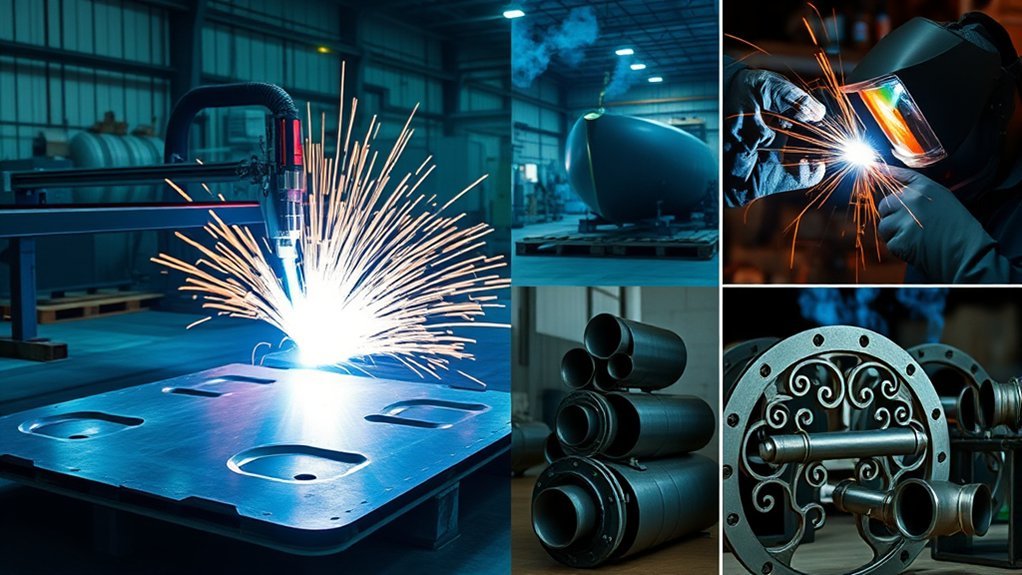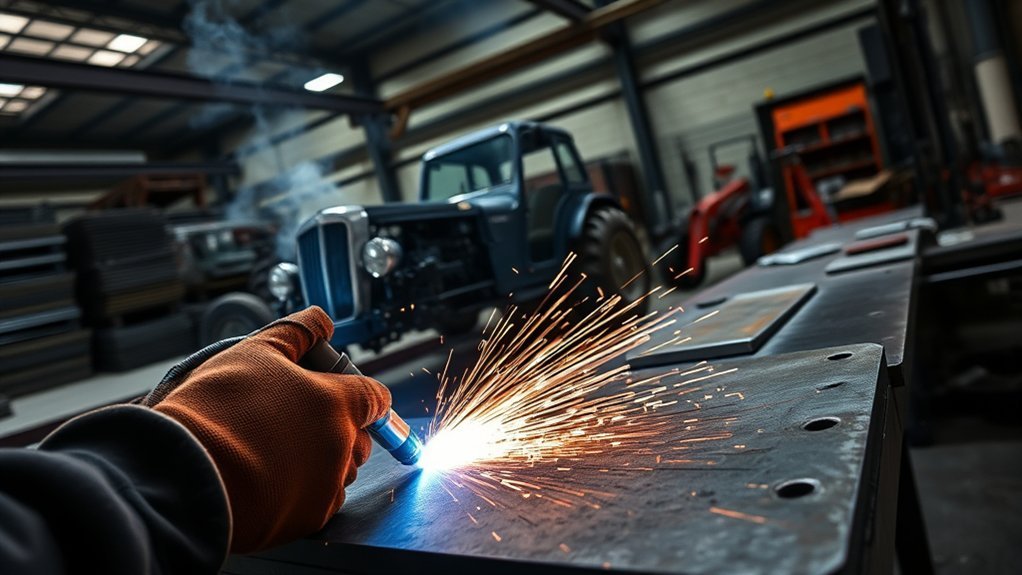
You can use a plasma cutter anywhere you need fast, accurate cuts in electrically conductive metal. It works well for steel plate, stainless steel, aluminum, brackets, frames, repair patches, exhaust parts, farm equipment, structural components, and decorative panels. The best results come from matching the machine, amperage, air or gas quality, consumables, torch height, and travel speed to the material you are cutting.
Quick Answer
Plasma cutters are used to cut conductive metals such as mild steel, stainless steel, aluminum, copper, and brass. Common uses include CNC fabrication, automotive parts, structural steel, farm repairs, heavy equipment repair, metal art, HVAC work, and fast shop cutting where a saw, grinder, or oxy-fuel torch would be slower or less precise.
Key Takeaways
- Plasma cutting is best for conductive metals, especially steel, stainless steel, and aluminum.
- CNC plasma cutting is useful for repeatable production parts, while handheld plasma is better for repair, demolition, and one-off work.
- Cut quality depends on amperage, material thickness, air or gas quality, torch height, travel speed, and consumable condition.
- Painted, galvanized, stainless, and coated metals need strong fume control because cutting can release hazardous metal fumes and gases.
- Plasma is fast and versatile, but laser, waterjet, saws, shears, or oxy-fuel may be better for some materials, tolerances, or edge-finish requirements.
Warning: Plasma cutting is hot work. Wear shade-rated eye and face protection, gloves, flame-resistant clothing, and hearing protection. Remove or shield combustibles, use local exhaust or other ventilation, and follow your machine manual, shop hot-work procedure, and applicable OSHA or local safety rules.
What Plasma Cutters Are Best Used For
A plasma cutter is most useful when you need fast metal cutting with a smaller kerf than many torch-cutting methods and less physical effort than a grinder or saw. It is especially helpful for sheet, plate, brackets, gussets, tubing, pipe, tabs, panels, repair patches, and irregular shapes.
Plasma cutting is not the best answer for every job. It needs an electrical path through the workpiece, so it is not meant for wood, plastic, glass, stone, or other nonconductive materials. It can also leave dross, bevel, and a heat-affected edge if the setup is wrong.
| Job Type | Plasma Cutter Fit | Better Alternative When… |
| General steel plate and brackets | Excellent for speed and shape flexibility | Use laser or waterjet for very tight tolerances or fine holes |
| Automotive repair and fabrication | Good for chassis tabs, exhaust flanges, patch panels, and brackets | Use shears or snips for very thin body sheet when heat must be minimal |
| Field repairs | Excellent with a portable unit and clean power/air supply | Use a saw or grinder if sparks, fumes, or fire risk cannot be controlled |
| Thick carbon steel | Good if the machine has enough output and duty cycle | Use oxy-fuel for very thick carbon steel when edge precision is less critical |
| Decorative metalwork | Great for signs, panels, silhouettes, furniture parts, and repeat patterns | Use laser or waterjet for very fine detail or no heat-affected edge |
Industrial Metal Fabrication and CNC Integration
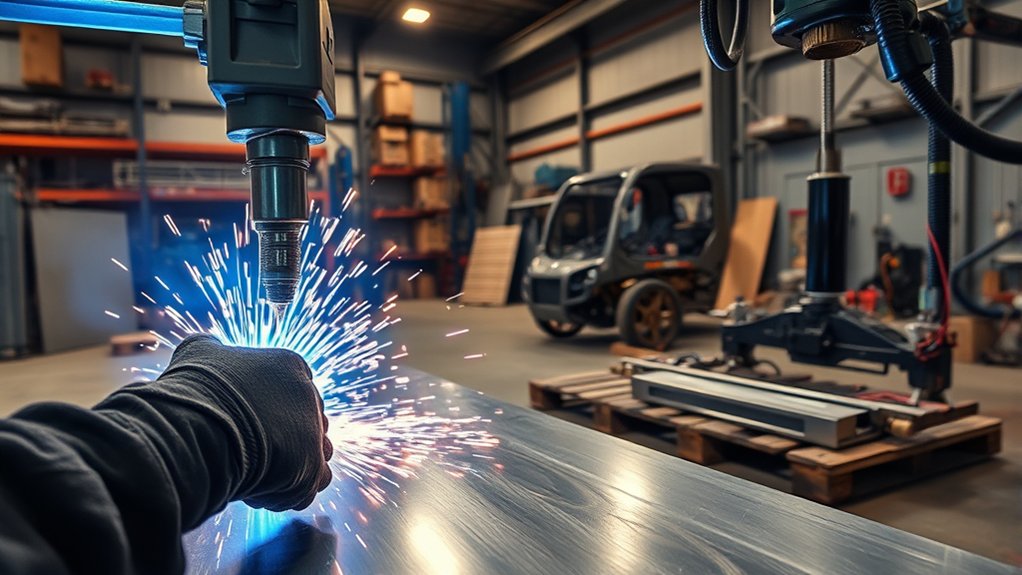
In fabrication shops, plasma cutting is often used to turn CAD drawings into repeatable metal parts. A CNC plasma table moves the torch along programmed toolpaths, while the operator controls material setup, amperage, cut speed, consumables, and torch height.
For repeat work, you use kerf compensation so the finished part lands closer to the intended size. You also use nesting software to place parts efficiently on a sheet or plate, which reduces scrap and lowers cost per part.
The biggest gains from CNC plasma cutting come from repeatable setup: dry air, good consumables, correct cut height, verified feed rate, and a clean work clamp.
High-definition plasma systems can produce cleaner edges than basic air plasma, especially when the machine, gas, table motion, and torch height control are set correctly. Even then, you should verify the first part with calipers, gauges, or a test coupon before running a full batch.
A strong shop workflow usually looks like this:
- Import the CAD file and confirm scale, material, and part orientation.
- Apply the correct kerf offset and lead-in/lead-out positions.
- Nest parts to reduce waste while leaving enough space for heat and tip-up control.
- Set amperage, gas or air, pierce delay, pierce height, cut height, and feed rate.
- Cut a sample or first article, then check hole size, edge bevel, dross, and part dimensions.
- Record settings that produced a clean, repeatable result.
Pro Tip: If your CNC plasma parts vary from one side of the sheet to the other, check plate flatness, slat condition, torch height control, ground clamp contact, and consumable wear before blaming the program.
Automotive Part Production and Customization
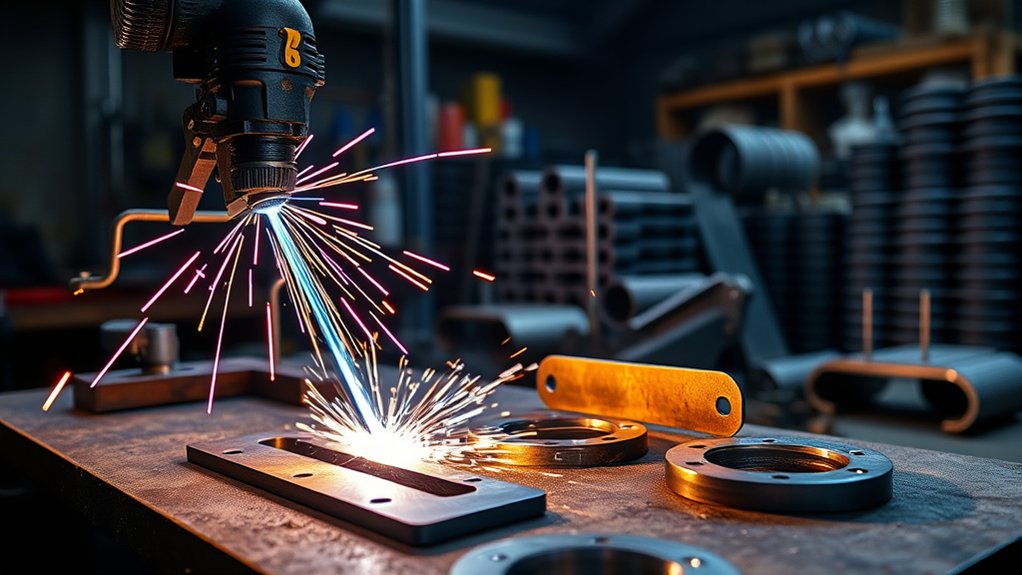
Automotive shops use plasma cutters for brackets, tabs, frame repair patches, exhaust flanges, skid plates, suspension mounts, body repair pieces, and custom panels. The main benefit is speed. You can rough out a part quickly, test-fit it, and refine the profile without waiting for outside cutting.
For production work, CNC plasma helps keep parts consistent from one vehicle or batch to the next. For repair work, a handheld plasma cutter helps remove damaged metal, cut patch shapes, and trim parts in tight areas.
Precision Chassis Fabrication
For chassis work, plasma cutting is useful for brackets, gussets, tabs, crossmember plates, reinforcement patches, and fixture parts. You can cut complex profiles faster than with a grinder, drill, and hole saw setup.
Accuracy still depends on fit-up and inspection. Cut edges should be cleaned before welding, holes should match the fastener size and tolerance needed, and structural repairs should follow the vehicle maker’s repair information or an approved fabrication plan.
To reduce distortion, avoid lingering in corners, use the right travel speed, and let parts cool naturally. On thin sheet or boxed sections, make short planned cuts instead of overheating one area.
Exhaust System Customization
Plasma cutters are helpful for exhaust flanges, hanger brackets, collector parts, muffler shells, and fixture plates. Stainless steel can be cut cleanly when the machine has the right output and the operator controls speed and torch height.
For exhaust parts, the goal is not just a clean-looking cut. You want parts that fit without forcing the joint, keep flow paths smooth, and reduce welding gaps. Clean kerfs also reduce grinding before TIG or MIG welding.
- Cut flanges to match port shape and bolt spacing.
- Deburr edges before welding or final assembly.
- Keep stainless parts clean to reduce contamination before welding.
- Use test pieces when dialing in stainless or aluminum settings.
High-Speed Panel Cutting
For body, chassis, and bracket panels, plasma cutting lets you move from a drawing or cardboard template to a usable metal part quickly. CNC cutting is best when you need several identical panels. Hand cutting is best when you are trimming a one-off patch or access opening.
Thin automotive sheet can warp if you add too much heat. Use lower amperage, fast movement, a steady hand, and enough standoff control to avoid dragging the tip unless your consumables are designed for drag cutting.
After cutting, inspect the edge for dross, hardened scale, and heat discoloration. Clean the edge before welding, adhesive bonding, primer, or paint.
Construction, Infrastructure, and Structural Steel
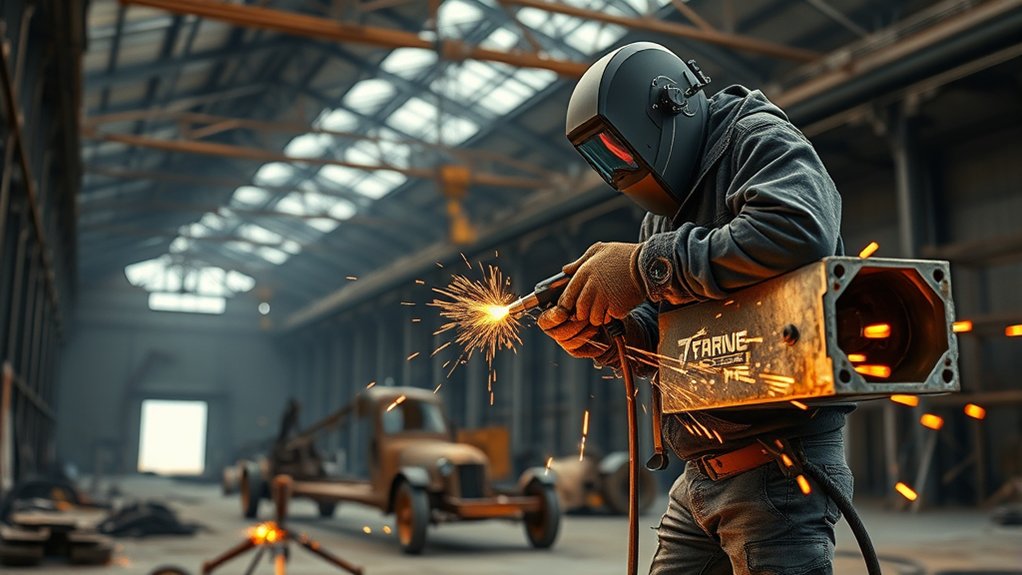
In construction and infrastructure work, plasma cutters are used for beams, columns, plates, pipe, base plates, gussets, stiffeners, access holes, cope cuts, and controlled removal of damaged sections. The work can be done in a shop or in the field, depending on the machine, power supply, access, and safety controls.
For structural work, plasma cutting should support the approved drawings, weld procedure, inspection plan, and project requirements. The cut itself does not make the work code-compliant. Compliance depends on the full procedure, material, fit-up, welding, inspection, and engineering approval.
Beam and Column Cutting
Plasma cutting can produce beam copes, web openings, flange trims, and connection plates faster than many manual methods. Before production cutting, verify dimensions against the detailing model or shop drawing.
For thick sections, run a test cut to check kerf width, bevel angle, edge condition, and heat input. A clean cut can reduce grinding, but structural edges may still need prep before welding, bolting, coating, or inspection.
- Confirm the cut line against the drawing before striking the arc.
- Support the member so the offcut cannot pinch the torch or fall unexpectedly.
- Sequence cuts to reduce heat buildup and protect straightness.
- Keep sparks away from combustibles and hidden spaces.
Pipe and Plate Fabrication
Pipe and plate shops use plasma cutting for saddle cuts, miters, cope profiles, holes, bevels, base plates, bridge-deck components, and large gussets. A rotary pipe fixture or pipe-cutting attachment can improve consistency when the same profile must be repeated.
For plate work, match amperage and consumables to thickness. For pipe, confirm the fit around the full joint, not just at one point. Small errors in rotation, torch angle, or height can create gaps that make welding harder.
When a cut edge will become weld prep, check bevel angle, land, root opening, and surface condition against the welding procedure. Remove dross, slag-like deposits, oil, paint, and loose scale before welding.
On-Site Structural Repairs
In the field, a portable plasma cutter can remove cracked plates, trim repair patches, cut access openings, and section damaged components. It is useful because it cuts quickly and works on many conductive metals.
Field repairs need stricter planning than bench work. Before cutting, confirm load paths, temporary bracing, fire hazards, coatings, fume control, and whether a hot-work permit or fire watch is required. OSHA hot-work guidance requires moving fire hazards when possible, guarding hazards that cannot be moved, and avoiding cutting or welding when required precautions cannot be followed.
- Validate the repair plan before cutting structural members.
- Keep fire extinguishing equipment ready for immediate use.
- Watch for sparks traveling through cracks, floor openings, ducts, and wall gaps.
- Document cut settings, consumables, inspection results, and repair steps when the job requires traceability.
Farming and Ranch Maintenance With Plasma Cutting
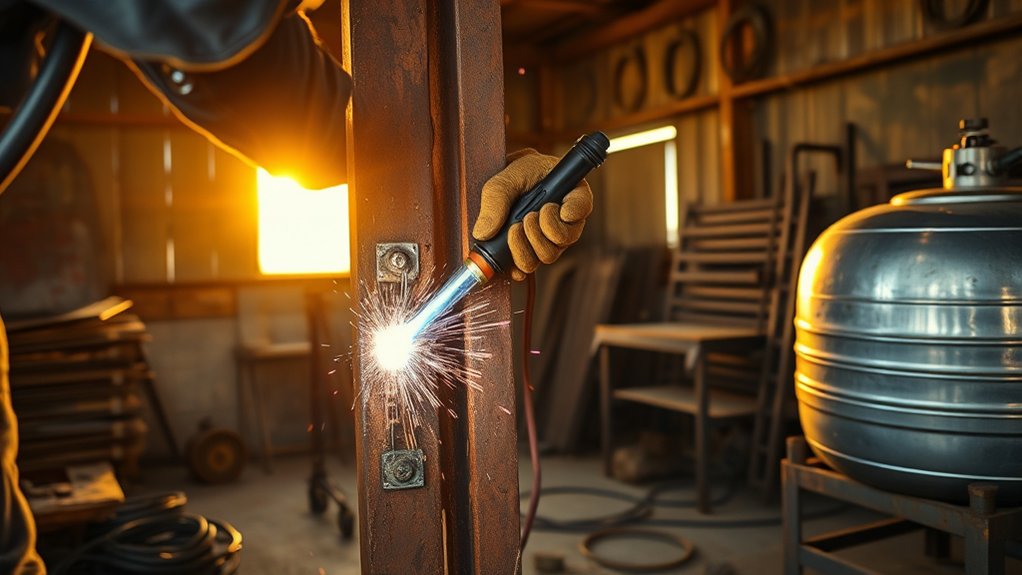
On farms and ranches, plasma cutters are often used to keep equipment working when downtime is expensive. You can cut repair patches, remove seized parts, trim brackets, open damaged guards, modify trailers, and fabricate mounts for tractors, combines, balers, trucks, and gates.
A portable plasma cutter is especially useful when the material is rusty, painted, or irregular. Even so, heavy rust, grease, paint, and galvanized coatings can affect arc stability and create more fumes or dross. Clean the cut path when practical, and use ventilation or respiratory protection when the coating is unknown or hazardous.
For repair work, handheld cutting usually matters more than perfect edge quality. You still need enough accuracy for fit-up. Mark the cut clearly, clamp the work, keep the torch steady, and test your settings on scrap of similar thickness.
Modern plasma systems may use cartridge-style or data-tracking consumables that help standardize setup and monitor arc starts, pierces, or arc-on time. That can help with maintenance planning, but the most important basics are still dry air, correct consumables, proper work clamp contact, and a steady torch.
Plasma gouging can also remove cracked welds, broken brackets, or seized fastener areas faster than grinding alone. Use it carefully, because gouging removes metal aggressively and can damage the base part if you stay in one area too long.
Heavy Machinery Manufacturing and Repair
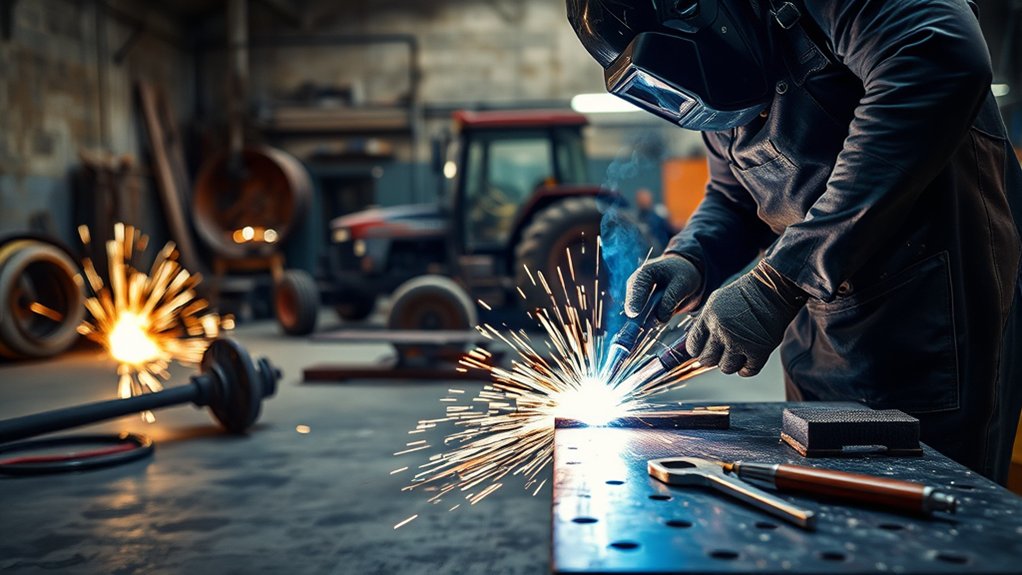
Heavy machinery manufacturing uses plasma cutting for thick plate, wear parts, gussets, tabs, flanges, access panels, bucket repairs, frame patches, and component fit-up. These parts often need speed, strength, and consistent geometry more than a polished edge.
CNC plasma is useful for repeat parts such as brackets, side plates, reinforcement webs, and wear liners. Handheld plasma is useful for field repairs, crack removal, damaged plate removal, and fitting patches on equipment that cannot be easily moved.
For heavy equipment work, plasma cutting saves the most time when it reduces grinding, drilling, and fit-up work after the cut.
Use these checks before cutting heavy machinery parts:
- Confirm material type, thickness, and whether the part is hardened, coated, or heat-treated.
- Select amperage and consumables for the actual thickness, not just the machine’s maximum rating.
- Set pierce delay correctly so the arc fully pierces before the torch moves.
- Use lead-ins and lead-outs where the start mark should not remain on the final edge.
- Clean cut edges before welding or bolting.
- Inspect consumables often because worn nozzles can cause bevel, dross, and poor hole quality.
In the field, protect hoses, leads, hydraulic lines, wiring, glass, tires, and fuel sources from sparks. Do not cut sealed components, tanks, or unknown cavities until they are properly cleaned, vented, and verified safe.
Artistic, Furniture, and Architectural Metalwork
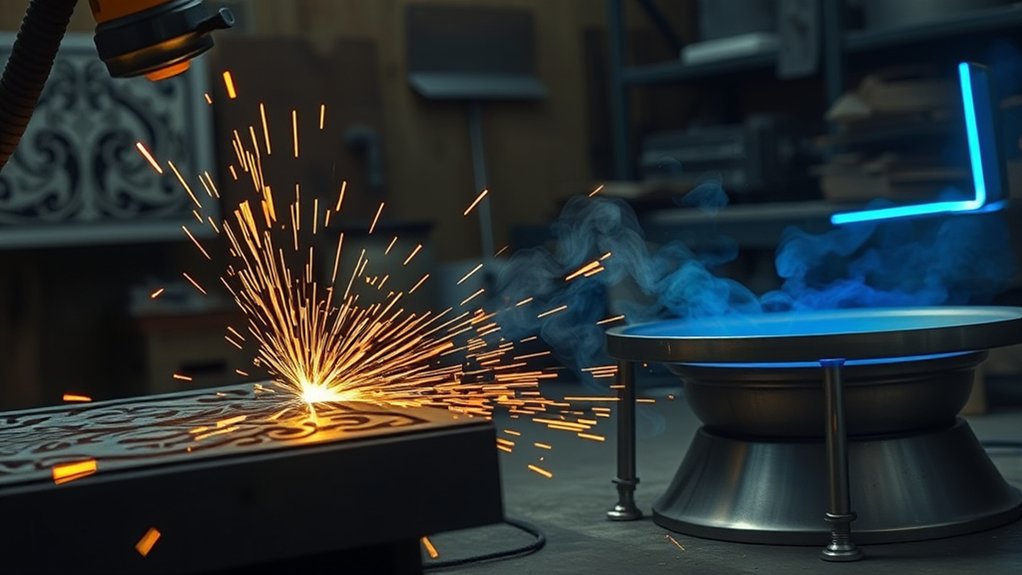
Plasma cutting is also popular for signs, furniture, lighting fixtures, wall art, gates, railing panels, garden art, and architectural screens. It lets you cut curves, letters, logos, scrollwork, brackets, and repeat patterns from sheet or plate.
For decorative work, edge quality matters because the cut may remain visible after finishing. Use clean material, dry air, correct consumables, and the right speed. Too slow can leave heavy dross and a wider heat mark. Too fast can cause an incomplete cut or angled edge.
For furniture, plasma-cut tabs and slots can help parts self-locate during assembly. This improves fit-up and saves layout time. For architectural panels, label parts and track drawing revisions so the installed pattern matches the design.
Stainless steel and aluminum need extra care. They can show discoloration and edge roughness if the settings are wrong. If the project requires a very fine edge, a polished face, or no heat-affected edge, compare plasma with laser or waterjet before choosing the process.
Materials Plasma Cutters Can and Cannot Cut
Plasma cutters work on electrically conductive materials because the arc must travel through the workpiece. Common plasma-cut materials include:
- Mild steel
- Stainless steel
- Aluminum
- Copper
- Brass
- Cast iron, when the machine and setup are appropriate
- Expanded metal and grating, with suitable technique and machine settings
Plasma cutters are not meant for wood, plastic, glass, rubber, tile, stone, fiberglass, or other nonconductive materials. They also are not ideal when you need a no-heat cut, a mirror-smooth edge, or extremely small holes in thin material.
Note: A machine’s “maximum severance cut” is not the same as its clean production capacity. For cleaner edges and better duty cycle, choose a plasma cutter that comfortably handles your normal material thickness instead of running at its limit all day.
Handheld vs. CNC Plasma Cutting
A handheld plasma cutter is best for repairs, demolition, quick trimming, farm work, mobile jobs, and one-off fabrication. It is flexible and portable, but the final quality depends heavily on your hand control, guide, and setup.
A CNC plasma cutter is best for repeat parts, production batches, complex profiles, signs, brackets, plates, and jobs where you need consistent dimensions across many pieces. It costs more and requires programming, but it can save time and material when the same parts are cut often.
- Choose handheld plasma when access, portability, and fast repair matter most.
- Choose CNC plasma when repeatability, nesting, production speed, and shape accuracy matter most.
- Choose high-definition CNC plasma when edge quality and dimensional control need to be better than basic air plasma can provide.
Products Worth Considering

CNC Interface for Table Integration: Connect to a compatible CNC plasma table using the built-in interface with remote start input and Arc OK output. Arc-voltage output supports compatible external torch height control (THC) equipment for making custom brackets, metal signs and repeat parts.
![ANDELI 65 Amp Plasma Cutter [CNC Enabled][ Non-HF],1.06" Max Cut](https://m.media-amazon.com/images/I/51HzSS1IgqL._SL500_.jpg)
【Large Digital Display】The upgraded LED interface clearly displays key parameters such as air pressure, voltage, current, and working status in real time, allowing users to monitor machine performance and make timely adjustments for more efficient operation. If an issue occurs, the screen shows an error code to help quickly identify the problem and simplify troubleshooting.

ALL-IN-ONE HI-END TECHNOLOGY PLASMA CUTTING MACHINE SET: Redefine your metal crafting experience with the Eastwood Versa Cut 4X4 CNC Plasma Table and Plasma Cutting Machine Torch Set. Crafted for those who demand perfection and a user-friendly metal fabrication experience. This all-in-one powerhouse brings a new level of control and versatility to your workshop or home garage. A fusion of precision, efficiency, and cutting-edge technology in one bundle.
Setup Checklist for Cleaner Plasma Cuts
Many plasma cutting problems start before the arc fires. A quick setup check can prevent dross, bevel, arc dropouts, and short consumable life.
- Power: Use the voltage, breaker, extension cord, and generator rating allowed by the machine manual.
- Air or gas: Use clean, dry air or the correct gas mix for the system. Moisture can shorten consumable life and roughen the cut.
- Consumables: Match electrode, nozzle, shield, and swirl ring to the amperage and cutting type.
- Work clamp: Attach the clamp to clean metal, close to the work when possible.
- Amperage: Match output to material thickness and consumable rating.
- Torch height: Use the correct pierce height and cut height. Too high or too low can cause bevel, spatter, and poor edge quality.
- Speed: Move fast enough to avoid heavy dross but slow enough to fully cut through.
- Fire safety: Clear combustibles, shield nearby hazards, and keep extinguishing equipment ready.
- Ventilation: Use source capture or other ventilation, especially on stainless, galvanized, painted, or coated materials.
Products Worth Considering

Package Include: 10 Shield Cups, 50 Nozzles, 20 Swirl Baffle, and 30 Electrodes.

[Achieve Precise Cuts] PT31 Plasma Cutting Consumables – Your Essential Tool for Efficient Cutting! Whether you're working with sheet metal, steel, or any other material, superior cutting performance ensure clean, accurate, and smooth cuts.

High-Quality Material:Made of high quality material to ensure a longer lifespan and superior performance.
Common Plasma Cutting Problems and Fixes
If the cut looks rough, do not change every setting at once. Change one factor, test again, and compare the edge.
| Problem | Likely Cause | Fix |
| Heavy bottom dross | Travel speed too slow, amperage too low, or worn consumables | Increase speed slightly, verify amperage, and inspect nozzle/electrode |
| Arc does not cut through | Speed too fast, amperage too low, poor ground, or material too thick | Slow down, raise output within consumable limits, clean clamp area, or use a larger machine |
| Wide bevel | Torch height wrong, damaged nozzle, or wrong cut direction | Reset cut height, replace worn parts, and confirm direction for the good side of the cut |
| Short consumable life | Wet air, wrong pierce height, excessive piercing, or wrong parts | Dry the air, pierce at the correct height, use edge starts when possible, and match consumables |
| Arc drops out | Poor work clamp, low air pressure, bad consumables, or poor power supply | Clean the clamp point, check air flow, inspect parts, and verify input power |
Safety Practices, Optimization, and Consumable Management
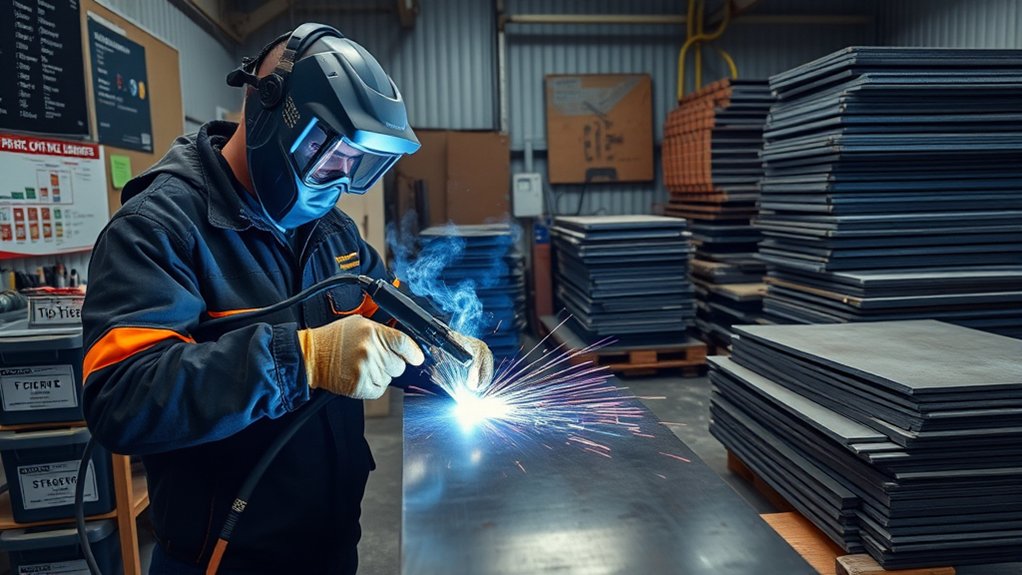
Before you strike an arc, set up the job for safety and cut quality. Plasma cutting can expose you to flying sparks, molten metal, arc radiation, noise, electrical hazards, compressed air, and airborne metal fumes. OSHA’s eye and face protection standard requires appropriate protection for hazards such as flying particles, molten metal, and injurious light radiation.
For plasma arc cutting, choose a helmet or face shield with a suitable filter shade for the amperage and visibility of the arc. Also wear safety glasses under the shield, flame-resistant clothing, gloves, and closed leather footwear. Avoid synthetic clothing because sparks and molten particles can melt it.
Control fire hazards before you cut. OSHA’s welding and cutting fire-prevention rules require movable fire hazards to be taken to a safe place where possible, and guards or shields to be used when hazards cannot be moved. Keep extinguishing equipment ready, and use a fire watch when sparks could ignite hidden or nearby combustibles.
Fume control matters, especially when cutting stainless steel, galvanized steel, painted metal, solvent-coated parts, or unknown coatings. OSHA’s welding fume fact sheet notes that plasma cutting can generate airborne metal fume and recommends controls such as understanding the material hazards, cleaning coatings that can create toxic exposure, positioning yourself away from fumes, and using local exhaust ventilation near the plume source.
Consumable management also affects safety and quality. A damaged nozzle can widen the arc and create a rougher, less predictable cut. A worn electrode can cause unstable starts and poor edge quality. Replace consumables as a matched set when the manufacturer recommends it, and keep spares dry and clean.
- Inspect torch leads, air lines, fittings, and the work clamp before cutting.
- Drain compressor moisture and use filtration or drying equipment when needed.
- Keep leads and hoses out of walkways and away from hot offcuts.
- Do not cut sealed containers, tanks, drums, or cavities unless they are properly cleaned, vented, and verified safe.
- Document proven settings for repeated materials and thicknesses.
- Review the safety data sheet for coated or unknown materials before cutting.
Warning: Never assume an “empty” tank, drum, pipe, or closed tube is safe to cut. Heat can ignite vapors or pressure trapped inside. Clean, purge, vent, test, and follow approved hot-work procedures before cutting any container or enclosed space.
Frequently Asked Questions
What power supply and amperage do home workshops need for plasma cutters?
Many light-duty plasma cutters can run on 120V power for thin sheet metal, while thicker cutting usually requires 240V input and a dedicated circuit. The right amperage depends on material thickness, cut quality expectations, and duty cycle. Always follow the machine manual for input power, breaker size, extension cord limits, compressor requirements, and maximum rated cut.
How does plasma cutting compare to laser and waterjet for cost?
Plasma cutting is usually the cost-effective choice for fast cutting of steel, stainless steel, and aluminum plate when a slight heat-affected edge is acceptable. Laser cutting is better for fine details, thin sheet, and tight holes. Waterjet is better when you need no heat-affected zone, but it is usually slower and more expensive to run.
Can plasma cutters handle painted, rusty, or galvanized metals safely?
Yes, plasma cutters can often cut painted, rusty, or galvanized metal, but safety and cut quality need extra attention. Coatings can create hazardous fumes, and rust or paint can cause more dross and arc instability. Clean the cut path when practical, use local exhaust or other ventilation, and use respiratory protection when required by the hazard assessment and safety rules.
What air quality and filtration requirements do shops need?
Shops should control plasma cutting fumes at the source when possible. Use local exhaust ventilation, downdraft or water tables where appropriate, spark-safe collection equipment, and air monitoring when required. Filtration choice depends on the metal, coating, volume of cutting, and local rules. Respirators may be needed when ventilation and work practices do not keep exposure low enough.
How do ambient temperature and humidity affect cut quality?
Humidity is often the bigger problem because moisture in compressed air can shorten consumable life and roughen the cut. Temperature changes can also affect condensation in hoses, regulators, and filters. Keep air dry, drain the compressor, maintain filters, and let consumables and the machine operate within the manufacturer’s temperature range.
What metals can a plasma cutter cut?
A plasma cutter can cut electrically conductive metals, including mild steel, stainless steel, aluminum, copper, brass, and some cast iron applications. It cannot cut nonconductive materials such as wood, plastic, glass, rubber, or stone.
Why does my plasma cutter leave dross?
Dross usually comes from the wrong speed, amperage, torch height, air quality, or worn consumables. Bottom dross often means the torch is moving too slowly or the setup is not hot enough. Top spatter can mean the torch is too high, the air is wet, or the consumables are damaged.
Conclusion
Plasma cutters are used because they make metal cutting faster, cleaner, and more flexible across many jobs. In a shop, CNC plasma turns drawings into repeatable brackets, plates, panels, and production parts. In the field, handheld plasma helps with repair, trimming, removal, and fabrication when a saw or grinder would be too slow.
The best results come from matching the process to the job. Choose the right machine output, use clean and dry air, install the correct consumables, control torch height, set the right speed, and protect yourself from fumes, sparks, arc light, and fire hazards. When those basics are handled well, plasma cutting becomes one of the most useful metalworking processes for fabrication, repair, construction, agriculture, machinery, and custom metalwork.
Sources
- OSHA Welding, Cutting, and Brazing — supports the article’s safety and standards context for welding, cutting, and brazing work.
- OSHA 1910.133 Eye and Face Protection — supports shade-rated eye and face protection guidance for arc cutting and plasma arc cutting.
- OSHA Fact Sheet: Controlling Hazardous Fume and Gases during Welding — supports fume-control guidance for welding, oxy-fuel cutting, and plasma cutting.
- OSHA 1910.252 General Requirements for Welding, Cutting, and Brazing — supports hot-work fire prevention, guarding, fire watch, and container safety guidance.