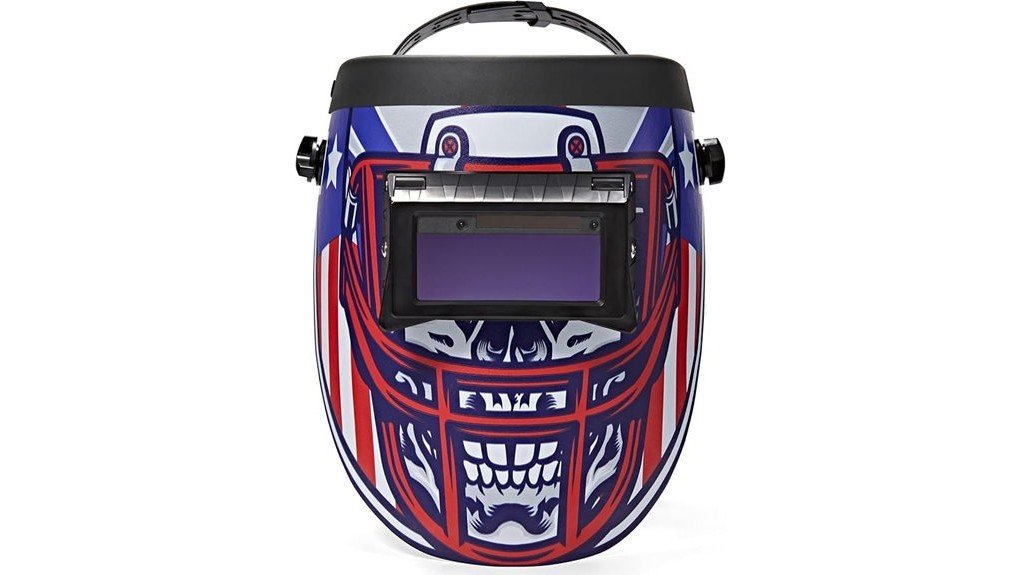
This lightweight auto darkening welding helmet weighs 12.5 ounces per the listing, and its shell is described as vulcanized fiber that resists heat and water. The listing also mentions an adjustable auto-darkening filter and a flip-up lens for switching between welding and grinding. This page covers what those details mean, which specs the listing leaves out, and who should skip it.
Quick Verdict
Best For: Welders who value low weight and a traditional fiber shell, and who will confirm the missing specs on the listing before ordering.
Bottom Line: Low weight and a heat-resistant shell are the selling points. The listing details reviewed here do not give the shade range, switching speed, power source or certification, so check those before you rely on it.
| Specification | Detail (per the listing unless noted) |
|---|---|
| Product type | Auto-darkening welding helmet |
| Amazon ASIN | B0DMVXKBC8 |
| Weight | 12.5 ounces |
| Shell material | Vulcanized fiber, described as heat and water resistant |
| Lens | Adjustable auto-darkening filter |
| Flip-up feature | Flip-up lens for switching between welding and grinding |
| Not verified | Shade range, switching speed, sensor count, power source, viewing area, certification and warranty. Confirm on the live listing. |
What Is This Lightweight Auto Darkening Welding Helmet?
It is a full-face welding helmet with an auto-darkening filter. The lens stays light while you set up and darkens when the sensors see the arc, so you can keep the helmet down between welds.
The listing stresses weight and the fiber shell. At 12.5 ounces it should put less strain on your neck than a heavier helmet, which matters on long sessions and overhead work.
Who Should Buy It?
- Welders who want a light helmet for long sessions or overhead positions.
- Users who like the feel of a vulcanized fiber shell.
- Garage welders who also grind and want a flip-up lens, once they confirm how it works.
Skip it if you need a certified helmet for jobsite work, a known battery and sensor setup, or a published shade range and switching speed.
The Vulcanized Fiber Shell
Vulcanized fiber is a traditional welding-helmet material. It resists heat and spark better than many plain plastics and stays light, which fits the weight figure. It can scuff and wear at the edges over time, and any shell should be replaced if it cracks, warps or is damaged by impact.
A shell protects against sparks and spatter, but the filter lens decides how well your eyes are protected from the arc. Check the lens markings, not just the shell.
How to Choose the Right Shade
The shade must match your process and amperage, and the right number comes from the chart in your manual. As a rough orientation, lower-amperage TIG often uses lighter dark shades, while MIG and stick work generally calls for darker ones. Treat any range as a starting point.
- Set the shade before you strike the arc, not after.
- If the puddle is hard to see, step the shade lighter only a little at a time.
- If the arc feels harsh or you squint, go darker.
The listing details reviewed here do not state the shade range, so confirm it before you buy if you do low-amperage TIG or heavy stick work.
Flip-Up Lens and Grinding
The listing mentions a flip-up lens to move between welding and grinding. In most flip-up designs the front frame lifts to show a clear lens so you can chip slag or grind without removing the helmet. Check whether a clear lens is included and rated for impact.
Wear safety glasses under any helmet, and use a full face shield for heavy grinding.
Setup and Care
- Adjust the headgear so the helmet sits level and does not press on your forehead.
- Test the lens on a short strike on scrap before starting a weld.
- Keep sensors and lens clean, and replace scratched cover lenses.
- Check the manual for the battery type and how to replace it.
Pros and Limitations
Pros
- Light at 12.5 ounces per the listing.
- Heat and water resistant vulcanized fiber shell.
- Adjustable auto-darkening filter.
- Flip-up lens for grinding tasks.
Limitations
- Shade range, switching speed and power source are not given in the details reviewed.
- Certification and warranty are not verified here.
- Fiber shells can scuff and wear at the edges.
- Viewing area size is not stated on this page.
Related guides: How an auto-darkening welding helmet works | Auto-darkening vs fixed shade helmets | Best welding helmets
Frequently Asked Questions
How much does this helmet weigh?
The listing gives 12.5 ounces. Weight depends on the headgear and any accessories, so compare with the weight on the live listing.
How do I choose the right shade?
Use the chart in the manual for your process and amperage, then fine-tune so you can see the puddle without squinting. Lower-amperage TIG usually needs a lighter dark shade than heavy MIG or stick.
Can the lens be replaced if it is damaged?
Replacement lens fit is not confirmed here. Check the model on the listing and ask the seller before you order spares, and replace a damaged lens before welding again.
Does it fit over prescription glasses?
Fit depends on the headgear and your frames, and this page cannot confirm it. Try the helmet on with your glasses and check that nothing presses or shifts.
What about battery life and warranty?
Neither is verified on this page. Check the manual for the battery type and the seller and Amazon return terms for warranty or returns.
The Bottom Line
This lightweight auto darkening welding helmet is worth a look if low weight and a fiber shell matter to you and you are happy to confirm the shade range and power details on the listing. Skip it if you need a certified helmet or published specs up front. All figures come from the listing and have not been tested or independently verified.
Ready to Buy?
Check the current price and listing details before you decide.