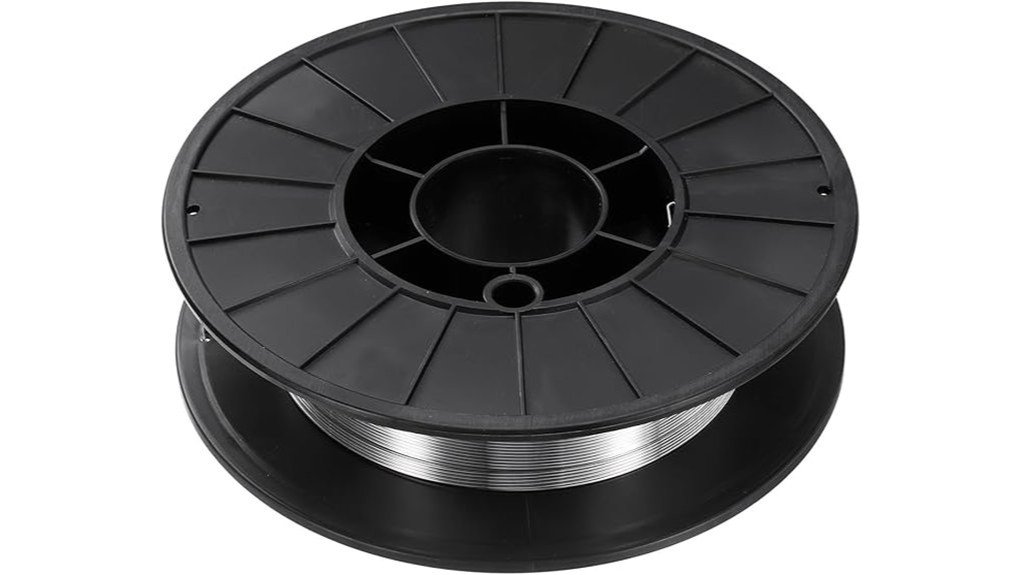
Is the HARFINGTON aluminum MIG wire worth buying? It is a standard 0.045 in (1.2 mm) solid aluminum wire on a 2 lb spool, which makes it a small, low-cost option for hobby aluminum MIG welding. This review is based on the Amazon listing and general aluminum MIG practice, not hands-on testing. Confirm the alloy on the listing (ER4043 or ER5356) and check that your welder can feed soft aluminum wire before you order.
Quick Verdict
Best for: Occasional aluminum repairs and practice on a MIG welder set up for aluminum.
Watch out: It will not work on a gasless or steel-only setup, and a standard steel feed system often struggles with soft aluminum wire.
HARFINGTON Aluminum MIG Wire Specifications
| Specification | Detail |
|---|---|
| Brand | HARFINGTON |
| Wire diameter | 0.045 in (1.2 mm) |
| Spool weight | 2 lb |
| Wire type | Solid aluminum MIG wire |
| Alloy | Check the listing: ER5356 or ER4043 (see comparison below) |
| Shielding gas | 100% argon is the standard choice for aluminum MIG |
| Process | MIG (GMAW), gas shielded |
Specs come from the seller listing and can change. Confirm the alloy, spool diameter and hub fit on the current listing before you buy.
ER4043 vs ER5356: Which Alloy Do You Need?
We could not confirm the alloy for this ASIN. A retailer listing for a similarly titled HARFINGTON 0.045 in, 2 lb spool names ER4043, so check which alloy your listing names before you buy.
| Point | ER4043 | ER5356 |
|---|---|---|
| Main alloy | Aluminum-silicon | Aluminum-magnesium |
| Puddle | Flows and wets easily | Stiffer, slightly less fluid |
| Strength | Lower | Higher |
| Feeding | Softer wire, harder to push | Stiffer wire, feeds more easily |
| Typical use | 6061 and castings, general repair | 5xxx marine alloys, higher strength joints |
| Limits | Does not color-match after anodizing | Not for parts in sustained service above about 150°F |
What You Need to Run Aluminum MIG Wire
- A MIG welder with a gas solenoid. Aluminum needs shielding gas, so flux-core and gasless setups will not work.
- 100% argon. Argon/CO2 mixes made for steel are not suitable for aluminum.
- A feed setup for soft wire. A spool gun or push-pull gun is the most reliable option. A standard gun can work on short runs if you use a Teflon or nylon liner, U-groove drive rolls and low roller tension.
- A contact tip sized for aluminum. Aluminum expands when hot, so many welders use a tip slightly larger than the wire. Check your manual.
- A spool that fits. Confirm the spool diameter and hub size against your machine.
- Clean metal. Aluminum oxide melts at a much higher temperature than the base metal, so remove it first.
How to Use It
- Degrease the joint with solvent, then brush it with a stainless steel brush kept for aluminum only.
- Load the spool, fit U-groove drive rolls and the right liner, and set light roller tension.
- Set 100% argon at a steady flow. Many guides suggest roughly 20 to 30 CFH, so follow your welder manual.
- Set voltage and wire speed from your welder chart. Aluminum usually needs a hotter, faster setup than steel of the same thickness.
- Push the gun rather than dragging it, and keep a short stick-out.
- Run test beads on scrap of the same alloy and thickness before the real joint.
- Wear a helmet, gloves and long sleeves, and ventilate the area.
Listing Claims to Treat With Care
Listings for this wire family describe smooth arc action, low spatter and the ability to weld on rusty, dirty or painted material, in all positions. These are seller claims we have not verified.
The dirty-surface claim does not fit aluminum practice. Oil, paint and oxide cause porosity and weak welds in aluminum, so clean the joint no matter what the listing says.
Pros and Limitations
- Pro: A small 2 lb spool is easy to buy for occasional repairs.
- Pro: The 0.045 in (1.2 mm) size is a common aluminum MIG diameter.
- Limit: Needs argon and an aluminum-ready feed setup.
- Limit: A 2 lb spool runs out quickly on larger jobs.
- Limit: Alloy and spool fit must be confirmed on the listing.
- Limit: No certifications or brand support details were verified.
Who Should Buy It?
Buy it if you have a MIG welder set up for aluminum and want a small spool for repairs, practice or a one-off project.
Skip it if you run a steel-only machine, weld aluminum often (buy a larger spool), or need certified filler for structural, pressure or code work.
Related Reviews and Guides
- AZZUNO ER5356 aluminum MIG wire review for another 5356 spool.
- Aluminum 4043 MIG welding wire review for a 4043 option.
- SÜA ER4043 MIG aluminum welding wire review to compare 4043 spools.
- How to reduce smut when MIG welding aluminum for cleaner welds.
Frequently Asked Questions
Can I use this wire with a gasless MIG welder?
No. Solid aluminum wire needs shielding gas, normally 100% argon. A gasless or flux-core setup will not give acceptable aluminum welds.
Do I need a spool gun?
Not always, but it helps. Aluminum wire is soft and can bird-nest in a long steel-style liner. A spool gun or push-pull gun feeds it most reliably. A standard gun can work with a Teflon liner, U-groove rolls and light tension.
Is this ER4043 or ER5356?
Check the listing title before you buy. ER4043 flows easily and suits 6061 and castings. ER5356 is stronger and suits 5xxx alloys. Use the comparison table above to decide.
Can I weld rusty or painted aluminum with it?
You should not. Some listings claim it works on dirty or painted material, but oil, paint and oxide cause porosity in aluminum. Degrease and brush the joint first.
How long does a 2 lb spool last?
It depends on bead size and joint length. It is enough for small repairs and practice, but larger projects need a bigger spool.
Bottom Line
The HARFINGTON aluminum MIG wire is a small, low-commitment spool for welders who already have an aluminum-ready MIG setup. Confirm the alloy and spool fit, use 100% argon, and clean the metal. Skip it if your machine cannot feed soft wire or you need documented, certified filler.