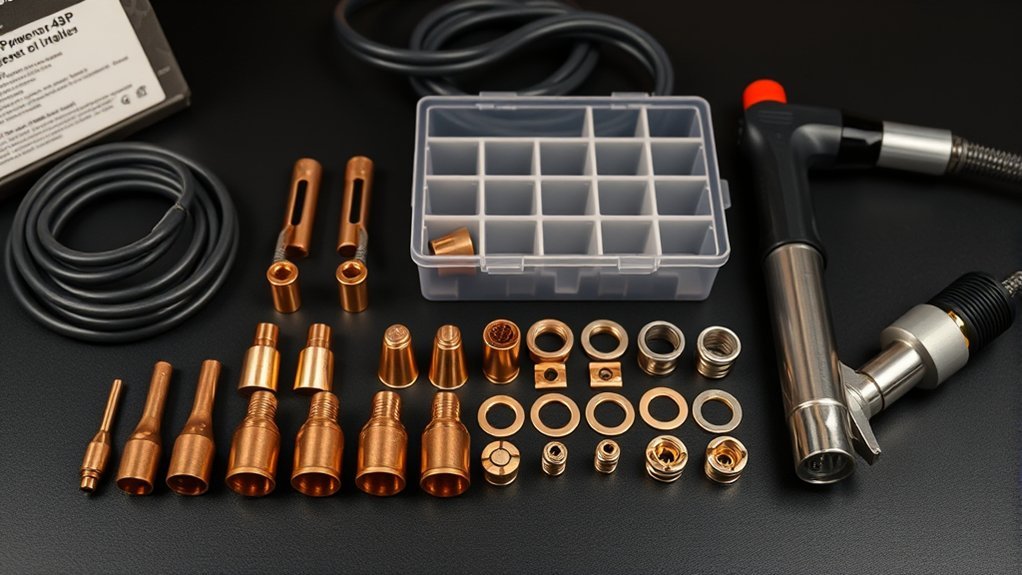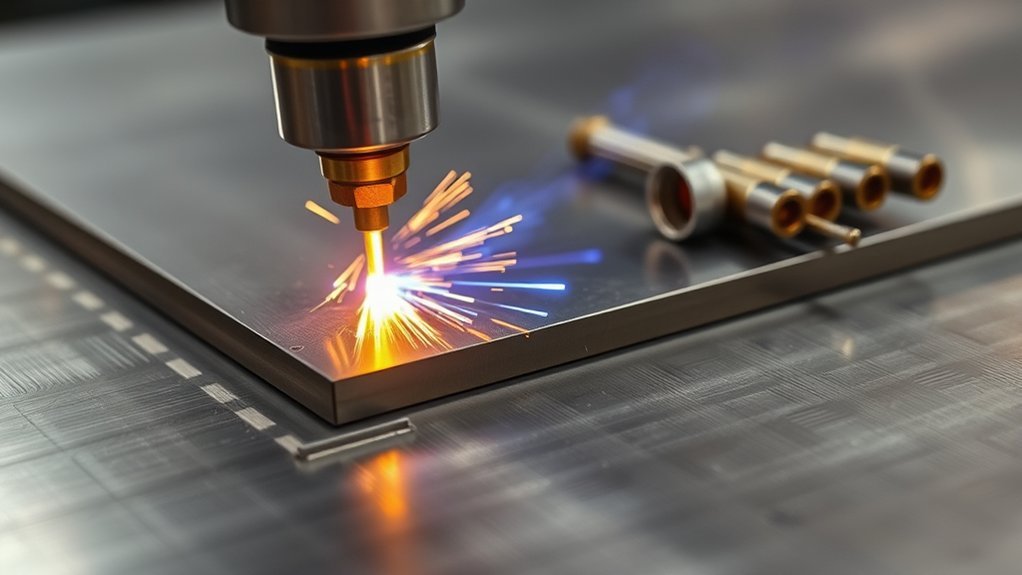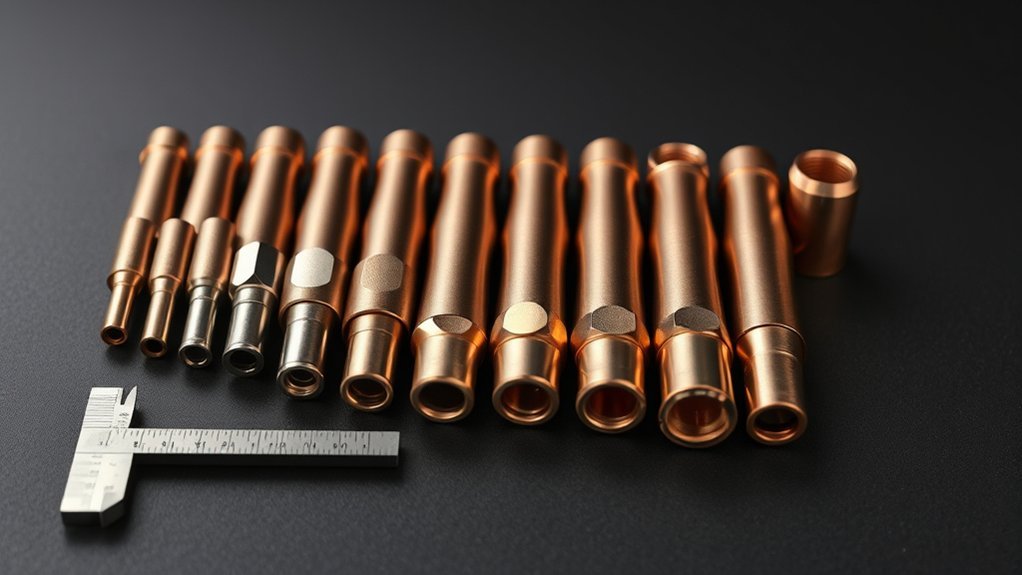
Cleaner cuts, longer consumable life, and safer operation start with the same habit: use the exact plasma cutter nozzle and matched consumables specified for your torch, material, thickness, process, and amperage. Then inspect the parts by condition instead of replacing them on a made-up schedule.
Quick Answer
Choose a plasma cutter nozzle by the exact torch model, process, material, thickness, and amperage listed in the OEM cut chart—not by a generic hole-size chart. Replace it when the orifice is oval, nicked, enlarged, or rounded, or when cut quality stays poor after checking height, speed, gas, and alignment.
Key Takeaways
- Use the consumable chart for your exact plasma cutter and torch. Orifice diameter alone is not a safe buying guide.
- Keep the nozzle, electrode, swirl ring, shield, and retaining cap within the same approved consumable family.
- Replace a nozzle when its orifice is damaged or cut quality no longer meets the job—not after a universal number of pierces.
- Dry, clean gas, correct pierce height, proper travel speed, and correct current have a major effect on nozzle life.
- Disconnect power and let the torch cool before removing, cleaning, or installing consumables.
At a Glance
| Time Required | 5–10 minutes for selection and inspection; longer if troubleshooting gas or CNC settings |
| Difficulty | Beginner to intermediate |
| Tools Needed | OEM operator manual or cut chart, clean lint-free cloth, good lighting, and any inspection gauge or consumable tool specified by the manufacturer |
| Cost | Inspection costs nothing; replacement cost varies by torch, amperage, and whether the system uses separate parts or a cartridge |
Warning: Plasma cutting exposes you to hot metal, ultraviolet and infrared radiation, fumes, noise, fire hazards, and electric shock. Turn the machine off, disconnect input power as directed by the manual, isolate the gas supply when required, and let the torch cool before servicing it. Use suitable eye, face, hand, hearing, clothing, and ventilation controls for the work.
Why Plasma Nozzle Selection Matters
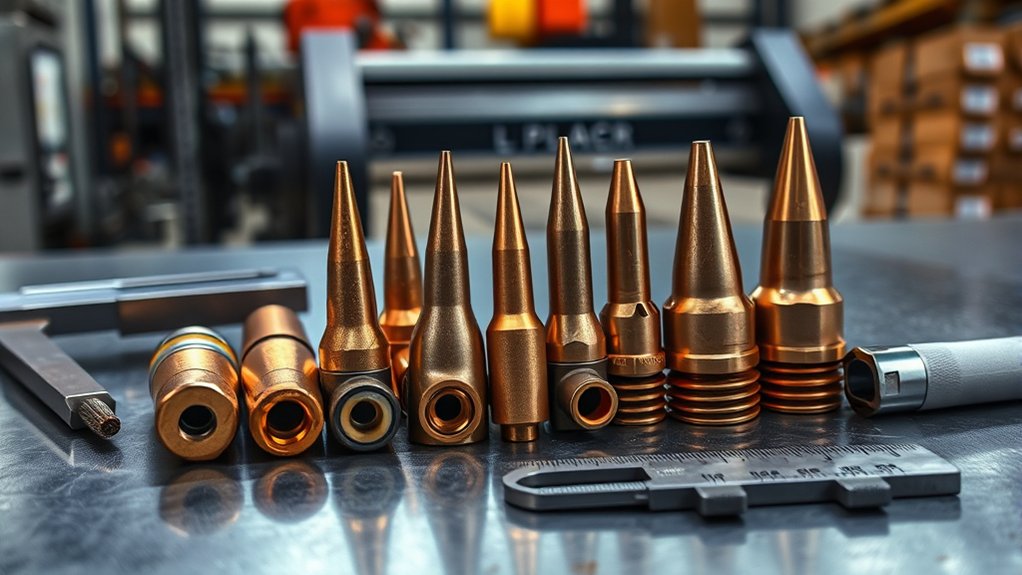
The nozzle is a precision consumable. Its bore constricts and directs the plasma jet, so even small changes in its shape can widen the kerf, increase bevel, add dross, or make the arc wander. Correct selection also protects the electrode and torch from early damage.
Do not select a nozzle from the machine’s maximum amperage alone. Start with the exact torch model and consumable family, then use the manufacturer’s cut chart for the material, thickness, cutting process, current, gas, cut height, pierce height, and travel speed.
Shield-gas and dual-flow systems can cool and protect the nozzle while improving cut quality, but their parts and settings are system-specific. A shielded stack, an unshielded stack, and a one-piece cartridge are not interchangeable unless the manufacturer says they are.
Pro Tip: Keep a photo or printed copy of the correct consumable stack beside the machine. Record the part numbers, process, material, thickness, amperage, gas, speed, and cut height for repeat jobs.
Types of Plasma Cutter Nozzles and Related Consumables
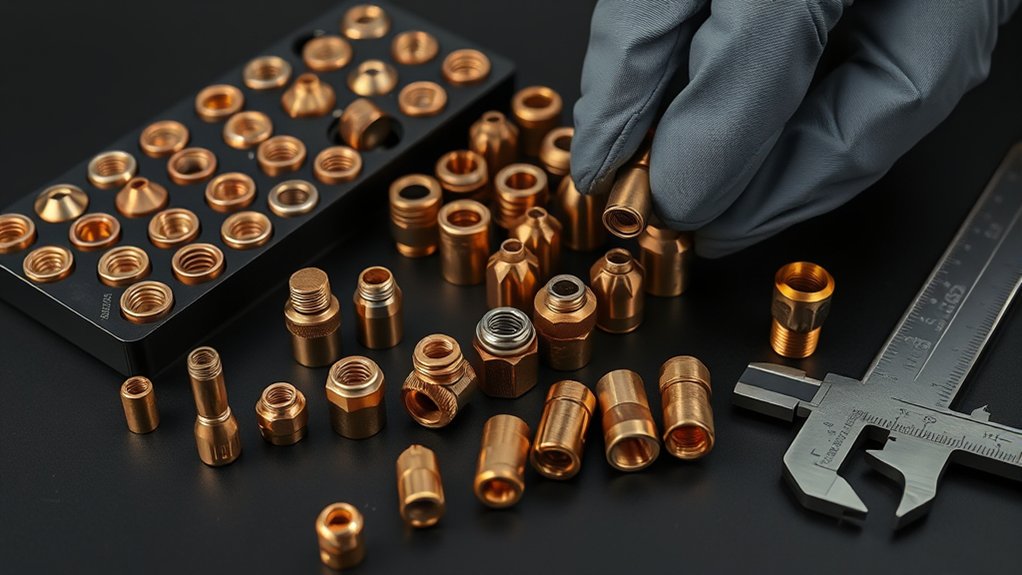
Names vary by brand, but most plasma consumable systems use one of the following nozzle or process categories:
- General-purpose cutting nozzles: Used for routine hand or mechanized cutting within a stated amperage range.
- Fine-cut or low-amperage nozzles: Designed for thinner material, narrower kerfs, and detailed features when the torch supports that process.
- Gouging nozzles: Shaped for removing metal rather than making a through-cut. They are not substitutes for cutting nozzles.
- Extended or specialty nozzles: Offered on some systems for access or a specific process. Use them only with the matching electrode, shield, and settings.
- Integrated cartridges: Combine several traditional consumable parts into one keyed assembly. Select the cartridge by process and amperage, not by measuring its hole.
A drag-cutting setup is usually created by the shield and the approved consumable stack, not by a universal “drag nozzle.” The shield allows compatible hand torches to ride on the plate while keeping the correct relationship between the nozzle and workpiece.
Products Worth Considering

[Achieve Precise Cuts] PT31 Plasma Cutting Consumables – Your Essential Tool for Efficient Cutting! Whether you're working with sheet metal, steel, or any other material, superior cutting performance ensure clean, accurate, and smooth cuts.

Fit for: SG-55 AG-60 plasma cutter torch head.

⚡【Precision Compatibility】 Exact fit for YESWELDER CUT 55DS Pro & 65DS (2019-2024 models). Replaces OEM# IPT40-55DS/65DS.
Nozzle vs. Electrode, Shield, and Swirl Ring
- Nozzle: Constricts and focuses the plasma jet. Its orifice must stay round, concentric, and free of nicks.
- Electrode: Carries current and contains the emissive hafnium or tungsten element on many systems. Pit-depth limits apply to the electrode, not the nozzle.
- Swirl ring: Directs the gas around the electrode, centers the arc, and helps it pass through the nozzle. It is a separate part on traditional stacks.
- Shield: Protects the nozzle from molten spatter, helps with cooling and gas flow, and enables drag cutting on compatible torches.
- Retaining cap: Holds the approved parts in position and may route gas or coolant.
Note: “Swirl nozzle” is not the usual name for the part that creates gas swirl. On most traditional torches, that job belongs to the swirl ring.
How Plasma Nozzles Work
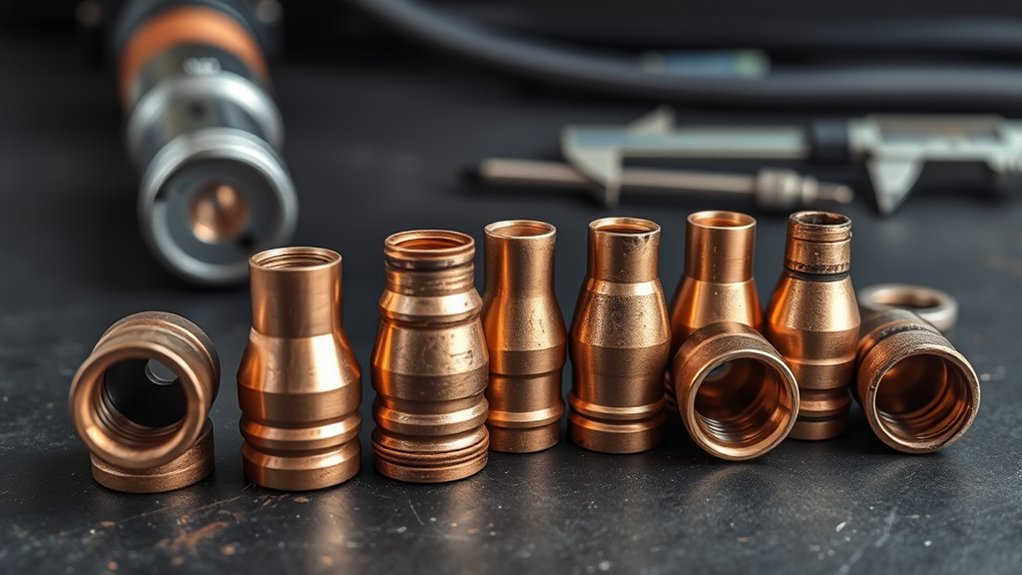
A plasma cutter sends gas through a torch while electrical energy ionizes the gas and creates a very hot, high-speed plasma arc. The nozzle’s bore constricts that arc and directs the jet through the workpiece. Plasma cutting arcs can approach about 40,000°F, which is why cooling, gas flow, standoff, and matched consumables matter.
Gas Constriction and Arc Control
The nozzle does more than point the arc. Its bore length, diameter, inlet shape, cooling, and relationship to the electrode help control arc shape and energy density. The swirl ring or cartridge gas passages center and stabilize the gas flow before it leaves the nozzle.
- A round, concentric orifice supports a straight, focused arc.
- A nicked, oval, enlarged, or eroded orifice changes the arc shape and cut angle.
- Low gas flow can reduce cooling and allow uncontrolled arcing inside the torch.
- Incorrect standoff, especially piercing too close to the plate, can drive molten spatter into the shield and nozzle.
Orifice Size and Amperage
Higher-current processes generally use a different nozzle geometry than lower-current processes, but there is no safe universal conversion from amperage to orifice diameter. Two nozzles with similar-looking holes can have different bore lengths, cooling paths, gas passages, or matching electrodes.
Use the nozzle or cartridge part number shown in the OEM cut chart. Do not drill, ream, file, or force a cleaning wire through the orifice. Once the bore geometry has changed, cleaning cannot restore it to specification.
Note: Some Hypertherm guidance states that certain traditional consumables perform well near 95% of the nozzle’s amperage rating. That is not a universal rule. Use the exact current in your own cut chart and never exceed the nozzle’s approved rating.
Common Amperage Ranges and OEM Nozzle Pairings
The often-repeated “20 A equals a 0.6 mm orifice” rule may match some torches, but it is not an industry-wide standard. The same warning applies to generic 40 A, 65 A, 100 A, and 200 A hole-size tables.
| Amperage Range | Common Use | Correct Selection Method |
| Low-current and fine-cut processes | Thin sheet, small features, narrow kerf | Choose the exact fine-cut or low-current part number listed for the torch and material. |
| General-purpose hand cutting | Routine fabrication and repair | Match nozzle, electrode, shield, current, pressure, and travel speed to the OEM chart. |
| Medium- and high-current mechanized cutting | Production plate cutting | Use the complete process set, including plasma gas, shield gas, coolant, pierce height, delay, and arc voltage. |
| Gouging processes | Weld removal and metal washing | Use a gouging cartridge or matched gouging nozzle set; do not substitute a cutting nozzle. |
If the correct chart is missing, identify the power supply model, torch model, lead type, and current consumable family, then obtain the current operator manual from the manufacturer. Do not guess from visual similarity.
Products Worth Considering

Fit for : AG-60 AG-60P SG-55 WSD-60 Plasma cutter torch head

Wide Compatibility: Compatible with CUT60, CUT60SP, CUT50DP, CUT50PI, LGK-60, LTP 5000, CUT-55DS plasma cutting machines.

Package Include: 2 Shield Cups, 10 Nozzles .040", 2 Wire Spacer Guides, and 10 Electrodes.
How to Select the Right Plasma Cutter Nozzle
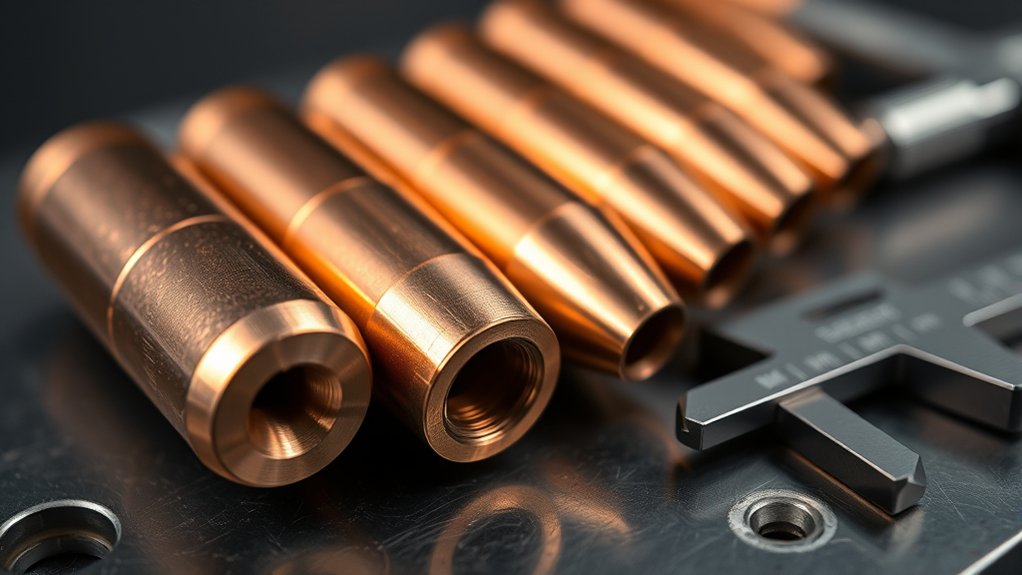
- Identify the exact torch. Record the power supply model, torch model, and whether it uses a traditional stack or integrated cartridge.
- Define the job. Note the metal type, thickness, desired cut quality, hand or mechanized use, and whether you are cutting, fine cutting, marking, or gouging.
- Open the current OEM cut chart. Find the process row for that material and thickness.
- Select the complete matched set. Use the listed nozzle or cartridge with the approved electrode, swirl ring, shield, and retaining cap. Do not mix look-alike parts.
- Enter the listed settings. Set current, gas type, pressure or flow, cut height, pierce height, pierce delay, travel speed, and arc voltage where applicable.
- Inspect before installation. Reject parts with damaged threads, seals, cracks, contamination, or an out-of-round orifice.
- Make a test cut. Check kerf, bevel, dross, lag lines, hole shape, and whether the arc stays centered before starting production.
- Record the result. Log part numbers, starts, arc-on time, material, thickness, settings, and observed wear.
For mechanized work, a nozzle cannot correct poor motion control, backlash, incorrect torch height, bad lead-ins, or wrong kerf compensation. Diagnose the full cutting system instead of blaming the consumable first.
Common Nozzle Wear Signs and Troubleshooting
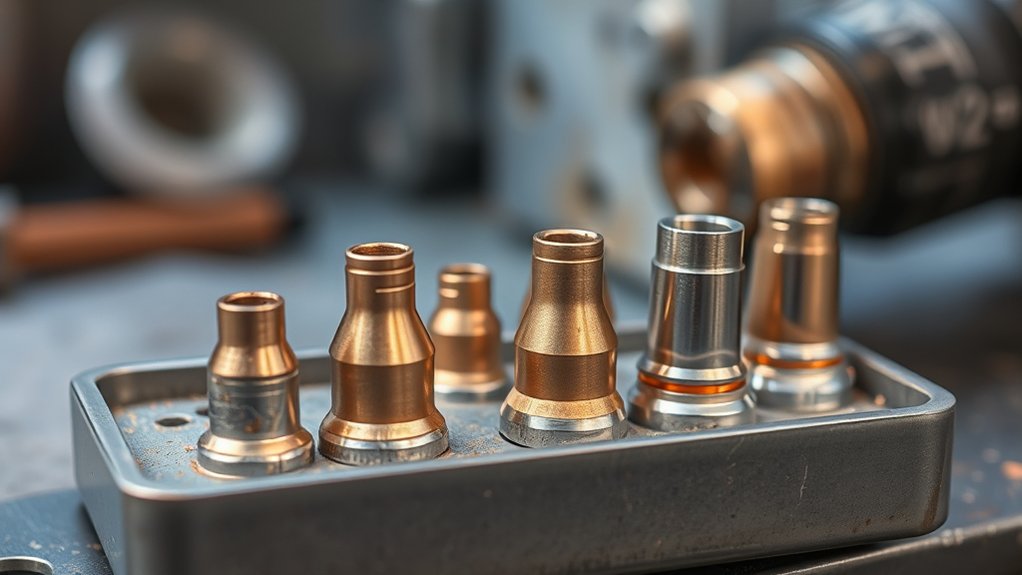
Inspect the nozzle in bright light. A serviceable nozzle should have a round, centered opening with clean, defined edges. Replace it when the orifice is nicked, notched, oval, visibly enlarged, or rounded enough to affect the cut.
Discoloration alone does not prove failure, and dross alone does not prove the nozzle is bad. Dross can also come from wrong speed, wrong height, incorrect current, poor gas flow, contaminated air, or material condition.
Replace a plasma nozzle by condition and cut quality—not by an arbitrary number of pierces.
| Symptom | Likely Causes | What to Check |
| Wide or inconsistent kerf | Worn nozzle, high standoff, low speed, wrong current, or poor gas flow | Orifice shape, cut height, speed, current, gas pressure, and torch squareness |
| Heavy bottom dross | Travel speed too fast or too slow, incorrect height, worn consumables, or unsuitable process | Compare speed and height with the cut chart before replacing parts |
| Excessive bevel or taper | Worn or off-center nozzle, torch not square, wrong height, wrong direction, or gas-flow issue | Rotate the torch for diagnosis, verify squareness, inspect the nozzle, and test height control |
| Very short nozzle life | Piercing too low, current above rating, wet or oily air, low gas flow, arc stretching, or an overused electrode | Pierce height and delay, air filtration, leaks, flow, electrode condition, and lead-out programming |
| Hard starting or failure to fire | Incorrect assembly, excessive gas pressure, damaged consumables, contamination, or a system fault | Part order, seating, gas setting, torch lock, error codes, and the operator manual |
| Out-of-round CNC holes | Motion backlash, height-control timing, gas flow, damaged consumables, or lead-in geometry | Run a marker test, test at fixed height, rotate the torch, and inspect the consumables |
Maintenance, Cleaning, and Installation Tips
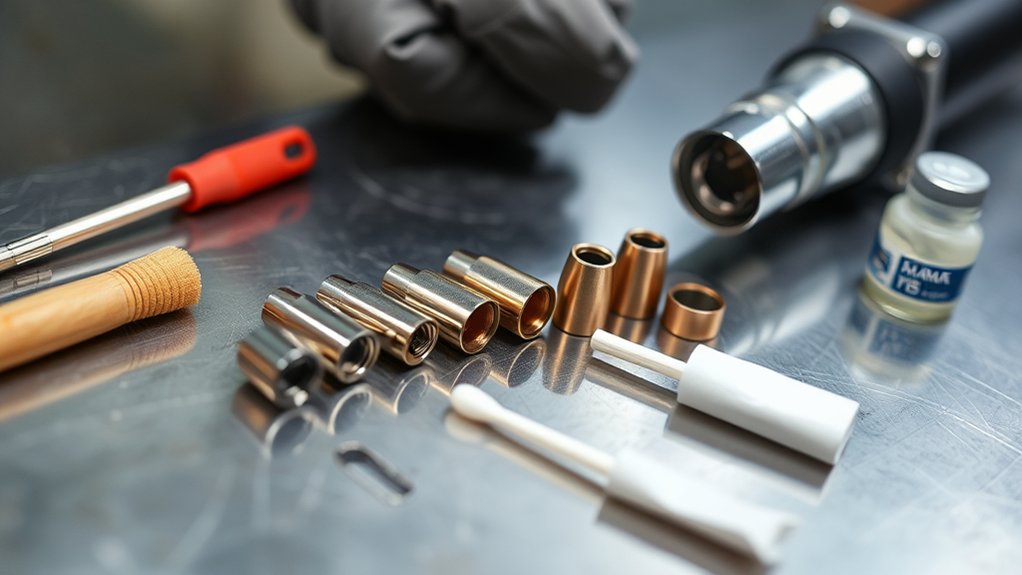
Cooling and Safe Handling
Let the torch and consumables cool before touching them. Follow the machine’s shutdown and lockout steps. On many systems that means turning off the power supply, disconnecting input power before maintenance, and isolating gas or coolant as the manual directs.
Wear heat-resistant gloves when handling recently used parts. Keep hot consumables away from flammable material. Plasma cutting is hot work, so maintain suitable fire prevention, eye and face protection, ventilation, and hearing protection.
Cleaning and Inspection
- Place removed parts on a clean, lint-free surface so metal dust does not enter the torch.
- Wipe seating surfaces, threads, and accessible areas with a clean lint-free cloth or the cleaner approved by the manufacturer.
- Use clean, dry gas or air only where the manual permits it.
- Do not use a drill bit, file, abrasive cord, tip cleaner, or hard object inside the nozzle bore.
- Inspect swirl-ring holes for blockage, seals for damage, retaining-cap threads for contamination, and the shield for a damaged center hole.
- Apply only the specified O-ring lubricant, in the specified amount, and only to the seals identified by the manual. Do not substitute general-purpose grease.
Proper Alignment and Installation
Install the consumables in the correct order and orientation. Seat each part squarely without forcing it. Tightening methods vary: some hand-torch caps are hand-tightened, while large mechanized systems may use a dedicated tool and a stated procedure. Do not apply a generic torque value or use a calibrated wrench unless your manual specifically requires it.
After assembly, verify that the torch is square to the plate and that the shield or cartridge is fully seated. Restore power and gas, confirm there are no alarms or leaks, and make a test cut before production.
Pro Tip: For compressed-air plasma systems, drain the compressor and separators regularly and inspect the final filter near the cutter. Moisture, oil, and particles can shorten consumable life and reduce cut quality.
Replacement Guidelines and Best Practices
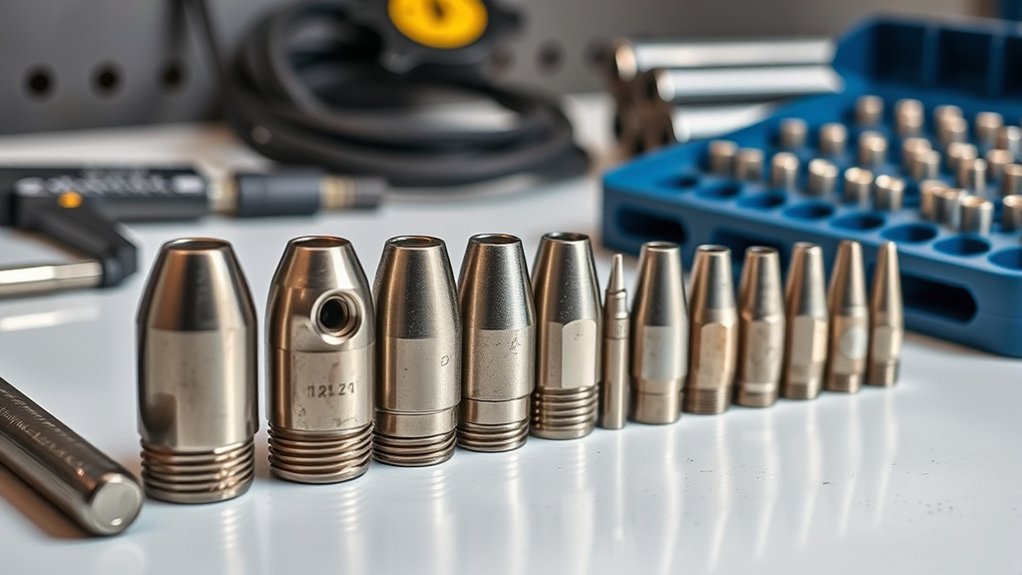
There is no reliable universal rule such as “replace the nozzle every 40 pierces.” Consumable life changes with the torch, process, amperage, material, pierce height, cut length, gas quality, duty cycle, and operator technique. Modern systems may deliver several hundred starts, while a bad setup can damage a new nozzle almost at once.
Use these replacement triggers:
- Replace the nozzle or cartridge if the orifice is nicked, notched, oval, enlarged, or has badly rounded edges.
- Replace it if the arc no longer produces an acceptable cut after speed, height, current, gas, and alignment are corrected.
- Inspect the electrode at the same time. Follow the exact pit-depth limit in the manual or cartridge end-of-life guidance.
- Replace cracked, burned, deformed, or contaminated parts that cannot be cleaned according to the manual.
- Do not keep running an electrode until it fails. Severe electrode wear can damage the nozzle and torch.
Note: The often-cited 0.040-inch pit limit applies to certain standard copper electrodes, while some Hypertherm SilverPlus electrodes are designed for at least 0.080 inch. These are electrode examples for named systems—not universal nozzle or electrode limits.
Build a Consumable-Life Log
Track starts, arc-on time, cut length, material, thickness, current, gas, nozzle and electrode part numbers, lot codes, failure mode, and cut-quality results. Once you know the normal life for your machine and work mix, schedule inspections before the usual failure point without discarding good parts too early.
For quality-controlled production, define measurable acceptance limits for kerf, angularity, dross, dimensions, and surface condition. ISO 9013:2017, together with its 2024 amendment, covers classification and geometrical quality tolerances for thermal cuts when the standard is specified for the work.
Frequently Asked Questions
How do ambient temperature and humidity affect nozzle performance?
Operate the cutter within the ambient-temperature range in its manual. Humidity matters most when it adds water to compressed air. Moisture, oil, and particles can reduce cut quality, shorten consumable life, and harm the torch or power supply, so use clean, dry air and suitable filtration.
Can nozzle design affect CNC cut-path accuracy?
The nozzle affects kerf width, angularity, and arc alignment, which can change the finished part. However, true CNC path accuracy also depends on motion control, backlash, torch height, lead-ins, cut direction, speed, and kerf compensation. Check the machine and process together.
Are there eco-friendly disposal methods for used nozzles?
Keep spent consumables separate from general trash when practical. Ask a local metal recycler whether it accepts small copper-alloy torch parts, and follow local rules for parts contaminated by the material being cut. Plasma consumables are not automatically e-waste, and acceptance varies by recycler.
What training reduces operator-induced nozzle damage?
Train operators to identify the torch and consumable family, read the cut chart, set current and gas correctly, maintain pierce and cut height, avoid arc stretching, inspect parts, recognize dross and bevel patterns, and document starts and arc-on time.
How do different gases influence nozzle life and kerf quality?
Gas choice is process- and material-specific. Oxygen is commonly used for high-quality mild-steel cutting on compatible mechanized systems. Nitrogen is often used for stainless steel and aluminum, while argon-hydrogen is used on some systems for thicker stainless steel and aluminum. Clean, dry air is economical on air-plasma systems. Use only gases, mixtures, pressures, and safety controls approved for your cutter.
Should I replace the nozzle and electrode together?
Inspect them together and follow the system manual. Many traditional systems recommend replacing a worn electrode and nozzle as a matched pair because electrode failure can damage the nozzle. Other systems use integrated cartridges with their own end-of-life guidance.
Can I clean and reuse a nozzle with an oval hole?
No. Cleaning may remove loose contamination, but it cannot restore an oval, enlarged, nicked, or rounded precision bore. Replace the nozzle or cartridge and correct the cause of the damage before cutting again.
Conclusion
Consistent plasma cuts come from a matched process, not from a generic nozzle-size chart. Identify the exact torch, use the OEM cut chart, install the complete approved consumable set, and verify current, gas, height, and speed before production. Inspect the nozzle for a round, centered orifice and replace it when damage or confirmed wear affects the cut.
Do not use a fixed 40-pierce schedule or apply electrode pit-depth limits to the nozzle. Track actual starts, arc-on time, cut conditions, and failure patterns for your machine. That record helps you replace consumables before failure without throwing away serviceable parts.
Sources
- Hypertherm Consumable Care Guide — nozzle, electrode, swirl-ring, shield, and replacement inspection guidance.
- Hypertherm: 10 Common Plasma Arc Cutting Mistakes — consumable matching, current, assembly, gas, standoff, and condition-based replacement.
- Hypertherm: Air Quality and Powermax Performance — effects of moisture and contamination on cut quality and consumable life.
- Hypertherm Plasma Gas Selection Guide — material-specific uses of air, oxygen, nitrogen, and argon-hydrogen.
- OSHA Welding, Cutting, and Brazing Hazards and Solutions — fumes, radiation, burns, electrical shock, and other hot-work hazards.
- ISO 9013:2017 — classification and geometrical quality tolerances for thermal cuts, with a 2024 amendment.