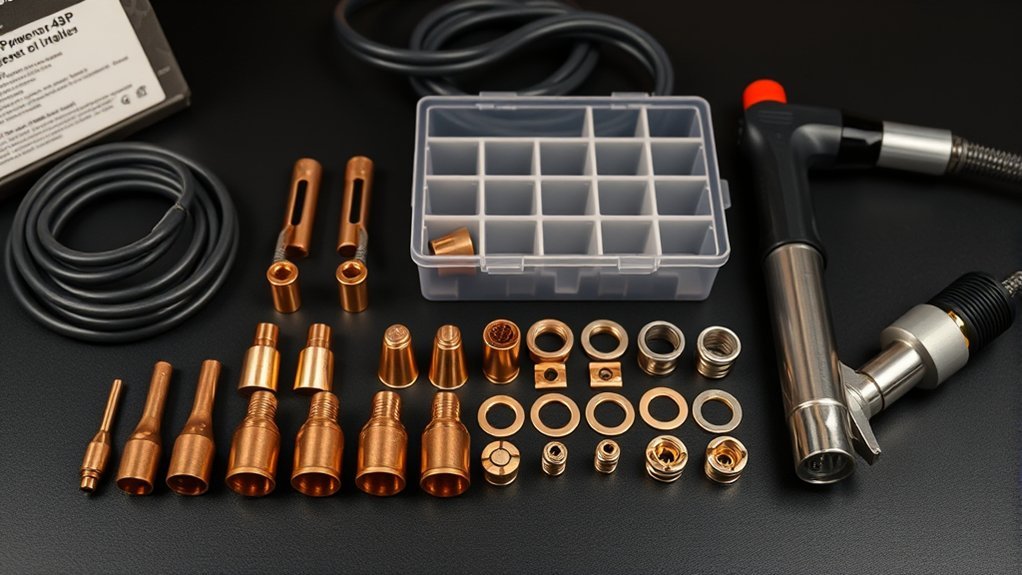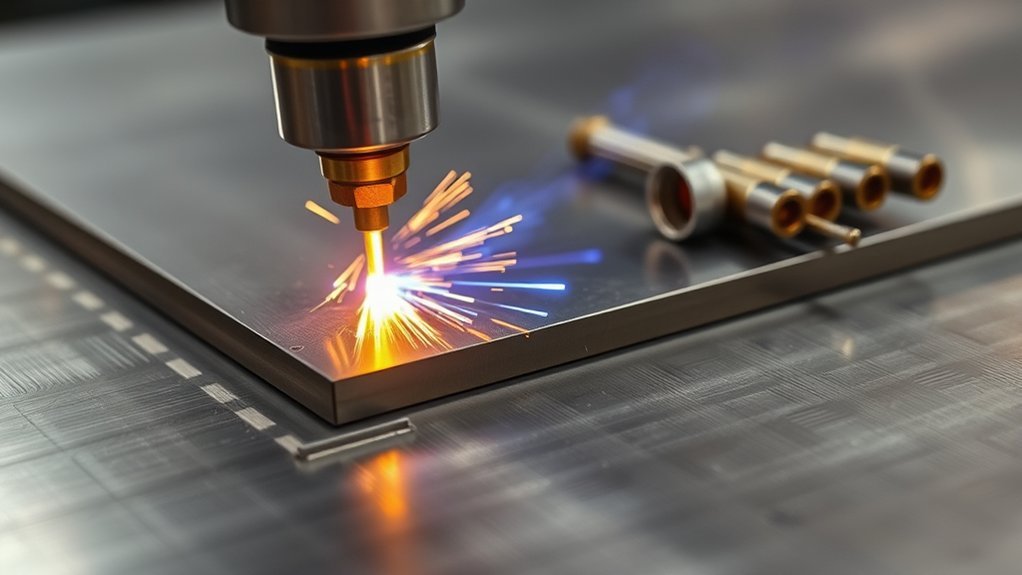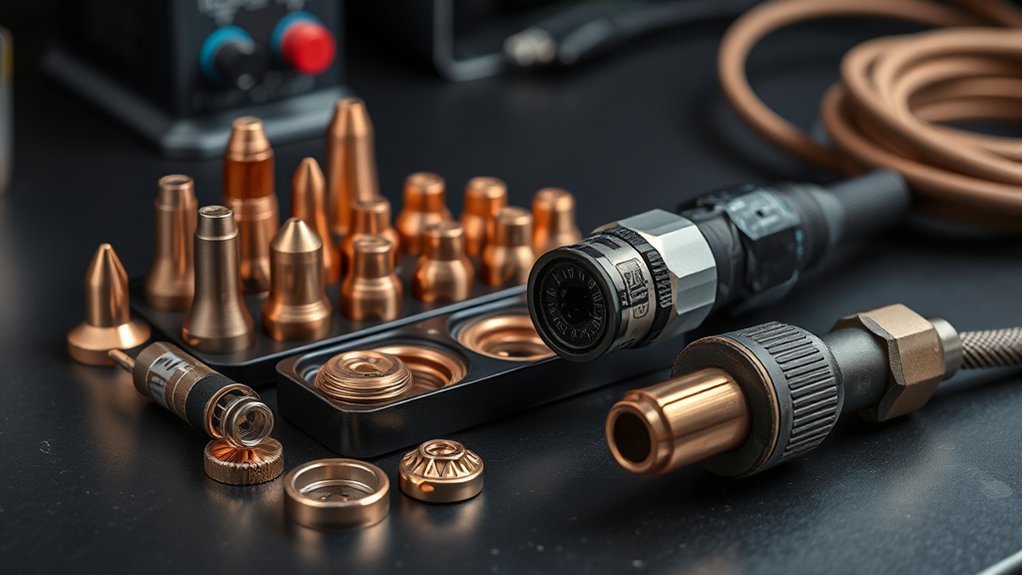
You rely on tight tolerances, so matching Mac Tools plasma cutter consumables and torches to the correct duty cycle, amperage, and gas specs matters. Stick with OEM-grade electrodes, nozzles, and swirl rings, and pair compatible torches like NT2060 or PC250 with the right leads for steady arc starts. If you need more reach, plan upgrades such as a 25-ft 860-992-100A torch to extend your workspace without inviting voltage drop. If you want consistent kerf, longer part life, and fewer misfires, compare your options before you buy.
Quick Answer
- Match the torch and consumables to the machine’s amperage class, duty cycle, and air requirements.
- Confirm connector style, pilot-arc signaling, and gas flow specs before ordering any torch/lead assembly.
- Use OEM-spec electrodes, nozzles, and swirl rings to keep fit and arc stability consistent.
- Choose compact torches (NT2060 or PC250) for typical bench work, and consider a 25-ft 860-992-100A torch when you need reach across larger workpieces.
- Keep consumables fresh and air clean and dry, then troubleshoot from the torch tip back before blaming the power source.
Compatible Plasma Torches and Lead Options
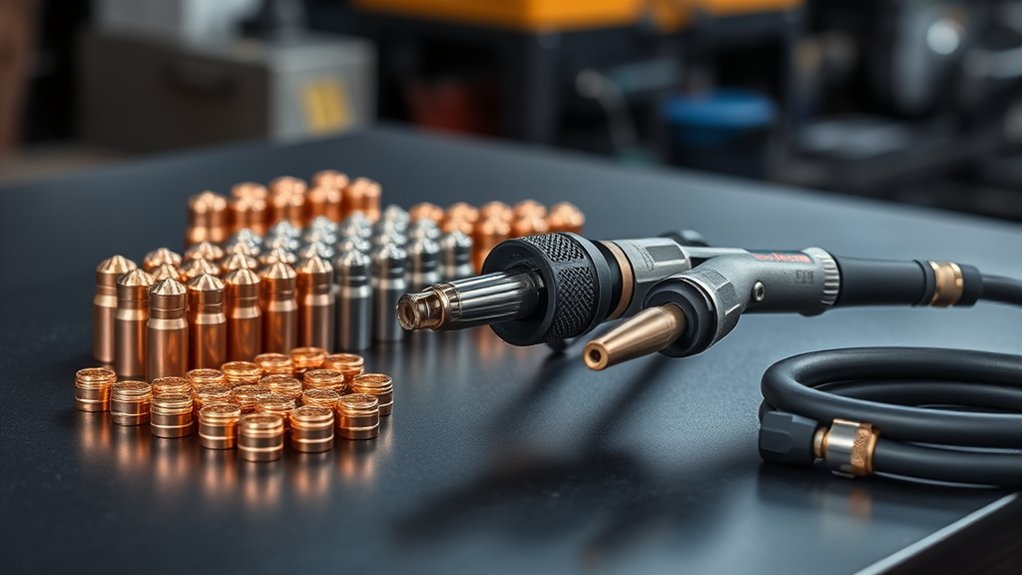
Compatibility first: the Mac Tools 40 A plasma cutter (model 118-001 PCS118) accepts several torch/lead solutions, including Nu-Tec NT2060, Firepower PC250, and the 860-992-100A torch with a 25-ft hose. You can match these options to your duty cycle and workspace reach while preserving torch performance and lead compatibility.
Verify connector style, pilot-arc signaling, and gas flow specifications to avoid communication faults and current derating.
Select the NT2060 or PC250 when you want a compact torch body and reliable starts on thin to mid-gauge steel. Choose the 860-992-100A when you need extended reach; its 25-ft hose reduces repositioning and helps you hold a steady standoff over larger workpieces.
Keep cable resistance low by inspecting pins, strain reliefs, and grounds. Heat at the connector or intermittent cutting usually points to a lead issue, not a power source fault. Confirm amperage settings align with 40 A class ratings. Follow manufacturer wiring diagrams and polarity notes to stay within shop safety and equipment standards.
Products Worth Considering

PT31 Plasma Torch: standard length: 16ft; air pressure: 4.5-5.5bar; duty cycle for 60% with 30A

APPLICATION: Apply to YESWELDER CUT-60DS PRO, CUT-65DS PLUS,CUT-65DS PRO plasma cutter with central interface.

[Achieve Precise Cuts] PT31 Plasma Cutting Consumables – Your Essential Tool for Efficient Cutting! Whether you're working with sheet metal, steel, or any other material, superior cutting performance ensure clean, accurate, and smooth cuts.
Essential Consumables: Electrodes, Nozzles, Caps, and Rings
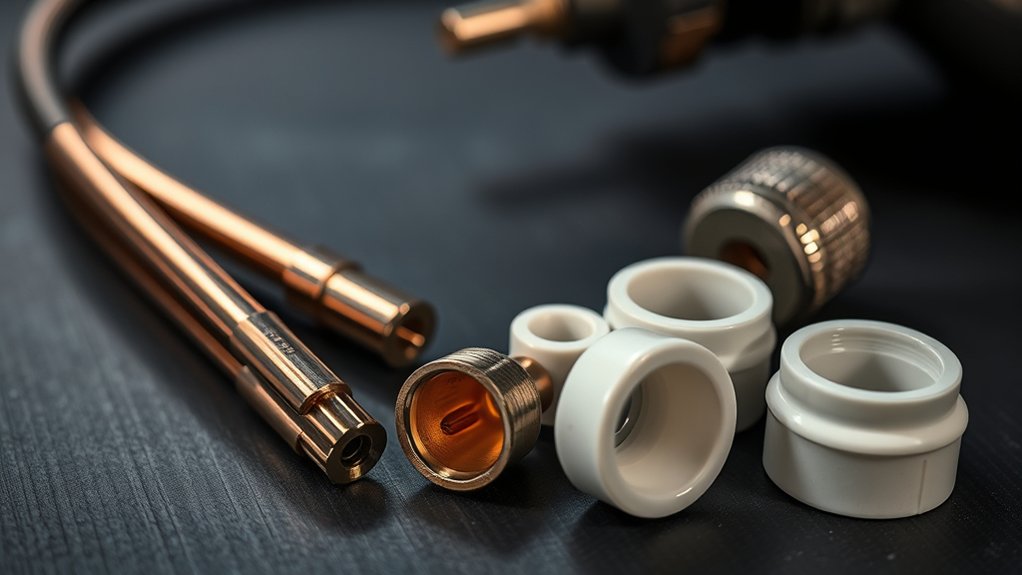
With your torch and lead sorted, keep cut quality and duty cycle on spec by managing the wear parts at the tip: electrodes, nozzles, swirl rings, and nozzle caps.
Match electrode types to output current and gas flow, and replace on schedule. A 3-pack of electrodes is often listed around $21.65, so plan stock accordingly. Pair nozzle sizes to amperage and material thickness; a 3-pack of 40 A straight nozzles is roughly $17.85. Use factory NUTEC parts to maintain tolerances and arc stability.
Products Worth Considering

PACKAGE INCLUDED: 5 Pcs Cup-15 Pcs Electrodes-10 Pcs Ring-30 Pcs Tip(Standard)

Fit for: SG-55 AG-60 plasma cutter torch head.

⚡【Precision Compatibility】 Exact fit for YESWELDER CUT 55DS Pro & 65DS (2019-2024 models). Replaces OEM# IPT40-55DS/65DS.
Straight vs. Tapered Consumables (Don’t Mix Them)
These systems commonly use both straight and tapered styles. Make sure your nozzle, cap, and related parts are the same style. Mixing styles can cause poor airflow, unstable arcs, and fast wear, even if the parts physically thread together.
- Verify swirl ring functionality: at about $19.95 each, the ring’s vortex sets arc centering, kerf width, and dross control. Replace if cracked, heat-distorted, or airflow ports are fouled.
- Maintain cap importance: around $30.00, nozzle caps meter cooling air to the nozzle and workpiece, preventing thermal drift and protecting cut geometry.
- Track wear indicators: pit depth on electrodes, orifice ovality on nozzles, airflow asymmetry at the ring, and cap thread/seat damage. Rotate inventory and document change intervals.
Replacement Parts and Upgrades for Legacy Mac Tools Models
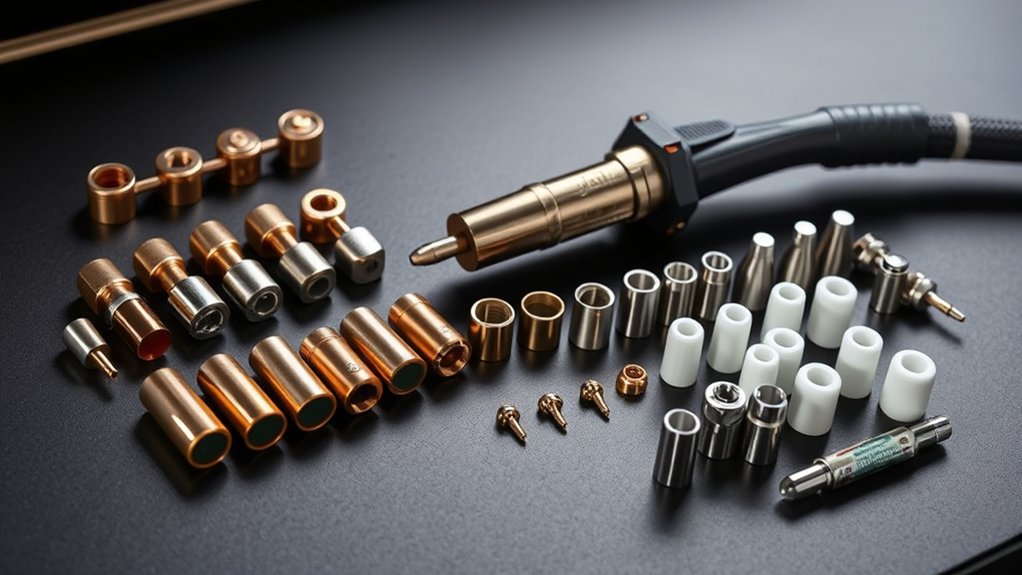
Even if your shop runs older Mac Tools cutters, you can keep them productive by selecting OEM-spec replacements and targeted upgrades that match legacy torch/console standards.
Before you order parts, validate legacy model compatibility against your PCS118 or YA-series nameplate and torch part code. Then spec consumables by amperage and taper so the torch stack stays matched.
Validate legacy compatibility via PCS118 or YA-series nameplate and torch code; spec consumables by amperage and taper.
Stock critical wear parts:
- 334-263-908 Electrode Plasma (3-pack, $21.65)
- 334-264-908 Swirl Ring Plasma ($19.95 each)
- 334-270-908 Nozzle Plasma 40 Amp Tapered Type (3-pack, $23.45).
Match nozzle amperage to your cut current and material thickness to maintain constricted arc geometry and consistent kerf.
For performance enhancements, consider the 860-992-100A Plasma Torch with 25-foot hose ($794.75).
The extended lead improves reach, fixture access, and torch standoff stability without rewiring the console when paired with the correct adapter.
Verify gas flow rating, pinout, and connector threads before purchase.
Document part numbers, lot codes, and change intervals.
Standardize setups per material to extend lifespan and preserve cut repeatability on legacy Mac Tools platforms.
Troubleshooting Performance and Optimizing Cut Quality
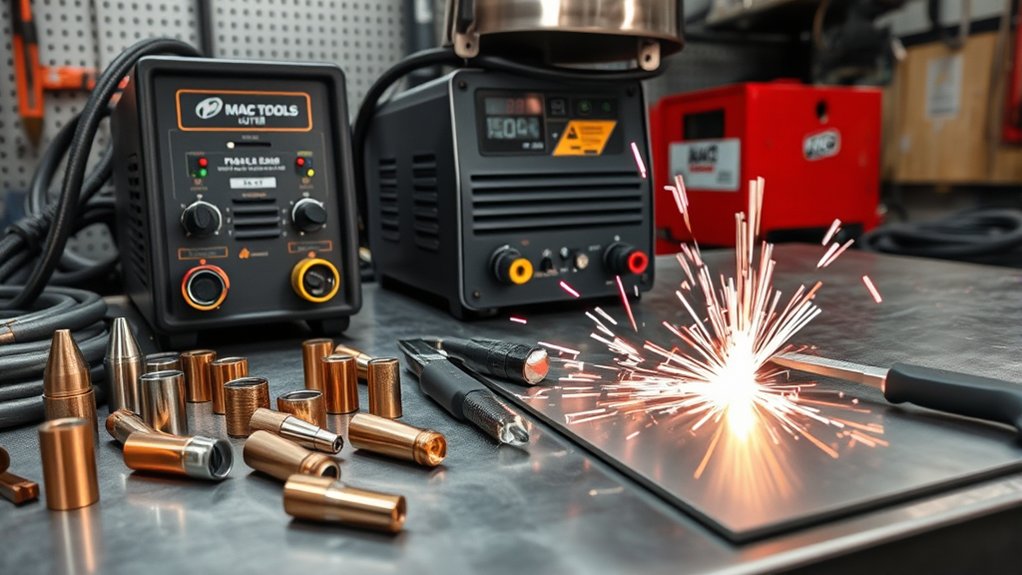
Before chasing complex faults, verify fundamentals that most impact arc energy and kerf quality: clean dross from the torch to restore reliable work contact, inspect and replace wear items (especially electrodes and swirl rings) on schedule, and set dry, stable air at the recommended ~40 psi. If your manual calls for a different pressure, follow the manual and confirm the reading under flow, not just static.
Start with the arc. Dross buildup raises resistance, cools the arc, and widens kerf. Replace a pitted electrode and a heat-checked swirl ring, then recheck air pressure under flow. Keep the air supply dry to prevent sputter and porosity.
- Verify torch-to-work distance with a feeler gauge; adjust standoff or height control to maintain consistent arc length.
- Match amperage to thickness; for 3/8” plate, use the cutter’s rated output and reduce speed if slag tails lean back.
- Log cut parameters and share clear photos of nozzle, electrode, and consumable stack with support to accelerate diagnostics.
Tune motion next: if edges bevel, slow travel slightly. If top spatter increases, raise air pressure to spec and lower standoff.
Cost-Saving Tips and Maintenance Best Practices
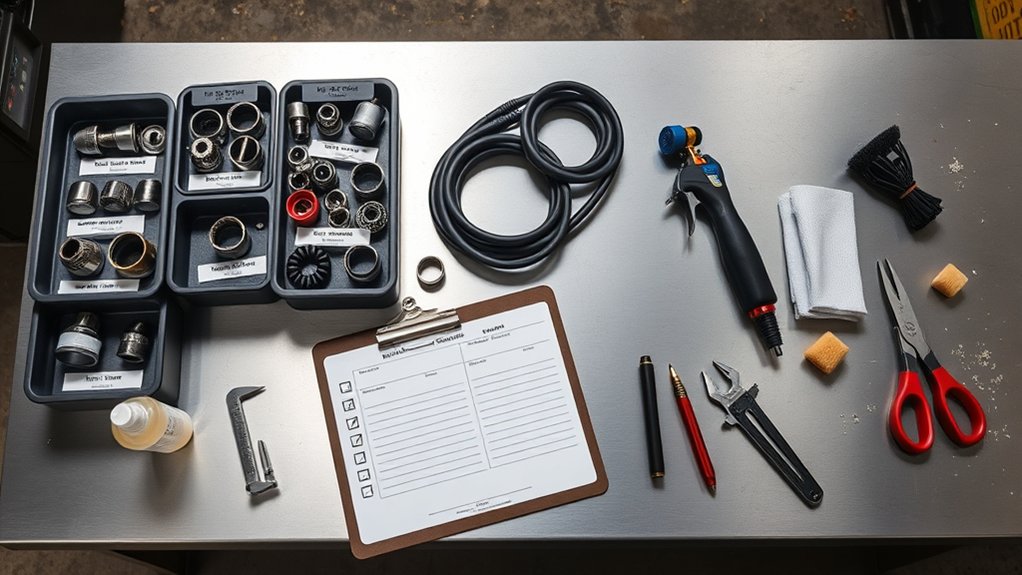
Two habits cut costs fastest: disciplined consumable management and air-system control. Replace electrodes and swirl rings on schedule to stabilize arc density and avoid unplanned stops. Use factory NUTEC parts; they match Mac Tools torch geometry and metallurgy, improving cost efficiency by extending wear life and preventing fit-up issues. Buy consumables in packs (e.g., 5-pack electrodes) to lower unit price and minimize changeout time.
Hold clean, dry air at about 40 psi under load; overpressure erodes tips, and underpressure destabilizes arcs. Add a filter/regulator and check weekly. Log nozzle, electrode, and swirl ring hours, and set thresholds for swap-out based on cut thickness and duty cycle. If your usage is high, evaluate models with lower-cost consumables; lifecycle math can justify a switch.
| Task | Interval | Target/Spec |
|---|---|---|
| Air pressure check | Daily | 40 psi, dry |
| Electrode inspection | Daily | ≤ 0.8 mm pit |
| Swirl ring check | Weekly | No cracks/warps |
| Inventory reorder | Monthly | 5-pack minimum |
Standardize maintenance routines and document results.
Frequently Asked Questions
Are Mac Tools Plasma Cutter Parts Compatible With Third-Party CNC Tables?
Yes, but you must verify torch interface standards, pilot-arc signaling, and connector pinouts for plasma cutter compatibility. Match voltage sensing, air requirements, and CNC start signals. Many third party accessories work via adapters; consult manuals and wiring schematics.
What Safety Certifications Do These Plasma Torches and Consumables Carry?
You may see certification labels like UL, CSA, and CE, signaling compliance with safety standards such as IEC/EN 60974 and ISO 9001. Don’t assume, though. Check the torch label and the manufacturer documentation for the exact ratings and test standards, and compare your shop procedures against OSHA welding, cutting, and brazing standards.
How Do I Identify Counterfeit Mac Tools Consumables Online?
You identify counterfeits by verifying SKU formats, holographic seals, and serialized packaging against Mac Tools’ database. Use counterfeit detection guides, compare electrode/nozzle geometry, check seller accreditation, demand invoices, and validate product authenticity with QR codes, UL marking consistency, and warranty registration.
Are There Eco-Friendly Disposal Options for Used Electrodes and Nozzles?
Yes. You can use manufacturer take-back recycling programs, scrap-metal recyclers, or certified waste management services. Segregate copper and brass, document alloys, and check local hazardous-waste thresholds. Follow ISO 14001-aligned practices and OSHA/EPA guidance; keep contaminated consumables in labeled containers.
Does Upgrading Torches Affect Warranty Coverage on Mac Tools Cutters?
Yes, torch upgrades can affect warranty coverage. You’ll void coverage if modifications aren’t OEM-approved. Review warranty implications in your model’s terms, verify compatibility, document installation, and retain receipts. When in doubt, get written authorization from Mac Tools or an authorized service center.
Conclusion
You’ve got options to keep your Mac Tools plasma cutter performing to spec: matched torches, calibrated consumables, and smart upgrades. Swap electrodes around 500–1,000 arc starts; worn tips can increase amperage draw by 10–15% and degrade kerf accuracy. Align torch-lead length with duty cycle and ANSI Z49.1 safety. For legacy models, OEM kits simplify fitment. Log cut hours, standardize consumable sets, and inspect swirl rings every cartridge change. Do that, and you’ll cut cleaner, faster, and cheaper.