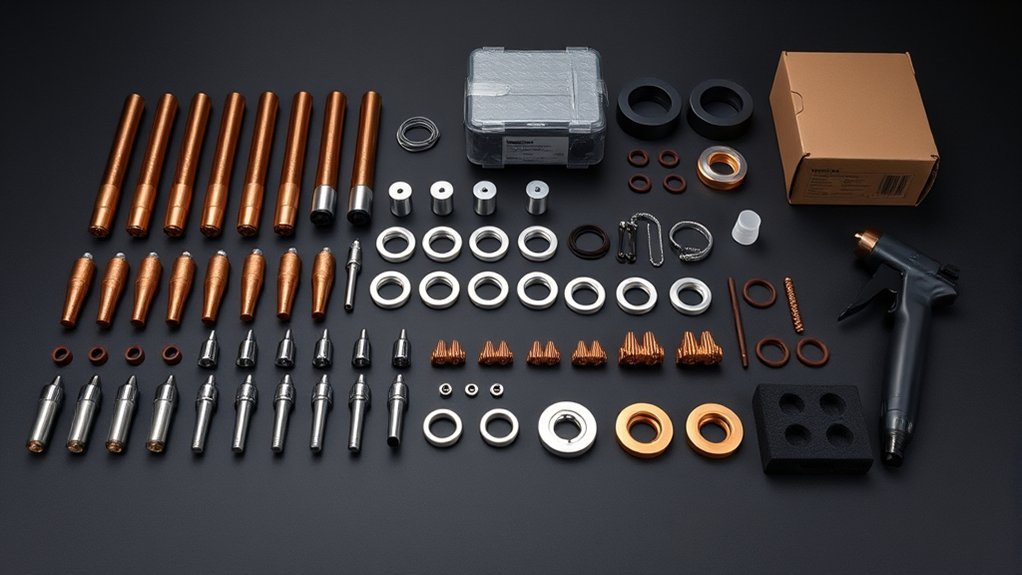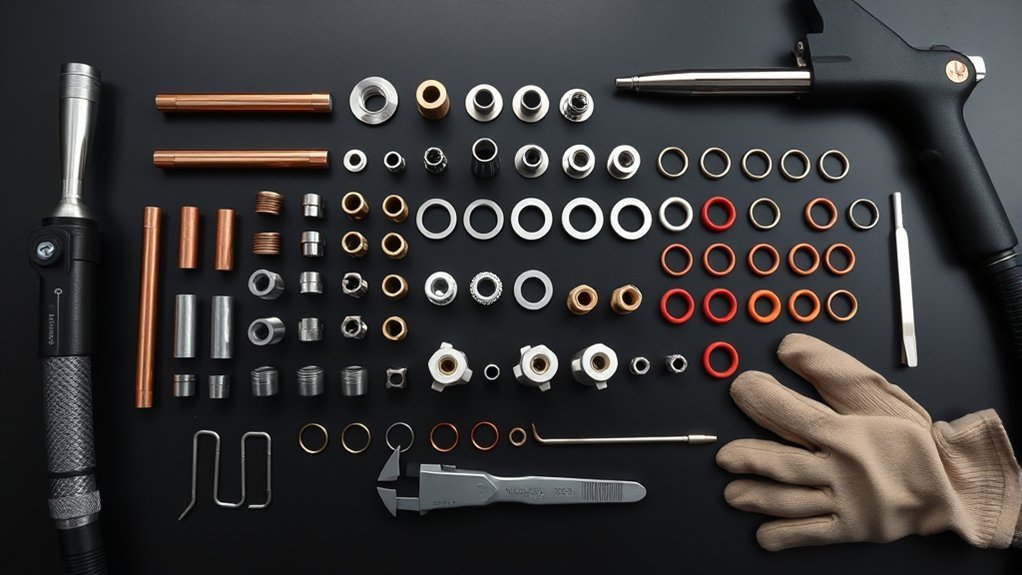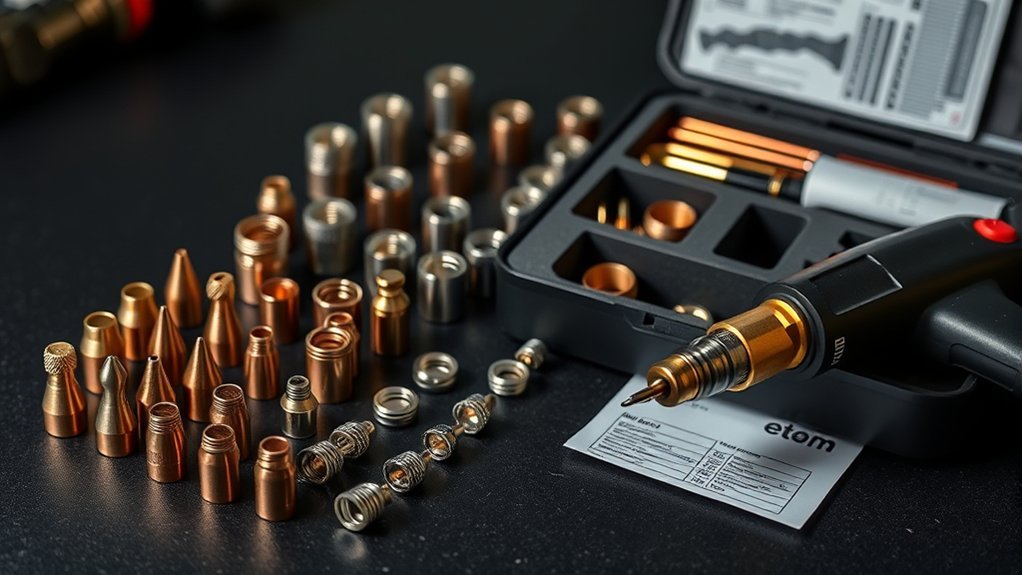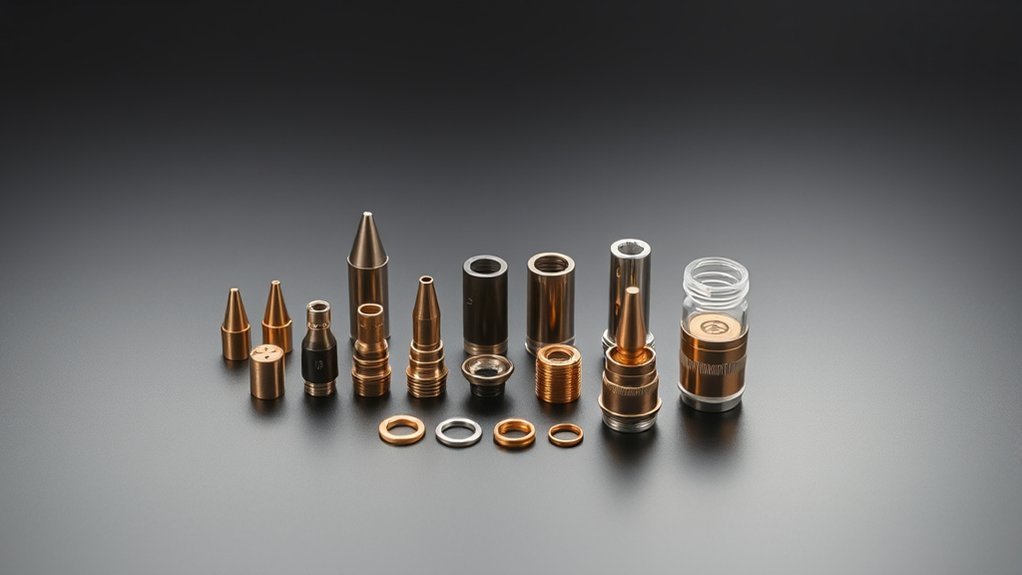
Bad consumables can turn a clean Powermax30 cut into heavy dross, wide kerf, and failed starts fast. Start with the right core parts for your system, then replace them before wear damages nearby torch parts. This guide covers Powermax30 consumables, common part numbers, cross-compatible items, HyAccess options, upkeep, accessories, and safe ordering steps.
What’s in This Article
- Powermax30 System Overview and Compatibility
- Essential Consumables: Nozzles, Electrodes, and Swirl Rings
- Part Numbers Reference for Powermax30 and 30/45 Cross-Compatible Parts
- HyAccess Extended Consumables for Hard-to-Reach Cuts
- Pricing, Savings, and Bulk Starter Kits
- Torch Components, Replacement Kits, and Upkeep
- Cutting Guides, Safety Gear, and Helpful Accessories
- Maintenance Intervals and Signs It’s Time to Replace
- Upgrading to Hypertherm Cartridge Platform (SYNC) Options
- Ordering, Shipping, and Support Resources
- Frequently Asked Questions
Quick Answer
For many Powermax30 setups, the core consumables to verify include electrode 220478, nozzle 220480, retaining cap 220483, swirl ring 220670, and deflector 220569. Check your exact Powermax30 variant before ordering because legacy Powermax30, Powermax30 XP, and Powermax30 AIR systems can use different torches, air setups, and consumable options. Inspect consumables often and replace worn parts when the electrode pit deepens, the nozzle orifice turns oval, or cut quality drops.
Key Takeaways
- Confirm your Powermax30 variant and torch family before you buy consumables.
- Keep high-wear parts such as electrodes, nozzles, retaining caps, swirl rings, and deflectors clearly labeled.
- Replace consumables when you see deep electrode pitting, oval nozzle wear, poor starts, added dross, or an unstable arc.
- Use HyAccess consumables only when you need more reach in tight joints or recessed cuts.
- Buy genuine parts from authorized suppliers and verify each part number before checkout.
Powermax30 System Overview and Compatibility
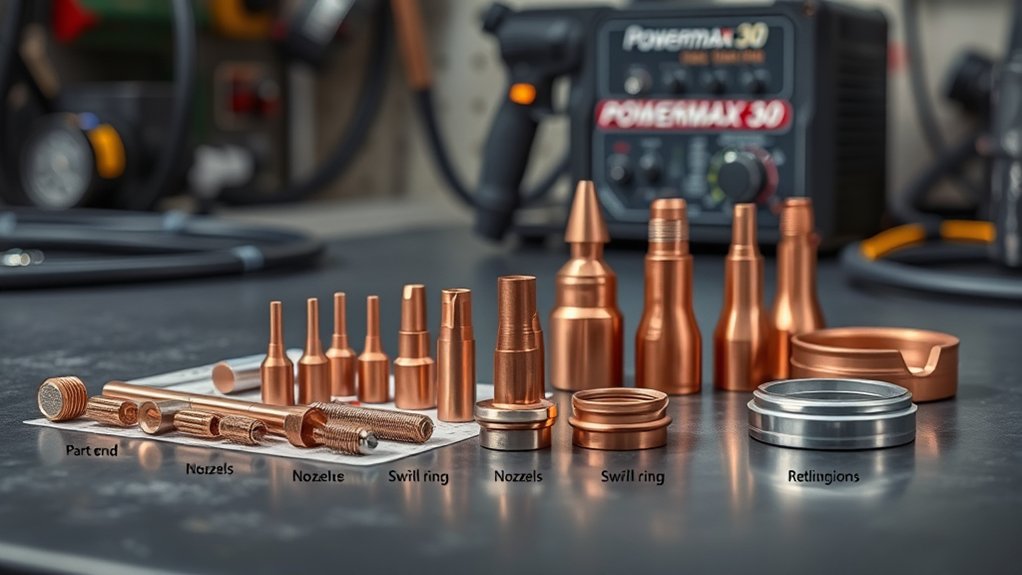
For Powermax30 users, start by confirming your system variant: legacy Powermax30, Powermax30 XP, or Powermax30 AIR. Consumable fit, torch setup, and air requirements can differ by model.
Match torches and parts by series so you maintain proper arc voltage and airflow. Those two factors affect cut quality, dross, bevel, and consumable life.
The Powermax30 family supports handheld plasma cutting on mild steel, stainless steel, and aluminum. Some setups also accept FineCut options for thin metal work with a tighter kerf and less cleanup.
Before you order replacements, verify the torch family and catalog part numbers. This step helps you avoid cross-series mismatches.
Check whether your model supports FineCut stock keeping units (SKUs) for precision work. Also use the correct retaining hardware for standard cutting, drag cutting, or gouging setups.
Verify FineCut compatibility and use the correct retaining hardware for your cutting or gouging setup.
Confirm air delivery before you tune pressure. Legacy and XP systems use shop air, while the AIR model uses an integrated compressor.
Keep one approved parts list for your shop. A clear list helps you swap parts fast without hurting cut quality or torch reliability.
Essential Consumables: Nozzles, Electrodes, and Swirl Rings
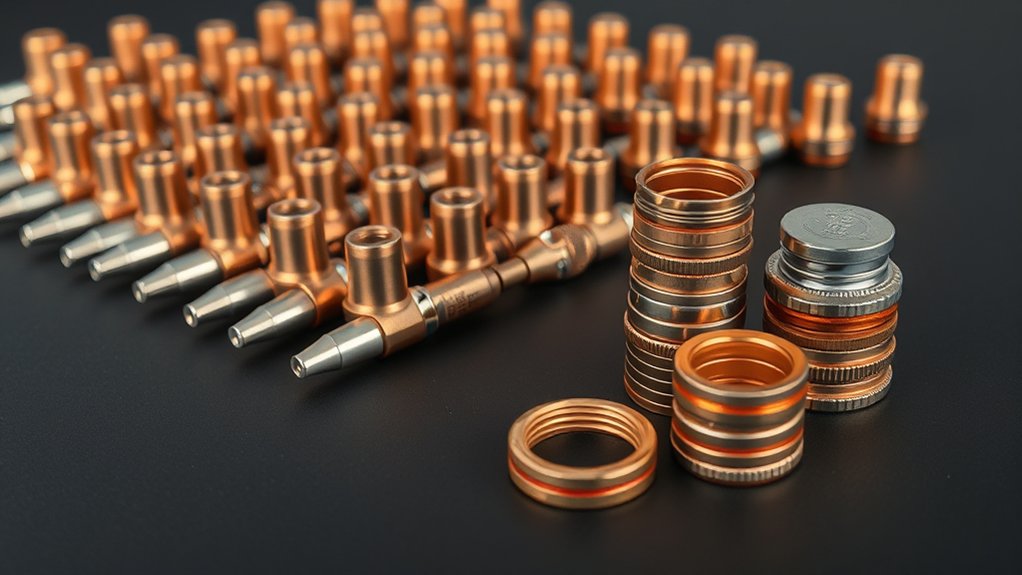
Consumables drive cut quality and uptime on a Powermax30 system. Match nozzles, electrodes, and swirl rings to the correct torch family and catalog SKUs before you order.
Use Powermax30-specified parts to reduce the risk of misalignment, gas leakage, and poor arc starts.
Nozzles focus the arc. Verify the amperage rating and orifice spec on the SKU before purchase.
Inspect nozzles for out-of-round wear and dross buildup. Clean light buildup, and replace the nozzle when tapering, chips, or oval wear appear.
Electrodes start and carry the arc. Replace them at the first signs of copper mushrooming, heavy burn marks, or a deep hafnium pit.
Track electrode life by cut length, pierce count, or torch-on time. Replacing an electrode early can protect the nozzle and improve starts.
Swirl rings stabilize gas flow. Check them for cracks, heat discoloration, blocked ports, or worn gas channels.
Replace a swirl ring if you see an unstable arc, wandering kerf, or uneven wear across the consumable stack.
Re-seat O-rings with a light, approved lubricant. Tighten the retaining cap according to the service guidance for your torch.
Products Worth Considering
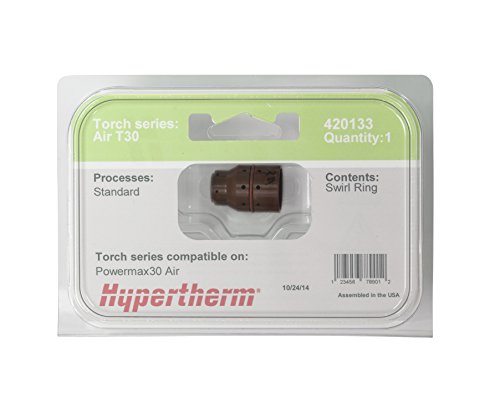
Hypertherm swirl ring, part number 420133.

Tool free allows consumables to be easily changed out

Hypertherm retaining cap, part number 420135.
Part Numbers Reference for Powermax30 and 30/45 Cross-Compatible Parts
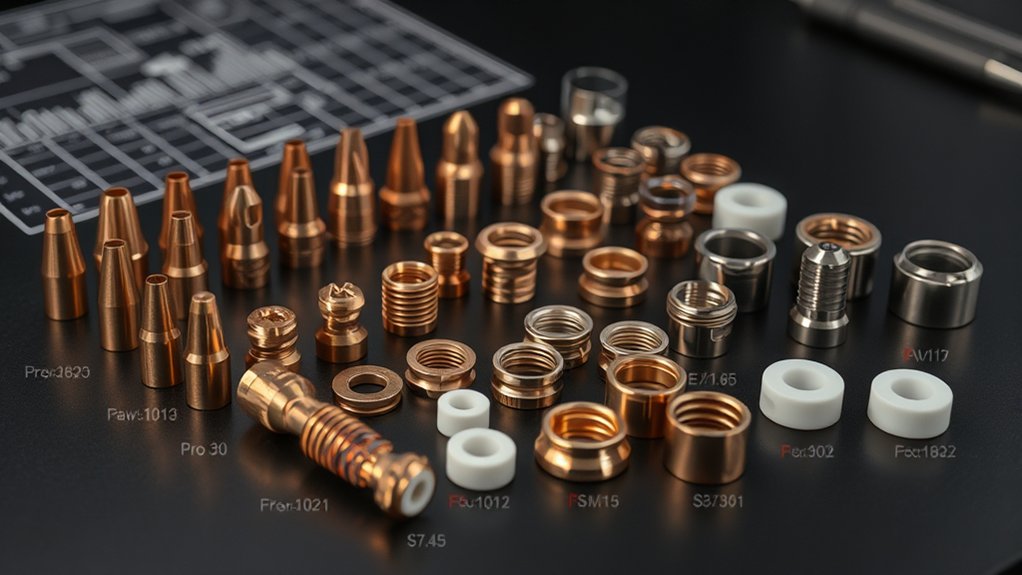
You can track common Powermax30 parts by number. Start with electrode 220478, nozzle 220480, and retaining cap 220483 for routine replacement planning.
If your shop runs both Powermax30 and compatible 30/45 systems, shared consumables can simplify stocking. Verify compatibility by model and torch before you standardize bins.
For fast outfitting, choose a starter kit that matches your process and amperage range. Check every included part number before you place it into service.
Powermax30 Core Parts
Core consumables help protect the Powermax30’s reliability. The key parts to track include electrode 220478, nozzle 220480, and retaining cap 220483.
Use these parts to support stable arc starts and consistent cut quality. Replace the 220478 electrode when starts degrade, and replace the 220480 nozzle when orifice wear widens the kerf.
Keep the 220483 retaining cap in good shape to hold the stack in alignment. Inspect it for thread wear, heat marks, and poor seating.
- Check that the 220480 nozzle orifice looks round and clean before each key job.
- Replace the 220478 electrode when pilot starts weaken or the pit reaches the wear limit in your manual.
- Seat the 220483 cap firmly so airflow seals correctly.
For deeper service work, also track the T30V hand torch assembly, lead replacement kit, and any torch body parts your supplier lists for your model.
30/45 Shared Consumables
Three high-rotation items often tie Powermax30 and 30/45 platforms together: electrode 220478, nozzle 220480, and retaining cap 220483. Verify your system before you treat any part as drop-in compatible.
Shared part numbers can simplify spares, reduce bin count, and speed changeovers across compatible systems.
For gas flow stability, check swirl ring 220670. For edge shielding or drag cutting, verify whether deflector 220569 fits your setup.
These cross-family pieces can preserve stack-up tolerances when your torch supports them. They also help you keep consumable changes consistent.
Use this replacement guide as a starting point:
- Electrode 220478: Replace it when pit depth nears the wear limit in your service manual.
- Nozzle 220480: Replace it when kerf width, bevel, or angularity increases.
- Retaining cap 220483: Inspect threads and seals, then replace the cap if it looks heat-crazed.
- Swirl ring 220670: Replace it when cracks, blocked ports, or gas-channel wear appear.
- Deflector 220569: Replace it when the edge looks warped, eroded, or spatter damaged.
Starter Kits Overview
Starter kits bundle matched consumables for common Powermax30 and 30/45 use cases. They help you avoid guesswork when you need several parts at once.
HyAccess gouging and consumable starter kits can help when your work needs 15 to 45 amp extended-reach parts. Confirm the kit part numbers against your torch and amperage chart.
- Open the kit and verify each nozzle, electrode, swirl ring, and shield against your approved parts list.
- Use the labeled amperage range, and match it to the torch setting before you cut.
- Log each kit part number so you can reorder exact replacements.
- Count bulk quantities and compare them with your average burn rate.
HyAccess Extended Consumables for Hard-to-Reach Cuts
For tight-access work, HyAccess extended electrodes and nozzles help you reach joints that standard consumables cannot reach well. These parts fit selected Powermax 30, 30 XP, and 45 setups, but you should confirm part numbers before ordering.
Switch to an extended electrode and nozzle set when visibility and reach limit your control. Better access can reduce torch repositioning and help you maintain cut quality.
Match each replacement part by amperage, torch, and task. Install the stack in the correct order so the torch stays within spec.
What HyAccess Includes
When tight clearances block a standard torch, HyAccess extended consumables give you more reach without changing the fixture. They can also improve your sightline in deep joints.
Each component supports a specific access task. Use the part number, amperage range, and process type to choose the right item.
- Use the HyAccess extended electrode for confined joints, and match amperage to your Powermax chart.
- Use the HyAccess extended cutting nozzle for tight profiles, and replace it when bevel or dross increases.
- Use the HyAccess extended gouging nozzle when you need better sightline during weld removal.
- Use the correct retaining or shield interface to maintain standoff in deep access areas.
When To Use
Switch to HyAccess extended consumables when a standard torch cannot maintain standoff or sightline. Common examples include tight brackets, recessed gussets, and inside corner pierces.
The longer design can help you hold a steadier arc length. It also reduces torch tilt, which can lower rework.
Choose the extended electrode for narrow channels or deep cavities. Pair it with the correct gouging nozzle when you remove welds or back-gouge in tight spaces.
Match the extended nozzle and shield style to your process, either cutting or gouging. Replace worn parts early to keep kerf shape, starts, and pierces consistent.
Part Numbers List
HyAccess extended consumables use specific part numbers for tight-access cutting and gouging. Check the current catalog or your supplier page before you buy.
Match parts to the 15 to 45 amp range and the torch task. Replace related parts as a set when wear changes arc shape or reach.
- Choose the amp-matched extended electrode to stabilize the arc in deep or blocked joints.
- Select the correct cutting nozzle orifice size to maintain kerf control and heat balance.
- Order the HyAccess-specific retaining cap when the setup requires it.
- Use the designated gouging nozzle for better view and material removal in confined spaces.
Pricing, Savings, and Bulk Starter Kits
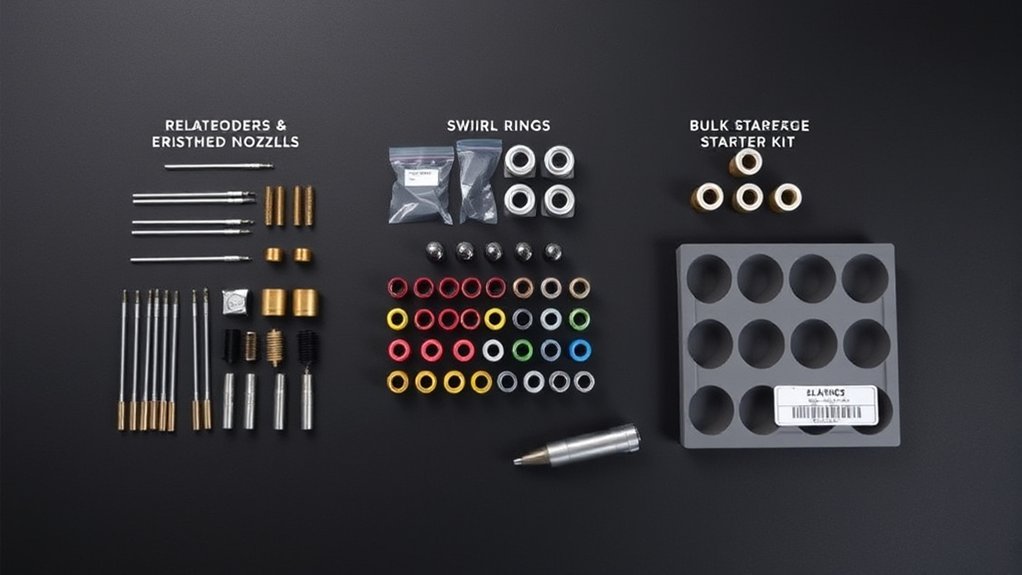
You have two main ways to control Powermax30 consumable costs: buy single part numbers as needed or use starter kits for matched inventory. The better choice depends on your burn rate, job mix, and downtime cost.
Prices can change by supplier, region, and stock status. Treat any listed price as an estimate, and confirm the final cost before checkout.
Starter kits can reduce missed parts because they bundle compatible items. They also make it easier to stock parts for cutting, gouging, or hard-to-reach work.
| Item/Kit | Key Detail | Price/Benefit |
|---|---|---|
| Electrode | High-wear replacement item | Confirm current supplier price |
| Nozzle | High-wear replacement item | Confirm current supplier price |
| Powermax 30/45 electrode pack | Multi-piece or promo listing | Check current promo terms |
| HyAccess Starter Kit (15 to 45 A) | Bundled mix | May lower blended cost |
| Bulk order | Shipping and stock planning | Check supplier threshold |
Plan replacements by burn rate. If you replace electrodes and nozzles in pairs, kit inventory may make sense. If your usage stays light, buy singles and watch verified supplier promos.
Products Worth Considering
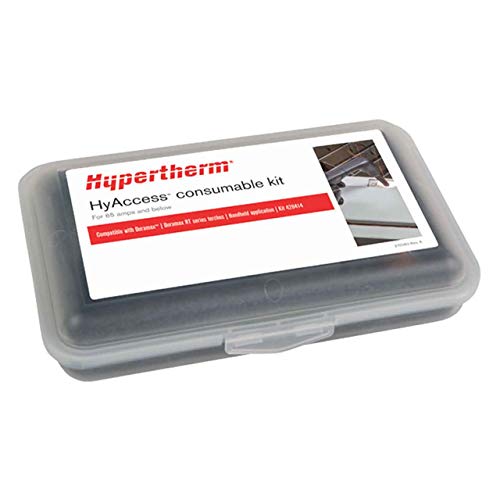
Hypertherm Duramax and Duramax Lock HyAccess consumable kit, part number 428414. Hypertherm's current product page identifies 428414 as a 30–65 A HyAccess cutting and...
Torch Components, Replacement Kits, and Upkeep
Good technique can extend consumable life, but you still need a plan for torch components and service kits. A small stock of key parts can keep downtime low.
Prioritize assemblies and replacement kits first. Then cycle consumables based on cut quality, pierce count, and inspection results.
- T30V hand torch assembly: Replace it when cable strain, gas leaks, or trigger faults remain after smaller repairs.
- Lead replacement kit: Install it when continuity checks show resistance drift or visible lead damage.
- Torch handle replacement kit: Use it to restore grip, trigger alignment, and latch function.
- Main body replacement kit: Swap it when threads, gas passages, or seat faces show wear.
Keep consumables fresh. Change the electrode when pit depth reaches the limit in your manual, and change the nozzle when the orifice turns oval or spatter-scarred.
Log part numbers, hours, pierces, material type, and cut current. This record helps you set better replacement intervals.
Cutting Guides, Safety Gear, and Helpful Accessories

Accessories can improve repeatability, safety, and storage. Choose them by torch fit, job type, and replacement needs.
For circle cuts, compare basic and deluxe guide packages by radius range, adjustment control, and torch compatibility. A guide can help you cut smoother circles with less layout time.
For safety, use a face shield shade that matches plasma cutting guidance and your shop policy. Keep clear window replacements on hand, and replace scratched or cloudy lenses.
Store the cutter, leads, and small consumables in a protective case or labeled bins. Add clean, dry air filtration when your setup uses shop air.
Circle Guide Options
Start with a circle-cutting guide that fits your torch body and standoff setup. Basic packages suit common radius work, while deluxe guides may offer a wider range and finer adjustment.
Circle guide benefits include faster setup, repeatable arcs, and cleaner circular cuts on mild steel, stainless steel, and aluminum. Record the part numbers for clamps, pivot pins, and radius arms so you can reorder worn pieces.
- Anchor the pivot pin firmly before you start the arc.
- Lock the radius arm to the exact diameter.
- Move the carriage smoothly to avoid tip dive and oval circles.
- Bag and label small components after each job.
Essential Safety Gear
Safety starts with gear that fits your Powermax workflow. Use protective equipment that meets your shop rules and the hazards of plasma cutting.
Use an operator face shield with a suitable shade for plasma arc glare and spatter. Pair it with clear window replacements so you can restore visibility when the lens gets pitted, cloudy, or scratched.
Warning: Do not cut without proper eye, face, hand, and fire protection because plasma arcs create intense light, heat, sparks, and fumes.
Inspect shields, gloves, glasses, and lenses before each shift. Replace any item that shows heat damage, deep scratches, holes, or loose fit.
Carrying and Storage Accessories
Good storage protects small parts from dirt, impact, and moisture. It also helps your team find the right consumable before a job starts.
For circular work, keep guide components bagged, labeled, and dated. For personal protective equipment, track lenses and windows as consumables.
- Use a basic circle cutting guide for common diameter work.
- Use a deluxe circle cutting guide when you need more radius range or finer control.
- Use an operator face shield with the correct shade for plasma cutting.
- Stock clear window replacements and replace them when visibility drops.
Add a foam-lined carrying case when you transport the Powermax30 XP often. Protected transport can reduce lead damage and lost accessories.
Maintenance Intervals and Signs It’s Time to Replace
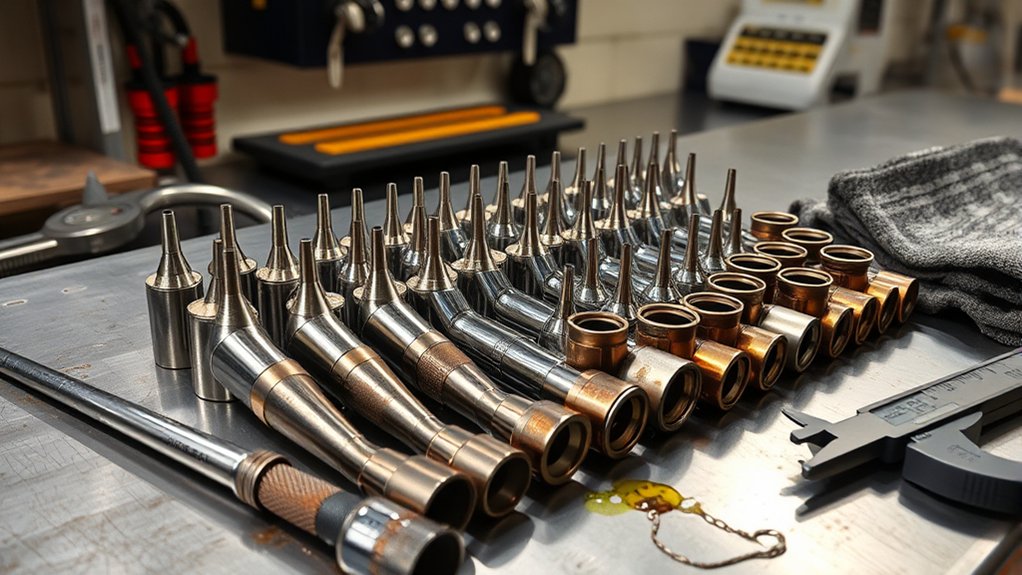
Plan regular inspection by torch-on time, pierce count, and cut quality. Many shops inspect consumables after heavy use periods rather than waiting for a failed cut.
Pull the shield, nozzle, and electrode on a set schedule. Document wear by part number so you can reorder quickly.
Watch for replacement signs tied to cut quality. If you see increased dross, wider kerf, or arc instability, check the electrode first.
Heavy pitting, mushrooming, or burn marks mean you should replace the electrode. Do not run a worn electrode until it damages the nozzle.
Inspect the nozzle orifice under magnification when possible. Ovaling, chips, or micro-cracks degrade arc shape and require a new nozzle.
Track how each job type affects wear. Short, frequent pierces can wear nozzles faster, while long continuous cuts can stress electrodes.
Replace weak parts instead of running a mixed good and bad stack. Proactive swaps can prevent damage to adjacent consumables and keep cuts on spec.
Pro tip: Keep one labeled sample of a new nozzle and electrode near the cutter so you can compare wear fast.
Upgrading to Hypertherm Cartridge Platform (SYNC) Options
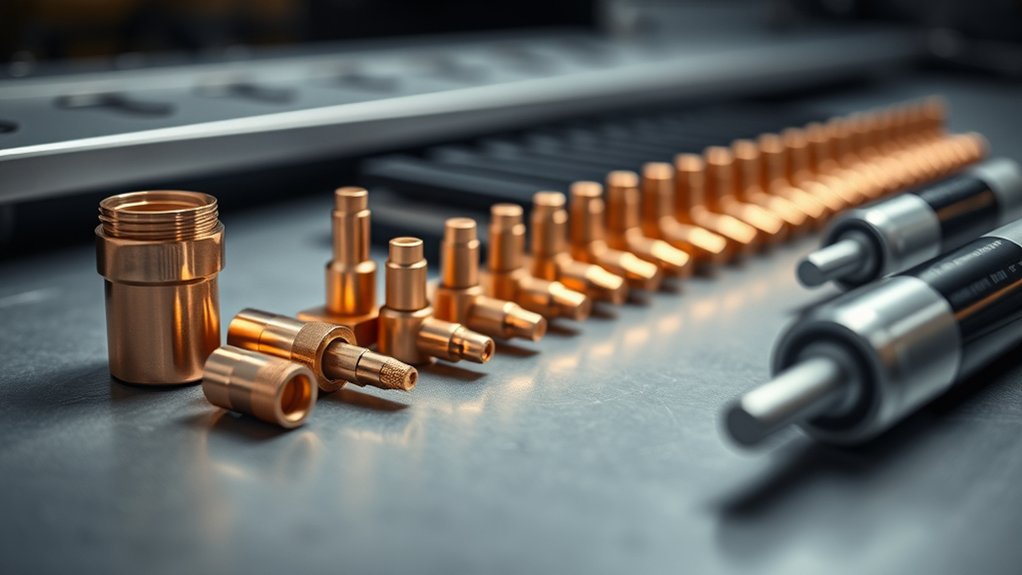
If you manage a multi-piece stack, a cartridge platform can reduce part matching work. Hypertherm SYNC options combine key consumable functions into a single cartridge on supported systems.
Cartridges can reduce mix-ups because you select one process-specific part instead of matching several separate pieces. Some compatible systems also support SmartSYNC features such as automatic process settings and end-of-life alerts.
Before you upgrade, confirm that your Powermax model, torch, and adapter support the cartridge platform. Do not assume older torches accept the same adapter or cartridge family.
- Adapter fit: Confirm the adapter matches your exact torch and system.
- Cartridge type: Choose the cartridge for drag cutting, mechanized cutting, gouging, or another listed process.
- Amperage range: Match cartridge rating to your cut chart and material thickness.
- End-of-life tracking: Replace cartridges when cut quality drops or the system indicates wear.
For replacements, match the SYNC cartridge family to your process and amperage. Keep adapter and cartridge SKUs paired in your inventory records.
Ordering, Shipping, and Support Resources
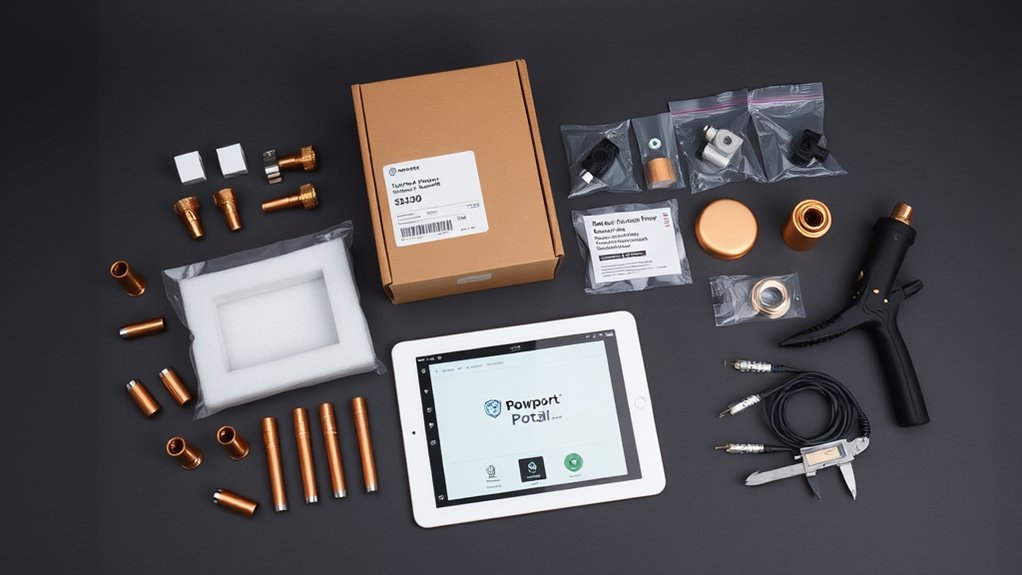
Genuine parts protect cut quality, torch life, and fit. Order Powermax30 consumables, adapters, and cartridges from authorized suppliers by exact part number.
Use the online catalog to verify each nozzle, electrode, swirl ring, shield, and retaining cap before checkout. Cross-check the torch variant, amperage rating, and quantity.
Shipping thresholds and stock status can change. Bundle high-use part numbers only when the order fits your real burn rate and storage plan.
Track shipments through the supplier portal when available. Set reorder points based on your average use, not guesswork.
For support, have your torch model, system serial number, and part numbers ready. Support teams can validate compatibility and help troubleshoot cut-quality issues.
Frequently Asked Questions
How Do Ambient Temperature and Humidity Affect Consumable Lifespan?
Heat, cold, and moisture can shorten consumable life. Temperature swings can stress parts, while humidity can promote oxidation and arc instability.
Store parts in dry, sealed containers when possible. Inspect them more often if your shop has damp air or wide temperature swings.
Are There Recommended Air Compressor Settings for Optimal Consumable Wear?
Use the air pressure and flow rate listed in your Powermax manual for your exact model. Do not rely on a generic pressure range when the manual gives a model-specific setting.
Clean, dry air matters as much as pressure. Replace filters on schedule, drain moisture, and check the regulator gauge for accuracy.
Can Counterfeit Consumables Be Identified Visually Before Installation?
You may spot some counterfeit parts by checking markings, fonts, laser etching, plating, and part-number alignment. Poor finish, missing marks, or off-size dimensions should raise concern.
Compare suspicious parts with known genuine parts from an authorized supplier. When in doubt, reject the part before it damages the torch.
What Storage Conditions Prevent Oxidation of Electrodes and Nozzles?
Store electrodes and nozzles in clean, sealed containers with desiccant when moisture is a problem. Keep them away from salts, oil, grinding dust, and other shop contamination.
Handle parts with clean, dry hands or gloves. Rotate stock by purchase date so older parts get used first.
How Do Cutting Stainless vs. Aluminum Impact Consumable Selection?
Stainless steel and aluminum can need different cut speeds, gas quality, and consumable choices. Use your cut chart to match material type, thickness, amperage, and nozzle choice.
Aluminum can transfer heat differently than stainless steel, so watch dross, bevel, and arc behavior closely. Replace parts when the orifice ovalizes or the electrode pit reaches the manual’s wear limit.
Final Powermax30 Consumables Checklist
The most important step is simple: match every Powermax30 consumable to your exact system, torch, process, and amperage before you cut. Keep electrodes 220478, nozzles 220480, retaining caps 220483, compatible swirl rings, and deflectors labeled if your setup supports them.
Inspect parts before key jobs and replace them when starts weaken, dross rises, kerf widens, or the arc wanders. Check HyAccess and SYNC options only when they solve a real reach, inventory, or process problem.
Use genuine parts, keep a shop log, and reorder before your last good set goes into the torch. That habit keeps your Powermax30 ready for clean, repeatable cuts.
References
- Hypertherm official product and consumables information — Hypertherm, accessed for manufacturer verification
- Powermax SYNC information — Hypertherm, accessed for cartridge platform context
- Workplace safety guidance — Occupational Safety and Health Administration, accessed for general safety context