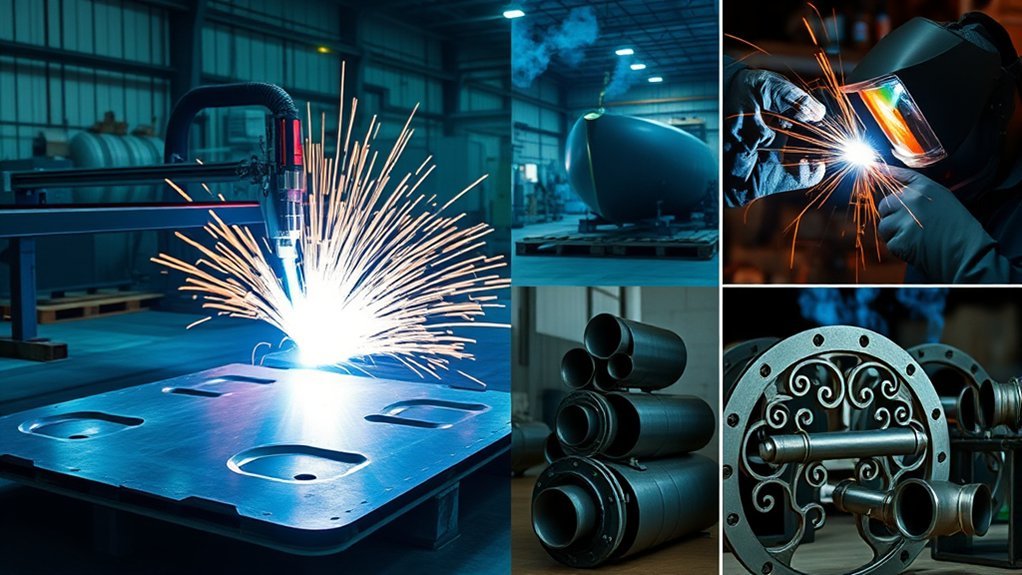
Plasma cutting is a fast way to separate electrically conductive metal, but it is not the best process for every part. It works especially well for steel plate, stainless steel, aluminum, repair work, structural fabrication, and repeatable CNC shapes. The best results come from matching the machine, consumables, gas or air supply, travel speed, and safety controls to the exact job.
Quick Answer
Plasma cutters are used to make fast cuts in electrically conductive metals such as carbon steel, stainless steel, aluminum, copper, and brass. Common uses include structural fabrication, vehicle and equipment parts, shipbuilding, repairs, signs, artwork, and CNC production. Material thickness, required precision, power, air, and safety controls determine whether plasma is the right choice.
Key Takeaways
- Plasma cutting works on electrically conductive metals, not wood, glass, plastic, stone, or ordinary ceramics.
- It is valued for speed, portability, plate-cutting capacity, and the ability to cut both ferrous and nonferrous metals.
- CNC systems add repeatable motion, nesting, kerf compensation, and automatic torch-height control.
- The machine’s recommended cut rating matters more than its slower maximum-severance rating.
- Cut quality depends on consumable condition, travel speed, torch height, air quality, amperage, and correct cut direction.
- Arc light, hot metal, fumes, noise, electricity, and fire require proper PPE, ventilation, grounding, and hot-work controls.
What’s in This Article
- How Plasma Cutting Works
- Materials and Jobs Suited to Plasma Cutting
- Automotive Manufacturing and EV Production
- Construction, Steel Fabrication, and Heavy Equipment
- Aerospace and Defense Applications
- Artistic, Signage, and Custom Metalwork
- Shipbuilding and Marine Engineering
- Maintenance, Repair, and Field Operations
- Manual vs. CNC Plasma Cutting
- Plasma vs. Other Cutting Processes
- What to Consider Before Choosing Plasma Cutting
- Plasma Cut Quality and Troubleshooting
- Plasma Cutting Safety
- Frequently Asked Questions
How Plasma Cutting Works
A plasma cutter sends an electric arc through a fast-moving gas. The energized gas becomes plasma, which forms an electrically conductive path between the torch and the workpiece. The concentrated arc melts the metal, while the high-speed gas blows the molten material out of the kerf.
Because the cutting circuit must transfer through the workpiece, conventional plasma arc cutting requires an electrically conductive material. Carbon steel, stainless steel, aluminum, copper, brass, cast iron, titanium, and many other conductive alloys can be cut when the machine and consumables are suitable for the material and thickness.
The cutting system normally includes a power supply, torch, electrode, nozzle, work lead, gas or compressed-air supply, and consumables. Mechanized systems add a cutting table, motion controls, computer numerical control, torch-height control, and software that converts a drawing into a cut path.
Plasma is a speed-and-versatility process. It can cut nearly any conductive metal, but the machine, consumables, gas, motion system, and required edge quality set the practical limit.
Materials and Jobs Suited to Plasma Cutting
Plasma cutting is most useful when you need a fast cut in conductive sheet, plate, tubing, expanded metal, or an existing metal assembly. It can cut clean new stock as well as many rusty or painted surfaces, although coatings must be assessed because heat can release hazardous fumes.
| Material or Job | Why Plasma Fits | Main Limitation |
|---|---|---|
| Carbon and mild steel | Fast cutting across sheet, plate, frames, brackets, and repair parts | Some bevel, dross, and heat-affected edge may remain |
| Stainless steel | Cuts a metal that oxy-fuel cannot cut effectively | Fume control and edge-condition requirements are important |
| Aluminum | High travel speed and useful capacity on sheet and plate | Heat, hydrogen risks with some underwater processes, and edge finish require control |
| Copper and brass | Conductive nonferrous metals can be cut with the right setup | High thermal conductivity may reduce speed and capacity |
| Expanded, rusty, or painted metal | The arc can handle interrupted surfaces and contamination better than some processes | Coatings and residues may produce toxic or flammable fumes |
| Repeated profiles and nested parts | CNC motion supports repeatable paths and efficient sheet use | Small holes and very fine details may favor laser or another process |
Note: “Conductive” does not automatically mean “safe to cut.” Identify coatings, plating, residues, tanks, closed containers, and nearby combustible materials before applying heat.
Automotive Manufacturing and EV Production
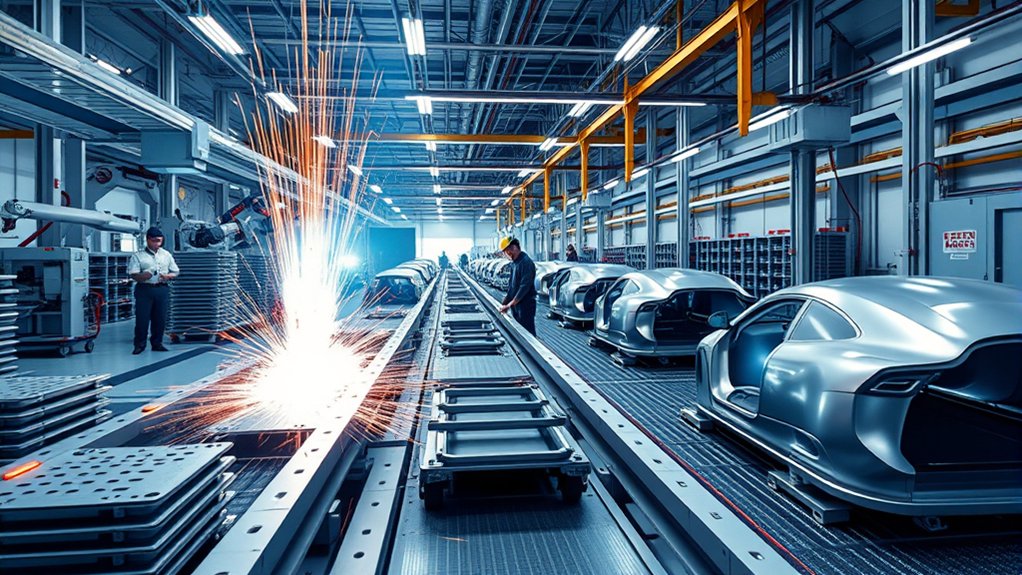
Plasma cutting is useful for many automotive components, especially brackets, frame sections, chassis reinforcements, exhaust parts, fixtures, tabs, and thicker steel or aluminum pieces. Automated plasma can deliver fast, repeatable cuts when the machine, motion system, cut chart, and inspection plan are matched to the part.
It is not the default process for every body-in-white panel or close-tolerance production component. Thin exterior panels are commonly stamped, while laser cutting may be preferred for narrow kerfs, small features, or tighter dimensional requirements. Plasma is strongest where speed, plate capacity, material flexibility, and moderate precision matter more than the finest possible edge.
Production cells can standardize pierce height, cut height, gas flow, amperage, and travel speed. A suitable torch-height controller can use arc-voltage feedback to maintain a more consistent standoff as plate height changes. Inspection may include part dimensions, hole quality, kerf width, edge angle, dross, and heat-affected areas.
Automated gantries or robotic systems can work with nesting software to fit more parts on a sheet. Barcode-driven programs, revision control, and statistical process checks can improve repeatability across shifts and product variants. These features depend on the equipment and control system; they are not included with every plasma cutter.
For EV production, plasma may be used to profile unfinished battery-tray parts, motor mounts, brackets, skid plates, and structural components before assembly. Fine-feature consumables and stable motion can improve detail, but the cut must still meet the drawing, joining procedure, corrosion-protection plan, and crash-performance requirements.
Warning: Do not plasma cut an assembled electric or hybrid vehicle until the exact make, model, model year, battery location, high-voltage cable routing, restraint-system hazards, and approved isolation procedure have been verified. Use the VIN, current manufacturer service information, and the applicable NHTSA emergency response guide. Never cut into a high-voltage battery pack or unidentified orange cable.
Construction, Steel Fabrication, and Heavy Equipment
Plasma cutting can turn drawings into beams, plates, gussets, base plates, stiffeners, connection parts, and equipment components quickly. In a fabrication shop, CNC tables can process nested part files while controlled motion improves consistency from one plate to the next.
Portable cutters also help with field repairs and approved jobsite changes. An operator may trim a plate, remove a damaged section, create an access opening, or prepare a component for replacement without returning the entire assembly to the shop.
Portable plasma can reduce field rework, but a fast cut does not replace engineering approval, dimensional checks, edge preparation, or inspection.
Do not change a load-bearing beam, flange, web, connection, lifting point, or pressure-retaining component solely because the cutter can reach it. Obtain the required engineering or manufacturer approval before altering structural members or safety-critical equipment.
Heat input, cut speed, consumable condition, and gas selection affect bevel, dross, hardness, and the heat-affected edge. Parts that will be welded may need grinding, machining, cleaning, or inspection before fit-up. The applicable drawing or welding procedure determines what edge condition is acceptable.
Heavy-equipment manufacturers use plasma for chassis rails, boom sections, buckets, guards, brackets, and wear-plate parts. The process works with carbon steel, high-strength low-alloy steel, stainless steel, and other conductive alloys, but heat-sensitive or quenched-and-tempered materials may have special cutting and preheat requirements from the steel producer.
Aerospace and Defense Applications
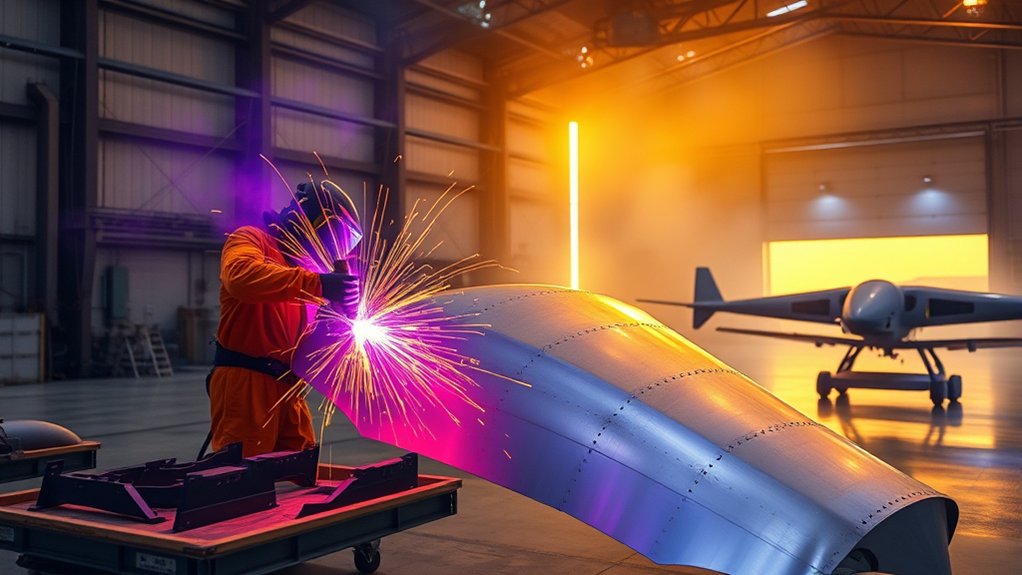
Plasma can cut conductive aerospace and defense alloys, including aluminum, titanium, stainless steel, and some nickel-based alloys. High-definition systems, narrow-kerf consumables, stable gas control, and accurate torch-height control can improve cut quality across a range of thicknesses.
Material compatibility does not make plasma suitable for every aircraft or defense part. Thin skins, close-tolerance holes, fatigue-critical edges, and flight-critical components may be better suited to laser cutting, waterjet, machining, or another approved process. The drawing, customer specification, material condition, and qualified manufacturing plan control the choice.
When plasma is approved, it may be used for rough profiles, thicker plate, tooling, fixtures, ground-support equipment, armored components, prototypes, or parts that will receive additional machining. Cut edges on titanium, nickel alloys, or hardened materials may require removal of the thermally affected layer before welding or final service.
Automated gantries, probing, bevel heads, nesting software, and post-cut inspection can improve yield and process control. Traceable records may include material identification, program revision, operator, consumable lot or condition, gas selection, current, speed, inspection results, and nonconformance disposition.
An aerospace quality-management system such as the IAQG 9100-series framework supports documented control and traceability. It does not independently approve plasma cutting or replace customer-specific process requirements.
Artistic, Signage, and Custom Metalwork

Artists and sign makers use plasma cutters to shape steel, aluminum, stainless steel, copper, brass, and weathering steel. A handheld torch works well for freehand cuts and templates, while a CNC table can reproduce logos, letters, panels, brackets, and decorative patterns.
Digital design software allows you to import vector files, apply kerf compensation, add lead-ins, place tabs, and nest several designs on one sheet. This can reduce manual layout time and support one-off pieces or small production runs.
Different metals and thicknesses need different cut charts. Aluminum and copper move heat quickly, thin sheet can warp, and small internal details can be lost if the kerf is too wide. A test cut helps confirm minimum feature size, cut direction, tab placement, and finishing needs.
Intricate Design Capabilities
Plasma can produce detailed signs, screens, address plates, wall art, brackets, and sculptures when the design is appropriate for the kerf width. CNC motion can create repeatable radii, slots, lattice patterns, negative space, and relief cuts.
Very small holes, thin bridges, sharp internal corners, and fine lettering remain challenging. Increase fragile feature widths, round tight internal corners, and leave enough material around mounting holes so heat and kerf do not weaken the design.
- Convert clean vector artwork into machine-ready paths
- Use kerf compensation to protect finished dimensions
- Plan lead-ins so pierce marks stay off visible edges
- Add micro-tabs to keep small pieces from tipping into the table
- Test thin or detailed designs on scrap before cutting finished stock
CNC-Driven Personalization
CNC-driven personalization makes it easier to repeat names, house numbers, logos, monograms, and custom patterns. Computer-aided design and manufacturing software can validate geometry, nest parts, simulate paths, and produce the machine code used by the controller.
| Material | Typical Application | Cut-Quality Focus |
|---|---|---|
| Mild steel | Outdoor signs and brackets | Low dross and correct cut direction |
| Aluminum | Indoor décor and panels | Heat control and adequate feature width |
| Weathering steel | Address plates and garden art | Clean visible edges and drainage details |
| Stainless steel | Brand logos and food-service panels | Fume control and surface protection |
| Brass or copper | Decorative inserts and monograms | Correct consumables, speed, and capacity |
Rapid revisions also help you adjust letter spacing, attachment points, negative space, and overall dimensions before metal is consumed. Save the approved drawing and cut file together so repeat orders use the correct revision.
Mixed-Metal Sculpture Work
Mixed-metal sculpture combines metals that may respond differently to heat. Steel, stainless steel, aluminum, copper, and brass can all be plasma cut, but each material may need a different gas, amperage, speed, standoff, or consumable setup.
Do not cut a stack of unlike metals as though it were one uniform plate. Gaps, coatings, different melting behavior, and trapped material can disrupt the arc and create poor edges or unexpected fumes. Cut each component with the appropriate settings, then prepare it for the planned joining method.
- Material planning: Match the cut chart to each metal and thickness.
- Design control: Confirm kerf allowance, visible edges, and attachment points.
- Prototyping: Test fit before final finishing or patina work.
- Waste control: Nest compatible parts while leaving safe spacing between pierces.
Shipbuilding and Marine Engineering
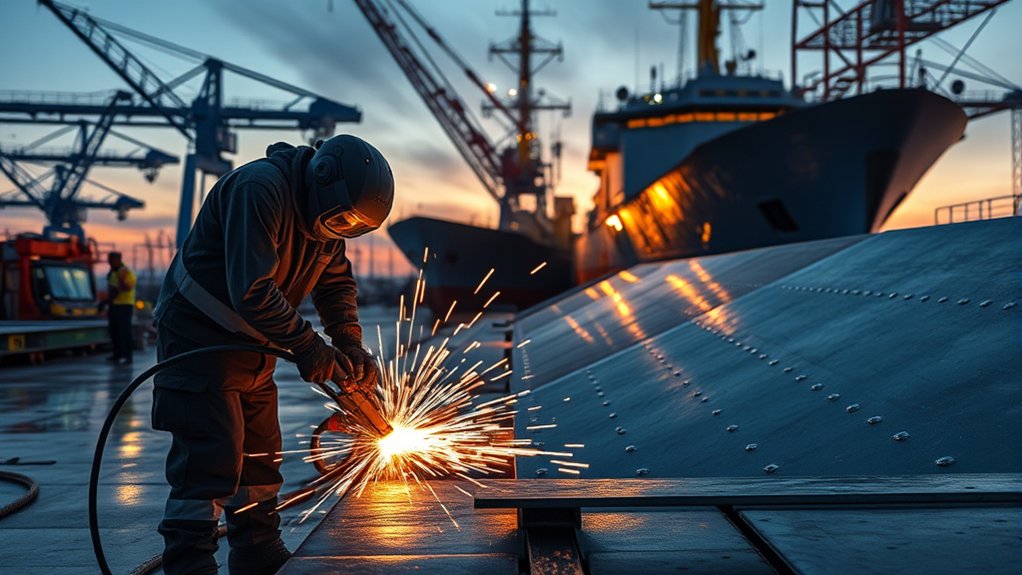
Shipbuilding requires long cuts and repeated profiles in large steel, stainless-steel, and aluminum plates. Mechanized plasma supports hull sections, bulkheads, stringers, brackets, deck parts, penetrations, stiffeners, and other marine components.
CAD/CAM nesting software can arrange parts on plate, add lead-ins and lead-outs, compensate for kerf, and reduce unused remnants. Automated gantries can maintain steady travel over long paths and support production lists that would be slow to complete by hand.
Bevel-capable plasma systems can prepare V, Y, and K profiles for welding. Bevel cutting is more demanding than a square cut because torch angle, kerf compensation, lead placement, speed, and consumable condition all affect the final land and angle. Trial cuts and inspection are normally required before production.
Marine work also brings added safety concerns. Coatings, primers, rust treatments, confined compartments, residues, and poor ventilation can create serious fume or fire hazards. Shipyard work must follow the applicable maritime rules, hot-work controls, atmospheric testing procedures, and employer program.
Maintenance, Repair, and Field Operations
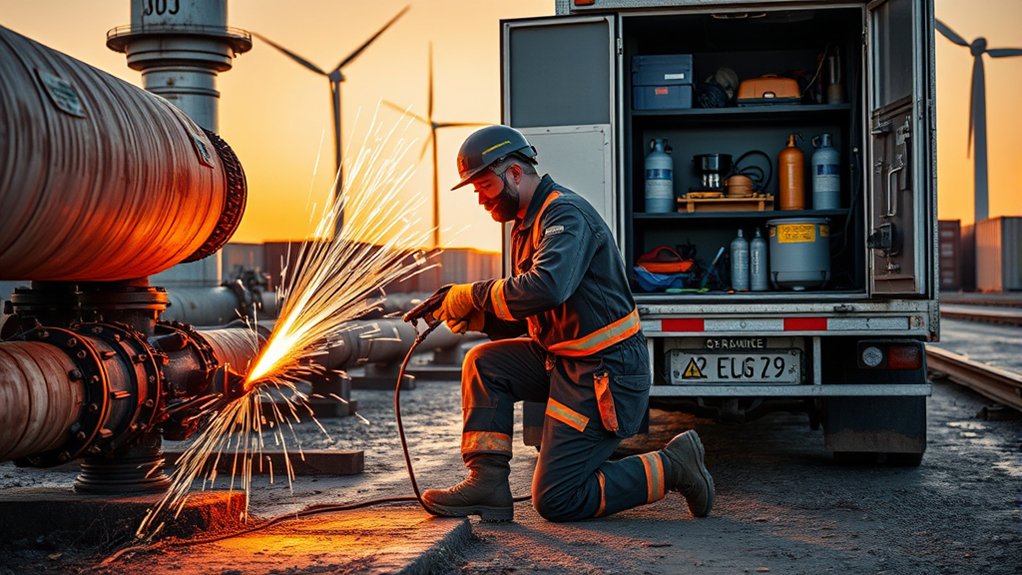
Portable plasma cutters help maintenance crews remove damaged parts, trim replacement plates, open seized assemblies, cut corroded fasteners, and prepare equipment for welding. Because plasma does not need a fuel-gas flame and can cut stainless steel and aluminum, it is flexible for many field repairs.
Portability does not remove the need for adequate input power and compressed air. Long extension leads, undersized generators, wet air, pressure loss, poor grounding, or a compressor that cannot recover fast enough can cause an unstable arc and shortened consumable life.
Some connected systems can log arc-on time, consumable data, fault codes, pressure conditions, or cartridge use. These records may support preventive maintenance when the machine is equipped for monitoring. Basic cutters still require routine inspection of the torch, leads, work clamp, air filter, consumables, and cooling openings.
Precision kerfs can reduce the amount of material removed during a repair, but nearby hoses, wiring, fuel, hydraulic fluid, insulation, batteries, glass, and hidden combustibles must be located before cutting.
Warning: Plasma cutting produces an electric arc, intense visible and ultraviolet radiation, molten metal, sparks, hot slag, noise, and fumes. Inspect both sides of the cut, remove or protect combustibles, control falling slag, provide ventilation, and keep suitable fire-control equipment ready.
- Use a portable inverter cutter only with an adequate circuit or generator.
- Confirm the compressor can maintain the required pressure and flow while cutting.
- Keep the work clamp connection clean and close enough for a stable circuit.
- Inspect consumables before blaming the machine or material.
- Protect nearby people with screens and control access to the hot-work area.
Manual vs. CNC Plasma Cutting
A handheld plasma cutter is best for repairs, demolition, rough profiles, straight cuts with a guide, and work that cannot be placed on a table. It is portable and relatively quick to set up, but edge quality and accuracy depend heavily on the operator’s movement and torch angle.
A CNC plasma table is better for repeated parts, nested sheet work, logos, brackets, gussets, flanges, and programmed contours. The controller moves the torch while software manages the path. A complete system may also control pierce height, cut height, arc voltage, cut direction, lead-ins, and kerf compensation.
| Factor | Handheld Plasma | CNC Plasma |
|---|---|---|
| Best use | Field repairs, removal, rough cutting, one-off work | Repeated profiles, nested parts, signs, production batches |
| Accuracy | Depends on operator, guide, and access | More repeatable when motion and height control are set correctly |
| Setup cost | Lower | Higher due to table, controls, extraction, and software |
| Programming | Usually none | CAD/CAM file preparation and machine operation required |
| Portability | High | Usually fixed in place |
Products Worth Considering

PROTECTS AGAINST RUST & CORROSION: Formulated for CNC plasma tables and water-table cutting systems. Use on ferrous and non-ferrous metals. Reduces flash rust on cut parts while protecting slats, tanks, and associated equipment.

𝐌𝐎𝐃𝐄𝐑𝐍 𝐓𝐄𝐂𝐇𝐍𝐎𝐋𝐎𝐆𝐘 𝐂𝐍𝐂 𝐏𝐋𝐀𝐒𝐌𝐀 𝐓𝐀𝐁𝐋𝐄: Craft your unique metal design arts with unparalleled precision with the Eastwood Versa-Cut 2'X2' CNC Plasma Table, a masterful blend of hobbyist accessibility and professional features. Crafted for those who demand perfection and a user-friendly metal fabrication experience. Designed specifically for use with Eastwood Versa-Cut 40 Plasma Cutter (𝐒𝐨𝐥𝐝 𝐒𝐞𝐩𝐚𝐫𝐚𝐭𝐞𝐥𝐲).

✅ 49" x 96" cutting area ideal for large pieces like bumpers, frame sections, rockers and sills - Use full-sheet (4' x 8') material for maximum yield with no pre-cutting
Plasma vs. Other Cutting Processes
Plasma is often chosen for its balance of speed, material range, plate capacity, and equipment cost. Another process may be better when you need extremely small details, no heat-affected zone, or very thick carbon-steel cutting at a low equipment cost.
| Process | Materials | Main Strength | Main Tradeoff |
|---|---|---|---|
| Plasma | Electrically conductive metals | Fast and versatile on sheet and plate | Wider kerf and more bevel than high-precision laser |
| Laser | Many metals; capability depends on laser type | Fine detail, narrow kerf, and high precision | Higher equipment cost and process limits on some thick or reflective materials |
| Oxy-fuel | Primarily carbon and low-alloy steels that oxidize readily | Economical cutting of very thick carbon steel | Slower preheat, larger heat input, and poor suitability for aluminum or stainless |
| Waterjet | Metal and many nonmetal materials | No thermal heat-affected zone | Slower cutting and higher operating or maintenance demands |
What to Consider Before Choosing Plasma Cutting
Plasma works only when the workpiece can complete the electrical cutting circuit. Before choosing it, compare the material, thickness, required tolerance, edge finish, production volume, available power, air or gas supply, fume controls, and finishing work.
Products Worth Considering
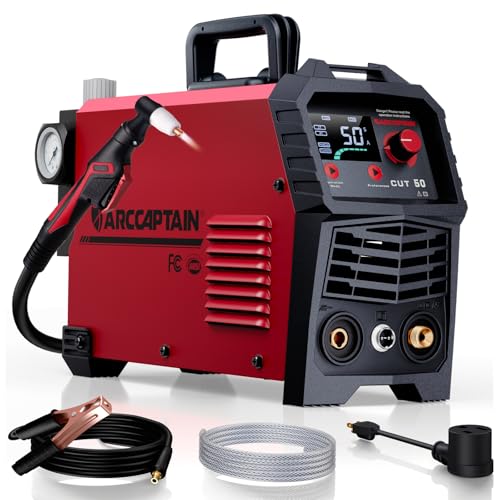
【Powerful Cutting Ability】Switch effortlessly between 110V and 220V for home or workshop use. Achieve professional 1/2" clean cuts on steel, aluminum, and copper with advanced LGBT technology. Perfect for DIY projects and heavy-duty tasks. Recommended maximum cutting thickness: 12mm @ 35A / 110V / 55 PSl; 18mm @ 50A / 220V / 75 PSI. Note: Requires compressed air (compressor sold separately).

【Non-Touch Pilot Arc Function】The ARCCAPTAIN 55A plasma cutter features a pilot arc function. It utilizes a high-frequency non-touch arc starting mode. The torch head does not need to touch the metal plate, reducing energy consumption during non-cutting work, minimizing electrode burning, and extending service life. NOTE: Do not switch voltages until the screen turns off and the fan stops.

【Non-Touch Pilot Arc Function】The plasma cutter features a high frequency non-touch arc starting mode. It allows for cutting steel surfaces with dirt, rust or coatings. The torch head does not need to touch the metal plate, reducing energy consumption, minimizing electrode burning, and extending service life. NOTE: DO NOT power on until the screen turns off and the fan stops working!
Material, Thickness, and Machine Rating
Choose a machine based on the thickness you cut regularly, not only the thickest piece it can barely separate. A manufacturer may publish several capacities:
- Recommended or rated cut capacity: The range intended for productive cutting with useful speed and edge quality.
- Maximum cut capacity: A slower cut near the upper practical limit.
- Severance capacity: The thickest material the machine can separate at a very slow speed, often with a rougher edge.
Two machines with the same output amperage may not have the same cut quality, speed, duty cycle, or gas requirement. Compare the full cut chart and test the exact material where quality matters.
Power Supply and Duty Cycle
Portable systems may use 120- or 240-volt single-phase power, while larger shop and automated systems may require 200–600 volts and three-phase service. Input current also changes with voltage, output, and machine design. Size the branch circuit, disconnect, breaker, generator, and extension lead from the manufacturer’s data plate and manual.
Duty cycle states how long a machine can cut within a defined test period and temperature before it must cool. A higher current setting, hot environment, blocked airflow, or undersized electrical supply may reduce practical cutting time.
Compressed Air or Cutting Gas
Air-plasma systems need enough flow and pressure while the torch is actually cutting. Static pressure with the torch off does not prove that the compressor and lines can maintain the required supply.
Moisture, oil, rust, and debris can disturb the arc and damage consumables. Use the filtration and drying required by the manual. Industrial systems may use nitrogen, oxygen, argon-hydrogen, F5, or other gases selected for a specific material and process.
Cut Quality and Secondary Work
Plasma may leave dross, bevel, a heat-affected edge, pierce marks, and surface oxidation. Decide whether the part will be welded, painted, machined, plated, or used as-cut. Grinding or machining can erase a speed advantage when the required finish is much tighter than the process can provide.
Operating Cost and Consumables
Include electrodes, nozzles, shields, cartridges, compressed air, specialty gas, electricity, filters, table maintenance, software, extraction, and secondary finishing. Worn or incorrect consumables reduce quality long before the torch stops cutting completely.
Pro Tip: Make a test cut with scrap from the same grade, thickness, coating, and surface condition as the finished part. Check the edge, dimensions, dross, hole quality, and consumable condition before running the full sheet.
Plasma Cut Quality and Troubleshooting
Start troubleshooting with the manufacturer’s cut chart. Confirm the material, thickness, consumable set, current, gas, pressure, flow, pierce height, cut height, travel speed, and cut direction. Change one variable at a time so you know which adjustment improved the result.
| Symptom | Likely Causes | What to Check |
|---|---|---|
| Soft, heavy dross at the bottom | Travel speed too slow, current too high, or torch too low | Increase speed in small steps and confirm cut height and amperage |
| Hard, narrow dross or angled lag lines | Speed too high, current too low, high standoff, or worn nozzle | Inspect consumables, reduce speed, and confirm height and current |
| Excessive bevel | Worn nozzle, wrong direction, torch not square, incorrect height, speed, flow, or current | Square the torch, inspect the nozzle, and verify the good side of the cut |
| Rough or wandering edge | Damaged consumables, unstable air, poor work connection, vibration, or incorrect speed | Check air quality, clamp contact, torch alignment, and motion |
| Pierce fails or damages the nozzle | Pierce height too low, material too thick, inadequate delay, or worn consumables | Use the specified pierce height and delay; edge-start if the manual requires it |
| Arc stops during the cut | Air pressure loss, duty-cycle limit, weak power supply, lost work connection, or torch fault | Watch dynamic pressure, fault codes, circuit voltage, cooling, and clamp contact |
| Small holes are tapered or out of round | Hole too small for the process, wrong lead, speed, direction, or height | Use hole-cutting settings, adjust lead placement, or choose another process |
Manufacturer troubleshooting guidance notes that dross and angularity can result from worn nozzles, excessive or low speed, incorrect standoff, unsuitable amperage, gas-flow problems, cut direction, and torch misalignment. Review the applicable dross troubleshooting guidance and cut-angularity guidance alongside your machine manual.
Plasma Cutting Safety
Plasma cutting is hot work and arc cutting. The hazards include electric shock, ultraviolet and infrared radiation, flying molten metal, hot surfaces, fire, explosion, fumes, compressed gas, and noise.
Eye, Face, Skin, and Hearing Protection
OSHA’s welding and cutting requirements call for suitable helmets or hand shields during arc-cutting operations. The lens shade must match the cutting current and operation. OSHA’s eye and face protection table lists minimum shades 8, 9, and 10 for light, medium, and heavy plasma arc cutting.
Follow the plasma-system manufacturer’s recommendation when it calls for a darker shade. Wear safety glasses with side protection under the helmet or face shield, flame-resistant clothing, leather gloves, nonflammable hearing protection, and sturdy leather footwear. Cover exposed skin to prevent arc burns.
Fumes, Coatings, and Ventilation
Use local exhaust or another effective ventilation method to keep fumes out of the breathing zone. Stainless steel, chromium-bearing alloys, galvanized coatings, lead paint, cadmium plating, primers, oils, sealants, and unknown residues can create serious exposure hazards when heated.
Do not assume a basic dust mask is adequate. Respirator selection must be based on the contaminant, exposure assessment, applicable rules, and a compliant respiratory-protection program. Remove coatings where required, review the safety data sheet, and do not cut an unidentified container or tank.
Fire and Hot-Work Control
Remove combustibles from the cutting area or protect them with suitable barriers. Check the floor, the opposite side of the workpiece, wall cavities, pits, and lower levels where sparks or slag can travel. Use a hot-work permit and fire watch when required by the employer, site rules, or the 2024 edition of NFPA 51B.
Never cut a sealed container, fuel tank, drum, pipe, vessel, or closed compartment unless it has been properly identified, cleaned, vented, tested, and released under an approved procedure.
Electrical and Equipment Safety
Inspect the torch, leads, power cord, plug, work clamp, and consumables before use. Keep connections dry and secure. Do not stand in water or use damaged insulation. Follow lockout and tagout procedures before servicing the power supply or torch.
Connect the work lead as instructed by the manufacturer. The clamp is part of the cutting circuit; it is not a substitute for the facility’s electrical grounding system.
Confined Spaces
Plasma cutting in a confined or enclosed space can create oxygen, fume, visibility, heat, and fire hazards. Do not enter or cut in such a space without the required permit, atmospheric testing, ventilation, attendant, rescue provisions, and trained personnel.
Frequently Asked Questions
What materials cannot be cut with a plasma cutter?
A standard plasma cutter cannot cut ordinary wood, plastic, glass, stone, concrete, or ceramics because those materials do not complete the transferred electrical arc. It is also a poor choice for many layered composites. Coated or contaminated metal may be electrically cut, but the coating can create hazardous fumes and may need to be removed first.
How does plasma cutting compare with laser cutting?
Plasma often provides a lower equipment cost and fast cutting on conductive sheet and plate, especially at moderate and greater thicknesses. Laser usually provides a narrower kerf, smaller features, and tighter precision on suitable materials. Compare the actual thickness, tolerance, edge finish, production rate, equipment cost, and secondary work before choosing.
What safety gear is required for plasma cutting?
Use an arc-cutting helmet or shield with the correct filter shade, safety glasses with side protection underneath, flame-resistant clothing, leather gloves, hearing protection, and sturdy leather footwear. The required shade depends on the current and operation. Respiratory protection may also be required when ventilation and other controls cannot keep exposure within safe limits.
How much power and air supply does a plasma cutter need?
Requirements vary widely. Small portable machines may use 120- or 240-volt single-phase power, while larger systems may need higher voltage and three-phase service. Air pressure and flow also vary by model and torch. Size the circuit, generator, compressor, hose, filter, and dryer from the exact machine data plate, manual, and cut chart.
What training or certifications are recommended for operators?
Operators need equipment-specific instruction on setup, cut charts, electrical safety, compressed gas or air, ventilation, PPE, fire prevention, consumables, and cut-quality inspection. OSHA 10- and 30-hour Outreach courses provide general hazard awareness and course-completion cards, but they are not operator certifications and do not replace employer-required training. AWS SENSE or other recognized programs may support broader welding and fabrication skills.
Is plasma cutting good for a small shop?
Yes. A portable plasma cutter can handle repair work, brackets, sheet-metal projects, equipment parts, artwork, and demolition cuts. The shop still needs a suitable electrical circuit, enough clean and dry air, effective ventilation, fire-safe space, and room to control sparks and falling slag. A CNC table makes more sense when repeated shapes justify the added cost and floor space.
What causes dross in plasma cutting?
Dross commonly results from incorrect travel speed, worn consumables, improper torch height, unsuitable amperage, or unstable gas flow. Slow cutting often leaves softer low-speed dross, while excessive speed can leave a hard narrow deposit and angled lag lines. Start with the cut chart, inspect the consumables, and adjust one setting at a time.
Can a plasma cutter cut painted or rusty metal?
Plasma can often cut through rust, mill scale, and paint because the arc transfers through the conductive base metal. However, coatings can contaminate the cut, shorten consumable life, and release toxic fumes. Identify the coating, remove it where required, provide ventilation, and never heat an unknown painted or plated surface without a hazard assessment.
Does plasma cutting warp metal?
It can. Thin sheet, slow travel, repeated nearby cuts, long unsupported profiles, and excessive current add heat that may distort the part. Use the correct speed and current, sequence cuts to spread heat, leave tabs where helpful, support the sheet, and allow cooling between dense cut areas.
Can you safely plasma cut aluminum?
Yes, when the machine, gas, consumables, ventilation, and cut chart are suitable for aluminum. Aluminum transfers heat quickly and may need different speed or gas settings than steel. Follow the system manufacturer’s instructions for water tables because some gas combinations and underwater aluminum cutting conditions can allow hydrogen to accumulate.
Plasma cutting provides speed, portability, and useful plate capacity when the job involves conductive metal. It is well suited to structural parts, repairs, vehicle and equipment components, marine plate, signs, artwork, and repeatable CNC profiles. Check the drawing, material, thickness, machine rating, power, air, cut quality, finishing needs, and safety controls before starting. A verified setup produces cleaner parts, longer consumable life, and less rework.
Sources
- Hypertherm: How Does a Plasma Cutter Work? — plasma-cutting principles and conductive material compatibility
- OSHA 29 CFR 1910.252 — general welding, cutting, hot-work, ventilation, and arc-protection requirements
- OSHA 29 CFR 1910.133 — eye and face protection and minimum filter-shade guidance
- NFPA 51B, 2024 Edition — fire prevention during welding, cutting, and other hot work
- AWS/ANSI Z49.1:2021 Safety Resources — welding, cutting, PPE, ventilation, fume, electrical, and fire guidance
- ISO 9013:2017/Amd 1:2024 — classification, geometrical specifications, and quality tolerances for thermal cuts