Plasma welding robots make the most sense when you need repeatable, high-quality welds on thin, precise, or high-value parts and your current process loses money to distortion, rework, slow travel speed, or skilled labor bottlenecks. They are not a magic upgrade for every shop. The best results come from matching the robot, torch, sensors, fixtures, safety cell, and weld procedure to a specific family of parts.
Quick Answer
Plasma welding robots use a constricted plasma arc to make repeatable, high-energy welds with tight torch control. They can improve consistency, reduce rework, and raise throughput when the part mix, fixturing, safety controls, and weld procedure are stable enough to justify the automation cost.
Key Takeaways
- Plasma welding robots are best for repeatable production parts where weld quality, heat control, and cycle time matter.
- Do not buy the robot first. Start with part families, weld procedure needs, fixtures, safety requirements, and ROI targets.
- ISO 10218-1:2025 and ISO 10218-2:2025 now define current industrial robot and robot-cell safety expectations.
- The ROI model should include burdened labor, scrap, rework, consumables, downtime, integration, training, qualification, and maintenance.
- Run a pilot and site acceptance test before scaling the cell across more parts.
What Plasma Welding Robots Do
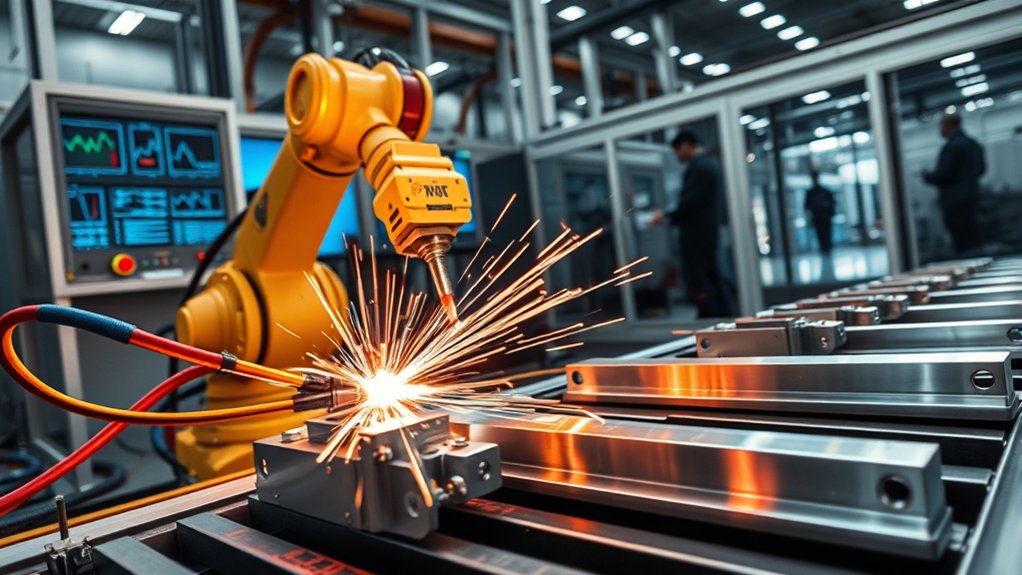
A plasma welding robot combines an industrial robot, a plasma welding power source, a precision torch, shielding and plasma gas delivery, fixtures, controls, and safety equipment. The plasma arc is constricted through the torch nozzle, which gives the process a focused arc column compared with a free TIG arc. That focused arc can help you make narrow, repeatable welds when the joint, travel speed, amperage, gas flow, and torch alignment are controlled.
In keyhole mode, the plasma jet penetrates through the joint and forms a small opening that closes behind the weld pool as the torch moves. This can be useful for suitable stainless steel, nickel alloy, titanium, and other qualified materials, but it is sensitive to fit-up, gas quality, torch condition, and heat balance. Treat every performance claim as process-specific until you prove it on your own parts.
Warning: A plasma welding robot is still a welding cell with arc flash, fumes, hot work, stored energy, moving machinery, and pinch hazards. Use a qualified integrator, complete a task-based risk assessment, and verify guarding, ventilation, fire protection, PPE, and lockout/tagout before production.
Key Industrial Applications of Plasma Welding Robots
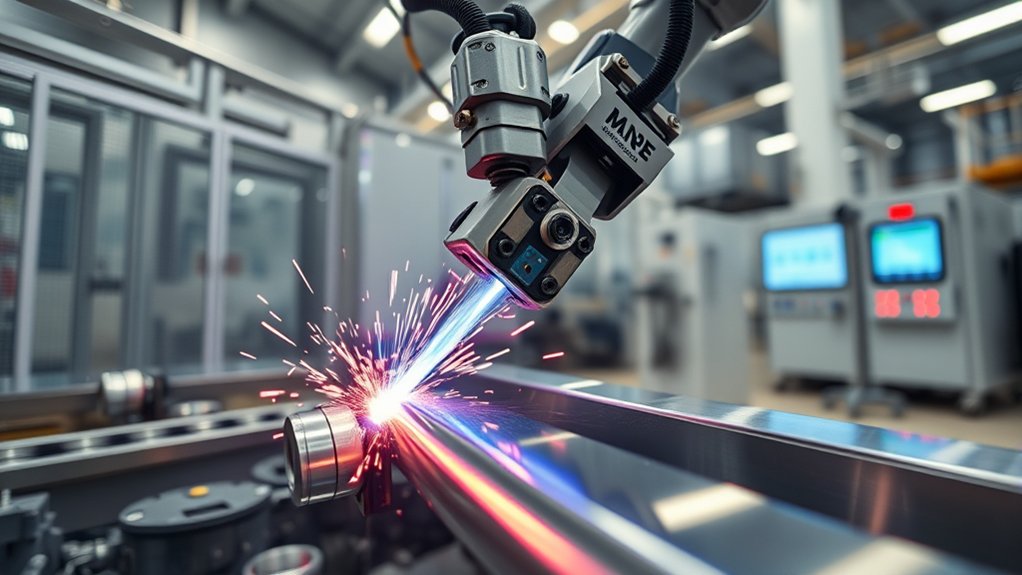
From aerospace to medical devices, plasma welding robots are most valuable where repeatability, heat control, traceability, and low rework matter. You will see the strongest business case when the same joint family repeats often enough to justify programming, fixtures, sensors, and qualification work.
In aerospace applications, robotic plasma welding can help control torch angle, standoff, travel speed, and heat input on qualified aluminum, titanium, stainless, and nickel-alloy parts. The benefit is not automatic strength by itself. The benefit is repeatable execution of a qualified weld procedure with documented parameters and fewer manual variations.
The best plasma welding robot projects start with repeatable parts, qualified procedures, controlled fixturing, and measurable rework or throughput pain.
You can capture clear automotive benefits on repeatable exhaust, bracket, sensor, battery, and light structural components where the joint design is stable. High travel speeds and consistent arc starts can shorten tack-to-finish time, but only when upstream part fit-up is consistent.
For electronics and electrical assemblies, robots can execute small, repeatable welds on connectors, housings, and sealed components. Here, the key value is control: stable energy input, clean shielding, and consistent part location.
In shipbuilding and heavy fabrication, plasma welding can support long, repeatable seams and deeper penetration on suitable plate joints. It still needs strong fit-up control, edge preparation, travel path planning, and fume extraction.
Medical devices can benefit from low-spatter, clean, repeatable welds on small assemblies, but these jobs often require extra documentation, material traceability, process validation, and cleanliness controls.
When a Plasma Welding Robot Makes Sense
A robotic plasma cell is a strong candidate when your parts are repeatable, your weld procedure is stable, and your production volume is high enough to recover the cost of automation. It is a weak fit when the work changes every day, parts arrive with poor fit-up, or your team cannot support programming, maintenance, and safety validation.
| Good Fit | Poor Fit |
|---|---|
| Repeatable part families with stable drawings and known weld procedures | One-off repair jobs or parts that change too often to justify programming |
| Tight joint fit-up, reliable fixtures, and clean material prep | Gaps, warped parts, dirty surfaces, or inconsistent edge preparation |
| High rework cost, heat distortion, or throughput limits in manual welding | Low-volume work where manual setup is faster than robot programming |
| A team that can support robot programming, torch maintenance, and quality checks | No trained operator, programmer, maintenance owner, or safety owner |
Material, Joint, and Fixture Requirements
Plasma welding robots reward discipline. Before you quote the cell, group the work by material, thickness, joint type, tolerance, weld length, and inspection requirement. Then test the hardest joints first, not the easiest ones. This keeps the project honest.
- Material condition: Remove oils, coatings, oxides, and burrs that can cause porosity, arc instability, or contamination.
- Joint fit-up: Control edge gap, mismatch, and part location. Keyhole plasma welding is not forgiving when the joint varies.
- Fixturing: Hold the part without blocking torch access, shielding gas, thermal movement, or inspection points.
- Gas control: Use clean, dry gas delivery and verify plasma gas, shielding gas, and purge gas where the material requires it.
- Procedure qualification: Confirm bead profile, penetration, tensile or bend results, leak tightness, metallography, or any customer-required acceptance test before full production.
Pro Tip: Use your worst acceptable part stack-up for the pilot. If the robot only works on perfect samples, the ROI model will collapse in production.
Programming Workflows and Best Practices
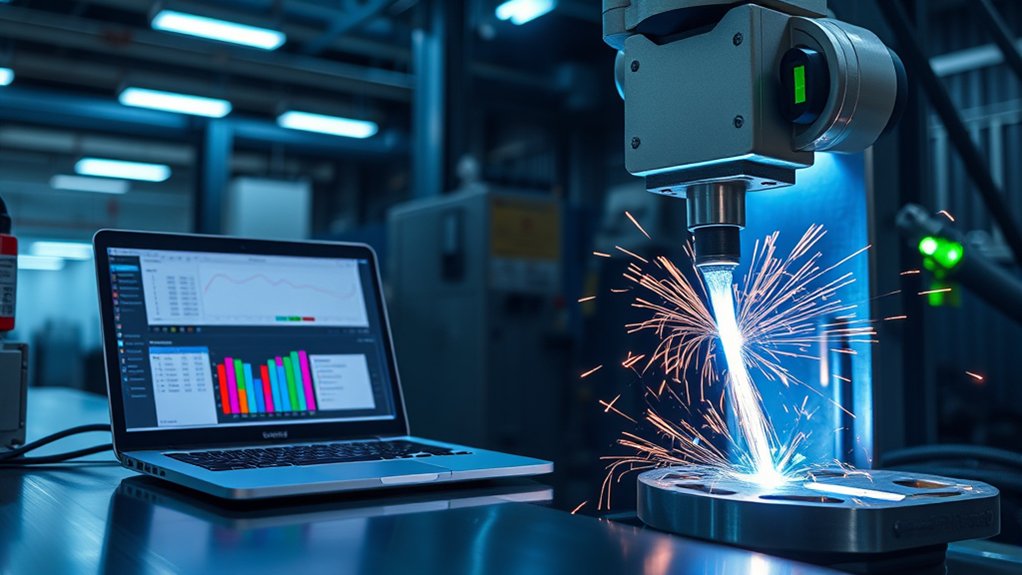
Two pillars drive reliable plasma welding robot programs: controlled file management and precise motion control. Start with a weld schedule library by material, thickness, joint type, gas mix, amperage range, travel speed, and torch setup. Match each schedule to the right weave, seam-tracking, start, crater-fill, and gas-flow settings.
Keep programs easy to audit. Use clear names, version numbers, line comments, and a change log. Avoid letting each shift create its own version of a weld path. A small undocumented torch-angle or standoff change can turn into undercut, lack of fusion, porosity, or burn-through.
Hold TCP stable and validate it after any torch crash, torch service, consumable change, or fixture change. Also confirm robot mastering, tool data, work offsets, cable dress, and collision zones. If you use offline programming, still prove the final path at the cell with production fixtures and real parts.
| Practice | What to Control | KPI to Track |
|---|---|---|
| Schedule library | Material, thickness, gas, amperage, travel speed, start/end settings | First-pass yield |
| Version control | Approved programs, change logs, backups, revision ownership | Unplanned changes per month |
| TCP checks | Tool center point, torch angle, standoff, work offset | Dimensional misses and weld defects |
| Path validation | Reach, singularities, collision zones, cable movement, fixture clearance | Downtime and path edits |
Equipment, Sensors, and Software Stack
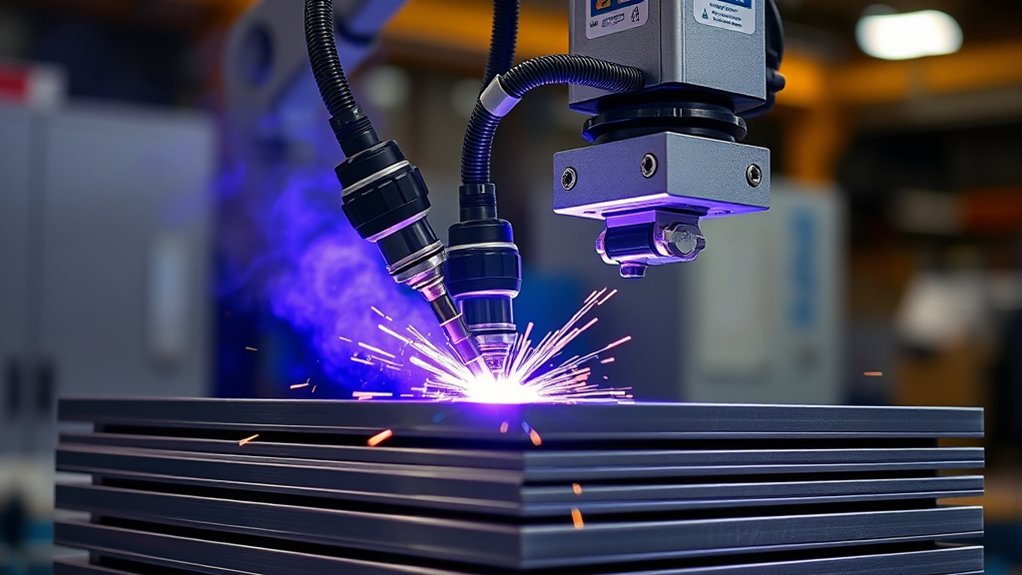
While the arc makes the joint, your ROI hinges on the full stack: robot, torch, power source, gas control, fixtures, safety system, sensing, software, and data capture. OSHA describes industrial robot systems as a combination of robot, end-effector, controls, power sources, sensors, and related process equipment, so do not scope the robot arm by itself.
Specify equipment around your hardest approved part. Ask vendors to document payload, reach, repeatability, calibrated path accuracy if needed, torch collision protection, cable management, duty cycle, service access, and compatibility with your required welding procedure. A six-axis robot may work for many parts, but some long seams or large assemblies may need a positioner, track, turntable, or coordinated external axis.
Prioritize sensor integration where your parts vary. Useful options include arc-voltage control for arc length, laser seam tracking for joint location, through-arc tracking for some joint types, current and voltage logging, gas-flow monitoring, and temperature monitoring where heat input is critical.
Your software stack should make qualified settings easy to use and hard to corrupt. Look for parameter libraries, path simulation, collision checks, program backups, user permissions, quality dashboards, alarm history, and weld-data export to your MES, ERP, or quality system.
Note: Repeatability and absolute path accuracy are not the same. Repeatability shows how consistently the robot returns to a taught point. Absolute path accuracy depends on calibration, load, fixture location, robot model, and environment.
Cost Breakdown: CapEx, OpEx, and Hidden Expenses
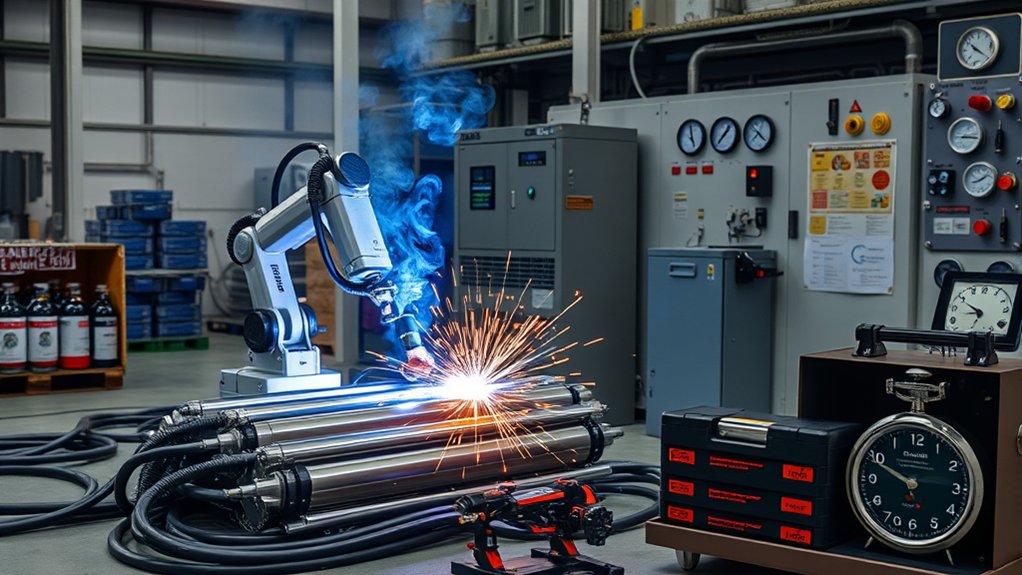
Because payback starts with a clear TCO model, break the project into CapEx, OpEx, and hidden line items. Do not compare the robot arm against one welder’s wage. Compare the complete cell against your current cost per accepted weld.
1) CapEx: Include the robot, controller, welding power source, plasma torch, cooling system, gas delivery, positioners, fixtures, guarding, light curtains or scanners where appropriate, fume extraction, fire protection, installation, and integration.
2) OpEx: Include electricity, plasma gas, shielding gas, purge gas, electrodes, nozzles, cooling parts, torch service, preventive maintenance, calibration, operator time, programmer time, and quality inspection.
3) Hidden expenses: Include procedure qualification, sample parts, destructive testing, downtime during installation, production ramp-up, operator training, maintenance training, spare parts, software updates, and fixture revisions.
4) Labor benchmark: Use your real burdened labor rate, not a generic wage. For a public baseline, the U.S. Bureau of Labor Statistics reported a median annual wage of $51,000 for welders, cutters, solderers, and brazers in May 2024. Your actual fully burdened cost may be much higher after benefits, payroll costs, overtime, supervision, recruiting, and regional wage differences.
ROI Modeling: Metrics, Examples, and Sensitivity Analysis
ROI modeling for a plasma welding robot starts by measuring your current cost per accepted weld. That number should include labor, rework, scrap, inspection, consumables, downtime, and missed throughput. Then compare it with the projected cost per accepted weld after automation.
Use this basic structure:
- Annual benefit = labor hours avoided + rework avoided + scrap avoided + extra gross margin from added throughput + overtime avoided.
- Annual operating cost = consumables + maintenance + energy + inspection + programming + spare parts + support contracts.
- Simple payback = total project cost divided by net annual benefit.
Strengthen the model with sensitivity analysis. Change production volume, uptime, labor rate, scrap rate, rework time, consumable cost, and selling margin. If the payback only works in the best-case scenario, the project is too fragile. A healthy model still looks reasonable after a volume dip, slower-than-planned ramp-up, or higher maintenance cost.
| ROI Input | What to Measure | Why It Matters |
|---|---|---|
| Cycle time | Arc time, load/unload time, inspection time, changeover time | Throughput gains only count if the full cell is faster, not just the weld pass. |
| Quality | First-pass yield, defect type, rework minutes, scrap value | Many robotic cells pay off through avoided rework, not only labor savings. |
| Uptime | Availability, planned downtime, unplanned stops, repair time | A faster robot does not help if the cell waits on parts, fixtures, or maintenance. |
| Labor | Burdened rate, overtime, staffing gaps, operator coverage | Automation often shifts labor from manual welding to loading, programming, and quality control. |
Safety, Compliance, and Facility Requirements
A plasma welding robot needs safety planning before it needs production speed. The current ISO robot safety framework separates robot requirements from robot-cell and application requirements. ISO 10218-1:2025 covers industrial robots, while ISO 10218-2:2025 covers industrial robot applications and robot cells.
For U.S. workplace safety planning, review OSHA’s Industrial Robot Systems and Industrial Robot System Safety guidance. OSHA emphasizes robot-system hazards, safeguarding, risk assessments, training, maintenance, and lockout/tagout. CDC/NIOSH also notes that workplace robots can improve safety but can create struck-by, caught-between, crushing, trapping, slipping, tripping, electrical, and emerging human-robot interaction hazards.
Welding-specific controls matter too. OSHA’s 1910.252 welding, cutting, and brazing requirements address fire prevention, eye protection, protective clothing, confined spaces, ventilation, and hot-work precautions. For robotic plasma welding, plan for fume extraction, fire watch where needed, arc-flash protection, guarding, emergency stops, safe teach mode, interlocks, lockout/tagout, and documented worker training.
- Power: Verify the robot, welding power source, cooler, ventilation, and auxiliary equipment load before installation.
- Ventilation: Size fume capture for the process, material, duty cycle, and enclosure design.
- Gas: Provide clean, dry, stable plasma gas, shielding gas, and purge gas where required.
- Fire protection: Remove or shield combustibles, control sparks, and keep suitable extinguishing equipment ready.
- Guarding: Use perimeter guarding, interlocks, scanners, light curtains, or other engineered controls based on the risk assessment.
- Training: Train operators, programmers, maintenance staff, and nearby workers on hazards, procedures, and emergency actions.
Implementation Checklist Before You Scale
Use a staged rollout instead of jumping straight into full production. This lowers the chance that a hidden fixture, safety, or quality issue wipes out your payback.
- Select the part family: Choose parts with repeatable demand, stable drawings, and measurable pain.
- Define acceptance criteria: Set weld size, penetration, appearance, leak, strength, distortion, and inspection requirements.
- Run trial welds: Test real materials, real fit-up, and worst-case tolerance conditions.
- Freeze the process window: Document current, voltage, travel speed, gas flow, torch angle, standoff, start, and crater-fill settings.
- Build production fixtures: Validate clamp access, thermal movement, repeatability, and inspection access.
- Complete safety validation: Finish risk assessment, guarding, emergency-stop checks, interlocks, ventilation, and lockout/tagout procedures.
- Train the team: Cover daily startup, program recovery, consumable changes, quality checks, alarms, and shutdown.
- Run site acceptance testing: Prove the cell at target rate, target quality, and expected uptime before scale-up.
- Track production KPIs: Measure first-pass yield, rework, scrap, downtime, consumable cost, and cost per accepted weld.
Frequently Asked Questions
How do plasma welding robots impact workplace safety and ergonomics?
They can move workers away from heat, arc flash, fumes, awkward posture, and repetitive torch handling. They also create new hazards from robot motion, stored energy, automatic restart, pinch points, and maintenance tasks. The safety gain only happens when the cell has proper guarding, ventilation, training, PPE, emergency stops, and lockout/tagout.
What certifications or standards govern plasma welding robot compliance?
Start with ISO 10218-1:2025 for industrial robots and ISO 10218-2:2025 for robot applications and cells. Depending on your region and equipment, ANSI/RIA R15.06, ISO 13849, UL standards, CE-related requirements, OSHA rules, and customer-specific welding codes may also apply. Always validate the final cell with a qualified integrator or safety professional.
How do you train and upskill operators for plasma robot adoption?
Use phased training. Start with safety, cell entry, alarms, emergency stops, and lockout/tagout. Then train operators on loading, daily checks, consumable changes, program selection, and basic quality checks. Train programmers and maintenance staff separately on TCP checks, path edits, backups, troubleshooting, fixtures, and process limits.
What facility requirements are needed for deployment?
You need suitable electrical service, grounding, compressed air if the equipment requires it, clean gas delivery, cooling capacity, fume extraction, guarding, fire protection, safe access for loading and maintenance, and enough floor space for robot reach and part handling. Confirm all utility requirements with the robot integrator and equipment manufacturers before installation.
How do plasma robots integrate with MES, ERP, and quality traceability systems?
They can log weld schedules, current, voltage, gas flow, alarms, operator ID, part serials, timestamps, and inspection results. Many plants connect this data through OPC UA, industrial Ethernet, APIs, or a local database. The goal is traceability: you should be able to connect each accepted weld to the program, settings, part, fixture, and operator event history.
What defects should you watch for in robotic plasma welding?
Watch for porosity, undercut, lack of fusion, excessive reinforcement, burn-through, keyhole instability, arc wandering, oxidation, and crater cracking. Common causes include poor fit-up, dirty material, wrong gas flow, worn nozzles, incorrect torch angle, unstable standoff, bad TCP data, or a process window that is too narrow for production variation.
How long does payback usually take?
There is no universal payback period. A cell can pay back quickly when production volume is high, rework is expensive, and uptime is strong. It can also miss the target if fixtures, programming, qualification, maintenance, or part variation were underestimated. Model simple payback from your real cost per accepted weld, not from the robot price alone.
Conclusion
You will get the most from plasma welding robots by applying them to repeatable, high-value welds where heat control, quality records, cycle time, and rework reduction matter. Build the business case around the full cell, not just the robot arm. Budget for fixtures, sensors, guarding, ventilation, safety validation, training, procedure qualification, and maintenance. Then prove the project with a pilot, track first-pass yield and cost per accepted weld, and scale only where the numbers stay strong in real production.
Sources
- ISO 10218-1:2025 — industrial robot safety requirements and current publication status.
- ISO 10218-2:2025 — safety requirements for industrial robot applications and robot cells.
- OSHA Technical Manual: Industrial Robot Systems and Industrial Robot System Safety — robot hazards, risk assessments, safeguarding, maintenance, and training.
- OSHA 29 CFR 1910.252 — welding, cutting, brazing, ventilation, fire prevention, PPE, and hot-work requirements.
- CDC/NIOSH Robotics in the Workplace — workplace robotics benefits, hazards, and emerging safety concerns.
- U.S. Bureau of Labor Statistics: Welders, Cutters, Solderers, and Brazers — labor wage baseline for ROI modeling.