How to Plasma Cut High-Carbon Steel Safely and Cleanly
What’s in This Article
- Before You Begin: Tools, Setup, and Time
- Understanding High-Carbon Steel and Its Cutting Challenges
- Selecting the Right Plasma Cutter and Consumables
- Dialing In Amperage, Voltage, and Air Pressure
- Cut Speed, Standoff, and Pierce Height Settings
- Managing and Minimizing the Heat-Affected Zone
- Surface Preparation and Workholding for Clean Cuts
- Technique Tips: Starts, Stops, and Edge Quality
- Consumable Care and Replacement Intervals
- Safety Practices and Post-Cut Finishing Steps
- Frequently Asked Questions
High-carbon steel can punish small cutting mistakes with hard edges, dross, warping, and cracks. You need tight control over heat input, travel speed, torch height, air quality, and consumable wear. This guide shows you how to set up your plasma cutter, make cleaner cuts, and reduce heat damage while working safely.
Quick Answer
To plasma cut high-carbon steel, start with clean metal, dry air, correct consumables, and the cut chart for your machine. Use the lowest amperage that still gives full penetration, keep a steady 1/16 to 1/8 inch standoff, and move fast enough to limit the heat-affected zone. Let the part cool in air unless your steel grade and process plan allow another cooling method.
Key Takeaways
- Follow your plasma cutter’s cut chart before you change amperage, speed, voltage, or air pressure.
- Keep the torch height steady to control arc shape, bevel, dross, and edge heat.
- Use clean, dry compressed air because moisture can shorten consumable life and hurt cut quality.
- Cut test coupons first when you work with unknown high-carbon steel or thick sections.
- Avoid rapid quenching unless your steel grade and heat-treatment plan allow it.
Before You Begin: Tools, Setup, and Time
Plan about 20 to 45 minutes for setup, test cuts, and basic finishing. Thick plate, critical parts, or unfamiliar steel grades may take more time because you need extra test cuts and inspection.
You’ll need:
- A plasma cutter with enough rated output for your steel thickness
- Correct torch consumables for the amperage range
- Clean, dry compressed air or the gas your system requires
- Fire-resistant clothing, leather gloves, eye and face protection, and hearing protection
- Clamps, a clean work table, and a solid ground connection
- Scrap coupons from the same or similar steel for test cuts
- A wire brush, grinder, or flap wheel for edge cleanup
Warning: Plasma cutting creates intense light, hot slag, fumes, noise, and fire risk, so wear proper protection and keep flammable materials away.
Use this basic sequence for repeatable results:
- Clean the cut zone and the ground clamp area to bright metal.
- Install the correct consumables for your amperage and torch.
- Set amperage, air pressure, pierce height, and cut speed from your machine chart.
- Clamp the work firmly and place the ground clamp on clean bare steel.
- Make a test cut on scrap and inspect the kerf, dross, bevel, and spark direction.
- Adjust one setting at a time until the edge quality looks stable.
- Cut the final part with steady travel speed and consistent torch height.
- Let the part cool under controlled conditions before grinding or welding.
Products Worth Considering
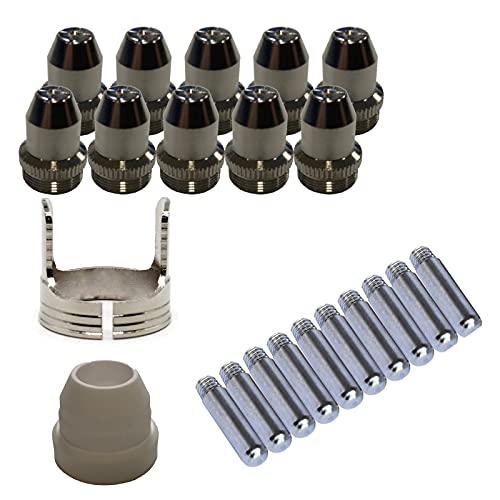
Only Compatible with BROWN Color Lotos LTP5800D , LTP5000D, LTPDC2000D.

⚡【Precision Compatibility】 Exact fit for YESWELDER CUT 55DS Pro & 65DS (2019-2024 models). Replaces OEM# IPT40-55DS/65DS.

Can only be used for BROWN Color Lotos LT5000D and BROWN Color Lotos CT520D
Understanding High-Carbon Steel and Its Cutting Challenges
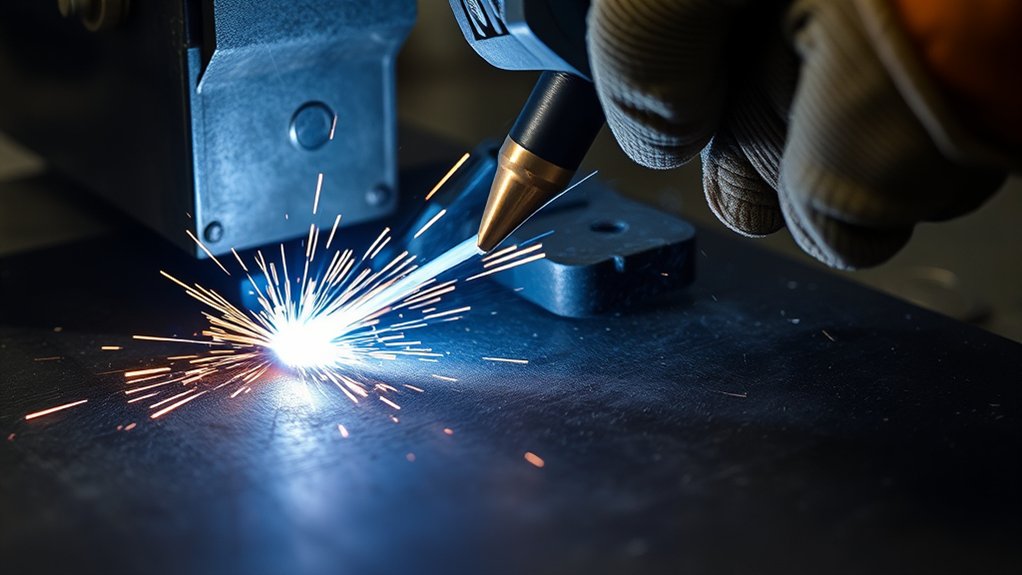
High-carbon steel commonly contains about 0.6% to 1.4% carbon. That higher carbon level can increase hardness and brittleness, so heat from plasma cutting needs close control.
High-carbon steel needs tighter plasma-cutting control because heat can create hard edges, distortion, and cracking risk.
Control heat input first. Set amperage high enough to finish the cut, then use enough travel speed to reduce dwell time and shrink the heat-affected zone (HAZ).
Maintain a consistent standoff distance to keep arc energy stable. Watch kerf color and slag behavior because they can show excess heat, poor speed, or weak air flow.
For thicker sections, preheating may reduce cracking risk. Use the temperature range that matches your steel grade, part thickness, and shop procedure instead of using one fixed setting for every job.
Use straight, continuous motion to limit dwell marks. Let the part cool in air unless your material plan calls for another method.
Validate the setup with test coupons. Record HAZ width, edge hardness, dross, bevel, and distortion so you can repeat the same cut later.
Selecting the Right Plasma Cutter and Consumables
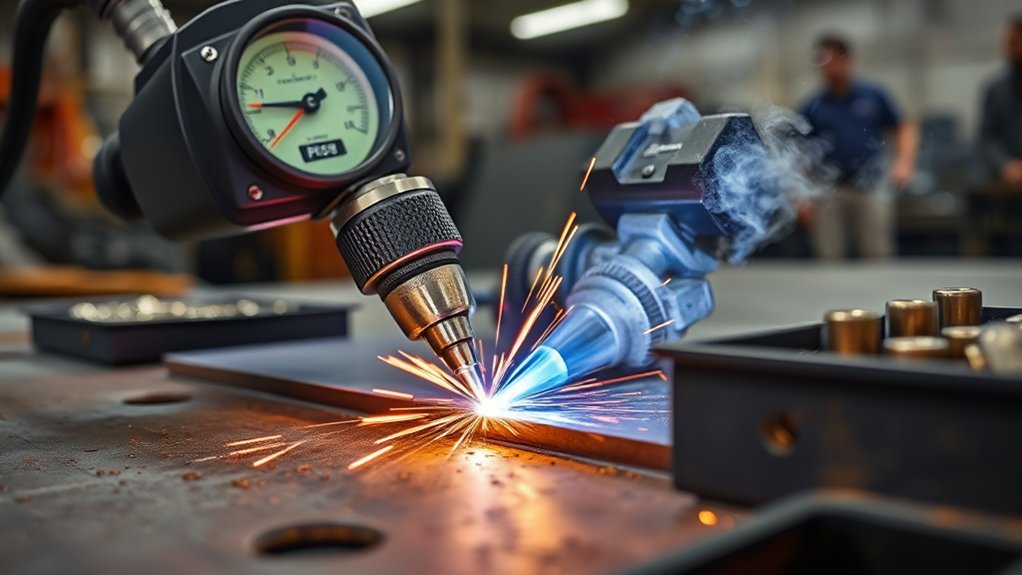
Two specs matter most when you choose a plasma cutter for high-carbon steel: usable amperage and duty cycle. Match both to the thickness you cut most often.
Use your machine’s cut chart as the main guide. As a general shop rule, lower amperage can handle thin sheet, while thicker plate needs more output and slower travel speed.
For steady shop work, look at the duty cycle at the amperage you will actually use. A machine’s peak rating does not tell you how long it can cut without stopping.
Choose a cutter with good thermal protection, stable arc starts, and clean air handling. Dry air helps protect the arc, the electrode, and the cut edge.
Use the consumables that match your torch and amperage. Heat-resistant electrodes, correct nozzles, and proper shields help keep the jet narrow and stable.
Inspect the tip orifice, electrode pit, and shield before important cuts. Replace worn parts before they cause wide kerfs, heavy dross, or extra heat in the edge.
Products Worth Considering

Unmatched Durability : deliver exceptional durability and wear resistance. Designed to withstand extreme heat and prolonged use, they ensure long service life and reduced replacement costs.
Unmatched Durability : deliver exceptional durability and wear resistance. Designed to withstand extreme heat and prolonged use, they ensure long service life and reduced replacement costs.

[Achieve Precise Cuts] PT31 Plasma Cutting Consumables – Your Essential Tool for Efficient Cutting! Whether you're working with sheet metal, steel, or any other material, superior cutting performance ensure clean, accurate, and smooth cuts.
Dialing In Amperage, Voltage, and Air Pressure
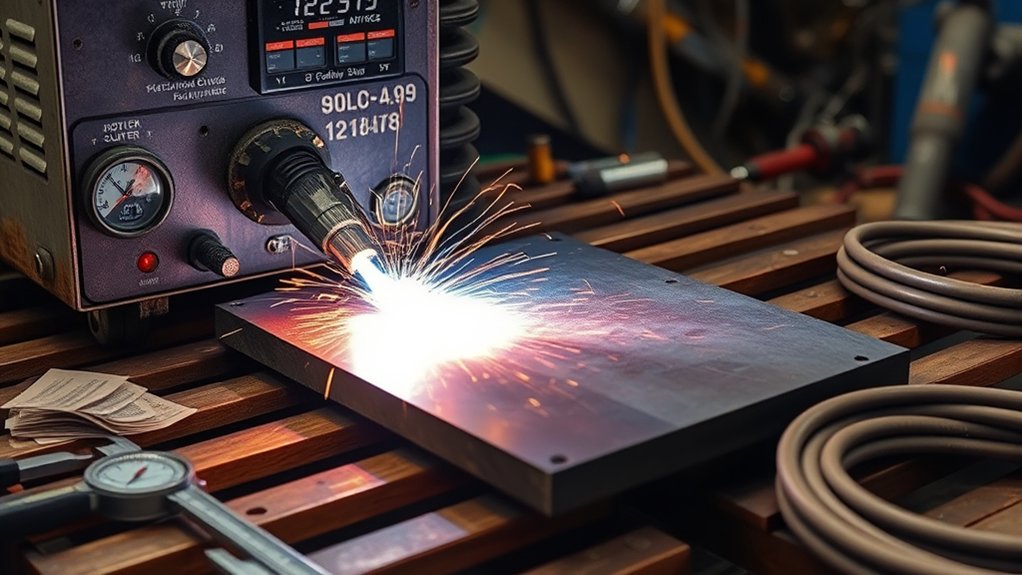
Match amperage to the steel thickness and the consumable set. Many light and medium cuts use about 30 to 80 amps, but your machine chart should control the final setting.
Arc voltage changes with torch height, material thickness, and system design. Hold a steady standoff, then use cut quality to confirm whether the arc runs correctly.
Set air pressure within the torch manufacturer’s range. Many air plasma systems work near 60 to 80 psi, but your system may need a different value.
Match Amps to Thickness
Start with the amperage listed in your cut chart. Then fine-tune while you watch kerf width, dross, bevel, spark angle, and HAZ size.
Do not use a fixed rule like 1 amp per 0.001 inch for every plasma cutter. That rule can lead to unsafe or unrealistic settings on many shop machines.
If the arc gouges the edge, creates a wide HAZ, or leaves heavy top spatter, reduce heat input. Lower amperage slightly, increase speed, or correct torch height.
If the cut does not sever the plate, increase amperage within the rated range or slow the travel speed. Change only one setting at a time so you can read the result.
Look for sparks that exit through the bottom of the cut and trail slightly behind the torch. That pattern often shows that speed and amperage work together.
Set Voltage via Standoff
In air plasma cutting, torch height controls arc length, and arc length affects arc voltage. You control that voltage behavior by holding a steady standoff.
For many manual cuts, a 1/16 to 1/8 inch cutting height works well. Use a drag shield, height gauge, or torch height control when your setup allows it.
Set pierce height above cutting height to protect consumables from molten blowback. Many setups use 1.5 to 2 times the cutting height, but your torch chart should guide you.
Check the cut edge after each test. Too much height can create lag lines, bevel, and top-edge rounding, while too little height can cause spatter or double-arcing.
Cut Speed, Standoff, and Pierce Height Settings
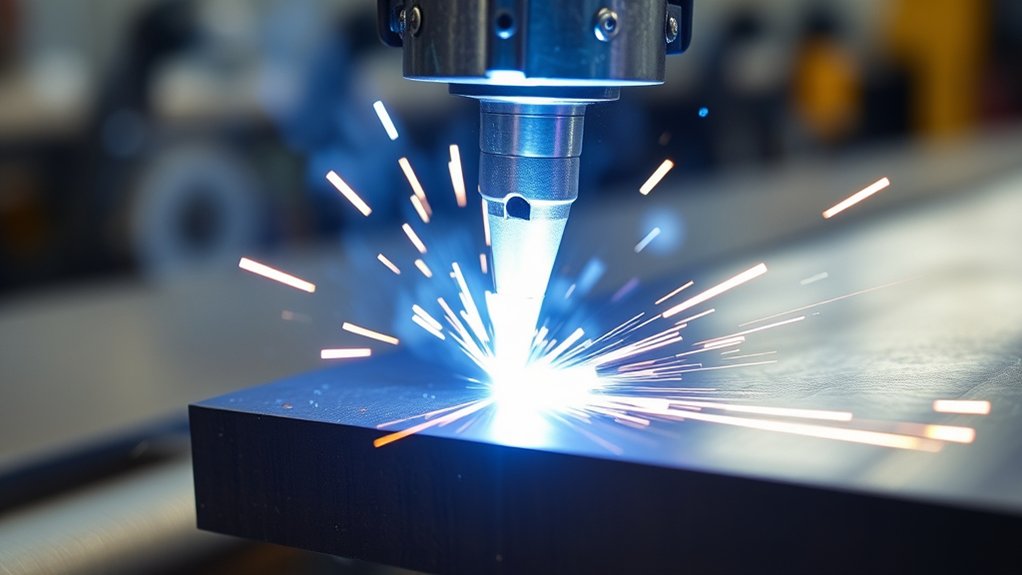
Cut speed, standoff, and pierce height work together. You need all three settings in range before you judge the edge.
Start with the cut speed from your machine chart. Then adjust in small steps to reduce dross, bevel, and HAZ width.
Keep torch standoff near 1/16 to 1/8 inch for many manual cuts. Set pierce height higher than cut height so molten metal does not damage the nozzle.
Optimal Cut Speed
Start at the middle of the charted speed range for your steel thickness. Then adjust based on slag, spark direction, and edge shape.
Higher carbon and thicker sections often need slower travel than thin sheet. Thin plate and fine-feature work may allow faster movement with lower heat input.
Heavy bottom dross, wide HAZ, and dark edge bands often mean you move too slowly or use too much amperage. Top spatter and bevel can mean you move too fast or hold the torch too high.
Validate every change on scrap before you cut the finished part. Confirm smooth kerf walls, minimal bevel, stable arc starts, and controlled heat.
Consistent Torch Standoff
You will not get repeatable results if torch height changes during the cut. Keep the torch between 1/16 and 1/8 inch from the plate unless your system calls for another height.
A torch that runs too low can gouge the plate, damage consumables, and create dross. A torch that runs too high can widen the arc and overheat the edge.
Use arc-voltage control or a mechanical follower when the sheet warps. A guide can help you hold the torch steady over uneven or heat-crowned material.
Watch the sparks under the plate. If they trail far behind, slow down or check amperage. If they spray back toward you, speed, height, or penetration may need correction.
Correct Pierce Height
Start the cut with correct pierce height. A higher pierce height shields the nozzle and shield cap from blowback during penetration.
After the pierce clears, lower the torch to the cutting standoff. This helps stabilize arc voltage, narrow the HAZ, and improve edge quality.
On high-carbon steel, match pierce height with amperage and travel speed. A low pierce can crater the plate and damage consumables, while a high pierce can delay penetration.
For manual piercing, angle the torch slightly at the start when your machine manual allows it. Then bring the torch upright as the arc breaks through and begin the cut.
Record arc voltage, height, and speed when you find a clean setup. A simple log saves time on the next part.
Managing and Minimizing the Heat-Affected Zone
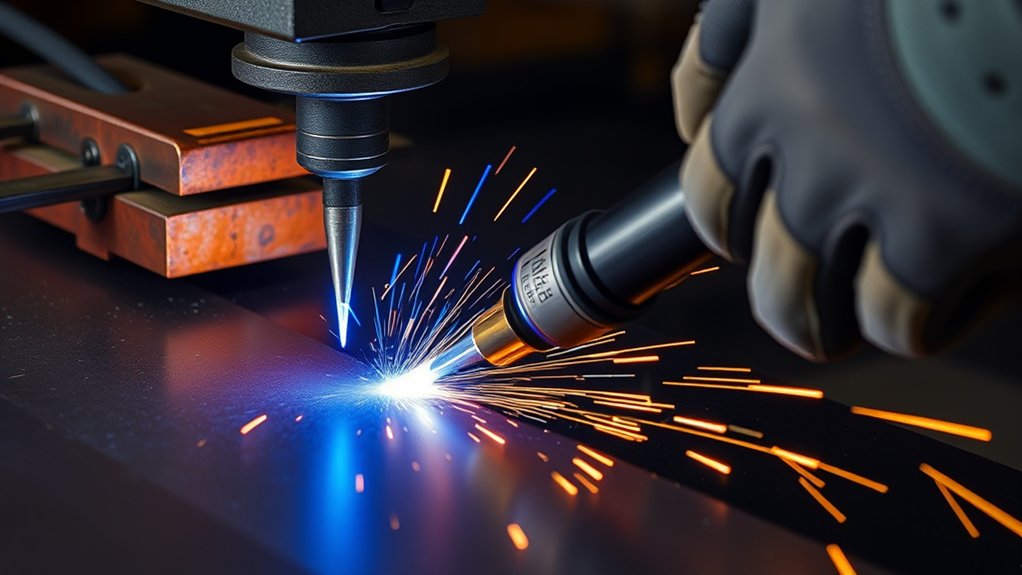
High-carbon steel reacts strongly to thermal cycles, so HAZ control starts with total heat input. Match amperage, air pressure, standoff, and cutting speed to the thickness and grade.
Faster speed can reduce dwell time and limit heat transfer into nearby metal. Aim for a narrow kerf, light dross, and a clean edge without heavy oxidation.
If the edge shows wide dark bands, reduce heat input. You can increase speed, lower amperage, correct standoff, or improve air flow.
Use short, continuous cuts when possible. Avoid long pauses because they soak heat into the same area and increase distortion risk.
After cutting, choose a cooling method that fits the steel grade and part use. Air cooling often gives a safer starting point than rapid quenching for high-carbon steel.
Pro tip: Keep a cut log by thickness, grade, consumable set, amperage, speed, and air pressure so you can repeat clean edges.
Surface Preparation and Workholding for Clean Cuts
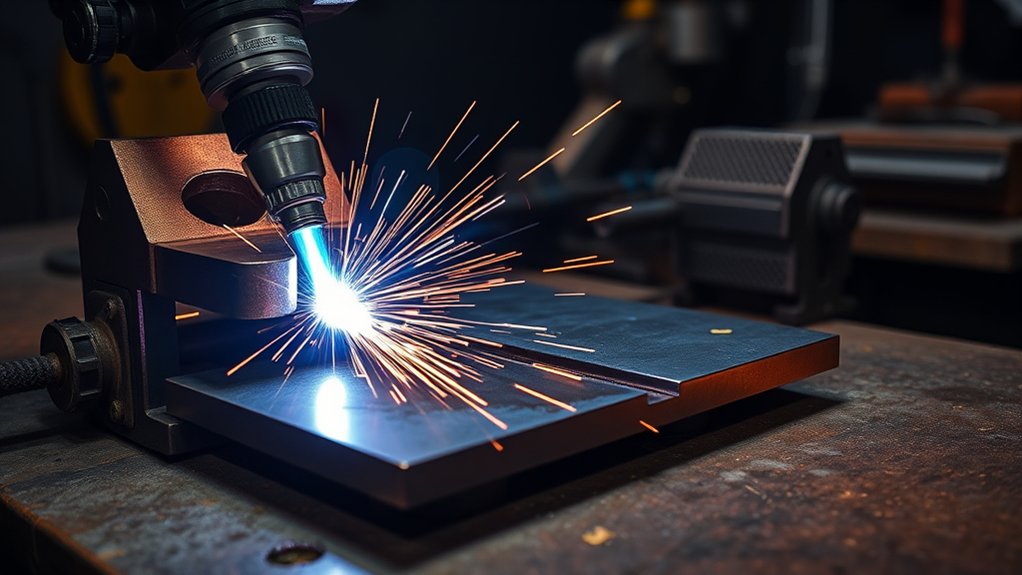
Surface prep and workholding directly affect cut quality, electrical stability, and HAZ control. Treat them as part of the setup, not as cleanup work.
Remove rust, paint, oil, and mill scale from the cut zone and ground clamp path. Wipe away oil first, then abrade the metal until the clamp contacts clean steel.
Use a continuity check when the cut matters. A low-resistance path from clamp to cut start helps reduce arc trouble and voltage drop.
Attach the ground clamp to bare steel and tighten it fully. Place it close to the cut line when the setup allows safe cable routing.
Stabilize the work with rigid clamps or magnetic fixtures rated for hot metal work. Avoid plastic or polymer supports that can soften, burn, or release fumes.
Check the support table for warped slats or loose contact points. Recheck the setup after heat cycles because thin parts can move as they expand.
Technique Tips: Starts, Stops, and Edge Quality
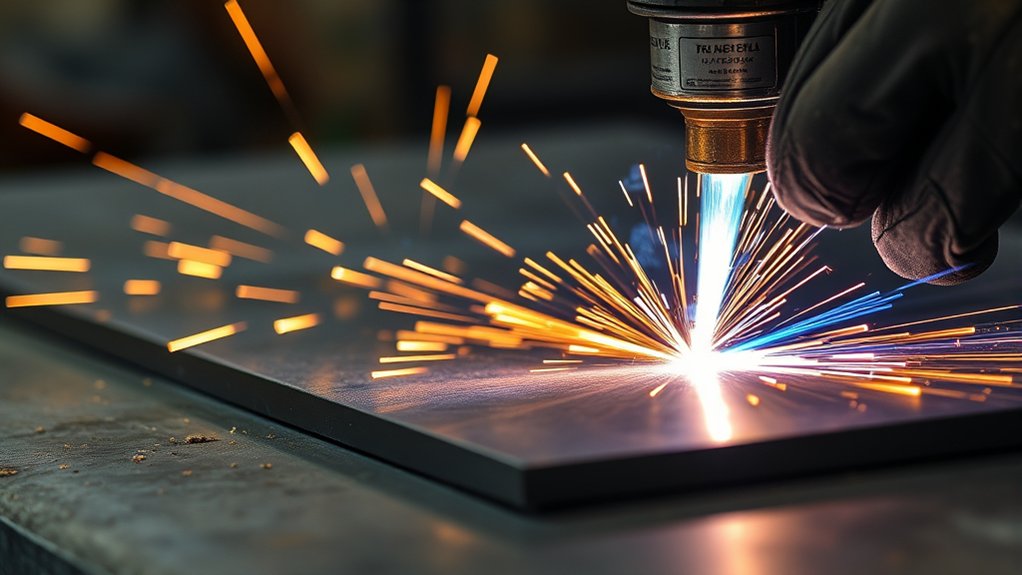
After you clean and clamp the work, focus on torch handling. Good starts and stops can make the difference between a clean edge and a rough part.
Use edge starts when the part design allows them. Fire the arc at the plate edge, then move into the cut line to gain full penetration fast.
Hold a steady 1/16 to 1/8 inch standoff or use a drag shield that matches your torch. Keep the torch square to the work to reduce bevel.
Adjust travel speed to the thickness. Faster speeds often reduce kerf width and heat input, but too much speed can leave bevel or incomplete cuts.
Watch the kerf stream. Sparks that exit the bottom and trail slightly behind the torch usually show a better speed than sparks that spray upward.
For stops, move out of the cut without pausing over the edge. If you must stop, backtrack slightly before you exit so slag does not build at the end.
Consumable Care and Replacement Intervals
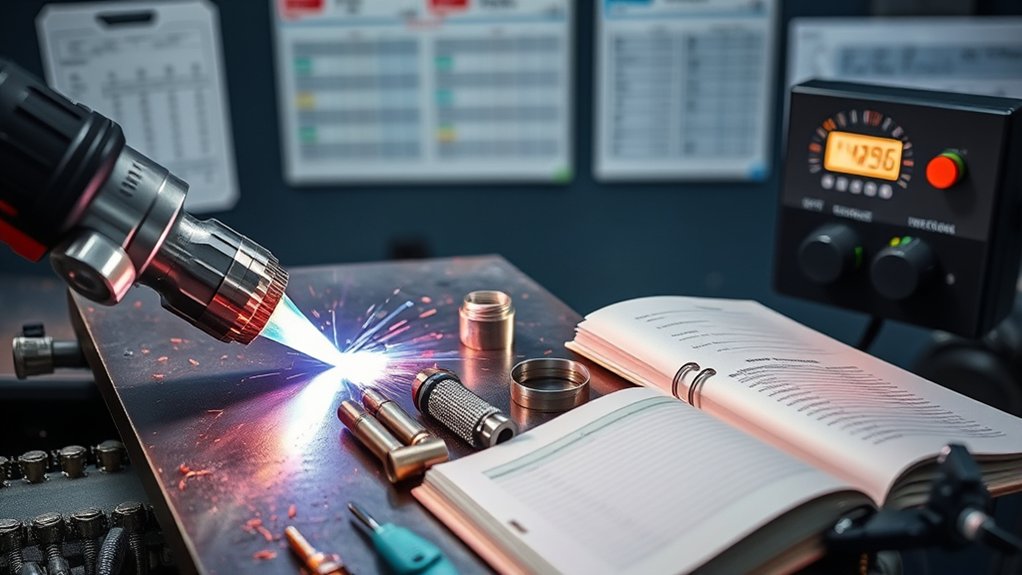
High-carbon steel can expose weak consumables quickly. Inspect tips, electrodes, and shields at the start of each shift and after long cuts.
Replace tips with enlarged or irregular orifices, heavy spatter, or tapering. Replace electrodes that show deep pitting, uneven wear, or damaged inserts.
For best arc stability, replace tips and electrodes as a matched set when wear affects the cut. Mixed wear can create kerf wander, bevel, and extra dross.
Build your maintenance schedule around amperage, duty cycle, pierce count, and arc-on time. Track how long each set lasts, then adjust the interval for your work.
Avoid over-tightening the retaining cup. Finger-tight often seals well without distorting parts, but your torch manual should guide the final method.
Control moisture with dryers and regular compressor draining. Wet air can cause double-arcing, rough cuts, and damaged electrodes.
Safety Practices and Post-Cut Finishing Steps
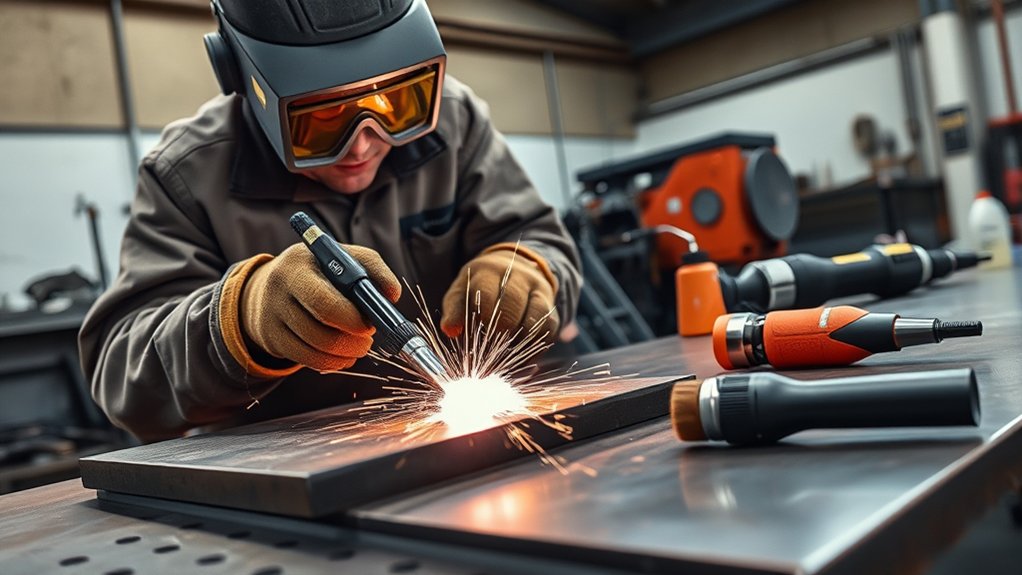
Even with correct settings, high-carbon steel needs careful safety and finishing. Wear fire-resistant clothing, leather gloves, eye and face protection, and hearing protection.
Use the lens shade recommended by your plasma cutter or safety procedure. Many plasma arcs need a dark shade because arc brightness changes with amperage.
Check the torch before power-up. Inspect the shield cup, tip, electrode, cables, air line, and trigger so worn parts do not cause spatter or double-arcing.
Keep the area dry and clear. Remove flammable materials, route cables away from your feet, and keep a fire watch when sparks can reach hidden areas.
Let parts air-cool unless your steel grade, shop procedure, or heat-treatment plan allows another cooling method. Rapid cooling can raise stress and increase cracking risk in hard edges.
For post-cut maintenance, remove dross with a wire brush, grinder, or 36 to 60 grit flap wheel. Keep the edge square when the part needs a tight fit.
| Step | Metric or Specification |
|---|---|
| Helmet lens | Use the shade recommended for your amperage and arc brightness |
| Electrode wear check | Replace when pitting or insert wear affects arc stability |
| Edge finishing | Use 36 to 60 grit when the edge needs grinding |
Frequently Asked Questions
Can Plasma Cutting Affect High-Carbon Steel’s Weldability Afterward?
Yes. Plasma cutting can create a hard heat-affected zone along the edge, which may affect later welding. Grind or machine the cut edge when the weld procedure requires it, and use preheat or post-heat only when the steel grade and procedure call for it.
What Post-Cut Heat Treatment Restores Hardness or Toughness?
The right heat treatment depends on the steel grade, thickness, and final part use. Normalizing can improve toughness on some steels, while quench-and-temper cycles can restore selected hardness levels. Follow the material specification or a qualified welding or heat-treatment procedure.
How Do Ambient Temperature or Humidity Impact Cut Quality?
Humidity can add moisture to compressed air, which can reduce arc stability and shorten consumable life. Cold steel can also collect condensation, especially when you move it into a warmer shop. Dry the air supply, wipe the plate, and shield the cut from wind.
Are There Certifications or Standards for Cut Edge Integrity?
Yes. Some jobs use standards such as ISO 9013, AWS requirements, or project-specific inspection rules for thermal cut edges. These standards may define roughness, bevel, tolerances, and inspection methods, so check the contract or drawing before you cut critical parts.
Can CNC Nesting Strategies Reduce Distortion on Small Parts?
Yes. CNC nesting can reduce distortion when you balance heat across the sheet and avoid concentrating cuts in one small area. Use staggered cut order, lead-ins, lead-outs, micro-tabs, and enough edge distance to help small parts stay flat.
Safety Disclaimer: This article is for informational purposes only and does not replace professional training, your equipment manual, or workplace safety rules. Consult a qualified welding, cutting, or safety professional before you cut critical parts or unfamiliar steel grades.
Conclusion
Clean high-carbon steel cuts start with controlled heat, steady torch height, dry air, and sound safety habits. Use your plasma cutter’s chart as the base, then test on scrap before you cut the final part.
Pay close attention to dross, bevel, spark direction, and HAZ color because they show what your settings do to the steel. Keep your PPE on, ground the work securely, and replace worn consumables before they ruin the cut.
When you track your best settings, each future cut becomes easier, safer, and more consistent.