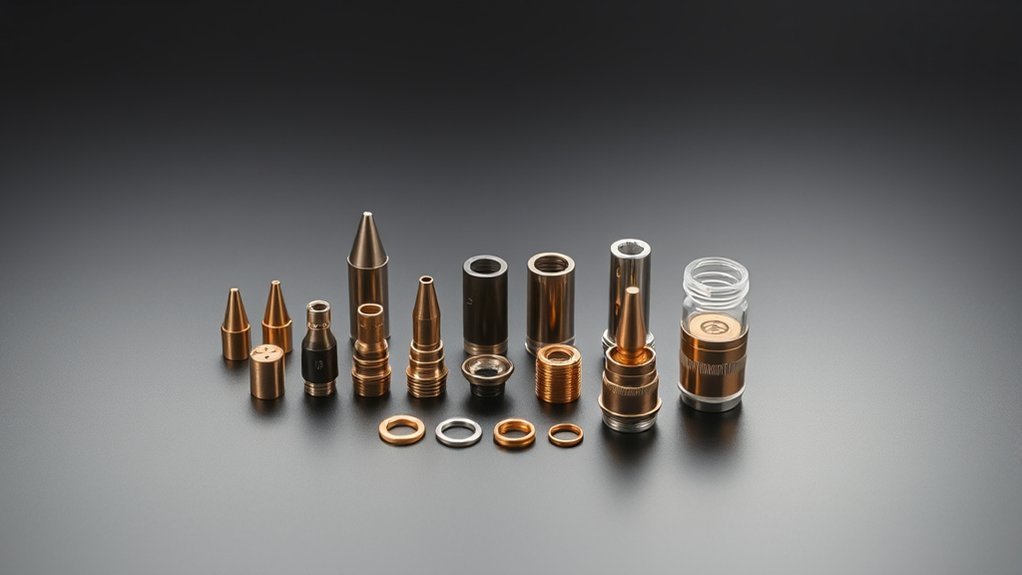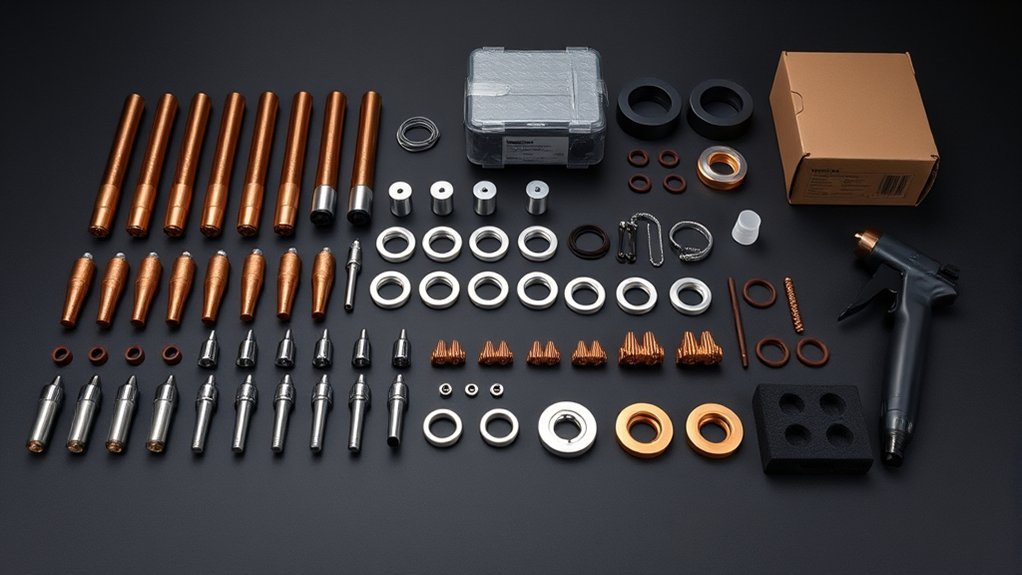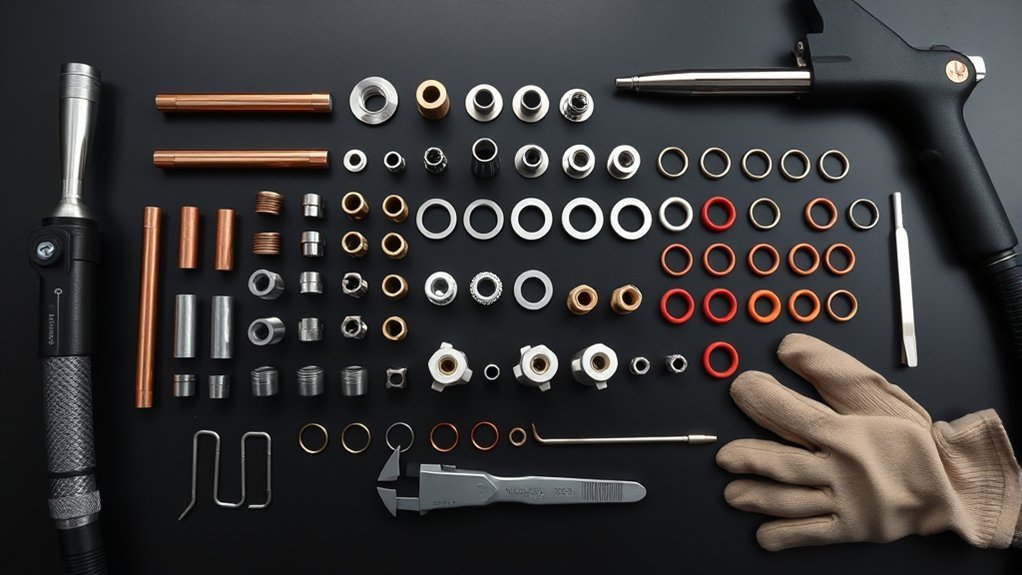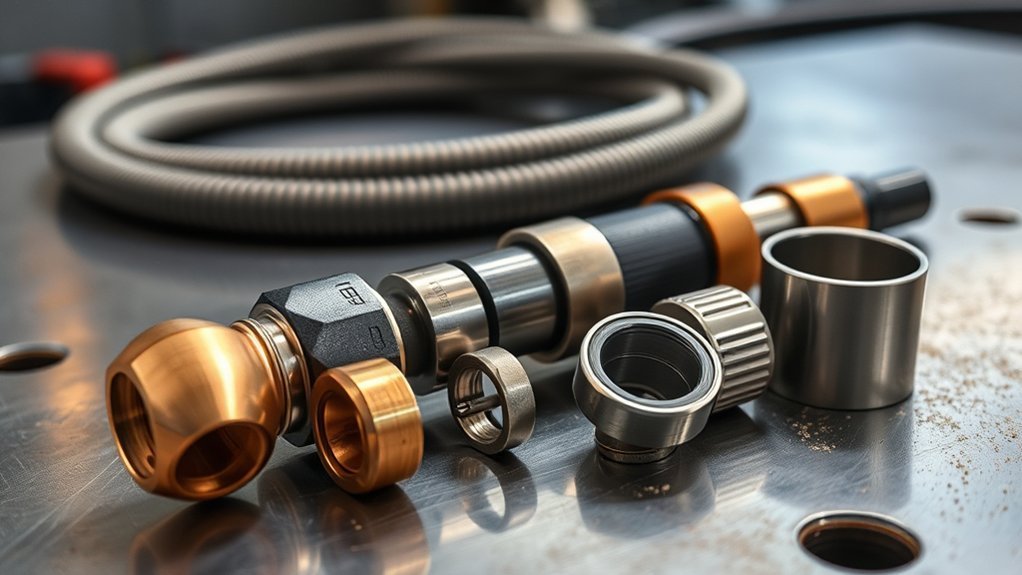
Plasma cutter consumables are the small torch parts that shape the arc, control gas flow, protect the nozzle, and decide how clean your cut looks. The main parts are the electrode, nozzle, swirl ring, retaining cap, and shield cap. Treat them as a matched set, because one worn part can cause hard starts, wider kerf, dross, bevel, and damage to the rest of the torch.
Quick Answer
Plasma cutter consumables include the electrode, nozzle, swirl ring, retaining cap, and shield cap. The electrode creates the arc, the nozzle focuses it, the swirl ring controls gas flow, and the caps hold and protect the stack. Inspect them often and replace parts when wear, poor starts, dross, or kerf changes appear.
Key Takeaways
- The electrode and nozzle wear fastest because they carry and shape the arc.
- Do not rely on one universal hour limit. Use the wear limits and part chart in your torch manual.
- A damaged nozzle, blocked swirl ring, or loose cap can cause dross, bevel, double-arcing, and poor starts.
- Clean, dry, oil-free air or gas helps protect consumables and improves cut quality.
- Always let the torch cool and disconnect power before you inspect or replace parts.
At a Glance
| Time Required | 5 to 10 minutes for a routine inspection; longer if the torch is hot or parts are stuck |
| Difficulty | Easy to moderate, depending on torch style and access |
| Tools Needed | Torch manual, clean cloth, dry compressed air, inspection light, spare consumables, O-ring-safe lubricant if approved by the manufacturer |
| Cost | Varies by torch model; electrodes and nozzles are usually the frequent replacement parts |
Warning: Plasma cutting is hot work. Wear proper eye and face protection, gloves, flame-resistant clothing, and hearing protection as needed. Keep combustibles away, use ventilation for fumes, and disconnect power before servicing the torch. OSHA’s eye and face protection guidance and welding and cutting fire-prevention rules are useful references.
Overview of Plasma Cutter Consumables
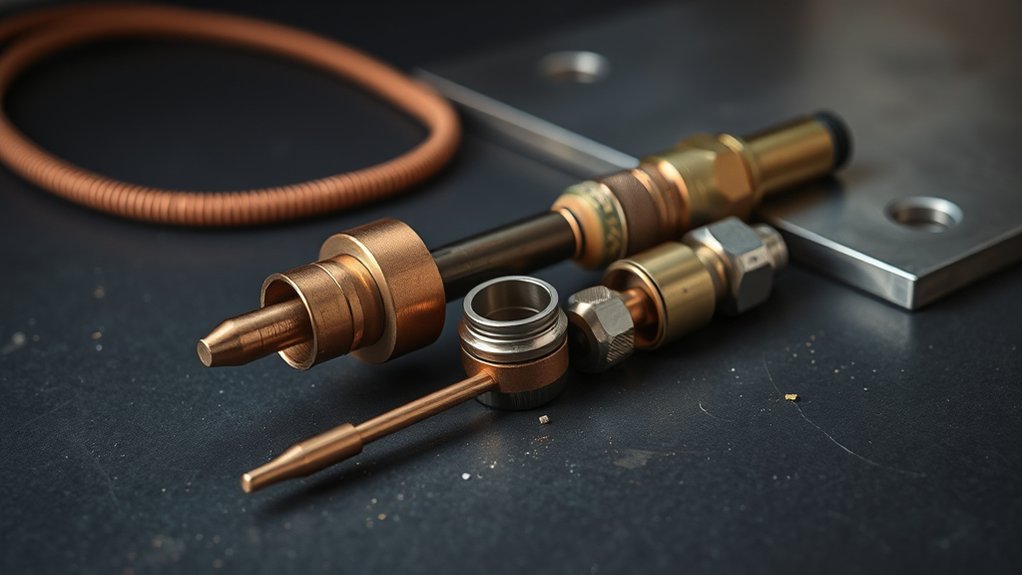
A plasma cutter’s consumables are the wear parts inside and around the torch tip. In most air plasma torches, the main consumables are the electrode, nozzle, swirl ring, retaining cap, and shield cap. Some torches use different names or extra parts, so always match this list to your exact torch manual.
These parts work together. The electrode starts and carries the arc, the nozzle constricts the arc into a focused jet, the swirl ring controls the gas path, and the caps hold the stack in alignment while shielding it from sparks and molten metal.
Good consumable maintenance is not just about saving money. It affects kerf width, bevel, dross, edge smoothness, piercing performance, and torch safety. Research on plasma cutting also shows that cutting speed, current, torch-to-work distance, and gas pressure can all affect cut quality, which is why worn or mismatched consumables cause problems quickly.
| Consumable | Main job | Replace or inspect when you see |
| Electrode | Forms and carries the arc | Deep pit, hard starts, unstable arc, burned tip |
| Nozzle | Focuses the plasma jet and controls kerf | Oval hole, nicks, wider kerf, extra dross, bevel |
| Swirl ring | Controls gas swirl around the electrode | Blocked ports, cracks, burn marks, damaged O-rings |
| Retaining cap | Holds consumables in line | Thread damage, heat cracks, poor seating, gas leaks |
| Shield cap | Protects the nozzle and helps control standoff | Spatter buildup, cracks, drag damage, blocked openings |
Electrode: Role and Wear Indicators
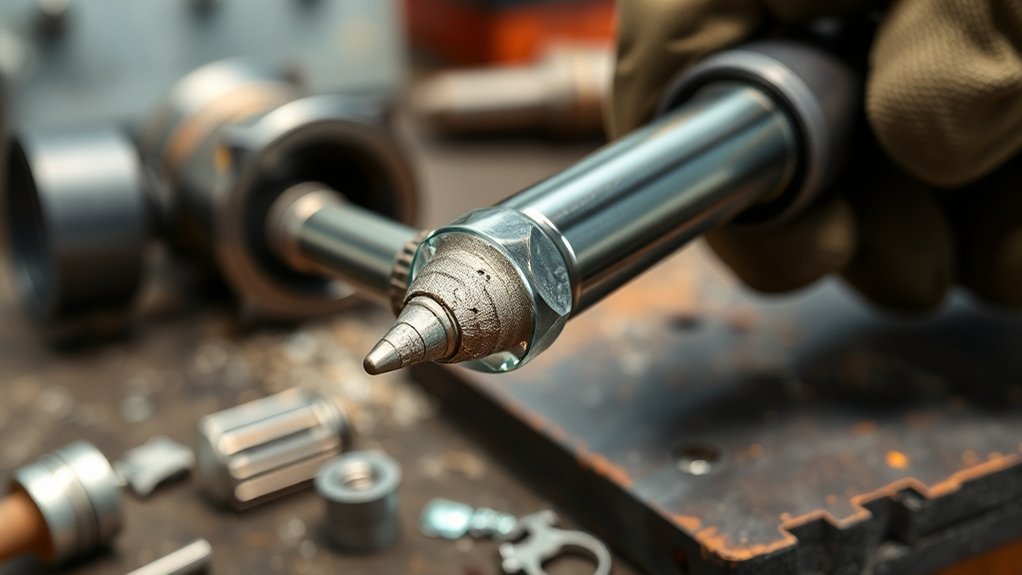
The electrode is the torch part that carries current and helps create the plasma arc. Many plasma cutting electrodes use a copper body with a hafnium insert, because hafnium handles extreme arc heat better than copper alone. Electrode wear is still normal, and electrode wear research shows that crater shape and insert behavior can vary with operating conditions.
Function in Arc Formation
When you press the trigger, gas flows through the torch and the pilot arc starts. The electrode helps anchor that arc so the main cutting arc can transfer to the workpiece. If the electrode is clean, centered, and within its wear limit, the arc is easier to start and easier to keep stable.
If the electrode is badly worn, the arc can wander. That arc wander may damage the nozzle, make the kerf less consistent, and cause rougher edges. This is why the electrode and nozzle are often inspected together.
Hafnium Emitter Wear
The small pit in the hafnium insert is one of the easiest wear signs to check. A shallow, even pit is normal. A deep, irregular pit means the electrode is near the end of its useful life. Many operators use a rough range of about 1 to 1.6 mm as a warning point, but your torch manual should be the final rule because designs vary.
Also watch how the torch starts. If you notice more misfires, delayed arc starts, sputtering, or a harsher sound from the torch, check the electrode before blaming the machine.
Replacement Timing Guidelines
Do not replace electrodes by hours alone unless your shop has tested that schedule on the same machine, material, amperage, and air supply. A better method is to combine four checks:
- Check the pit: Replace the electrode if the pit is too deep, off-center, or rough compared with the manual’s wear limit.
- Track arc starts: Frequent piercing and many short cuts wear consumables faster than long continuous cuts.
- Watch cut quality: If the edge gets rough, the kerf widens, or dross appears with correct settings, inspect the electrode and nozzle.
- Replace matched wear parts: If the nozzle is damaged, do not leave a deeply worn electrode beside a fresh nozzle.
Pro Tip: Keep a small log of arc starts, material thickness, amperage, and part changes. After a few weeks, you will know your real consumable life instead of guessing from a generic hour range.
Nozzle: Sizing, Function, and Replacement
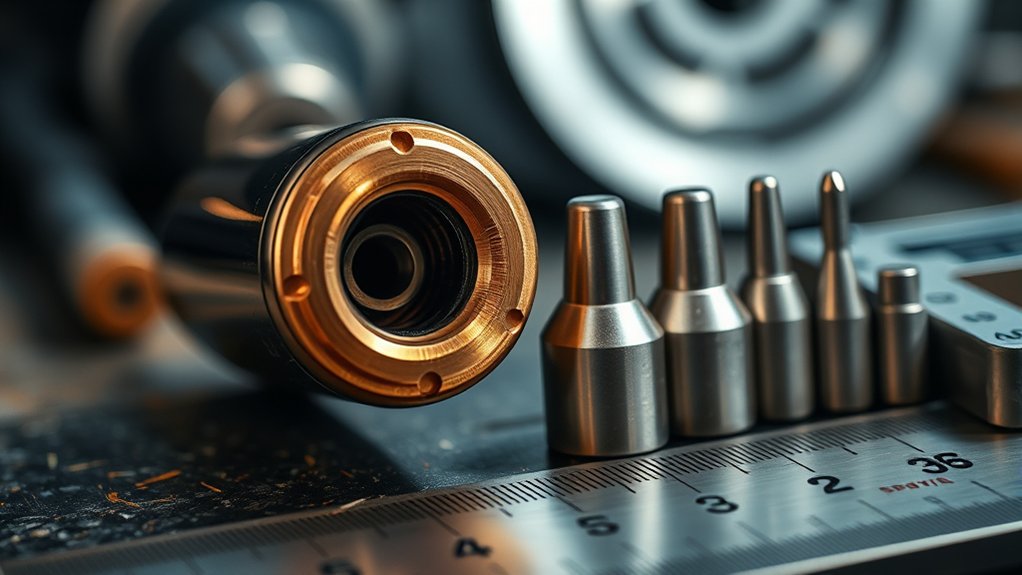
The nozzle has a small orifice that focuses the plasma arc. That tiny hole controls the shape of the jet, so it has a direct effect on kerf width, edge angle, dross, and detail. A clean round orifice gives you a tighter, more predictable cut. An enlarged or oval orifice spreads the arc and makes the cut look sloppy.
Products Worth Considering

[Achieve Precise Cuts] PT31 Plasma Cutting Consumables – Your Essential Tool for Efficient Cutting! Whether you're working with sheet metal, steel, or any other material, superior cutting performance ensure clean, accurate, and smooth cuts.

Fit for : AG-60 AG-60P SG-55 WSD-60 Plasma cutter torch head

Wide Compatibility: Compatible with CUT60, CUT60SP, CUT50DP, CUT50PI, LGK-60, LTP 5000, CUT-55DS plasma cutting machines.
Choosing Nozzle Size
Choose the nozzle size from your cutter’s amperage chart. Smaller nozzles are used for lower-amperage precision work. Larger nozzles are used for higher-amperage cutting or gouging. Do not install a high-amperage nozzle and run it at a low setting just because it fits the torch. The gas flow and arc shape may not match the job.
- Thin sheet and detailed cuts: Use the lower-amperage nozzle listed for your torch.
- General plate cutting: Match the nozzle to the amperage and material thickness chart.
- Gouging: Use the gouging nozzle or tip style specified by the manufacturer.
- CNC cutting: Match nozzle, shield, amperage, pierce height, cut height, and speed as a complete setup.
When to Replace
Inspect the nozzle orifice under good light. Replace the nozzle if the hole is no longer round, if the face is nicked, or if spatter cannot be cleaned without scraping into the metal. Also replace it if the machine starts making more dross or bevel after you confirm the amperage, speed, air pressure, and standoff are correct.
Because the nozzle and electrode affect each other, many shops replace them as a pair for critical work. For rough cutting, you may stretch one part longer, but do not let a damaged nozzle burn up the rest of the torch stack.
Swirl Ring: Gas Flow Control and Maintenance
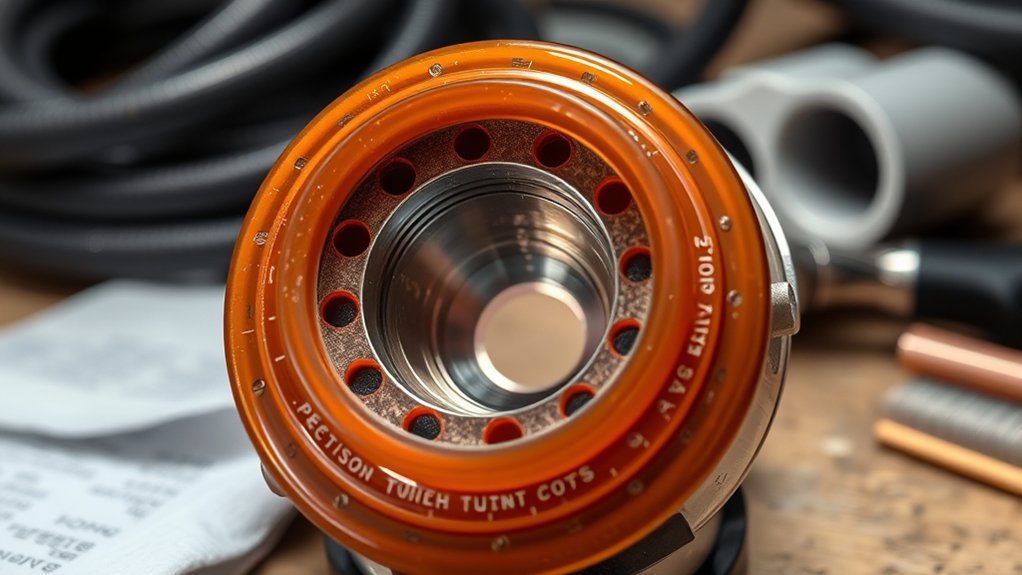
The swirl ring directs gas around the electrode before the gas reaches the nozzle. That swirl helps center the arc, cool nearby parts, and stabilize the plasma jet. If the ports are blocked or the ring is cracked, the arc can become uneven even if the electrode and nozzle are new.
Check the swirl ring each time you service the torch. Look for blocked ports, melted areas, cracks, swelling, missing O-rings, or a ring installed backward. Use only the cleaning method approved in your manual. Do not force wire, drill bits, or sharp tools through the ports, because a damaged port can change gas flow.
Replace the swirl ring when you see physical damage, poor seating, hardened O-rings, or repeated arc instability that does not improve with a fresh electrode and nozzle.
Note: If your torch suddenly cuts worse after a consumable change, check the swirl ring orientation before changing machine settings. A reversed or poorly seated ring can mimic a bad nozzle.
Retaining Cap and Shield Cap: Protection and Alignment
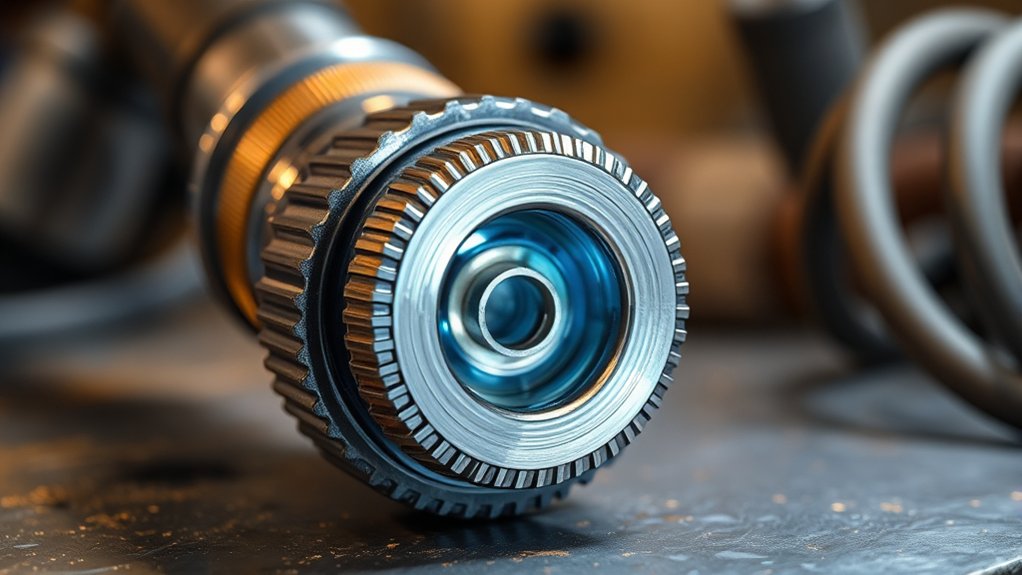
The retaining cap holds the electrode, nozzle, and swirl ring in the correct position. If it is cracked, cross-threaded, dirty, or loose, the consumable stack may not sit squarely in the torch. That can cause gas leaks, poor arc alignment, and short consumable life.
The shield cap protects the nozzle from sparks, slag, and accidental contact with the workpiece. On drag-cutting setups, it may also help set standoff. A shield cap with heavy spatter buildup or damaged openings can disturb gas flow and make the torch ride unevenly.
Inspect both caps for thread wear, heat checking, cracks, spatter bridges, damaged sealing surfaces, and worn O-rings. Clean loose spatter carefully with a method approved by the manufacturer. Replace caps that are distorted, burned, or hard to seat by hand.
Tips to Maximize Consumable Lifespan
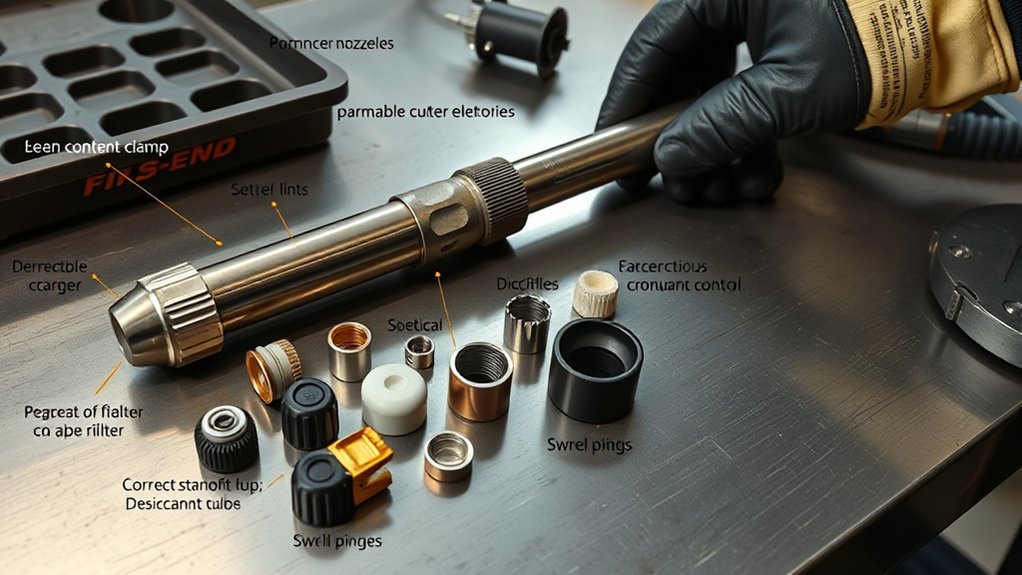
You extend consumable life by controlling heat, air quality, setup, and handling. A fresh electrode and nozzle will not last long if the torch is dragged too hard, pierced too low, run with wet air, or used with the wrong nozzle for the amperage.
- Use the correct parts: Match the electrode, nozzle, swirl ring, shield, and retaining cap to your torch model and amperage.
- Set air or gas correctly: Use clean, dry, oil-free air or the cutting gas listed by the manufacturer. Studies on plasma cutting confirm that gas pressure affects cut quality, so do not ignore the pressure and flow chart.
- Maintain standoff: Too little distance can cause double-arcing and nozzle damage. Too much distance can cause poor penetration and bevel.
- Pierce at the right height: Piercing too close throws molten metal back into the nozzle and shield.
- Let post-flow finish: Do not shut air off early. Post-flow cools the torch and protects hot consumables.
- Keep parts clean and dry: Store spares in sealed bags or containers away from grinding dust, moisture, and oil.
- Avoid mixing worn and new parts: A new nozzle paired with a badly worn electrode may still cut poorly.
How to Inspect Plasma Cutter Consumables
Use this simple inspection routine before a long cutting session, after a drop in cut quality, or when the torch starts poorly.
- Power down and cool the torch: Let the post-flow finish, disconnect power if required by your manual, and wait until the torch is safe to touch.
- Remove the cap stack: Unscrew the shield and retaining cap by hand if possible. Do not force stuck parts while they are hot.
- Inspect the electrode: Check the hafnium pit, burned areas, and off-center wear.
- Inspect the nozzle: Look for an oval hole, nicks, spatter, cracks, or a rough inner edge.
- Inspect the swirl ring: Confirm the ports are open, the ring is not cracked, and O-rings are flexible and seated.
- Inspect the caps: Check threads, sealing faces, standoff surfaces, and shield openings.
- Reassemble correctly: Install parts in the right order and orientation. Hand-tighten unless your manual gives a specific torque method.
- Test on scrap: Make a short cut and check arc start, sound, dross, kerf width, and bevel before cutting the real part.
Common Cut Problems and Consumable Causes
| Problem | Likely consumable issue | What to check first |
| Hard starts or misfires | Worn electrode, dirty nozzle, weak air flow | Electrode pit, nozzle face, air pressure, work clamp |
| Wider kerf | Enlarged nozzle or wrong nozzle size | Nozzle orifice and amperage match |
| Heavy bottom dross | Worn nozzle, wrong speed, low air flow | Nozzle, speed, pressure, dry air supply |
| Uneven bevel | Arc not centered, damaged swirl ring, bad nozzle | Swirl ring seating, nozzle shape, torch squareness |
| Double-arcing | Nozzle contact, wrong standoff, damaged nozzle | Standoff, drag shield, nozzle, pierce height |
Air, Gas Quality, and Storage
Consumables last longer when the torch gets clean, dry, oil-free air or the correct gas for the machine. Moisture and oil can change arc behavior, dirty the torch, and shorten electrode and nozzle life. If your plasma cutter uses shop air, drain the compressor, use a water separator, and add a filter or dryer if moisture is common.
If your system uses oxygen, nitrogen, argon-hydrogen, or other gases, follow the machine’s gas chart and regulator instructions. Do not copy gas purity or dew point numbers from another system unless your manual calls for them. For ventilation while cutting, especially on coated or stainless materials, review OSHA’s ventilation guidance for welding, cutting, and heating.
Store spare parts in clean, dry containers. Keep electrodes and nozzles in labeled bags by amperage so you do not mix similar-looking parts. Avoid touching sealing surfaces with oily hands.
CNC Settings That Reduce Consumable Wear
On a CNC plasma table, software settings can shorten or extend consumable life. The biggest wear happens during starts and pierces, so pierce height, pierce delay, lead-in length, and torch height control matter.
- Use the correct pierce height: Piercing too low throws molten metal back into the nozzle and shield.
- Use enough lead-in: Lead-ins keep pierce damage away from the final cut edge.
- Set cut height correctly: A torch that runs too low can double-arc. A torch that runs too high can bevel and lose energy.
- Use anti-dive: Torch height control diving into a corner or kerf can crash the shield and damage the nozzle.
- Limit unnecessary starts: Combine cuts when it makes sense, because repeated starts wear electrodes and nozzles faster.
OEM vs Aftermarket Consumables
Aftermarket consumables can work well in some torches, but compatibility is not guaranteed. The safest choice is the part number listed by your torch manufacturer. A part that looks similar can have a different orifice size, gas path, thread fit, metallurgy, or shield design.
If you use aftermarket consumables, buy from a reputable supplier, keep the packaging and part number, and test on scrap before production cuts. Also check your warranty terms. Some manufacturers may limit warranty coverage if non-approved consumables damage the torch.
Products Worth Considering

Fit for: IPT45 IPT53 IPT60 Plasma cutter torch head and Bestarc BTC500XP, BTC650XP, BTC800XP, CUT55XP, CUT60XP, Also fit other Model CUT-65DS PRO CUT-60DS PRO, CUT-55DS PRO

Crafted from high-quality durable materials, copper components offer excellent electrical conductivity and heat resistance, stable for high-frequency, high-intensity cutting. .045"/1.1 aperture ideal for 50-60A current.

Package Include: 5 Shield Cups, 20 Nozzles .045", 5 Wire Spacer Guides, and 20 Electrodes.
Frequently Asked Questions
How do ambient temperature and humidity affect consumable performance?
Humidity matters more than room temperature in most shops. Wet air can carry moisture into the torch, which may hurt arc stability and shorten electrode and nozzle life. Store consumables in a dry container and use clean, dry air or the gas quality specified by your machine.
Are aftermarket consumables compatible with my torch warranty?
Sometimes, but not always. Check your torch manual and warranty terms before using non-OEM parts. If aftermarket parts are allowed, use the exact compatible part number, document what you installed, and stop using any part that causes poor fit, gas leaks, hard starts, or torch damage.
What storage methods prevent consumable contamination or oxidation?
Keep electrodes, nozzles, swirl rings, and caps in sealed bags or divided containers. Store them away from grinding dust, moisture, oil, and loose metal chips. Label parts by torch model and amperage so you do not mix similar parts.
How do cutting gas choices impact consumable lifespan and cut quality?
Gas choice affects arc energy, oxidation, dross, and edge finish. Many portable cutters use compressed air, while industrial systems may use oxygen, nitrogen, argon-hydrogen blends, or shield gases. Use only the gas type, pressure, and flow listed for your system and material.
Can software settings reduce consumable wear during CNC cutting?
Yes. Correct pierce height, pierce delay, lead-ins, cut height, corner slowdown, and anti-dive settings can reduce molten blowback, torch crashes, double-arcing, and needless starts. Use the cut chart for your amperage, material, and consumable set.
Should I replace the electrode and nozzle at the same time?
For critical or high-quality cuts, replacing them together is often the best choice because both parts shape arc stability. For rough cutting, you can inspect each part and replace only the worn one, but do not pair a fresh nozzle with a badly worn electrode.
Why do my plasma consumables wear out so fast?
Fast wear usually comes from wet or oily air, wrong amperage for the nozzle, piercing too close, poor work clamp contact, excessive starts, dragging without the correct shield, or using mismatched parts. Check the setup before assuming the consumables are defective.
Conclusion
Plasma cutter consumables work as a system. The electrode forms the arc, the nozzle focuses it, the swirl ring controls gas flow, and the retaining and shield caps keep the stack aligned and protected. When any one of these parts wears out, cut quality can fall fast.
For the best results, follow the consumable chart for your torch, inspect parts before long cutting sessions, keep your air or gas clean and dry, and test on scrap after any part change. Replace parts based on wear signs, cut quality, arc starts, and the limits in your manual, not on a universal hour rule.
Sources
- Chabert, Gonzalez, and Freton electrode wear study — backs hafnium insert wear and crater behavior in air plasma cutting electrodes.
- Welding Journal: Cutting and Shield Gases Pressure Effects on Plasma Cutting Quality — backs the effect of gas pressure and cutting variables on cut quality.
- OSHA 1910.133 Eye and Face Protection — backs eye and face protection guidance for cutting and arc work.
- OSHA 1910.252 Welding, Cutting, and Brazing — backs fire-prevention and hot-work precautions.
- OSHA 1926.353 Ventilation and Protection in Welding, Cutting, and Heating — backs ventilation cautions for cutting work.