Disclosure: As an Amazon Associate I earn from qualifying purchases. Buying through these links costs you nothing extra.
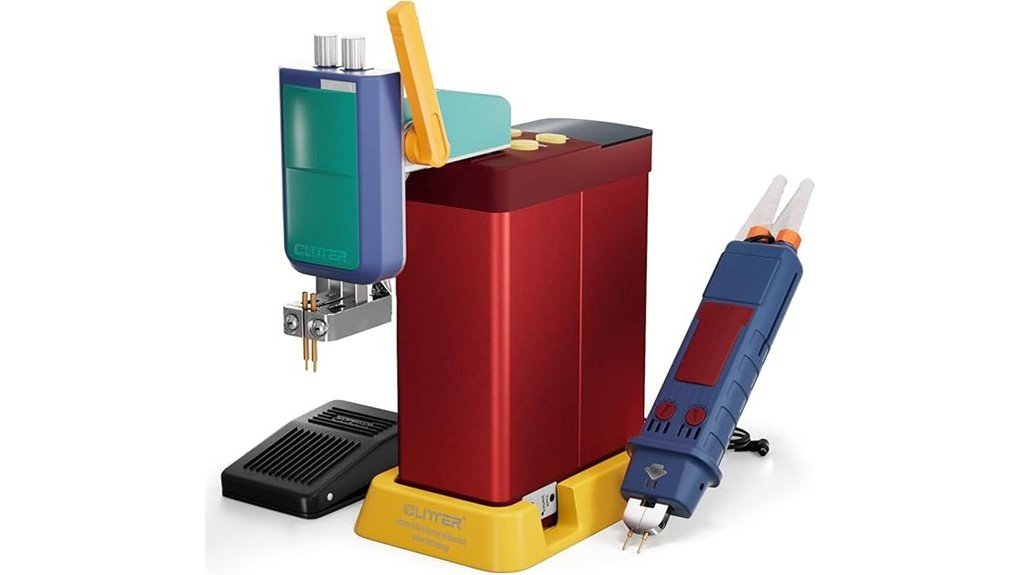
The GLITTER 801D spot welder is a capacitor-style battery spot welder for building 18650 and similar cell packs with nickel strip. The Amazon listing gives it 99 power levels, AT and MT modes, a down-pressing rocker arm and a movable welding pen. Peak figures differ between sellers, so this guide uses the numbers per the listing and tells you what to check before you rely on them.
Quick Verdict
Best for: Hobbyists building or repairing small lithium battery packs with nickel strip who want adjustable power and a hand-held pen option.
Bottom line: A flexible budget-class battery spot welder on paper, but peak power and current claims vary by listing and are not independently verified here. Test on scrap nickel and an old cell before touching a good pack.
GLITTER 801D Specs
| Spec | Detail |
|---|---|
| Power levels | 99 adjustable gears, per the listing |
| Modes | AT and MT spot-welding modes, per the listing |
| Welding heads | Down-pressing rocker arm plus a movable welding pen, per the listing |
| Display | Digital display for settings, per the listing |
| Peak power and current | The Amazon listing quotes 14,500 W and 2,500 A; other seller listings quote lower figures (for example 9,900 W and up to 1,800 A), so confirm on the listing you buy |
| Weight | 8.4 lb, per the listing |
| Included accessories | Not clearly listed on all sellers, check the box contents |
How to Use the GLITTER 801D Spot Welder Safely
- Read the manual and set the lowest power level first.
- Use fresh pure-nickel strip of a thickness the welder supports (check the manual) and keep it flat against the cell terminal.
- Make a test weld on a scrap strip and tug it; a good weld tears the strip, not just peels off.
- Step the power up one level at a time until welds hold without burning holes in the strip.
- Keep cells insulated with fish paper and work on a non-conductive, non-flammable surface.
- Wear safety glasses, remove rings and watches, and never weld on a charged, damaged or swollen cell.
Rocker Arm vs Welding Pen
The fixed rocker arm holds the electrodes at a set spacing and pressure, which gives repeatable welds on flat strip. The movable pen lets you reach awkward spots on a built pack. Use the arm where you can, because consistent pressure matters more than power when welding thin nickel.
Who Should Buy It?
- DIY builders making e-bike, power-bank or tool packs from 18650 or similar cells.
- Repairers who need to re-strap a pack without soldering directly on cells.
Skip it if you need a production-grade welder with a calibrated, documented output. For pure-nickel strip to use with it, see the nickel strip for battery welding review.
Questions to Settle Before Buying
Check the listing for the exact peak power, the pen and foot-pedal options, the supported strip thickness, the input power source and whether a warranty is offered. These details vary by seller and are not confirmed here.
Pros and Limitations
Pros
- 99 power levels for fine tuning
- Rocker arm and pen options
- Digital display and AT/MT modes
- No soldering heat on the cell
Limitations
- Claimed peak figures vary between listings
- Strip thickness and accessories not consistently listed
- Requires care and practice to avoid damaging cells
Related reading: SEESII battery spot welder, AWithZ U2 battery spot welder and pure nickel strips.
Frequently Asked Questions
What does the GLITTER 801D spot welder do?
It welds nickel strip to battery cells such as 18650 cells to build or repair battery packs without soldering heat on the cell.
Can it weld other battery types?
Spot welders weld the strip material, not a battery chemistry. It can weld nickel strip on other cylindrical cells if the strip and power setting are right, but check the cell maker guidance and the manual.
What is the difference between AT and MT mode?
The listing offers AT and MT spot-welding modes. Check the manual that comes with the unit for exactly how each mode triggers a weld before you use it on a pack.
Is there a warranty?
The listing does not clearly state warranty terms here, so check the Amazon page and ask the seller before you buy.
How do I maintain the welder?
Keep the electrodes clean and properly shaped, check cables for wear, and store the unit dry. Follow the manual for any electrode replacement.
The Bottom Line
The GLITTER 801D is a feature-rich budget battery spot welder, with adjustable power, two modes and two head styles. Because quoted peak figures differ between listings, start on scrap strip, confirm the specs on the listing you buy, and follow cell safety rules.
{“@context”:”https://schema.org”,”@type”:”FAQPage”,”mainEntity”:[{“@type”:”Question”,”name”:”What does the GLITTER 801D spot welder do?”,”acceptedAnswer”:{“@type”:”Answer”,”text”:”It welds nickel strip to battery cells such as 18650 cells to build or repair battery packs without soldering heat on the cell.”}},{“@type”:”Question”,”name”:”Can it weld other battery types?”,”acceptedAnswer”:{“@type”:”Answer”,”text”:”Spot welders weld the strip material, not a battery chemistry. It can weld nickel strip on other cylindrical cells if the strip and power setting are right, but check the cell maker guidance and the manual.”}},{“@type”:”Question”,”name”:”What is the difference between AT and MT mode?”,”acceptedAnswer”:{“@type”:”Answer”,”text”:”The listing offers AT and MT spot-welding modes. Check the manual that comes with the unit for exactly how each mode triggers a weld before you use it on a pack.”}},{“@type”:”Question”,”name”:”Is there a warranty?”,”acceptedAnswer”:{“@type”:”Answer”,”text”:”The listing does not clearly state warranty terms here, so check the Amazon page and ask the seller before you buy.”}},{“@type”:”Question”,”name”:”How do I maintain the welder?”,”acceptedAnswer”:{“@type”:”Answer”,”text”:”Keep the electrodes clean and properly shaped, check cables for wear, and store the unit dry. Follow the manual for any electrode replacement.”}}]}