Sheet metal can warp fast when too much heat stays in one small area. To MIG weld sheet metal without warping, you need short welds, tight fit-up, steady settings, and patient cooling between passes. Use tack welds, stitch welding, skip welding, and a copper backing bar to spread heat and protect the panel shape.
Quick Answer
To MIG weld sheet metal without warping, avoid long continuous beads. Use short tack welds, stitch the joint in small sections, move around the panel, and let each area cool before you weld again. A tight fit-up, correct wire stickout, and copper backing bar also help control heat.
Key Takeaways
- Keep heat low by using short weld bursts instead of one long bead.
- Place tack welds about 1 inch apart to hold the panel shape.
- Use skip welding so heat spreads across the panel instead of one spot.
- Let the metal cool between welds before you continue.
- Use a copper backing bar when you need more support behind thin metal.
Before You Begin MIG Welding Sheet Metal
Prepare the sheet metal before you strike an arc. Clean the joint, remove paint or rust near the weld, and clamp the panels so they sit flat with no wide gaps.
Set your MIG welder for thin metal, then test the settings on scrap from the same material. Your goal is enough penetration without burning through the panel.
- Clean sheet metal panels
- MIG welder with suitable wire and shielding gas
- Clamps or panel holders
- Copper backing bar or chill bar
- Compressed air or a safe cooling method
- Hammer and dolly for light panel correction
- Welding helmet, gloves, jacket, and proper ventilation
Estimated total time: Most small sheet metal welds take about 30 to 90 minutes, depending on panel size, fit-up, and cooling time.
Step-by-Step Process to MIG Weld Sheet Metal Without Warping
- Clean the joint area. Remove coatings, rust, oil, and dirt so the weld stays stable.
- Clamp the panels tightly. Keep the edges aligned and reduce gaps that can pull the metal out of shape.
- Set the welder for thin metal. Use scrap metal to check heat, wire speed, and penetration before welding the real panel.
- Place short tack welds. Space the tacks about 1 inch apart so the panel stays in position.
- Use stitch welding. Add short weld bursts instead of one long bead.
- Skip around the joint. Move to a different area after each short weld so heat spreads more evenly.
- Cool between welds. Let the metal cool until you can safely touch it with a gloved hand.
- Check alignment often. Correct small movement early with light hammer and dolly work.
Warning: Welding produces heat, sparks, fumes, and intense light, so use proper personal protective equipment and work in a ventilated area.
Products Worth Considering

Value Pack: The package includes 24 packs of butt welding clamps, enough quantity to meet your daily needs and replacements. Each butt welding clamps is individually wrapped in a small bag, convenient to carry and use.

16-Pack Welding Clamps Set: Includes 16 butt welding clamps designed for precise edge-to-edge welding, ideal for body repair, floor patching, door skins, and sheet metal alignment.

Welding Clamps : for Floors Door Panels etc Repair and Renovation
What Causes Warping When MIG Welding?
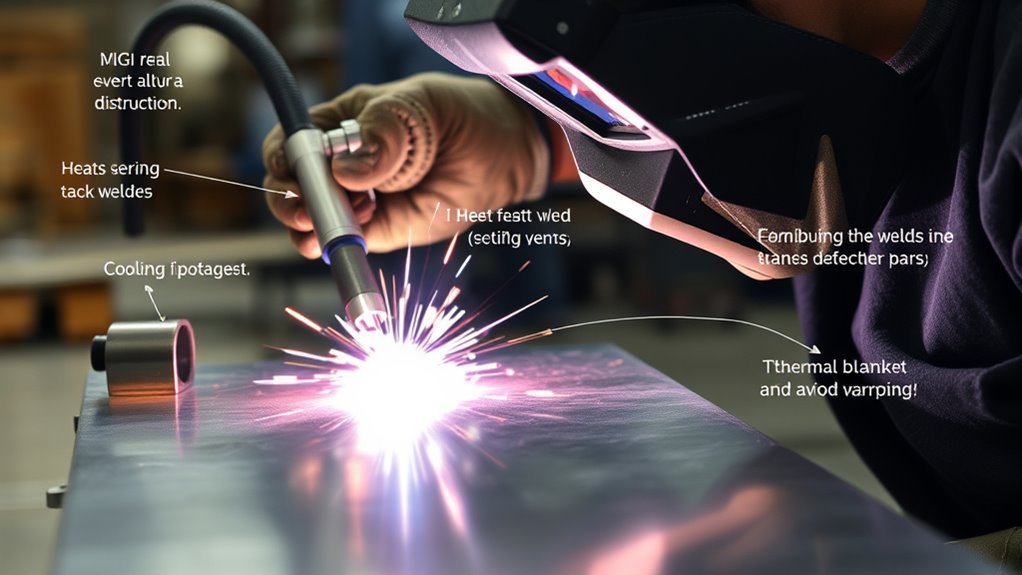
When you MIG weld sheet metal, warping happens when heat spreads unevenly through the metal. The hot area expands, then shrinks as it cools, which can pull the panel out of shape.
Thin sheet metal creates this problem faster than thick material. It has less mass to absorb heat, so a small area can overheat quickly.
Low welding power can also cause trouble. If the weld lacks penetration, the joint may stay weak and move under stress.
Long continuous welds create localized overheating. This heat makes the weld area shrink as it cools, which can leave waves, dips, or pulled edges.
Continuous welding without enough cooling time can cause localized overheating, distortion, and shrinkage in the weld area.
Poor fit-up makes warping worse. Gaps between pieces let heat collect unevenly and force you to add more filler metal.
To reduce warping, control heat and make the fit-up tight before you start. You can also use techniques from flux core welding when you need better heat control and penetration in difficult weld positions.
Key Techniques for Controlling Heat During MIG Welding
To control heat during MIG welding, use methods that limit how long the arc stays in one area. Start with stitch welding instead of continuous beads.
Stitch welding uses short weld sections with cooling time between them. This reduces heat concentration and helps control the heat-affected zone.
Use skip welding by moving between different areas of the joint. This spreads heat more evenly and lowers the risk of panel distortion.
Use compressed air carefully to cool welds between tacks when the panel gets too hot. Avoid blasting the molten weld puddle because that can affect weld quality.
Keep a steady wire stickout of about 1/2 inch. Changes in stickout can change heat output and make the weld less consistent.
Let the panel cool between weld bursts. If you rush this step, the weld can shrink hard as it cools and pull the metal out of shape.
These techniques can improve your MIG welding results. Learning flux core welding can also help you understand heat control in other welding setups.
Pro tip: Weld short sections on opposite sides of the joint so one area never holds too much heat.
Products Worth Considering

Gel eliminates erratic operation with a film that will not clog orifices and threads on MIG nozzles and contact tips

The blades cut away the built up spatter helping prolong the nozzle life, and reduces the chances of wire sticking.
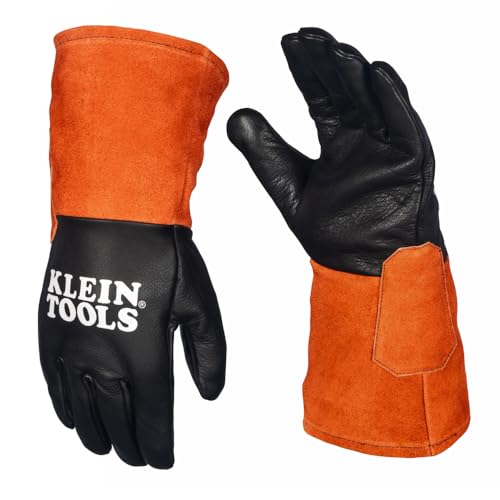
TIG WELDING GLOVES: Premium full grain cowhide leather palm, hand, and fingers provide superior dexterity for precise TIG welding and torch control
Guide to Tack Welding and Stitching for Precision
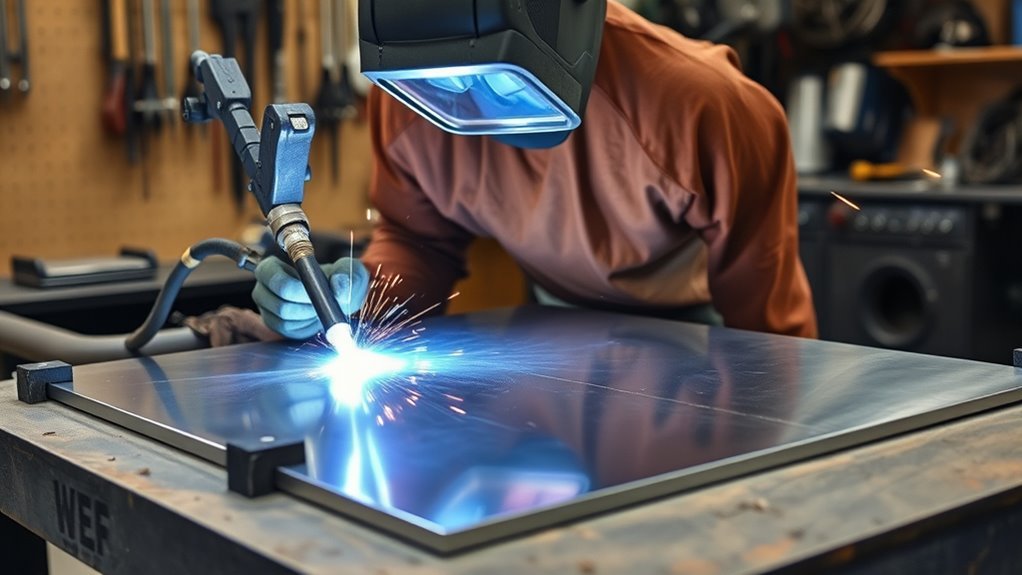
Tack welding and stitching help you control thin sheet metal with better precision. Place small, evenly spaced tacks about 1 inch apart to hold the panel in position.
Keep each tack very short. A quick tack reduces heat concentration and helps prevent distortion.
Stitch welding means you add short bursts of weld in a staggered pattern. Let each area cool before you add the next short weld.
Maintain a wire stickout of about 1/2 inch during welding. This helps you keep steady heat input and enough penetration while reducing warpage.
Good shielding gas flow also matters. It helps prevent porosity and supports stronger welds.
After tack welding, remove clamps only when the panel can hold its shape. Align the joint with light hammer and dolly techniques before you move to longer stitch welds.
Cooling Methods to Prevent Distortion in Welds
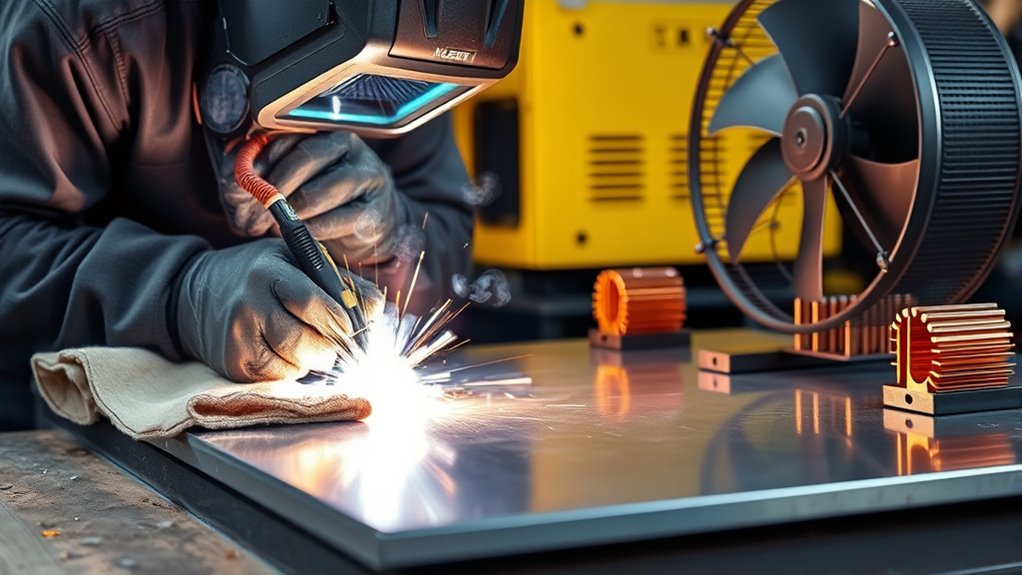
Cooling methods help you prevent distortion when you work with thin sheet metal. Use controlled cooling to reduce the heat-affected zone and keep the panel stable.
Let the metal cool enough before you add more welds. If you continue while the panel stays hot, the weld area can shrink and warp.
Use a copper backing bar behind the joint when the panel allows it. Copper absorbs extra heat and helps reduce burn-through.
Watch the panel temperature while you work. If the metal turns blue near the weld, it may be too hot for thin sheet metal work.
Use air to cool that area before you continue. You can also adjust your welder’s post-flow settings to keep shielding gas coverage after the arc stops.
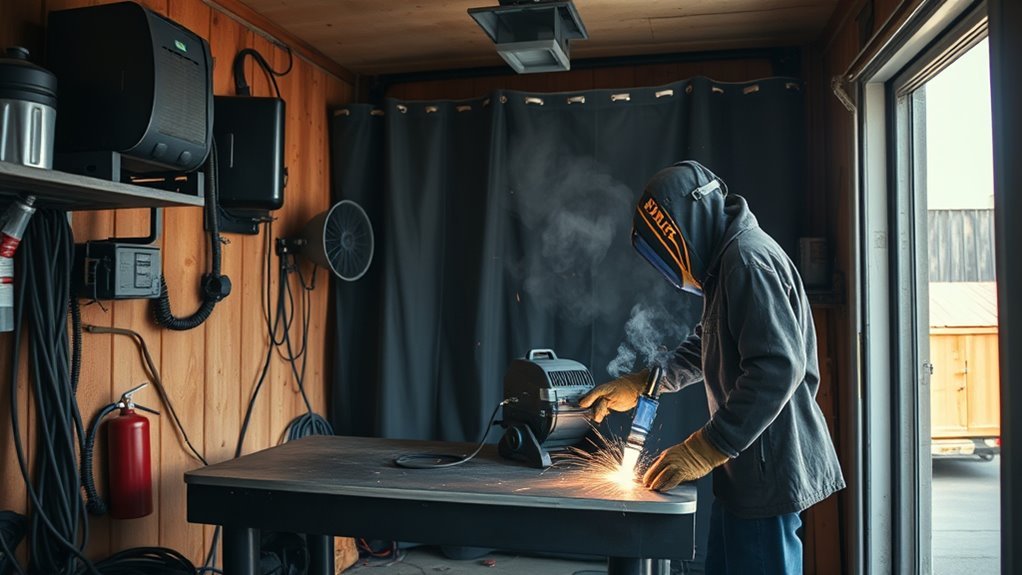
Keep the work area ventilated to reduce welding fume exposure. Proper ventilation in the work area helps protect you during hot work.
Common Mistakes That Cause Sheet Metal Warping
Most warping problems come from too much heat, poor fit-up, or rushed welding. These mistakes may seem small, but they can bend thin panels quickly.
- Running one long bead across thin sheet metal
- Leaving wide gaps between panel edges
- Using too much amperage for the metal thickness
- Welding the next section before the panel cools
- Holding an inconsistent wire stickout
- Skipping clamps or support behind the joint
Correct these issues before you blame the machine or filler wire. Better preparation often fixes distortion before it starts.
Final Steps for a Flawless MIG Weld
As you finish MIG welding sheet metal, check the panel fit before every new weld. Tight alignment helps keep the heat-affected zone small and reduces warping risk.
Use stitch welding and space your tacks with care. Let each short weld cool before you place the next one.
| Technique | Description | Benefit |
|---|---|---|
| Stitch Welding | Short bursts spaced apart | Reduces heat distortion |
| Cooling Methods | Use compressed air or chill bars | Prevents excessive heat buildup |
| Amperage Adjustment | Set for good penetration without overheating | Helps create stronger welds |
| Hammer and Dolly | Realign while warm | Relieves stress and maintains shape |
Practice these techniques on scrap metal before you weld a visible panel. Using stitch welding techniques will help you manage heat input more effectively.
Frequently Asked Questions
Can You MIG Weld Thin Sheet Metal Without Warping?
You can MIG weld thin sheet metal with little warping if you control heat from the start. Use short tacks, stitch welds, skip welding, and cooling time between welds.
Is It Better to Push or Pull While MIG Welding Sheet Metal?
Many welders push the MIG gun on thin sheet metal because it gives better puddle visibility and a flatter bead. Use the method that gives you steady control, clean gas coverage, and enough penetration.
What MIG Settings Help Prevent Sheet Metal Warping?
Use settings that match the sheet metal thickness and test them on scrap first. Aim for enough heat to fuse the joint without burn-through, then adjust wire speed and travel speed as needed.
How Do You Weld Sheet Metal Without Distortion?
To weld sheet metal without distortion, prepare a tight joint and avoid long beads. Use tack welding, stitch welding, skip welding, and steady cooling to keep the panel shape stable.
Does a Copper Backing Bar Help When MIG Welding Sheet Metal?
A copper backing bar can help thin sheet metal because it absorbs heat and supports the back of the weld. It also helps reduce burn-through when you weld small gaps or edges.
Safety Disclaimer: This article is for informational purposes only and does not replace hands-on training or professional safety guidance. Always use proper welding protection, follow your equipment manual, and work with a qualified instructor if you’re unsure.
Conclusion
The best way to MIG weld sheet metal without warping is to control heat before it builds up. Use short tacks, stitch welds, tight fit-up, and cooling breaks to protect the panel shape.
Practice on scrap metal before you weld a finished part. With steady technique and patience, you can make cleaner welds with less distortion.