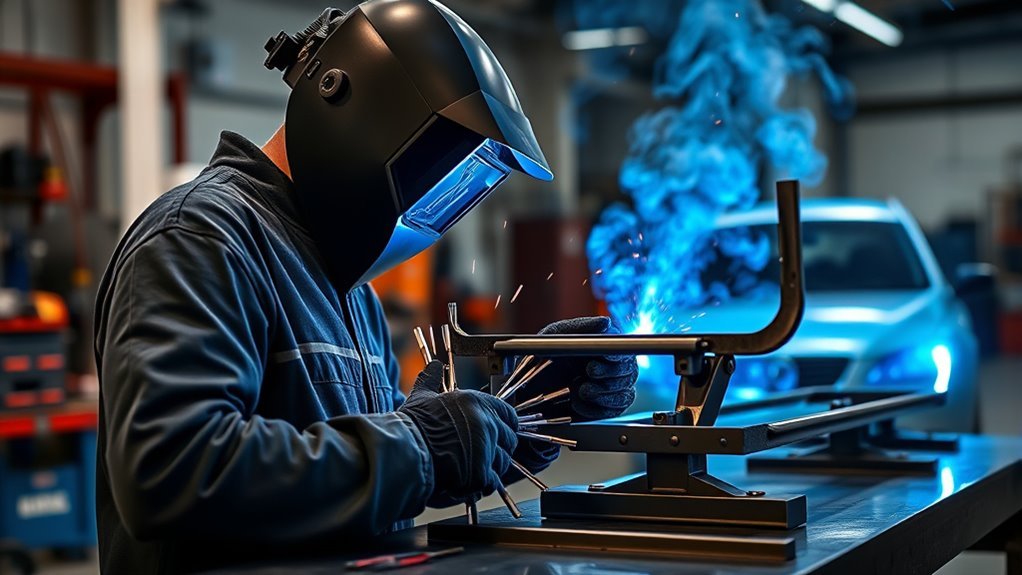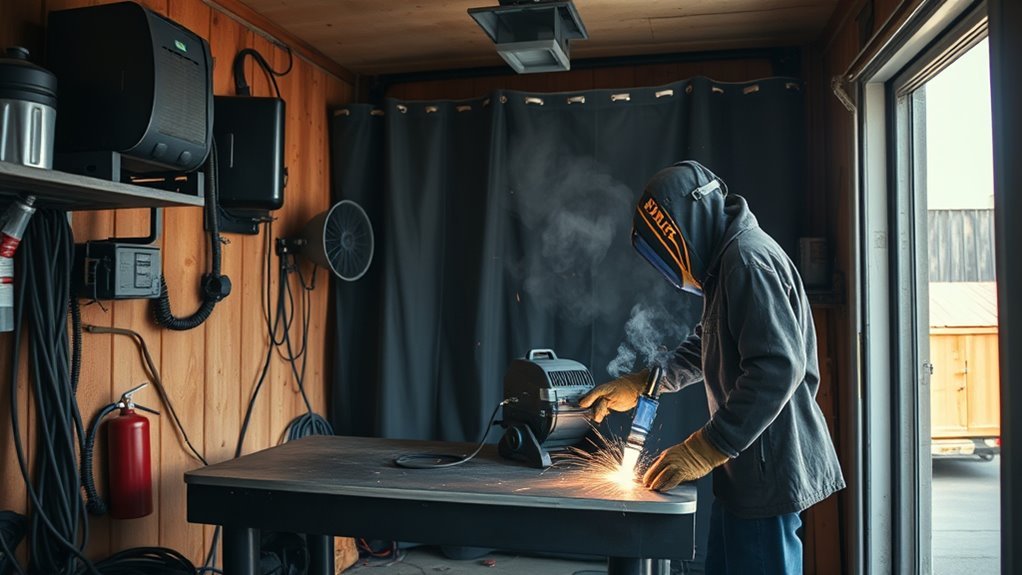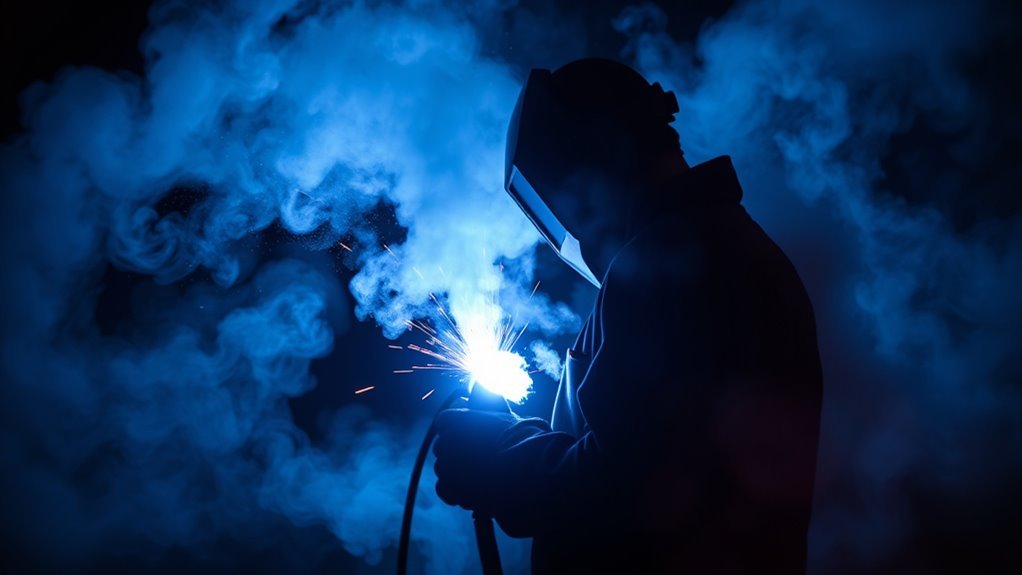
Ozone generated during welding is a serious breathing hazard because it can form close to the arc and enter the welder’s breathing zone. It is a gas, not visible smoke, so a clean-looking arc does not prove the air is safe. The best protection is to control the plume and gases at the source, keep your head out of the airflow path, and verify exposure when the risk is uncertain.
Quick Answer
Welding arcs can create ozone when ultraviolet radiation reacts with oxygen in the air. Ozone can irritate the eyes and lungs, trigger coughing or chest tightness, and worsen asthma. Control it with source-capture ventilation, clean replacement air, breathing-zone monitoring, and an ozone-approved respirator when engineering controls are not enough.
Key Takeaways
- Ozone is an invisible gas, so low visible fume does not necessarily mean low ozone exposure.
- Aluminum MIG and TIG welding can create significant ozone, and TIG may produce high ozone even when particulate fume looks low.
- OSHA’s U.S. permissible exposure limit is 0.1 ppm as an 8-hour time-weighted average; NIOSH recommends a 0.1 ppm ceiling.
- A HEPA or P100 filter controls particles, not ozone gas. Any gas-phase filter or respirator cartridge must be specifically approved and maintained for ozone.
- Unknown, oxygen-deficient, or immediately dangerous atmospheres require supplied breathing air or positive-pressure SCBA—not an ordinary shop respirator.
What Is Ozone and How Is It Generated in Welding?

Ozone, written as O3, is a highly reactive gas made of three oxygen atoms. During arc welding, strong ultraviolet radiation can split oxygen molecules in the surrounding air. Some of the free oxygen atoms then combine with oxygen molecules to form ozone.
The gas may form close to the arc and move with the hot plume toward the welder’s helmet. Risk usually rises when the arc is bright, the work is sustained, airflow is weak, the welder leans over the joint, or the job is performed in a booth, vessel, tank, or other enclosed area.
Ozone is different from metal fume. Welding fume is an aerosol of very small particles, while ozone is a gas. A particle filter can reduce metal fume but does not, by itself, provide dependable ozone control. Gas-phase removal requires exhaust to a safe location or equipment specifically tested and maintained for ozone.
Warning: Do not use smell, visible smoke, or comfort as an exposure test. Odor sensitivity varies, and ozone must be assessed with ventilation review and air monitoring when exposure is uncertain.
Why Ozone Exposure Matters for Welders
Ozone is a strong oxidizing gas that can injure the eyes and respiratory tract. The NIOSH Pocket Guide for ozone lists irritation of the eyes and mucous membranes, pulmonary edema, and chronic respiratory disease among its health concerns.
Exposure can be underestimated because low-fume processes may still produce strong ultraviolet radiation. TIG welding is a key example: the arc may look clean, but ozone can still be present. The United Kingdom’s Health and Safety Executive guidance on aluminum welding notes that TIG welding can produce less particulate fume than MIG welding while producing higher ozone concentrations in some aluminum applications.
Ozone is also only one part of the welding atmosphere. Depending on the base metal, filler, coating, shielding gas, and work area, the welder may also be exposed to metal particles, nitrogen oxides, carbon monoxide, hexavalent chromium, fluorides, or low oxygen. Symptoms such as dizziness or unusual fatigue should therefore trigger an assessment of the full atmosphere, not an assumption that ozone is the only cause.
Health Risks Linked to Ozone in Welding Emissions
Breathing ozone can cause coughing, a sore or scratchy throat, chest discomfort, shortness of breath, wheezing, and pain when taking a deep breath. The U.S. Environmental Protection Agency also identifies airway inflammation and worsening asthma, emphysema, and chronic bronchitis as ozone-related concerns.
Effects can begin during the job or become more noticeable after welding stops. People with asthma or another lung disease may respond at lower exposures or have stronger symptoms. Severe exposure can cause serious lung injury, so chest pain, marked shortness of breath, or symptoms that continue after moving to fresh air require prompt medical evaluation.
Ozone should not be confused with the cancer classification for welding. The International Agency for Research on Cancer classifies welding fumes and ultraviolet radiation from welding as carcinogenic to humans. That classification does not mean ozone itself is an IARC Group 1 carcinogen.
How Ozone Affects Respiratory Health in Welders
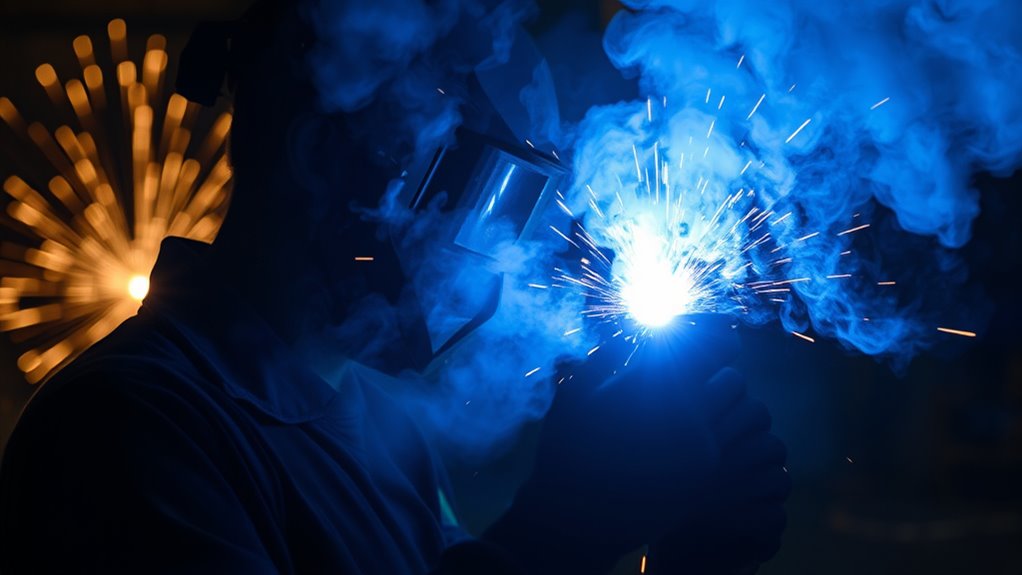
When ozone reaches the moist lining of the airways, it reacts quickly and can irritate or inflame the tissue. Deep breaths may feel painful, the throat may feel raw, and coughing may continue after the arc is shut off. The effect depends on the concentration, exposure time, breathing rate, workload, and individual sensitivity.
Ozone Exposure Symptoms
- Coughing, wheezing, or throat irritation
- Chest tightness or pain when taking a deep breath
- Shortness of breath or reduced breathing comfort
- Eye, nose, or mucous membrane irritation
- Worsening asthma, emphysema, or bronchitis symptoms
- Headache, dizziness, or unusual fatigue that may also indicate other welding gases, heat stress, or an oxygen problem
What to Do if Symptoms Start
- Stop welding and leave the contaminated area. Move to fresh air without entering another worker’s plume.
- Report the event. Warn nearby workers and notify the supervisor or safety lead.
- Do not restart the job until the cause is checked. Inspect extraction, replacement air, work position, coatings, shielding gas, and confined-space conditions.
- Get medical help for serious or persistent symptoms. Chest pain, severe coughing, wheezing, faintness, or trouble breathing needs prompt evaluation.
Note: This article provides workplace safety information, not a diagnosis or treatment plan. Emergency symptoms require professional medical care.
Welding Conditions That Can Generate More Ozone
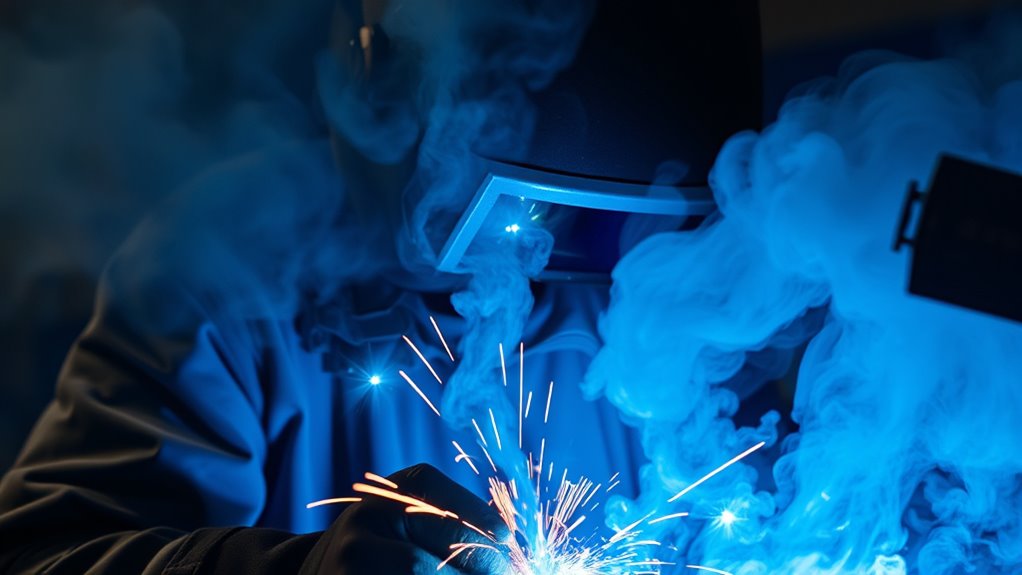
Any arc process can create ozone, but there is no single risk ranking that applies to every job. Ozone generation and breathing-zone exposure depend on the process, current and voltage, base and filler metals, shielding gas, arc duration, surface reflectivity, enclosure, extraction, and the welder’s position.
Common Welding Techniques
MIG welding, also called GMAW, can produce ozone during sustained gas-shielded arc work. TIG welding, also called GTAW, often produces less visible particulate fume than MIG or stick welding, but the bright arc can still generate significant ozone. Aluminum and stainless-steel TIG work deserve particular attention because a clean-looking arc may hide a gas exposure problem.
Flux-cored and stick welding often create more visible particulate fume. That fume does not prove ozone is high or low; the only reliable answer comes from evaluating the specific process and breathing-zone exposure.
Ozone Exposure Factors
The table below is a screening guide, not a substitute for air monitoring.
| Welding situation | Why ozone may be a concern | What to check |
|---|---|---|
| MIG/GMAW on aluminum | Sustained bright arcs and reflective surfaces can produce significant ozone | Source capture, arc time, body position, shielding gas, enclosure, and breathing-zone ozone |
| TIG/GTAW on aluminum or stainless steel | Visible fume may be low while ultraviolet radiation still creates ozone | Do not judge by smoke; evaluate ozone, nitrogen oxides, metals, and airflow |
| Long arc-on time or higher-energy settings indoors | More sustained ultraviolet output can increase the opportunity for ozone buildup | Duty cycle, current and voltage, room volume, air exchange, and hood placement |
| Confined or enclosed welding | Ozone, other gases, and oxygen deficiency can develop in the same atmosphere | Permit procedure, continuous ventilation, atmospheric testing, attendant, communications, and rescue plan |
Safety Measures Required
Start with engineering controls. Position local exhaust close enough to capture the rising plume without pulling shielding gas away from the weld. Arrange the part and your body so the plume does not pass through your helmet opening. Provide clean replacement air and discharge contaminated air away from workers and air intakes.
For recurring, enclosed, or high-risk work, verify the setup with breathing-zone monitoring. A monitor mounted across the shop may miss the short, concentrated exposure near the welder’s nose and mouth.
How to Measure Ozone Exposure During Welding
Exposure assessment should represent the air the welder actually breathes during active arc time. A qualified industrial hygienist may use a calibrated direct-reading ozone meter, detector tubes for screening, or a validated laboratory method such as OSHA Method ID-214, depending on the purpose of the survey.
- Sample in the breathing zone. Place the inlet near the nose and mouth without interfering with the helmet or work.
- Capture peak tasks. Include the actual process, material, settings, arc-on time, body position, and enclosure.
- Record other hazards. Ozone results do not replace testing for metals, nitrogen oxides, carbon monoxide, or oxygen when those hazards are possible.
- Follow the instrument instructions. Calibration, sensor interferences, response time, tubing, and environmental limits can affect the reading.
- Repeat after controls change. Recheck exposure after moving an extraction hood, changing a process, increasing production, or modifying the enclosure.
In the United States, OSHA limits ozone to 0.1 ppm as an 8-hour time-weighted average, while NIOSH recommends that 0.1 ppm not be exceeded at any time.
Effective Ventilation Strategies to Reduce Ozone Exposure
Ventilation is the main engineering control for welding-generated ozone. General ventilation can dilute contaminants, but local exhaust ventilation is usually more effective because it captures gases and fume near the arc before they spread through the room.
The OSHA welding fume and gas fact sheet recommends keeping hoods, fume guns, and vacuum nozzles close to the source and positioning them so contaminants are drawn away from the welder. The hood must be moved as the weld progresses, and its airflow should be checked routinely.
Do not assume outdoor welding is automatically safe. Wind can carry the plume into your helmet or toward another worker. Stay upwind when practical and reassess your position as conditions change.
Products Worth Considering

3.3ft long adjustable flexible hose duct, 75mm OD, 68mm ID

Desktop Soldering Fume Extractor—Compact Yet Powerful! This fume solder extractor is specifically designed for manual soldering work stations. Equipped with brushless motor and button for airflow adjustment, fume extractor soldering delivers a powerful airflow of up to 180 m³/h at a max speed of 8608 RPM. The fume extractor soldering captures harmful fumes larger than 0.3 microns within one second, instantly the air ensuring efficient fume control.
3.3ft long adjustable flexible hose duct, 50mm OD, 45mm ID
Confined-Space Ventilation
Confined-space welding requires a separate hazard assessment and the applicable permit procedure. Mechanical ventilation must supply clean respirable air, and atmospheric testing may need to cover oxygen, flammable gases, ozone, carbon monoxide, nitrogen oxides, and metal contaminants. An attendant and rescue plan may also be required.
Warning: Never use oxygen for ventilation. Oxygen enrichment greatly increases fire risk, and shielding gases can displace oxygen in enclosed spaces. Follow the applicable confined-space and welding rules before entry.
Pro Tip: A HEPA or P100 filter is a particle filter. It is not an ozone control unless the complete system also includes gas-phase media specifically rated for ozone. Check the manufacturer’s performance data, service-life instructions, and replacement schedule instead of relying on the word “carbon” alone.
How Personal Protective Equipment (PPE) Mitigates Ozone Risks
PPE is important, but it should not replace feasible engineering controls. A welding helmet protects the eyes and face from arc radiation and spatter; a standard helmet does not clean the air.
When ventilation and work practices cannot keep exposure under the applicable limit, the employer must select a respirator that is suitable for ozone and every other contaminant present. Under OSHA’s respiratory-protection standard, required respirator use includes a written program, medical evaluation, fit testing for tight-fitting facepieces, training, inspection, maintenance, and a cartridge or canister change schedule when applicable.
Products Worth Considering

The 2097 can be used with 3M's wide variety of half and full face piece designs

NIOSH-APPROVED: For use against certain organic vapors

3M Organic Vapor Cartridge 6001, Respiratory Protection 60/Case
Which Respirators Protect Against Ozone?
- Particle-only respirators: N95, P100, HEPA, and particle-only PAPRs do not protect against ozone gas.
- Air-purifying respirators: Use only a NIOSH-approved configuration whose cartridge or canister approval and manufacturer instructions specifically cover ozone at the measured concentration.
- Supplied-air respirators: These may be appropriate when air-purifying protection is unsuitable, exposure is high, or a safety assessment calls for supplied breathing air.
- Unknown, oxygen-deficient, or IDLH atmospheres: Use the positive-pressure SCBA or supplied-air-with-auxiliary-SCBA configurations required for those conditions. Do not use an ordinary cartridge respirator.
A PAPR may improve comfort and provide eye and face coverage, but only the approved filter-and-cartridge configuration determines what contaminants it controls. A PAPR with a particle filter alone is not ozone protection.
What Are the Legal Limits for Ozone Exposure?
Exposure limits depend on the country, industry, state plan, and specific workplace rule. In the United States, OSHA’s federal permissible exposure limit is legally enforceable where the federal standard applies. NIOSH limits are recommendations, not OSHA PELs, but they are widely used as protective occupational-health guidance.
| Limit or guide value | Value | What it means |
|---|---|---|
| OSHA PEL | 0.1 ppm TWA | Federal U.S. workplace limit averaged over an 8-hour shift where the standard applies |
| NIOSH REL | 0.1 ppm ceiling | Recommended concentration that should not be exceeded at any time |
| NIOSH IDLH | 5 ppm | Concentration considered immediately dangerous to life or health |
Meeting the ozone limit does not prove the full welding atmosphere is safe. The exposure assessment may also need to cover hexavalent chromium, manganese, nickel, aluminum compounds, fluorides, nitrogen oxides, carbon monoxide, and oxygen, depending on the job.
Best Practices for Minimizing Ozone Risks During Welding
Use the hierarchy of controls and document the decisions for repeat jobs.
- Review the job before welding. Identify the base metal, filler, coatings, shielding gas, settings, arc-on time, enclosure, nearby workers, and safety data sheets.
- Choose the least hazardous workable setup. Reduce unnecessary arc time and use a lower-emission process or consumable when it meets the welding requirement.
- Clean the workpiece safely. Remove coatings, oil, and solvent residue using an approved method. Keep chlorinated solvent vapors away from arc radiation because dangerous decomposition products can form.
- Capture contaminants at the source. Use an extraction arm, fume gun, downdraft bench, or engineered enclosure suited to the job.
- Keep your head out of the plume. Change the table height, part angle, sequence, or body position so hot gases rise away from your helmet opening.
- Supply clean replacement air. Exhaust systems need enough makeup air to work without creating cross-drafts that push contaminants through the breathing zone.
- Verify exposure. Use breathing-zone monitoring for new, changed, frequent, enclosed, or symptom-producing work.
- Use the correct respirator when needed. Match the complete approved respirator configuration to ozone and the other contaminants present.
- Protect nearby workers. Helpers, inspectors, grinders, and workers in adjacent bays may be exposed even when they are not holding the torch.
- Maintain the controls. Inspect airflow, ducts, hoods, filters, gas-phase media, alarms, and respirators on a documented schedule.
Warning: Do not weld near chlorinated solvent vapors or on a surface that is not fully dry after solvent cleaning. Ultraviolet radiation and heat can create highly toxic decomposition products. Follow the SDS and the applicable OSHA welding rules.
Frequently Asked Questions
Why do welders not live long?
Welding does not automatically shorten a person’s life, but uncontrolled exposure can raise the risk of lung disease, cancer, hearing loss, heat illness, and serious accidents. The risk depends on the materials, process, ventilation, smoking history, exposure time, and use of effective controls.
Is welding oxygen safe to breathe?
No. Do not breathe from welding oxygen cylinders or use oxygen for ventilation. Welding equipment is not an approved breathing-air system, and oxygen enrichment can make clothing, grease, and other materials ignite much more easily.
Can your lungs heal from welding fumes and ozone exposure?
Some short-term irritation may improve after exposure stops, but recovery depends on the dose, the contaminants, and the person’s health. Repeated or severe exposure can cause lasting harm. Ongoing cough, wheezing, chest tightness, or shortness of breath needs medical evaluation.
What are the symptoms of ozone exposure in welding?
Common symptoms include coughing, a sore throat, eye or nose irritation, chest tightness, shortness of breath, wheezing, and pain when taking a deep breath. Leave the area for fresh air and get medical help for severe or persistent symptoms.
Does a HEPA fume extractor remove ozone?
A HEPA filter is designed for particles, not ozone gas. An extractor may control ozone if it exhausts contaminated air safely outdoors or uses gas-phase media specifically tested for ozone. Check the complete unit’s specifications and maintenance instructions.
How do I know if my welding ventilation is enough?
Check that the hood captures the plume without drawing it across your face, confirm airflow at the hood, and use breathing-zone air monitoring for ozone and other likely contaminants. Smoke visualization can show airflow direction, but it does not measure ozone concentration.
Can you smell dangerous ozone levels?
Ozone can have a sharp odor, but smell is not a safe exposure gauge. People differ in sensitivity, odor can become less noticeable, and a compliance decision requires a proper air measurement rather than a smell test.
Will an N95 or P100 respirator protect against welding ozone?
No. N95 and P100 filters protect against particles, not ozone gas. Ozone protection requires a NIOSH-approved respirator configuration specifically approved for ozone and selected for the measured concentration and workplace conditions.
Conclusion
Ozone from welding is easy to miss because it is a gas and can be present during clean-looking arc work. Treat it as part of the full welding atmosphere: capture contaminants near the arc, keep your head out of the plume, supply clean replacement air, monitor the breathing zone when risk is uncertain, and use only respiratory protection approved for the measured hazards. Stop work and investigate when symptoms appear.
Sources
- NIOSH Pocket Guide to Chemical Hazards: Ozone — exposure limits, IDLH value, symptoms, measurement method, and respirator recommendations.
- OSHA: Controlling Hazardous Fume and Gases During Welding — source capture, positioning, ventilation, and respiratory-protection guidance.
- OSHA 29 CFR 1910.252: Welding, Cutting, and Brazing — ventilation, confined-space, oxygen, and welding-control requirements.
- HSE: Ozone and Fume Arising From Welding on Aluminum — process-specific ozone risks, exposure factors, assessment, and controls.
- EPA: Health Effects of Ozone Pollution — respiratory symptoms, airway inflammation, and sensitive groups.
- IARC Monographs Volume 118 — carcinogenicity evaluation of welding fumes and ultraviolet radiation from welding.