The best plasma cutter for expanded metal is a pilot-arc or non-HF blowback model that restarts across gaps. The ARCCAPTAIN CUT50 or bestarc BTC500 suit light garage mesh, the ARCCAPTAIN CUT60 suits thicker or rusty stock, and the YESWELDER CUT65 offers the most power. Prices and availability change, so check the current Amazon listing.
As an Amazon Associate I earn from qualifying purchases. Buying through these links costs you nothing extra.
You work with expanded metal, so you need a plasma cutter that can restart cleanly across gaps, pierce rusted surfaces and avoid chewing through consumables. This guide focuses on machines that balance clean pilot-arc starts, adequate amperage and dependable air control, because those are the features that save time, reduce scrap and make mesh work more predictable.
Read on and you will spot which models fit a garage tinkerer, a mobile tradesperson or a small fabrication shop.
Fast decision: Choose a 50A dual-voltage cutter for light garage mesh, a 55A model if you want app controls and extra cutting modes, and a 60A or 65A cutter if you regularly cut thicker, rusty or mixed stock.
Plasma Cutter for Expanded Metal: Top Picks
|
Category |
Product |
|---|---|
|
Best Beginner-Friendly |
|
|
Best App-Controlled |
|
|
Best for Plate Cutting |
|
|
Best Value |
|
|
Best Pro Features |
|
|
Most Powerful |
|
|
Best for Home Shops |
|
|
Best Compact |
|
|
Best Dual-Voltage |
|
|
Best Entry-Level |
How We Picked These Plasma Cutters
You want a cutter that handles expanded metal reliably, so we prioritized consistent pilot-arc starts, clean cuts on perforated and rusty surfaces, and adjustable air regulation. Power and duty cycle were weighed so you can cut the mesh gauges you work with without overheating or repeated passes.
Ease of setup and controls matter when you are switching between 110V projects in the garage and 240V jobs on site, so machines with clear displays, convenient connectors and sensible default settings were favored. Value and durability also influenced the list because long-term consumable cost and basic support determine how much the tool really saves you over time.
This guide is not based on hands-on testing. Product notes come from listing specifications and product positioning, so confirm current specs, warranty terms, prices and availability on Amazon before ordering.
How To Choose A Plasma Cutter For Expanded Metal
|
Buying Factor |
Why It Matters For Expanded Metal |
What To Look For |
|---|---|---|
|
Pilot arc or blowback start |
Mesh creates gaps that interrupt the arc, so easy restarting matters. |
Choose a non-touch pilot arc, blowback start or dedicated grid/mesh mode when possible. |
|
Voltage |
120V is convenient, but 240V usually gives cleaner cuts and fewer stalls. |
Pick dual voltage if you work in both garages and shops. |
|
Air control |
Moist or inconsistent air shortens consumable life and roughens the edge. |
Look for a built-in regulator, air sensor or clear pressure setup. |
|
Consumables |
Expanded metal can wear tips quickly if the arc keeps restarting. |
Keep spare tips and electrodes and confirm replacements are easy to buy. |
|
Clean cut vs max cut |
Max cut claims often require slower travel and more cleanup. |
Compare clean-cut capacity first, then use max cut as a backup reference. |
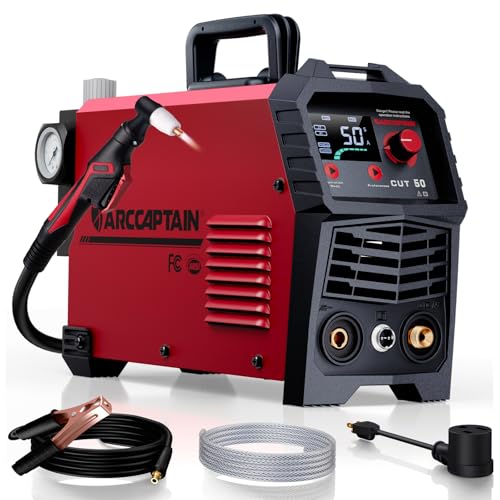
You get a portable, straightforward plasma cutter aimed at garage mechanics and hobby fabricators. It is light enough to move around a bench, and the large LED display makes the settings easier to read. The built-in regulator and gauge help when you are cutting expanded metal or rusty pieces, and the unit performs best on a 240V supply where cuts are cleaner and faster.
It is not built for continuous industrial cutting, but it can replace slower grinder work on trim panels, brackets and light automotive repairs. Keep spare consumables nearby and consider a proper 240V setup for the cleanest results.
Best For
Beginners, DIY users and garage fabricators who want a simple dual-voltage plasma cutter for mesh, sheet metal and light repair work.
Situational Benefits
|
Situation |
How It Helps |
|---|---|
|
Garage Hobbyist |
You can tackle trim panels, brackets and mesh without needing heavy-duty equipment; the unit is portable and easy to store. |
|
Automotive Work |
You can cut rusted sheet and bar stock cleanly when using 240V, which speeds repairs and reduces grinding time. |
|
Small Fabrication |
You can use the pilot arc to pierce expanded metal and perforated panels with less tip wear and fewer failed starts. |
|
Mobile Jobs |
You can move it between sites easily, though you should plan for a proper 240V supply or bring a suitable adapter for heavier cuts. |
Problem Solving Ability
Good at solving common expanded-metal challenges like pierce starts, cutting through rust, and reducing rework when you use appropriate air pressure and 240V power. It’s less suited to continuous, heavy industrial workloads.
Key Benefits
- Pilot-arc and drag-tip torch for cleaner starts on perforated or rusty metal
- Dual-voltage design lets you switch between 110V and 240V setups
- Built-in regulator and gauge simplify air-pressure tuning
- Compact and portable for garage or mobile work
Pros
- Easy controls for first-time users
- Good fit for thin mesh and light shop repairs
- Built-in air controls reduce setup friction
Cons
- Best performance depends on 240V power
- Not intended for continuous industrial use
- Some buyers mention support or reliability concerns
Editor Verdict: Pick the ARCCAPTAIN CUT50 if you want a beginner-friendly plasma cutter for expanded metal and light shop work without stepping into a heavier, more complex machine.

You get a compact cutter with more control options than a basic 50A machine. The app control and multiple cutting modes help you move between mesh cutting, rust removal and gouging without guessing every setting from scratch. It performs best on a 240V feed, where pierces are cleaner and cutting speed improves, while the 120V option remains useful for light garage jobs.
If you want one machine for expanded metal, sheet work and occasional heavier plate, the CUT55 gives you a practical middle ground.
Best For
DIY users and small-shop owners who want app control, extra modes and more power than a basic entry-level plasma cutter.
Situational Benefits
|
Situation |
How It Helps |
|---|---|
|
Hobby Projects |
You can switch modes quickly to trim panels, cut decorative mesh or remove rusted sections without a lot of fiddling. |
|
Farm Or Shop Use |
You can tackle varied jobs from sheet repairs to light plate work when you have a 240V supply and a decent compressor. |
|
Mobile Jobs |
You can bring a compact unit with long leads and app control to site work, though plan for power and air needs. |
|
Expanded Metal Cutting |
You can rely on the pilot arc and mesh mode to pierce and follow perforated patterns with less tip wear. |
Problem Solving Ability
Strong for solving common expanded-metal tasks: reliable pilot starts, adjustable modes for finish control, and good cleanup on rusty surfaces when used with correct air pressure and 240V power. It is not optimized for nonstop industrial production.
Key Benefits
- App control for quick mode switching and remote adjustments
- Pilot-arc blowback system that helps start on perforated or rusty metal
- Dedicated modes for mesh cutting, rust removal and gouging
- Compact design and included 10 ft leads make it portable between jobs
Pros
- Useful mode options for mesh, rust and gouging
- App and LED controls make adjustments easier
- Good step up from basic 50A cutters
Cons
- Some users may not need app control
- Short leads and fittings may need attention
- Full performance still depends on 240V and steady air
Editor Verdict: Choose the CUT55 if you want expanded-metal capability plus modern controls and extra modes without jumping to a larger 60A or 65A machine.

The CUT60 gives you more cutting headroom without making the setup feel overly complex. Its 60A output and stronger cooling are useful when you move from thin expanded metal to thicker plate, brackets or mixed repair work.
The blowback pilot arc and air-pressure detection help with inconsistent starts on expanded or rusty metal, and the large LED display keeps adjustments readable when you switch tasks. It is compact enough for a small shop but better suited than a basic 50A unit when you need cleaner pierces and fewer repeat passes.
Best For
Small fabrication shops, garage builders and repair users who need more amperage for thicker plate while still working with expanded metal.
Situational Benefits
|
Situation |
How It Helps |
|---|---|
|
Garage Projects |
You can handle heavier repairs and thicker panels without swapping tools, and the improved duty cycle keeps you cutting longer between cool-downs. |
|
Small Fabrication |
You can maintain steady cuts on expanded or perforated stock and use the gouging mode for prep work, reducing manual cleanup. |
|
Automotive Repair |
You can cut rusted floor pans and brackets more cleanly with fewer retries when you run it on 240V and tune the air pressure. |
|
Jobsite Mobility |
You can move a compact yet powerful unit between sites, though you should plan for proper power and air supply to get full performance. |
Problem Solving Ability
Very capable at the common problems you face with expanded metal: consistent pilot starts, pierce ability through perforated sections, and decent finish with correct pressure and speed. It is not intended for continuous heavy industrial cycles, and performance depends on supplying 240V and steady compressed air for best results.
Key Benefits
- 60A output and improved cooling for tougher, longer cuts
- Blowback pilot arc reduces failed starts on perforated and rusty surfaces
- Air-pressure detection and built-in regulator for easier setup
- Includes longer torch and consumables for immediate use
Pros
- Strong 60A output for thicker material
- Air-pressure detection helps reduce setup errors
- Dedicated expanded-metal and gouging capability
Cons
- More machine than casual thin-sheet users may need
- Needs reliable air and power for best results
- Support and reliability should be checked before the return window closes
Editor Verdict: The CUT60 is one of the better fits if you cut expanded metal and also need enough power for thicker shop material.

The bestarc BTC500 is a practical value pick for expanded metal and general shop cutting. The pilot-arc design and air sensor help with perforated or rusty surfaces, while the front-panel controls keep the learning curve manageable.
Dual-voltage flexibility lets you work from a garage outlet for light jobs or step up to 240V when you need cleaner, thicker cuts. It is compact enough for a small shop and makes sense if you want an easy-to-learn cutter that covers DIY, repairs and light fabrication.
Best For
Buyers who want strong value, simple controls and reliable pilot-arc behavior for DIY and light fabrication.
Situational Benefits
|
Situation |
How It Helps |
|---|---|
|
Weekend Projects |
You can knock out bodywork trim, brackets and small fabrications quickly with minimal setup and reliable starts. |
|
Small Shop Use |
You can switch between light sheet work and heavier cuts by moving to 240V and adjusting the air pressure for cleaner edges. |
|
Expanded Metal Cutting |
You can pierce and follow perforated patterns with the pilot arc, reducing tip wear and failed starts. |
|
Starter Fabrication |
You can learn plasma cutting without a steep learning curve thanks to clear controls and an included regulator. |
Problem Solving Ability
Very effective at common expanded-metal challenges: consistent pilot starts, reduced consumable changeovers, and predictable edge quality when you supply steady compressed air. It isn’t meant for nonstop industrial duty and benefits from a capable compressor and 240V for best results.
Key Benefits
- True pilot-arc for reliable starts on perforated and rusty metal
- Built-in regulator and air sensor simplify setup and extend consumable life
- Dual-voltage operation for garage or shop use
- Front-panel controls and LED display make adjustments straightforward
Pros
- Strong visible review count compared with many budget picks
- Good balance of price-minded value and useful air controls
- Beginner-friendly front panel
Cons
- Some fittings may feel budget-grade
- Longer cuts need a capable compressor
- 50A output has less headroom than 60A and 65A models
Editor Verdict: The BTC500 is a strong value choice if you want a pilot-arc cutter for expanded metal without paying for app controls or higher amperage.
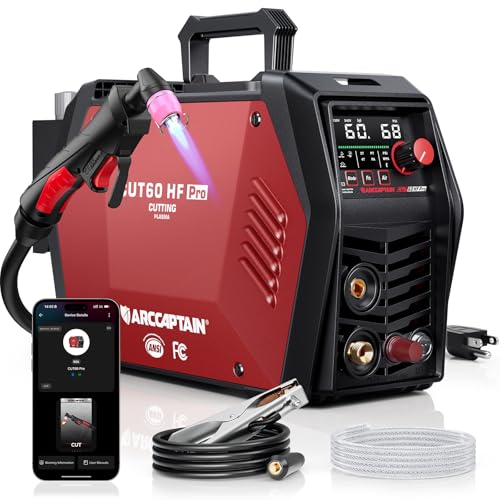
The CUT60 Pro bridges hobby work and heavier shop tasks. Its 60A output gives you more headroom for thicker material, while app-driven controls help you switch modes or fine-tune settings with less trial and error.
It handles expanded metal and rusty panels well because of its pilot-arc design, and the gouging mode is useful when you need to remove material rather than only cut it. Supply 240V and steady air to get the best performance from this model.
Best For
Users who want 60A power plus app control, gouging and rust-removal modes in one machine.
Situational Benefits
|
Situation |
How It Helps |
|---|---|
|
Garage Repairs |
You can cut and prep rusty panels with fewer retries and cleaner edges when you tune pressure and use the pilot arc. |
|
Light Fabrication |
You can switch between cutting and gouging modes to both shape parts and clean weld areas without swapping tools. |
|
Automotive Restoration |
You can pierce expanded or perforated panels and trim replacement sections with consistent starts and less tip wear. |
|
Mobile Work |
You can move a compact, feature-rich unit between sites, but plan for 240V and a reliable compressor to get full performance. |
Problem Solving Ability
Strong for common expanded-metal challenges: consistent pilot-arc starts reduce failed pierces, the app and display simplify mode selection, and the gouging/rust modes cut down manual prep. It isn’t built for continuous heavy industrial use and performs best with proper power and air.
Key Benefits
- 60A output and improved duty for longer, tougher cuts
- App control and clear LED display for quick adjustments
- Pilot-arc and blowback start that helps with expanded and rusty metal
- Gouging and rust-removal modes for prep and repair work
Pros
- Pro-style controls and multiple modes
- Good fit for mesh, rusted metal and prep work
- 60A output gives more room than 50A cutters
Cons
- App features may be unnecessary for simple cutting
- Short leads or fittings may need checking
- Not a substitute for industrial production equipment
Editor Verdict: The CUT60 Pro makes the most sense if you want advanced controls and 60A cutting power for a mix of mesh, repairs and prep work.
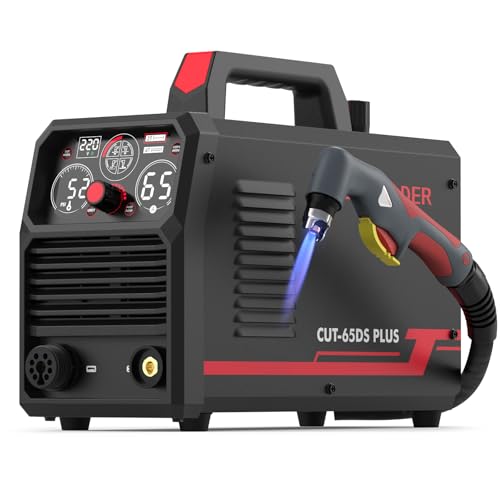
The YESWELDER CUT65 is the high-output choice in this list. The 65A capacity and non-touch pilot arc support more demanding cutting, while the gouging and marking modes add flexibility for prep and repair work.
It runs on 110V for lighter tasks, but it is most useful on 240V where cutting speed and edge quality improve. Expect it to use a fair amount of air, so pair it with a compressor that can keep up and keep spare consumables nearby while you dial in speed and pressure.
Best For
Farm repairs, heavier DIY fabrication and buyers who want the highest amperage in this roundup.
Situational Benefits
|
Situation |
How It Helps |
|---|---|
|
Heavy Plate Work |
You can cut thicker sections and pierce through stubborn material when you run it on 240V and slow your travel for cleaner edges. |
|
Farm And Shop Repairs |
You can handle a range of tasks from pipe work to patching panels with the cutter’s multiple modes and higher amperage. |
|
Prep And Gouging |
You can remove welds and clean up joints using the gouging mode instead of switching to a separate tool. |
|
Mobile Jobs |
You can move a robust unit between sites, but you should plan for a reliable 240V supply and a compressor that can keep up. |
Problem Solving Ability
Strong for common expanded-metal problems: reliable pilot-arc starts, solid pierce ability and useful gouging for cleanup. It solves the need to switch tools for cutting and gouging, though consistent performance depends on good air supply and correct power.
Key Benefits
- High 65A output for thicker plate and tougher cuts
- Non-touch pilot arc for piercing perforated and rusty metal
- 4-in-1 modes (cutting, grid, gouging, marking) for flexible shop use
- Dual-voltage portability with more power on 240V
Pros
- Highest amperage in the roundup
- Useful grid, gouging and marking modes
- Good fit for farm and heavier repair jobs
Cons
- Lower visible review count than several other picks
- Needs strong air supply to perform consistently
- May be more power than casual mesh users need
Editor Verdict: Choose the YESWELDER CUT65 if your expanded-metal work overlaps with thicker plate, pipe or farm repair jobs where extra amperage matters.

The CUT55 Prolux fits buyers who want a compact home-shop machine with app control, a clear LED display and several cutting modes. It lets you move from trimming expanded metal to rust removal or light gouging without starting over with a completely different setup.
It performs best on 240V for heavier cuts, but the 120V option is useful for quick garage fixes. The included leads and straightforward controls make it practical for weekend projects, small restorations and mobile jobs where portability matters.
Best For
Home shops that need a compact cutter with app controls, non-touch starts and multiple modes for repair work.
Situational Benefits
|
Situation |
How It Helps |
|---|---|
|
Weekend Projects |
You can tackle trim, repair and decorative mesh cuts without a steep learning curve thanks to clear controls and preset modes. |
|
Shop Fabrication |
You can move between sheet work and light plate cutting by using 240V and adjusting air pressure for cleaner edges. |
|
Automotive Repair |
You can pierce and remove rusted panels more predictably with the pilot-arc start, reducing rework and cleanup time. |
|
Mobile Jobs |
You can carry a compact, capable unit between sites, but plan for a reliable power and compressor setup to get full performance. |
Problem Solving Ability
Effective at common expanded-metal issues: consistent pierces, fewer tip changes, and adaptable modes for finish control. Best results require steady compressed air and proper power input.
Key Benefits
- App control and upgraded LED for easy mode selection
- Non-touch pilot arc improves starts on perforated and rusty metal
- Dedicated modes for mesh cutting, rust removal and gouging
- Compact, portable design with included leads for immediate use
Pros
- Good home-shop feature set
- Useful air-pressure detection and mode options
- Portable enough for mobile repair work
Cons
- Some buyers may prefer a simpler non-app machine
- Lead length and fittings should be checked early
- Still needs 240V for its best heavier-cut performance
Editor Verdict: The CUT55 Prolux is a good home-shop pick when you want app-assisted setup and enough versatility for expanded metal, rusted panels and light gouging.

The Reboot RBC6000D is a compact cutter built around portability and straightforward metalwork. The pre-installed air regulator and clear controls reduce setup time, and the unit performs best on 240V where it can handle thicker cuts with fewer passes.
It is an easy fit if you move between the garage and the jobsite. On 120V, expect lighter-duty performance and watch for breaker limitations on smaller circuits.
Best For
Mobile users and hobby fabricators who want a compact dual-voltage cutter with built-in air regulation.
Situational Benefits
|
Situation |
How It Helps |
|---|---|
|
Garage Hobbyist |
You can tackle bodywork, trim and small repairs without hauling big equipment, and the built-in regulator speeds setup for occasional cuts. |
|
Mobile Jobs |
You can take a lightweight unit between sites and plug into 240V where available, keeping downtime low and portability high. |
|
Light Fabrication |
You can run consistent cuts on expanded metal and thin plate when you supply steady compressed air and a higher-voltage feed. |
|
Field Repairs |
You can cut and trim parts on equipment or scrap in the field, but plan for a proper circuit or generator and a capable compressor for best results. |
Problem Solving Ability
Good at common expanded-metal tasks: reliable pierce starts, reduced tip changes thanks to touch arc, and reasonable finish on perforated or rusty surfaces when paired with correct air pressure. It is not designed for nonstop industrial throughput and depends on appropriate power and compressor capacity for consistent performance.
Key Benefits
- Pre-installed air regulator for quicker setup and more consistent pressure
- Portable, compact design that’s easy to move between sites
- Dual-voltage flexibility for garage or shop use
- IGBT inverter and touch arc for cleaner pierces on expanded or rusty metal
Pros
- Compact and easy to move
- Built-in regulator simplifies setup
- Good fit for home and field repairs
Cons
- 120V performance may be limited
- Breaker trips are possible on weak circuits
- Not aimed at heavy continuous production
Editor Verdict: The RBC6000D is a practical compact pick if portability and quick setup matter more than advanced app controls.
The YESWELDER CUT-50DS is beginner-friendly while still handling real shop tasks. The large digital display and dual-voltage support make it flexible for quick garage fixes or moving to 240V for tougher cuts.
It is lightweight enough to carry between jobs and useful for sheet work, but some users report occasional reliability problems. Check return and warranty details before relying on it for regular shop use.
Best For
First-time plasma cutter buyers who want a recognizable brand, a clear display and dual-voltage flexibility.
Situational Benefits
|
Situation |
How It Helps |
|---|---|
|
Weekend Projects |
You can trim panels, cut brackets and work on restorations without a steep learning curve thanks to the simple controls and display. |
|
Light Fabrication |
You can switch to 240V for cleaner cuts on thicker sheet and maintain reasonable duty cycles for brief production runs. |
|
Automotive Repair |
You can pierce rusted panels and remove old sections with less grinding, making repairs faster and cleaner. |
|
First-Time Users |
You can learn plasma cutting basics on a forgiving, portable unit while keeping setup and consumable costs manageable. |
Problem Solving Ability
Good for solving common expanded-metal tasks like reliable starts on sheet and perforated stock and reducing cleanup on rusty edges, provided you use the right power and keep spare consumables accessible.
Key Benefits
- Dual-voltage flexibility for garage or shop power
- Large digital display for clear, quick adjustments
- Portable and lightweight for mobile use
- Good cutting performance on sheet metal and light plate
Pros
- Beginner-friendly display and controls
- Dual-voltage flexibility
- Portable for weekend repair work
Cons
- Customer sentiment is more mixed than stronger picks
- Some reliability complaints appear in user feedback
- The current URL points to an Amazon search page rather than a specific product page
Editor Verdict: The YESWELDER CUT50 is worth considering for simple DIY work, but confirm the exact listing before buying because the current link does not point to a dedicated product page.

The S7 CUT50 is a budget-minded plasma cutter for hobby and small-shop work. The non-touch pilot arc and long torch lead help when starting on perforated or rusty panels, and the built-in regulator cuts down on external plumbing.
It performs noticeably better on a dedicated 240V circuit, but the 110V option lets you handle light garage jobs. Expect to tune air pressure and standoff technique as you learn its sweet spot, and consider checking fittings and ground-lead convenience during setup.
Best For
Budget-focused DIY users who are comfortable making setup adjustments and keeping spare consumables on hand.
Situational Benefits
|
Situation |
How It Helps |
|---|---|
|
Garage Projects |
You can trim panels, cut patch pieces and work on restorations without bulky equipment thanks to its portability and forgiving pilot arc. |
|
Field Scrapping |
You can cut rusty or perforated scrap with fewer tip changes, provided you pair it with a decent compressor and proper power. |
|
Light Fabrication |
You can produce consistent cuts on expanded metal and thin plate when you tune air pressure and standoff technique. |
|
Learning Plasma |
You can develop cutting technique on a manageable tool that shows clear effects from small adjustments in speed, pressure and amperage. |
Problem Solving Ability
Good at common expanded-metal tasks: consistent pierce starts, fewer failed arcs on perforated surfaces, and decent edge quality when you use the right pressure and 240V feed. Less suited to continuous heavy industrial work and may need small mods for long-term reliability.
Key Benefits
- Non-touch pilot arc for easier starts on perforated and rusty metal
- Built-in air regulator reduces setup time and stabilizes cutting
- Long torch lead improves reach for workshop or mobile work
- Lightweight, portable design suitable for DIY and farm use
Pros
- Budget-friendly fit for DIY users
- Non-touch pilot arc helps with mesh starts
- Long torch lead improves reach
Cons
- May require fitting or setup tweaks
- Short ground lead is a common complaint
- Not ideal for continuous heavy-duty cutting
Editor Verdict: The S7 CUT50 is best for budget-minded hobbyists who value a low-cost entry point and are willing to fine-tune setup details.
Related guides: Best Plasma Cutters for Gouging and Mesh Work, Best Plasma Cutter for Fabrication and Best Plasma Cutters Under 300 Dollars.
FAQ
Do I Need 240V To Cut Expanded Metal?
You do not always need 240V, but you will notice a big difference when you have it. For thin mesh and light sheet work a 110V hookup can get the job done, yet if you regularly pierce thicker or rusted expanded metal you will get cleaner cuts, fewer passes and less tip wear on 240V.
Plan to run the cutter on a dedicated circuit or appropriately rated breaker when using higher amps, and be careful relying on small generators or weak jobsite circuits because they can cause instability or trip breakers.
What Should I Know About Air And Consumables?
Good, consistent air is as important as the cutter itself. Use clean, dry air and a regulator so pressure stays steady; set the pressure the manufacturer recommends for your model.
A larger tank or higher CFM compressor helps you keep cutting without long recovery pauses. Keep spare tips and electrodes handy and inspect air fittings and the ground lead before each session.
Swapping to a quick-connect or proper threaded fittings often eliminates leak and compatibility headaches.
Will A Pilot Arc Help With Expanded Metal?
Yes. A pilot-arc or blowback start is great for perforated and rusty surfaces because you don’t have to touch the torch to the metal to start the arc, which reduces sticking and saves tips. For best results use a steady travel speed, allow a brief post-flow to cool consumables, and practice lifting slightly after initial strike when using drag tips to avoid burning tips.
Remember pilot-arc machines are excellent for intermittent shop and repair work, but if you plan on continuous, heavy production you should check duty cycle and cooling requirements first.
Which Plasma Cutter Is Best For Beginners Cutting Expanded Metal?
A beginner should prioritize a true pilot arc, clear controls, dual-voltage flexibility and a built-in regulator. The ARCCAPTAIN CUT50 and bestarc BTC500 fit that buyer well because they keep setup simple while still supporting cleaner starts on mesh and rusty material.
What Should I Check Before Buying A Plasma Cutter For Mesh?
Check whether the machine has pilot arc or blowback start, whether your shop has the right 120V or 240V circuit, whether your compressor can keep up, and whether replacement tips and electrodes are easy to buy. Also compare clean-cut capacity rather than only max-cut claims.
Are 50A Plasma Cutters Enough For Expanded Metal?
For thin expanded metal, sheet metal and occasional repair work, a 50A plasma cutter can be enough when paired with steady air and the right technique. For thicker, rusty or frequent cutting, a 55A to 65A model gives more headroom and usually produces cleaner results on 240V.
What to Prioritize
You usually prioritize how much cutting power you need and where you’ll use it. Pick the CUT50 for portable garage jobs, the CUT55 if you want extra modes and app control for mesh and rust removal, the CUT60 when you need higher amperage and longer cutting sessions, and the YESWELDER CUT65 when maximum power matters more than compact simplicity. Models with a built-in regulator, clear displays and reliable pilot-arc starts are easier to live with because they reduce tip changes and setup frustration.
Wrapping Up
If you work on expanded metal, pilot arc, air regulation and amperage affect cut quality more quickly than they do on solid plate. Choose a higher-amp model if you regularly pierce thicker or rusted mesh, and choose a unit with a true pilot arc and built-in regulator if you want fewer failed starts, less tip wear and cleaner edges.
For occasional garage work, a midrange dual-voltage cutter such as the ARCCAPTAIN CUT50 or bestarc BTC500 is usually enough. For thicker material and small-shop use, step up to the ARCCAPTAIN CUT60 or YESWELDER CUT65. Match the machine to your power, air supply and cutting frequency, and you will spend less time redoing cuts and more time finishing projects.
| Product Name | Image | Cutting Capacity | Power Source | Weight | Best Fit | CTA |
|---|---|---|---|---|---|---|
| ARCCAPTAIN Plasma Cutter CUT50 |
 |
1/2 inch clean cut, up to 3/4 inch max cut. | 110/220V AC, 50 Amps. | 13 lbs | Beginner-friendly garage mesh cutting | Check price on Amazon |
| ARCCAPTAIN iControl CUT55 MP |
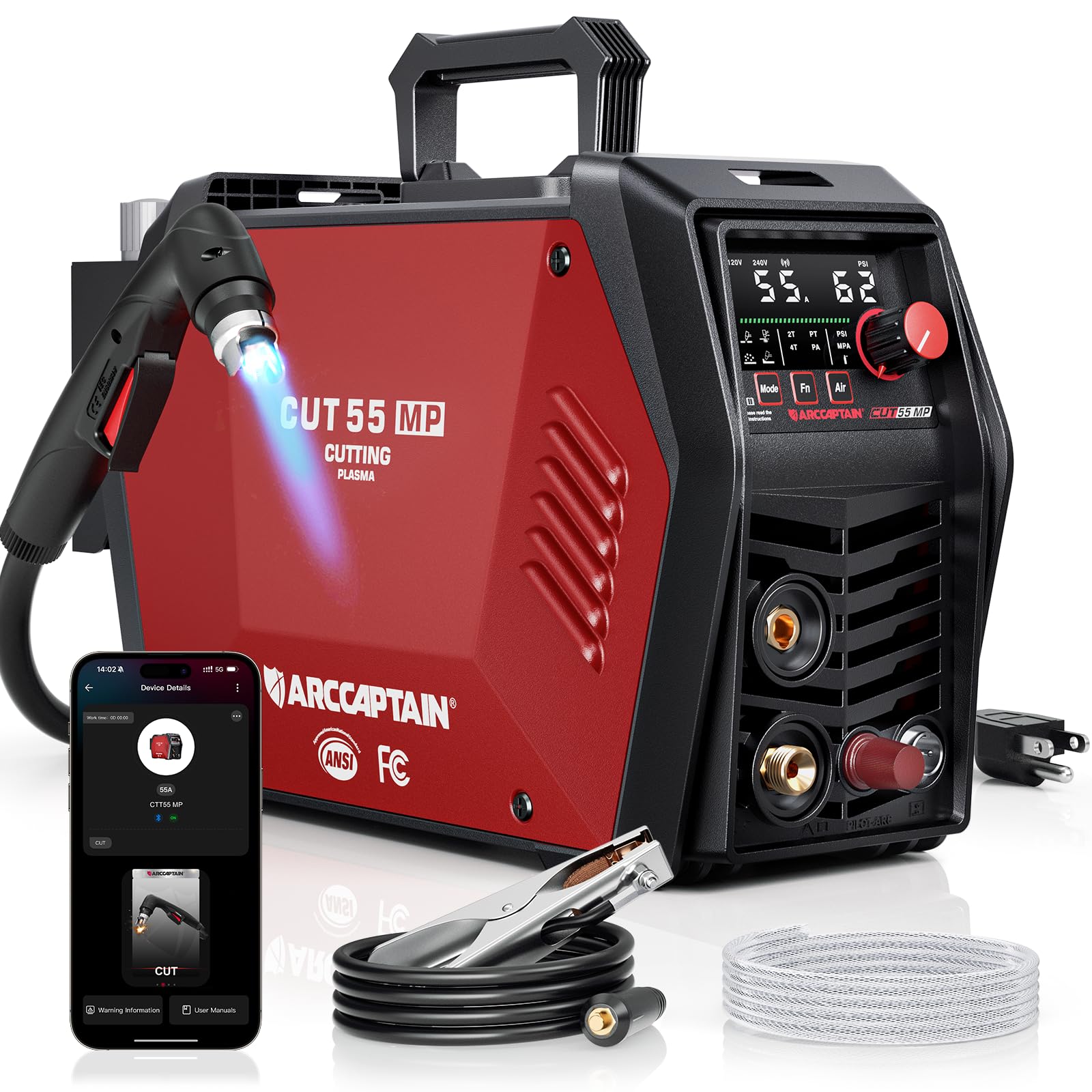 |
5/8 inch clean cut, up to 3/4 inch max cut. | 120/240V AC, 55 Amps. | 20.5 lbs | App control and extra cutting modes | Check price on Amazon |
| ARCCAPTAIN 60Amp Plasma Cutter |
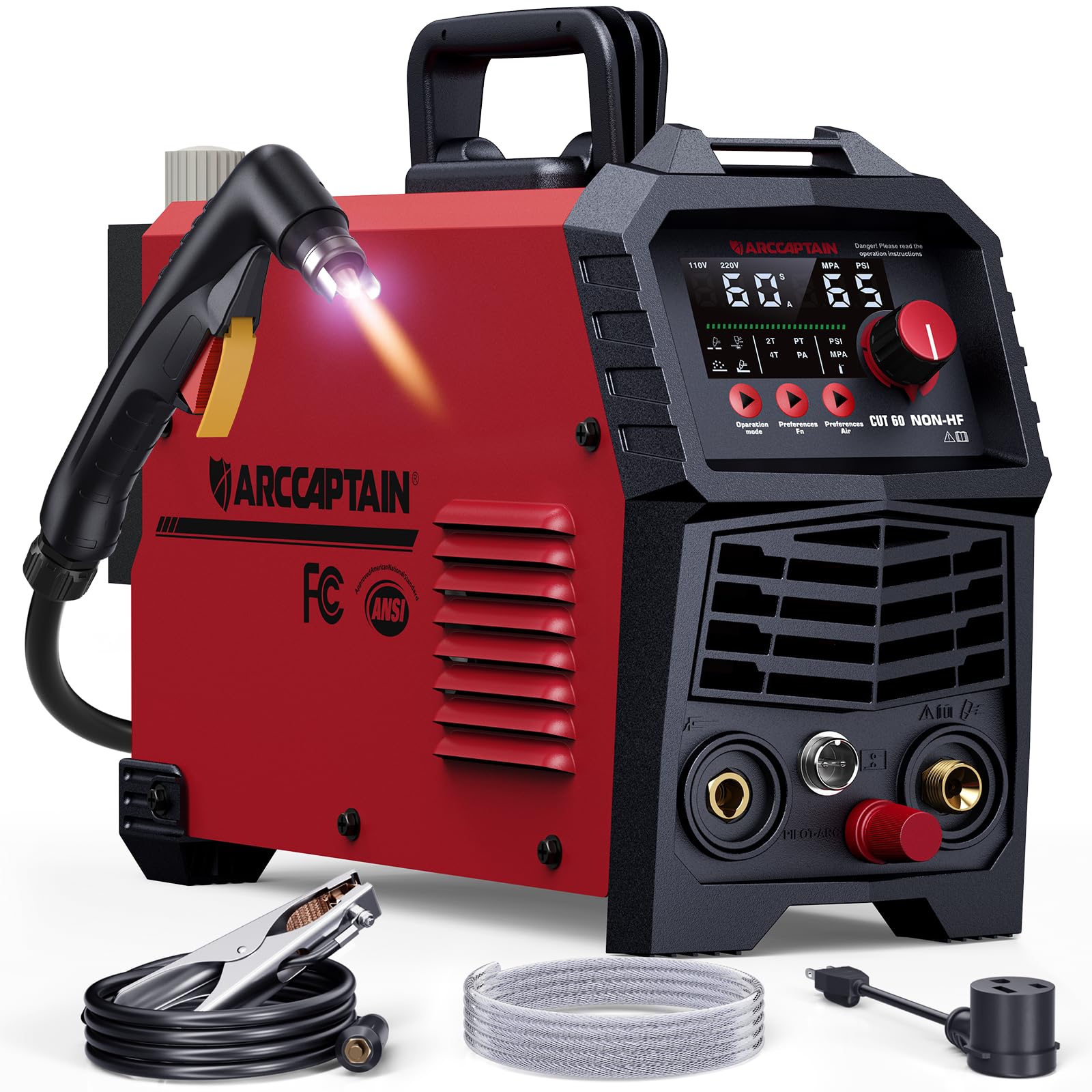 |
5/8 inch clean cut, up to 1 inch max cut. | 110/220V AC, 60 Amps. | 19.66 lbs | Thicker plate and small fabrication | Check price on Amazon |
| bestarc Plasma Cutter BTC500DP |
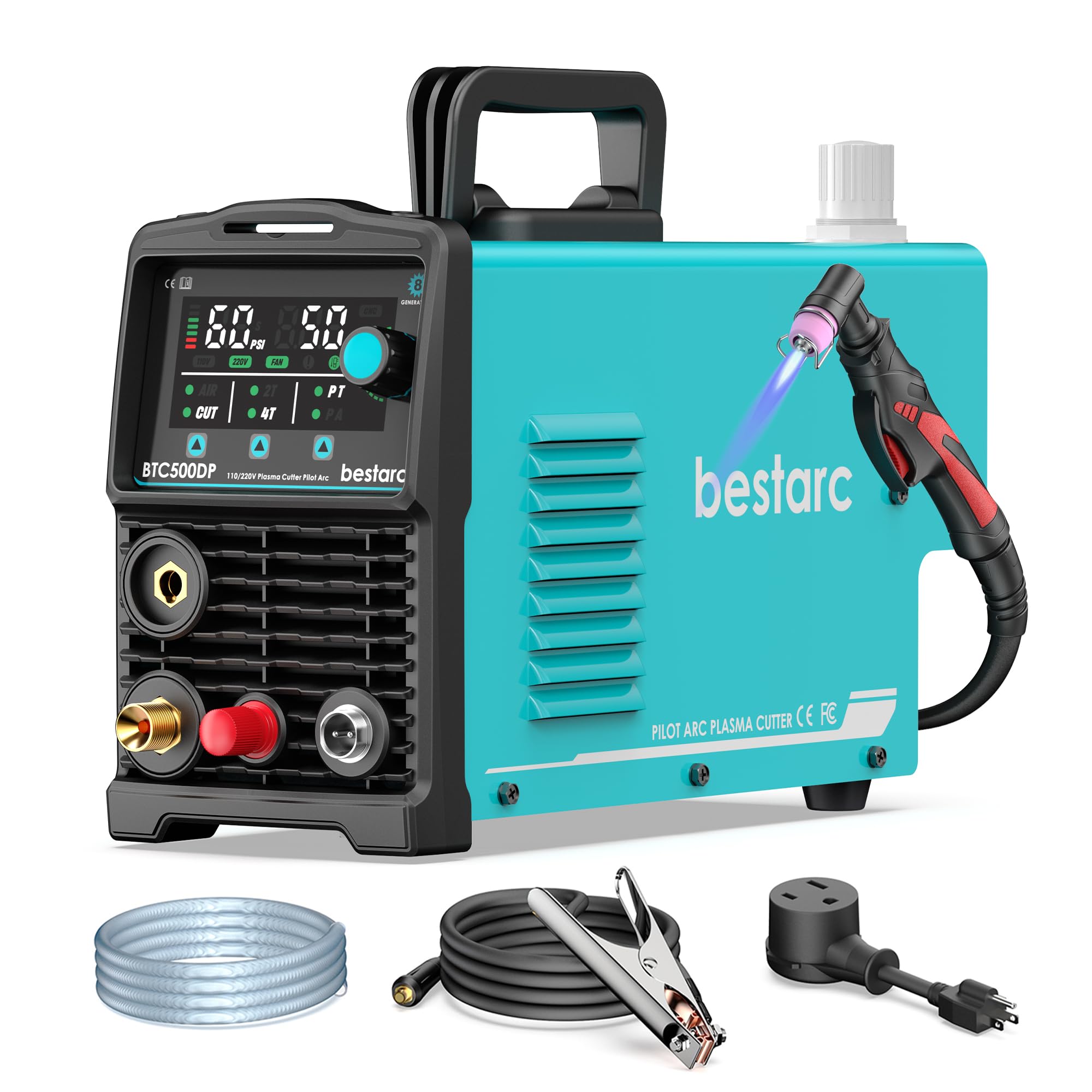 |
1/2 inch clean cut, up to 3/4 inch max cut. | 110/220V AC, 50 Amps. | 16.52 lbs | Value-focused pilot-arc cutting | Check price on Amazon |
| ARCCAPTAIN iControl CUT60 Pro |
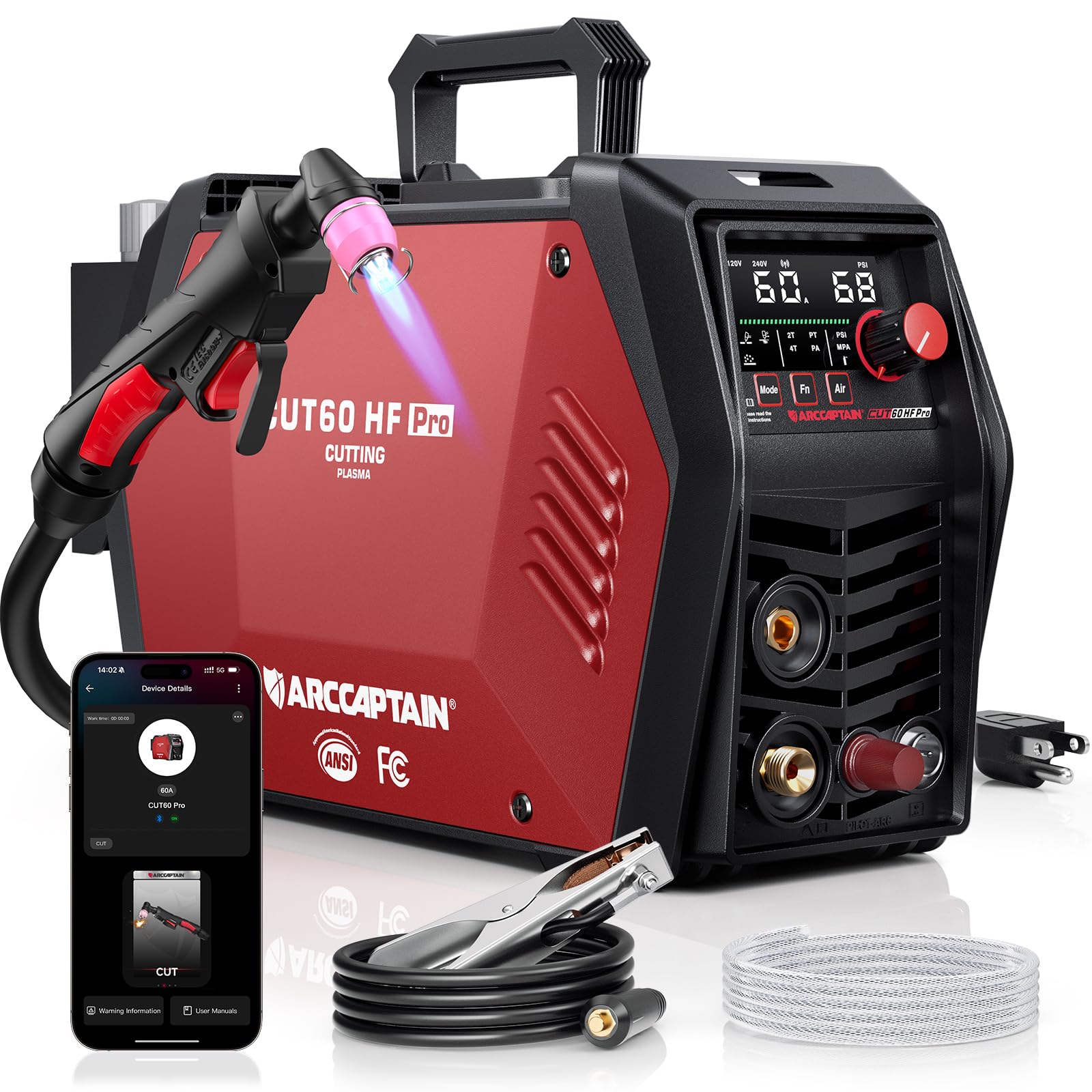 |
15/16 inch max cut. | 120/240V DC, 60 Amps. | 24.6 lbs | Advanced controls and gouging | Check price on Amazon |
| YESWELDER CUT-65DS PLUS Plasma Cutter |
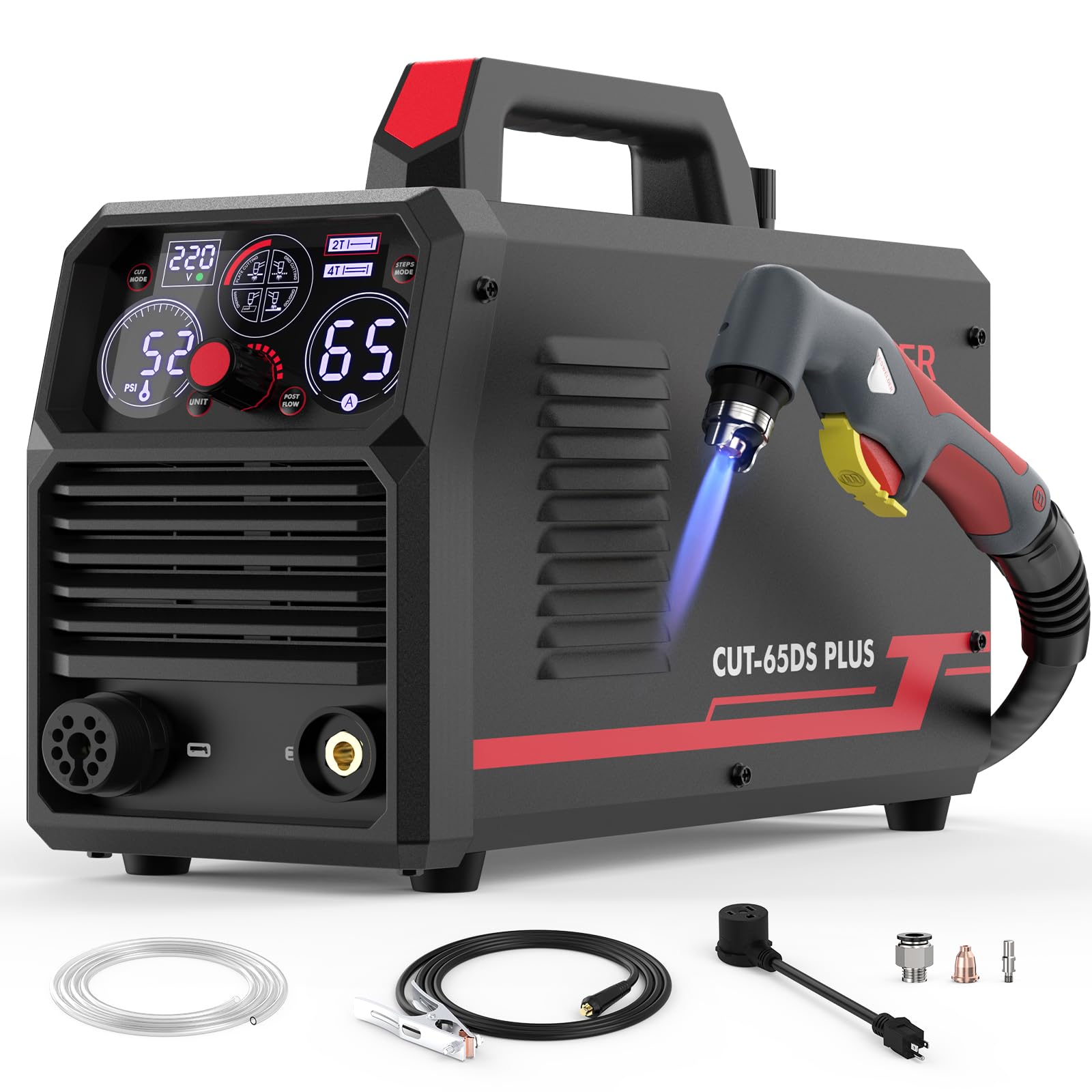 |
2.5 cm max cut. | 110/220V AC. | 22 lbs | High-amperage farm and plate work | Check price on Amazon |
| ARCCAPTAIN CUT55 Prolux |
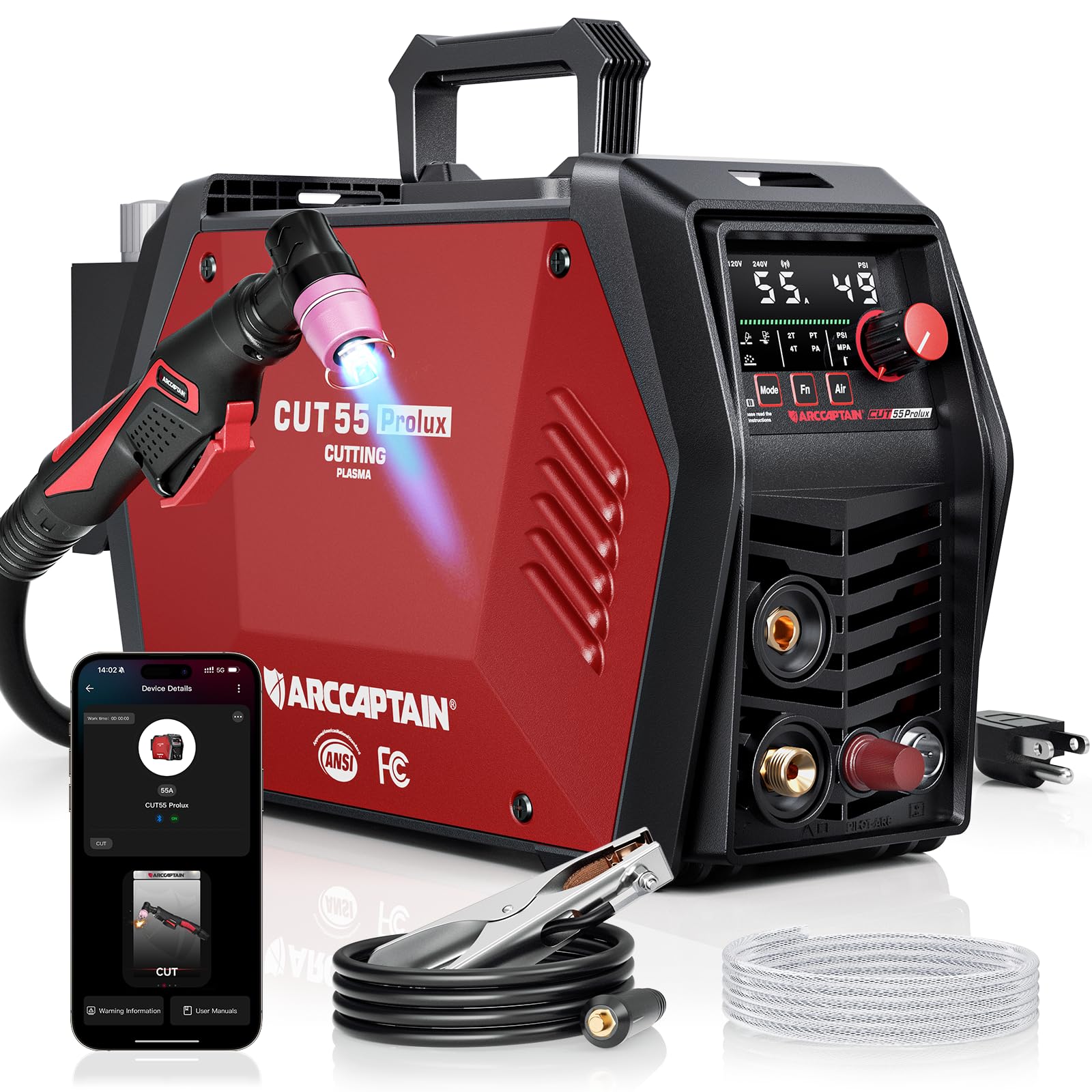 |
Supports expanded metal, rust removal and gouging. | 120/240V AC, 55 Amps. | See listing | Home shops and mobile repairs | Check price on Amazon |
| Reboot 60A Plasma Cutter RBC6000D |
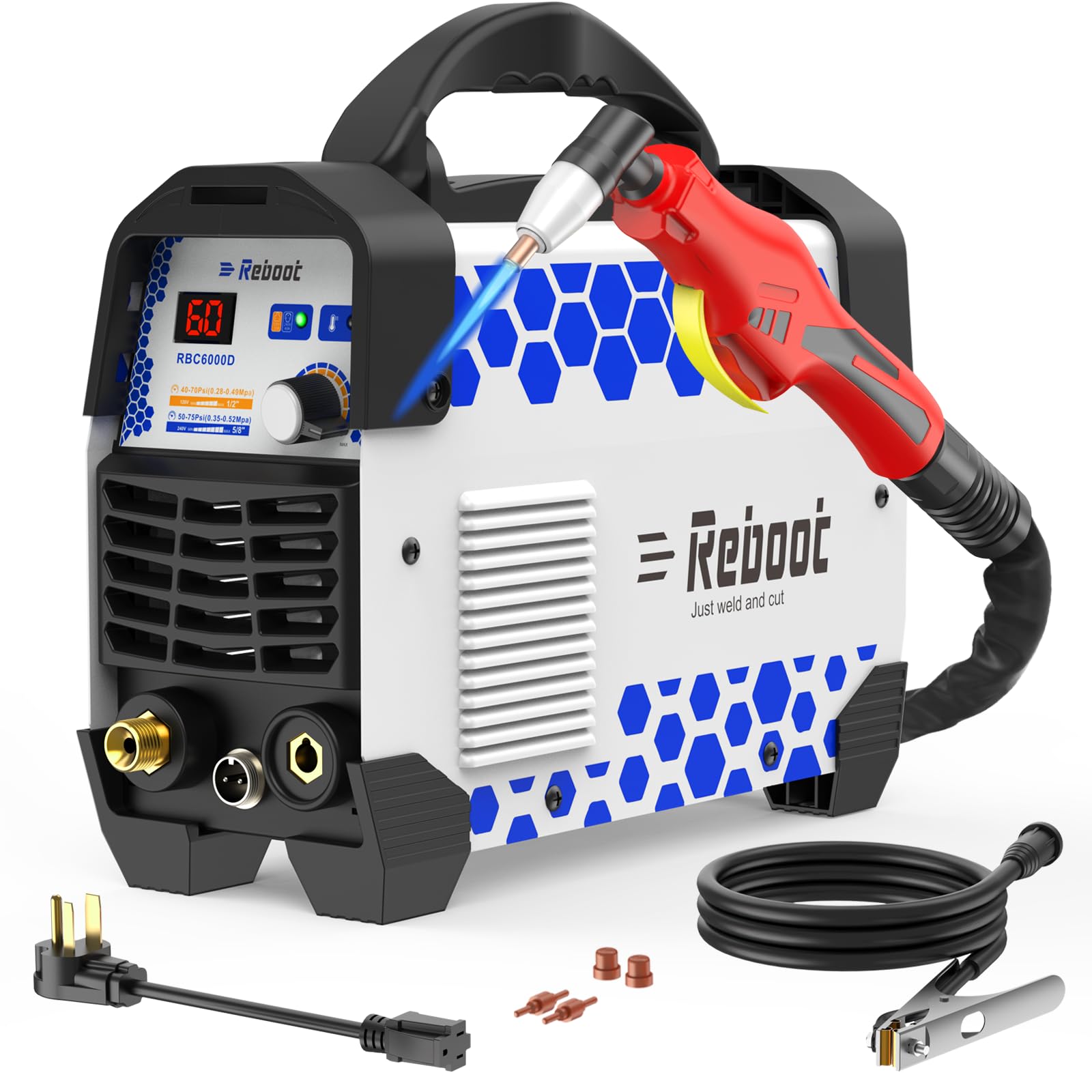 |
1/2 inch clean cut. | 110/220V AC. | 15.18 lbs | Compact portability | Check price on Amazon |
| YESWELDER CUT-50DS Plasma Cutter |
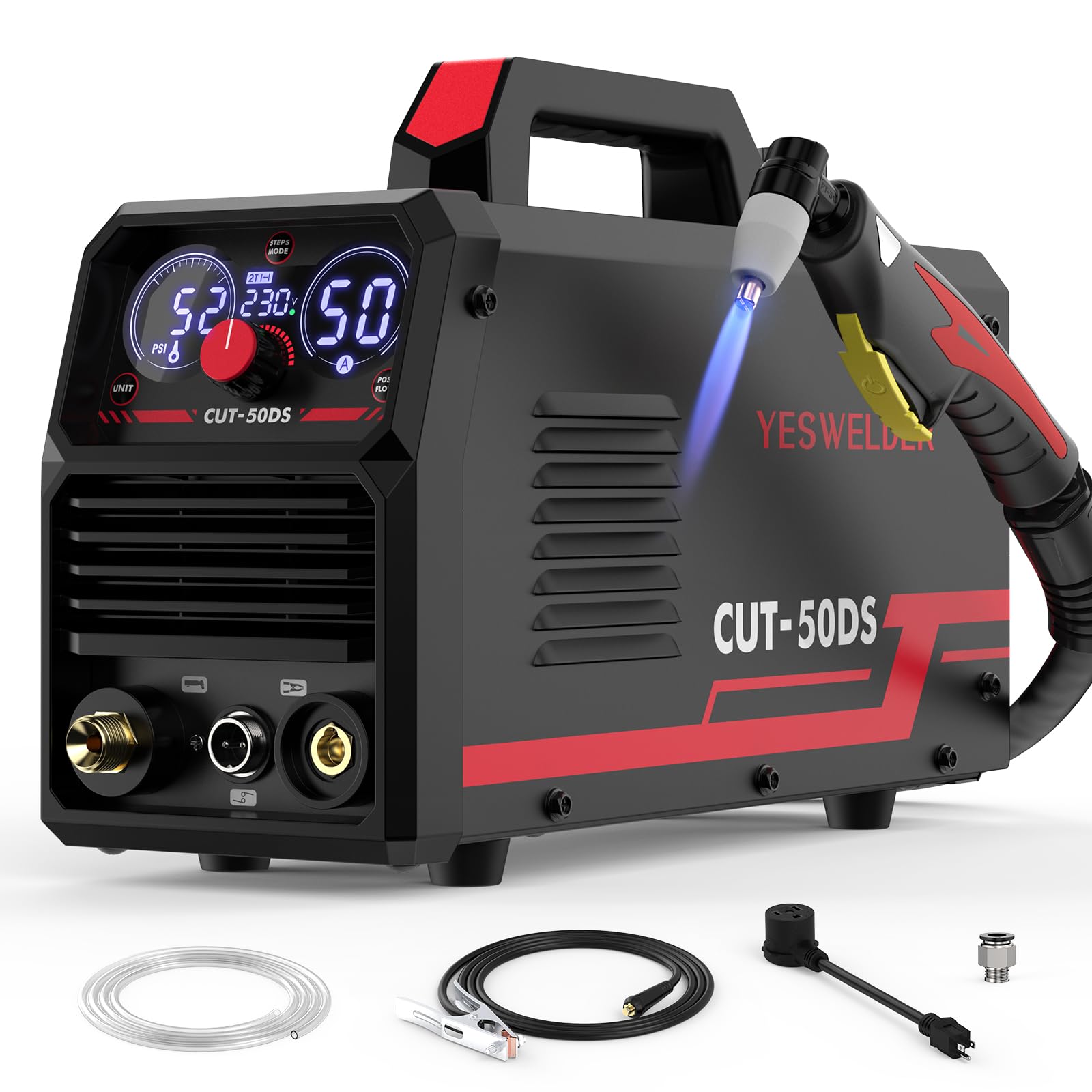 |
1/2 inch clean cut. | 110/220V DC. | 18.08 lbs | Dual-voltage DIY cutting | Check price on Amazon |
| S7 CUT-50 Plasma Cutter |
 |
20 mm max cut. | 110/220V AC. | 22.2 lbs | Budget entry-level cutting | Check price on Amazon |